Magical Realism: betwixt and between

In folklore, mythology and fantasy, and real or acted-out rites of passage, the boundaries where worlds meet are variously considered volatile, dangerous and rich in possibilities. Why is a bride carried over the threshold? Yes, it’s traditional, but it harkens back to the notion that a doorway was a dangerous boundary.

Myths and superstitions have flourished around the doorways, thresholds, crossroads, the littoral between ocean and beach, the lines where forests and meadows meet, dusk and dawn, and other dividing lines between realities.

You’ll find these “uncertain places”—as Lisa Goldstein calls them in her fantasy by that name—referred to as “neither here nor there” and “betwixt and between.”
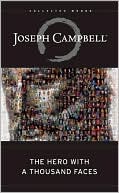
herothousandfacesIn his groundbreaking The Hero with a Thousand Faces, Joseph Campbell writes that in the hero’s journey, “A hero ventures forth from the world of common day into a region of supernatural wonder: fabulous forces are there encountered and a decisive victory is won: the hero comes back from this mysterious adventure with the power to bestow boons on his fellow man.” Strategic points in this journey occur where worlds and realities meet.

Even in a contemporary fantasy such as the Harry Potter series, the magic of Hogwarts is distinguished from the unknown and potentially darker magic of the forest. However, as Luke in Star Wars and Harry in Rowling’s series learn, the hero doesn’t grow within, much less advance on the physical part of his/her journey without going into the swamp, the dark forest, or the unknown world outside the city gates.

Magical Realism

Magical realism usually focuses upon the boundaries between the worlds of the known and the unknown. The stories combine the natural and the supernatural in a straightforward manner and without commentary or judgement as equally real. Characters dance back and forth across the “uncertain places” as the stories progress.

In a fantasy novel, the characters approach and enter supernatural worlds while noting they’re stepping into realms that are acknowledged as magical, different or strange. In a magical realism novel, events or places that readers may consider supernatural are, by contrast, accepted by the characters as no more or less real than the everyday science and technology world in place at the time when the novel is set.
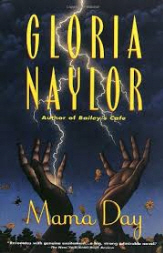
MamaDayGloria Naylor’s novel “Mama Day” is a perfect example of the juxtaposition of realms. Her first novels, The Women of Brewster Place and Linden Hills took a realistic approach. However, in writing Mama Day, Naylor said, “I needed to find a way structurally to have you walk a thin line between that which is real and that which is not real.”

New York City in this novel represents the real. The fictional Willow Springs, on an island near the Georgia and South Carolina border represents what—in our consensual everyday reality—is not real. Writing in Challenging Realities: Magical Realism in Contemporary American Women’s Fiction, Maria Ruth Noriega Sanchez says that Naylor’s novel is an “extraordinary exploration of the intangible and the power of belief that brings into question the limits or reality and truth.”

Naylor’s approach to magic in Mama Day can be seen in my favorite passage from the novel: “She could walk through a lightning storm without being touched; grab a bolt of lightning in the palm of her hand; use the heat of lightning to start the kindling going under her medicine pot. She turned the moon into salve, the stars into swaddling cloth, and healed the wounds of every creature walking up on two or down on four.”

If this were written in a realistic novel, Naylor would have produced something more like this: “She could purportedly walk through a lightning storm without being touched; imagine grabbing a bolt of lightning in the palm of her hand; or appear to use the heat of lightning to start the kindling going under her medicine pot. In her dreams, she turned the moon into salve, the stars into swaddling cloth, and healed the wounds of every creature walking up on two or down on four in her mind’s eye.”

waterforchocolateRealism demands the qualifying words and phrases. Magic realism omits them and keeps the reader guessing and unsettled about what is really happening in the uncertain realms that are betwixt and between.

In this passage from Laura Esquivel’s Like Water for Chocolate, “Her body was giving off so much heat that the wooden walls began to split and burst into flame,” the reader finds no “as if,” “as though,” or other qualifiers to indicate the event is figurative—because it isn’t. How you react to that as a reader depends on how you see the world and/or on how well the author has enchanted you to see things differently while reading the book.

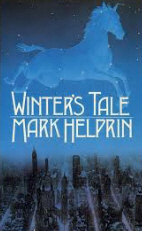
In Mark Helprin’a Winter’s Tale, Peter Lake is riding Athansor, a guardian angel in the form of a horse: “They got up steam and proceeded calmly to the north – where there seemed to be no people, but only mountains, lakes, reedy winterstalecoversnow-filled steppes, and winter gods who played with storms and stars.” Here again, the winter gods are mentioned as matter of factly as the mountains and lakes.
When initiates go through a ritual, they begin with the everyday world and end up transformed in some way. The place where these two stages meet is often called “liminality.” Here the initiate is not quite who s/he was and not quite who s/he will become.

Early studies in this area were done by Arnold van Gennep, who coined the word, in his 1909 book Rites de Passage. Folklore, myth, fairytales and stories following the “hero’s journey” typically involve plots ritesofpassageand scenes that are similar to rites of passage. The protagonist is buffeted by storms, monsters, magic forces, conscious landscapes and other dangers during his/her physical and inner journey to the intended destination.

Magical realism lives at that liminal point, leaving the reader with one foot over the threshold and one foot in the comfortable world s/he knows. Unsettling as this can be, that’s the genre’s greatest strength—a cauldron of worlds where stories simmer and readers become part of the spell.

You may also like: Just starting out? Beware of Magical Realism

–Malcolm

This post is part of the Magical Realism Blog Hop. About twenty blogs are taking part in the hop. Over three days (29th – 31st July 2015) these blogs will be posting about magical realism. Please take the time to click on the button above to visit sit them and remember that links to the new posts will be added over the three days, so do come back to read more.The button should go live on or after 12:01 a.m. July 29th.

Malcolm R. Campbell is the author of “Conjure Woman’s Cat,” a magical realism novella set in the Jim Crow era of the Florida Panhandle where granny and her cat take on the Klan.

What happens to the world if this post goes viral?

You are reading a post called “What happens to the world if this post goes viral” with a disquieting sense of deja vu that it has already gone viral and you are just now finding out about it (having been in prison or having sex or simply busy at work) and/or that the whole thing hasn’t happened yet and is coming to you from the future. Either way, if it goes viral and/or already has gone viral, what in fact will be the result?

Here are the probabilities:

  1. It (this post which, in your reality, you think you are reading right now even though–as you will see–you probably aren’t) will pick up speed and become so ubiquitous nobody will remember where they saw it first or if they just heard about it so often they began to believe they saw it, to the extent that some people will become alarmed and start warning about the world tilting on its axis or frogs falling from the sky or various magic men coming down from their mountains to tell us once and for all the meaning of life.
  2. Sappho on a vase found years ago in an attic.
    Sappho on a vase found years ago in an attic.

    The speed of this post will exceed the speed of light and, as Einstein predicted, will become younger and younger until it ends up appearing on MySpace or an ancient CompuServe forum, ultimately to be discovered mixed into the poetry of Sappho that will be discovered 200 years ago on a papyrus long thought to have been lost or mixed up with the Nostradamus prediction about rogue photons calling out of the sky on a summer evening in 1566 or 1966 (depending on the translation).

  3. It goes without saying that all of you who leave pithy comments will become either famous or infamous (perhaps both) and will start getting movie deals, hearing from old flames, learning that you forgot to pay a parking ticket in Carson City 15 years ago and now (with interest) you owe more money than most people earn in a lifetime even though, quite possibly (fate being what it is) time will move backwards and you’ll be talked about on the streets of London and Paris years before you are born, completely tangling up the records at Ancestry.com.
  4. Once something becomes ubiquitous, people (especially conspiracy theorists) begin debating whether it’s a blessing or a curse with everyone pointing fingers at the top Presidential contenders and demanding that if they are responsible, they apologize or lamely say they misspoke or, if elected, have new laws ready to put on the books to contain the real or imagined dangers that may or may not occur either now or in the past.
  5. As a famous scientist will say in the future or past, depending on which universe you hang you hat in, there is no containing rogue photons that spin off into lives of their own when a viral post collides with the sides of voynichbent space, causing people who we’ve always thought to have lived in the past to have not lived there, or if they did, did things differently so that the future changed in ways that could not be predicted, one of them being that this post ended up never being written at all.
  6. Once this post flows backward in “time” to 1916, Einstein will see things differently or even dream things differently so that the general theory of relativity takes on either new meanings or collapses altogether depending on whether one is there to observe the event or not (like that darned cat that may or may not be dead in the box).
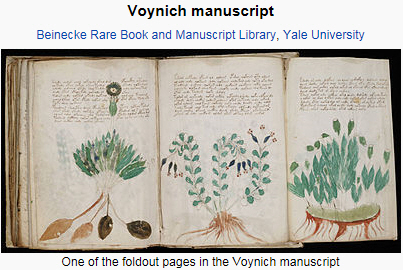
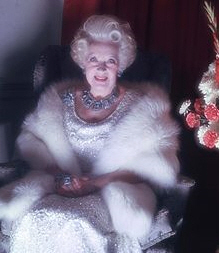
  7. People–and we don’t yet know who they are except that they probably live in Nebraska–will start decoding this post with the same fervor similar people have hopelessly tried to decode the Voynich manuscript, and there will be among them advanced code breakers who will begin to find that when the letters in this post are shaken up and mixed with every other word from Finnegans Wake the result is a new set of theories for the meaning of life, how to achieve immortality, and even who will be standing outside your house every Bloomsday to see if you’re reading Joyce or, heaven help you, Barbara Cartland.

    Cartland
    Cartland
  8. New religions and political parties will be born out of the chaos of dreams and the dreams of dreams that have no beginning and no end, advocating on one side of the coin that this post is total nonsense and that everyone who left a comment on it is a daft buffoon, and on the other side of the coin, that this post is part of the great shift in consciousness predicted by seers and soothsayers and what this means for you–the innocent reader–is that your will be swept up into arguments and/or country songs and/or various legends that will show everyone just how silly and/or profound beliefs can be when everyone is talking about them at once.
  9. You will discover that you’re not the same person that you were when you started reading this post and that, depending on how the magic hidden within it impacts your psyche, you will either join new causes and help save the world or you will hide in a cave until the world blows over (figuratively speaking, perhaps) and in the final analysis you will wonder what kind of synchronicity exists in a world where a post like this appears seemingly out of nowhere (unless you think Sappho wrote it) and comes to your attention on a day when you had no reason to be logging on to WordPress, MySpace or CompuServe (depending on which time period you ended up in).
  10. Bacon
    Bacon

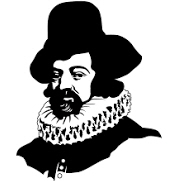
    Assuming that all of this is true, chances are optimal that you are either not reading this post right now or–just as likely–you are a sage living at the time of Frances Bacon who is quite certain that whether Shakespeare wrote the plays or not, some of the lines in this missive were hidden away in misplaced early draft of “All’s Well That Ends Well,” or on the other hand, assuming that none of this was true while the post was being written, once it’s ubiquitous it will become true, proving once and for all that cause and effect isn’t quite what we thought it was, but true or false, it appears that there’s nothing we can do about anything that becomes viral.

Give auntie some sugar

When I was a kid and some long lost relative came to visit, they often said something horrifying like, “Come on, Malcolm, give Auntie some sugar.”

Truth be told, I still get the willies thinking about it.

However, if auntie had been a conjure woman, she could have made me run over and hug her without having to say a word. How?

A Sweetening Spell

brerrabbitThese make people like you, feel better about you, or appreciate you in some way whether it’s a relative, a co-worker or even a judge.

(In general, sweetening may help you attract a lover, but for true industrial-strength romance, check out these love spells.)

You’ll need:

  1. Something Sweet (sugar, honey, Karo Syrup, molasses)
  2. An empty jar (baby food jars work well)
  3. A piece of brown paper (a grocery sack is fine)
  4. Appropriate candles (see below)
If you want hot romance, well that usually requires something stronger.

What to do:

  1. Write the name of your auntie, co-worker, judge of whoever in the middle of the paper three times with a pencil.
  2. Now, turn the paper side ways and write your name across those three names three times. (Some say four times). Be thinking about what you’re wanting.
  3. Fold up the paper and push it down into the jar of sweetener. Say aloud you intention: “I want Bob to like me.”
  4. Close the jar and put it on a shelf, desk, workbench, or nightstand where it won’t be disturbed.
  5. To ramp up the power, burn candles next to the jar twice a week, white for general esteem, brown for court cases, red for passionate love and pink for friendship. (optional)

Now, when you need a friend or a favor or “a little sugar,” you won’t have to ask for it.

There are many variations of this trick, and you can find them on line by using search terms like sweetening spell and conjure honey jar. You’ll find a few sites like this one and this one.

So, here you have a bit of friendly white magic!

Malcolm

MaKIndle cover 200x300(1)lcolm R. Campbell is the author of “Conjure Woman’s Cat,” a Jim-Crow era novella set in the Florida Panhandle. The KKK was very strong in Florida in those years, so Eulalie has her work cut out for her. On sale for 99 cents June 4 and June 5, 2015.


Looking for lust in all the wrong places

While doing research for another short story that  includes a few conjuring tricks, I came across a lust potion.

lustclipartTraditionally, a fair number of people stop by their local root doctor’s house for a little help getting lucky in love or gambling (which are pretty much the same thing, at times). While you can pick up powders and oils such as “Follow Me Boy (or Girl)” to persuade others to find you attractive, many practitioners don’t like tampering with a prospective lover’s free will.

It’s one thing to cast a spell to keep your spouse from cheating on you; it’s another thing to compel somebody to fall in love with you–that wouldn’t be true love, right?

This lust potion is powerful stuff. Heck, right after reading it and visualizing how it might work, I chanced to see a picture of the late Grandma Moses and my immediate reaction was, “Whoa, that chick is hot.”

Some writers have been criticized for, say, putting too many details in their work about how to cause death and destruction, that I feel I must say that causing lust in ones readers might be almost as dangerous.

Just as a responsible writer wouldn’t put the directions for making an A-bomb out of the stuff in a medicine cabinet, a merciful storyteller shouldn’t put the directions for causing lust in a story. Heaven help us if somebody rushed into a Walmart and sprinkled this stuff around or threw it out the car window on I-75.

Where would we be today if Jerry Leiber and Mike Stoller had listed the ingredients in their “Love Potion No. 9” classic back in 1963? We know the stuff smells like turpentine, but (fortunately) dowsing oneself in paint thinner doesn’t cause amorous feelings in normal passersby. But thank goodness we don’t know the complete recipe.

So, I’ll mention the potion in the story without the recipe and let all my readers who are looking for lust in all the wrong places create their own opportunities. Oddly enough, the potion includes nutmeg. Using nutmeg by itself won’t cause lust, though it might make a person remember their favorite pumpkin soup.

–Malcolm

KIndle cover 200x300(1)Malcolm R. Campbell is the author of Conjure Woman’s Cat, a 1950s-era novella about a black cat named Lena who helps  her best friend do magic.

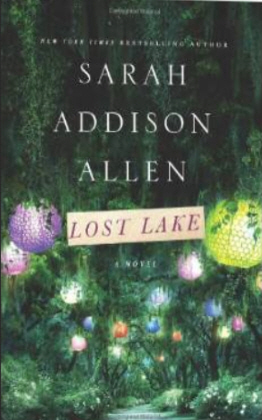
Review: ‘Lost Lake’ by Sarah Addison Allen

Lost Lake, Sarah Addison Allen (St. Martin’s Press, hardcover, January 21, 2014, paperback January 6, 2015), 304 pp.

lostlakeKate Pheris is waking up after the worst year of her life, the year she lost her husband and almost lost herself while her young daughter Devin waited for life to begin again and her mother-in-law Cricket orchestrated their future like a puppeteer with an agenda stronger than love.

But older ties are stronger even though they might have seemed forever lost.

Kate and Devin serendipitously discover a fifteen-year- old postcard in the attic while getting ready to move to Cricket’s house where neither of them wants to be: Greetings from Lost Lake, Georgia: a Magical Experience. Sent by Kate’s great-great-aunt Eby after Kate’s best summer ever at the ramshackle cabins our of another era in South Georgia, the card stirs up old hopes and memories.

Kate’s never seen the card before. Her mother, who had a falling out with Eby that summer, hid it away along with its message, “You’re welcome to come back anytime you’d like.”

It’s too late, isn’t it? Lost Lake and Eby are probably long gone. Yet, Lost Lake really isn’t that far from Atlanta. What if Kate and Devin drive down there and look?

While Cricket organizes the future she wants with indomitable and merciless force, Lost Lake suggests possibilities with a gentle touch, one that pulls on the heartstrings of those who have come back for one last summer before Eby sells the place she can no longer afford to keep and flies away to see the world.

The book features a cast of memorable characters and–inasmuch as this novel is magical realism–a magical setting. Everyone who arrives to say goodbye to Eby and Lost Lake is looking for something, and they all have their secrets and their losses.

Like an oasis that’s almost visible for one moment and gone the next, the magic and the synchronicity of the setting are deftly handled by Allen (Garden Spells The Sugar Queen, The Girl Who Chased the Moon, The Peach Keeper), adding mystery and, perhaps, a sense of hope that a seemingly lost future is not altogether lost.

One cannot read Lost Lake without noting a certain predictability in the plot and the syrup of sentimentality it the developing themes and coming-out-of-hiding histories of the characters. One can say the same thing about It’s a Wonderful Life.  Nonetheless, movie viewers return to It’s a Wonderful Life every year at Christmas just as the faithful, if not aging, guests return to Lost Lake every summer.

Lost Lake gives those guests what they’re looking for even though most of them are too stubborn to admit it. Readers may know, or think they know, how Kate’s and Devin’s summer at Lost Lake will end. They may be right. Even so, the book casts a spell that’s impossible to resist.

–Malcolm

KIndle cover 200x300(1)Malcolm R. Campbell is the author of the magical realism novella “Conjure Woman’s Cat,” set in the Florida Panhandle where folk magic lives deep in the piney woods.


Herbs: Holy Ghost Root

“Angelica Root (also known as Holy Ghost Root, Archangel Root, and Dong Quai) is widely thought to be a powerful Guardian and Healer, and to provide Strength to Women. We believe that Angelica Root is used by many people for the purpose of Warding Off Evil and bringing Good Luck in Health and Family Matters” – Lucky Mojo Curio Company

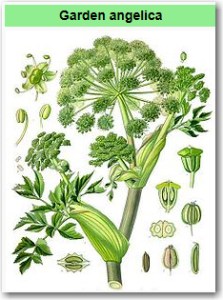
angelicarootThis biennial, Angelica archangelica, is known variously as angelica root, wild celery and holy ghost root. In myth, the Archanel Michael (or Gabriel) said it had medical uses, hence its name. There are over thirty varieties of the plant.

Herbs-Treat and Taste says that “because of its association with the archangel it was also believed to be associated with the Annunciation when the Archangel Gabriel appeared to the Virgin Mary and told her that she was pregnant. One legend says that an archangel revealed in someone’s dream that angelica was a cure for the plague. Because of these holy associations it was believed that it would rid places of evil spirits and protect against witchcraft and evil enchantments.”

In folk magic, it’s used variously to keep a home protected and peaceful, to ensuring that a marriage is a happy one, and to create the “Fiery Wall of Protection” that protects your property and yourself from evil people.

In folk medicine, the roots and leaves had multiple uses from purifying the blood to curing augues and infections as well as fighting coughs and colds. As an aromatic plant, it has also been used in pot pourris, essential oils and as a flavoring (similar to Juniper) in confectionery, perfumes and liqueurs. Some people turn the stems into jam or use them in salads.

According to WebMD, Angelica is used for heartburn, intestinal gas (flatulence), loss of appetite (anorexia), arthritis, circulation problems, “runny nose” (respiratory catarrh), nervousness, plague, and trouble sleeping (insomnia).

When researching my novels, I find the multiple uses of herbs fascinating because many have come into standard medicine and are now created synthetically, but also have purported magical uses or are old folk medicine remedies. As a writer, I an usually a bit vague in my descriptions of herbs and their uses because (a) I’m not a doctor or herbalist, and (b) Don’t want anyone to think that a fictional usage constitutes a medical prescription or an herbal tea.

Usages vary greatly depending on where you look and the culture you’re looking at.

–Malcolm

KIndle cover 200x300 Malcolm R. Campbell is the author of “Conjure Woman’s Cat,” a novella set in the Jim Crow era of the Florida Panhandle about Eulalie and her cat Lena who fight the KKK with spells and other magical means.

New novella tells the story of a cat, a conjure woman and the KKK

Click here for Kindle edition.

Thomas-Jacob Publishing has released Conjure Woman’s Cat,  a novella by Malcolm R. Campbell (“The Sun Singer”), set in the 1950s Florida Panhandle world of blues, turpentine camps, root doctors, the KKK and a region of the state so far away from everywhere else that it’s often called “the other Florida” and “the forgotten coast.”

Lena, a shamanistic cat, and her conjure woman Eulalie live in a small town near the Apalachicola River in Florida’s lightly populated Liberty County where longleaf pines own the world. Black women look after white children in the homes of white families and are respected, even loved as individuals, but distrusted and kept separated and other as a group.

A palpable gloss, sweeter than the state’s prized tupelo honey, holds the spiritual and temporal components of the Blacks’ and Whites’ worlds firmly in the stasis of their separate places. When that gloss fails, the Klan restores the unnatural disorder of ideas and people that have fallen out of favor.

Click her to see the trailer.

Lena and Eulalie know the Klan. When the same white boys who once treated Eulalie as a surrogate parent rape and murder a black girl named Mattie near the saw mill, the police have no suspects and don’t intend to find any. Eulalie, who sees conjure as a way of helping the good Lord work His will, intends to set things right by “laying tricks.”

Eulalie believes that when you do a thing, you don’t look back to check on it because that shows the good Lord one’s not certain about what she did. It’s hard, though, not to look back on her own life and ponder how the decisions she made while drinking and singing at the local juke were, perhaps, the beginning of Mattie’s ending.

All that’s too broke to fix, but beneath the sweet sugar that covers crimes against Blacks, Eulalie’s pragmatic, no-nonsense otherness is the best mojo for righting wrongs against both the world and the heart.

I hope you enjoy the book.

–Malcolm

Conjure Woman’s Cat website

Paperback Edition at Amazon

Nook Edition at Barnes & Noble

Eulalie's world.
Eulalie’s world.


Perhaps we’ve lost too much of the magic

“‘The ancient world was full of magic,’ writes novelist C.J. Cherryh.  ‘Most everyone north and northwest of the Mediterranean believed that standing barefoot on the earth gave you special knowledge, that the prickling feeling at the back of your neck meant watchers in the wood, and that running water cleansed supernatural flaws.'”

–On Myth and Magic in Terri Windling’s post

Since we, as a world, have grown up, most people no longer believe this; or, if they do, they don’t admit it.

Ignorant superstition or pagan religion: that’s how such ideas are often categorized.

fantasyartIn one of my novels, I said that we’d exchanged magic and wonder for science and technology. Goodness knows, there have been benefits to some of that. But it seems a little skewed to me.

Too little magic. Too much technology. Some say, that our technology will one day rule us (literally, not figuratively as it does now) and will become so self-aware that it (the computers and machines) will decide that humans are no longer needed.  Kind of like the Terminator movies.

I’m subversive when it comes to magic. I put it in my fantasy novels where it seems almost natural enough to be real. I hope some readers think it’s real by the time they finish the books. If not that, I hope they are willing top ponder the question of its reality with open minds.

Perhaps we’ve most too much of the magic because we never believed enough in ourselves as individuals. Did we assume scientists, inventors, governments and corporations knew more about everything than we did? Did we see ourselves as too small to trust what our hearts suggested to us?

Hard to say. The magic discussion can get very circular because it’s often said, you won’t find magic if you don’t believe in it. That may be true, but it’s also convenient because it’s a false method of trying to prove a point.

Maybe we don’t have to believe in magic to find it. Maybe all we have to do is entertain the possibility that it’s there. It’s not too difficult to walk barefoot across a field or a beach and see what happens. Naturally, doing that with our arms crossed and our minds cynical isn’t going to help. Better to play. To dance there or enjoy the scenery with all of our logic on hold.

In my stories, I suggest magic is there waiting for characters to see it. Some do, some don’t. Maybe those who see it are crazy fools, but what if they’re not? If we dismiss things out of hand, we’ll never know.

–Malcolm

Malcolm R. Campbell is the author of the upcoming folk magic novella “Conjure Woman’s Cat.”

Crossings, magical and otherwise

KIndle cover 200x300There’s a railroad crossing on the cover of my upcoming novella Conjure Woman’s Cat because several incidents in the book occur at a crossing and crossings are associated with magic.

The Florida Panhandle has traditionally been tied to the timber and turpentine industries. In the 1950s era when my book was set, pines, pulpwood, scraped trees with cups collecting resin for turpentine, and logging trains were common sights.

In modern times, we associate road crossings with red lights, traffic jams, hard-to-make left turns and accidents. Railroad crossings are places where drivers have to wait for trains and, by all means, stop, look and listen.

Crossings have always been associated with danger. Robberies happened there, armed men clashed there, and people got lost there.

All of this translates nicely into various forms of folk magic, including hoodoo, and in mythology. Like borders, crossroads were often considered to be uncertain places where realms, domains, countries and states of mind came together. Such places were often like oil and water in that they didn’t properly mix–“neither here nor there” folks often said. There is power at a crossroads, for good and ill.

quincunx - click on art for the Wikipedia page.
quincunx – click on art for the Wikipedia page.

In hoodoo, the crossroads is the place where one summons demons and bargains for skills they need: in my novella, a young girl goes to a crossing to learn how to sing the blues. “Crossing” also refers to wavy lines an X mark (or quincunx) placed on the ground where one harms or shames another person through “foot-track magic.”

Powders and liquids used to jinx the path where the victim is expected to walk are said to enter or contact that person through the soles of his feet. Folks who know conjure, watch where they walk and also carry mojo bags, charms and other items to ward off evil.

Today we use the term “street wise” to those who know what to watch out for in the inner city; I think we can safely say one needs to be equally aware in a rural area where a root doctor (conjure woman) lives.

Railroad cars with logs - Saint Marks, Florida, photo by Johnson, State Archives of Florida, Florida Memory
Railroad cars with logs – Saint Marks, Florida, photo by Johnson, State Archives of Florida, Florida Memory

Turpentine and pulpwood mean logging trains, a constant image in my book. People traveling the road into town see bulkhead flat cars at the railroad crossing heading for the paper mill. Where the tracks cross the road is also a tempting place to “lay a trick.”

I like the interplay of the magical and the real, and “crossings” (symbolic and real) offer a lot of “neither here nor there” kinds of places in a conjure story. A piney woods story wouldn’t be real without railroad crossings, bulkhead flat cars (typical for hauling wood) and turpentine stills.

I hope readers will enjoy the double meanings in the story as well the dangerous events that occur where one road (or railroad) crosses another road.

luckymojoYou can read an interesting summary of crossings in hoodoo at the extensive Lucky Mojo site.  (To Put on Curses, Jinxes, and Crossed Conditions, To Destroy Luck and Change Good Luck to Bad, For Revenge and Spiritual Antagonism).

You can read the Wikipedia overview of crossroads magic here and the post Mystery, Magic & Mayhem of the Crossroads here.

As always, I enjoy pulling the details and secrets of a place into my fiction and very much sharing the Florida world where I grew up.

Malcolm


How to create a whoopass wall of protection

Did you ever notice how tough guys in movies and brainy guys on science shows are always claiming that a darned good bomb can be made out of the contents of a family’s medicine cabinet?

The first time I heard this I was a kid in the days when kids were still allowed to play with fire, cap pistols, bows and arrows and cherry bombs. How exactly would I make a darned good bomb? Would I mix Preparation H and Vagisil? Or, possibly hydrogen peroxide and codeine. (In those days, the feds allowed people to buy codeine, paregoric and other miracle meds).

The thing is, nobody who claimed to know how to turn a medicine cabinet into a bomb ever explained how.

I have no interest in making a bomb, but I wonder what–as a writer–I should do if a character in one of my books was fighting bad guys, needed a bomb, and ran into the bathroom to throw one together. How should one realistically describe what he does?

Look, I’ve read plenty of thrillers written by people who know everything in the world about bombs, guns, aircraft, submarines, martial arts, police procedures, &c. They never say, “Bob grabbed a gun before he got on the helicopter.” For purposes of reality–and to prove to readers they know their subject matter–they state what kind of gun in was, what kind of helicopter it was, and spout out a bunch of stats like they’ve got the owner’s manuals with them.

What about magic?

Rowling has already confessed to using fake spells in the Harry Potter books. They’re kind of cute, actually. But they don’t do squat. I’m sure a lot of people went around shouting Accio Money and Avada Kedavra  before Jo told the world she didn’t give us the real stuff.

So now, I’ve got an ethical dilemma as I work on my conjure woman novella. I’m a fanatic about realism because I think it’s a wonderful foundation for the magic. If the stuff people already know is obviously real, then they’ll think the stuff they don’t know is also real. (That’s not logical, but it works in books.)

Suffice  it to say, that if Rowling used real spells or if some book called “Mega-Enforcer Dude” gave a step-by-step recipe for making a bomb out out Preparation H, folks would be getting hurt. But, the details have to sound plausible because: (a) you don’t want people who know how to make spells and bombs writing bad reviews on Amazon saying the recipes were a bunch of crap, and (b) you hate being dishonest with your readers.

There’s a wonderful conjuring spell called The Whoopass Wall of Protection (not its real name). As she fights the bad guys, my conjure woman needs to use this spell. But I can hardly say she dumped “a bunch of stuff” out of a sack. Nobody will believe she knows squat or, worse yet, that I (as the author) know squat. I can use footnotes to tell readers that the real Whoopass spell isn’t included, but footnotes turn people off because they start thinking they’re reading a doctoral dissertation and, trust me on this, nothing is more boring that that kind of writing.

Perhaps I should give a few hints to satisfy those craving reality as well as those who really know the spell. “Lucy dumped a sack filled with cornmeal, coffin nails, rue and pepper on her sidewalk.” Okay, that could work, but it doesn’t really plunge the reader into the moment, does it?

This is going to require some careful thought. If you’re a writer, perhaps you can offer some advice about just how much dangerous information should be included in a novel for the sake of accuracy.

If you’re a reader, just how much do you want to know? And, if the novella included the real spell, would you promise not to use in unwisely?

Related Posts

Malcolm

Malcolm R. Campbell, as you may already suspect, writes magical realism, fantasy and paranormal stories and novels.