When magic creates the ride, all the writer can do is hang on

“A bit of advice
Given to a young Native American
At the time of his initiation:
As you go the way of life,
You will see a great chasm. Jump.
It is not as wide as you think.”
― Joseph Campbell


Magic is like drugs. However, once you let it take over, you’re not lost. You are found. Logic, the more addictive drug, will become your greatest trap because, like an old bad habit, it works on you, makes you think that magic is a a delusional part of your unconscious that’s escaped into your mind like devils, makes you doubt yourself.
magicbookWhenever I run back to logic, I stop writing. I stop writing because logic tells me loud and clear that hanging on to a magic carpet as my fingers type words on the screen is no way to write a book. It’s illogical. One must plot and plan and outline the who shebang from beginning to end. Yes, that makes sense. The thing is, I don’t know the story I’m telling until I’m telling it, and then all I know is what happens next.

When logic gets a hold of me, I’m scared to write: I don’t think I can do it because I don’t know how I do it. As I mentioned in my last post, we create our own reality. So, we meditate, play around with the law of attraction, go on shamanic journeys, repeat affirmations and cast spells, but how quickly that can fade in the chilling light of day when the car won’t start or your spouse is sick or the man you hired to build a fence around part of your property hasn’t shown up for six weeks or the trees in your yard of dying for lack of rain. Where’s the magic now?

Logic breeds on itself. The more I think I need it, the more I use it, doubting myself more and more in the process.  Sooner or later, I say to hell with that and jump the growing chasm of doubt. The rains come, the fence gets built, my wife gets well, and the words flow.

Some say magic gives the practitioner more control. I suppose if one thinks of magic is the wizards in the Harry Potter books hurling never-fail spells across the room, then perhaps it does. But there’s a paradox here. Exerting control is logical thinking. To live and write by magic means surrendering to the greater part of oneself and the universe and one understanding that the less one pushes, the smoother the ride.

A couple of days ago, I used the word “epitaph” in a figurative way in my work in progress. The moment I did it, I knew it wasn’t figurative at all. Magic knew where it was going before I did and logically it made so sense to go there. After resisting that idea for two days, I saw I had no choice but too get out of the way of the story in the same kinds of ways our greater selves ask us to step out of the way of the directions our lives are meant to go.

MRbloghop2016Too much logic ensures it’s going to be a bumpy ride.

When I was in the navy, I often heard the proverb “Smooth seas don’t make good sailors.” Maybe we need a few of those hard knocks of life to finally understand we’re going about it all wrong and start seriously looking for a better way.

I think I ran through every pothole the universe had to offer until I realized I was gripping the wheel as though my life and art depended on it. Early in life, we often become brainwashed into thinking we need to grip that wheel the way we do.

Whenever writer’s block looms  large before me, I remind myself to let go while I write. My hope is that my readers will let go while they read.

–Malcolm

Malcolm R. Campbell is the author of the magical realism novella “Conjure Woman’s Cat,” available in paperback, e-book and audiobook.

This post is part of the Magic Realism Blog Hop. About twenty blogs are taking part in the hop. Over three days (29th – 31st July 2016) these blogs will be posting about magic realism. Please take the time to click on the frog button for a list of other blogs in the hop. Links to the new posts will be added over the three days, so do come back to read more.


Haints, Plate-Eyes and Demons, oh my

Frankly, I don’t like reading specific directions for summoning evil spirits because I’m afraid I’ll accidentally think them or recite them and suddenly a hideous monster will appear.

demonFrom hoodoo to witchcraft to high magic, the lore is filled with cautions about the dangers of summoning bad stuff because unless you know what you’re doing, the bad stuff will come after you. This would be kind of like purchasing a rabid dog to keep traveling salesmen away from your door. The odds seem high that the dog will attack you first.
Another reason I don’t like reading specific directions for summoning evil spirits is the feds. They probably track this stuff and the last thing I need is the NSA telling the FBI that I used the search terms “black arts conjure oil” or “hoodoo demon-calling spell” enough times for it “to be a problem” as opposed to looking for crossword clues.

Writers often talk about stuff like this. We worry about doing research about how to kill people, make bombs, mix deadly and untraceable poisons, and making pacts with the devil. The people who have that kind of history on their computers usually tern out to be serial killers or the kind of nut cases who join ISIS and saying “I’m just writing a book” probably won’t cut it when the cops arrive.

I didn’t worry about this when I was writing Conjure Woman’s Cat because for that book, I was looking up good spells, good charms, and how to reverse jinxes. But in the sequel, my good conjure woman is combating a black arts root doctor and so I have to know more about that side of the business for her to be able to speculate about what he’s doing and how.

Since I try to make the spells and uses of herbs as realistic as possible within the world of conjure, I don’t feel right just making it up. Suffice it to say, the curses I’ve found aren’t going into the sequel verbatim. For one thing, I have to find a spell or recipe in multiple places before I’ll trust that it’s more than the imaginings of one resource. For another, what if the thing works as advertised? I don’t need to see on CNN that people are using my book to summon demons to go after their spouses’ lovers or to disrupt law-abiding governments (if any). So, everything has to be blurred around the edges: exact enough to make a real conjure woman nod in agreement but inexact enough to your child, spouse or neighborhood crook can’t use it.

By the way, plate-eyes aren’t seen very much any more, but generally they’re unpleasant, what with their glowing eyes the size of plates. If one bothers you, you can get rid of it with anything that smells bad. I’m pretty sure I’m not going to use any plate-eyes in the sequel to Conjure Woman’s Cat because nobody seems to know how to contact one of them. Haints, well, they’re okay, but they usually have their own agendas.

Demons, though, they’re looking pretty good, figuratively speaking, because they’re easier to summon that most people think and fewer people are going to question whether the author has used the right technique or the wrong technique to call them.

When the book comes out, I promise it won’t contain the exact technique for calling a demon. It will be close enough to make the book slightly dangerous. But that’s what readers want.

–Malcolm

KIndle cover 200x300(1)Malcolm R. Campbell is the author of “Conjure Woman’s Cat” and a batch of paranormal Kindle short stories.

Stop by my website.


I write magical realism so of course I’m superstitious

A shark pursuing a ship means bad luck, especially if there are sick people on board.

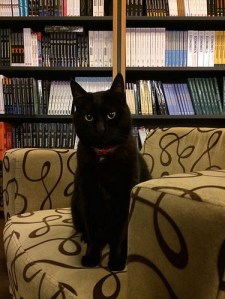
Some say black cats bring good luck and some say they bring bad luck. (I opt for good.) - Wikipedia photo
Some say black cats bring good luck and some say they bring bad luck. (I opt for good.) – Wikipedia photo

A superstitious person sees the supernatural everywhere. As a superstitious person, I’m attuned to signs, omens and other hints that good or bad luck is about to follow unless I quickly change course. If I accidentally make a “wrong turn” while driving, I assume I was supposed to make that wrong term in order to avoid something bad on my regular route or to find something good on my new route.

During a brief time when I was the primary driver in a work car pool, my riders asked why I seldom drove to the office the same way twice. I gave them a throw-away answer: going the same way bores me. But I saw darker forces at work.

Don’t sweep dirt out the front door after the sun goes down or bad luck will come to your home.

I've never a talisman as ostentatious as the Talisman of Charlemagne.
I’ve never carried a talisman as ostentatious as the Talisman of Charlemagne.

When I was growing up, people my father’s age constantly asked me if I was Sir Malcolm Campbell, the famous British driving ace who broke many land and water speed records in his famous Bluebirds. I thought then that if I ever had a blue car, good luck would follow me if I named it “Bluebird”

In 1967, another Syracuse University student and I walked past a newsstand where the headline said DONALD CAMPBELL KILLED IN BLUEBIRD RECORD ATTEMPT. I don’t remember what I said, but my friend said “you look like you’ve seen a ghost: are you related?” Well, of course not, though if I ever had a son, I never would have named him Donald because the famous “Donald” was the famous “Malcolm’s” son.

If one has a realistic bad dream, the next morning breakfast must be eaten before the dream can be mentioned or discussed. Otherwise, the bad dream will come true.

Some omens and signs are good. Mine are what work for me, so I love seeing black cars and ravens.

I won’t say that when I wrote Conjure Woman’s Cat, I believed in all the spells, practices and good/bad luck admonitions of my main character. But, being superstitious, I could relate because magic and realism aren’t all that different in my panpsychism world view. A conjure woman might tell me to bore a hole in a Mercury dime, put it on a red string, and wear it around my ankle or neck for protection and good luck. I don’t go that far, but I do tend to save rocks, pieces of wood and other objects that seem “charged with power” when I find them.

If you start to go somewhere and come back for something you will have bad luck.

Nope, I don’t go along with that one. I assume that if I go back for something, I was supposed to go back either because, say, I left the stove on or forgot to lock the door, or, that if I hadn’t gone back, something bad would have happened at some place along the road. Seriously, I’m not obsessive/compulsive about this: if I were, I’d check the door locks and stove a dozen times before leaving the house.

Walking past a pole with someone it is bad luck to split up and each go around on different sides of it.

Those who know the pole omen know that saying “bread and butter” counteracts the bad luck. Some omens just don’t work for me, like “Drop a fork an a woman will show up.” I dropped a lot of forks in high school and college, and no women ever showed up. Omens and signs must pick “their kind of people” to have any impact.

In reality, I think the universe gives us signs we can each recognize, so I justify my superstitions by saying “this is my coded way” of seeing the world. Of course, that might be bullshit, but it works for me. And it also helps me write the kinds of stories I write. Kind of handy, that way.

That’s my story and I’m sticking to it–mainly because not sticking to it brings bad luck and/or makes one look like they’re lying.

–Malcolm

SarabandeCover2015Malcolm R. Campbell is the author of true stories that his publishers label as fantasy or magical realism.

PS – When you hang a horse shoe on the wall, never hang it facing down or all the luck will run out of it.


Basil: powerful for more than pesto

My father escaped from his typewriter by experimenting with new food concoctions in the kitchen. Most of them came out very well. One of them even got into a cookbook. While the number of meals I cook is limited to a “safe group” that my wife and I have agreed are fit for weekly consumption, I seldom experiment in the kitchen except when it comes to herbs.

Basil - Wikipedia photo
Basil – Wikipedia photo

Basil, oregano and rosemary are my favorites and find their way into all kinds of things. My mother’s old Betty Crocker cookbook had a chart inside the front and back covers listing foods and the herbs that went with them. According to the chart, basil goes into lots of recipes. This chart has kept me from venturing too far into the inedible.

The last time we went to a high style restaurant, they were in their basil phase, creating numerous lunch and dinner dishes encrusted with, simmered with, or liberally garnished with fresh basil. While this was good stuff, it was a cautionary experience, reminding me to be careful with fresh herbs. Everything with basil on the restaurant’s menu was too strong.

I tend to use basil in stews and spaghetti sauce more often than not. However, as I discovered in my research for Conjure Woman’s Cat, one can also use basil outside the kitchen for bringing happiness (other than a tasty meal) or as a protection from evil. If you do this all the time, you might refer to the herb as “holy basil” or “sweet basil” and grow your own rather than getting it off the McCormick spice display at Kroger or Publix.

For example, basil–used alone–or with clover, rosebuds, lavender, etc.–can be placed in a bath or sprinkled or placed in sachets around doors and windows, or kept in bowls to bring happiness and love to your home. Likewise, when sprinkled dry or used as a cleansing wash, it is said to protect a home or a person from evil.

  • When you buy basil from a magic shop, you'll almost always see that it's sold as a curio, that is to say, not with any magical claims.
    When you buy basil from a magic shop, you’ll almost always see that it’s sold as a curio, that is to say, not with any magical claims.

    According to the Candle Spells website,  “It has been said that when tied in a cheesecloth bag and tossed into a hot bath, sweet basil will activate your money drawing abilities and you will be seeing money come to you.”

  • Carolina Conjure says that, “Basil is said to attract customers to a business by placing some in the cash register, or sprinkling basil-water near the threshold. “
  • Catherine Ywronwode (who also has a Hoodoo Herb and Root Magic book available on Amazon), writes on Conjure Lists by Hoodoo Psychics that basil is “A multi-talented magical herb, this one protects the home, brings love and peace to the family, and draws money to the kitchen; Sprinkle some on the floor and sweep it out the back door, for “No evil can come where Basil has been.”
  • Do a search on Google using something like “basil conjure” and you’ll get a lot more hits than you ever imagined the last time you put a little basil on your beef pot roast.
Basil Conjure Oil, meditation, relaxation, altar

Needless to say, I’m a passable cook (within fairly narrow parameters) and not a conjurer at all. So I pass these magical ideas along as curiosities only and as interesting beliefs. As a famous scientist (I forget who) once said when asked why he placed a horseshoe above his door, it’s there just in case.

One can always sprinkle basil outside the front door just in case. Otherwise, if you don’t use too much of it, Betty Crocker and others have plenty of basil suggestions for your cooking and eating pleasure.

I make sure I never run out of basil.

–Malcolm

KIndle cover 200x300(1)Malcolm R. Campbell is the author of “Conjure Woman’s Cat,” a 1950s story about a root doctor who fights the KKK with magic.

Conjure Woman’s Cat website


99¢ Sale: ‘Conjure Woman’s Cat’ and ‘Sarabande’

The Kindle editions of my dark contemporary fantasy Sarabande and my magical realism novella Conjure Woman’s Cat are both available for 99¢ each on December 3rd. (In fact, the price has already been marked down.)

From the reviewers:

SarabandeCover2015Sarabande: “Campbell describes a rape scene that is difficult to read, yet at the same time, earns my respect with his skill in describing this scene, and its aftermath on the woman. Indeed, I had to keep reminding myself I was reading the writing of a male author. It is rare to find this ability in an author to cross genders even in everyday basics such as conversation, mannerisms. To do so in describing the effect of rape on a woman’s body and psyche is nothing short of amazing. Campbell nails it: her anger, her pain, her humiliation, her ferocity that eventually takes her from victim to survivor to avenger.” – Zinta Aistars, Smoking Poet Magazine

While Sarabande follows-up on the story told in The Sun Singer, it can also be read as a standalone novel.

KIndle cover 200x300(1)Conjure Woman’s Cat: “The story is set in the Florida panhandle in the 1950’s in a society dominated by racism, and tackles the serious issues of white violence, rape, day-to-day prejudice and mother/daughter relationships. This is a book that packs a lot into its 166 pages. Despite this bleak subject matter the book is beautifully written, allowing this Brit a vision of a place which the author knows well and clearly loves. The contrast of the natural beauty highlights the ugliness of human behaviour.” Zoe Brooks, Magical Realism Review Site

–Malcolm

Malcolm R. Campbell is also the author of “Emily’s Stories” and “The Sun Singer.”

Website


Magical Realism Writing Tips – Importance of Belief

When an author writes a novel or short story in the magical realism genre, magic is always a natural  and unquestioned component of the characters’ lives and the environment in which they live. As an author, you’re more likely to write a believable story if–while you’re writing, at least–you assume the magic is real.

This is my favorite blog because the writer has many years of experience and a great archive of posts for many Hoodoo subjects.

This doesn’t mean you must personally subscribe to the philosophy and practices of the magical system in your story whether that system is a known collection of beliefs such as hoodoo or Voodoo or a fictional system you built from scratch.

I prefer using practices based on actual belief systems because they already have a rich, varied and somewhat known lore that is often much deeper than anything a most of us can make up.

When I wrote Conjure Woman’s Cat about a root doctor (another name for a conjure practitioner), I began by reading books and web sites written by people who practice hoodoo. When I had a question, I asked them, usually making it clear that I was researching a novel rather than following the belief system myself. (You’ll see some of the sites/books I consulted in the folk magic category of my Myth and Magic Resources post.)

At times, I’ve read paranormal and magical realism books by authors who take a known system–say, witchcraft–and have their characters doing things that are completely outside the realm of the practice whether it’s Wicca or the traditional craft. Hollywood has done this a lot, but I feel more anger about it when I find it in a novel by a known writer who can look stuff up and talk to experts and keep the magic within the realm of what a system claims is possible. Witches do not worship the devil nor utilize spells that look like they originated in the Harry Potter series or Lord of the Rings.

This is a more commercial site with products to sell. However, it also has a wealth of information about spells, herbs and candles.

Yes, we all take liberties when telling a good yarn, and even when we don’t, it’s probable that (in my case) a real conjure woman will find things in my book that are unrealistic. I try to make the material as accurate as possible for a fiction writer–as opposed to a real practitioner who writes a novel based on their own experiences.

One way to make your story accurate is through the use of multiple sources. This helps you understand the magical approach well enough to write about it in your own words.

Of course, if you make up the magic from scratch, it helps if you set limits on it (so that your characters aren’t all-powerful) and keep it consistent. Don’t state a magical rule on page 25 and then have a character successfully ignore that rule on page 250.

For your readers to believe, you have to believe. Most of them will believe while they’re reading the story. That’s how you need to feel. I didn’t become a conjurer after I wrote Conjure Woman’s Cat, and I don’t expect my readers to do so either.

If you don’t believe while you’re writing, the story won’t ring true because your author’s point of view is that it isn’t true.

There’s a lot of anecdotal evidence that a fair number of people believe witchcraft, hoodoo and Voodoo work. Frankly, I don’t have an opinion about that and did everything possible while writing to refrain from judgement.

What we hope for when we write magical realism is that our readers will be carried away by the story as though everything in it is absolutely possible, maybe not in their own lives, but in the lives of our characters.

When magicians like Penn and Teller walk out on the stage in front of you or when you see them on TV, you know that what they’re doing is an illusion. You’re in the audience to be fooled and when the magician carries off a trick perfectly and you can’t figure it out, you laugh and applaud and ask for more.

A magical realism short story or novel is also an illusion. If both the magic and the realism in the story are done well, you’ll be fooled into thinking everything you read did happen or could happen. Neither the stage magician nor the writer dares approach his or her audience with any doubts about the effect s/he is trying to achieve. Doubts kill the performance, on stage or in writing.

And then, too, sometimes that stage magician and that writer include a bit of real magic under the guise of illusion. We always want you to think, “hmm, I wonder.”

–Malcolm

KIndle cover 200x300(1)SarabandeCover2015Malcolm R. Campbell is the author of the contemporary fantasy novel “Sarabande” and the magical realism novella “Conjure Woman’s Cat.”

Website


Myth and Magic Resources and Links

While working on Conjure Woman’s Cat, Sarabande and other novels, I compiled a list of resources for others interested in writing about magic or learning more about spiritual/new age resource materials.

mythclipartThe following resources, collected from this blog’s posts, may be helpful to others studying or following the heroine’s journey, folk tales and magical pursuits. These are books and sites I found helpful as I researched my novels and short stories.

Dark Moon

Black Moon and the Black Madonna on Sophia’s Children

Goddess Meditations by Barbara Ardinger

Dragontime Magic and Mystery of Menstruation by Luisa Francia

Moon Phases Calendar

Planting by the Moon

The Moon Watcher’s Companion by Donna Henes.

Moon Watching by Dana Gerhardt

Moon Tides, Soul Passages by Maria Kay Simms

Moon Mother, Moon Daughter by Janet Lucy

Witchcraft vs. Wicca – See one view here on Hecate’s Cauldron

Death and Rebirth

Descent to the Goddess by Sylvia Brinton Perea

The Myth of the Goddess: Evolution of an Image by Anne Baring and Jules Cashford

The Pattern of Initiation in the Evolution of Human Consciousness by Peter Dawkins & Sir George Trevelyan

Inanna, queen of heaven and earth: Her stories and hymns from Sumer by Diane Wolkstein and Samuel Noah Kramer – This book, first published in 1983, presented a long-awaited translation of the original Inanna material from the 2000 BCE cuneiform clay tablets.

Folk Magic

HOODOO IN THEORY AND PRACTICE –  An Introduction to African-American Rootwork by Catherine Yronwode – An introduction to hoodoo, including basics, spells, herbs, and related blues songs.

The Black Folder, edited by Catherine Yronwode, 2013.

Drums and Shadows, folk magic practices in the state of Georgia assembled by the WPA in the 1930s. The online overview describes the book this way: This collection of oral folklore from coastal Georgia was assembled during the 1930s as part of a WPA writers’ program, under the supervision of Mary Granger. The accounts in this book, framed by colorful descriptions of the rural locales where they were collected, were principally from elderly African-Americans, some of them centarians. Most had been slaves. In some cases they had known first generation slaves who had been born in Africa.

Hoodoo Herb and Root Magic, by Catherine Yronwode, 2002.

“Remembering Hoyt’s Cologne,” Malcolm’s Round Table

The Sanctified Church, by Zora Neale Hurston, 1981.

SOUTHERN SPIRITS: Ghostly Voices from Dixie Land – Web site features reference materials from the South during the slavery years about conjure and hoodoo.

Mojo Workin’: The Old African American Hoodoo System by Katrina Hazzard-Donald, University of Illinois Press; 1st Edition edition (December 17, 2012)

Conjured Cardea: Full-Service Botanica and Rootwork Services – supplies, services, blog

Heroine’s Journey

The Heroine’s Journey by Maureen Murdock

From Girl to Goddess: The Heroine’s Journey through Myth and Legend by Valerie Estelle Frankel (See the July 2011 “Mythprint” review of this book here.) Frankel’s website includes a lengthy heroine’s journey reading list.

Sarabande contemporary fantasy by Malcolm R. Campbell released by Thomas-Jacob Publishing in a new second edition November 20151.

“The Way of Woman: Awakening the Perennial Feminine” by Helen M. Luke

Apple Farm Community – The Writings of Helen M. Luke

Real Women, Real Wisdom: A Journey into the Feminine Soul by Maureen Hovenkotter  (See a review here.)

The Heroine’s Coach, the website for Susanna Liller’s journey-oriented coaching services. The site includes an e-mail newsletter for women following their own paths called “Journey News.”

The Heroine’s Journey appears on author Leslie Zehr’s Universal Dancer website and includes a discussion of Sylvia Brinton Perera’s Descent to the Goddess, a book I found essential for my understanding of the journey. Zehr is the author of The Alchemy of Dance: Sacred Dance as a Path to the Universal Dancer.

Light of Nature

Light of Nature Website, exploring the science and the philosophy of the concept.

“The Female Brain” by Louann Brizendine

“The Spell of the Sensuous” by David Abram

Messages from Mother – Author Mare Cromwell’s website.

Heroine Literature

The Heroine’s Bookshelf: Life Lessons, from Jane Austen to Laura Ingalls Wilder by Erin Blakemore

Fearless Girls, Wise Women & Beloved Sisters: Heroines in Folktales from Around the World by Kathleen Ragan

The Heroine in Western Literature: The Archetype and Her Reemergence in Modern Prose by Meredith A. Powers

The Art of Fiction: Illustrated from Classic and Modern Texts by David Lodge

Mythic Archetypes

Goddesses in Everywoman: Powerful Archetypes for Women by Jean Shinoda Bolen

Patriarchy

The Dance of the Dissident Daughter by Sue Monk Kidd

Unplugging the Patriarchy – A Mystical Journey into the Heart of a New Age by Lucia René

Reviving Ophelia by Mary Pipher

Ophelia Speaks: Adolescent Girls Write about Their Search for Self by Sara Shandler

Surviving Ophelia: Mothers Share Their Wisdom in Navigating the Tumultuous Teenage Years by Cheryl Dellasega

Story Within

And Now The Story Lives Inside You, poems by Elizabeth Reninger

The Spell of the Sensuous by David Abram

Alchemical Studies by C. G. Jung

Harry Potter – A New World Mythology? By Lynne Milum

“Dark Wood to White Rose: Journey and Transformation in Dante’s ‘Divine Comedy’” by Helen M. Luke

“The Soul’s Code: In Search of Character and Calling” by James Hillman

Tarot

LaVielle’s Book Jacket Blog

Raven’s Tarot Site

Writer’s Muse

The Sister from Below: When the Muse Gets Her Way by Naomi Ruth Lowinsky

Marry Your Muse: Making a Lasting Commitment to Your Creativity by Jan Phillips

The Voice of the Muse: Answering the Call to Write by Mark David Gerson.

20 Master Plots: an How to Build Them, by Ronald Tobias

The Hero’s Journey: A Guide to Literature and Life by Reg Harris and Susan Thompson (This is a series of lesson plans for teaching the hero’s journey in a classroom setting.)

Fairy Tales, Folk Tales, and Related Stories

Myth & Moor – Terri Windling’s blog

Marina Warner Website – Writer of fiction, criticism and history with a strong focus on fairy tales.

The Endicott Studio – “The Endicott Studio, founded in 1987, is a nonprofit organization dedicated to literary, visual, and performance arts inspired by myth, folklore, fairy tales, and the oral storytelling tradition.”

“The Irresistible Fairy Tale: The Cultural and Social History of a Genre,” by Jack Zipes. A wonderful study of the genre available in paperback and Kindle.

Fairy tales and Literature – An online bibliography from author and professor Theodora Goss. Great introduction of resource material.

–Malcolm

Malcolm R. Campbell is the author of magical realism, contemporary fantasy, and paranormal stories and novels.

Thomas-Jacob releases new edition of ‘Sarabande’

SarabandeCover2015Thomas-Jacob Publishing is releasing a new edition of Sarabande just in time for the 2015 holiday season.

The second book in the “Mountain Journeys” series, the novel sweeps a young woman along a dark and ill-fated trek from the high country of Montana to the prairie of Illinois to escape a ghost. While the novel’s official release date is November 1, the Kindle edition is available for pre-order on Amazon now.

Haunted by her powerful sister Dryad from beyond the grave, Sarabande leaves the world of Pyrrha from its hiding place within Montana’s Glacier Park, and travels on horseback to Illinois to seek the help of Sun Singer Robert Adams. Sarabande almost dies trying to reach him and it’s soon obvious that evil has followed her from the western mountains to Robert’s small town in a world of soybeans, corn, brick streets and old homes.

Click here to see the trailer on YouTube

Robert saved Sarabande’s life in the first book of the series, The Sun Singer. Truth be told, he doesn’t think he can do it again. His magic is weak, all but forgotten. Worse yet, he remembers Dryad’s moon magic and hypnotic voice and fears that he can’t resist her seductive charms another time.

Sarabande, a contemporary fantasy, was written so that it can be read as a standalone novel about a woman’s perilous journey. It can also be read as a sequel to The Sun Singer, which was the story of Robert’s journey to Pyrrha. The Sun Singer ended on a positive note, but there were a few loose ends.

–Malcolm

Malcolm R. Campbell is also the author of “Conjure Woman’s Cat,” “Emily’s Stories,” and “Jock Stewart and the Missing Sea of Fire.”

Mountain Journeys Web Page


Got Cops on Your Tail? Try oregano.

If you like Italian-American food, grilled chicken and vegetables, or ramping up the dressing for your tossed salad, you probably have oregano on your spice rack.

oreganoI like growing it because fresh is better than dried for most things and it gives a nice scent to the garden. Or, perhaps you use it as a dietary supplement to reduce LDL cholesterol and increase HDL cholesterol.

However, unless you’re a fan of folk magic or frequent your neighborhood conjurer, you probably think of this tasty herb primarily as food rather than as protection.

Conjure Uses

Unfortunately, these require a bit of work; that is to say, you won’t keep the cops and annoying lawyers away by putting oregano in your spaghetti sauce.

That would be too easy, right?

hoodooherbAccording to catherine yronwode at herb-magic.com, oregano “is widely believed to be a protective herb with the power to ward off troublesome and meddling individuals, especially those who may wish to interfere with one’s personal financial dealings. Furthermore, oregano is said to have significant power to keep the law away.” She is the author of a handy book for conjurers called Hoodoo Herb and Root Magic.

  • Got Cops, Do This: Dig up the footprint of the police officer and stir it up with oregano, redbrick dust and black mustard seed and place the mixture outside at the corners of your house.  A large “X” at your doorsteps will help.
  • Got Nosy Lawyers, Do This:  A mixture of cascara sagrada bark and oregano burnt on charcoal in an ashtray or grill prior to your deposition or court date is said to turn destiny in your favor.

A good conjure woman or curio shop may also recommend burning special incense, using oils and lighting candles in addition to offering you packets of court case and keep-the-law-away powders.

I’m by no means a conjurer. As I research my next book, I am fascinated by the folk magic uses of culinary herbs, plants with purported medical uses and common household materials.

Needless to say, I make no warrants or promises for oregano in your life.

For additional conjure and herb information, see Kitchen Hoodoo -Using Oregano in Hoodoo, Conjure and Candle Spells and Cooking With Magical Herbs.

–Malcolm

KIndle cover 200x300(1)Malcolm R. Campbell is the author of the Jim Crow era novella “Conjure Woman’s Cat” set in a KKK-infested north Florida town in the 1950s.

Visit my web site.


Just starting out? Beware of Magical Realism

Once upon a time, when teachers said “You can’t do XYZ in your writing,” I listed famous authors who did it all the time. The teachers’ responses were all the same: “When you’re famous you can do that.”

MRbloghop2015Some publishers also have this theory and, I’ll stipulate that they’re not totally wrong. If you’re thinking about magical realism as your prospective genre of choice, be careful. Some publishers abhor the label and claim it’s merely an uppity name for fantasy and/or that it means the author has “literary fiction pretensions.”

In general, except when we’re talking big names and/or big advertising budgets, fantasy finds more readers than magical realism and commercial fiction finds more readers than literary fiction (or fiction perceived as literary).

What happens if you’ve written a magical realism novel? Don’t let the publisher sell it as fantasy. Fantasy readers expect certain things. Most genre readers do. So, if your magical realism novel is slotted into the fantasy genre, it probably won’t sell. Readers will either be disappointed or stay away in droves. Others will post negative reviews that are hard to survive.

It’s a catch-22 thing. Yes, magical realism is typically listed as a subset of fantasy. That’s a mistake, but “they didn’t ask me.” Magical realism uses magic that the characters don’t see as unusual or out of place in a setting that is otherwise very realistic. Fantasy readers aren’t going to buy that as fantasy. So, what do you do?

I guess if HarperCollins has given you a $100,000 advance, you keep your mouth shut. Otherwise, get another publisher or publish the book yourself. Or, if you want a slightly easier career, you might consider writing fantasy and then shifting into magical realism before you become to typecast as a fantasy writer only.

Three of my novels are out of print because the publisher not only sold them as fantasy but removed the more subtle magical realism in favor of the more overt magic of fantasy. I don’t have the stamina to re-write them. Of course, they might have been a dead horse: they might have crashed and burned no matter what genre we put them in.

I love the art and craft of writing and that means I write about the world the way I see the world. I see the subtle workings of magic in daily life. Am I a shaman? Am I psychic? Am I crazy? Am I in need of stronger medications?

Who cares?

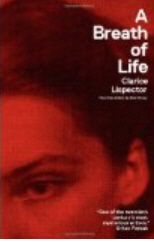
breathoflifeThe late, highly creative Brazilian author Clarice Lispector (“A Breath of Life”) said, “I write as if to save somebody’s life. Probably my own.” Now that’s true of most of us who write. The reader doesn’t care whether we’re crazy as long as they’re getting a wonderful story.

Only you know how your writing ends up the way it does. That’s between you and your muse. Sure, others can help you make it better. They’re called editors and publishers (if you pick the right ones). But when the cows finally come home–and they will–you have to be happy with it because it is a part of you.

If you see magic in the world, don’t let anyone else say that you don’t and turn your novel into something it isn’t. You have to be who you are and let the spirits and spells fall where they may.

–Malcolm


–Malcolm

This post is part of the Magical Realism Blog Hop. About twenty blogs are taking part in the hop. Over three days (29th – 31st July 2015) these blogs will be posting about magical realism. Please take the time to click on the button above to visit sit them and remember that links to the new posts will be added over the three days, so do come back to read more.The button should go live on or after 12:01 a.m. July 29th.


KIndle cover 200x300(1)Malcolm R. Campbell is the author of “Conjure Woman’s Cat,” a magical realism novella folk magic in the Jim Crow era of the Florida Panhandle where granny and her cat take on the Klan.