I’m glad the new public library is open. As the busiest library in the regional system, the Jefferson, Georgia public library needed to get out of its old, cramped facility. The new facility opened June 27 in half of an old grocery store building and the result is a lot of upscale space.
This is where the books in my garage play into the equation. After years of moving stuff from one house to another, my wife and I are downsizing. I’ve already taken about forty sacks of old magazines to the recycling center. But the books–some 15 boxes–aren’t going to be thrown away.
These usually don’t go into the library’s collection. Most are sold by the Friends of the Library group at the annual book sale to help raise money for more programs. Our library will probably have this year’s sale in the fall. Meanwhile, a few books went to the Berry College Library, a couple of boxes went to the library in nearby Talmo, and the rest have been waiting for the Jefferson library to finish moving from the old building to the new building.
In general, I don’t like disposing of books. On the other hand, the place where I’m sitting right now is a home and not a book storage facility. I hope the books find new readers when the next book sale comes along. Needless to say, I’m not going to the sale. I know it’s for a good cause, but seriously, I don’t want to see a thousand books coming back into the garage.
One box went to the library today, but there are more to go in the coming weeks.
“Charles Marion Russell (1864–1926) was many things: consummate Westerner, historian, advocate of the Northern Plains Indians, cowboy, writer, outdoorsman, philosopher, environmentalist, conservationist, and not least, artist.” – Charles M. Russell Museum
Charles M. Russell: Photographing the Legend, by Larry Len Peterson, University of Oklahoma Press (March 20, 2014), 329 pages, photographs
From the Publisher: Almost as familiar as the images of the American West he painted and sculpted is the figure of Charles M. Russell himself. Standing or mounted, in boots and wide-brimmed hat, sash knotted at his waist, gaze steady under a hank of unruly hair: he is the one and only “Cowboy Artist.” What is not so well known is the story that unfolds in the myriad photographs of Russell, pictures that document a remarkable life while also reflecting the evolution of photography and the depiction of the American West at the turn of the twentieth century. This biography makes use of hundreds of images of Russell, many never before published, to explore the role of photography in shaping the artist’s public image and the making and selling of his art. More than that, the book shows how the Cowboy Artist personified what he portrayed.
About the Author: “A two-time Western Heritage Award winner for best art book of the year and recipient of the Scriver Award, Larry Len Peterson is an acknowledged expert on art and art history of the American West. His publications include Charles M. Russell, Legacy (1999); A Most Desperate Situation (2000, 2001); Philip R. Goodwin: America.” – Mountain Press Publishing
If you’re a fan of Charles M. Russell, you’ll find a large selection of his works in the Montana Historical Society Museum in Helena, Montana. According to the society, “This collection (numbering over 200 pieces—24 major oils, 33 major watercolors, 40 pen and inks, 15 original models, 60 bronzes, and 34 illustrated letters) is one of the most significant collections of Russell art anywhere. ” Click here for information about the collection and the society.
Speaking in Forked Tongues, by Brad Gallaway, Signal 8 Press (April 22, 2014), 306 pages
Brad Gallaway’s dark fantasy/horror novel Speaking in Forked Tongues is inventive, delightfully written tale about a young man who calls demons for a living. When folks can’t solve their earthly problems, they contact Helping Hands agency who sends out a caller with an underworld solution. Callers who have been to hell and back multiple times are the best in the business.
While the publisher’s description claims that protagonist “Bren Barran is a normal guy in most ways,” one might ask whether a young man who was adopted by demons, who grew up in hell, and who brings clients and demons together to fix what nobody else can fix can possibly be normal in most ways. Yet, Gallaway makes Barran seem normal, in spite of a predilection for dark, self-deprecating humor.
Unlike poor Faust who sold all of his soul for help from hell, Barran’s clients usually part with a mere sliver, insuring that the demon on call gets what he wants, Barran’s boss Nareth gets what she wants (a cut of the action), the callers get paid and that the happy clients have enough soul left to bring in repeat business.
What could possibly go wrong?
Even though hell is a well-run, ably governed and a relatively safe place quite unlike what we’ve all heard, there’s room there for jealousy and discord. Truth be told, Barran doesn’t think demonkind is any worse than humankind when it comes to bad traits except for the fact demons are physically larger, have claws, and know dangerous (and harmful) spells. So, when Helping Hand’s callers start disappearing and when Barran starts getting attacked on the street, it isn’t long before (seemingly) all hell breaks lose.
There’s a bit of expected gore in this book and a wonderfully tangled plot for Barran to navigate as he tries to solve his agency’s demon problem while staying alive. Naturally, Mom and Dad want to help, but according to the rules, they also have to be paid. The bad guys in this story are really bad and Gallaway makes them seem uncomfortably plausible while leading readers to an ending they won’t see coming.
On a minor note, a warning to parents: The novel’s listing on Amazon claiming that the book is suitable for ages 1 to 17 is either an error or a devilish promotional trick. Teens and adults of all ages can probably stand the heat, while enjoying the trip.
Jock Stewart Strikes Back by Malcolm R. Campbell –Now Available Audio, Print and All Ebook Editions!
Jock Stewart Strikes Back
by Malcolm E. Campbell
Since modern-day journalism is going to hell in a hand basket and/or nowhere fast, Jock Stewart strikes back by categorizing news events as satirical, outlandish, strange or political. Nonetheless, according to informed sources, the use of this volume as a journalism textbook has not been authorized anywhere the world is right as rain.
The fictional news stories and “Night Beat” editorial columns in this collection began as posts on the “Morning Satirical News” weblog and subsequently appeared in the Worst of Jock Stewart and/or the “Jock Talks” series of e-books. Jock Talks…Politics was a 2013 Pushcart Prize nominee.
Stewart, who served diligently as the protagonist in Jock Stewart and the Missing Sea of Fire, refutes charges that he was raised by alligators or hyenas. When he was a young boy, his dear old daddy said, “Jock, everyone but you and me is scum and I’m not sure about you.”
That proverb opened Jock’s eyes to the realities of the world, primarily that everything is worse than it seems: the small-town newspaper, the Star-Gazer, is allegedly run by fools and buffoons; the Junction City, Texas, government is allegedly corrupt and inept.
Production Notes
Jock Stewart Strikes Back is narrated and produced by Barry Newman, Florida. Barry’s career in media and journalism, including voice work in radio and TV commercials, lends a unique ‘Jock-ness’ to the production, and we look forward to working with him again in the future.
I’m a disorganized writer. My den, and especially my book shelves, is a mess. When my publisher sends me free author’s copies of my books and/or I order books for gifts, reviewers and book signings, I often order more copies without checking to see how many I already have. Extra copies are everywhere.
Here’s my solution. The following is a list of extra copies of some of the books I’ve written. All of them are available on Amazon, Smashwords and OmniLit so you can check them out. If you decide you would like a copy mailed to you (continental U.S.), you can have one at no charge. Limit is one per person on a first-come, first served basis.
With the exception of the last item on the list, all of these are from Vanilla Heart Publishing.
If you would like a copy, send me an e-mail with the title of the book you want, your mailing address and whether or not you want the copy signed. If you have a second or third choice, include those titles in case somebody else gets to your first choice before you do.
Send the e-mails to me at malcolmrcampbell [at] yahoo [dot] com.
Offer expires May 30, 2014
Titles and Copies Available
Emily’s Stories (three short stories set in north Florida) – 1 copy
The Seeker (magical realism with fantasy elements) – 4 copies
The Sailor (magical realism with fantasy elements) – 3 copies
Jock Stewart and the Missing Sea of Fire (comedy/mystery, original cover) – 2 copies
The Sun Singer (fantasy) – 3 copies
The Sun Singer (fantasy, iUniverse edition; same as VHP edition except that it blurs the real locations used in the story) – 2 copies
If you find anything that sounds like your cup of tea, e-mail me and I’ll send it to you. There’s no obligation, but if you love it, an Amazon review would be nice.
On Connectedness: Music of Sacred Lakes, A Redemptive Ghost Story
“I don’t belong anywhere.”
For some people, especially in the western world today, this is a common and nagging feeling, sometimes even with catastrophic results for a life. And this is the problem that, even while striking him as trivial and self-centered, is wrecking the life of Peter Sanskevicz, the young protagonist of. He can’t accept the sixth-generation family farm from his parents, can’t continue serving “fudgies,” tourists in Northern Michigan who feel more at home than he does–and then, Peter accidentally kills a girl. Seeing his life is at risk, Peter’s friend takes him to his uncle, a pipe carrier of the Odawa tribe, who tells him he has lost his connection with the land and must live by the shores of Lake Michigan until the lake speaks to him.
But what does that mean? How does a lake speak? What is this connection Peter, and many people in the modern world today, have lost? Why does it matter?
Connectedness & Belonging
When I started researching Music of Sacred Lakes, I had just come through a very difficult time in my life, in which religion still seemed very important but I was realizing the shortcomings of the faith of my upbringing. There was a big disconnect between what the people who raised me in church had said and what they did to help the world. There was an even bigger disconnect between what they said God thought of them and how they seemed to really feel about their place in the world.
Novel’s Lake Michigan Setting
I set out to find out if I could live a life that honored God’s good creation and that left a place for me in that world. Surely people couldn’t really believe that the world was a beautiful creation of God and then fill it with trash and let it be destroyed by greedy corporations.
Surely I could find a way to live my faith that didn’t leave me miserable and condemned, being told simultaneously that I was saved by grace and that I had to have the exact right ideas about God in order to get to heaven (Pope Francis has a few things to say about that, I’ve discovered since). And even more importantly, I was discovering that this 20th-century idea of man being separate from the world–standing outside it and looking in—didn’t make any sense.
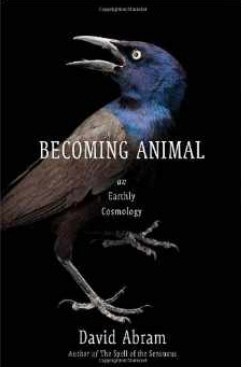
I was seeing statements everywhere as I researched this novel of belonging that really hooked me. To paraphrase from the book Becoming Animal, I stand in the earth, not on top of it. I am within the biosphere, the atmosphere, and am breathing this air in and out. How then can I say I am set apart from this creation? If this atmosphere disappears, I die instantly. As I breathe in and out, exchanging matter with this world around me, I am a part of it, and it is a part of me.
That, and all the wisdom texts and physics books I was reading on the nature of matter and energy and the universe, which stated that matter is best understood as notes on a scale that vibrate at different frequencies to manifest as different kinds of substance (superstring theory) and that all these strings are connected across a vast network through the universe so that everything is connected to everything else (M Field Theory)—really clinched it for me. This modernist idea of man being separate, objective, different from the rest of the universe–it wasn’t true at all. And that had big implications–HUGE–for my faith, for the way I viewed the world, for the way I approached my faith.
To top it off, the mystics all agreed. The Oglala Lakota Sioux chief Black Elk once said that he had a vision of the mountain (The Black Hills) and the mountain was the center of the world, and the mountain was everywhere. This kind of statement has a way of cropping up in multiple religions, throughout the history of spiritual thought. It’s in Buddhism. It’s in Christianity, too, believe it or not. It even pops up in the Sufi streams of Islam.
Odawa Website
I followed the rabbit hole down to postmodernism, to the wisdom traditions of the past that never lost connection with the world, to spiritual paths that honored the earth, and discovered that my own western modern iteration of faith had simply lost this important piece of wisdom, but that there were other cultures, Odawa and Ojibwe Native American being one in my own back yard, that had held on to this wisdom to bring it back to my generation. To say I was humbled, and in awe, and blessed by this, would be an understatement. And all this without ever leaving my own religion, Christianity. Mind boggling.
So what is it to discover that you can be a Christian and honor the wisdom of other people, without blending anyone’s faiths? What is it to discover that you belong in the world, and that, to finally quote a Christian mystic for once, “All will be well and all will be well and all manner of things will be well”? If you want to know what it is to discover that this question of belonging and the way we treat the earth are connected, read this story. I think if any of this post resonates with you, that ache that says there must me something more to life that you’re missing, something to your life that makes more sense than the daily grind, you will like Music of Sacred Lakes a great deal. You will discover connectedness, and as usual in life, this can come through the most unexpected of places: a story, a ghost, and a boy reconnecting with his faith through Lake Michigan.
–
In addition to her website, you can connect with Laura K. Cowan, The Dreaming Novelist, on Twitter or on Facebook.
Years ago, as a park ranger in Yellowstone, Alan Leftridge loved sharing his passion for the outdoors with other people.
“Seeing the excitement and enthusiasm on a visitor’s face is its own reward,” Leftridge says. “They come to a park asking ‘what is there to see and do?’ and you can see the anticipation build as you describe the natural wonders awaiting them. It’s the best part of the job.”
Now Leftridge has channeled that passion into Farcountry Press’ newest release, The Best of Yellowstone National Park ($19.95, Farcountry Press, 2014).
“As the world’s first national park, Yellowstone is a land of superlatives,” he says. “The park is home to the world’s largest collection of geothermal features, including geysers, mudpots, hot springs, and fumaroles. There are stunning wildflower displays, grizzly bears, wolves, bison, and elk, and wonderful hiking trails. It’s easy to share my excitement for such a spectacular place.”
From his home in Montana’s Swan Valley, Leftridge regularly ventures onto Yellowstone’s trails, photographing wildflowers, watching wildlife, and easing into the serenity of the mountains.
Leftridge says, “Over the years, I’ve spent many hours exploring Yellowstone. I wanted this book to read like an insider’s guide, as though a trusted friend was divulging all the best things to see and do in the park.”
The book describes the best day hikes, nature trails, backpack trips, boat tours, flora and fauna, historic sites, and more. There are sections on the best activities for kids and the best ways to spend a rainy (or snowy) day. Also included are the best cross-country ski trails and other activities for winter visitors.
In addition to his contemporary fantasy set in Glacier National Park, Malcolm R. Campbell is the author of the collection of humorous stores “Jock Stewart Strikes Back.”
“Life is crap and the weather is stupid-hot: reasons enough for four small-town Southern women to plan ‘the easy way out,’” the publisher’s description for Suicide Supper Club informs us. Rhett DeVane (“Cathead Crazy”) brings her trademark sparkling prose and deep insights into human nature to this story of the darkness and light in the lives of Abby, Loiscell, Sheila and “Choo-choo.”
Truth be told, the light is in short supply.
The lives of these kindred spirits play out in the Florida Panhandle between Chattahoochee, a small town with a main street dominated by a mental institution, and Tallahassee, the state capital, 44 miles away. Most of the festering family secrets, declining health, estrangement and physical abuse live and breathe in Chattahoochee for Abby, Loiscell, Sheila and Choo-choo. Tallahassee is for shopping, fine dining, cancer treatments and a prospective appointment with a hit man.
Suicide and humor are usually mutually exclusive worlds. But they seamlessly merge through DeVane’s inventive plot, fully realized characters, knowledge of Southern life and customs, and sense of place. Readers cannot help but feel the characters’ reactions to the darkness in their lives and, quite possibly, understand the rationale for a suicide supper club.
The light in Suicide Supper Club comes from the great love and esteem the four women have for each other and the ways they find for coping with the Florida heat and the crap. I grew up in the Florida panhandle, so it was easy for me to see near the beginning of this novel that when it comes to Chattahoochee and Tallahassee and the people who live there, Rhett DeVane gets it right.
You’ll see that, too, long before you reach the last page and learn whether or not Abby, Loiscell, Sheila and Choo-choo are still among the living.
“Events are not things that happen to you. They are materialized experiences formed by you, according to your expectations and beliefs.” – Seth via Jane Roberts
NOTE: Over the years, Seth Mullins and I have discussed in various blogs and e-mails our affinity for the metaphysical information from the entity known as Seth who was channeled by Jane Roberts between 1963 and 1984 and subsequently chronicled in a series of books beginning with The Seth Material in 1970 (republished in 2011). Seth Mullins has previously explored spirituality, dreams and reality in Song of an Untamed Land and Song of the Twice Born while I have explored similar themes in my novels.
I hadn’t heard from him in some time when I received an e-mail asking my current address so he could send me a copy of his new novel What Casts a Shadow? (January, 2014). He said that, among other things, the novel was an exploration of Seth’s view of reality in a contemporary story. Yes, there are multiple Seths here, but the one in Italics refers to the Seth as channeled by Jane Roberts and the Seth without the Italics refers to the author of this inventive novel.
What Casts a Shadow?
While the Seth material channeled by Jane Roberts was immensely popular during the 1970s and 1980s and continues to have a wide following today, my experience is that rather than feeling empowered by the phrase “you create your own reality,” a fair number of people fear and/or angrily reject the idea. For one thing, the idea doesn’t appear to make logical sense. Otherwise, people say either “if I create my own reality, why is my life filled with so many disappointments?” or “my thoughts must be totally screwed up to have created what I’m experiencing.” People had a similar reaction to ideas about “the law of attraction” as presented in The Secret and other books.
Seth Mullins’ protagonist Brandon Chane in What Casts a Shadow? has similar reactions when a psychologist suggests that the “world out there” isn’t out there. After Brandon’s mother died, he was stuck living with a drunken and abusive father who believes neither Brandon nor his new heavy metal rock band will ever amount to anything.
After his father lashes out at him prior to a performance, Brandon thinks: “My world is painted black; my entire inner landscape is barren. All the roads in my head lead to horrific ends. At the bleakest margins of this particular attack, I didn’t even care about the gig. I wanted nothing but oblivion.”
Mullins’ three-dimensional character is in many ways symbolic of creative people who want to express their unique visions of life through art, music, writing and other avenues but simultaneously believe that the world (or fate) is against them. Brandon and his best friend Tommy want to translate their feelings into their music; their music, they hope, will be their salvation.
Brandon reacts to the slings and arrows in his life with violence. Physical fights seem justified and bring release. Writing songs and performing them in front of an audience also bring release, but at the beginning of What Casts a Shadow? the songs aren’t as potent as knocking somebody down.
After a confrontation that involves the police and an interview with a consulting psychologist at the police station, Brandon ends up on Saul’s doorstep. Saul is a licensed therapist who believes individuals create their own reality.
Saul is a “new age” guru with a more or less conventional counseling approach. That is, he doesn’t sell guided-meditation CDs, lead drumming groups in the woods or ask his patients to recite affirmations. Instead, he asks Brandon to see his beliefs as beliefs rather than as facts and to compare his experiences with the states of mind leading up to them.
Mullins has created a protagonist that readers can easily identify with who has dreams that are running afoul of a seemingly apathetic world with bad people in it. Other than Saul’s active listening, Brandon will find clues that he might not be not doomed and worthless: Tommy understands him, his younger sister trusts him, the girl he meets doesn’t run away from him, and the music is evolving. Yet, his violence and anger feel so natural and justified!
Transformation and “success” in Brandon’s world will not come from a magic spell, a miracle drug or the intervention of a benevolent spirit guide. He will have to slog it out like we all do, day by day, doubt doubt, and reaction by reaction. What Casts a Shadow? will pull both open minded and skeptical readers into its story because that story mirrors so much of today’s world.
“Several studies have shown that when you buy from an independent, locally owned business, rather than a nationally owned businesses, significantly more of your money is used to make purchases from other local businesses, service providers and farms — continuing to strengthen the economic base of the community.” – Sustainable Connections
An online friend of mine is being forced to close her bookstore. One of the unfortunate aspects of this is the disappearance of a venue for local authors.
Bookstores, of course, are struggling as e-books grab a larger share of the readership. Some stores have tried to counter this by installing Espresso Book Machines that will print any POD book within a few minutes. For the store, this isn’t cheap. Other stores are teaming up with providers to offer e-books.
Several years ago, the New Yorker Magazine published a cartoon showing a downtown merchant taking the delivery of books from Amazon even though there was a bookstore right next door.
Why has it come to this? Why has it become easier to order from Amazon and wait a day or two for the book to arrive rather than driving 15 minutes to the nearest store?
Some people don’t have time to drive to the bookstore, and they argue that it takes less time to order an Amazon book that will arrive on their doorstep than it does to drive. Perhaps so. Other readers say that Amazon offers bigger discounts and–when the orders are large enough–free shipping.
Perhaps we’ve become so isolated from our friends, neighbors and local business people that we see no reason to support them by buying local. Are we so in love with celebrity authors that every book we buy has to be a mega-bestseller rather than a lesser-known book written by somebody who
Click on graphic to learn more
lives near us who’s placed that book on consignment at the bookstore down town?
Seriously, is Amazon really cheaper? The book itself might be, especially in those states where Amazon isn’t paying sales taxes. Buying local supports local schools, public works, related businesses, and provides jobs. It helps the economy. Buying from Amazon, hurts the local economy because it gives nothing back to it.
Newspapers have long known the proverb: Nearest, dearest. That is, people tend to care about local news, especially when if impacts them in some way. I wish we were applying this proverb to local businesses and local authors, giving them our support before helping Amazon and faraway authors first.
We can use the IndieBound store finder to find bookstores near us. Maybe we’ll be driving past one on the way to see a movie, buy groceries or stop at the hardware store. Why not stop for a few minutes and see what they have to offer?
Malcolm R. Campbell is the author of the mystery/comedy “Jock Stewart and the Missing Sea of Fire.” In Commerce Georgia, you’ll find my paperback books at the Bookstand of Northeast Georgia.
 I’m glad the new public library is open. As the busiest library in the regional system, the Jefferson, Georgia public library needed to get out of its old, cramped facility. The new facility opened June 27 in half of an old grocery store building and the result is a lot of upscale space.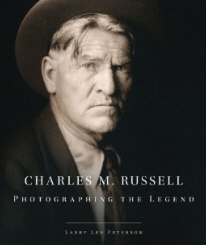






 Malcolm's Round Table