When does the research for a novel get out of hand?

If you’ve been reading my posts for a long time, you know I take issue with fiction that spends a lot of time teaching its readers something rather than telling a story. In different ways, The Da Vinci Code and the Celestine Prophecy are examples of this. Actually, I enjoyed both books–probably because I liked the messages. I’ve also like Katherine Neville, whose 1988 novel The Eight more or less introduced the heavy-on-teaching/mystery-thriller/ancient-secrets approach to fiction that Brown, Raymond Khoury, and others have used  in a fair number of other novels. When one finds the secret and/or the message fascinating, it’s easy to forgive the fact that these novels have too much lecturing in them.

researchFor the rest of us, our research gets out of hand when we become so fascinated by it, that we left it take over our fiction–presumably, this happens when think our readers will love that research as much as we do or when we’re just sloppy.

Before I write, my research always gets out of hand, as others see it, because I insist on knowing a lot more about the novels’ subject matter, location, and characters than I can possibly use. My conjure-related, blues-related, and other historical notes for Conjure Woman’s Cat and Eulalie and Washerwoman are longer than the combined word count of the books.

I do this because I want to internalize the information so that whenever and wherever it’s needed in the story, it naturally appears there without seeming to intrude. In “real life,” most of us act in accordance with our views and beliefs without the need for a Dan Brown-style lecture in the middle of an event that explains to others who are there why we’re doing what we’re doing.  I do too much research because I want the result of it to be a correct novel that doesn’t have to tell the readers why it’s a correct novel insofar as, say, conjure or the blues or the Florida piney woods go.

One never wants a reviewer to say “the research shows” about a book. When it does, it’s gotten out of hand.

One thing one learns when writing nonfiction is that the more often one quotes other people (other than in research papers where you have to do it), the less one understands the material. If you understand it, you don’t need to tell it through others’ words. I believe the same thing about research and the novel. If you have to keep pasting in globs of research, then you probably don’t understand your own subjects, locations and characters well enough to just tell the story.

Yes, it’s easy to say a little too much here and a little too much there and only realize later (probably after the book has been printed and it’s too late to change it) that while correct facts and ambiance are important, they need to support the story and the story’s wont to be continuously moving forward. Right now, my research for an upcoming novel is almost out of hand because I’m fascinated with the subject matter and could just as well keep reading about it if I don’t admit that–past a point–I’m delaying writing the book rather than creatively getting ready to write the book.

So, it’s almost time to stop and to let what I’ve learned become a part of me. Only then will it help the story. Just a few more pages to read, and then I’ll start writing, oh and just quickly check another book or two, yeah, right, that’s my story and I’m sticking to it.

–Malcolm

To learn more about my two conjure novels, read my spooky web page. 


Tarot cards after all these years

“Tarot reading is an excellent way to learn more about one’s self, have a closer look at your inner self or to examine your very own intentions and ambitions.”

Raven’s Tarot Site

I’ve been tinkering with the I Ching and the Tarot since I was in high school. I don’t do readings for other people. In fact, most people don’t know that I know anything about these divination systems because once they know, they walk on the other side of the street whenever they see you.

knightofswordsI was happy that C. LaVielle contributed a Tarot and storytelling guest post on January 11th because she focused one of the reasons I like both the I Ching and the Tarot: understanding the characters in my stories.
Like Joseph Campbell’s Hero’s Journey, both the I Ching and the Tarot present ways of looking at the world. The Tarot, of course, is closely linked to the Tree of Life of the Kabbalists.  The future isn’t fixed. At least I don’t think it is. So I don’t use any of these ways of looking at the world for predicting the future. In fact, they tell me what I know that I don’t know that I know. That is to say, they tell me what the unconscious part of me knows to be true even though the conscious part of me hasn’t figured it out yet.

My sun sign is Leo and the card representing me in the Tarot is the Knight of Swords (called King of Swords in most decks). This is why the URL for this site includes “knight of swords.” When I do Tarot readings for myself, the knight is me. When I do readings about novels I’m writing, the knight is always the logic of the story, cruel at times, to be sure, but nonetheless the fiery part of air as the card is described.

As a character in one of my novels said, he doesn’t want to see the future because that would spoil the surprise. It would also impact what he (or any of us) choose to do right now. Our power is always in the now. I see that, but the characters in my stories don’t always notice it. Plus, seeing the future would give us the false idea the whole shebang out there is engraved in stone when, actually, nothing except epitaphs are engraved in stone.

As a knight of swords, I’m a trickster (among other things), so that means I’m always stirring things up. That’s one reason I write fiction–to stir things up. That’s also why I like my Tarot deck: it shows me that even when I don’t consciously know I’m doing it, I’m stirring things up–and creating ideas that I let other people carry out to completion after I’ve wandered off to something new.

I see this as the author’s first duty–sowing seeds, suggesting things that bother people while making them think, suggesting that things aren’t what they appear to be, telling people that whatever goes bump in the night is real, finding the story inside everything that happens.

It’s one hell of a thing to do, but somebody’s got to do it. Fortunately, my Tarot deck “advises me” when it’s time to step back before the mob shows up on my door step.

–Malcolm

Revising and rewriting old books

Looking at the older drafts of my book and short story manuscripts is similar to going down into the Grand Canyon and seeing the strata of past eras stacked up like cord wood.

Every revision of a book came at a different era of my life, eras that no longer represent the focus of my thinking in the present. Same story, of course, just as I’m still the “me” of ten or twenty years ago. But the ambiance is different. The emotions change, too, depending on whether I was angry about something similar to an event in the novel or, some years later, felt more mellow about it.

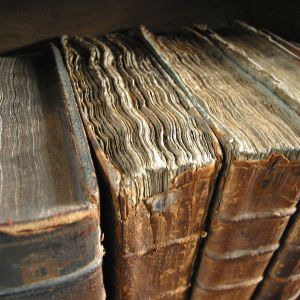
oldbookI’m reworking an old novel now that has gone out of print. I’m surprised by some of the things I find: (a) Wow, did I write that? (b) Crap, why the hell did I say that? (c) I don’t remember this scene at all.

I try never to change the basic story, but tend to polish a little here and clarify the meaning a little there. Of course, Amazon keeps everything, including books that came and went years ago and haven’t been in print for years. So, if I get this book fixed up the way I want it, there will be an author’s note at the beginning that tells readers the names of previous versions. (I’m not into the romance authors’ ploy of releasing old stories with new names and/or new covers so that readers buy them without realizing they read the things 20 years ago.)

Self discovery

A writer’s journey down into the depths of his older work shows him (hopefully) that he’s writing better stories today than he wrote when he first started out. Most of my really old stuff never gets revised! The work also shows him where he might have slipped in recent years as though he forgot about some of his better techniques. He sees changes in himself as well, for the work–as Virginia Woolf wrote in Orlando, “Every secret of a writer’s soul, every experience of his life, every quality of his mind is written large in his works.”

If you’ve ever come across a diary you kept years ago or the saved letters you wrote to an old friend or family member who’s since passed on, you know what I’m talking about. No matter how careful or flippant or circumspect you were, your secrets are still there–the secrets about yourself as you were then, whenever you wrote what you wrote. What a strange and eerie way to re-discover the selves we thought we’d outgrown and buried in the past.

I see all this when revise or rewrite old books. In some ways it’s a blessing, and it some way’s it’s not.

–Malcolm

If you love magical realism, Florida, conjure or a bit of mystery, I invite you to discover my two folk magic novels, “Conjure Woman’s Cat” and “Eulalie and Washerwoman.” 


This and That from, well, me

coracoverYes, I’m the guy behind the curtain of this blog. Seemed like it was time for a books update:

  • Two more of my e-books are being translated into Italian, “Cora’s Crossing” and “Moonlight and Ghosts.” Meanwhile, we’be found a translator to create a Spanish edition of “Sarabande.”
  • The sequel to “Conjure Woman’s Cat,” “Eulalie and Washerwoman” is now on the editor’s desk. (uh oh) I’ve seen a partial version of the cover art and it’s looking good. It’s being done by the by the same artist who did the cover art for the first book.
  • For years, I’ve put off writing the third book in the Mountain Journeys Series that begins with “The Sun Singer” and then moves forward with “Sarabande.” Don’t laugh, but I didn’t start it sooner because the protagonist knows more about magic than I do, and I thought, “Well, Malcolm, how in the hell are you going to write this book.” I thought about faking it, but that seems wrong. The book’s name will be “Aeon.” Shhh, my publisher doesn’t know about it yet.
  • My review of “A Girl is a Half-Formed Thing,” which I posted here recently, also appears on Literary Aficionado. Nice to show up on that site again! It’s been a while.
  • Have you seen this article: How Long Until a Robot Wins the Pulitzer? I don’t think it will happen for a year or two. What about you?
  • Since this is banned books week, let’s end with a quote about it: “I urge everyone to celebrate Banned Books Week by picking up a book that some closed-minded person out there wanted desperately to keep out of your hands.” – Jessica Herthel
  • If any of my books are banned, I’ll be really ticked off and might even use some profanity.

Malcolm

Why or Why Not?

“I read a piece in Marie Claire titled “I Published My Debut Novel to Critical Acclaim – and Then I Promptly Went Broke.” And I caught my head nodding in agreement with the writer. http://www.marieclaire.com/career-advice/features/a22573/merritt-tierce-love-me-back-writing-and-money/

“About once a year I find myself at a crossroad in my writing. I love freelancing, and Funds for Writers, and novel writing. I wish I could do just one of them, but the fact is these days you cannot just do one. You must diversify and spread your name (and talent) around to reach all the pockets of readers out there. It takes diversification to earn a living.” – Author Hope Clark

You would think, wouldn’t you, that if an agent accepts your novel, sells it to a big New York publisher, and the book becomes a bestseller, you’d be ready to work as a full-time author of fiction everybody wants to read. Hope Clark and I read the same article and, as she said in today’s newsletter, she does several things to maintain her income even though she wishes she could pick one of those things and work on it full time.

One way or the other, we need to ask how we can diversify and make it all work. A lot of writers teach. That’s their full-time job and, like most regular jobs, it provides the health insurance and other benefits. Well known writers can make money with speaking engagements. Others work for magazines, newspapers, corporate public relations departments, and other places who need writers. Many, of course, work full-time at some a job totally unrelated to their fiction.

If you have a family, your time is even more limited whether the children are in pre-K and grade school or are in high school or college. Having a family is a joy, if it’s meant for you, but it also carries a lot of time-consuming responsibilities. If you’re working full-time and then coming home to maintain a household and chauffeur your kids around to activities, your writing time during most weeks might be slim to none.

I worked as a technical writer, a job that’s not so much in demand any more. What I liked about it was that–except when my company was kicking off a new software package–the job seldom required overtime hours. On the other hand, when I worked in corporate communications, I always had to contend with deadlines that extended my working hours, or that involved after-work activities.

When a full-time job and one’s family take up most of one’s time, it’s very easy for the writing to fade away. For one thing, assuming you publish anything, it’s probably not going to bring in enough money to justify spending multiple hours a week away from your other chores. So, if you want to write books, the challenge is discovering why you want to and how to manage those reasons into why you want to (or have to) do the other things on your plate.

Simplistically, keeping up with fiction writing often means staying home when everyone you know is at a party, ball game, concert or outing at the park. It probably means that when the fall TV schedule begins, you won’t be able to watch all the new shows. So what are you going to do? Watch this season of “Survivor,” “How to Get Away with Murder,” and “Grey’s Anatomy,” or slog it out on a novel a few hundred words per evening? And, as most writers discover early in their marriages, the spouse is likely to be unhappy if you sequester yourself in your den every night instead of doing something together whether that’s watching a favor TV show or cleaning out the garage.

So, why are you writing? Perhaps wanting to write isn’t quite enough. Yes, I know, a lot of writers say during their first interview, “I always wanted to be a writer.” When they first started feeling that way, they probably thought they’d pay their dues by writing for pennies, then nickles, then dollars, and then ultimately have an agent and a big publisher behind them helping ensure a steady income. This is like every kid who plays sandlot baseball thinking they’re going to be accepted by a major league ball club. Chances are slim to almost none.

Maybe we don’t know why we write. We just do it because we have to. Okay, that might be enough as long as we understand the realities of the money side of this business. Or, perhaps you have a more complex reason and that lends itself to your involvement in multiple kinds of writing in addition to novels, or in work in businesses and groups that relate to the WHY of your writing–justice, the environment, law, politics. Perhaps that WHY is the foundation for a diversified income that fits hand-in-glove with the time required for writing.

Let’s hope we all find what that WHY is so that we can make our careers work.

–Malcolm


Conjure: why those frizzle chickens are handy

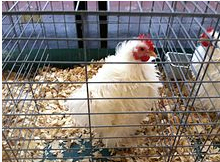
“The Frizzle is a breed of chicken with characteristic curled or frizzled plumage. While the frizzle gene can be seen in many breeds, such as thePekin and Polish, the Frizzle is recognized as a distinct breed in a number of European countries and Australia. In the United States frizzled chickens are not considered a breed, and at shows are judged by the standards of the breed they belong to.” – Wikipedia

Unless one keeps chickens or attends 4-H competitions, most of us will probably never see a chicken with frizzled (curled) plumage, what one blogger calls the “divas of the chicken world.” However, if you’re researching hoodoo for your books–as I have been–it’s amazing what you learn about all kinds of things that are indirectly related to your subject.

So, how would chickens help a conjurer?

Frizzle chicken - Wiipedia photo
Frizzle chicken – Wikipedia photo

First, conjure includes what’s often generically referred to as foot track magic, tricks (hexes) that are placed on the ground in order to keep away or send away people who might walk through them or over them; they are also used as one of the many techniques that can protect one’s own property.

Second, the best defense is a good offense, so if you’re a conjurer, you want your property protected so that others can’t come on it while you’re asleep or away and place tricks on the normal pathways use use to come and go, walk to the potting shed or garden, or gather eggs from your own chickens.

If your chickens aren’t confined in a coop, what do you see them doing on the property? They’re constantly scratching the soil looking for something to eat. If they scratch through a hex sign, for example, they destroy it. According to some conjurers, black frizzle hens are a very good defense against anything a rival did to your property if they find a way to get onto it without your own magic turning them away.

As the very handy Lucky Mojo site puts it, “The backwards curling of the frizzled feathers on these birds is seen as a natural expression of their ability to undo bad work that has been laid down to walk over. Frizzles come in all the usual chicken colours and patterns, but since black hens are the birds most often used to scratch up evil powders in the yard, it follows that a black Frizzled hen would be the best possible bird in the world for that purpose. As with the black cat, also much admired and much feared in hoodoo work, a black Frizzle hen’s dangerous associations with the infernal can be parlayed by a deft root doctor into a powerful tool for undoing and reversing evil and uncrossing clients..”

If you’re working evil, you’ll find the eggs from black hens very effective, but that’s another story. If you want the chickens for style, you should know that their plumage doesn’t offer as much protection against rain and cold weather as flat feathers. Keep them in a sheltered place during bad weather.

–Malcolm

Malcolm R. Campbell is the author of the hoodoo novel “Conjure Woman’s Cat,” available at major booksellers in paperback, e-book and audiobook.


When magic creates the ride, all the writer can do is hang on

“A bit of advice
Given to a young Native American
At the time of his initiation:
As you go the way of life,
You will see a great chasm. Jump.
It is not as wide as you think.”
― Joseph Campbell


Magic is like drugs. However, once you let it take over, you’re not lost. You are found. Logic, the more addictive drug, will become your greatest trap because, like an old bad habit, it works on you, makes you think that magic is a a delusional part of your unconscious that’s escaped into your mind like devils, makes you doubt yourself.

magicbookWhenever I run back to logic, I stop writing. I stop writing because logic tells me loud and clear that hanging on to a magic carpet as my fingers type words on the screen is no way to write a book. It’s illogical. One must plot and plan and outline the who shebang from beginning to end. Yes, that makes sense. The thing is, I don’t know the story I’m telling until I’m telling it, and then all I know is what happens next.

When logic gets a hold of me, I’m scared to write: I don’t think I can do it because I don’t know how I do it. As I mentioned in my last post, we create our own reality. So, we meditate, play around with the law of attraction, go on shamanic journeys, repeat affirmations and cast spells, but how quickly that can fade in the chilling light of day when the car won’t start or your spouse is sick or the man you hired to build a fence around part of your property hasn’t shown up for six weeks or the trees in your yard of dying for lack of rain. Where’s the magic now?

Logic breeds on itself. The more I think I need it, the more I use it, doubting myself more and more in the process.  Sooner or later, I say to hell with that and jump the growing chasm of doubt. The rains come, the fence gets built, my wife gets well, and the words flow.

Some say magic gives the practitioner more control. I suppose if one thinks of magic is the wizards in the Harry Potter books hurling never-fail spells across the room, then perhaps it does. But there’s a paradox here. Exerting control is logical thinking. To live and write by magic means surrendering to the greater part of oneself and the universe and one understanding that the less one pushes, the smoother the ride.

A couple of days ago, I used the word “epitaph” in a figurative way in my work in progress. The moment I did it, I knew it wasn’t figurative at all. Magic knew where it was going before I did and logically it made so sense to go there. After resisting that idea for two days, I saw I had no choice but too get out of the way of the story in the same kinds of ways our greater selves ask us to step out of the way of the directions our lives are meant to go.

MRbloghop2016Too much logic ensures it’s going to be a bumpy ride.


When I was in the navy, I often heard the proverb “Smooth seas don’t make good sailors.” Maybe we need a few of those hard knocks of life to finally understand we’re going about it all wrong and start seriously looking for a better way.

I think I ran through every pothole the universe had to offer until I realized I was gripping the wheel as though my life and art depended on it. Early in life, we often become brainwashed into thinking we need to grip that wheel the way we do.

Whenever writer’s block looms  large before me, I remind myself to let go while I write. My hope is that my readers will let go while they read.

–Malcolm

Malcolm R. Campbell is the author of the magical realism novella “Conjure Woman’s Cat,” available in paperback, e-book and audiobook.

This post is part of the Magic Realism Blog Hop. About twenty blogs are taking part in the hop. Over three days (29th – 31st July 2016) these blogs will be posting about magic realism. Please take the time to click on the frog button for a list of other blogs in the hop. Links to the new posts will be added over the three days, so do come back to read more.

Wow, almost 100,000 views for this blog

roundtablelogo

Aw shucks, folks, thanks for all the visits and for putting up with the fact I haven’t felt the need to place this blog squarely in one niche or another.

  • The all-time favorite post is: The Bare-bones structure of a fairy tale. Even though that post is a little over two years old, it still out performs every new post from week to week. I have no idea why, but at over 7,000 views, it’s well ahead of the rest of my 1,065 of posts since 2007.
  • The second most popular post is: Heave Out and Trice Up. This, I understand. A lot of people search for the meanings of navy jargon and slang, most especially what “heave out and trice up” actually means. This post was written in 2010 and still gets hits every week.

I’ve done a lot of reviews on this site, a few author interviews from time to time and talked about writing (including my own). Those posts are in the majority. However, when north Florida’s notorious Dozier School was in the news, my 2012 post about the White House Boys got a lot of hits. So did my 2013 (and frequently updated) post about the fate of the aircraft carrier USS Ranger that was scrapped rather than turned into a museum.

Since my books are mostly set in Montana’s Glacier National Park and the Florida Panhandle, I’ve written posts about my stories’ settings. Those get more hits over time than they do on the day they appear. I’m glad you find them whenever you find them.

I’ve appreciated your comments over the years as well. One never knows what people will say. I do know it takes time for you to write them.

Want a chance at a free Kindle Fire?

For those of you who’ve enjoyed reading my books and short stories, I want to mention that my publisher is starting a newsletter. I hope you’ll sign up. It’s free. Better yet, one subscriber will receive a free Kindle Fire Tablet. Deadline is 16 days from now. Click here to subscribe and enter the random drawing for the Kindle.

As for heaving and tricing

Now, for those of you who are curious about heave out and trice up, it has nothing to do with throwing up while seasick or drunk. I don’t know if navy ships still use the phrase as a wake-up call over the ship’s public address system. It means get up and raise your bunk (rack) or hammock up away from the floor (deck) so that the compartment cleaners can sweep out your berthing (sleeping, not having babies) area.

–Malcolm

Malcolm R. Campbell writes magical realism, contemporary fantasy and paranormal novels and short stories.


How does your worldview influence your writing?

When you read a hard-as-nails police or espionage novel, do you wonder about the worldview of the author? Do you assume s/he’s politically conservative, possibly career law enforcement or military, and/or heavily interested in weapons, military strategy, law and order issues and personal and national security?

When you read a novel about people coming of age, discovering themselves in hero’s journey styled stories, or finding love among the ruins, do you wonder if the author is writing out of his or her own philosophy of life and “the big picture”? Do you assume s/he is politically liberal, possibly a teacher or a psychologist, and/or heavily interested in social programs, personal and religious freedom and a lifetime of learning?

I’m not sure we should make these assumptions. If we do, we might be surprised how often an author writes “against typecasting.”

worldviewOn the other hand, many of us write short stories and novels that are heavily influenced by our “philosophy of life” or our view of the universe and an individual’s place within it. When I read a page-turning espionage novel and marvel at the author’s knowledge of weapons and tactics, I see quite clearly that I could never write such a book. I have no experience with military weapons and have never been drawn to study them, much less to form a clear picture about their technical differences or what it would be like to use them in a real world situation.
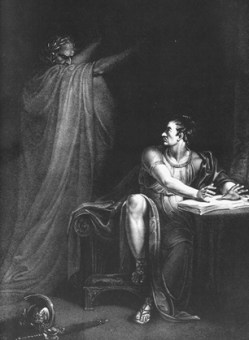

On the other hand, when I read a magical realism novel I assume that the author has an affinity for the magic and the stories generally associated with the time and place in which the story is set. A good researcher can find out what myths and legends might apply to a town or a region. But blending those into a story probably requires a sense of magic just as a spy novel often requires its author to have a sense of weapons and combat situations.

Perhaps somebody has written a doctoral dissertation or a definitive book about stories and the authors who tell them. Perhaps there’s research out there that shows the connections (or lack of connections) between authors’ books and authors’ political/philosophical/religious beliefs.

Personally, I see writing within–or somewhat within–one’s worldview as another way of writing what you know. Expediently, it’s a practical approach because in general terms, our worldview is our comfort zone. We know more about how situations within that view might unfold and how characters embracing our attacking that worldview might develop, react and think. Some (perhaps many) authors might refute this idea by showing how they have been a chameleon–so to speak–by writing books that contrast so greatly with each other that readers could only conclude that they have no worldview at all, have multiple worldviews, or changed their worldviews over time.

That said, perhaps my musings on this subject boil down to this opinion: If you’re an emerging writer, writing from within your worldview gives you a greater chance of “getting it right” than writing about characters and events you don’t grok in your daily life.

That’s my experience. What’s your experience?

–Malcolm

Malcolm R. Campbell is the author of fantasy (“The Sun Singer,” “Sarabande”), paranormal (“Moonlight and Ghosts,” “Cora’s Crossing), and magical realism (“Conjure Woman’s Cat,” “Emily’s Stories,” “Willing Spirits”) novels and stories.

Local author experiments with hoodoo and discovers that’s a bad idea

Rome, Georgia, July 16, 2016, Star-Gazer News Service–Malcolm R. Campbell, author of the hoodoo novel Conjure Woman’s Cat, was doing hex research on a dark and stormy night when he went to a nearby graveyard to try out a haint calling spell to see what would happen.

Campbell being bugged by a haint while he tries to write the next chapter of his book.

Haints happened, more than he could shake a stick at (like that would do any good), and while they were generally friendly, they wanted haint tasks: people to scare, places where ghost lights would improve the ambiance, bad neighbors who needed to experience a plague of rabid bull frogs, people walking on lonely roads in search of spooky entertainment.

“I didn’t realize the spell worked until I got home,” said Campbell. “My three cats are always chasing invisible things around the house, so everything seemed normal when I got home from the graveyard. When the cats wouldn’t settle down, I turned off all the lights and was surprised to see a living room full of haints, Most of them threatened to turn on Fox “News” 24/7 unless I kept them busy with exciting haint chores.”

Campbell, who has always believed 100% accuracy makes for better fiction, told reporters during a “fluke rain storm” of flying fish, that trying out the haint spell was bad idea because it didn’t come with any directions for sending the haints back to the graveyard.”

Medicine men, shamans, cops, witches and everyday people with shotguns visited Campbell’s house to try their hand at getting rid of the haints. Nothing worked.

“I have to admit it was fun for a while,” said Campbell, “because when they weren’t out causing mischief, they sat in my Naugahyde recliner and offered tips for the haint scenes in my work in progress. For example, the idea that haints mainly haunt people in cemeteries is pretty much of a myth: more hauntings happen in abandoned Walmart stores than anywhere else.”

Campbell has a hotline with local police to assure them that “his haints” aren’t responsible for every “weird” 911 in Rome and Floyd County.

Security paint at Campbell's house.
Security paint at Campbell’s house.

“There’s been so much publicity about the haint infestation,” said Officer Smith (not his real name), “that people just assume Campbell forgot to close the front door and the haints flew out trying to make every night like Halloween. We’ve advised Campbell to keep each haint on a leash so that innocent people won’t get scared and pee in their pants.”

According to one haint who told his story to a local television station, “We haven’t had this much fun since the spiritualism era of the late 1800s and early 1900s when seances were all the rage, Ouija Boards were selling faster than hotcakes, folks wanted to believe they could talk to dead aunts and uncles, and tables all around the country were rocking, rolling and tapping.”

Campbell told the Feds, who came to town to investigate, that the haints were starting to get bored and were planning to leave for Washington, D.C. during the next thunderstorm when energy fields are high and spiritual travel is easier than falling off a tombstone.

“As soon as they leave, I’m buying a fresh can of haint blue paint for the front of my house to make sure they don’t come back,” Campbell told Agents Houdini and Doyle. The agents subsequently confirmed “things are weirder than usual” whenever Congress  is in session.

Story by Jock Stewart, Special Investigative Reporter.