‘The Wood at Midwinter,’ by Susanna Clarke

Not only do the Dodgers win the World Series, but a favorite author has released a new book, and it’s illustrated. The author of Jonathan Strange & Mr Norrell has once again found the perfect story and just the right tone.

From the Publisher
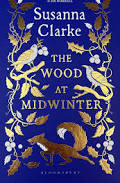
‘A church is a sort of wood. A wood is a sort of church. They’re the same thing really.’

Nineteen-year-old Merowdis Scot is an unusual girl. She can talk to animals and trees-and she is only ever happy when she is walking in the woods.

One snowy afternoon, out with her dogs and Apple the pig, Merowdis encounters a blackbird and a fox. As darkness falls, a strange figure enters in their midst-and the path of her life is changed forever.

Featuring gorgeous illustrations truly worthy of the magic of this story and an afterword by Susanna Clarke explaining how she came to write it, this is a mesmerizing, must-have addition to any fantasy reader’s bookshelf.

From the Factor Magazine Review

Illustrator

“Although set in the 19th century, there is something ancient and deep about this story. It feels like a traditional European fairytale, the kind that existed before they became delivery mechanisms for Western morality. In a brilliant bit of design, this tone is reflected in the physical layout of the story. Sawdon’s illustrations remind me of an illuminated manuscript, except in black and white. (If a publisher ever gets around to doing a full-color version of this story, I will be first in line to buy it.) The art is two-dimensional but vivid and strange. One full page illustration almost functions like a jump scare, mirroring a similar moment in the text. Speaking of the text, the font also has a medieval flair to it, particularly with the way the “c” and “t” are connected. The narration font of the woods is scratchy and fractured, making it look almost like you’re staring up at barren tree branches clustered together. ” – Alex Brown
Malcolm

Congress should pass a law that mandates more novels from non-prolific authors

And why not? The feds are already sticking their noses into a lot of stuff that isn’t the government’s business. And if Congress were fair about the matter, it wouldn’t force everyone to churn out books like James Patterson who, as we all know, has a truckload of co-authors except on his Alex Cross novels.

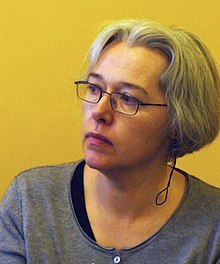
Clarke has aged since this 2006 photo was taken.

Since the idea for this legislation is mine, I get to choose the authors: they would include Mark Helprin, Erin Morgenstern, Susanna Clarke, and Donna Tartt. Oh shoot, Clarke has chronic fatigue syndrome, so we can’t put her on the list. We want to, but we shouldn’t. While it’s taxing to write books, maybe the feds should impose a tax on authors who really ought to write more, the rationale being that we need their stories to stay sane–or mostly sane.

Jonathan Strange and Mr. Norrell (2004) and its alternate history of Britain and magic, is probably one of the best magic/fantasy novels anyone has written.  We need more, much more because these books show us the world as it really exists. Perhaps Congress can convene a committee of dunces to learn why there’s been no sequel.

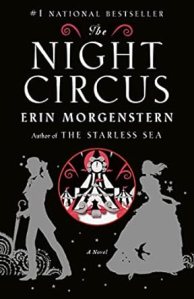
One pleasant surprise of 2012 was the appearance (without warning) of Morgenstern’s The Night Circus about a strange circus that appears without warning and spreads magic and humor in the towns where it manifests. The Starless Sea (2020) also captured our imagination with a magical world just as stunning as that of the circus.

Perhaps the tactic Congress should take is that readers need more of these books for national security reasons. We know that rationale is always bullshit, but it seems to work.

Mark Helprin, at 76, has appeared with another novel that will help save us from the Ruskies, Hamas, and other bad people called The Oceans and the Stars. I like all of his work, but think nothing holds a candle to Winter’s Tale.

Donna Tartt who–thank the good Lord is only 59–has always written at a snail’s pace. Congress can fix this because the country, as the Department of Homeland Security would say, “needs the security of books,” and that means that Tartt cannot take a few years off to play video games or watch “Survivor” and “Hells Kitchen” while the Pulitzer gathers dust on the shelves.

We need the stories, but we wither on the vine when we’re stuck waiting for them for too long.

–Malcolm

Women’s prize for fiction goes to Susanna Clarke’s ‘mind-bending’ ‘Piranesi’

Susanna Clarke, who published her debut novel Jonathan Strange & Mr Norrell 17 years ago and then was struck down with chronic illness, has won the Women’s prize for fiction for her second, Piranesi. Narrated by its eponymous hero as he explores the endless halls of a house that imprisons an ocean, Piranesi is “a truly original, unexpected flight of fancy which melds genres and challenges preconceptions about what books should be,” according to the Women’s prize chair of judges, Booker-winning novelist Bernardine Evaristo.

Source: Women’s prize for fiction goes to Susanna Clarke’s ‘mind-bending’ Piranesi | The Women’s Prize for Fiction | The Guardian

When I reviewed this book on this blog a year ago, I have the novel five stars, concluding, “For those who don’t require fire-breathing dragons or the snap of lethal energies flung from the hands of protagonists and antagonists in epic battles, this book is a treasure to be savoured like fine wine.”

This is one of the most creative books I’ve ever read and a worthy follow-up to Jonathan Strange & Mr Norrell. Clarke became ill after finishing her first novel and never thought she’d recover enough to write this one 17 years later.  I’m pleased that she was able to complete it and happy about today’s news about the prize.

–Malcolm

Review: ‘Piranesi’ by Susanna Clarke

PiranesiPiranesi by Susanna Clarke
My rating: 5 of 5 stars

Imagine this: You live in a huge, seemingly infinite house filled with statuary and ocean tides; you have never been outside the house because the house is all you know and all you can know; your life’s mission, as you see it, is exploring this house to length and breadth of possibility and, as you walk and climb and stay away from the highest of those tides, you catalogue everything you see in a series of journals that may potentially become infinite in number and detail.

The protagonist is called Piranesi–perhaps in deference to the great printmaker of the 1700s, though Piranesi doesn’t know this–by the other living human being in the house. Piranesi doesn’t believe “Piranesi” is his real name, nor does he know the real name of the other man in the house, so he calls him “The Other.” Their researches into the ways and means of the house are, at first, beneficial. However, their co-operation begins to wear thing when Piranesi discovers that The Other is seeking advanced and secret knowledge he believes to be hidden inside the house. Piranesi thinks nothing can be more important that the beauties and scope of the house itself.

There are some dead in the house, not many, and where and when they died is unclear. Piranesi has taken care to arrange them in an orderly fashion and to keep them out of reach of the tides. The Other says there’s somebody else in the house, a person who hides, perhaps, in unknown rooms, and he suggests that that person wishes to harm Piranesi. They refer to him or her as “16,” since–when you include the dead–that’s the number of people in the house.

There’s deep and quiet magic in this masterpiece, and it becomes more evident as Clarke’s novel unfolds. There are hints that there may be a past Piranesi has forgotten or misconstrued. He becomes unsure of some of the entries in meticulously kept journals. There’s a growing worry about The Other’s truthfulness in some manners. Is anything what it seems? Piranesi can only wonder and proceed from room to room and tide to tide with due care.

For those who don’t require fire-breathing dragons or the snap of lethal energies flung from the hands of protagonists and antagonists in epic battles, this book is a treasure to be savoured like fine wine.

–Malcolm

Malcolm R. Campbell is the author of magical realism, including the novels “Conjure Woman’s Cat,” “Eulalie and Washerwoman,” “Lena,” and (NEW) “Fate’s Arrows.”

View all my reviews

Jonathan Strange and Mr Norrell author to return after 16-year gap

Sixteen years after readers were introduced to the magical world of Jonathan Strange and Mr Norrell, Susanna Clarke is to publish her second novel.

Source: Jonathan Strange and Mr Norrell author to return after 16-year gap | Books | The Guardian

Her first novel seemingly came out of nowhere, sold four million copies, and then she was silent except for a short piece linked to Jonathan Strange and Mr. Norrell.

I can absolve 2020 for some of its crimes because of the upcoming publication of Piranesi.

Publisher’s Description

Piranesi’s house is no ordinary building: its rooms are infinite, its corridors endless, its walls are lined with thousands upon thousands of statues, each one different from all the others. Within the labyrinth of halls an ocean is imprisoned; waves thunder up staircases, rooms are flooded in an instant. But Piranesi is not afraid; he understands the tides as he understands the pattern of the labyrinth itself. He lives to explore the house.

There is one other person in the house-a man called The Other, who visits Piranesi twice a week and asks for help with research into A Great and Secret Knowledge. But as Piranesi explores, evidence emerges of another person, and a terrible truth begins to unravel, revealing a world beyond the one Piranesi has always known.

For readers of Neil Gaiman’s The Ocean at the End of the Lane and fans of Madeline Miller’s Circe, Piranesi introduces an astonishing new world, an infinite labyrinth, full of startling images and surreal beauty, haunted by the tides and the clouds.

Personally, I classify this book for lovers if magic and fantasy as a book not to be missed.

–Malcolm

Jonathan Strange and Mr Norrell author to return after 16-year gap  

Sixteen years after readers were introduced to the magical world of Jonathan Strange and Mr Norrell, Susanna Clarke is to publish her second novel.

Out in September next year, Clarke’s Piranesi will follow the story of its eponymous hero, who lives in the House, a building with “hundreds if not thousands of rooms and corridors, imprisoning an ocean. A watery labyrinth.” Occasionally, he sees his friend, The Other, who is doing scientific research into “A Great and Secret Knowledge”.

Source: Jonathan Strange and Mr Norrell author to return after 16-year gap | Books | The Guardian

I liked  Jonathan Strange and Mr Norrell along with a related ser of short stories. Now, finally, Clarke is releasing a new novel. But it’s a year away. How cruel. Get everyone excited and then make them wait.

She writes slower than Donna Tartt who’s released three novels since 1992. Both of them seem to be following the old-style approach to writing, taking a while to write each book rather than churning out Two or three novels a year like many novelists do these days.

I’ll be looking forward to this one.

Malcolm

My Glacier National Park novel “Mountain Song” is free on Kindle through October 1.