Thomas-Jacob releases new edition of ‘Sarabande’

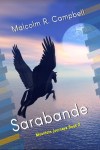
SarabandeCover2015Thomas-Jacob Publishing is releasing a new edition of Sarabande just in time for the 2015 holiday season.

The second book in the “Mountain Journeys” series, the novel sweeps a young woman along a dark and ill-fated trek from the high country of Montana to the prairie of Illinois to escape a ghost. While the novel’s official release date is November 1, the Kindle edition is available for pre-order on Amazon now.

Haunted by her powerful sister Dryad from beyond the grave, Sarabande leaves the world of Pyrrha from its hiding place within Montana’s Glacier Park, and travels on horseback to Illinois to seek the help of Sun Singer Robert Adams. Sarabande almost dies trying to reach him and it’s soon obvious that evil has followed her from the western mountains to Robert’s small town in a world of soybeans, corn, brick streets and old homes.

Click here to see the trailer on YouTube

Robert saved Sarabande’s life in the first book of the series, The Sun Singer. Truth be told, he doesn’t think he can do it again. His magic is weak, all but forgotten. Worse yet, he remembers Dryad’s moon magic and hypnotic voice and fears that he can’t resist her seductive charms another time.

Sarabande, a contemporary fantasy, was written so that it can be read as a standalone novel about a woman’s perilous journey. It can also be read as a sequel to The Sun Singer, which was the story of Robert’s journey to Pyrrha. The Sun Singer ended on a positive note, but there were a few loose ends.

–Malcolm

Malcolm R. Campbell is also the author of “Conjure Woman’s Cat,” “Emily’s Stories,” and “Jock Stewart and the Missing Sea of Fire.”

Mountain Journeys Web Page


Thanks for the editors

At this very moment, an editor is going over the manuscript for Thomas-Jacobs Publishing’s re-release of my contemporary fantasy Sarabande. I’m glad she is. She sees what I cannot see along with inconsistencies and goofs I wouldn’t recognize if I did see them.

Note: none of my editors look like this.

I could blame my cataract surgery for making my right eye see so much better than I need new glasses to read the words on the screen. (My old glasses are now too strong.)

However, if my editor sees this post, she can remind me (and all of you) that I was overlooking a lot of typos before the surgery.

Sometimes my wife reads over things I’ve written that I think are error free. Nope. She was a newspaper editor so she catches a lot of stuff.

So does my publisher, but she likes to check and double-check, so an editor reads my stuff after she reads my stuff. It must be a fact of life that a writer can go over his or her work a hundred times and guess what? It’s still waiting for the editor’s red pen.

Unfortunately, the red pen is gone. My wife and I are old school: we grew up editing copy (news copy) on a double spaced printout. I find more errors this way than I do when looking for typos and missing punctuation on the screen. I have to admit that Word’s Revision/Markup makes it easy for publishers and editors and writers to communicate over time about manuscript corrections.

But I still prefer edits on paper. My eyes are attuned to the page rather than the screen. Even so, I miss a lot. You probably do, too, whether you edit on the screen or print out a hard copy and look for your favorite pencil.

That’s why I firmly believe everything should go through an editor even though it’s not always easy to arrange this in today’s Kindle Direct Publishing world. If your spouse didn’t work for a newspaper, at least get your pets to review everything before you hit the “Save and Publish” button.

Thanks Lesa (wife), Smoky (editor) and Melinda (publisher).

–Malcolm

TSScoverjourneysMalcolm R. Campbell is the author of “The Sun Singer,” a contemporary fantasy that is currently on sale on Kindle.


Writing wasting away in Limboville

I’ve been asked what happened to my contemporary fantasy novels The Sun Singer and Sarabande.
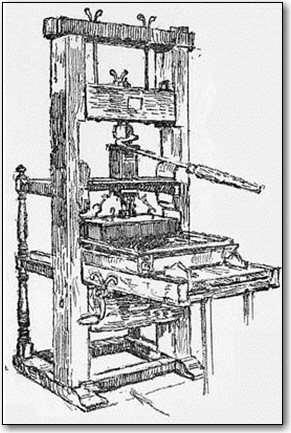
printingpressSince both have been well received, I found a new publishing home (Publisher B) after pulling them away from Publisher A due to a disagreement about the contract.

Publisher B had previously come out with many novels I enjoyed, some of which I had reviewed, so I thought I had found the perfect home for my work.

So what happened?

My guess is that staff turnover at Publisher B created a deluge of work that the remaining staff couldn’t keep up with. Nonetheless, when I sent the manuscripts to the publisher in the fall of 2013, I felt the publisher could meet his proposed release dates of January 2014 for The Sun Singer and May 2014 for Sarabande.

These dates were missed with no explanation and I was given a new set of release dates that were also missed with no explanation. Perhaps my request for a cover befitting a fantasy novel was the problem. I said that the covers supplied by Publisher A, while striking, weren’t typical fantasy covers; among other things, they gave readers no clue about the focus of the novels.

Publisher B agreed as did several of the artists he contacted who looked at the covers I’d had before. Yet somehow, no viable artist could be found until late in the summer of 2014. Finally, The Sun Singer was released last August with a nice cover and a great printing job.

E-book Problems

Unfortunately, the formatting of the e-books as a mess. The publisher blamed me for supplying documents that had formatting errors. He was right about that, though I consider the delivery of a manuscript to be the author’s responsibility and the formatting for print, Kindle, PDF and other e-books to be the publisher’s responsibility. I also expect the publisher to make sure the formatting is correct before the books go live on a seller’s site.

It took me several weeks to get Publisher B to remove the e-books from Amazon and Smashwords. I would have preferred the files be fixed and re-uploaded, but this didn’t seem to be happening. Then, Publisher B removed the print version from Amazon and elsewhere even though there was nothing wrong with it.

We had a variety of discussions about how the e-book formatting should be done, my preference being for something that mirrored the formatting of the print version. Whether I was asking for something impossible to deliver, I don’t know.

Finally, several weeks ago, Publisher B sent me an e-mail saying they were ready to release The Sun Singer in e-book (with a simplified formatting) and print.

Publisher B doesn’t seem to understand that the author needs to know the release date so s/he can do advanced publicity, set up give-aways on GoodReads, and talk about the book on Facebook and Twitter.

I asked for the release date and got no response. Publisher B asked me about Sarabande, I answered, and got no response. I asked about being added to the publisher’s blog so I could help promote the books and got no response.

Finally, I used my old e-mail address to ask the publisher if messages from my new e-mail address were ending up in the SPAM folder because we were (I thought) in the middle of a dialogue about moving forward and all I was hearing from Publisher B was the sound of silence. My question about the SPAM queue got no response.

So there it is. Both novels have been in limbo for over a year. Since Publisher B has authors and novels on their list that I like, I would prefer they release The Sun Singer and Sarabande. Whether they will or they won’t is a question stuck in the black hole of zero communication.

What Happens Now?

Now, if you are Publisher B and happen to be reading this, and have been sick, immersed in a family tragedy or a business reversal, then I would be sorry to hear that because I know what that’s like. I wish you had told me and propose that when you can’t keep up with e-mail, then a staff assistant needs to step up to the plate and keep things running smoothly.

If you’re not Publisher B and wish to have your work published, I’ll say that long delays of a year or so are not uncommon with major publishers, though you do need to have an agreed-upon time table for all the steps in the process. One of the benefits of working with a smaller publisher is the hands-on more personal approach as well as a shorter manuscript-to-print time frame.

My mistake here was not nailing down the release dates, with reasonable flexibility, in advance. Also, if small-publisher tradition and/or contract language specifies that the author is responsible for most of the marketing effort, the publisher needs to at least keep the author informed of release dates (and then stick to them) as well as having a blog or a system of news releases that announce the new books. This needs to be in the contract, too. I didn’t get that nailed down either because my back-and-forth e-mails with Publisher B gave me the impression my expectations about such things would be met without being backed up by clauses in the contract.

I’ve been in this business long enough to know better and ended up with my books in Limboville. There are many sites that show standard book contracts. While reading them doesn’t guarantee you’ll get a prospective new publisher to add any verbiage you find missing in his standard contract, you can always try.

I let my emotions get in the way: I was so upset with Publisher A about the contract dispute that everything Publisher B seemed to be offering looked like a breath of fresh air. It’s better to step away from those kinds of negative feelings and hopes and make sure you have a meeting of the minds with a prospective publisher before you sign the contract.

This is your cautionary tale.

Malcolm

Malcolm R. Campbell is the author of The Lady of the Blue Hour and The Land Between the Rivers. His short stories appear in The Lascaux Prize 2014 (2014) and Spirits of St. Louis: Missouri Ghost Stories (2013).


The Next Big Thing: a novel in progress

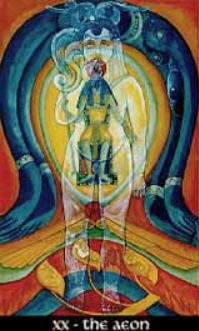
“The Aeon is the symbol for the Rise of Phoenix, it stands for a time of insight, the true understanding of the circle of life, of growing and fading.” – Raven’s Tarot Site

When author T. K. Thorne (“Noah’s Wife”) invited me to participate in a “blog chain” that focuses on the working title of our next book, I faced the same problem she did when she sat down to write her post. Which book do I want to talk about? Should I talk about the collection of short stories or my next Glacier Park Fantasy novel in the series that includes “The Sun Singer” and “Sarabande”?

I’ve decided to talk about the novel.

  1. What is your working title of your book?  “Aeon”
  2. Glacier Park’s Chief Mountain – M. R. Campbell photo

    Where did the idea come from for the book? When I wrote “The Sun Singer,” I knew the book’s Grandfather Elliott character would eventually return to a mirror-image universe (set in another time period) hidden within the mountains of Glacier Park Montana. “The Sun Singer” was his grandson Robert Adams’ story. Now it’s time to tell Tom Elliott’s story.

  3. What genre does your book fall under? Contemporary fantasy.
  4. Which actors would you choose to play your characters in a movie rendition? I’ve been waiting for Clint Eastwood to call and say he wants to play Billy, an Indian medicine man, in a movie version of “Sarabande.” So far, nothing. Maybe he’s been waiting for the Tom Elliott role to be ready.  There’s a role for Mila Kunis and another for Angelica Huston.
  5. What is the one-sentence synopsis of your book? An aging avatar returns to the land of Pyrrha to fulfill the ancient prophecy, overthrow the evil king and neutralize the traitorous sorcerer, and prepare the land for the arrival of the goddess.
  6. Will your book be self-published or represented by an agency? Neither. I will submit the novel to the publisher directly.
  7. How long did it take you to write the first draft of your manuscript? I am still working on it.
  8. What other books would you compare this story to within your genre? Although I write contemporary fantasy and Stephen R. Donaldson writes epic fantasy, Tom Elliott’s quest has some similarities to that of Thomas Covenant in Donaldson’s “Chronicles” cycle. Needless to say, “Aeon” can best be compared to “The Sun Singer” and “Sarabande.”
  9. Who or what inspired you to write this book? I wrote “The Sun Singer” based, in part, on my own psychic experiences and my love of magic and Glacier National Park. “Aeon” is the logical next step in the cycle. As the title suggests, I also like the meaning behind the trump #20 in the Tarot deck.
  10. What else about your book might pique the reader’s interest? The story is going to be a wild ride that begins on a Harley Davidson FXE Superglide Shovelhead. After that, what’s the worst that could possibly happen? Among other things, that means the production company for a movie version will have to spend a truck load of money on special effects.

I’ll keep you posted. By that I mean, don’t call me (unless you’re Clint, Mila, or Angelica), I’ll call you.

Now, for the next installment of THE NEXT BIG THING blog chain during the week of November 26th, check out the blogs of authors Melinda Clayton, L. E. Harvey and Pat Bertram.

Malcolm

Stop by my Facebook page!

The Dance of Sun and Moon – Stages on the Journey

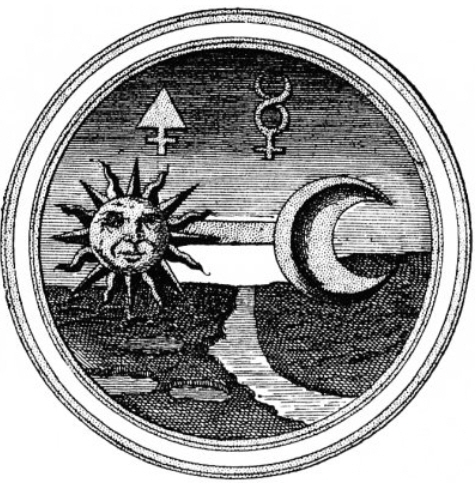
When the Sun and the Moon are viewed within the arena of Western esoteric traditions, including alchemy and the Tarot, they represent opposites that approach and retreat from each other even though they are destined to be merged into one. In these traditions, the Sun represents fire, masculine, positive (polarity), rational, visible world, and the consciousness mind. The Moon represents water, feminine, negative (polarity), intuition, hidden world, and the unconscious mind.

It is said that the enlightened being, often called The Wonder Child or viewed as the Philosopher’s Stone, is born from the merging of these apparent father/mother, king/queen opposites as depicted in the old art work shown here.

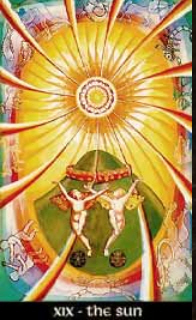
One of the many ways of illustrating the steps on the path to enlightenment, the goal of the hero’s and heroine’s journeys, is through the sequence of Major Arcana (trumps) cards in a Tarot deck. The Major Arcana  cards begin with “0 The Fool,” who is considered the innocent initiate at the beginning of the journey/quest and end with “21 The Universe,” which represents ascension. En route, the seeker finds “18 The Moon” and “19 The Sun.”

I like the description of the Moon and Sun  cards in the ancient quests of  knights for the Holy Grail. The Moon, then, is the Grail in the lake (beautiful water symbolism here) and the Sun represents the Grail lifted up into the pure light prior to completing the quest. Afterwards, the initiate/seeker reaches “20 Aeon” which is viewed as the rising of the Phoenix from the ashes prior to ascension.

Many Paths = One Destination

There are multiple layers of symbols here when we overlay the hero’s/heroine’s journey paths with all their traditional associations, including the Lesser Mysteries and Greater Mysteries, the cycles of the seasons around “the wheel of the year,” the Tree of Life, Tarot, alchemy and astrology. One need not study all of this, or even any of this, to understand seeker’s journey. The journey is who we are and what we are about. All of the paths to enlightenment are pointed toward the same end: transformation. Each of us focuses on the symbols we’re most comfortable with and attuned to.

Some experts say that we’re impacted by these symbols even if we are not consciously aware of them or understand the little we may have heard about them. I am a novice in using Tarot and understanding the cards’ many connections to the Tree of Life, spiritual alchemy and the cycles of the seasons. Generally, though, I like the symbolism of the Thoth Deck of Cards. The Moon and Sun cards shown here are from that deck and have a fair amount of symbolism.

  • Moon: The overall tone here is night. In the Book of Thoth, the Moon is called the “Gateway of Resurrection.” During night and Winter, the waiting Sun is diminished or absent. The landscape here is severe and the stream is mixed with blood. The sacred scarab holds the sun in its darkness while the moon occupies the mind and cosmos.
  • Sun: The overall tone here is light, with the twelve major rays standing for the signs of the zodiac. The light emanates from a rose-like sun, standing for the flowering of the solar influence. The children above the green and fertile earth are forever young and innocent. They represent the seeker’s and/or humankind’s next stage.

The Writer’s Raw Materials

moon
moon

As a writer, I love the relationship of symbols and story ideas. They can strongly impact plots, themes and characters. There are many ways to characterize a journey. For example, readers of my hero’s journey novel The Sun Singer  will find numerous references to light and the other aspects of the so-called solar journey. For more information, see the Journey Page on my website and explore the information on the Joseph Campbell Foundation site. The book’s Glacier Park setting reminds park visitors and fans of “Going to the Sun Road” and the expanse of light one sees from high mountain trails.

Likewise, readers of my heroine’s journey novel Sarabande will find numerous references to water and the other aspects of the so-called lunar journey. The Heroine’s Page and the Sarabande Page on my website have more details. While the book’s story begins in the mountain high country, the plot (which is oriented around the moon’s phases) becomes more focused on rivers, dreams and the so-called “Underworld.”


sun
sun

For more information about Tarot cards in general, you might enjoy exploring one of my favorite sites: Raven’s Tarot Site. Here you’ll learn more about the Major Arcana (trumps), Minor Arcana (suits), and their correspondences with the Tree of Life, the classic elements, and astrology.

My first intention in both of these books is telling an exciting story. Both stories have many associations with myths and symbols. Those who know the myths and symbols will, perhaps, smile when they see the references. Those who do not consciously know the myths and symbols will still be subject to their spells.

As Rumi said, “What you seek, seeks you.” So, perhaps when you’ve finished reading the stories, you’ll be drawn into the “inner stories” behind the actions of Robert Adams (The Sun Singer) and Sarabande (Sarabande). When that happens, you’ll find that what you are looking for will begin to appear more often in your life in the form of books, websites and links, things you see on the way to work or on a hike, people who are interested in these subjects, and your dreams.

Meanwhile, as you read the novels, I hope you’ll enjoy the action while you are dancing with the Sun and the Moon—as they dance with each other.

–Malcolm

Inanna’s Heroine’s Journey – a drama for authors and seekers

“The world’s first love story, two thousand years older than the Bible—tender, erotic, shocking, and compassionate—is more than a momentary entertainment. It is a sacred story that has the intention of bringing its audience to a new spiritual place. With Inanna, we enter the place of exploration: the place where not all energies have been tamed or ordered.” – Diane Volkstein in “Inanna, the Queen of Heaven and Earth: her Stories and Hymns from Sumer”

Inanna, as envisioned by nikkirtw123 on Photobucket is strikingly close to my vision of Sarabande

As an author, I view my characters through a high-powered microscope and present the results of what I see as part of my stories. I will put you into the characters’ shoes if I can because—as Diana Volkstein writes—this is where the energies haven’t been tamed or ordered.

In my hero’s journey adventure Garden of Heaven: an Odyssey, I describe that place like this: “He knew him at the binary level where the line between matter and energy is barely discernible and often non-existent: Where urges pull at their chains, where drives push dumbly and drip sweat, where instincts race unchecked, where a horrifying sadness lies buried, where a raw pulse drums a cadence for the primitive rites of changing seasons, where white-hot impulses leap synapses in a shower of elemental fire.”

I wanted a similar, up-close focus in my heroine’s journey novel Sarabande. So, for the story of a woman seeking wisdom and wholeness, I could think of no better model than the myth of Inanna, a graphic dramatization of a woman’s inner journey to find herself outside the traps and trappings of a masculine world that has–as Sylvia Brinton Perera (“Descent to the Goddess”) wrote–forced the binary level of feminine power into dormancy for 5,000 years.

Or, as the late Adrienne Rich said, “The woman I needed to call my mother was silenced before I was born.”

Sarabande’s Heroine’s Journey

The journey in “real life”

In today’s terms, Sarabande was a tomboy. She was an expert with a knife, bow and arrow, a fishing pole, and everything she needed to know to survive in the wilderness. She learned all this from her father because her her mother believed women should only learn to keep a good home and not question society’s norms for women. However, Sarabande will never truly become herself as long as she is a disciple of either her late warrior father or her misguided, preachy mother. She is being taunted by a ghost that she must approach face to face in the ghost’s world.

Early on in her quest to rid herself of the ghost of her dead sister Dryad, Sarabande learns to see the world at a binary level: The lake, surrounding mountains and the cloud-draped sky broke apart into millions of colored specks. Sarabande leaned against Sikimí, even though he was no longer solid, and saw that her own light-pink hand was not solid either. In spite of her sudden dizziness, she did not fall. In fact, when her fingertips touched Sikimí’s side, a swarm of pink specks flew, like bees, into the permeable yellow gold of the horse, and when they did, their color changed to match the specks in their new environment.

But she doesn’t know what it means. So it is, that her quest to find and confront her sister follows the pattern of Inanna’s Heroine’s journey to confront her sister Eriskigal, Goddess of the Underworld. The underworld, in this case, is not the world of mobs and crime or “hell” in the Christian view, but the more dangerous world of the unconscious. Like Inanna, Sarabande will be broken, shamed and close to death before she learns who she is.

This is the heroine’s journey, to be buried in mother earth like a seed where she will be reborn with the spring into a new creation that finally has the freedom to follow the original injunctions of her destiny and her gender.

Malcolm

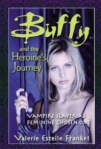
Briefly Noted: ‘Buffy and the Heroine’s Journey’ by Valerie Estelle Frankel

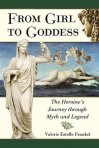
In February 20121, McFarland released a new book for authors and readers interested in the heroine’s journey in fiction and myth and for fans of the Buffy the Vampire Slayer movie (1992) and the subsequent television series (1997 – 2003).  A well-researched book, Buffy and the Heroine’s Journey is a natural extension of Valerie Frankel’s work in From Girl to Goddess: The Heroine’s Journey through Myth (McFarland, 2010).

On her website, Frankel writes that “Though scholars often place heroine tales on Campbell’s hero’s journey point by point, the girl has always had a notably different journey than the boy. She quests to rescue her loved ones, not destroy the tyrant as Harry Potter or Luke Skywalker does. The heroine’s friends augment her natural feminine insight with masculine rationality and order, while her lover is a shapeshifting monster of the magical world—a frog prince or beast-husband (or two-faced vampire!). The epic heroine wields a magic charm or prophetic mirror, not a sword. And she destroys murderers and their undead servants as the champion of life. As she struggles against the Patriarchy—the distant or unloving father—she grows into someone who creates her own destiny.”

A new era in film and fiction for three-dimensional female action characters?

Frankel’s new book appears at a time when readers, authors and reviewers are discussing whether or not Lisbeth Salander (in Stieg Larsson’s Millennium series) and Katniss (in Suzanne Collins’ The Hunger Games series) represent a positive trend in the development of female protagonists that are more than male-gaze eye candy. That is, can authors and film makers step away from the patriarchal idea that women—whether they kick ass or not—are little more than sex objects?

Unfortunately, Frankel—along with author Maureen Murdock (The Heroine’s Journey)—appear to represent a minority view. Most film makers are still trotting out female characters in mini-skirts and bikinis fighting alongside male counterparts who are dressed in normal uniforms or SWAT team gear, while many authors and screenwriters are arguing that the heroine’s journey is no more than a female character following Joseph Campbell’s hero’s journey sequence.

As the author of a contemporary fantasy novel featuring the hero’s journey (The Sun Singer) and another that features the heroine’s journey (Sarabande), I find it refreshing to find another author/researcher who sees a difference between solar and lunar journeys. While I think my heroine’s journey story would make a great film, I don’t want Hollywood to turn my title character into a male-gaze Lara Croft-style protagonist transported to the mountains and plains of Montana in a tight and/or skimpy outfit.

Publisher’s Description: The worlds of Percy Jackson, Harry Potter, and other modern epics feature the Chosen One–an adolescent boy who defeats the Dark Lord and battles the sorrows of the world. Television’s Buffy the Vampire Slayer represents a different kind of epic–the heroine’s journey, not the hero’s. This provocative study explores how Buffy blends 1990s girl power and the path of the warrior woman with the oldest of mythic traditions. It chronicles her descent into death and subsequent return like the great goddesses of antiquity. As she sacrifices her life for the helpless, Buffy experiences the classic heroine’s quest, ascending to protector and queen in this timeless metaphor for growing into adulthood.

The paperback edition, for reasons that are not readily apparent, is priced considerably higher ($35.00) than other paperbacks of a similar length (226 pages ). However, at $9.99, the Kindle edition is more in line with today’s prices.

I bought the Kindle edition even though I didn’t see the Buffy the Vampire Slayer television series or feature film. I liked From Girl to Goddess: The Heroine’s Journey through Myth and am finding Buffy and the Heroine’s Journey to be another very readable and credible look at the heroine’s journey.

Malcolm

contemporary fantasy on Kindle at $4.99

Free e-Book: Celebrate Glacier National Park

During Glacier National Park’s 2010 centennial, I wrote quite a few posts about the history, personalities, facilities and environment of Montana’s shining mountains for this weblog. Now, Vanilla Heart Publishing has compiled a selection of those posts into a free PDF e-book that you can download from PayLoadz.

Highlights of the 49-page e-book

  • Fast Facts and Photographs
  • All Aboard for Glacier National Park
  • Glacier by the Grace of God and the Great Northern
  • Mountains and Rock
  • Remembering James Willard Schultz
  • Glacier’s Long-Ago Mining Town
  • Remembering George Bird Grinnell
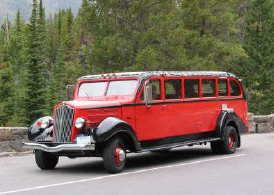
  • Those Historic Red Tour Buses
  • Kinnikinnick
  • Glacier’s First Ranger
  • Heavens Peak Fire Lookout
  • Mary Roberts Rinehart

The Scenery Behind My Stories

While working as a bellman at a Glacier Park hotel, I fell in love with the park. I’ve been back several times, but it’s too far from northeast Georgia for easy commuting. I returned in my imagination, though, while setting three novels in the park: The Sun Singer (contemporary fantasy, 2004), Garden of Heaven: an Odyssey (magical realism, 2010) and Sarabande (contemporary fantasy, 2011). If you’ve visited Many Glacier Hotel on the east side of the park, you’ll recognize many of the settings in all three books from Swiftcurrent Lake to Grinnell Glacier

I hope you will enjoy Celebrate Glacier National Park and the scenery behind my stories with a bit of the history of how Glacier came to be and who took part in developing it as both a park and a playground. Of course, you need to do more than read about “backbone of the world” in northwestern Montana.

How about a trip? You’ll need to stay for a couple of days so you have time to see both sides of the park, experience Going-to-the-Sun Road, hike to Sperry or Grinnell Glacier, take a launch trip on Lake McDonald, Swiftcurrent Lake or Lake Josephine, and ride in one of those ancient red buses with the top down so you can enjoy the mountain air.

–Malcolm

Kindle edition

Heroine’s Journey Links and Resources

While I was working on my recent contemporary fantasy Sarabande, I found a lot of helpful references about the heroine’s journey. The heroine’s journey has fewer Internet links, so perhaps you’ll find some of mine helpful if you are experiencing, reading about or writing about the journey.

There seem to be two schools of thought about the journey. One is that the heroine’s journey is the same as the hero’s journey, potentially with a few modifications.

While that concept approach works for many people, I don’t agree with it because the hero’s journey is a solar journey and the heroine’s journey is a lunar journey. My novel’s research materials tend to reflect the lunar approach.

Dark Moon

  1. Goddess Meditations by Barbara Ardinger
  2. Dragontime Magic and Mystery of Menstruation by Luisa Francia
  3. Moon Phases Calendar
  4. Planting by the Moon
  5. The Moon Watcher’s Companion by Donna Henes.
  6. Moon Watching by Dana Gerhardt
  7. Moon Tides, Soul Passages by Maria Kay Simms
  8. Moon Mother, Moon Daughter by Janet Lucy

Death and Rebirth

  1. Descent to the Goddess by Sylvia Brinton Perea
  2. The Myth of the Goddess: Evolution of an Image by Anne Baring and Jules Cashford
  3. The Pattern of Initiation in the Evolution of Human Consciousness by Peter Dawkins & Sir George Trevelyan
  4. Inanna, queen of heaven and earth: Her stories and hymns from Sumer by Diane Wolkstein and Samuel Noah Kramer – This book, first published in 1983, presented a long-awaited translation of the original Inanna material from the 2000 BCE cuneiform clay tablets.

Fantasy

  • The Mythopoeic Society – The Mythopoeic Society is a national/international organization promoting the study, discussion, and enjoyment of fantastic and mythopoeic literature through books and periodicals, annual conferences, discussion groups, awards, and more.

Horses

  1. She Flies Without Wings-How Horses Touch a Woman’s Soul by Mary D. Widkiff
  2. Horses and the Mystical Path-The Celtic Way of Expanding the Human Soul by Thomas McCormick
  3. The Tao of Equus by Linda Kohanov
  4. Torden, Hear the Tunder by by C. Kirkham. (This is a well-written young adult novel about a young girl and a Friesian horse.)
  5. Horses, Somatics, and Spirit: An Equine-Guided Program in Conscious Living, a workshop presented by Beverley Kane, MD, Ariana Strozzi, MSC. (This is an example of some of the programs available today.)

Heroine’s Journey

  1. The Heroine’s Journey by Maureen Murdock
  2. From Girl to Goddess: The Heroine’s Journey through Myth and Legend by Valerie Estelle Frankel (See the July 2011 “Mythprint” review of this book here.) Frankel’s website includes a lengthy heroine’s journey reading list.
  3. Sarabande contemporary fantasy by Malcolm R. Campbell released by Vanilla Heart Publishing, August 2011.
  4. “The Way of Woman: Awakening the Perennial Feminine” by Helen M. Luke
  5. Apple Farm Community – The Writings of Helen M. Luke
  6. Real Women, Real Wisdom: A Journey into the Feminine Soul by Maureen Hovenkotter  (See a review here.)
  7. The Heroine’s Coach, the website for Susanna Liller’s journey-oriented coaching services. The site includes an e-mail newsletter for women following their own paths called “Journey News.”
  8. The Heroine’s Journey appears on author Leslie Zehr’s Universal Dancer website and includes a discussion of Sylvia Brinton Perera’s Descent to the Goddess, a book I found essential for my understanding of the journey. Zehr is the author of The Alchemy of Dance: Sacred Dance as a Path to the Universal Dancer.

Light of Nature

  1. Light of Nature Website, exploring the science and the philosophy of the concept.
  2. “The Female Brain” by Louann Brizendine
  3. “The Spell of the Sensuous” by David Abram

Literature

  1. The Heroine’s Bookshelf: Life Lessons, from Jane Austen to Laura Ingalls Wilder by Erin Blakemore
  2. Fearless Girls, Wise Women & Beloved Sisters: Heroines in Folktales from Around the World by Kathleen Ragan
  3. The Heroine in Western Literature: The Archetype and Her Reemergence in Modern Prose by Meredith A. Powers
  4. The Art of Fiction: Illustrated from Classic and Modern Texts by David Lodge

Patriarchy

  1. The Dance of the Dissident Daughter by Sue Monk Kidd
  2. Unplugging the Patriarchy – A Mystical Journey into the Heart of a New Age by Lucia René
  3. Reviving Ophelia by Mary Pipher
  4. Ophelia Speaks: Adolescent Girls Write about Their Search for Self by Sara Shandler
  5. Surviving Ophelia: Mothers Share Their Wisdom in Navigating the Tumultuous Teenage Years by Cheryl Dellasega

Story Within

  1. And Now The Story Lives Inside You, poems by Elizabeth Reninger
  2. The Spell of the Sensuous by David Abram
  3. Alchemical Studies by C. G. Jung
  4. Harry Potter – A New World Mythology? By Lynne Milum
  5. “Dark Wood to White Rose: Journey and Transformation in Dante’s ‘Divine Comedy’” by Helen M. Luke
  6. “The Soul’s Code: In Search of Character and Calling” by James Hillman

War

  1. Achilles in Vietnam and Odysseus in America by Jonathan Shay.
  2. Rape: Weapon of Terror by Sharon Frederick
  3. Against our Will: Men, Women and Rape by Susan Brownmiller

Weaving, Storytelling, Linen

  1. American Textile History Museum
  2. All Fiber Arts (weaving in stories and fairytale)
  3. Women’s Work: The First 20,000 Years by Elizabeth Wayland Barber
  4. Linen from flax seed to woven cloth by Linda Heinrich
  5. The Joy of Handspinning – many details, photographs and demonstration videos
  6. The Weaver’s Book: A practical, authoritative step-by-step guide for beginners by an expert weaver by Harriet Tidball
  7. Grading, Spinning, Dyeing: an introduction to the traditional wool and flax crafts by Elizabeth Hoppe and Ragnar Edberg
  8. Fibers of Being – Judy’s detailed weaving blog
  9. Eva Stossel’s weaving blog – In addition to information about weaving, both Judy and Eva include lengthy blogrolls.
  10. A History of Irish Linen
  11. Flaxland – Growers and Processors in the U. K.

Wolves

  1. Women Who Run with the Wolves by Clarissa Pinkola Estes
  2. The Company of Wolves by Peter Steinhart
  3. The Wolf’s Tooth by Christina Eisenberg

Writer’s Muse

  1. The Sister from Below: When the Muse Gets Her Way by Naomi Ruth Lowinsky
  2. Marry Your Muse: Making a Lasting Commitment to Your Creativity by Jan Phillips
  3. The Voice of the Muse: Answering the Call to Write by Mark David Gerson.
  4. 20 Master Plots: an How to Build Them, by Ronald Tobias
  5. The Hero’s Journey: A Guide to Literature and Life by Reg Harris and Susan Thompson (This is a series of lesson plans for teaching the hero’s journey in a classroom setting.)

Classic TA Resources for the Journey

  1. Born to Win: Transactional Analysis with Gestalt Experiments by Muriel James and Dorothy Jongeward
  2. Your Inner Child of the Past by Hugh Missildine
  3. What Do You Say After You Say Hello: The Psychology of Human Destiny by Eric Berne
  4. I’m Ok, You’re Ok by Thomas Harris

Malcolm

Malcolm R Campbell is the author of the heroine’s journey novel “Sarabande” from Thomas-Jacob Publishing.

Blurring Reality and Fiction

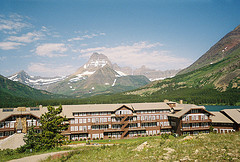
Many Glacier Hotel

As the author of two contemporary fantasies and one magical realism novel, I enjoy blurring the line between the real settings in my novels and the stuff I make up.

Real settings provide a foundation for the magic of my imagination whether they’re well-known locations such as Glacier National Park or personal locations such as the house my parents owned in Eugene, Oregon when I was in kindergarten.

However, the trickster in me wants the reader to always be in doubt where reality begins and ends. When people tell ghost stories around a camp fire, the stories often begin with: “Many years ago in these very woods on a summer night just like this one, a monster watched a patrol of Boy Scouts cooking their evening meal.”

Suddenly, everyone around the camp fire starts hearing strange noises in woods—perhaps it’s just the wind, or perhaps it isn’t. When I set my contemporary fantasy novels Sarabande (2011) and The Sun Singer (2004) in Glacier Park, I not only had a lot of photographs and reference materials helping me make my descriptions accurate, but also the benefit of knowing that many of my readers will have been there or seen pictures or TV programs about the area. (I also had my memories of hiking a good many trails in the park.)

So, is there magic at Many Glacier Hotel in Swiftcurrent Valley? Maybe yes, maybe no.

Garden of Heaven

In Garden of Heaven: an Odyssey (2010), I used well known locations in Glacier National Park such as Chief Mountain and Many Glacier Hotel. For my own personal amusement, I also used the starter-house my parents owned on Alder Street in Eugene. While I barely remember the house, I do have pictures of it. My readers, of course, don’t know anything about an obscure street in Eugene, but they have heard of the town. That’s why I used the name in this stream-of-consciousness, vision quest sequence in the novel:

My mother at the house in Eugene

He woke up in the centre of the prairie where the land lay like a calm sea and the black mountains were small in the west. On his mind there was a predominant thought, ‘I am east of the sun and west of the moon,’ and though that was true, for it was sometime past noon, the thought was on his mind in a strange déjà vu way, pulling him he knew not where.  His memory danced like a frail aspen leaf in the north wind until he was carried southwest by south on more or less a straight course past the grey ice of Api-natósi, the north fork of the Flathead, the Kootenai National Forest, the Bitterroots, south of Couer d’Alene Lake, the boiling confluence of the Columbia and Snake, the Cascades, to Eugene and Alder Street, to the little buff-coloured house with the blue roof and white picket fence and a snowman to the left of the driveway, and then inside to a room bluer than the roof where an inviolate circle of light from the lone lamp encompassed mother and child, she in a chair reading aloud from an old tan book of stories, he sleepy-eyed beneath covers hearing about trolls, witches, winds that talked, a castle, and a prince, the stuff that dreams and futures are made of before seasons matter and life hardens the soul.

In a vision quest, the real and the unreal are often tangled up. I always want the reader to wonder which is which. In this passage, most readers will recognize the real places such as the Snake River and the Cascades even if they’ve never been to the area. I added “Alder Street” just for me because I’m a spinner of tall tales that are occasionally true.

Malcolm