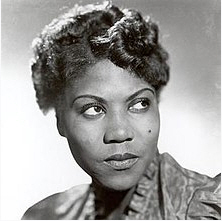
 If you’ve been around for a while and/or like vintage gospel, jazz, and blues, you know who Rosetta Tharpe was as well as how influential she was. As Wikipedia notes, “Tharpe was a pioneer in her guitar technique; she was among the first popular recording artists to use heavy distortion on her electric guitar, presaging the rise of electric blues. Her guitar playing technique had a profound influence on the development of British blues in the 1960s; in particular a European tour with Muddy Waters in 1963 with a stop in Manchester is cited by prominent British guitarists such as Eric Clapton, Jeff Beck, and Keith Richards.”
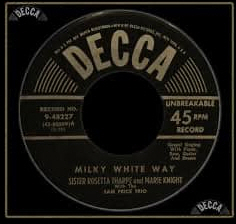
So, one would think that finding a picture of a 1951 Decca release of “His Eye is on the Sparrow” with Marie Knight would be easy to locate on the Internet. Perhaps, but I can’t find it and would really like to see what it looks like so I can mention it in a novel. I could fake that, I suppose, by assuming that it looks like the other Decca recordings of the era, but I don’t feel comfortable doing that.
I spent a couple of hours this morning looking for the image. So far, I’ve found everything but. Seriously, I’d rather be writing the novel that pulling teeth, research-wise, for every fact I use. I’ve mentioned Tharpe before in my “Florida Folk Magic Series” because my character Eulalie was a blues singer and knows who all the singers of her era were. In the novel in progress, the main character is named “Sparrow” so that’s why this recording is important. Plus, I like the song, one that everyone and their brother or sister has recorded. Since the book is set in 1954-1955, the 1951 recording is the most reasonable release to use.
If you’re thinking about becoming a writer, obsessions like this will often take over your days.
UPDATE:
And here it is, compliments of Sandy Daigler who picked the one method of searching Google’s images that didn’t occur to me:

 Yesterday, I looked at dozens of sites to learn more about bullet and arrow wounds. I found a wealth of information. So far, the police haven’t knocked on my door to talk to me about cold cases involving arrows in the ass.
 “Waiting for bag lady,” I said (because she bagged the groceries as she scanned them). “Most people around here think I’m a bag lady because I walk everywhere when my car won’t run which is near about always.” After that, she got ticked off if I didn’t come to her register or take her advice on my grocery buying habits. Seems like I saw her everywhere in town and about every time we’d stop to chat, somebody would ask me a few days later why I was talking to “that old bag lady.” I told people she was giving me brokerage tips.
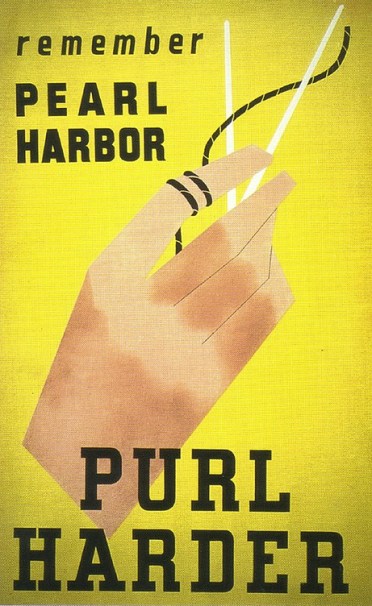

 For the rest of us, our research gets out of hand when we become so fascinated by it, that we left it take over our fiction–presumably, this happens when think our readers will love that research as much as we do or when we’re just sloppy.
 From hoodoo to witchcraft to high magic, the lore is filled with cautions about the dangers of summoning bad stuff because unless you know what you’re doing, the bad stuff will come after you. This would be kind of like purchasing a rabid dog to keep traveling salesmen away from your door. The odds seem high that the dog will attack you first.

 Malcolm's Round Table