“God’s love for humankind is one of our present culture’s all-pervasive, invisible, unquestioned, and thus unconscious assumptions. When war shattered this assumption, American soldiers in Vietnam lost a sustaining idea.” ― Jonathan Shay, Achilles in Vietnam: Combat Trauma and the Undoing of Character
I’ve always thought Vietnam stole everything from my generation that really mattered, leaving us with a plague of PTSD. The plague worsened when veterans came home and discovered they were invisible. Somehow, the cynical comments from the introduction to Dalton Trumbo’s anti-war novel “Johnny Got His Gun” became the national attitude:
So long, losers. God bless. Take care. We’ll be seeing you.
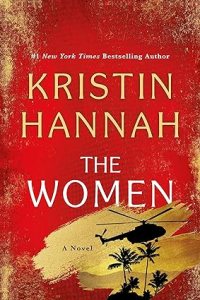
Frankie, an army nurse who serves in-country Vietnam in this gritty, well-written novel, experiences this attitude in spades.
“We were the last believers, my generation. We trusted what our parents taught us about right and wrong, good and evil, the American myth of equality and justice and honor. I wonder if any generation will ever believe again. People will say it was the war that shattered our lives and laid bare the beautiful lie we’d been taught. And they’d be right. And wrong. There was so much more. It’s hard to see clearly when the world is angry and divided and you’re being lied to.”
Hannah’s story sounds like it comes from a woman who was there. If you were there, this novel might stir up your case of the plague.
“When your fight has purpose—to free you from something, to interfere on the behalf of an innocent—it has a hope of finality. When the fight is about unraveling—when it is about your name, the places to which your blood is anchored, the attachment of your name to some landmark or event—there is nothing but hate, and the long, slow progression of people who feed on it and are fed it, meticulously, by the ones who come before them. Then the fight is endless, and comes in waves and waves, but always retains its capacity to surprise those who hope against it.” – ― Téa Obreht, The Tiger’s Wife
(I’m not an official blogger for peace, check Mimi Writes if you want to be a member and use the official logos.)
The quote from Téa Obreht suggests one reason why war is so difficult to stamp out.
My introduction to the realities of war came from reading All Quiet on the Western Front when I was in high school. I found this novel to be so graphic, I could not comprehend how anyone who fought in a war, observed a war or read that book could possibly support any politician calling for war. I won’t read it again.
I felt the same way after reading the equally repellant Johnny Got His Gun. “Hawks,” I wanted to say, “this is what war does to people.” Along with many others, I learned about the unnecessary and immoral firebombing of Dresden when I read Slaughterhouse Five. Cynically, I wondered how many of those who raged at Sherman’s approach to war thought what we did to Dresden was somehow justifiable.
We don’t always hear the anguished stories of those who fight and return because they can’t or won’t talk about what happened over there. I’ve written elsewhere that I think the real casualties are those who survive so that they can go through the hell of the battle every night in their dreams. Perhaps we learn a little from war reporting, and later from historical novels and nonfiction accounts. Perhaps if we spent one day in Ukraine, we would become doves forever; but I doubt it.
Dresden, where 25,000 people were slaughtered.
Kurt Vonnegut, wrote in, Slaughterhouse-Five, “You know — we’ve had to imagine the war here, and we have imagined that it was being fought by aging men like ourselves. We had forgotten that wars were fought by babies. When I saw those freshly shaved faces, it was a shock. ‘My God, my God — ‘ I said to myself, ‘It’s the Children’s Crusade.'”
And so it usually is. We imagine there’s glory in it. There is not. The idea of glory is the sham that sends the babies off to fight and that celebrates their work if they return. They never return, actually, because they will never mentally escape the slaughterhouse of battlefields and the cities like Dresen that got in the way.
Perhaps if we listened to their nightmares and shared their PTSD, we could become doves forever and–as we used to say (and sing)–“give peace a chance.”
When it comes to a prospective war, your thoughts about the wrongness of it matter.
–Malcolm
Malcolm R. Campbell is the author of the Vietnam War novel At Sea.
I keep hoping that after all of the promises we hear from candidates claiming they will bring troops home from Iraq and Afghanistan, and close the prison at Guantanamo, somebody will actually do it.
Today’s CNN headline Biden administration considering 6-month extension for US troops in Afghanistan is discouraging. I understand why we’re there: it was a knee-jerk reaction to the 9/11 attacks. Now it’s simply another needless morass like Iraq where U. S. soldiers and civilian contractors continue to be killed and wounded with no discernible or viable policy benefits.
The casualty figures–the new name for the body counts of the Vietnam War era–are said to be low, to be within plan, to be acceptable. These counts do not include the casualties who survive and come home with PTSD and worse and never get their lives back together.
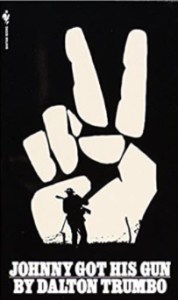
In his 1970 introduction for the new edition of Johnny Got His Gun, author Dalton Trumbo spoke to the “many hundreds or thousands of the dead-while-living,” saying, “So long, losers. God bless. Take Care. We’ll be seeing you.”
The book, for me, is one of the most potent and troubling anti-war novels ever written. Trumbo, of course, knows that we typically look away from those who come home in tatters. Very few campaign rallies are held beneath the viaducts and along the city streets where our homeless vets are scratching out a living. We cheer when the men march away and hide inside our comfortable homes when they return–worse than dead.
So, when I ask why we are still in Iraq and Afghanistan even those who keep sending our soldiers there have yet to come up with a sensible answer.
They shall grow not old, as we that are left grow old: Age shall not weary them, nor the years condemn. At the going down of the sun and in the morning We will remember them. – Robert Laurence Binyon
My wife and I see our reflections in the Vietnam War memorial as I find the name of a high school classmate two died there.
Memorial Day Sales
These anger me because merchants raking in money and shoppers getting a good deal on the latest electronics equipment are not the purpose of this day.
Must we commercialize everything, including the day set aside for remembering our dead?
I’m by no means a hawk–just the opposite, actually. So, I do not see Memorial Day as part of the misbegotten notion that there are glory and honor in war.
Some say we should use the day to visit military cemeteries and memorials. That’s a better idea than heading over to Walmart and filling up a shopping cart. We could spend a quiet day at home or walking a favorite trail through the forest: such things allow us time to attune with the universe, ourselves, and our fallen soldiers.
‘All Quiet on the Western Front’
Reading this book at a relatively young age was a strong influence on my becoming a pacifist. The novel is graphic, shows the dying, the dead, and the battle-weary in ways that leave no space for saying “isn’t this glorious?” Not that I’m suggesting we all stay home and read military history, battlefield novels, or watching films like “Saving Private Ryan” or episodes from the old TV series “China Beach.”
You Don’t Need to Become a Pacifist to Remember
The fallen were doing their duty as they saw it, sometimes against their will (at times of conscription), whether we agreed with the need to fight a particular war or not. Those who came home from those wars have not forgotten the fallen. Those who came home and those who did not and the families and friends of both often supported the wars and the need to enlist, heart, body, and soul. Those who supported the cause and those who did not have an opportunity to come together on Memorial Day and remember those no longer with us whom we loved.
I’ve written somewhere in one of my novels that the true casualties of war are those who come home with or without PTSD. They need our support and understanding and, on Memorial Day, our solemn regard for those who were killed. There’s no support available from us while we push and shove through the crowded aisles on a big box store.
The stores I respect are those that close on Memorial Day out of reverence for the meaning of the day.
When injured Vietnam War veteran Timothy O’Rourke returns home in 1973, an open wound accompanies him. Today, we might call it PTSD or survivor’s guilt. When his helicopter was shot down and then attacked by the Viet Cong on the ground, he was able to save one of the men with him–but not both. The prospective roles of fate, destiny, fairness, and second-guessing oneself plague him as surely as a virus
Vietnam War veteran Thomas Paul Reilly saw the war for himself and subsequently applied that knowledge and his degrees in psychology as an author (Value-Added Selling) and public speaker focusing on the importance of hope, attitude, and value. He effectively uses this background to create a realistic, yet troubled protagonist in this novel which will be released on Veterans Day.
In the chronicles of war and returning veterans, Timothy’s issues aren’t unique, but in an era where veterans’ issues were not well understood, he believes he is alone in trying to heal his psychological wounds. He’s attending college, works multiple jobs, drives a falling-apart old car, has a steady girlfriend named Cheryl, and remains one step ahead of bankruptcy. Friends and family either can’t or won’t help him when he’s confronted with unexpected expenses such as replacing the ancient furnace in his mother’s house where he is staying. Cheryl has money to lend, but he refuses to accept it.
Co-workers at a Christmas tree lot where he’s working to earn extra money tell him that college and dreams aren’t for “guys like us” and that he needs to quit college and get a real job. In almost every area of his life, he is without hope. Among other things, he’s driving away Cheryl, who unconditionally loves him, by constantly telling her he’s not good enough for her.
Reilly has created a character who epitomizes veterans who have reason to believe fate and their country are conspiring against them. Broke and in ill health (emotional or physical), they end up living on the streets as one of society’s festering wounds that seems impossible to heal. A co-worker, Hoffen, at the Christmas tree lot casually talks to Tim about hope, perseverance, and attitude. The man speaks like a sage down from the mountaintop, but will his advice be enough to convince Tim that the open wound he brought home from Vietnam will never heal until he lets it heal?
If Tim were in therapy, his analyst might ask him if he wants the wound to heal. His memory of the helicopter crash–which is well written and rings true–replays over and over as though he either wanted to be rescued from the wounds it caused or return to the scene and die along with the buddy he couldn’t save. Tim is a character who is easy to admire for his dilligent attempt to save his dream against great odds. He is less easy to like because his overly hopeless attitude, as demonstrated in his thoughts and his conversations with Cheryl and others, comes close to whining, justified though it may be.
The book would be stronger if the plot focussed on the major highs and lows of the story and left out the step-by-step “transcripts” of minor–or recurring–thoughts and actions. The inspiring ending would be stronger if readers felt that, other than his stubbornness, Tim had played a more active role in making it happen.
Reading Hope in the Shadows of War should be a cathartic experience for struggling veterans and those who want to understand veterans’ issues and motivations. This is the story’s strength. So is the message of hope from Hoffen and others. Readers will probably take that message with them after they finish the novel.
“Ancient Greek heroes were men of pain who were both needed by their people and dangerous to them.” – Jonathan Shay in “Odysseus in America.”
“A slave stood behind the conqueror holding a golden crown and whispering in his ear a warning: that all glory is fleeting.” –Gen. George C. Patton
We reward our heroes with medals and praise whether they march away to war or run into burning buildings to bring people out to safety.
In either case, praise, like glory, is fleeting, and the transcendent renewal expected through trial by fire (or under fire) in the mythic sense of the hero’s journey may be a dream unrealized. The hero’s character, as Jonathan Shay, author of Achilles in Vietnam and Odysseus in America believes, may be wrecked by the trauma of the experience.
A psychiatrist working with Vietnam War veterans suffering from post traumatic stress disorder (PTSD), Shay focuses his books on what soldiers need to know before they go to war and on what all of us need to know when they return in psychologically damaged condition.
New York Times reviewer Chris Hedges, in his review of a translation of Homer’s Odyssey, wrote “It is his hero’s heart that he must learn to curb before he can return to the domestic life he left 20 years earlier. The very qualities that served him in battle defeat him in peace. These dual codes have existed since human societies were formed; and every recruit headed into war would be well advised to read the ‘Iliad,’ just as every soldier returning home would be served by reading the ‘Odyssey.'” The same can be said of Shay’s “Achilles in Vietnam” and “Odysseus in America.”
Those who march away are praised for marching away and for going beyond the call of duty to perform those duties thrust upon them. When they return, we ask what it was like, but our eyes glaze over when they try to tell us. Is the problem to large to fix? Shay doesn’t think so.
Betrayal of What’s Right
As Shay points out, soldiers often face what happened to Achilles in the “Iliad” when they go into combat. They face a betrayal, via commanders or the system, of what they believe is right and proper. Likewise, when they leave the battlefield, they often face what Odysseus faced in the “Odyssey.” They face the lack an adequate way of dealing with what they experienced while re-integrating into the mainstream world.
Whether it’s the trauma of war or the trauma of other horrific, and often traumatic, events where heroes serve of humanity’s behalf, Shay’s books are wonderful resources for the journey. Shay brings an optimism to his work that might help those who were there and those who were not there come to terms with each other and what happened before the medals were awarded and the fleeting praise was bestowed.
The books are also excellent reference materials for writers, psychiatrists and philosophers who study the classic hero’s journey.
 I’ve always thought Vietnam stole everything from my generation that really mattered, leaving us with a plague of PTSD. The plague worsened when veterans came home and discovered they were invisible. Somehow, the cynical comments from the introduction to Dalton Trumbo’s anti-war novel “Johnny Got His Gun” became the national attitude:
 “When your fight has purpose—to free you from something, to interfere on the behalf of an innocent—it has a hope of finality. When the fight is about unraveling—when it is about your name, the places to which your blood is anchored, the attachment of your name to some landmark or event—there is nothing but hate, and the long, slow progression of people who feed on it and are fed it, meticulously, by the ones who come before them. Then the fight is endless, and comes in waves and waves, but always retains its capacity to surprise those who hope against it.” – ― Téa Obreht, The Tiger’s Wife
 My introduction to the realities of war came from reading All Quiet on the Western Front when I was in high school. I found this novel to be so graphic, I could not comprehend how anyone who fought in a war, observed a war or read that book could possibly support any politician calling for war. I won’t read it again.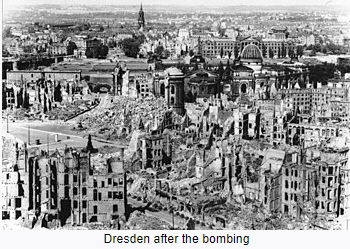

 In his 1970 introduction for the new edition of


 Malcolm's Round Table