How to destroy the pacing of your story

thrillerNovelists trick us in multiple ways in order to ramp up the suspense of a story. Important facts are concealed, backstories aren’t revealed, and point of view is shifted from one character to another keeping readers outside the head of the person whose thoughts would reveal important clues.

One trick annoys me, probably annoys others, and disrupts the pacing of the story. Let’s call this “hurry up and wait.” Here’s an example:

The Bomb

Joe opened the suitcase. There is was: enough C4 to level the building and a timer with ten seconds left in the countdown. The timer was old, sounded like a plastic clock.

The tick tock, tick tock reminded him of summer evenings at the lake when Dad not only woke him at the crack of dawn, but kept him awake most of the night with a loudly ticking alarm clock. Every time it woke him, he lay there waiting for it to go off in an explosion of bells and sunshine. Before the left the old cabin, he threw that darned clock in the lake, hoping a gator might eat it. He had to smile in spite of the bomb in the suitcase. If Dad were alive and sitting here next to him, he would love the sound of that timer.

When a story is racing toward a critical moment, stopping the action for an absurd reason cheats the reader, for it builds tension where there should already be enough tension to cover the action.  In this example:

  1. No sane person faced with a bomb with just seconds to defuse is going to walk down memory lane in his thoughts. He will run, throw the bomb out a window, or defuse it.
  2. Some novelists don’t pay attention to the time it takes a reader to read a passage. I always note it. In this case, the bomb will explode before Joe finishes his thoughts about the lake and the clock simply because the thought takes more time than he has.

A similar sin, somewhat less grievous, is the insertion of backstory information into a scene where, in reality, there’s no time for it. Now, if you’re a reader or a writer who isn’t concerned with the amount of time thoughts and memories take to occur, this won’t bother you as much as it bothers me. Consider this:

The Highway

Sue lit another cigarette and blew the smoke out the open window of the car. Goodness knows, she was driving fast enough for the wind to draw everything out the window including her soft voice, her hair and the gnats that took over the car while they were parked at a rest stop.

“What are we going to tell our parents when we get there,” she asked.

“If you’ll slow down,” said Jim, “we’ll have more time to come up with an elaborate lie.”

She laughed, looked at him sideways, and punched his shoulder gently.

“I’m eight months pregnant,” she said. “What kind of elaborate lie do you propose.”

Other than how she happened to get pregnant, Sue was forever practical. He preferred jokes and delays and white lies. If he could think of a real whopper, he would resort to that. This road was a highway of lies because it connected their hometown with the beach cottages. Things happened at those cottages. Always had. The road home, lined with saw palmetto and scrub oak and a few longleaf pines, was a fertile ground for fibs, large and small. They literally fell out of the trees. If they’d been fish, they would have jumped into his boat. Sue felt uncomfortable with lies. That’s why she drove down this road faster than the law allowed.

“You’ve been overeating,” he suggested.

Okay, maybe there’s some relevance in the fact Jim uses the road as a time and place for covering up whatever he did at the beach.

  1. Nonetheless, this diversion destroys what was developing as a back-and-forth dialogue of short sentences. The pace one can create with that kind of dialogue gets derailed with the intrusion of a giant paragraph of information.
  2. Plus, I feel like asking the author exactly what Sue is doing while Jim has this multi-sentence thought. Yes, sooner or later such conversations have to end. But not before they’re naturally over.

Pacing can help a writer’s work or destroy it. Sometimes, it’s a matter of personal taste. If you read your stuff aloud, you’ll hear the pacing as surely as you hear the rhythm of a song on the radio. The pace not only needs to feel right, it needs to make logical sense. I think it’s illogical for a man defusing a bomb to think about something else, and I think most people having a conversation would be saying “Jim, Jim, Earth to Jim” before Jim finished his thoughts about the road and the lies he found on it.

Pitch-perfect pacing keeps the thrills in your thriller.

My two cents for a Monday afternoon.

–Malcolm
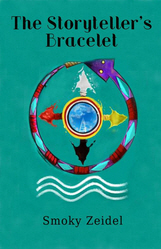
 

Briefly Noted: ‘The Storyteller’s Bracelet’ by Smoky Zeidel

Thomas-Jacob Publishing released a new edition of Smoky Zeidel’s The Storyteller’s Bracelet today, bringing the novel back into print after a twenty-two month absence. The book is available in e-book and Kindle editions. You can watch the novel’s trailer here.

From the Publisher

STBcover“It is the late 1800s, and the U.S. Government has mandated native tribes send their youth to Indian schools where they are stripped of their native heritage by the people they think of as The Others. Otter and Sun Song are deeply in love, but when they are sent East to school, Otter, renamed Gideon, tries to adapt, where Sun Song does not, enduring brutal attacks from the school headmaster because of her refusal to so much as speak. Gideon, thinking Sun Song has spurned him, turns for comfort to Wendy Thatcher, the daughter of a wealthy school patron, beginning a forbidden affair of the heart.

“But the Spirits have different plans for Gideon and Sun Song. They speak to Gideon through his magical storyteller’s bracelet, showing him both his past and his future. You are both child and mother of The Original People, Sun Song is told. When it is right, you will be safe once more. Will Gideon become Otter once again and return to Sun Song and his tribal roots, or attempt to remain with Wendy, with whom he can have no future?”

Smoky’s Description of the Cover’s Symbolism

“I’ve gotten a lot of questions about the meaning behind the symbols on the new edition of The Storyteller’s Bracelet. The wavy lines at the bottom represent water, which plays a life-changing role for my male protagonist, Otter/Gideon. The stairway through the clouds represents the gateway to the 5th World in Hopi mythology. The arrows point to the four cardinal directions and their colors represent the direction people of color scattered at creation. (These colors can vary from one tradition to another; these are the colors the Hopi use.) Finally, the rattlesnake is a symbol of new life, of transformation. Rattlesnake sheds her skin and begins life anew.”

You May Also Like

Smoky also released a companion short story on Kindle called Why the Hummingbird is So Small, “the enchanting story of Sun Song, a storyteller for her tribe, as she visits Fuss, her hummingbird friend, on the day before she is to leave for Indian School in the East.” You can visit Smoky’s website here.

–Malcolm


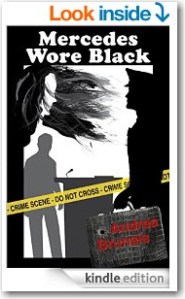
Briefly noted: ‘Mercedes Wore Black,’ by Andrea Brunais

Mercedes Wore Black, by Andrea Brunais, Southern Yellow Pine Publishing (June 14, 2014), 291pp.

mercedesworeblackI’m enjoying this smartly written political thriller set in Florida where I grew up. As a former college publications adviser from a “journalist family,” I see immediately that Andrea Brunais knows the world of reporting and gets it right, especially in the domains of murder, political intrigue and the often-losing out Florida environment.

From the Publisher

Florida Politics. The only thing predictable is the unpredictability. When Janis is fired from her job at the newspaper, she focuses on the causes that matter to her. The environment and the economy. That embroils her in the 2014 election.

When her good friend Mercedes encounters danger and is brutally murdered, Janis begins to investigate. She finds herself in a political maelstrom of big money, lottery, and interests with opposing goals. Will she be able to find the crux of the problem—and Mercedes’ killer? Will she be able to expose corruption before anyone else is put in danger?

Quotes from the Reviews

  • “Fast-paced, exquisitely written, Mercedes Wore Black vividly depicts the underbelly of the newspaper industry and the all-too-real shenanigans of those who are ever willing to sacrifice Florida’s natural treasures” – Joe Guidry, The Tampa Tribune
  • “A fast-moving story with as much Florida flavor as a grouper sandwich.” Daniel Berger, Amazon reader review.

Floridians especially will enjoy this novel for it is rich in recent political history, on-going environmental issues pitting development against the land, and places state residents know well such as Tate’s Hell Forest, Sopchoppy, Bradenton, Tallahassee and Wakulla Springs. While these strengths will endear the book to Florida readers, they could be a little too much for those in other parts of the country–could be, for the intrigue is high level and will carry readers past the heavy local color.

I spent many hours at Wakulla Springs, a half hour south of Tallahassee where I grew up, and I always saw its old-Florida charm as unique and a bit strange. Now, after the protagonist’s best friend is murdered there  in Mercedes Wore Black, I don’t think I’ll ever see this home of snake birds, limpkins, turtles, and icy cold water the same again.

Highly recommended. See the full review here.

Malcolm

Malcolm R. Campbell’s Florida short stories include “Moonlight and Ghosts,” (Tallahassee) “Cora’s Crossing,” (Marianna) “Emily’s Stories,” (St. Marks)  and “The Land Between the Rivers.” (Tate’s Hell Swamp) His novel “The Seeker” includes major scenes at Alligator Point and Tate’s Hell.


Who are all those people in your stories?

“Revealing small tidbits about your characters as you go along helps engage your readers. We know how important that is in dropping clues and red herrings, but it’s also an excellent way to have your readers identify with your characters — even the villains. This is especially important in a mystery because it isn’t until the end of the story (hopefully) that the reader figures out who is truly the villain.” – Gayle Trent

I like author Gayle Trent’s advice about adding small tidbits of information about characters as stories progress, taken from Adding Dimension to Your Characters, because it mirrors the way most of us learn about the people in our lives. We meet a person, note what they look like, discover whether they seem to like us or pose a threat, and then the longer we’re around them, the more bits and pieces we pick up. Real life people seldom appear with a resume.

I’ve been thinking about all those people in our stories and how we portray them ever since reading a beginning writer’s question on a writing forum. She wanted to know how to figure out what a character in a proposed story looked like, sounded like, and acted like.

The question puzzled me, not because it’s irrelevant, but because the writer seemed to have no idea what the character was like. Early on, most writers need to figure out how best to portray major and minor characters in a story. Usually, though, a writer has a story idea and sort of “sees” the people involved: the challenge, then, is taking what one “sees” and figuring out how to  describe the character on paper.

By “see,” I mean seeing the character the way one “sees” somebody in their memory when they think about a family member, colleague, or friend.

Rushing the Plot?

I often wonder if a writer is rushing the plot down on paper before it’s ready when s/he decides to write the story but doesn’t know what any of the characters are like. When I think about writing a “boy meets girl” story, it’s hard for me to think about the idea without “seeing” what they boy and girl look like, act like, and believe in.

Fortunately for me, my imagination is very visual. That is, my potential story or story in progress presents itself to my thoughts like watching a movie. When I write a scene, I’m watching it the way I watch a movie or the way I see an event from the past in my memory.

If you don’t see your story this way as you write, here are a few ideas for learning about your characters:

  1. Readers like good guys with flaws and bad guys with a few good points. Real people are seldom 100% angels or 100% devils.
  2. Write a few pages of the story, and watch who shows up. As you write about your protagonist, do you “see” him taking actions and having conversations? Do you see the antagonist working his or her evil plots? If you do, then your characters and their traits may well develop as you tell the story. As you learn about them, you can go back and begin to describe them.
  3. Interview your character: This works best if you type a list of questions, print them out, and then quickly hand write the answers. Questions might include: how old are you, what color is your hair, what’s your hobby, what’s your job, what’s your favorite movie, what excites you, what depresses you, etc. Pretend like your conducting a job interview and write down the answers as quickly as you can.
  4. Imagine your character. Relax and pretend you are sitting in a place associated with your story whether it’s an office, ship, war zone, forest, old house or whatever. Pretend you’re sitting there when your character shows up. Watch them. How do they act? What do they look like? What’s their favorite color or song or book?
  5. I don’t like using real people as models, but sometimes it’s hard not to when they seem to fit the bill. What makes these real people stand out in your mind? If you were going to sketch their picture with a pencil, what physical characteristics would stand out?
  6. Elsewhere, I wrote a post about characters and themes. When you have a so-called theme for your minor characters, you’re providing the reader with a few defining points each time they appear. They pronounce words incorrectly. They shout. Their hair is always messed up. They wear the same color all the time. They swear a lot. They tell the same joke in multiple ways. You can sketch in characters quickly by getting readers used to identifying them with their theme.
  7. It’s important to discover why readers might care about your protagonist and what they fear/dislike about your antagonist. Without resorting to trite, stock characters out of books and movies, what does this suggest to you. What actions/traits make a character lovable? What actions/traits make a character despicable? As you think of this, you might begin to see what they look like, what they might do (good or bad) and the kinds of friends they have.

Rushing the story ruins the story. Rushing character development tends to create either flat stereotypes or too many details. As your story unfolds during the first draft, I think you will “see” your characters more and more clearly in your mind. You can always go back and add detail earlier in the story if you need it. You don’t need to know everything about every character when you start writing.

I like the idea of discovering a story as I write. This doesn’t work for the people who insist upon an outline. But as the story unfolds, the characters become clear. Now I can go back and fill in the details and make them more three-dimensional.

In many stories, the plot defines the kinds of characters you need. The more you follow the plot, the more you see who’s in it.

Malcolm


Sometimes writers forget to back up their work

“Outside of a dog, a book is a man’s best friend. Inside of a dog it’s too dark to read.” – Groucho Marx

Cynical book reviewers often suggest some books are best eaten by dogs, used as doorstops and fireplace kindling, or lost in computer crashes. Sometimes they’re right.

SOFcover2014Since the writing that writers write is more often than not sitting in a DOC file on a computer’s hard drive, you’d think we’d backup our work every night with the same diligence that we run the dishwasher, turn off the lights and lock the front door.

Flash drives that hold zillions of words make that so easy to do. But suppose somebody–possibly me–was really on a roll while writing a comedy mystery about a reporter looking for a race horse on a new computer. (Actually, Jock was looking for the horse at a racetrack and an abandoned farm.)

So, this writer writes way past the ending of Jock Stewart and the Missing Sea of Fire and before he knows what’s happening, he’s 30% into the sequel to be called Jock Stewart and the Bambi Diaries.

He copies the words belonging to the first novel into another file and sends it to the publisher. He hasn’t backed anything up yet be cause the computer is relatively new. While the publisher looks at the sea of fire book, he adds more to the Bambi diaries book.

Then the relatively new computer has a head crash. No software on the face of the earth is able to retrieve the document holding the sequel to Jock Stewart and the Missing Sea of Fire.

I was so deep into the continuing story that I never took the five minutes necessary to insert a flash drive and backup the sequel. And, I never was able to get back in the groove enough to re-create it.

So now, everything is backed up a hundred ways to Sunday even if it’s a Tuesday. There may be a lesson here, but I’m thinking it’s probably too obvious to point out.

Malcolm

While Malcolm R. Campbell did not become the author of “Jock Stewart and the Bambi Diaries,” he did write other stuff before the computer ate it.

Review: ‘Suicide Supper Club’ by Rhett DeVane

suicidesupperclub“Life is crap and the weather is stupid-hot: reasons enough for four small-town Southern women to plan ‘the easy way out,’” the publisher’s description for Suicide Supper Club informs us. Rhett DeVane (“Cathead Crazy”) brings her trademark sparkling prose and deep insights into human nature to this story of the darkness and light in the lives of Abby, Loiscell, Sheila and “Choo-choo.”

Truth be told, the light is in short supply.

The lives of these kindred spirits play out in the Florida Panhandle between Chattahoochee, a small town with a main street dominated by a mental institution, and Tallahassee, the state capital, 44 miles away. Most of the festering family secrets, declining health, estrangement and physical abuse live and breathe in Chattahoochee for Abby, Loiscell, Sheila and Choo-choo. Tallahassee is for shopping, fine dining, cancer treatments and a prospective appointment with a hit man.

Suicide and humor are usually mutually exclusive worlds. But they seamlessly merge through DeVane’s inventive plot, fully realized characters, knowledge of Southern life and customs, and sense of place. Readers cannot help but feel the characters’ reactions to the darkness in their lives and, quite possibly, understand the rationale for a suicide supper club.

The light in Suicide Supper Club comes from the great love and esteem the four women have for each other and the ways they find for coping with the Florida heat and the crap. I grew up in the Florida panhandle, so it was easy for me to see near the beginning of this novel that when it comes to Chattahoochee and Tallahassee and the people who live there, Rhett DeVane gets it right.

You’ll see that, too, long before you reach the last page and learn whether or not Abby, Loiscell, Sheila and Choo-choo are still among the living.

Malcolm

Book Review: ‘New Dimensions of Being’ by Nora Caron

NDB cover smallAuthor Nora Caron (Journey to the Heart) returns with the gentle and deeply spiritual sequel New Dimensions of Being about a young Canadian woman named Lucina who has moved to Oaxaca for a much-needed change of scene. Fluent in Spanish and acclimated to the warm climate and culture of Southwestern Mexico, the former computer professional works as a waitress and shares her apartment with her boyfriend Teleo.

While she is happy with her decision to move to Oaxaca, Lucina’s sleep and serenity are being disrupted by frightening nightmares. Then she discovers she is pregnant. Her uncertainty about motherhood at this time in her life puts a strain on her relationship with Teleo and widens the scope of her spiritual quest.

New Dimensions of Being is a story about mentors. Teleo is an herbal healer; John is a shaman, Maria–a former actress–is wise in the ways of predatory men (vampires, as she calls them); Teleo’s mother is a midwife with strong connections to spirit as indigenous cultures view humankind’s relationship with Earth, gods and elemental forces; and Weeping Willow brings Lucina the Hopi worldview and its prospective  connection to her nightmares.

Each of these mentors has a role to play in Lucina’s quest, imparting wisdom and advice out of their experience. What does she want to do about her pregnancy, her relationship with Teleo, and her role as a woman at a time of spiritual shifts?

Written in a natural, easy-to-read style, New Dimensions of Being brings us a believable protagonist who is learning how, exactly, to define herself. At times, she is more reactive than active, when some of the mentors’ stories become lengthy.

However, her reactions ring true and her progress along her spiritual path will appeal greatly to women who are reclaiming their feminine energy and power in a patriarchal world, and to others who are focused on a more natural and cooperative relationship with Mother Earth.

Quebec author finds her stories and spirit in the Southwest

NoraCaronToday’s guest is Nora Caron, author of Journey to the Heart and the recently released sequel, New Dimensions of Being. From Montreal, Quebec, Caron works as a private English teacher and Kangen water distributor when she’s not in the American Southwest working on films.

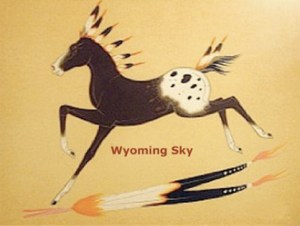
She co-wrote the script for Wyoming Sky, a film currently in development by her own film production company, Oceandoll Productions.

Malcolm: Welcome to Malcolm’s Round Table. You’ve been busy lately touring on behalf of New Dimensions of Being. I won’t ask you to tell tall tales about appearing in multiple towns and multiple stores, but I’m guessing it’s been an adventure. What are the high points?

NDB cover smallNora: I adore meeting new people and not knowing who will show up. Every bookstore has its own energy and I never know what to expect! It’s like a dream every time in which I don’t know what will happen. In the past I used to try to organize everything and count on certain people to show up but now I just go with the flow. Sometimes people don’t talk and other times, like in Texas recently, they just open up magically and incredible life stories are shared in the room. The best part of touring is that afterwards, you come home with new friends and unforgettable memories, not to mention great new ideas for future novels.
Malcolm: When you wrote Journey to the Heart, did you know that your protagonist Lucina had another story to tell or did she start appearing in your thoughts and dreams later?

Nora: I had several people come up and ask me, “So what happens after? I want to know more! Please!” I had never thought of writing a trilogy but I realized after much meditation that Lucina’s story indeed was not over. When I started writing the second book, I had so much to say that I couldn’t wait to start the third. I literally wrote two books one after the other without taking a break, something I thought I would never pull off given all my other work that I must juggle daily. I can honestly say these books wrote themselves through my fingertips, as though powerful forces were pushing their way to print.

Small-coverMalcolm: I can understand a resident of Quebec being fluent in French. But how did the German and Spanish come into the picture? How does being multi-lingual influence your work as a writer in English?

Nora: My mother speaks many languages and it was a sort of necessity growing up in our household to master different languages. I lived for a while in Berlin back in 2001 and loved the German culture very much, and it was at that moment that I began learning German. In 2002, I traveled to Mexico where I heard Spanish for the first time and couldn’t shake it from me. It was in University that I minored in German and Spanish because I knew that being multilingual would help me later down as I traveled the world. Speaking different languages allows me to study other cultures and people more in depth, and allows me to see more clearly how other people live and interact. The fact that I speak Spanish gave me an inside perspective on Mexico which is everywhere in my first three novels. I believe that to know different languages gives you freedom to explore worlds that remain hidden sometimes to the common outside tourist.

Malcolm: How does a person living in the ice and cold of Quebec become fascinated with the American Southwest? Yes, I know it’s warmer there, but I think there’s more to it than that?

Nora: Although I am born in ice and cold and gray skies, my spirit is far from that energy. It was in the south of the US that I started to feel myself fully, especially in California and Arizona. I find the people more welcoming and friendly, and I adore the dry heat. I am an outdoors person, I love running and swimming so winters in Quebec are a little death for me each year. In my heart, I am a true Californian: wild, free-spirited, open-minded, rebellious, and very liberal. Plus I love the joy and lightness of being in the southwest which is rare to find in my part of the world. Up here people are constantly fighting the weather hence that reflects in their personalities. Quebecers are rough, tough, and often not the happiest people on earth. I believe climate shapes people much more than we imagine.

Malcolm: You’re one of the few authors I know who also has an IMDb listing. What led you to acting and to your work in the Wyoming Sky project?

In the summer of 1884, the proud daughter of a horse rancher returns home from back east, only to face hardship and danger on the Wyoming frontier. To save her father's ranch, she must move a herd of rare horses over 100 miles, with a gang of killers in hot pursuit.
In the summer of 1884, the proud daughter of a horse rancher returns home from back east, only to face hardship and danger on the Wyoming frontier. To save her father’s ranch, she must move a herd of rare horses over 100 miles, with a gang of killers in hot pursuit.

Nora: When I first went to Los Angeles seven years ago, I befriended a wonderful actor named Ingo Neuhaus who became one of my closest friends on earth. One day he threw me into a short film Online Dating and we had so much fun, that we decided to work together on other short films. I had done television and theatre in the past, as well as film studies, so I felt like I was re-connecting with a part of me that had been sleeping for a long time. Three years ago, Ingo and I started writing our first feature film Wyoming Sky and once the script was complete, we realized we had something really special in our hands. Several people in Hollywood jumped on board, and last year we formed our film company with Brad Neuhaus and we became Oceandoll Productions. Since then, we have been raising funds for Wyoming Sky and recently launched a Kickstarter campaign for development money. It’s such a pleasure to be doing films with such talented men as the Neuhaus boys! There is never a dull moment and we like to think we are different from other filmmakers because we take time with people and listen to people rather than just think about ourselves. Hollywood can be very narcissistic at times, sadly.

Malcolm: In her novel The Goldfinch, Donna Tartt describes Nevada as a place of “wide horizons, empty skies, spiritual clarity.” I also get this feeling when I visit my granddaughters there, and I sense it lurking behind the scenes in your work set in the Southwest. How do you visualize the region when you approach it as a writer—and perhaps someday as a resident?

Mojave Sunset
Mojave Sunset

Nora: Since I did travel in Mexico, the scenes in my novel come from a first-hand account as well as much research about the places my narrator visits. I feel at home in places with wide horizons and clear skies, and one of my favorite places to visit was the Mojave desert in California. It was there that I heard the calls of the coyotes and slept under the starlit skies, and dreamed of shamans and witches and transformations. I hope that my descriptions of places in my novels stir that sense of wonder in readers, wonder about the mysterious unknown, the Other Side, the world of magic and spirits, and rebirth and death.

Malcolm: Thank you for stopping by Malcolm’s Round Table. Best of luck with your Kickstarter campaign for Wyoming Sky and your tour for New Dimensions of Being.

The Story: In New Dimensions of Being, Lucina is haunted by terrible recurring nightmares. Unsure of what they represent, Teleo and her seek answers but the quest opens up many new areas of life Lucina is not certain she can cope with. Discovering that she is pregnant, Lucina faces a huge decision: Is she ready to become a mother or not? As Lucina stumbles around to find the right path for her, she realizes that keeping love alive is much more complicated than she originally thought.

On the Web: You can visit Nora on the web here; you and learn more about her campaign to raise money for Wyoming Sky here.

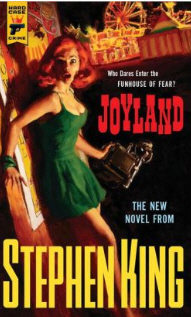
Stephen King, Joyland and the Lure of Pulp

joylandA haunted carnival funhouse gives a supernatural spin to events in Thriller Award–winner King’s period murder mystery with a heart. In the summer of 1973, 21-year-old college student Devin Jones takes a job at Joyland, a North Carolina amusement park. Almost immediately, a boardwalk fortune-teller warns that Devin has “a shadow” over him, and that his destiny is intertwined with that of terminally ill Mike Ross, a 10-year-old boy who has “the sight.” – from the Publishers Weekly review of Stephen King’s “Joyland” (June 2013 release)

Anyone Stephen King’s age or older has been impacted by pulp fiction whether we’ve read any of it or not. Pulp, referring to the cheap paper, covered a lot of genres from westerns to mysteries to sports to gangsters. It was cheaply produced and, so some people say, never could have seen the light of day in the up-scale “slicks” or “glossies”—the magazines and books printed on better paper.

The cover art, which was usually suggestive, garish, colorful, and over the top, meant that readers typically wouldn’t let their parents, teachers, office workers, pastors, and spouses see the books. In terms of magazines, most pulps died out during the 1950s as the sixty-year-old publishing approach began to run its course. Today, the book covers that were once considered scandalous are now considered “camp” and/or treasures of a bygone era that began with Argosy Magazine and included authors H. Rider Haggard,  Edgar Rice Burroughs and Talbot Mundy.

“Undeniable…charm [and] aching nostalgia…[JOYLAND] reads like a heartfelt memoir and might be King’s gentlest book, a canny channeling of the inner peace one can find within outer tumult.” – Booklist

The cover of Stephen King’s upcoming novel Joyland screams PULP. Published by Hard Case Crime, the look of the book is intentional as its author takes a nostalgia trip back to his roots and the fiction he grew up reading. The publisher is a friend of pulp:

Hard Case Crime brings you the best in hardboiled crime fiction, ranging from lost noir masterpieces to new novels by today’s most powerful writers, featuring stunning original cover art in the grand pulp style.

Though King embraced e-books early on, Joyland will be available in paperback only. That’s made bookstores happy and caused other people to wonder what King is up to when he says, “I have no plans for a digital version. Maybe at some point, but in the meantime, let people stir their sticks and go to an actual bookstore rather than a digital one.”

Pulp seems to be less pulpy on a Kindle or a Nook. Perhaps that, and the nostalgia of those pulpy old days is sufficient rationale for the paperback-only release. Personally, I would like to see some other major writers delay the release of the digital versions of their books. Only the prosperous could afford to do that, to go against the tide that often washes e-books up on shore before the paperback and hardcover releases.

Some years ago, literary agent Mort Janklow said of King, “That’s a fellow sitting up in Maine having fun, but it’s not a way to run a business.”

No, it probably isn’t. But I like it. I like it even on a day when I’m talking to the regional library system about including e-book editions of my novels on their e-lending lists. I like it because it’s fun. And yes, I’ll buy a copy at a bricks-and-mortar bookstore because that’s part of what pulp fiction is all about, walking in, making sure Mom, Dad or the school teacher aren’t around, and grabbing a copy of the latest hardboiled story off the spinning rack of books.

I remember the thrill of all that and I’ll enjoy going back in time to renew my memories. Unlike the old days, this book has glowing reviews from mainstream reviewers. I almost wish it didn’t.

–Malcolm

Have You Ever Been in a Book Discussion Club?

bookclubMany of us, authors included, have a few unsettling memories of some of the book discussions that occurred during our high school and college English classes. I wondered at the time how many prospective readers would swear off books forever after being subjected to highly technical book criticism discussions in survey and other general literature courses.

In contrast, book discussion clubs and readers’ groups can provide a breath of fresh air. The catch is, you have give some thought to your club’s membership, book selection methods and discussion format at the beginning, and then select a moderator who keeps things on track and gives everyone a chance to talk. Rachel Jacobsohn provides a few tips that will get you started. The American Library Association also has had some great ideas.

In fact, if you search on line with search terms like “readers group tips” and “how to start a book discussion club,” you’ll find more than enough ideas from publishers, The Library of Congress and libraries to get your group up and running.

Basic Discussion

Personally, I think you can have a great evening talking about a novel by focusing on relatively standard discussion questions:

  • What happened?
  • What plot twists surprised you?
  • Who were the main characters and how did they interact with each other?
  • Did the characters change during the course of the story?
  • Did the author have a theme and/or a message behind the story?

If a novel fits into a specific genre, you might want to add a question about, say, its approach to fantasy, how romance fit into the storyline, or whether the mystery/thriller aspects of the plot were set up and then resolved.

Adding Depth

Many publishers provide discussion guides or book club starter questions to help reading group moderators lead memorable discussions. You can decide whether this information should be handed out to all members after they read the book but before the discussion begins, or whether to keep these materials on hand for use by the discussion leader as needed.

Since most clubs are discussing novels for the members’ enjoyment rather than approaching fiction as it might be taught in a college course, I think you’ll usually get more spontaneity out of your group if you don’t show them in-depth discussion questions in advance. Sure, these questions provide food for thought, but they can also lead to members planning their answers in advance rather than listening to and responding to what other members are saying as the discussion unfolds.

I’ve spent the morning writing “starter questions” for the novels in my upcoming series of fantasy adventures. As I wrote them, I wished I could turn myself invisible and listen in on some of the discussions. I haven’t been in a reading group for a long time and miss the great discussions that come up right after people finish reading a memorable novel.

Malcolm

trilogybanner