Review: ‘Madame ZeeZee’s Nightmare’

If you’re taking a dance class and its members find out you’re a writer and ask you to write a murder mystery about the class, what will you do? I happen to know author Pat Bertram has been taking a dance class or two or three and that her friends thought such a novel would be a real hoot.
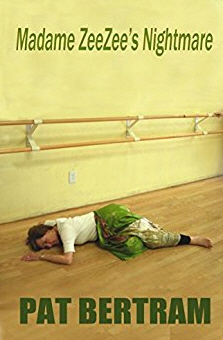
That said, I’m surprised that Pat’s publisher didn’t put a disclaimer at the beginning of the novel that claimed “No dance class members were killed during the writing of this book.” But, Pat and her publisher Indigo Sea Press threw caution to the winds, so one wonders where the fiction begins and the truth ends–and vice versa.

The result is a very readable hoot.

When the students at a small town’s studio class find out that one of them is an author, they think it would be fun for her to write a novel about their classes in which one is killed and everybody else is a suspect. A superstitious person would know such games lead to real trouble; so would anyone who suspects the fates have a dark sense of humor. But they don’t stop to think about consequences. One of them even volunteers to be the victim. The rest of them talk about motives and murder methods.

But then somebody dies and the book thing is no longer a game. Suffice it to say, the cops are not amused by the book idea and think the writer is the killer. In this dandy mystery, everyone has a secret, a reason for covering it up, and a possible motive. The characters are well developed, the introspective protagonist wonders if she inadvertently set the stage for a murder by agreeing to write a murder mystery based on the dance class, and the cops tell her that in real life, most amateur sleuths and up dead or worse.

Readers who love mysteries will enjoy this book. Writers who write mysteries will consider being more careful when pretending to kill off their friends in a novel. And those who’ve been thinking of taking a dance class will see the story as a cautionary tale.

Pat (More Deaths Than One, Daughter I Am) has, with Madame ZeeZee’s Nightmare, written another compelling story.

Malcolm


Too much interior monologue will kill a good story

“Interior monologue, in dramatic and nondramatic fiction, narrative technique that exhibits the thoughts passing through the minds of the protagonists. These ideas may be either loosely related impressions approaching free association or more rationally structured sequences of thought and emotion.” – Encyclopaedia Britannica

True stream-of-consciousness fiction can yield a lot of exciting passages about a character’s inner life (which s/he may or may not confuse with reality) as well as plot-advancing impressions that mesh well with the story line.

When I think of “too much interior monologue,” I’m not bashing well-written stream of consciousness techniques in spite of the fact that readers who don’t like literary fiction will hand out one- and two-star reviews for such novels on Amazon. When an author’s protagonist thinks about the situation s/he is in, that’s interior monologue.
Naturally, it’s normal and relevant to think about the situations we’re in. On the other hand, when this thinking does on for hundreds of words in multiple places in a novel, then it is likely to ruin the story. Writers are told that most of what they put in a novel should advance the plot. Overused interior monologue doesn’t advance the plot: instead it puts the plot on hold.

I just finished reading a novel with an interesting plot. A protagonist with a history of panic attacks which s/he manages with prescription medication (as much as possible) undergoes a traumatic experience before being put into an unrelated but more dangerous situation where her life and the lives of others is at risk.

I’m not going to identify the novel or even count the number of words in it and compute what percentage of it is plot-stalling interior monologue. My impression, though, is that 40% of the novel is interior monologue along the lines of. . .I need to keep my self from screaming. . .I need to relax. . .maybe I didn’t see what I think I saw. . .can I trust person XYZ. . .maybe if I told my story and/or got certain people to trust me, they would believe me and/or help me.

Stop Talking to Yourself and Do Something!

A little bit of this is fine. But when it goes on and on and on, there’s really nothing happening. Yes, maybe this would happen in real life, but writers are also told that writing fiction that copies real life–as a 24/7 video camera might view it–is bad because a lot of that real life stuff is trivial. In the novel I just finished, the character’s fight to keep her panic under control and her considerations about what may or may not be happening can be conveyed to the reader much faster.

When I see excessive amounts of interior monologue, my first thought is that the writer doesn’t really have enough depth in the plot to make a novel. That is, there are two few events and dialogue passages to sustain a book-length story. So, the interior monologue pads the length of the book out to the minimum number of words the author or publisher feels are necessary to call the book a novel rather than a short story, novelette, or novella.

I liked the plot of the novel I just finished. I liked the satisfactory ending and the fact that the protagonist’s experience ended up making her a stronger person ready to take stock of a lot of decisions about her life that had been stalled. I think it’s a shame, though, that the story was dragged down by the interior monologue instead of being pushed forward with a greater number of plot elements.

Dan Brown’s “Teaching Moments” Come to Mind

Dan Brown and others who write novels about ancient secrets with a modern twist to them are often criticized for stopping the action through the insertion of a lot of exposition in which one character tells another character what the ancient secrets are all about. This is a slick way of telling the reader what those secrets are about. If you were going to write a spoof of such books, you’d have one character pull a knife on another character and then–so to speak–freeze the action while the character tells somebody else why all this matters (for, say, a thousand words) and then go back to the knife fight.

That really tears apart the pacing of the action. It’s also very frustrating to the reader. Excessive interior monologue has the same negative impacts.

–Malcolm

Malcolm R. Campbell is the author of “Conjure Woman’s Cat,” “Eulalie and Washerwoman,” and other magical realism and fantasy novels.

Autumn Price List for My Kindle Books

Prices on the following books have been reduced in time for the vast amount of shopping you plan to do for the holidays.

  • Eulalie and Washerwoman (novel) – $2.99 – conjure, crime, and magic in Florida
  • The Sun Singer (novel) – $1.99 – contemporary fantasy in the Montana mountains
  • Mountain Song (novel) – $1.99 – realism with a splash of magic in the Montana mountains
  • At Sea (novel) $1.99 – realism with a splash of magic on an aircraft carrier in the Vietnam War
  • “Waking Plain” (short story) $0.99 a very fractured fairy tale

Happy shopping!

–Malcolm

To learn more about my books, please visit my website.

‘How?’ – the motive power of the novel

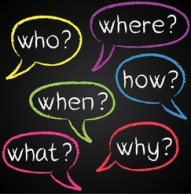
Journalists are taught that basic news stories focus on the 5Ws and the H, that is, who, what, when, there, why, and sometimes how. Consider this lead to a news story:

City council members Roger Daniels and Steve Tanner were killed when their sports utility vehicles collided at the corner of 5th and Main during the morning rush hour here today.

  • Who: Roger Daniels and Steve Tanner
  • What: Two Deaths
  • When: This Morning
  • Where: 5th and Main
  • Why: Automobile collision

If the story was written soon after the wreck, the how isn’t known? Since those involved were city council members, there may be a follow-up story explaining how it happened even before a police investigation is completed. In terms of the 5Ws, there aren’t many variations of automobile crashes at intersections.

Some gurus suggest that there aren’t many plot variations available to novelists either. They say the number is finite and/or that–in terms of the basic who-what-when-where-why series of events–all of the universe’s stories have already been told. So why, then, are writer still writing?

Because of the how.

In an interview in the September/October issue of Poets & Writers, Salman Rushdie says that James Joyce’s novel Ulysses doesn’t have much of a plot, that is to say, the who, what, when, where and why are very spartan. As he puts it, “Man works around Dublin for a day.” A lot of people do that, if not in Dublin, in some other city.

Wikipedia photo

“But the how,” he adds, “is what makes this a gigantic work of literature.” A story, he believes, “works” or “doesn’t work” based on the how. He suggests writers should take an organized approach when they contemplate writing a new story, asking themselves what are they writing about, what’s the story there, whose story are you telling, and why are you telling it?

But the important questions are how are are doing it? and why are you doing it like that?

Whether you take an organized approach via such questions, outlines, and other pre-planning or begin with a notion and simply start writing to see where the story goes, the how is the real story. A Dylan Thomas fan, I’ve always liked his poem “The Force That Through The Green Fuse” that begins: “The force that through the green fuse drives the flower/Drives my green age; that blasts the roots of trees/Is my destroyer.” That force is energy.

I see that force in stories as roughly defined by the “how of it all.”

If you were to develop a short story using the events in the accident story above as the plot, it’s likely that the story wouldn’t become a gigantic work of literature if how it happened turned out to be that one of the drivers was texting and ran a red light.

But what if it was a murder/suicide? What if criminals jimmied the brakes in both cars? What if one or both men were being controlled by a witch? Okay, now we might be going somewhere readers can’t help but read about.

–Malcolm

Malcolm R. Campbell is the author of “Eulalie and Washerwoman.” People are kidnapped everyday, but how Eulalie stops this from happening is the true energy behind the story.


How often do you re-read your old books?

  1. Never because I don’t know where they are.
  2. Once in a while whenever I can get them away from the dog.
  3. Whenever I find then hidden at the houses of friends who “borrowed” them.
  4. Are you crazy, who has time to re-read old books when so many new books are published?
  5. Whenever my stack of new books runs out and the next Amazon shipment is days away.

My answer to this hastily thrown together set of questions is #5. When I read a great book the first time, I think, “I’ll remember all of this forever.” When I re-read it ten or twenty years later, I’m amazed at how much I’d forgotten.

Biltmore House Library

Returning to a favorite book is like having a new conversation with an old friend. I don’t re-read books as often as literature professors because many of them read books again every time they teach them in a course. While some literary criticism is interesting, I seldom read it, even when it focuses on the books on my selves I like the best. I don’t like being skewed away from my impressions of a book over time by reading what others have said them.

My favorite room at Asheville, North Carolina’s Biltmore House is the library. My library wouldn’t look this good because I buy mostly paperbacks. They don’t wear as well or look as nice on shelves that climb all the way to the ceiling. As it turns out, some of my paperbacks are so old that the pages fall out when I read them. Suffice it to say “Perfect Binding” (the style used for most paperbacks) isn’t perfect. The glue deteriorates over time.

I’ve probably re-read this series of novels more often than any other. Fortunately, my copy isn’t as beaten up as this old edition on Amazon.

I doubt that any of my old books are worth a lot of money, so you won’t see my name attached to a newsworthy sale of a book at a famous auction house. In addition to the favorites I’ve owned for years, the most dear are those that were once owned by my parents or grandparents. They speak to other times and other places, but re-reading them occasionally is almost like a psychic experience because my imagination tells me what my relatives thought and felt when they once read the words I’m seeing years later.

Every time I re-read a book, I discover something new about the story or about me. Sometimes I remember where I was when I first read it. Sometimes I’m disappointed because I no longer like the story and I see that I’ve changed from the person I was when I thought it was the best thing I read “that year.” However, the books I turn to again and again are always a special pleasure because through luck or magic or the author’s skill, they have kept their excitement, sense and relevance.

Perhaps some of you have found some of the same things to be true whenever you took an old book off a shelf and enjoyed it again.

–Malcolm

Malcolm R. Campbell is the author of “The Sun Singer,” “Sarabande,” “Jock Stewart and the Missing Sea of Fire,” “Conjure Woman’s Cat,” “Eulalie and Washerwoman,” “Mountain Song,” and “At Sea” in addition to numerous Kindle short stories.


Florida Legends: The man who could turn into an alligator

One of my favorite stories out of the Federal Writers Florida Folklore project, is the one about Uncle Monday collected by the author Zora Neale Hurston in the 1930s. Among other places, it appears in “Uncle Monday and Other Florida Tales” by Kristin G. Congdon.

Uncle Monday was a powerful conjure man who brought his magic from Africa. He was sold into slavery. When he escaped, he joined up with the Seminole Indians to fight against federal troops. He vowed that he would never be taken captive and enslaved again.

ewgatorDuring a ceremony at Blue Sink Lake in central Florida held by Africans and Indians, Uncle Monday danced and transformed into an alligator and plunged into the lake with all the other alligators. He is said to live there even now and to change into a man again when it suits his fancy. At the end of the day, though, he returns to the lake and, as Congdon writes in her rendition, folks “feel more comfortable with Uncle Monday home in the waters with his reptile family.”

If you search on line, you’ll probably find a number of tales about the alligator man, one of which relates the story of one Judy Bronson of Maitland who claimed she was a more powerful conjure doctor than anyone else. One night when she was fishing at Blue Sink, she saw Uncle Monday walking across the water in a beam of light with an army of gators.

She tried to escape, but her legs wouldn’t function. Uncle Monday told her she would stay right there until she admitted that her magic wasn’t as powerful as his. This was the last thing she wanted to do, but she had no choice. When she confessed she could not do such magic, she was carried back to her house. Soon, she threw away her conjure bottles, candles and herbs and claimed that she fell ill on the shore of Blue Sink and that Uncle Monday cured her.

As Congdon writes, “Folks will try to tell Judy that she only suffered a stroke and fell in the lake, but she knows better.”

Since I’ve read more than one story about this man, I couldn’t resist mentioning him in my Florida folk magic novel Eulalie and Washerwoman, along with other legends such as the giant gator named Two-Toed Tom, the Swamp Booger, and the ghost from Bellamy Bridge near Marianna.

Malcolm


When you read a novel, do you identify with the protagonist?

I find it difficult to enjoy a novel if I don’t find some kind of connection or identification with the protagonist, even if that person has a dark side I don’t like or is otherwise very different than me.

If the protagonist is a man, I note ways we’re the same or that we’re faced similar questions or heartaches. If the protagonist is a woman, I note whether this is the kind of woman I would like to know, or have known, or perhaps simply respect.

How about you? Do you look for this connection? Do you feel a sense of admiration when the protagonist solves a problem, deals with an issue, gets past a bad habit, or discovers new meanings in life that are one way or the other similar to issues you’ve dealt with–or are still dealing with?

If so, I think we have a lot of company here, putting ourselves into the main characters’ shoes in one novel after another. Maybe we end up feeling inspired or less alone with the trials and tribulations that plague us. Maybe we feel better about ourselves when a main character makes the same kinds of mistake we’ve made or finds solutions to problems similar to those we’ve discovered.

As a writer, I hope to create characters that make readers feel this sense of identification. Partly, those feelings draw you into the story and keep you reading. And partly they might leave you with something more than a good read when you finish the book.

When I think of the novels that I’ve liked best over the years, I see there’s always something that drew me to the main character–for better or for worse. While reading, I was–in a sense–walking in his or her shoes.

Stories gives us many examples of others puzzling out the vicissitudes of life whether those people live in the distant past or the far-off future. The stories don’t become recipes so much as they become ideas, possibilities, or prospective ways to dealing with what we’re dealing with.

I love a novel than ends up seeming like it was sort of about my kinds of dreams and concerns. You might think of what you know about me and what you know about the main character in the novel I’m reading and see a night and day difference. But, as long as I keep reading, you can bet I’ve found some kind of a connection there.

–Malcolm


Thanks for the editors

At this very moment, an editor is going over the manuscript for Thomas-Jacobs Publishing’s re-release of my contemporary fantasy Sarabande. I’m glad she is. She sees what I cannot see along with inconsistencies and goofs I wouldn’t recognize if I did see them.

Note: none of my editors look like this.

I could blame my cataract surgery for making my right eye see so much better than I need new glasses to read the words on the screen. (My old glasses are now too strong.)

However, if my editor sees this post, she can remind me (and all of you) that I was overlooking a lot of typos before the surgery.

Sometimes my wife reads over things I’ve written that I think are error free. Nope. She was a newspaper editor so she catches a lot of stuff.

So does my publisher, but she likes to check and double-check, so an editor reads my stuff after she reads my stuff. It must be a fact of life that a writer can go over his or her work a hundred times and guess what? It’s still waiting for the editor’s red pen.

Unfortunately, the red pen is gone. My wife and I are old school: we grew up editing copy (news copy) on a double spaced printout. I find more errors this way than I do when looking for typos and missing punctuation on the screen. I have to admit that Word’s Revision/Markup makes it easy for publishers and editors and writers to communicate over time about manuscript corrections.

But I still prefer edits on paper. My eyes are attuned to the page rather than the screen. Even so, I miss a lot. You probably do, too, whether you edit on the screen or print out a hard copy and look for your favorite pencil.

That’s why I firmly believe everything should go through an editor even though it’s not always easy to arrange this in today’s Kindle Direct Publishing world. If your spouse didn’t work for a newspaper, at least get your pets to review everything before you hit the “Save and Publish” button.

Thanks Lesa (wife), Smoky (editor) and Melinda (publisher).

–Malcolm

TSScoverjourneysMalcolm R. Campbell is the author of “The Sun Singer,” a contemporary fantasy that is currently on sale on Kindle.


Listen, writers, this is gospel or my name’s not John Doe

A Facebook friend of mine claims that every story you want to write is sitting “out there” in limbo or maybe Topeka waiting for you to discover it, copy it into a DOCX file, and send it off to HarperCollins for $1000000000000000.

Does that sound crazy or what?

actorsFar be it from me to dispute it because the gospel truth is stranger than fiction. Working writers use meditation, dreams, magic, quantum entanglements and whiskey to meet with their characters once a month and talk about stories. Think of these people as, not beta readers, but beta writers.

Every one of them has ideas. Like actors, they all want to direct. These meetings are like casting calls (when you have a new story to write), brainstorming sessions (when one of them wants to run an idea of the flagpole) or encounter groups (when the sock puppets get out of control).

It’s completely safe because weapons are checked at the front door and watched over by a guy who looks like Dirty Harry. If you get too close to the guns, he says, “Well, you gotta ask yourself, do you feel lucky punk?”

theoaksI meet with my characters at a seafood joint called The Oaks in Panacea, Florida. The real Oaks has been closed for years, but with powerful meditation techniques and/or a shot of Scotch, the place returns out of the Ochlockonee River mist with the same reality that Brigadoon appeared to Tommy Albright and Jeff Douglas in the Scottish Highlands.

Since Eulalie (Conjure Woman’s Cat) is the best cook, she fixes fried mullet, hush puppies and slaw for the crowd while we shoot the breeze over old times, swap recipes for cathead biscuits and saw mill gravy, and stay away from the guy guarding the weapons.

Last night, Eulalie asked how her next story was coming along and I had to tell her it was running behind schedule. Emily (Emily’s Stories) said I promised her she could look for ghosts at the old Perkins Opera House in Monticello, Florida. “I know where it’s hiding,” she said.

nogunsRuby (The Seeker) wanted to know why she didn’t didn’t have a part in Snakebit. “Anne and I are like family,” she reminded me. “Who the hell do I have to sleep with to get another story?”

Laurence Adams (The Sun Singer) showed up even though his story doesn’t take place in Florida and said, “If you had finished writing another story set in Glacier National Park, it would be selling like hot cakes this summer during the hotel’s 100th anniversary. Please tell me you people aren’t eating mullet. High class Floridians don’t even eat mullet.”

You can see why we check our weapons at the door.

Okay, here’s what you do.

  1. meditationChoose a real place for your meeting. Make sure the owners (if any) don’t know about the meeting.
  2. If you know the names of your characters or prospective characters, write them on a piece of paper in blood (hopefully not yours) and bury it (the paper) in a deserted graveyard while nobody’s watching. If you are looking for fresh ideas, include words like “Chainsaw Killer,” “Honest Lawyer,” and “Sexy Vixen.”
  3. Steal somebody’s meditation techniques off the Internet and suddenly feel like your eyes are getting tired, that your brainwaves are entering the alpha state, and that you can “see” your meeting hall filling up with wonderful people and probably a feel wannabees. (Don’t over-do the meditation and go into a stupor.)
  4. Check all weapons.
  5. After finishing your favorite foods and beverages, ask your current and prospective characters if they believe stuff like “every story you want to write is sitting ‘out there’ in limbo or maybe Topeka waiting for you to discover it, copy it into a DOCX file, and send it off to HarperCollins for $1000000000000000.”
  6. When they say, “Does that sound crazy or what?” tell them you’re ready to hear some better ideas. Listen carefully with an open mind and an open heart. (This means not saying, “Hey, dirtbag, what kind of bozo idea is that.”)
  7. tonightshowNow, listen, writers, this is gospel or my name’s not John Doe: When you come out of your meditation (assuming you come out of it), you will have the best darned ideas for the best darned stories in the best of all possible worlds.
  8. This is important: Don’t discuss your new idea with anyone specially friends and family for they’ll share it with everyone and before you know it, some clown from Chicago or Miami will be sitting in a chair on the “Tonight Show” telling the world about YOUR BOOK. Well, it would have been your book if hadn’t blabbed the storyline to people who can’t keep a secret.
  9. Write the thing. Then give Jimmy Fallon a call. I know, I know, he’s no David Letterman or Johnny Carson, but he’s probably good for couple hundred grand in sales.

There you go.

–Malcolm

KIndle cover 200x300(1)99centsMalcolm R. Campbell is the author of the Jim Crow era novella, “Conjure Woman’s Cat,” which is on sale on Kindle today (July 18th) for only 99 cents. Eulalie claims she gets a 50% cut of the action or else.


Review: ‘Lost Lake’ by Sarah Addison Allen

Lost Lake, Sarah Addison Allen (St. Martin’s Press, hardcover, January 21, 2014, paperback January 6, 2015), 304 pp.

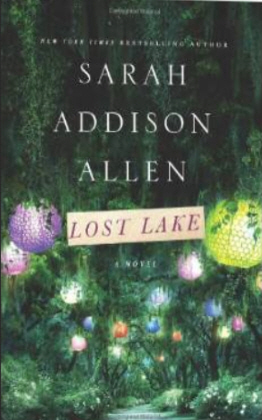
lostlakeKate Pheris is waking up after the worst year of her life, the year she lost her husband and almost lost herself while her young daughter Devin waited for life to begin again and her mother-in-law Cricket orchestrated their future like a puppeteer with an agenda stronger than love.

But older ties are stronger even though they might have seemed forever lost.

Kate and Devin serendipitously discover a fifteen-year- old postcard in the attic while getting ready to move to Cricket’s house where neither of them wants to be: Greetings from Lost Lake, Georgia: a Magical Experience. Sent by Kate’s great-great-aunt Eby after Kate’s best summer ever at the ramshackle cabins our of another era in South Georgia, the card stirs up old hopes and memories.

Kate’s never seen the card before. Her mother, who had a falling out with Eby that summer, hid it away along with its message, “You’re welcome to come back anytime you’d like.”

It’s too late, isn’t it? Lost Lake and Eby are probably long gone. Yet, Lost Lake really isn’t that far from Atlanta. What if Kate and Devin drive down there and look?

While Cricket organizes the future she wants with indomitable and merciless force, Lost Lake suggests possibilities with a gentle touch, one that pulls on the heartstrings of those who have come back for one last summer before Eby sells the place she can no longer afford to keep and flies away to see the world.

The book features a cast of memorable characters and–inasmuch as this novel is magical realism–a magical setting. Everyone who arrives to say goodbye to Eby and Lost Lake is looking for something, and they all have their secrets and their losses.

Like an oasis that’s almost visible for one moment and gone the next, the magic and the synchronicity of the setting are deftly handled by Allen (Garden Spells The Sugar Queen, The Girl Who Chased the Moon, The Peach Keeper), adding mystery and, perhaps, a sense of hope that a seemingly lost future is not altogether lost.

One cannot read Lost Lake without noting a certain predictability in the plot and the syrup of sentimentality it the developing themes and coming-out-of-hiding histories of the characters. One can say the same thing about It’s a Wonderful Life.  Nonetheless, movie viewers return to It’s a Wonderful Life every year at Christmas just as the faithful, if not aging, guests return to Lost Lake every summer.

Lost Lake gives those guests what they’re looking for even though most of them are too stubborn to admit it. Readers may know, or think they know, how Kate’s and Devin’s summer at Lost Lake will end. They may be right. Even so, the book casts a spell that’s impossible to resist.

–Malcolm

KIndle cover 200x300(1)Malcolm R. Campbell is the author of the magical realism novella “Conjure Woman’s Cat,” set in the Florida Panhandle where folk magic lives deep in the piney woods.