Review: ‘The Improbable Wonders of Moojie Littleman’ by Robin Gregory

The Improbable Wonders of Moojie Littleman, by Robin Gregory ( Mad Mystical Journey Press, December 14, 2015), 294 pp.

Moojie has so many strikes against him that survival of any kind seems improbable. He’s born with physical disabilities; is slow to talk and when he finally does, he stutters; he loses his mother and his father won’t have him; almost everyone taunts him; and he’s sent to live with a cantankerous grandfather at a place called St. Isidore’s Fainting Goat Dairy. If being named “Moojie” was the first curse, being sent to the dairy was just about the last straw.

MoojieBut were more last straws to come.

His grandfather drinks, curses, works Moojie hard in spite of the young man’s weak legs and weak arms, constantly threatens to send him to an orphanage, and passionately has it out for the so-called “hostiles” who live in the surrounding forests.

While the hostiles first appear to have come from the land of faerie, Moojie discovers they’re a magical race tasked with demonstrating harmony in our world. He hopes their clan will accept him because, among other things, he has no true family to call his own. But will they trust him? He can scarcely trust himself. But he’s learning, and the realism of this process is well handled by the author.

Moojie, his grandfather, his meddlesome aunt, the clan members, and the townspeople are defined in spot-on detail. They have depth, though Moojie believes he’s shallow and inept at the beginning of this well-crafted and beautifully told tale. The book’s magical realism accentuates the abilities of the off-world clan family as well as the dormant gifts Moojie has been blessed (or possibly cursed) with.

Many will call this a coming-of-age novel. Yes it is. But that assessment is much too stale for such a fresh, rich story. The story is about making choices and the probable transformations that follow them. Other than a bit of sentimentality at the end, Robin Gregory’s novel is a wonder about wonders and highly recommended.

–Malcolm

Malcolm R. Campbell is the author of magical realism and contemporary fantasy novels and short stories.

I write magical realism so of course I’m superstitious

A shark pursuing a ship means bad luck, especially if there are sick people on board.

Some say black cats bring good luck and some say they bring bad luck. (I opt for good.) - Wikipedia photo
Some say black cats bring good luck and some say they bring bad luck. (I opt for good.) – Wikipedia photo

A superstitious person sees the supernatural everywhere. As a superstitious person, I’m attuned to signs, omens and other hints that good or bad luck is about to follow unless I quickly change course. If I accidentally make a “wrong turn” while driving, I assume I was supposed to make that wrong term in order to avoid something bad on my regular route or to find something good on my new route.

During a brief time when I was the primary driver in a work car pool, my riders asked why I seldom drove to the office the same way twice. I gave them a throw-away answer: going the same way bores me. But I saw darker forces at work.

Don’t sweep dirt out the front door after the sun goes down or bad luck will come to your home.

I've never a talisman as ostentatious as the Talisman of Charlemagne.
I’ve never carried a talisman as ostentatious as the Talisman of Charlemagne.

When I was growing up, people my father’s age constantly asked me if I was Sir Malcolm Campbell, the famous British driving ace who broke many land and water speed records in his famous Bluebirds. I thought then that if I ever had a blue car, good luck would follow me if I named it “Bluebird”

In 1967, another Syracuse University student and I walked past a newsstand where the headline said DONALD CAMPBELL KILLED IN BLUEBIRD RECORD ATTEMPT. I don’t remember what I said, but my friend said “you look like you’ve seen a ghost: are you related?” Well, of course not, though if I ever had a son, I never would have named him Donald because the famous “Donald” was the famous “Malcolm’s” son.

If one has a realistic bad dream, the next morning breakfast must be eaten before the dream can be mentioned or discussed. Otherwise, the bad dream will come true.

Some omens and signs are good. Mine are what work for me, so I love seeing black cars and ravens.

I won’t say that when I wrote Conjure Woman’s Cat, I believed in all the spells, practices and good/bad luck admonitions of my main character. But, being superstitious, I could relate because magic and realism aren’t all that different in my panpsychism world view. A conjure woman might tell me to bore a hole in a Mercury dime, put it on a red string, and wear it around my ankle or neck for protection and good luck. I don’t go that far, but I do tend to save rocks, pieces of wood and other objects that seem “charged with power” when I find them.

If you start to go somewhere and come back for something you will have bad luck.

Nope, I don’t go along with that one. I assume that if I go back for something, I was supposed to go back either because, say, I left the stove on or forgot to lock the door, or, that if I hadn’t gone back, something bad would have happened at some place along the road. Seriously, I’m not obsessive/compulsive about this: if I were, I’d check the door locks and stove a dozen times before leaving the house.

Walking past a pole with someone it is bad luck to split up and each go around on different sides of it.

Those who know the pole omen know that saying “bread and butter” counteracts the bad luck. Some omens just don’t work for me, like “Drop a fork an a woman will show up.” I dropped a lot of forks in high school and college, and no women ever showed up. Omens and signs must pick “their kind of people” to have any impact.

In reality, I think the universe gives us signs we can each recognize, so I justify my superstitions by saying “this is my coded way” of seeing the world. Of course, that might be bullshit, but it works for me. And it also helps me write the kinds of stories I write. Kind of handy, that way.

That’s my story and I’m sticking to it–mainly because not sticking to it brings bad luck and/or makes one look like they’re lying.

–Malcolm

SarabandeCover2015Malcolm R. Campbell is the author of true stories that his publishers label as fantasy or magical realism.

PS – When you hang a horse shoe on the wall, never hang it facing down or all the luck will run out of it.


Magical Realism Writing Tips – Importance of Belief

When an author writes a novel or short story in the magical realism genre, magic is always a natural  and unquestioned component of the characters’ lives and the environment in which they live. As an author, you’re more likely to write a believable story if–while you’re writing, at least–you assume the magic is real.

This is my favorite blog because the writer has many years of experience and a great archive of posts for many Hoodoo subjects.

This doesn’t mean you must personally subscribe to the philosophy and practices of the magical system in your story whether that system is a known collection of beliefs such as hoodoo or Voodoo or a fictional system you built from scratch.

I prefer using practices based on actual belief systems because they already have a rich, varied and somewhat known lore that is often much deeper than anything a most of us can make up.

When I wrote Conjure Woman’s Cat about a root doctor (another name for a conjure practitioner), I began by reading books and web sites written by people who practice hoodoo. When I had a question, I asked them, usually making it clear that I was researching a novel rather than following the belief system myself. (You’ll see some of the sites/books I consulted in the folk magic category of my Myth and Magic Resources post.)

At times, I’ve read paranormal and magical realism books by authors who take a known system–say, witchcraft–and have their characters doing things that are completely outside the realm of the practice whether it’s Wicca or the traditional craft. Hollywood has done this a lot, but I feel more anger about it when I find it in a novel by a known writer who can look stuff up and talk to experts and keep the magic within the realm of what a system claims is possible. Witches do not worship the devil nor utilize spells that look like they originated in the Harry Potter series or Lord of the Rings.

This is a more commercial site with products to sell. However, it also has a wealth of information about spells, herbs and candles.

Yes, we all take liberties when telling a good yarn, and even when we don’t, it’s probable that (in my case) a real conjure woman will find things in my book that are unrealistic. I try to make the material as accurate as possible for a fiction writer–as opposed to a real practitioner who writes a novel based on their own experiences.

One way to make your story accurate is through the use of multiple sources. This helps you understand the magical approach well enough to write about it in your own words.

Of course, if you make up the magic from scratch, it helps if you set limits on it (so that your characters aren’t all-powerful) and keep it consistent. Don’t state a magical rule on page 25 and then have a character successfully ignore that rule on page 250.

For your readers to believe, you have to believe. Most of them will believe while they’re reading the story. That’s how you need to feel. I didn’t become a conjurer after I wrote Conjure Woman’s Cat, and I don’t expect my readers to do so either.

If you don’t believe while you’re writing, the story won’t ring true because your author’s point of view is that it isn’t true.

There’s a lot of anecdotal evidence that a fair number of people believe witchcraft, hoodoo and Voodoo work. Frankly, I don’t have an opinion about that and did everything possible while writing to refrain from judgement.

What we hope for when we write magical realism is that our readers will be carried away by the story as though everything in it is absolutely possible, maybe not in their own lives, but in the lives of our characters.

When magicians like Penn and Teller walk out on the stage in front of you or when you see them on TV, you know that what they’re doing is an illusion. You’re in the audience to be fooled and when the magician carries off a trick perfectly and you can’t figure it out, you laugh and applaud and ask for more.

A magical realism short story or novel is also an illusion. If both the magic and the realism in the story are done well, you’ll be fooled into thinking everything you read did happen or could happen. Neither the stage magician nor the writer dares approach his or her audience with any doubts about the effect s/he is trying to achieve. Doubts kill the performance, on stage or in writing.

And then, too, sometimes that stage magician and that writer include a bit of real magic under the guise of illusion. We always want you to think, “hmm, I wonder.”

–Malcolm

KIndle cover 200x300(1)SarabandeCover2015Malcolm R. Campbell is the author of the contemporary fantasy novel “Sarabande” and the magical realism novella “Conjure Woman’s Cat.”

Website


Just starting out? Beware of Magical Realism

Once upon a time, when teachers said “You can’t do XYZ in your writing,” I listed famous authors who did it all the time. The teachers’ responses were all the same: “When you’re famous you can do that.”

MRbloghop2015Some publishers also have this theory and, I’ll stipulate that they’re not totally wrong. If you’re thinking about magical realism as your prospective genre of choice, be careful. Some publishers abhor the label and claim it’s merely an uppity name for fantasy and/or that it means the author has “literary fiction pretensions.”

In general, except when we’re talking big names and/or big advertising budgets, fantasy finds more readers than magical realism and commercial fiction finds more readers than literary fiction (or fiction perceived as literary).

What happens if you’ve written a magical realism novel? Don’t let the publisher sell it as fantasy. Fantasy readers expect certain things. Most genre readers do. So, if your magical realism novel is slotted into the fantasy genre, it probably won’t sell. Readers will either be disappointed or stay away in droves. Others will post negative reviews that are hard to survive.

It’s a catch-22 thing. Yes, magical realism is typically listed as a subset of fantasy. That’s a mistake, but “they didn’t ask me.” Magical realism uses magic that the characters don’t see as unusual or out of place in a setting that is otherwise very realistic. Fantasy readers aren’t going to buy that as fantasy. So, what do you do?

I guess if HarperCollins has given you a $100,000 advance, you keep your mouth shut. Otherwise, get another publisher or publish the book yourself. Or, if you want a slightly easier career, you might consider writing fantasy and then shifting into magical realism before you become to typecast as a fantasy writer only.

Three of my novels are out of print because the publisher not only sold them as fantasy but removed the more subtle magical realism in favor of the more overt magic of fantasy. I don’t have the stamina to re-write them. Of course, they might have been a dead horse: they might have crashed and burned no matter what genre we put them in.

I love the art and craft of writing and that means I write about the world the way I see the world. I see the subtle workings of magic in daily life. Am I a shaman? Am I psychic? Am I crazy? Am I in need of stronger medications?

Who cares?

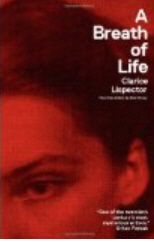
breathoflifeThe late, highly creative Brazilian author Clarice Lispector (“A Breath of Life”) said, “I write as if to save somebody’s life. Probably my own.” Now that’s true of most of us who write. The reader doesn’t care whether we’re crazy as long as they’re getting a wonderful story.

Only you know how your writing ends up the way it does. That’s between you and your muse. Sure, others can help you make it better. They’re called editors and publishers (if you pick the right ones). But when the cows finally come home–and they will–you have to be happy with it because it is a part of you.

If you see magic in the world, don’t let anyone else say that you don’t and turn your novel into something it isn’t. You have to be who you are and let the spirits and spells fall where they may.

–Malcolm


–Malcolm

This post is part of the Magical Realism Blog Hop. About twenty blogs are taking part in the hop. Over three days (29th – 31st July 2015) these blogs will be posting about magical realism. Please take the time to click on the button above to visit sit them and remember that links to the new posts will be added over the three days, so do come back to read more.The button should go live on or after 12:01 a.m. July 29th.


KIndle cover 200x300(1)Malcolm R. Campbell is the author of “Conjure Woman’s Cat,” a magical realism novella folk magic in the Jim Crow era of the Florida Panhandle where granny and her cat take on the Klan.

Magical Realism: betwixt and between

In folklore, mythology and fantasy, and real or acted-out rites of passage, the boundaries where worlds meet are variously considered volatile, dangerous and rich in possibilities. Why is a bride carried over the threshold? Yes, it’s traditional, but it harkens back to the notion that a doorway was a dangerous boundary.

Myths and superstitions have flourished around the doorways, thresholds, crossroads, the littoral between ocean and beach, the lines where forests and meadows meet, dusk and dawn, and other dividing lines between realities.

You’ll find these “uncertain places”—as Lisa Goldstein calls them in her fantasy by that name—referred to as “neither here nor there” and “betwixt and between.”
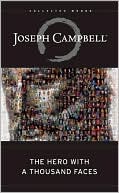
herothousandfacesIn his groundbreaking The Hero with a Thousand Faces, Joseph Campbell writes that in the hero’s journey, “A hero ventures forth from the world of common day into a region of supernatural wonder: fabulous forces are there encountered and a decisive victory is won: the hero comes back from this mysterious adventure with the power to bestow boons on his fellow man.” Strategic points in this journey occur where worlds and realities meet.

Even in a contemporary fantasy such as the Harry Potter series, the magic of Hogwarts is distinguished from the unknown and potentially darker magic of the forest. However, as Luke in Star Wars and Harry in Rowling’s series learn, the hero doesn’t grow within, much less advance on the physical part of his/her journey without going into the swamp, the dark forest, or the unknown world outside the city gates.

Magical Realism

Magical realism usually focuses upon the boundaries between the worlds of the known and the unknown. The stories combine the natural and the supernatural in a straightforward manner and without commentary or judgement as equally real. Characters dance back and forth across the “uncertain places” as the stories progress.

In a fantasy novel, the characters approach and enter supernatural worlds while noting they’re stepping into realms that are acknowledged as magical, different or strange. In a magical realism novel, events or places that readers may consider supernatural are, by contrast, accepted by the characters as no more or less real than the everyday science and technology world in place at the time when the novel is set.

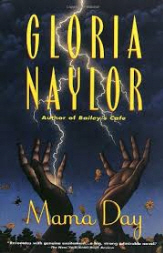
MamaDayGloria Naylor’s novel “Mama Day” is a perfect example of the juxtaposition of realms. Her first novels, The Women of Brewster Place and Linden Hills took a realistic approach. However, in writing Mama Day, Naylor said, “I needed to find a way structurally to have you walk a thin line between that which is real and that which is not real.”

New York City in this novel represents the real. The fictional Willow Springs, on an island near the Georgia and South Carolina border represents what—in our consensual everyday reality—is not real. Writing in Challenging Realities: Magical Realism in Contemporary American Women’s Fiction, Maria Ruth Noriega Sanchez says that Naylor’s novel is an “extraordinary exploration of the intangible and the power of belief that brings into question the limits or reality and truth.”

Naylor’s approach to magic in Mama Day can be seen in my favorite passage from the novel: “She could walk through a lightning storm without being touched; grab a bolt of lightning in the palm of her hand; use the heat of lightning to start the kindling going under her medicine pot. She turned the moon into salve, the stars into swaddling cloth, and healed the wounds of every creature walking up on two or down on four.”

If this were written in a realistic novel, Naylor would have produced something more like this: “She could purportedly walk through a lightning storm without being touched; imagine grabbing a bolt of lightning in the palm of her hand; or appear to use the heat of lightning to start the kindling going under her medicine pot. In her dreams, she turned the moon into salve, the stars into swaddling cloth, and healed the wounds of every creature walking up on two or down on four in her mind’s eye.”
waterforchocolateRealism demands the qualifying words and phrases. Magic realism omits them and keeps the reader guessing and unsettled about what is really happening in the uncertain realms that are betwixt and between.

In this passage from Laura Esquivel’s Like Water for Chocolate, “Her body was giving off so much heat that the wooden walls began to split and burst into flame,” the reader finds no “as if,” “as though,” or other qualifiers to indicate the event is figurative—because it isn’t. How you react to that as a reader depends on how you see the world and/or on how well the author has enchanted you to see things differently while reading the book.

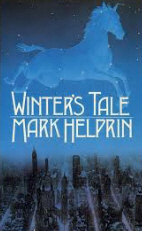
In Mark Helprin’a Winter’s Tale, Peter Lake is riding Athansor, a guardian angel in the form of a horse: “They got up steam and proceeded calmly to the north – where there seemed to be no people, but only mountains, lakes, reedy winterstalecoversnow-filled steppes, and winter gods who played with storms and stars.” Here again, the winter gods are mentioned as matter of factly as the mountains and lakes.
When initiates go through a ritual, they begin with the everyday world and end up transformed in some way. The place where these two stages meet is often called “liminality.” Here the initiate is not quite who s/he was and not quite who s/he will become.

Early studies in this area were done by Arnold van Gennep, who coined the word, in his 1909 book Rites de Passage. Folklore, myth, fairytales and stories following the “hero’s journey” typically involve plots ritesofpassageand scenes that are similar to rites of passage. The protagonist is buffeted by storms, monsters, magic forces, conscious landscapes and other dangers during his/her physical and inner journey to the intended destination.

Magical realism lives at that liminal point, leaving the reader with one foot over the threshold and one foot in the comfortable world s/he knows. Unsettling as this can be, that’s the genre’s greatest strength—a cauldron of worlds where stories simmer and readers become part of the spell.

You may also like: Just starting out? Beware of Magical Realism

–Malcolm

This post is part of the Magical Realism Blog Hop. About twenty blogs are taking part in the hop. Over three days (29th – 31st July 2015) these blogs will be posting about magical realism. Please take the time to click on the button above to visit sit them and remember that links to the new posts will be added over the three days, so do come back to read more.The button should go live on or after 12:01 a.m. July 29th.

Malcolm R. Campbell is the author of “Conjure Woman’s Cat,” a magical realism novella set in the Jim Crow era of the Florida Panhandle where granny and her cat take on the Klan.

Top Five Magical Realism Books at Amazon

If you’ve heard about magical realism, but haven’t knowingly sampled it yet, the top sellers on Amazon are a wonderful place to start.

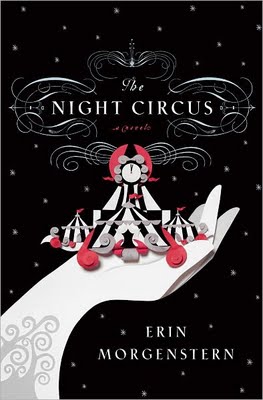
  1. TNightCircushe Night Circus, by Erin Morgenstern, September 2011.  I read this as soon as it came out and it became one of my favorite books. It edged out The Tiger’s Wife as that year’s favorites as I wrote in this post.  The fact that it’s still number one, shows it has staying power and that people continue to find it. It has a long list of starred reviews, telling me the critics also like it. A circus shows up out of nowhere, displays breathtaking feats of real magic as though they are mere illusions, and then disappears. What a joy to read.
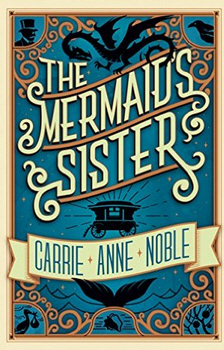
  2. mermaidsisterThe Mermaid’s Sister, by Carrie Anne Noble, March 2015. This book is the 2014 Winner of Amazon’s Breakthrough Novel Award for Young Adult Fiction. I haven’t read it yet, but I’m impressed with the general tone of the reviews and what I can see via the book’s “Look Inside” feature. The cover is delightful and the publisher’s opening words about the story are tempting: “There is no cure for being who you truly are…In a cottage high atop Llanfair Mountain, sixteen-year-old Clara lives with her sister, Maren, and guardian Auntie. By day, they gather herbs for Auntie’s healing potions. By night, Auntie spins tales of faraway lands and wicked fairies. Clara’s favorite story tells of three orphan infants—Clara, who was brought to Auntie by a stork; Maren, who arrived in a seashell; and their best friend, O’Neill, who was found beneath an apple tree.”
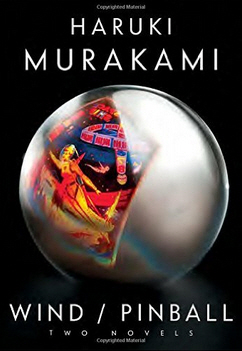
  3. windHear the Wind Sing and Pinball, by Haruki Murakami are two novels issued in this one volume set for release next month. They haven’t previously been available in English. According to the publisher, “These powerful, at times surreal, works about two young men coming of age—the unnamed narrator and his friend the Rat—are stories of loneliness, obsession, and eroticism. They bear all the hallmarks of Murakami’s later books, and form the first two-thirds, with A Wild Sheep Chase, of the trilogy of the Rat.” I am tempted by this book, but more tempted by the book sitting in position number five.
  4. godhelpGod Help the Child, by Toni Morrison, April 2015. I have read most of Morrison’s work and have this book on order.  While the cover is disappointing, the reviews are positive. The publisher describes the book this way: “At the center: a young woman who calls herself Bride, whose stunning blue-black skin is only one element of her beauty, her boldness and confidence, her success in life, but which caused her light-skinned mother to deny her even the simplest forms of love. There is Booker, the man Bride loves, and loses to anger. Rain, the mysterious white child with whom she crosses paths. And finally, Bride’s mother herself, Sweetness, who takes a lifetime to come to understand that ‘what you do to children matters. And they might never forget.’”  I’ll stipulate that so far, I’ve only read what I can see via “look inside,” but based on that, I think it will be difficult for any author in 2015 to match the power of this story.
  5. penumbraMr. Penumbra’s 24-Hour Bookstore (audio version), by Robin Sloan, October 2012. I read this book when it came out and found the story and characters strange and compelling. I don’t care for the cover but, like Morrsion’s book, the reviews are positive. And, what can be more tempting for an author than a publisher’s description that (1) starts out like this: “A gleeful and exhilarating tale of global conspiracy, complex code-breaking, high-tech data visualization, young love, rollicking adventure, and the secret to eternal life—mostly set in a hole-in-the-wall San Francisco bookstore” and (2) begins like this: “Lost in the shadows of the shelves, I almost fall off the ladder. I am exactly halfway up. The floor of the bookstore is far below me, the surface of a planet I’ve left far behind. The tops of the shelves loom high above, and it’s dark up there–the books are packed in close, and they don’t let any light through. The air might be thinner, too. I think I see a bat.” I hope the world will always have bookstores that can be described this way. The book kept my attention, but not enough to re-read it as I have The Night Circus.

There’s a lot to like here if you’re of a mind to sample the latest magical realism. Then, stop by Malcolm’s Round Table on July 29 when I’ll be taking part in a magical realism blog hop.

–Malcolm

KIndle cover 200x300(1)Malcolm R. Campbell is the author of the magical realism novella set in the Jim Crow era of the Florida Panhandle, “Conjure Woman’s Cat”

See the Indie View interview about how I write and why I wrote this book.

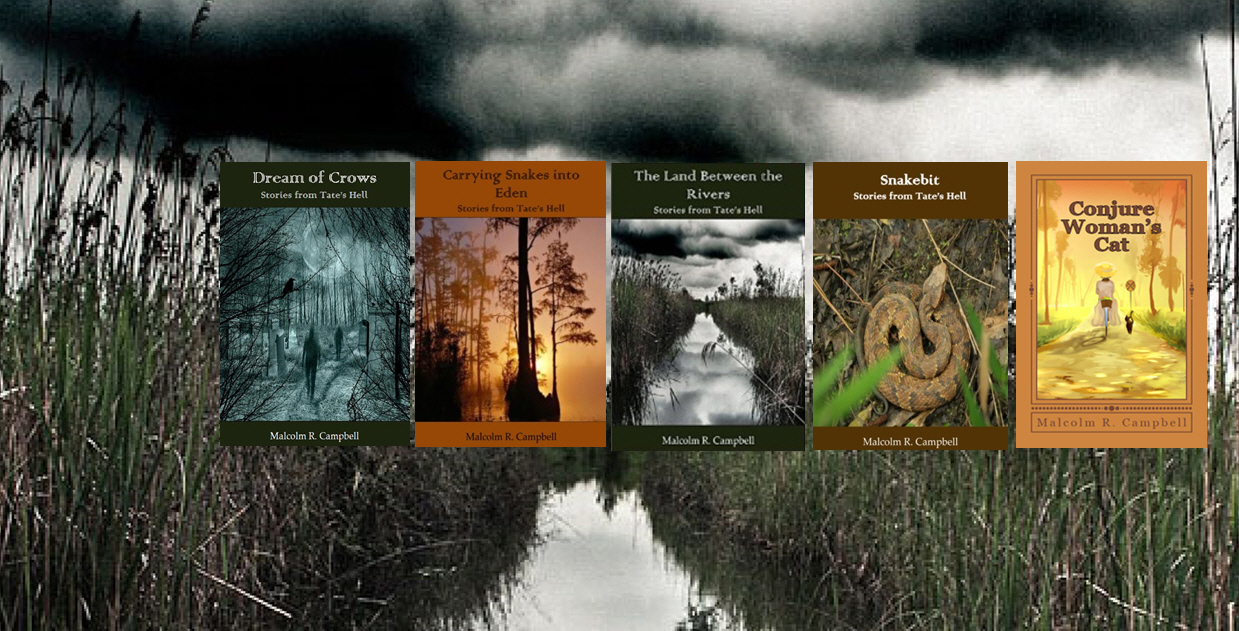
The Tate’s Hell Stories

“Who was Tate, you wonder? In Sumatra they still tell his story: how he left the frontier village at dusk a century ago with his two hunting dogs and his puppy Spark, to kill a panther that had been raiding Sumatra livestock. He carried a Long Tom shotgun and a Barlow knife, and he thought he knew where the darkening waters ran.”

– Gloria Jahoda, The Other Florida (1967)

Tate's Hell is a Florida state forest located in the panhandle counties of Franklin and Liberty. With diverse habitats, including a notorious swamp, it's named after the legendary Cebe Tate who was killed by a rattlesnake while hunting a panther there in 1875.
Tate’s Hell is a Florida forest located in the counties of Franklin and Liberty.

When my 1950s-era novella Conjure Woman’s Cat came out, my publisher said that with all the book’s mentions of Tate’s Hell Swamp, how about a Kindle series of stories about the place?

Fortunately I had a bunch of things on hand, including a short story from an anthology and scene from my out-of-print novel The Seeker that just happened to be set there and in nearby Carrabelle.

I couldn’t resist the idea of taking snakes to Eden. Most of all, I enjoyed learning more about the animals and their Florida wild places environments for the folktale collection.

I’ve enjoyed coming up with three short stories and one short collection of folktales for the series.

crowssmallcoverDream of Crows: This dark story about a businessman and a sexy conjure woman who lives next to a cemetery on the edge of Tate’s Hell is the most recent. It originally appeared in the Lascaux Prize 2014 Anthology.

If you’re prone to nightmares, be warned that this story is written in the second person and makes the reader the main character. Free June 24-28.

Opening lines: During the coroner’s inquest into the matter of your death, a well-meaning friend or relative will step forward with your affidavit stating that you read Dream of Crows because you saw it in your spouse’s copy of The Lascaux Review, heard several clerks at Barnes and Noble speculating about its deeper meanings, or—more likely—because you were intrigued by the probable connection between the short story and an odd string of assisted suicides in a Florida’s Tate’s Hell Swamp. 

SnakebitCOVERSnakebit: This slightly less dark short story came out just before Dream of Crows. Two college students fall in love while working as seasonal employees at a resort hotel in the northwest.

At the end of the summer, they return to their respective colleges that are far apart. When she’s assaulted on a dark street outside the college gates, she refuses to let him visit her. Finally, when he’s allowed to travel to Florida in June, he finds her much changed. The more he sees, the more he thinks he’ll have to sever the relationship. However, before he does so, the magic of Tate’s Hell intervenes.

The Dream: Then the squalling wheels in the coach’s rear truck in a tight curve fetched up the memory of the caterwauling panther of a nightmare that stalked him thirteen miles up the track. He ran between small ponds beneath a bright moon. Coowahchobee sprang out of a dark stand of hat-rack cypress and chased him through shallow water. He was trapped, suddenly, in an unyielding thicket of titi where the small white flowers exploded overhead like a dying constellation. He saw brown eyes above a deep growl that ran through his soul seconds before the claws snagged his left arm when the large cat dragged him away from the water. 

CarryingSnakesCoverCarrying Snakes Into Eden: “Eden” in this story refers to Florida’s former Garden of Eden attraction on the Apalachicola River. It’s rather a tongue in cheek story about two college students who pick up a hitchhiker with a sack of snakes he captured in Tate’s Hell. He says they’re need in the Garden of Eden.

The students learn that skipping church that Sunday morning may have long-term consequences.

Opening Lines: When John and I drove to Carrabelle on a gray Sunday morning for brunch with the Boynton sisters, skipping church was the least of our sins. Julie and Kathy were seniors, cheerleaders, and the most popular blondes in high school. John and I, mere juniors, wore clean sport shirts and Jade East aftershave. Brunch was canceled when the parents returned from New Orleans on Seaboard’s Gulf Wind a week early. They saved us from prospective sins of the flesh. But we weren’t home free. In fact, our transgression on that April day in 1961 was a first for the Florida Panhandle.

LandBetween2015The Land Between the Rivers: This series of three folktales set in Tate’s Hell at the dawn of time is introduced by Eulalie, my conjure woman in the novella. They begin where the Seminole creation myth leaves off with stories about Panther, Snakebird and Bear–the first animals to walk the earth in the old legends.

Panthers, of course, are highly endangered in Florida. When I was young, there were panthers in Tate’s Hell. Now they’re gone from the panhandle and can only be found in central and south Florida.

Openning Lines: One day when I was just a piddling kitten no bigger than a crow, I fell into Coowahchobee Creek while helping my conjure woman look for crawfish. The cold water spun me around like pinecone. I sulled up into a snarling fit three times my normal size and swatted the rocks and roots along the bank with my claws.
“Hush, little one,” Coowahchobee whispered. “Lena, look directly into Eulalie’s haint blue eyes and your thoughts will tell her you are ready to hear our stories.”


FBfivebooksCOVER

These stories all see for 99 cents and occasionally are featured free in book sales. I hope you enjoy them even if you don’t live in the Florida Panhandle.

–Malcolm

KIndle cover 200x300(1)“Conjure Woman’s Cat” is available on Kindle ($2.99) and in paperback ($8.58) and, in addition to Amazon, can also be found at Powell’s, B&N, Smashwords and other online book sellers.


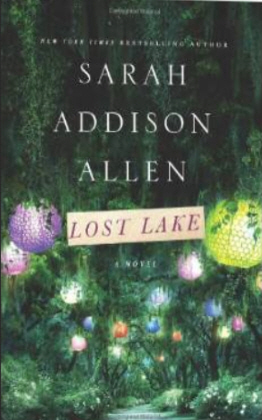
Review: ‘Lost Lake’ by Sarah Addison Allen

Lost Lake, Sarah Addison Allen (St. Martin’s Press, hardcover, January 21, 2014, paperback January 6, 2015), 304 pp.

lostlakeKate Pheris is waking up after the worst year of her life, the year she lost her husband and almost lost herself while her young daughter Devin waited for life to begin again and her mother-in-law Cricket orchestrated their future like a puppeteer with an agenda stronger than love.

But older ties are stronger even though they might have seemed forever lost.

Kate and Devin serendipitously discover a fifteen-year- old postcard in the attic while getting ready to move to Cricket’s house where neither of them wants to be: Greetings from Lost Lake, Georgia: a Magical Experience. Sent by Kate’s great-great-aunt Eby after Kate’s best summer ever at the ramshackle cabins our of another era in South Georgia, the card stirs up old hopes and memories.

Kate’s never seen the card before. Her mother, who had a falling out with Eby that summer, hid it away along with its message, “You’re welcome to come back anytime you’d like.”

It’s too late, isn’t it? Lost Lake and Eby are probably long gone. Yet, Lost Lake really isn’t that far from Atlanta. What if Kate and Devin drive down there and look?

While Cricket organizes the future she wants with indomitable and merciless force, Lost Lake suggests possibilities with a gentle touch, one that pulls on the heartstrings of those who have come back for one last summer before Eby sells the place she can no longer afford to keep and flies away to see the world.

The book features a cast of memorable characters and–inasmuch as this novel is magical realism–a magical setting. Everyone who arrives to say goodbye to Eby and Lost Lake is looking for something, and they all have their secrets and their losses.

Like an oasis that’s almost visible for one moment and gone the next, the magic and the synchronicity of the setting are deftly handled by Allen (Garden Spells The Sugar Queen, The Girl Who Chased the Moon, The Peach Keeper), adding mystery and, perhaps, a sense of hope that a seemingly lost future is not altogether lost.

One cannot read Lost Lake without noting a certain predictability in the plot and the syrup of sentimentality it the developing themes and coming-out-of-hiding histories of the characters. One can say the same thing about It’s a Wonderful Life.  Nonetheless, movie viewers return to It’s a Wonderful Life every year at Christmas just as the faithful, if not aging, guests return to Lost Lake every summer.

Lost Lake gives those guests what they’re looking for even though most of them are too stubborn to admit it. Readers may know, or think they know, how Kate’s and Devin’s summer at Lost Lake will end. They may be right. Even so, the book casts a spell that’s impossible to resist.

–Malcolm

KIndle cover 200x300(1)Malcolm R. Campbell is the author of the magical realism novella “Conjure Woman’s Cat,” set in the Florida Panhandle where folk magic lives deep in the piney woods.


and now a word from our fantasy sponsor

My book reviews, interviews and posts on Malcolm’s Round Table, Magic Moments and Literary Aficionado are brought to you by, er, me.

Speaking of myself now in the third person, Malcolm R. Campbell is the author of magical realism, contemporary fantasy and satire published by Vanilla Heart Publishing of Washington State. While my noir satire, Jock Stewart and the Missing Sea of Fire, is set in a fictional Texas town with a really screwed up fictional newspaper, my three other novels are set in Glacier National Park, Montana and other places where I have lived or visited.

Last summer brought the release of Sarabande, a harrowing heroine’s journey and contemporary fantasy about a young woman who is haunted by the ghost of her sister. Sarabande seeks the help of a young man who has, on one previous occasion, bent time to “raise the dead.” The solution to the problem is not without its nasty down side.

Satire for your Nook

In 2004, I came out with the first edition of my novel The Sun Singer, the story of a young man whose psychic dreams ultimately lead him into a dangerous mountain world where it will take all of his skills to survive. First things first: he had to figure out who the good guys are and who the bad guys are and, as it turns out, who exactly he is. The second edition of The Sun Singer was released in 2010. College students at Lone Star College, Texas, read and discussed the novel this past Spring as part of a Wayfaring Heroes course.

Garden of Heaven: an Odyssey (also released in 2010) is magical realism about a man who grows up on a Montana ranch who loses his way when a failed love affair sends him down dangerous roads along which is is betrayed multiple times by those he cares about the most. The book is also available as an $4.99 e-book from OmniLit.

Where To Find Malcolm R. Campbell on the Internet

Excerpt from Sarabande

Only $4.99 on Kindle

Gem pulled her hands away and stood up so quickly she knocked over her spinning wheel. She didn’t appear to notice. She walked to the window and leaned out as though making sure no one else would hear her words.

“I was shamed by the king.” Gem pulled up her left sleeve to reveal the letters SJ in a bold pink scar that contrasted with her walnut-colored skin.

“Your strike brand!”

“I bore Justine’s mark as well as his child. Both were conceived in pain in a dark cell covered with urine and rat droppings.” Sarabande went to her, but Gem rolled down the sleeve, covering the ugly mark that signified Sovereign Justine. “No, my friend, I cannot abide your seeing it close at hand. My daughter, though, this doting mother will speak of her at great length if allowed to do so.”

“Cinnabar has shown me her brand,” said Sarabande.

“Discretion is a lesson I was never able to teach her. But listen: on your journey to Osprey’s house, you won’t walk through the domains of kings.”

Sarabande gasped and sat down, suddenly lightheaded when she understood why Gem showed her the scar.

“If there are no kings, what dangers have you seen?”

Gem put her hands on Sarabande’s shoulders and kneaded out the growing knots. Her touch always felt like a touch of power, and she wondered if she shared Osprey’s way with healing magic.

“I have seen a dark creek beneath a bridge on a foggy night. I have heard screams and howls outside my comprehension. I don’t understand it,” said Gem, holding their eye contact as though she understood more than she would say. “Sarabande, you know without my lecturing at great length about the ways of the world. A a woman on a lonely road can be a target. Travel with a sharp knife.”

The impromptu massage felt good. The unclear warning did not. Vague predictions were worse than silence. They stirred up what did not need to be stirred up.

“Yes, I know that, Gem. I will carry a knife and take care to have it handy.”

“With due care, you can avoid your fate, but destiny is the way you’ve already written your life’s story.”

“I wanted to walk the sixteen hundred and fifty miles to Osprey’s house long before it occurred to me I would ever do so. If there is to be shame in it, then I will live or die with whatever I find on that lonely road.”

Thank you for stopping my Malcolm’s Round Table today!

–Malcolm

Book Review: ‘The Miracle of Mercy Land’

The Miracle of Mercy Land: A NovelThe Miracle of Mercy Land: A Novel by River Jordan
My rating: 5 of 5 stars

This wise, well-told 1930s-era story about a young woman from the back woods of Bittersweet Creek, Alabama, who moves to a nearby city to work for the newspaper will haunt the jaded cloak off a cynic and the bloom off a Southern Magnolia in the arena of pure beauty.

A preacher’s daughter, protagonist Mercy Land is steeped in the spiritual and plain-spoken common sense of the rural South. She carries her heritage deep in her humble soul when she begins work for Doc on the Bay City “Banner.” While Doc is the epitome of a caring, community oriented small town newspaper editor, his kindness contains sad flaws.

The focal point of the novel is a shining book of light that appears out of nowhere on Doc’s desk. The book knows everything, roads taken and roads not taken, about the residents of Bay City. It contains secrets only an arrogant individual would dare to know. But then, why did it appear? To read or not to read is the bittersweet question that follows Doc and Mercy with more urgency than the daily news.

Like any good editor, Doc finds it difficult to sit on the story of a lifetime. Like any young woman who fondly recalls her formative years, Mercy cannot ignore what the book knows about a childhood companion who vanished without a trace years ago.

From Mercy’s point of view, “To say that it became a distraction would be a flat-out lie. It became an obsession. Doc swore me to complete secrecy so that no one in town knew a thing. But that wasn’t the toughest part; he swore me to keep the secret from everyone in Bittersweet Creek.”

As Jordan writes in a note to the reader at the end of the book, this is a story about choices and their impact on a person’s interconnected relationships. The novel’s fine-spun wisdom, mysterious and engaging plot and shimmering magical realism are the stuff of dreams and wondrous storytelling.

View all my reviews