Briefly Noted: Joseph Campbell’s ‘Romance of the Grail’

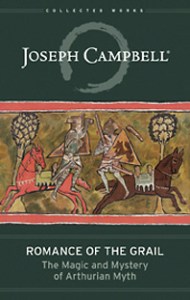
Romance of the Grail: The Magic and Mystery of Arthurian Myth (The Collected Works of Joseph Campbell), Evans Lansing Smith, Editor, ( New World Library, December 15, 2015), 304pp

romanceofgrailJoseph Campbell scholars and Arthurian legends students have been waiting for this volume for a long time. Sponsored by the Joseph Campbell Foundation, this collection focuses on the myths that introduced and excited Campbell about the over-arching mythic theories he spent a lifetime developing.

The book’s editor, Evans Lansing Smith became interested in disseminating Campbell’s views of the quests after discovering a typewritten copy of Campbell’s masters thesis “A Study of the Dolorous Stroke” which exams the motif of the wound and wasteland in the stories.

In an interview about the book, Smith said he hopes readers “will be as deeply engaged — and, indeed, as mesmerized as I was — with the power, grace, and fun with which Campbell retells the stories of the knights so central to the Grail romances: Yvain, Lancelot, Parzival, Gawain, Tristan, and others. As an Irishman, Campbell came from a long lineage of oral tradition, so that he was able in a couple of hours to convey more of the complexity and spiritual depth of those stories than many have been able to in long books on the subject.”

From the Publisher

The Arthurian myths opened the world of comparative mythology to Campbell, turning his attention to the Near and Far Eastern roots of myth. Calling the Arthurian romances the world’s first “secular mythology,” Campbell found metaphors in them for human stages of growth, development, and psychology. The myths exemplify the kind of love Campbell called “amor,” in which individuals become more fully themselves through connection. Campbell’s infectious delight in his discoveries makes this volume essential for anyone intrigued by the stories we tell—and the stories behind them.

Library Journal: “Smith provides well-rounded and concise essential readings on Arthurian mythology by one of America’s leading mythologists and incredible storytellers. Highly recommended for readers interested in Campbell, mythology, or Arthurian studies.”

When Campbell talks and writes about mythology, he presents the material as though he were there when it happened. He makes complex themes accessible. The Grail stories certainly lend themselves to his expertise and insights.

–Malcolm

JCFfundraiser


Magical Realism: betwixt and between

In folklore, mythology and fantasy, and real or acted-out rites of passage, the boundaries where worlds meet are variously considered volatile, dangerous and rich in possibilities. Why is a bride carried over the threshold? Yes, it’s traditional, but it harkens back to the notion that a doorway was a dangerous boundary.

Myths and superstitions have flourished around the doorways, thresholds, crossroads, the littoral between ocean and beach, the lines where forests and meadows meet, dusk and dawn, and other dividing lines between realities.

You’ll find these “uncertain places”—as Lisa Goldstein calls them in her fantasy by that name—referred to as “neither here nor there” and “betwixt and between.”
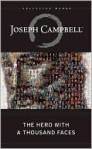
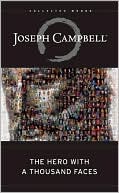
herothousandfacesIn his groundbreaking The Hero with a Thousand Faces, Joseph Campbell writes that in the hero’s journey, “A hero ventures forth from the world of common day into a region of supernatural wonder: fabulous forces are there encountered and a decisive victory is won: the hero comes back from this mysterious adventure with the power to bestow boons on his fellow man.” Strategic points in this journey occur where worlds and realities meet.

Even in a contemporary fantasy such as the Harry Potter series, the magic of Hogwarts is distinguished from the unknown and potentially darker magic of the forest. However, as Luke in Star Wars and Harry in Rowling’s series learn, the hero doesn’t grow within, much less advance on the physical part of his/her journey without going into the swamp, the dark forest, or the unknown world outside the city gates.

Magical Realism

Magical realism usually focuses upon the boundaries between the worlds of the known and the unknown. The stories combine the natural and the supernatural in a straightforward manner and without commentary or judgement as equally real. Characters dance back and forth across the “uncertain places” as the stories progress.

In a fantasy novel, the characters approach and enter supernatural worlds while noting they’re stepping into realms that are acknowledged as magical, different or strange. In a magical realism novel, events or places that readers may consider supernatural are, by contrast, accepted by the characters as no more or less real than the everyday science and technology world in place at the time when the novel is set.

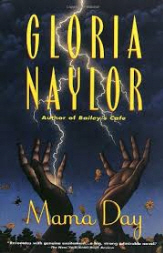
MamaDayGloria Naylor’s novel “Mama Day” is a perfect example of the juxtaposition of realms. Her first novels, The Women of Brewster Place and Linden Hills took a realistic approach. However, in writing Mama Day, Naylor said, “I needed to find a way structurally to have you walk a thin line between that which is real and that which is not real.”

New York City in this novel represents the real. The fictional Willow Springs, on an island near the Georgia and South Carolina border represents what—in our consensual everyday reality—is not real. Writing in Challenging Realities: Magical Realism in Contemporary American Women’s Fiction, Maria Ruth Noriega Sanchez says that Naylor’s novel is an “extraordinary exploration of the intangible and the power of belief that brings into question the limits or reality and truth.”

Naylor’s approach to magic in Mama Day can be seen in my favorite passage from the novel: “She could walk through a lightning storm without being touched; grab a bolt of lightning in the palm of her hand; use the heat of lightning to start the kindling going under her medicine pot. She turned the moon into salve, the stars into swaddling cloth, and healed the wounds of every creature walking up on two or down on four.”

If this were written in a realistic novel, Naylor would have produced something more like this: “She could purportedly walk through a lightning storm without being touched; imagine grabbing a bolt of lightning in the palm of her hand; or appear to use the heat of lightning to start the kindling going under her medicine pot. In her dreams, she turned the moon into salve, the stars into swaddling cloth, and healed the wounds of every creature walking up on two or down on four in her mind’s eye.”
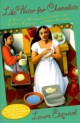
waterforchocolateRealism demands the qualifying words and phrases. Magic realism omits them and keeps the reader guessing and unsettled about what is really happening in the uncertain realms that are betwixt and between.

In this passage from Laura Esquivel’s Like Water for Chocolate, “Her body was giving off so much heat that the wooden walls began to split and burst into flame,” the reader finds no “as if,” “as though,” or other qualifiers to indicate the event is figurative—because it isn’t. How you react to that as a reader depends on how you see the world and/or on how well the author has enchanted you to see things differently while reading the book.

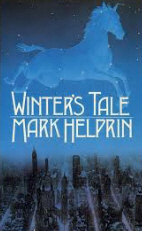
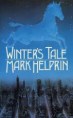
In Mark Helprin’a Winter’s Tale, Peter Lake is riding Athansor, a guardian angel in the form of a horse: “They got up steam and proceeded calmly to the north – where there seemed to be no people, but only mountains, lakes, reedy winterstalecoversnow-filled steppes, and winter gods who played with storms and stars.” Here again, the winter gods are mentioned as matter of factly as the mountains and lakes.
When initiates go through a ritual, they begin with the everyday world and end up transformed in some way. The place where these two stages meet is often called “liminality.” Here the initiate is not quite who s/he was and not quite who s/he will become.

Early studies in this area were done by Arnold van Gennep, who coined the word, in his 1909 book Rites de Passage. Folklore, myth, fairytales and stories following the “hero’s journey” typically involve plots ritesofpassageand scenes that are similar to rites of passage. The protagonist is buffeted by storms, monsters, magic forces, conscious landscapes and other dangers during his/her physical and inner journey to the intended destination.

Magical realism lives at that liminal point, leaving the reader with one foot over the threshold and one foot in the comfortable world s/he knows. Unsettling as this can be, that’s the genre’s greatest strength—a cauldron of worlds where stories simmer and readers become part of the spell.

You may also like: Just starting out? Beware of Magical Realism

–Malcolm

This post is part of the Magical Realism Blog Hop. About twenty blogs are taking part in the hop. Over three days (29th – 31st July 2015) these blogs will be posting about magical realism. Please take the time to click on the button above to visit sit them and remember that links to the new posts will be added over the three days, so do come back to read more.The button should go live on or after 12:01 a.m. July 29th.

Malcolm R. Campbell is the author of “Conjure Woman’s Cat,” a magical realism novella set in the Jim Crow era of the Florida Panhandle where granny and her cat take on the Klan.
Briefly Noted: ‘Buffy and the Heroine’s Journey’ by Valerie Estelle Frankel

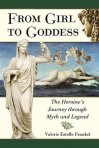
In February 20121, McFarland released a new book for authors and readers interested in the heroine’s journey in fiction and myth and for fans of the Buffy the Vampire Slayer movie (1992) and the subsequent television series (1997 – 2003).  A well-researched book, Buffy and the Heroine’s Journey is a natural extension of Valerie Frankel’s work in From Girl to Goddess: The Heroine’s Journey through Myth (McFarland, 2010).

On her website, Frankel writes that “Though scholars often place heroine tales on Campbell’s hero’s journey point by point, the girl has always had a notably different journey than the boy. She quests to rescue her loved ones, not destroy the tyrant as Harry Potter or Luke Skywalker does. The heroine’s friends augment her natural feminine insight with masculine rationality and order, while her lover is a shapeshifting monster of the magical world—a frog prince or beast-husband (or two-faced vampire!). The epic heroine wields a magic charm or prophetic mirror, not a sword. And she destroys murderers and their undead servants as the champion of life. As she struggles against the Patriarchy—the distant or unloving father—she grows into someone who creates her own destiny.”

A new era in film and fiction for three-dimensional female action characters?

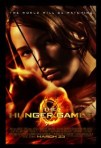
Frankel’s new book appears at a time when readers, authors and reviewers are discussing whether or not Lisbeth Salander (in Stieg Larsson’s Millennium series) and Katniss (in Suzanne Collins’ The Hunger Games series) represent a positive trend in the development of female protagonists that are more than male-gaze eye candy. That is, can authors and film makers step away from the patriarchal idea that women—whether they kick ass or not—are little more than sex objects?

Unfortunately, Frankel—along with author Maureen Murdock (The Heroine’s Journey)—appear to represent a minority view. Most film makers are still trotting out female characters in mini-skirts and bikinis fighting alongside male counterparts who are dressed in normal uniforms or SWAT team gear, while many authors and screenwriters are arguing that the heroine’s journey is no more than a female character following Joseph Campbell’s hero’s journey sequence.

As the author of a contemporary fantasy novel featuring the hero’s journey (The Sun Singer) and another that features the heroine’s journey (Sarabande), I find it refreshing to find another author/researcher who sees a difference between solar and lunar journeys. While I think my heroine’s journey story would make a great film, I don’t want Hollywood to turn my title character into a male-gaze Lara Croft-style protagonist transported to the mountains and plains of Montana in a tight and/or skimpy outfit.

Publisher’s Description: The worlds of Percy Jackson, Harry Potter, and other modern epics feature the Chosen One–an adolescent boy who defeats the Dark Lord and battles the sorrows of the world. Television’s Buffy the Vampire Slayer represents a different kind of epic–the heroine’s journey, not the hero’s. This provocative study explores how Buffy blends 1990s girl power and the path of the warrior woman with the oldest of mythic traditions. It chronicles her descent into death and subsequent return like the great goddesses of antiquity. As she sacrifices her life for the helpless, Buffy experiences the classic heroine’s quest, ascending to protector and queen in this timeless metaphor for growing into adulthood.

The paperback edition, for reasons that are not readily apparent, is priced considerably higher ($35.00) than other paperbacks of a similar length (226 pages ). However, at $9.99, the Kindle edition is more in line with today’s prices.

I bought the Kindle edition even though I didn’t see the Buffy the Vampire Slayer television series or feature film. I liked From Girl to Goddess: The Heroine’s Journey through Myth and am finding Buffy and the Heroine’s Journey to be another very readable and credible look at the heroine’s journey.

Malcolm

contemporary fantasy on Kindle at $4.99

A writer’s world view: effective rather than futile

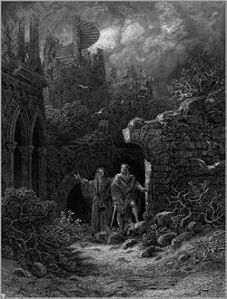
Merlin advising Arthur

How do you see the world? Looking at the major issues we face—global warming, AIDS, terrorism, overpopulation, unemployment, renewable energy, the environment—do you view the world as “too broke to fix” or still within our capabilities to drastically improve and correct?

The books writers write are often impacted by their world views. Some agree with Jean-Paul Sartre’s statement that “Man is a futile passion.” In fact, looking at most of the fiction published during the last hundred years or so, I suggest that most authors either agree with Sartre or think the public agrees with Sartre and wants to read stories that corroborate this world view.

In my latest post on Sarabande’s Journey, World of Wonder finding ‘Life in Truth,’ I wrote that “a lot of mainstream fiction has fled from wonder, pulled by science, technologies and difficult-to-solve world issues into realism, powerlessness, despair and alienation.” Some of this fiction gives us happy endings, but they’re usually small endings in a sea of troubles. That is to say, the lovers who will live happily ever after will do so as long as the screwed-up world allows it.

The alternative proposition to readers and writers who agree with Sartre is neither naiveté nor the false believe that life will save warring factions from themselves if only the parties involved will sit down and sing “Kumbayah” together. While naiveté and “Kumbayah” bring their adherents many positive moments and, perhaps the illusion of positive action, they are—I believe—taking a bury-your-head-in-the-sand approach to the problems of the world and, worse yet, to their own personal development.

In my novel Garden of Heaven: an Odyssey, my protagonist—who is trying to create a magical cloud inside his apartment—is advised to close his eyes. Why? Because as long as he sees that the cloud isn’t there yet, he’ll become more and more convinced he can’t create it. When he stops looking, he’s successful.

Now, I would never suggest that we stop being aware of the world’s problems and thereby give up on all the logical, science-and-techology-based approaches to solving them. Instead, I prefer the approach advocated by mythologist Joseph Campbell: “We’re not on our journey to save the world but to save ourselves.  But in doing that you save the world.  The influence of a vital person vitalizes.”  As long as we, as individuals, focus on the huge problems of the world for which we see no viable solutions, we not only feel more alone, but more powerless as well.

Whether or not you were around or not during the 1960s, you’re probably aware that Washington, D. C. and/or the Kennedy administration was often referred to as “Camelot.” Rightly or wrongly—and regardless of political viewpoint—the Camelot we hoped for was on a par with the heroic dreams of the legendary King Arthur and his noble knights. Perhaps our hope was based on all the wrong reasons and perhaps it had too much “Kumbayah” and “Make Love Not War” in it, but it was hope. Hope has, it seems to me, become a rare commodity in both our lives and our fiction.

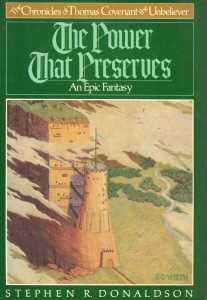
Looking at the rhetoric, few people believe that America as either a dream or a hope or a goal will ever become the Camelot of our imagination. Variously, it’s too late, too broke to fix, or too besieged by problems no man or woman or group can solve. In the minds of many, America is rather like the tragic world of King Arthur in Tennyson’s epic poem Idylls of the King. Epic fantasy author Stephen R. Donaldson summed up Camelot, as viewed by Tennyson like this:

Tennyson’s technique is to take a genuine, honest-to-God “epic” character (Arthur) and surround him with normal, believable, real human beings who lie and cheat and love and hate and can’t make decisions. So what happens? The normal, believable, real people destroy Arthur’s epic dream.

Donaldson suggests that many of us think we’re not capable of doing anything else because we believe that since “man is a futile passion” that we are powerless and incapable of creating a living, breathing real Camelot. He writes fantasy, in part, to demonstrate that man is capable of being an effective passion.

An Alternative to Sartre

I quoted storyteller Jane Yolen in my latest Sarabande’s Journey post, so those of you who read that will, I hope, forgive the repetition. In her book Touch Magic, she says that Life in Truth (as opposed to the world we see with our eyes) “tells us of the world as it should be. It holds certain values to be important. It makes issues clear. It is, if you will, a fiction based on great opposites, the clashing of opposing forces, question and answer, yin and yang, the great dance of opposites. And so the fantasy tale, the ‘I that is not you,’ becomes a rehearsal for the reader for life as it should be lived.”

My philosophy of life does not include the viewpoint that men and women are powerless or that they don’t matter or that “evil” and “blame” are independent forces out there in the real world. As an individual, I believe in Life in Truth; that is, among other things, both a Joseph Campbell approach and a Jane Yolen approach. In my contemporary fantasies, The Sun Singer and Sarabande as well as in my magical realism adventure Garden of Heaven: Odyssey, I focus on stories with intense—and sometimes horrible—personal trials. And yet, my characters also find answers, answers that focus on themselves rather than on those who would destroy them or the world they believe in.

While I write contemporary fantasy rather than epic fantasy, I agree with Donaldson’s point of view about the value of fantasy fiction. His characters look within for answers, and this allows them to see the “real world” just the way it is while simultaneously seeing their dreams; that is to say, the world as it should be.

Paradox or not, I can reconcile Life Actual (the so-called real world) and Life in Truth, and understand clearly that while I don’t have what it takes to solve the large issues of the day, I am learning all that I need to know to solve the problems of myself. One day, as long as I don’t stare too intently at the problems themselves, the worlds of reality and of imagination will become one.

Malcolm

sharp-edged fiction without the futility

Hero’s Journey – Magical Helpers

“What such a figure represents is the benign, protecting power of destiny.” –Joseph Campbell in “The Hero With a Thousand Faces”

When a mythic hero begins his or her journey into the unknown, s/he often receives help from a magical helper or mentor in the form of advice or amulets to ward off or lessen the impact of the dragons and other horrific forces and entities along the hero’s path.

Crones, wise men, elves and other faerie folk, gods and goddesses, totem animals and spirit guides are among the forms of supernatural aid that providence (or the universe) provides.

Campbell writes that no matter how dangerous the evil forces are on the far side of the threshold or portal into the unknown (dark forest, wine-red sea, unconscious), that “protective power is always and ever present within the sanctuary of the heart and even immanent within, or just behind, the unfamiliar features of the world.”

Considering the journey as a spiritual undertaking, the hero–as we learn from mythology–is wise to trust himself and his guardians. In “Harry Potter and the Sorcerer’s Stone” for example, young Harry is called to his journey via mysterious letters arriving from Hogwarts School of Wizardry and Witchcraft; however the nasty Dursley family won’t allow him to read them, much less respond.

But the journey will not be denied. Hagrid, a half giant from the school appears, and rescues Harry via supernatural means. Likewise in “Star Wars,” Obi-Wan Kenobi uses supernatural means (paranormal skills) to extract Luke Skywalker from the planet where he’s been living and then serves as Luke’s mentor as the journey begins.

Friesian Horse – Walraven on Flickr

In my novel “The Sun Singer,” young Robert Adams encounters several magical helpers including a large, black horse named Sikimí. In everyday terms, the horse is a Friesian like the one in the picture. Yet, when Robert meets the horse for the first time, he–and the reader as well–are tipped off that Sikimí is somehow more than a horse:

The horse was excessively here in the present tense as though accentuated by the angle of the light into being more now than now and more visible than normally visible.

And then David Ward–a mentor character in the novel–tells Robert that Sikimí describes himself as “night in the shape of a horse.”

The journey, though, belongs to the hero alone. In “The Sun Singer,” neither Sikimí nor David Ward remain with Robert. He says goodbye to them and is on his way. He must trust that they–or whatever he has learned from them–will serve him well when the need arises.

Each mythic hero must merge the magical powers, amulets, advice of the magical helpers or mentors with his or her own willpower and faith to carry out the quest to its conclusion. The amulets cannot be all powerful nor the mentor always present, for then the “hero” would simply be along for the ride with no risks to face nor crucial decisions to make.

Hero’s path myths–and fiction based on the steps of the hero’s journey–are intended (in addition to their storytelling value) as catalysts for readers and their own life’s journeys. The translation of the mentors concept into daily life can be rather straightforward, for there are teachers everywhere as well as books, workshops and courses everyday heroes can use to their advantage.

Most of us do not expect a wide variety of gods to help us in the manner in which they directly helped (or hindered) Odysseus in Homer’s epic poem “The Odyssey.” Depending on one’s belief system, prayer can serve as supernatural help; so, too, the messages of totem animals and spirit guides in dreams and meditation. For others, the magical helpers of myths transform into the positive synchronicity and “good luck” that seemingly appear out of nowhere as a result of one’s positive thinking, trust in himself or herself, and dedication to a course of action in harmony with the universe (or one’s spiritual views).

The prospective hero hears “the call to adventure” and makes the decision to undertake the journey without guarantees. He does not ask to see the mentor or the magical helpers in advance. He walks out the door of everyday life without a script that shows precisely what will happen and how s/he will survive the tasks ahead and make it safely home.

Writer’s Note

As Ted Andrews notes in his book “Animal-Speak: The Spiritual & Magical Powers of Creatures Great and Small,” horse symbolism is complex. His keynotes for the horse are travel, power and freedom. These fit my needs for the book since my protagonist is concerned with all of these things.

The black horse appears in my own dreams and meditations often enough to be considered a totem animal: my own magical helper, so to speak. This means that I “know” a lot more about this particular horse than I need for the book, always a plus for an author.

If horses, wise old men, or other magical helpers and guides appear in your dreams, then they are playing the same role as the supernatural powers of classic myths as well as novels and movies that are structured along the lines of Joseph Campbell’s hero’s journey theme.

–Malcolm

Malcolm R. Campbell is the author of the contemporary fantasy “The Sun Singer,” a hero’s journey novel.