Salt to the Sea, Ruta Sepetys, (Philomel Books: February 2016), 400pp, young adult
Between January and May, 1945, Germany evacuated two million people from the advancing Soviet army in the Polish and East Prussian corridors via Operation Hannibal, the largest sea evacuation in modern history. Over 25,000 of them died in the Baltic Sea when 158 of the estimated one thousand merchant vessels were lost, many to enemy fire.
Among the lost were 9,400 of the German, East Prussian, Lithuanian, Latvian and Polish refugees on board the Wilhelm Gustloff that was sunk at 9:15 p.m. January 30th by three torpedoes from Soviet Submarine S-13 at 55°04′22″N 17°25′17″E, nineteen miles off the Polish shore.
Ruta Sepetys’ superb young adult novel traces the flight of Joana (Lithuanian), Florian (Prussian), Emilia (Polish) and Alfred (German) from the advancing Soviet army. Alfred is a sailor sent to the port of Gotenhafen for duty on board the Wilhelm Gustloff to help evacuate those escaping from the Soviet advance. Joana, Florian, and Emilia have a more difficult trek to Gotenhafen because they are also running from the German army.
The story is told in one-to-three-page chapters from the viewpoints of the four major characters. By the end of the novel, readers know each of these characters like family for they will have heard an unforgettable story of brutality, death, guilt, fate, shame and fear from every angle that matters.
Joana is a compassionate nurse, Emilia is a pregnant teenager, Florian is a young man with secrets, and Alfred wants to receive a medal for small, self-important deeds. And then there are Eva, who is tall and gruff; Heinz, a cobbler who knows people by their shoes; Ingrid, a blind girl who sees better than many, and the other seemingly doomed but hopeful souls along the way.
As they walk through the snow, Joana thinks: We trudged farther down the narrow road. Fifteen refugees. The sun had finally surrendered, and the temperature followed. A blind girl ahead of me, Ingrid, held a rope tethered to a horse-drawn cart. I had my sight, but we shared a handicap: we both walked into a dark corridor of combat, with no view of what lay ahead. Perhaps her lost vision was a gift. The blind girl could hear and smell things the rest of us couldn’t.
Sepetys’ great success with this novel comes from many factors over and above her research. The story, including the sinking of the Wilhelm Gustloff, is told in pointed, straightforward, often graphic language with well-chosen details and no authorial editorializing or sentimentality. If the refugees reach the ships in Gotenhafen, they may not be given a boarding pass: the Germans can easily find reasons for and against each of the characters. And, the subplot of secrets ultimately linking Joana, Florian and Alfred adds tension.
It’s difficult to imagine a more perfect story about the tragedy of civilians in wartime or a better historical introduction to the plight of the Lithuanian, Prussian, Polish and German refugees caught between the opposing, but equally brutal World War II regimes of Hitler and Stalin.
Salt to the Sea is the novel no reader will forget.
“Although Urrea has stitched a seamless end to the saga initiated in The Hummingbird’s Daughter, Queen of America lacks the clarity of vision of its prequel. Having left behind Mexico’s rich landscape and languages, the Urreas — Tomás and Teresita, and the author as well — grasp for inspiration.” – New York Times 2011 review by Mythili G. Rao
If Urrea’s powers as an author of magical realism and his great-aunt Teresa’s powers as an inspiring healer reach their apex in The Hummingbird’s Daughter, they become a lingering, bittersweet denouement in Queen of America. Urrea writes in the novel’s notes and acknowledgements that “The story is not the history.” Writing a novel rather than a non-fiction account of his family’s history led Urrea on a twenty year journey to pull together myths and stories and facts into a cohesive whole that is whole as an impression of what happened rather than–as he says–a textbook.
After she flees Mexico at the end of The Hummingbird’s Daughter, Teresa is carried by multiple tides more powerful than even her imagination can grasp. Initially, she settles with her father in a variety of locations in the Southwest. It’s closer to what they know, but it’s also dangerous inasmuch as the Mexican government still considers her an enemy of the state and persists in sending assassins to put an end to it. Until her father manages to land on his feet and start a profitable life in the States, finances are in short supply.
After suffering through an assault, Teresa leaves her family behind and looks for a way to continue her healing work elsewhere. Unfortunately, her upkeep and life are taken over by a consortium that primarily seeks profit out of her fame. Her life becomes, in today’s terms, a lengthy tour where she is at once visiting royalty and a caricature of her former self.
She experiences many wonders on this journey, including a prospective chance for love, companionship and normality. And she experiences many heartbreaks. In these highs and lows, readers will find her to be wonderfully human. Urrea knows his character and brings out her soul in this sequel.
By the time she frees herself from the sweep of events controlled by others, she has spent her capital. In many ways, it’s a well-deserved rest, one that she’s ultimately at peace with.
Urrea has handled her story with humor, more of his rich language, and a deep look into the psyches of the major characters. The story is told well and Teresa emerges as a complete person. While Urrea did not write a textbook and was free to interpret events (perhaps more truthfully as fiction than as facts) he is nonetheless constrained by the realities of Teresa’s life. No doubt, he would disagree. Suffice it to say, the historical Teresa did not lead a revolt against the Mexican government or become a catalyst for Indian rights and freedom while on tour, nor go on to accomplish great and mythic deeds in the U. S. If she had, Queen of America might have reached the stunning heights of its predecessor.
Teresa bloomed in The Hummingbird’s Daughter and faded as all flowers must in Queen of America. It is still a must-read for everyone who began the journey in The Hummingbird’s Daughter–for closure.
–Malcolm
Malcolm R. Campbell is the author of the magical realism novella Conjure Woman’s Cat
Thomas-Jacob Publishing is releasing a new edition of Sarabande just in time for the 2015 holiday season.
The second book in the “Mountain Journeys” series, the novel sweeps a young woman along a dark and ill-fated trek from the high country of Montana to the prairie of Illinois to escape a ghost. While the novel’s official release date is November 1, the Kindle edition is available for pre-order on Amazon now.
Haunted by her powerful sister Dryad from beyond the grave, Sarabande leaves the world of Pyrrha from its hiding place within Montana’s Glacier Park, and travels on horseback to Illinois to seek the help of Sun Singer Robert Adams. Sarabande almost dies trying to reach him and it’s soon obvious that evil has followed her from the western mountains to Robert’s small town in a world of soybeans, corn, brick streets and old homes.
Click here to see the trailer on YouTube
Robert saved Sarabande’s life in the first book of the series, The Sun Singer. Truth be told, he doesn’t think he can do it again. His magic is weak, all but forgotten. Worse yet, he remembers Dryad’s moon magic and hypnotic voice and fears that he can’t resist her seductive charms another time.
–
Sarabande, a contemporary fantasy, was written so that it can be read as a standalone novel about a woman’s perilous journey. It can also be read as a sequel to The Sun Singer, which was the story of Robert’s journey to Pyrrha. The Sun Singer ended on a positive note, but there were a few loose ends.
–Malcolm
Malcolm R. Campbell is also the author of “Conjure Woman’s Cat,” “Emily’s Stories,” and “Jock Stewart and the Missing Sea of Fire.”
Today’s guest is Keith Willis, author of the new fantasy novel “Traitor Knight,” released by Champagne Books on September 7. You can learn more about the novel on its Facebook page.
Malcolm: Welcome to the Round Table, Keith. To keep things reasonably honest, I should confess that I was an English department instructor and you were a student some thirty years ago at Berry College. I wondered then what people did with a degree in English. You said on your website that when you graduated with a double major in English and French, you were best qualified for unemployment benefits. What were your expectations when you first entered college about your career? Somehow, I expected you’d be the editor of a literary magazine.
Keith: Thanks for having me on the Round Table, Malcolm. Where the heck did that 30 years go? Actually, in the interests of full disclosure, it’s closer to 40 years. But I won’t mention that if you won’t.
Malcolm: Keith, at our ages, it’s better to round numbers down rather than up.
This Berry College walkway is suitable for knights, real or imagined. – M. R. Campbell photo
Keith: I have to admit my career expectations on entering college were, not to put too fine a point on it, pretty non-existent. I would have loved to snag a job as editor of a literary magazine. Unfortunately supply far exceeds demand there, and the fact is the pay scale probably wouldn’t have cut it anyway. I had some vague ideas about becoming a teacher and even started the sequence for that in college—until the bottom dropped out of the teaching market.
I also had dreams of becoming an attorney, courtesy of way too many Perry Mason re-runs in my youth. But in the cold light of dawn, I knew that wasn’t realistic either, since I really hated public speaking. Thus, with a newly minted degree and a new wife I resorted, as do so many English majors, to “any port in a storm,” which in my case ended up being a career telling other people what to do (also known as Management). But at least the skills I learned at Berry allowed me to boss them around with clarity and conciseness.
Malcolm: A lot of new writers think everything that does into a novel involves sitting at a keyboard and typing. Not that we need a management spreadsheet here, but in terms of time and effort, how much of your work on Traitor Knight was writing vs. research, revising, editing, manuscript submission and planning a marketing strategy.
Keith: I actually got the initial concept for Traitor Knight in October 2008, so almost exactly seven years ago. Once I started writing, it took me roughly fifteen months to produce a first draft (I was working full time as well, and didn’t devote a ton of time for writing). While I didn’t necessarily follow the dictum of “Write drunk, edit sober,” I will say that I just wanted to get a first draft down, and worry about fixing it afterwards.
The book actually started off much more in the romance genre, with a pretty high heat level, but I soon realized that really wasn’t what the story was all about. After reading over what I’d managed to write, I spent the next five years revising and re-writing and actually making it into a story that flowed and made sense. I found that I had lots of great scenes, but they didn’t actually all go together to drive the story forward.
Once I’d done some revisions I started feeling that this was pretty good stuff, and began sending queries to literary agents and editors. As most new authors do, I sent the manuscript out much too soon. Initial responses ranged from a polite “no thank you” to a nervous “why did you send me this ticking bomb draped in deadly cobras—please take it back”. It was honestly pretty awful. But each time I took any bit of feedback I could get, sat down and did another revision, and another, ad nauseum, to try and make the story more readable and attention-grabbing. It took six years and over 80 rejections (I kept a spreadsheet of them) before I snagged a publisher. But you just keep re-writing and revising until you catch the interest of that one individual who’s going to say “Yes!” instead of “Go away.” And as I’m sure you’ve noticed in your own work, no matter how many times you revise and edit and tweak, even after it’s published you still see something that you think “oh, I really should have done this differently”.
Malcolm: What led you to write a knight on a quest fantasy, and did you know early on that your protagonist Morgan McRobbie might have been considered a bit of a loose cannon by Arthur, Lancelot, Galahad and the rest of the Round Table bunch?
Keith: The fantasy genre has always been something that resonated with me. One of my first favorite books was TH. White’s The Once and Future King, and I’m sure this had a lasting influence, as did Tolkien, and the SFF humorist Christopher Stasheff, whose The Warlock in Spite of Himself , filled with romance, adventure, and marvelously awful puns, helped me to see that the genre didn’t have to be quite so serious. Also, I think part of the attraction is that you get to make up your own rules, history, etc.
Malcolm: White’s novel was also one of my favorites.
Keith: When I first came up with the idea for Traitor Knight, I knew I wanted to do something a bit out of the ordinary—to turn the old ‘knight vs dragon’ trope on its head. So I ended up with a dragon suffering from hiccups and a damsel-in-distress who’s fiercely suspicious of her rescuer. The story is really more a swashbuckler with a large dash of wit, and is intended as an homage to all those great old Saturday matinee movies. And I came to realize that, even though Traitor Knight is classified as fantasy, the story relies less on the fantastical elements than in the interplay between Morgan and Marissa. Their characters owe a great deal to a couple of classic British writers: PG Wodehouse and Agatha Christie, who both wrote characters thrown into situations beyond their control and who face their challenges with aplomb and a sense of humor. My two leads clash, but they also engage in banter and barbs and their struggle, together and separately to save the kingdom from an insidious traitor, is what really drives the story.
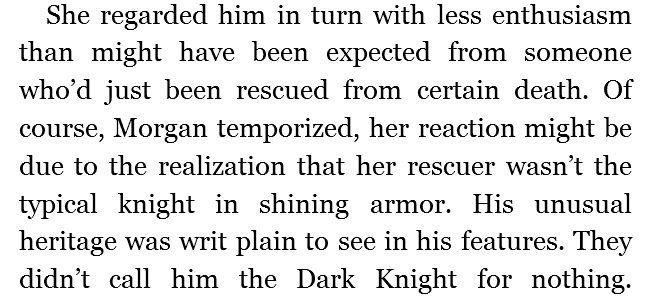
Malcolm: Looking at this passage, I think Marissa expected a different kind of rescuer:
Keith: Morgan might well have been considered a loose cannon—although in the world I’ve created, cannon haven’t yet been invented—but he’s doing what he must, even at the risk of his honor, his happiness, and likely his life, to safeguard what he holds sacred. Morgan’s motto, as emblazoned on the family crest, translates to “As Need Requires”, and this is a major theme of the book, in that Morgan will do whatever is necessary, by whatever means come to hand, to accomplish his mission.
Malcolm: What kinds of reference materials or web sites did you use to nail down all the knights’ weapons/clothing, foods, customs, structures, horses and tack, viewpoints and customs that were all part of the time period in which the novel is set?
Champagne Books
Keith: The great thing about a story like mine is that you’re essentially starting with a blank slate. I tell people “I love history—especially when I get to make it all up”. I would have to say that most of my “research” was from reading heavily in the fantasy genre. I don’t go into a lot of descriptive details of armor, weaponry, etc. in the story. Instead I try to let the reader imagine what those things look like. I did have to come up with a system of magic, and figure out where the dragons came from—but as I mentioned earlier, I don’t really spend an inordinate amount of time going into the nitty gritty of this stuff. The story is really much more about the characters and their conflicts and desires. They just happen to live in a world where magic and dragons (and Dwarves, but we really don’t get to them until Vol. 2) exist.
Malcolm: So, your characters are campaigning for a sequel to Traitor Knight rather than allowing you to write with a different focus?
Keith: Rats! I guess I gave that answer away just now. There definitely is a sequel in the works., although Traitor Knight does actually stand alone. There’s no real cliffhanger that absolutely requires a second or third volume. My hope is more that readers will be engaged by the characters and want to read the next one just to see what they’re up to.
But I initially wrote books one and two as a single volume, then realized just how unwieldy that would be (somewhere in the neighborhood of 750 or so pages). I found a good stopping point for the first book and chopped ‘em in half. The second was pretty much done, but the editing and revisions I’ve ended up doing over the past couple of years have changed a lot of what happens in the sequel. My editor is urging me go get on with it and complete book two (tentatively titled Desperate Knights, and I am working trying to smooth out the rough edges and get all my dragons in a row.
Malcolm: If Hollywood calls you tomorrow to say they’re ramping up for a $100000000000 production of Traitor Knight, who would you pick to play Morgan McRobbie? Seriously, when you were writing, did you see the scenes in your mind’s eye the way they would look in “real life” or in a film?
A prospective Morgan McRobbie?
Keith: Morgan is actually bi-racial—his mother is from an island nation rather like Jamaica, where his father was dispatched on a diplomatic mission (they met while routing a band of particularly nasty pirates, but that’s another story—which I have, actually written). My choice to play Morgan would be Will Smith. I think he’s got the looks, the panache and the charisma to carry off the character. And yes, I did write the story not so much with a film in mind, but definitely from a cinematic perspective—I felt that if my writing evoked that type of visual sense, it would resonate more with readers.
Malcolm: Will Smith will work just fine. Thank you for stopping by the Round Table, Keith. Readers will find Traitor Knight on Kindle
A Facebook friend of mine claims that every story you want to write is sitting “out there” in limbo or maybe Topeka waiting for you to discover it, copy it into a DOCX file, and send it off to HarperCollins for $1000000000000000.
Does that sound crazy or what?
Far be it from me to dispute it because the gospel truth is stranger than fiction. Working writers use meditation, dreams, magic, quantum entanglements and whiskey to meet with their characters once a month and talk about stories. Think of these people as, not beta readers, but beta writers.
Every one of them has ideas. Like actors, they all want to direct. These meetings are like casting calls (when you have a new story to write), brainstorming sessions (when one of them wants to run an idea of the flagpole) or encounter groups (when the sock puppets get out of control).
It’s completely safe because weapons are checked at the front door and watched over by a guy who looks like Dirty Harry. If you get too close to the guns, he says, “Well, you gotta ask yourself, do you feel lucky punk?”
I meet with my characters at a seafood joint called The Oaks in Panacea, Florida. The real Oaks has been closed for years, but with powerful meditation techniques and/or a shot of Scotch, the place returns out of the Ochlockonee River mist with the same reality that Brigadoon appeared to Tommy Albright and Jeff Douglas in the Scottish Highlands.
Since Eulalie (Conjure Woman’s Cat) is the best cook, she fixes fried mullet, hush puppies and slaw for the crowd while we shoot the breeze over old times, swap recipes for cathead biscuits and saw mill gravy, and stay away from the guy guarding the weapons.
Last night, Eulalie asked how her next story was coming along and I had to tell her it was running behind schedule. Emily (Emily’s Stories) said I promised her she could look for ghosts at the old Perkins Opera House in Monticello, Florida. “I know where it’s hiding,” she said.
Ruby (The Seeker) wanted to know why she didn’t didn’t have a part in Snakebit. “Anne and I are like family,” she reminded me. “Who the hell do I have to sleep with to get another story?”
Laurence Adams (The Sun Singer) showed up even though his story doesn’t take place in Florida and said, “If you had finished writing another story set in Glacier National Park, it would be selling like hot cakes this summer during the hotel’s 100th anniversary. Please tell me you people aren’t eating mullet. High class Floridians don’t even eat mullet.”
You can see why we check our weapons at the door.
Okay, here’s what you do.
Choose a real place for your meeting. Make sure the owners (if any) don’t know about the meeting.
If you know the names of your characters or prospective characters, write them on a piece of paper in blood (hopefully not yours) and bury it (the paper) in a deserted graveyard while nobody’s watching. If you are looking for fresh ideas, include words like “Chainsaw Killer,” “Honest Lawyer,” and “Sexy Vixen.”
Steal somebody’s meditation techniques off the Internet and suddenly feel like your eyes are getting tired, that your brainwaves are entering the alpha state, and that you can “see” your meeting hall filling up with wonderful people and probably a feel wannabees. (Don’t over-do the meditation and go into a stupor.)
Check all weapons.
After finishing your favorite foods and beverages, ask your current and prospective characters if they believe stuff like “every story you want to write is sitting ‘out there’ in limbo or maybe Topeka waiting for you to discover it, copy it into a DOCX file, and send it off to HarperCollins for $1000000000000000.”
When they say, “Does that sound crazy or what?” tell them you’re ready to hear some better ideas. Listen carefully with an open mind and an open heart. (This means not saying, “Hey, dirtbag, what kind of bozo idea is that.”)
Now, listen, writers, this is gospel or my name’s not John Doe: When you come out of your meditation (assuming you come out of it), you will have the best darned ideas for the best darned stories in the best of all possible worlds.
This is important:Don’t discuss your new idea with anyone specially friends and family for they’ll share it with everyone and before you know it, some clown from Chicago or Miami will be sitting in a chair on the “Tonight Show” telling the world about YOUR BOOK. Well, it would have been your book if hadn’t blabbed the storyline to people who can’t keep a secret.
Write the thing. Then give Jimmy Fallon a call. I know, I know, he’s no David Letterman or Johnny Carson, but he’s probably good for couple hundred grand in sales.
There you go.
–Malcolm
Malcolm R. Campbell is the author of the Jim Crow era novella, “Conjure Woman’s Cat,” which is on sale on Kindle today (July 18th) for only 99 cents. Eulalie claims she gets a 50% cut of the action or else.
If your granny taught you anything, she made sure you knew how to make a proper dill pickle. I’m not going to repeat the recipe here, because I ain’t your granny. Suffice it to say, it includes dill. Surprised?
Most people don’t grow their own dill. If you don’t, your pickles won’t do well at the state fair. Surely, granny told you this. Whether you’re using seeds or leaves (sprigs), pickles just taste better when you grow your own dill because factory fresh ain’t fresh.
If your granny was cagey, she probably didn’t tell you that you can attract a lover by soaking yourself in a “love-drawing bath.” Obviously, there are hundreds of spells you can add to the mix, but since taking a bath is a good idea before going out on a date, the dill seeds you collected and dried yourself are superior to those from the factory. (A fair number of sites tell you how to dry the seeds. Here’s one of them.)
The leaves from your fresh-from-the-garden dill will remove a jinx, possibly the kind of crossed condition a rival might have put on you to keep you from finding the mate of your dreams. Make a coction with the leaves and ginger root, strain it, and rub it on yourself like sun screen. Think of it as a jinx screen. Do this for at nine days.
Maybe you’re not jinxed. Okay, then soak those dill seeds in water for three days and add them to your next bath. Soak yourself for a while (but not for nine days!).
Good luck.
Now, if you need something more powerful, there are dozens of hoodoo practitioners out there with hundreds of love spells involving candles, incense, oils, letters and even some properly obtained graveyard dirt. (Hint: get that, with a token of payment, from the grave of a good person, leaving out the black sheep in your family and/or a lunatic.)
I’m an author. I look this stuff up when writing stories like “Snakebit” and “Dream of Crows,” and my Conjure Woman’s Cat novella. That means that I “fake it,” I don’t prescribe it. My granny wasn’t a conjure woman (that I know of) so she didn’t hand down any spells. She often said, though, that “things are in a real pickle”–whatever that meant.
But, like suggesting sickly people should have a bowl of chicken soup, I’m in the clear by suggesting you throw some dill seeds in your bath.
If that doesn’t work, maybe you’re forgetting to brush your teeth.
–Malcolm
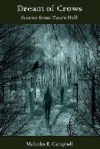
Malcolm R. Campbell is the author of “Dream of Crows,” a dark story about a sexy conjure woman, a swamp, a cemetery and–it goes without saying–some graveyard dirt. It’s free on Kindle for two more days.
“Alternating between Sarah’s and Handful’s contrasting perspectives…allows Kidd to generate unstoppable narrative momentum as she explores the troubled terrain that lies between white and black women in a slaveholding society… The novel’s language can be as exhilarating as its powerful story… By humanizing these formidable women, The Invention of Wings furthers our essential understanding of what has happened among us as Americans – and why it still matters.” —The Washington Post
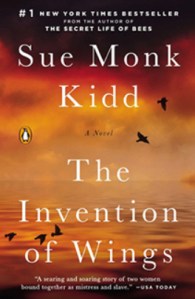
Sue Monk Kidd’s powerful historical novel The Invention of Wings returns to the public’s consciousness the effective, famous and infamous abolitionist and feminist orators/authors, sisters Sarah Moore Grimké (1792-1873) and Angelina Emily Grimké Weld (1805 – 1879). (See PBS’ People & Ideas: Angelina and Sarah Grimké.)
Born into a Charleston slaving-holding family that was widely known in the city’s upper levels of society, both girls would–in spite of a stern mother and a resolute father–evolve into outspoken ladies who would ultimately defy their kin, city, and church to speak out against slavery and discrimination against women.
As the PBS article notes, “The sisters’ public speaking and involvement in the political sphere drew condemnation from religious leaders and traditionalists who did not believe that it was a woman’s place to speak in public. The sisters soon found themselves fighting for equality of the sexes and women’s rights, following women like Sojourner Truth in linking the rights of blacks and women.”
The Invention of Wings shows the sisters’ (and Sarah’s Black maid Handful’s) struggles at a close, personal level as the women’s views about themselves and their places in the world evolve during the novel’s 1803 to 1838 time frame. This is the novel’s first great strength.
From Sarah’s perspective:“All things pass in the end, even the worst melancholy. I opened my dresser and pulled out the lava box that held my button. My eyes glazed at the sight of it, and this time I felt my spirit rise up to meet my will. I would not give up. I would err on the side of audacity. That was what I’d always done.”
From Handful’s perspective: “Goods and chattel. The words from the leather book came into my head. We were like the gold leaf mirror and the horse saddle. Not full-fledge people. I didn’t believe this, never had believed it a day of my life, but if you listen to white folks long enough, some sad, beat-down part of you starts to wonder.”
Its second great strength comes through the seamless blend of historical facts and characters and fictional characters and events. You realize how expertly this hand-in-glove fit was accomplished when you read the author’s note at the end of the book. (Kidd also provides a list of references.)
I became a fan of Sue Monk Kidd in 1996 when I read her The Dance of the Dissident Daughter: A Woman’s Journey from Christian Tradition to the Sacred Feminine. I thought of that book again as I read The Invention of Wings. I does not surprise me that an author who wrote about her own escape from religious patriarchy would be drawn to two historical sisters who also took strong issue with the organized church, sexism and racism.
The Invention of Wings is a testament to a wonderful writer’s ability to put herself into the shoes of two unfortunately obscure civil rights and feminist leaders and bring them to back life again in a highly readable story.
–Malcolm
Malcolm R. Campbell is the author of “Conjure Woman’s Cat,” a novel about small-town racism in the Florida Panhandle during the Jim Crow era.
Causing Chaos (Inola Walela/Steven Hawk Suspense Series Book 4), by Deborah J. Ledford, IOF Productions Ltd (March 31, 2015), 308 pp.
Deborah J. Ledford follows Staccato (2009), Snare (2010) and Crescendo (2014) with another powerful mystery/thriller set in the western North Carolina world of the Smoky Mountains and the Eastern Band Cherokee trust lands of the Qualla Boundary.
The story begins in blood, “Red streaks on the lower cabinets, an overturned chair, the oven door. An arc of crimson, the entire height of one wall.”
While Cherokee artist Paven Nahar works in his studio, his wife Shellie argues with two art dealers in the couple’s house who insist on acquiring the sculpture in progress. When Paven returns to the house later, he finds a bloody kitchen, a shattered pottery urn and no sign of his wife.
Paven, who is soon on the run, quickly becomes the prime suspect in his wife’s disappearance and presumed murder. Inola “Hummingbird” Walela, the only Cherokee in the Bryson City police department is tasked with the capture of the man who was her closest childhood friend.
The story is also defined by blood, blood as represented by the often conflicting love and drama within a family, and blood as a force of heritage and loyalty for members of the Cherokee Nation. Walela’s case is potentially related to an unsolved series “Qualla Ghosts” cases of missing women on tribal lands. This increases the pressure on Walela while ramping up the suspense for readers.
While each novel in this very cohesive series has developed the characters of Walela and her boyfriend Steven Hawk, Causing Chaos belongs to Hummingbird in every possible way. While the novel is aptly categorized as a police procedural and thriller, it is also a deeply personal story for Walela as multiple layers of her past and her family/tribal relationships come to light. Among these is a childhood incident, a source of nightmares and latent fears, that may somehow be related to the fate of Paven and Shellie and to the puzzling Qualla Ghost cases.
Causing Chaos is a cop story with great depth and a heartbreaking psychological undertow.
–
On a personal note, I have been hiking and vacationing in western North Carolina since childhood and have a deep fondness for the Smoky Mountains, the Blue Ridge Parkway and the sacred waters of the Oconaluftee River. Ledford’s novels not only fit hand-in-glove within this setting, but enhance it for those of us who know it well.
–Malcolm
Malcolm R. Campbell is the author of contemporary fantasy and magical realism fiction, including “Conjure Woman’s Cat.”
Thomas-Jacob Publishing released a new edition of Smoky Zeidel’s The Storyteller’s Bracelet today, bringing the novel back into print after a twenty-two month absence. The book is available in e-book and Kindle editions. You can watch the novel’s trailer here.
From the Publisher
“It is the late 1800s, and the U.S. Government has mandated native tribes send their youth to Indian schools where they are stripped of their native heritage by the people they think of as The Others. Otter and Sun Song are deeply in love, but when they are sent East to school, Otter, renamed Gideon, tries to adapt, where Sun Song does not, enduring brutal attacks from the school headmaster because of her refusal to so much as speak. Gideon, thinking Sun Song has spurned him, turns for comfort to Wendy Thatcher, the daughter of a wealthy school patron, beginning a forbidden affair of the heart.
“But the Spirits have different plans for Gideon and Sun Song. They speak to Gideon through his magical storyteller’s bracelet, showing him both his past and his future. You are both child and mother of The Original People, Sun Song is told. When it is right, you will be safe once more. Will Gideon become Otter once again and return to Sun Song and his tribal roots, or attempt to remain with Wendy, with whom he can have no future?”
Smoky’s Description of the Cover’s Symbolism
“I’ve gotten a lot of questions about the meaning behind the symbols on the new edition of The Storyteller’s Bracelet. The wavy lines at the bottom represent water, which plays a life-changing role for my male protagonist, Otter/Gideon. The stairway through the clouds represents the gateway to the 5th World in Hopi mythology. The arrows point to the four cardinal directions and their colors represent the direction people of color scattered at creation. (These colors can vary from one tradition to another; these are the colors the Hopi use.) Finally, the rattlesnake is a symbol of new life, of transformation. Rattlesnake sheds her skin and begins life anew.”
You May Also Like
Smoky also released a companion short story on Kindle called Why the Hummingbird is So Small, “the enchanting story of Sun Song, a storyteller for her tribe, as she visits Fuss, her hummingbird friend, on the day before she is to leave for Indian School in the East.” You can visit Smoky’s website here.
Dance of the Banished, by Marsha Forchuk Skrypuch, Pajama Press (February 1, 2015), young adult, 288 pages. In her sixth book set during the Armenian Genocide, Marsha Forchuk Skrypuch’s Dance of the Banished brings young adult readers a heartbreaking account of the World War I-era ethnic cleansing in the Anatolia region of Turkey and the Canadian paranoia that sent thousands of purportedly dangerous immigrants to internment camps.
Armenians, who are traditionally Christian, and Alevi Kurds, whose religious views differ from those of Sunni Kurds, predate the arrival of the Turks in Anatolia. The discord brought into the region by the Turks is a centuries-old fight. “Dance of the Banished” begins in 1913 on the brink of Turkey’s entry into World War I on the side of the Central Powers with the story of two betrothed Alevi Kurds who are soon separated by hard times and a very wide ocean.
Ali chooses to go to Ontario, Canada where jobs are available. He plans to send money home to his family and to save enough to ultimately pay for Zeynep’s passage to Ontario. She views his departure as a betrayal, as practical as it may be, and wonders if they will ever see each other again.
Subsequently, Zeynep also leaves town to work in a hospital in a Harput, a city between the Tigris and Euphrates rivers, where she is swept up into the horror of revolution, war and poverty. Ali begins work in Canada only to find himself rounded up on trumped up charges and sent to a prison camp where he’s pressed into service at a minimal age. Both wonder why they don’t hear from each other.
The book’s sections, which alternate between Zeynep’s and Ali’s stories, are presented as journal entries written in the form of letters to each other. In time, she learns that the Armenians who have been allegedly drafted to fight in World War I are being exterminated and he learns that he is part a growing group of imprisoned Ukrainians, Turks and others who came to Canada for freedom only to end up without it.
The power of this novel comes in part from the age of its two protagonists and how their view of the world is forced to change. Young and in love, they see life through a different lens than their parents and grandparents. While their focus is on being reunited with each other, their journal entries begin with typical day-to-day activities and then change from initial disbelief at the persecution around them into grim accounts of their own involvement and means of survival.
Their growing horror and their continuing hope and perseverance during the cruel years of 1913 to 1917 combine for a poignant love story and a stark account of genocide close up and very personal.
The book is enhanced by the inclusion of internment camp pictures and an author’s note about the story’s historical background.
–Malcolm Malcolm R. Campbell is the author of the upcoming novella “Conjure Woman’s Cat.”
 Ruta Sepetys’ superb young adult novel traces the flight of Joana (Lithuanian), Florian (Prussian), Emilia (Polish) and Alfred (German) from the advancing Soviet army. Alfred is a sailor sent to the port of Gotenhafen for duty on board the Wilhelm Gustloff to help evacuate those escaping from the Soviet advance. Joana, Florian, and Emilia have a more difficult trek to Gotenhafen because they are also running from the German army.













 Malcolm's Round Table