Satire Used to be Easy To Write

Satire is a genre of the visual, literary, and performing arts, usually in the form of fiction and less frequently non-fiction, in which vices, follies, abuses, and shortcomings are held up to ridicule, often with the intent of exposing or shaming the perceived flaws of individuals, corporations, government, or society itself into improvement.[1] Although satire is usually meant to be humorous, its greater purpose is often constructive social criticism, using wit to draw attention to both particular and wider issues in society. – Wikipedia
Used to be all it took to write satire was a good imagination and a love of dark humor. Now, those days are gone with the wind–and grieved, as Thomas Wolfe might say. I loved finding absurd government actions and making up stories that were much worse and more humorous.

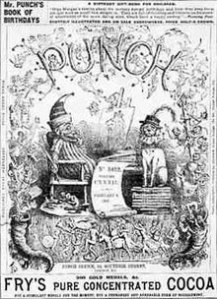
I was trained by the writers of Mad Magazine and Punch.

Now, the government has become much worse, and making it worse in a satirical news story is already too close to the truth to make people laugh. (Not counting crazy people who, actually, are running the county.)

In the old days, I might write a headline like this:

Pacifists kill people to draw attention to horror of killing people.

Now protests often come with violence, and it’s hard to make a joke of it.

Or:

Feds pave road to hell with mob concrete.

Now hell is right here on our doorsteps, compliments of both sides of the aisle. (As a Libertarian, I can poke fun at everyone.)

Today, I might write:

Foreign aid now headed for blue states.

And yet, with the calamity that’s befallen USAID, I can’t make myself write that kind of satirical story because–as it turns out–“Mad Magazine” has become the Feds’ policy manual. Think of the money that’s being saved by reading the magazine rather than drafting policies from scratch. Yeah, that’ll work until DOGE kills off the magazine.

I’d rather write a story with this headline:

DOGE Pulls Plug on Itself

Maybe my satirical story will become a prophecy. I can only hope.

–Malcolm
Review: ‘Winterkill,’ a novel by Marsha Forchuk Skrypuch

Holodomor is а genocide of Ukrainian nation committed in 1932–1933. It was committed by leadership of the Soviet Union in order to suppress Ukrainians obedient and the ultimate elimination of Ukrainian opposition regime including efforts to build an independent from Moscow Ukrainian State. In 2006 by the Law of Ukraine “About the Holodomor of 1932-1933 in Ukraine” Holodomor was recognized as genocide against Ukrainian people. In 2010, by the resolution of Court of Appeal in Kyiv region was proved the genocidal nature of Holodomor, the intention of Stalin, Molotov, Kaganovich, Postyshev, Chubar, Khatayevych, Kosior to destroy a part of the Ukrainian nation. In 1932–1933 were killed more than 7 million people in the Ukrainian SSR and 3 million of Ukrainians abroad in the regions which were historically populated by Ukrainian: Kuban, the North Caucasus, Lower Volga and Kazakhstan. – National Museum of the Holodomor-Genocide

Winterkill, by Marsha Forchuk Skrypuch, Scholastic (September 6, 2022) Middle-Grade Fiction

Winterkill will break your heart.

Once again award-winning Ukrainian Canadian author Marsha Forchuck Skrypuch (Making Bombs for Hitler, Traitors Among Us) gifts readers with a pitch-perfect, well-written, extensively researched novel that shows the human side up close and personal of those trapped within the clutches of an atrocity of history that many still say never happened, was a quirk of nature, Eastern European weather patterns, or bad luck.

Joseph Stalin engineered a blatant genocide against the Ukrainian people by the Soviet Union, especially the farmers. He stole their crops and the food in their pantries and gardens and took their personal possessions, farms, and their lives. Whether through fate or coincidence, history is repeating itself with this novel’s release as the Russian Federation has invaded Ukraine while it once again steals the country’s grain.

Nyl lives on a small family farm and, like many of his neighbors, is puzzled when the Russians increase crop quotas while sabotaging the farmers’ ability to meet those quotas. He meets Alice, an idealistic Canadian who comes to Ukraine with her father purportedly to help modernize the country’s farming methods, introduce the promised efficiencies of collectivization, and advocate for the acceptance of mechanization–especially tractors. 

Skrypuch’s genius comes, in part, from making all of her characters three-dimensional, from those who hope to get by and those who turn on their neighbors as informers for personal gain. There are many points of view amongst these friends and neighbors and we see them clearly rather than as statistics delineating those who deny, who hide seeds and provisions, who try to escape, and who die without lifting a finger.

Alice appears at Nyl’s house with her father to take an inventory of everything in the house and on the property. Soon, it’s obvious that this inventory is helping the Russians dispossess the farmers and characterize them as an affluent, lazy drain on society. Alice doesn’t see the connection between her innocent task and the growing number of lost farms and deaths. By the end of the novel, Alice and Nyl are working together to survive and escape. The dead are everywhere. Food is nowhere. 

The people in this novel make it work. We know them. We see them fight. And we see them perish under conditions that remind us of the Nazi terrors and the lack of a piece of bread. 

–Malcolm


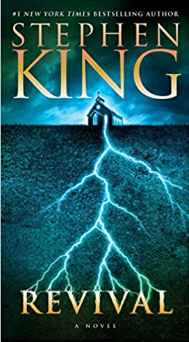
Stephen King’s ‘Revival’ – the usual nasty King stuff in a padded-out novel

Nope, the book doesn’t cut it even though the concept is interesting and the story has many of the usual really bad things happening in it.

From the Publisher

The new minister came to Harlow, Maine, when Jamie Morton was a boy doing battle with his toy army men on the front lawn. The young Reverend Charles Jacobs and his beautiful wife brought new life to the local church and captivated their congregation. But with Jamie, he shares a secret obsession—a draw so powerful, it would have profound consequences five decades after the shattering tragedy that turned the preacher against God, and long after his final, scathing sermon. Now Jamie, a nomadic rock guitarist hooked on heroin, meets Charles Jacobs again. And when their bond becomes a pact beyond even the Devil’s devising, Jamie discovers that the word revival has many meanings….
The problem with the plot comes from the span of time covered by the novel and that something has to fill up all those years until the BIG ENDING finally arrives.

Charles Jacobs is interested in a force he calls “secret electricity.” It works in the carny world for doing magic tricks and, according to Jacobs, it appears to cure people. Curing people finally becomes the focus of his business while in his spare time he plummets deeper and deeper into the sources and uses of this strange force.

The trouble is, there are side effects that are often not always apparent–at first. Some are transitory. Some are long-lasting and can ruin and/or end lives. Jamie Morton becomes just as obsessed with these side effects ad Jacobs is with his electricity experiments. Here’s where the padding in the story occurs. Jamie and another friend spent hours tracking down the people Jacobs has supposedly cured as well as the subset who finally went nuts.

While the is a fair amount of shock value to the kinds of side effects that occur, reading these pages is about like reading the phone book. Most of the people listed aren’t characters in the novel, so we have no buy-in when their names appear. This is all very tedious and without much of a point except, I guess, filling space.

Jacobs mentions the amusement park called Joyland which was a wonderful Stephen King novel. It’s almost a travesty seeing that name in this disappointing book.

Malcolm

Looking forward to Jhumpa Lahiri’s new novel ‘Whereabouts’

I’m a huge fan of this author and have read most of her work. But this novel will be a first, in a way, because she wrote it in Italian and did the English translation herself. That’s rather unusual. In part, I want to see if her novel flows differently than The NamesakeThe Lowland, and Interpreter of Maladies. 

I’m impressed with anyone who can learn a new language and gain enough skill and fluency to write a book using it.

Lahiri, who grew up in the States was born in England to Indian parents. So, her native language is Bengali, though she doesn’t speak it well. At the same time, she didn’t feel that much at home in English even though she handled it well enough (!) to win a Pulitzer Prize and be shortlisted for other awards even though she once said that in both Bengali and English she felt like “a linguistic exile.”

Learning Italian wasn’t easy, even after she moved to Italy. Finally, she found people willing to speak nothing but Italian to her and to correct her mistakes as though she were a child. It worked.

From the Publisher

Exuberance and dread, attachment and estrangement: in this novel, Jhumpa Lahiri stretches her themes to the limit. In the arc of one year, an unnamed narrator in an unnamed city, in the middle of her life’s journey, realizes that she’s lost her way. The city she calls home acts as a companion and interlocutor: traversing the streets around her house, and in parks, piazzas, museums, stores, and coffee bars, she feels less alone.

We follow her to the pool she frequents, and to the train station that leads to her mother, who is mired in her own solitude after her husband’s untimely death. Among those who appear on this woman’s path are colleagues with whom she feels ill at ease, casual acquaintances, and “him,” a shadow who both consoles and unsettles her. Until one day at the sea, both overwhelmed and replenished by the sun’s vital heat, her perspective will abruptly change.
 
This is the first novel Lahiri has written in Italian and translated into English. The reader will find the qualities that make Lahiri’s work so beloved: deep intelligence and feeling, richly textured physical and emotional landscapes, and a poetics of dislocation. But Whereabouts, brimming with the impulse to cross barriers, also signals a bold shift of style and sensibility. By grafting herself onto a new literary language, Lahiri has pushed herself to a new level of artistic achievement.

The reviews are good, so I have high hopes for this one.

Malcolm

Malcolm’s Books: A Getting Started Guide

In general, reading my books is a matter of seeing one word after another.

If your local bricks and mortar bookstore doesn’t have a copy of the book you’re looking for, you can: (a) ask why the hell not, (b) show the clerk or manager the listing for the book on one of the many online booksellers where it can be found and order it while s/he gasps in horror, or (c) tell them they can order the book from their Ingram catalog in the same manner that got all the other books into the building (unless they rely on elves).

If you don’t know the names of any of my books don’t admit it to any other writers since some of those writers might have “mob enforcers” who will teach you a lesson.

If you’re in a literature class taking a test, you’ll probably see questions like this: Which of the following books was written by Malcolm?

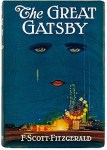
  1. The Great Gatsby
  2. A Visit from the Goon Squad
  3. Still Life With Woodpecker
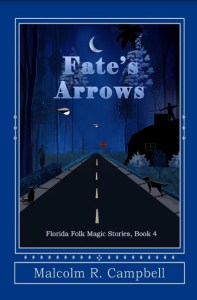
  4. Fate’s Arrows
  5. All of the above
  6. None of the above
  7. One, two, and three above

If the book cover shown here appears on the test, you’ve “accidentally” gotten the professor’s grading copy; your next step depends on (a) whether or not the professor or a grad student monitor is sitting at the front of the room staring at you, (b) the number of security cams in the room, (c) the size of the mob enforcers patrolling the aisles, or (d) dumb luck.

Once you have a hardcover, paperback, or Kindle/Nook copy of my book in front of you, it’s best to start reading from the beginning unless you’re one of those creeps who goes to the back of the book first to see if anything bad or scary happened.

Before you start reading, hire a mob enforcer to keep anyone from messing with you (or else).

Feel free to drink while reading the book. I suggest Scotch or red wine. Getting drunk will probably cause you to say I wrote The Great Gatsby on the next pop quiz. (If the book in front of you ends with the line “So we beat on, boats against the current, borne back ceaselessly into the past,” you are reading The Great Gatsby and that means the book store or the mob enforcer is messing with you.)

While this getting started guide was prepared at great expense, it’s free for you, “gentle reader.”

Malcolm or Bennie Salazar or Gulietta

Do you ‘see’ your story as you write?

“Mikaella Clements interviews various authors about how their visual imagination (or lack thereof) informs their writing. The answers run the gamut: “I rarely visualize what I’m writing because visualization takes effort and can be distracting,” says Talia Hibbert. While Claire Messud says, “When I’m in a world it’s like a 3D five senses movie. I’m there.” (Washington Post)” – From Poets & Writers

On weekdays, I check Poets & Writers overview of literary headlines. When I read the blurb above, my first thought was that I wasn’t going to be able to see the entire story due to the Washington Post’s pay wall. That was frustrating because, after seeing the comment by Talia Hibbert, I wondered how anyone could possibly create a story without seeing it in their mind’s eye.

I guess we all assume that what we experience while writing is similar to what other authors experience. Since I “automatically ‘see'” the characters and locations I’m creating in my fiction, I wondered how visualization could be distracting, much less take an effort to accomplish.

As Messud says, “I’m there.”

In fact, I couldn’t avoid being there even if I wanted to because images appear (unbidden but welcome) while I write. True, they’re often somewhat determined by the research I do, especially when it comes to the look and feel of locations. 

“Seeing’ absolutely nothing would, for me, be a distraction. It would be like writing in a dark room with my eyes closed. Heck, I’d probably ‘see’ the story anyway.

If you write fiction, does your mind create pictures of your location and your characters while you’re writing? (Just wondering.) If you do see those pictures, are they helpful or distracting?

I’m always writing, so to speak, about a mental movie I’m watching. But maybe most writers don’t approach their work this way. When I hear that other writers don’t/won’t/can’t to this, I’m filled with wonder about how the process of creation works.

Malcolm

Malcolm R. Campbell is the author of contemporary fantasy, realism, magical realism, and paranormal stories and novels.


Briefly Noted: ‘Waltzing Montana’

Mary Clearman Blew grew up on a small cattle ranch in Montana, on the site of her great-grandfather’s 1882 homestead. Her memoir “All But the Waltz: Essays on a Montana Family,” won a Pacific Northwest Booksellers Award, as did her short story collection, “Runaway.” – Author’s Website

Waltzing Montana, University of Nebraska Press, March 1, 2021, 294 pp.

A refreshing and original story by an author who knews the territory. Blew is a writing professor at the Univerfsity of Idaho.

From the Publisher:

Midwife Mildred Harrington is riding back home one evening after checking on one of her pregnant neighbors when she stumbles upon an injured stranger. She soon realizes it’s her old sweetheart, Pat, from country school—and he may not be telling the full truth about how he was injured.

Set in rural Montana in 1925, Waltzing Montana follows Mildred as she grapples with feelings for Pat while also trying to overcome the horrific abuse she suffered as a young teenager. Ultimately Mildred must decide whether to continue her isolated life or accept the hand extended to her.

Inspired by the life of midwife Edna McGuire (1885–1969), who operated a sheep ranch in central Montana, Blew has turned the classic Western on its head, focusing on rural women and the gender and diversity challenges they faced during the 1920s.

Editorial Review:

“What we need most right now are stories that are down-to-the-bone authentic, and Mary Clearman Blew gives us one with her new novel, Waltzing Montana. The women and men in this book are not only resilient but find their true meaning in forging through challenge: drought, war, and the Spanish flu pandemic. And yet Blew artfully nods to their limits too. There’s only so much brutality a person can endure, and the ravages of pain and abandonment Blew portrays in these pages stir acts of forgiveness, patience, and abiding friendship, which allow the deepest wounds to finally heal.”—Debra Gwartney, author of I Am a Stranger Here Myself

The book has an apt and lovely cover; my only concern here is that the title and author’s name need to be more visible.

–Malcolm

Malcolm R. Campbell

Publisher: Thomas-Jacob Publishing

Website

Facebook Author’s Page

Amazon Author’s Page

Available on Nook from B&N


Shoot them now while they’re still happy

That was Dorothy Parker’s advice for those who had friends who wanted to be writers.

When I was a college English department instructor, my “Bible” was The End of Intelligent Writing: Literary Politics in America (1974) by Richard Kostelanetz. My colleagues thought it was overly grim, though they didn’t worry about literary politics because they weren’t teaching their students how to become writers. Their students were simply supposed to enjoy literature and then if they enjoyed it enough, teach it to others.
It was a closed-loop quite soundly divorced from considerations of what it took to write and produce that literature. According to my “Bible” prospective writers were up against a closed club. The author called “The New York Review of Books” the New York Review of Each Other’s Books. The club would let you in if you, say–killed somebody and wrote a book about it or if you were a famous, and hopefully infamous, celebrity submitting a tell-all book about almost anything. But fiction: a hard sell then and now.

I should have been a firefighter.

I’ve been haunted for years by the words of author Lila Shaara posted in Beatrice in 2006: “I grew up seeing writing as something that gripped you in poisoned talons, gave you little or nothing back, drove you to addiction and depression, and killed you young.”

Some writers will disagree. They are the 1% who dodged the bullet when we tried to shoot them and somehow clawed their way through the politics of publishers and agents and against overwhelming odds, and are still happy. (Too happy, I would say, from what I read in their newsletters.) The other 99% are insane or selling used cars in Fargo.

Once upon a time, there was a gag that most newspapermen and women thought they had a book inside them, the response being, that was a good place for it to stay. I agree. These days, they can self-publish and potentially earn enough per month to buy a happy meal. I’m not sure that’s an improvement over the world of 1974 when who you were dictated whether or not you succeeded. Or met with an “accident.”

I think the Mafia operates the same way,

–Malcolm

Malcolm R. Campbell

Publisher: Thomas-Jacob Publishing

Website

Facebook Author’s Page

Amazon Author’s Page

Panic Grass – a writer’s dream name

Wikipedia photo

I love double meanings. That’s why I like the name “panic grass.” It has nothing to do with panic–that comes from Panicum–but the use of the word when describing an environment where (in your story) things are going wrong is a nice subliminal trick.

The common or regional names of many plants will help you create the kind of ambiance you want. Perhaps that’s cheating.  But I don’t care as long as the name is factual and also likely to be used in the place where my story is set.

If you have a good plant or wildflower guide for your state or region, you’ll find a lot of “local color.” I have these guides for both Florida and Montana. They not only help me describe the location but support my addiction to puns and words with double meanings such as “spurned panic grass.”

The guidebooks also ensure that the flowers in your stories are blooming at the time of the year when they bloom in “real life.”

–Malcolm

Giveaway: ‘Mountain Song’

My Montana novel Mountain Song will be free on Kindle for three days, February 8 through February 10. Previously called The Seeker, the novel is the first of my two David Ward novels. At Sea is the sequel.

Description

David Ward lives in the Montana mountains where his life was impacted by his medicine woman grandmother and his utilitarian grandfather. Anne Hill suffered through childhood abuse and ultimately moved in with her aunt on the edge of a Florida swamp. Their summer romance at a mountain resort hotel surprises both of them. But can they make it last after the initial passion wears off and they return to their college studies far apart from each other especially after an attack on a college street changes Anne forever?

Background

This novel is set in Glacier National Park Montana where I worked for two summers as a resort hotel employee. It’s also set at a fictional Montana sheep ranch and at a real Florida Panhandle swamp. The characters move around a bit, one might say. The mountain on the cover is named Heavy Shield, previously Mt. Wilbur, and can be seen across Swiftcurrent Lake from Many Glacier Hotel on the east side of the park.

You can find information about all of my books on my website.

–Malcolm