When Theodora Goss’ novella The Thorn and the Blossom: A Two-Sided Love Story was released last year, the book’s imagery, dual stories and unique construction created a bit of a stir. In the story, Evelyn Morgan and Brendan Thorne meet by chance and become lovers after he hands her a copy of a medieval romance.
In her Bookslut review, Colleen Mondor said: “Slipcovered and with an accordion-fold binding, “The Thorn and the Blossom” is designed so it can be flipped and readers may thus enjoy Brendan and Evelyn’s separate perspectives of the same tale. While the publisher’s work is impressive, it is Goss’s handling of the story itself that really blew me away. You do not have to read these perspectives in any particular order; you can start with Brendan or Evelyn and either way you will not ruin critical moments or spoil the ending.”
Publishers Weekly said: “The fantasy elements are light, revolving mostly around Gawan’s story and Evelyn’s visions of fairies and trolls. Overall this makes the tale align more with old-fashioned romance than pure speculative fiction, but Goss’ appealing characters and modern magic atmosphere will continue to attract a following.”
Some reviewers on Amazon liked the unique look of the book, but found the accordion-style presentation difficult to read because the pages easily fell away in long folds. Other authors with two stories to tell in one book have solved this problem by formatting the stories from alternate ends of the book but with standard binding. Needless to say, the issue becomes a non-issue for those reading the e-book version.
Nonetheless, showing the same story from two points of view is an age-old technique that’s been handled in multiple ways, and whenever it appears it adds both drama and depth to the material. Readers naturally feel some stress when they are told it doesn’t matter which account to read first and also when they see that there will be no resolution to the contrasting viewpoints. The depth, aided in part in this case by Goss’ evocative language, comes from understanding that people see events and relationships differently rather than via the single, linear viewpoint commonly used in most fiction. So, the dual stories show us what we often miss in fiction, though we experience it in our lives.
Available in hardcover and e-book, “The Thorn and the Blossom” is likely to enchant lovers of fantasy, romance, and well-told tales.
Malcolm R. Campbell is the author of contemporary fantasy, including the gritty, magical adventure “Sarabande.” His paranormal Kindle short story, “Moonlight and Ghosts” was released last month.
“To our indigenous ancestors, and to the many aboriginal peoples who still hold fast to their oral traditions, language is less a human possession than it is a property of the animate earth itself, an expressive, telluric power in which we, along with the coyotes and the crickets, all participate. Each creature enacts this expressive magic in its own manner, the honeybee with its waggle dance no less than a bellicose, harrumphing sea lion.” — From Becoming Animal: An Earthly Cosmology by David Abram, quoted by Terri Windling in her recent series of posts.
The plots and imagery of my short stories and novels frequently evoke the powers of Earth and invite meditations on and respect for the natural world. This is especially true in my 2011 heroine’s journey adventure novel Sarabande.
The phrase heroine’s journey indicates that this is a woman’s adventure story and that the trials and tribulations will strongly test the main character. The story is written with a feminine point of view, that of Sarabande, the young title character. Since Earth and the forces of nature are often viewed as feminine, the title character’s adventure is supported by “Earth language.”
Sarabande is attracted to rivers, the earth’s life blood and she is healed by an Indian’s Earth-centric approach. And, for a short period of time, she truly experiences becoming animal when she merges with Coyote, a magical creature in the mountains where she finds the ghost who has been haunting her.
I’m attracted to David Abram’s books because they place humans back into nature rather than as creatures at odds with nature. In Sarabande, the title character’s interactions with nature are important to her physical survival and to her inner growth. As readers will soon discover, her life is in danger quite often: knowing “Earth Language” will be essential.
David Abram suggests that rather than describing nature, we should listen to and talk to nature. He relates the story of a man who has trained himself so well to understand “the dialects of trees” that he can be taken blindfolded to any location in the Pacific Northwest. Once there, he will tell you who the nearby trees are. Perhaps our best contemporary fantasies can lead readers back to an appreciation for such skills.
In Sarabande, I hope readers will not only enjoy the adventure, but will take away a bit of Earth language.
Today’s Writing Links
Why We Have Both “Color” and “Colour” by Mignon Fogarty for Grammar Girl – “Have you ever wondered why the British spell “color” with a “u” and Americans don’t? Or why the British spell “theater” with an “re” at the end and Americans spell it with an “er” at the end? We all know that these spelling differences exist, but not everyone knows why they exist.”
The Stephen King Guide to Marketing by Jason Kong for Jane Friedman’s blog – “…you need both good writing and good marketing. Many writers see this as two steps. Write first, then worry about marketing once the words are published. The belief is that the writing and marketing processes are distinct.”
Quote: I am obsessive about titles. Even for my second and third book in the series, I couldn’t move forward until I had the right title for it. With Crewel, I didn’t want it to be so sewing-based that it would be off-putting. I stumbled upon “crewel,” and I thought, obviously this is the title. I take liberties with it. There’s someone out there who does crewel who’s going to say, “There isn’t one crewel work in the book.” – Gennifer Albin, author of “Crewel” – from Shelf Awareness
“The Twa Corbies”, Illustration by Arthur Rackham to Some British Ballads – Wikipedia
In Part 1, I suggested that magical animals in fantasy, magical realism and folktales should start out on your imaginary drawing board as factually accurate as possible. Real-world facts make your animal believable.
Whether your animal can perform overt acts of magic, such as my flying horse Sikimi in The Sun Singer and Sarabande, or mysteriously appears on the scene when important things happen to the characters, such as the crows in Verlyn Flieger’s The Inn at Corbies’ Caw, you can add great depth by linking it to traditional myths and superstitions, American Indian creation myths and real or imaginary local stories and beliefs. When you do this, you are building either on what the reader already believes (ravens hang out in grave yards and bring bad luck) or you are layering the story with information that, while probably new to the reader, helps make your magical animal three dimensional.
In a recent short story about the rare Florida panther, I noted that according to Seminole myth, the creator placed all the animals into a birthing shell from which they emerged when the time was right. The first animal to come into the world was the panther, and she had certain qualities that made her special. Since my story is set in a long-ago time period before humans arrived, the animals view the birthing shell as real. They mention it in an off hand way because my short story is not retelling the myth; the mythic backstory gives my panther a larger than life ambiance.
Many writers turn to Nature-Speak and/or to Animal-Speak: The Spiritual and Magical Powers of Creatures Great and Small by Ted Andrews for a comprehensive introduction to a large number of animals as they are seen in myth and folklore. The books are especially valid for stories set in the United States since they have an American Indian flavor. I prefer to find out about my prospective magical animals before I start writing so I can build their characterizations and actions around the myths and superstitions rather than pasting a “surface-level” set of qualities on top of an otherwise realistic creature.
The Internet is an amazing resource as long as one double checks everything from multiple sources to: (a) insure the myth or legend is widely known rather than being one writer’s imaginary story or religious belief, (b) locate enough detail to keep your account (including the adjectives and phrases you use) from sounding too much like the one source you located. When setting a story in a real location, a you can start with such online searches as creation myths of the Seminoles (insert appropriate tribe for the region) , panther (insert appropriate animal) myths and legends, and Florida (insert state, city, park, forest or resort) animal legends.
How Magic Do You Want Your Animal to Be?
Magic has to be used carefully, for if you make your main character (human or animal) all powerful, then you won’t have a way to build an exciting story. When your animal is all powerful, then you can build in understood “rules” that keep it from solving all the challenges in the story the minute it arrives. My flying horse, for example, is on the scene to transport my human characters from place to place. But he allows them to decide where they’re going and what they’re going to do when they get there. While he occasionally takes strong action, he generally doesn’t interfere in the fate, destiny or logical plan of the humans.
You can, of course, make all of the magic indirect. That is, if an character’s totem animal is the raven, the raven need not have Superman-like powers to play a role. He can appear in dreams and visions with cryptic messages, can be seen flying in a certain direction as a hint to the characters to go that way, and can be placed in trees or in flight overhead when things are beginning to get frightening. This approach works well in contemporary fantasy and magical realism where your magical animals generally don’t have the capabilities of science fiction and fantasy animals in other worlds where the rules are different.
In “real life,” an overtly magical animal would attract attention. Of course, if that attention and how the human and animal deal with it, is important to your story, then hiding the animal’s abilities wouldn’t be an issue. Otherwise, magical animals tend to be more overt when they appear in parallel worlds, spooky uncertain regions, and deserted places. You can also blur the level of reality by opening up the possibility that the magical things a character saw and/or took part in, might have been the stuff of his imagination and dreams. You will see when you do your research into animal superstitions and tales, that magic tends to happen in places where the whole world cannot see it. This not only makes the magic potentially more frightening (it happens at midnight where two roads cross, for example), but keeps it from getting out of control in your story.
If your protagonist is a human, the rules of storytelling (depending on the genre) generally call for him or her to have more control over the direction of the plot than the animal. When placed within a dangerous situation, you character—knowing or not knowing the magic that’s “available”— will make choices to run, to hide, to fight, to be heroic, to find hidden strengths, or perhaps to fail. The magical animal cannot run in out of nowhere and “fix” all of the character’s problems. If so, the story become very anticlimactic.
In most fantasy, there are various “rules in place” in the parallel universe and in adjoining or overlay worlds that contain or restrict all the magic. This also makes stories more suspenseful and mysterious and keeps them from ending on the first page. Even Superman can’t do everything and be everywhere at once: the fact that he can’t, is what makes the story a story. The same is true for your magical animals.
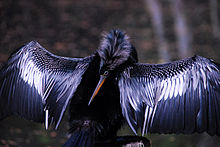
I grew up seeing Anhingas in Florida swamps. A bit of Internet research told me why they dry their wings before flying.
Animals in fantasy, folktales, faerie, and magical realism often have the ability to perform magic, change shapes, influence human events, know the future, or serve as guides between realms or worlds. While the needs of these genres are not the same, it helps to start off with as much knowledge as you can about real animals in their natural habitats. Once you know what an animal eats, how and where it sleeps, what its habits are, and what it looks like, you can branch off from there.
While most readers cannot recite the same specifics as a wildlife biologist, they do have a sense about how animals move around in their environments, and what kinds of animal habits in a work of fiction come across as true or apparently true, and what is blatantly impossible. If you’re writing faerie tales or folktales or creating animals “from scratch” like those we saw in the Harry Potter books, you have more latitude than you do in contemporary fantasy or magical realism.
My feelings about this are somewhat based on my own manner of writing, insisting on accuracy to a fault. For example, in a recent story my two main characters were driving between two real-life towns while listening to a real-life CD. My accuracy thing while writing this is to see how many miles the people will travel at normal speed and then look at the playing times of the cuts on the CD. It doesn’t have to be exact: but personally, I don’t want my characters to purportedly listen to 30 minutes of music during a ten-minute drive.
Likewise, even in fantasy and folktale, I don’t want my animals eating or sleeping in places they never eat or sleep in real life. Sure, magical powers can account for a lot of differences between real animals and fantasy or folktale animals. But the wider the gap you have between the animal in your story and the animal in real life, the less viable your story is and the greater the odds the readers won’t go along with it.
If I had the time and money, I would go into the field with a wildlife biologist and listen while s/he describes the animal behaviors and habitats we’re looking at. Like most writers, I can’t invest in $100 worth of highly specific books from Amazon just for a short story. This means relying on dozens of websites to find the foundation facts for my story.
I was trained as a journalist, yet as a novelist I believe in magic. That means I dislike and have trouble following stories or novels where everything is totally fabricated. If nothing in the story is real, it will probably not attract an audience.
I anchor my stories with verifiable facts about the animals and the settings. Perhaps you will anchor your stories in some other way. But when it comes to creating magical animals in fiction, it won’t hurt to know what your animals do and don’t do, eat and don’t eat, and are capable of and not capable of in “real life” before you start adding the fantasy elements, animal totem qualities, traditional myths and legends involving the animal, superstitions and the stuff you imagine as you put yourself in the animal’s self and walk around a bit.
If you place magical powers on top of a totally unrealistic animal, your story is going to be very difficult to write, much less keep a reader’s attention. A little careful research into your animal in nature will improve the magical animal in your story.
Speaking of myself now in the third person, Malcolm R. Campbell is the author of magical realism, contemporary fantasy and satire published by Vanilla Heart Publishing of Washington State. While my noir satire, Jock Stewart and the Missing Sea of Fire, is set in a fictional Texas town with a really screwed up fictional newspaper, my three other novels are set in Glacier National Park, Montana and other places where I have lived or visited.
Last summer brought the release of Sarabande, a harrowing heroine’s journey and contemporary fantasy about a young woman who is haunted by the ghost of her sister. Sarabande seeks the help of a young man who has, on one previous occasion, bent time to “raise the dead.” The solution to the problem is not without its nasty down side.
Satire for your Nook
In 2004, I came out with the first edition of my novel The Sun Singer, the story of a young man whose psychic dreams ultimately lead him into a dangerous mountain world where it will take all of his skills to survive. First things first: he had to figure out who the good guys are and who the bad guys are and, as it turns out, who exactly he is. The second edition of The Sun Singer was released in 2010. College students at Lone Star College, Texas, read and discussed the novel this past Spring as part of a Wayfaring Heroes course.
Garden of Heaven: an Odyssey (also released in 2010) is magical realism about a man who grows up on a Montana ranch who loses his way when a failed love affair sends him down dangerous roads along which is is betrayed multiple times by those he cares about the most. The book is also available as an $4.99 e-book from OmniLit.
Where To Find Malcolm R. Campbell on the Internet
The Sun Singer, Sarabande and Jock Stewart and the Missing Sea of Fire are available at multiple online booksellers, including the paperback and Kindle/Nook editions at Amazon and Barnes & Noble.
Gem pulled her hands away and stood up so quickly she knocked over her spinning wheel. She didn’t appear to notice. She walked to the window and leaned out as though making sure no one else would hear her words.
“I was shamed by the king.” Gem pulled up her left sleeve to reveal the letters SJ in a bold pink scar that contrasted with her walnut-colored skin.
“Your strike brand!”
“I bore Justine’s mark as well as his child. Both were conceived in pain in a dark cell covered with urine and rat droppings.” Sarabande went to her, but Gem rolled down the sleeve, covering the ugly mark that signified Sovereign Justine. “No, my friend, I cannot abide your seeing it close at hand. My daughter, though, this doting mother will speak of her at great length if allowed to do so.”
“Cinnabar has shown me her brand,” said Sarabande.
“Discretion is a lesson I was never able to teach her. But listen: on your journey to Osprey’s house, you won’t walk through the domains of kings.”
Sarabande gasped and sat down, suddenly lightheaded when she understood why Gem showed her the scar.
“If there are no kings, what dangers have you seen?”
Gem put her hands on Sarabande’s shoulders and kneaded out the growing knots. Her touch always felt like a touch of power, and she wondered if she shared Osprey’s way with healing magic.
“I have seen a dark creek beneath a bridge on a foggy night. I have heard screams and howls outside my comprehension. I don’t understand it,” said Gem, holding their eye contact as though she understood more than she would say. “Sarabande, you know without my lecturing at great length about the ways of the world. A a woman on a lonely road can be a target. Travel with a sharp knife.”
The impromptu massage felt good. The unclear warning did not. Vague predictions were worse than silence. They stirred up what did not need to be stirred up.
“Yes, I know that, Gem. I will carry a knife and take care to have it handy.”
“With due care, you can avoid your fate, but destiny is the way you’ve already written your life’s story.”
“I wanted to walk the sixteen hundred and fifty miles to Osprey’s house long before it occurred to me I would ever do so. If there is to be shame in it, then I will live or die with whatever I find on that lonely road.”
–
Thank you for stopping my Malcolm’s Round Table today!
Few questions are more important to a writer. So, what if Harry Potter bought the house next door and wasn’t shy about who he was and what he could do? Really, Harry Potter himself, not Daniel Radcliffe.
Of course, the real Harry Potter—if there is one—is part of a secret world that “in real life” we would never know anything about. There’s a reason for that: people who are different are usually shunned, persecuted or worse.
The first traditional rule for the adept—alchemist, psychic, shaman, wizard—is KEEP SILENT. If he lived next door to any of us, the real Harry Potter would probably appear as unassuming as Clark Kent in the Superman stories.
But, as long as we’re playing WHAT IF?, let’s say Harry is sick and tired of staying in his figurative closet. (Actually, he did stay in a closet at his foster parents’ house—what a nice touch of symbolism on Rowling’s part).
Time for the Welcome Wagon
When a new family moves into a neighborhood, people are curious. They drop by with pies and casseroles partly as a way of starting things off with a friendly “hello” and partly as a way of getting a look at the new folks to assess how they’re going to fit in. Times might be changing, but even today there are many neighborhoods in which the “welcome committee” will be displeased if a Black, Jew, Muslim, or Gay answers the door. In other neighborhoods, Whites, Catholics, and Japanese “don’t belong.”
In scholarly literature, those who don’t belong are often referred to as The Other. They are outside the mainstream. In the Harry Potter books, witches, elves, wizards and giants are outside the mainstream of English society. Even within the magical world itself, there’s a hierarchy about who’s “in” and who’s “out.”
Fantasy offers readers unlimited opportunities to come to terms with what’s different, what goes against the mainstream scheme of things, and to consider whether the consensus reality of “real life” must be engraved in stone or not. Fantasy lets us safely question “what is.” While reading a Harry Potter book or watching a Harry Potter movie, it’s easy to feel simpatico with Harry, Ron, Hermione, and Dumbledore, and perhaps even to feel a bit sorry for the everyday people in London who don’t know anything about the magic in their midst. Just think of all they’re missing!
But What Happens When We Get to the End of the Book and the Last Movie?
Here come Harry’s friends!
Picture this. The moving van has pulled away and the new family—who looked normal enough while carrying boxes into the house—has gone inside. So, you put together your best cherry pie or your favorite Hamburger Helper meal (depending on your skill in the kitchen), and you go next door and ring the bell.
A dark-haired guy comes to the door. He’s wearing well-aged dungarees and a polo shirt. He smiles and says “Hello.” But, before you can introduce yourself, his son—whom you can see down the entry hall in the living room—shouts Avis! and a flock of pigeons appears out of nowhere and flies past you en route to the wide open sky.
What happens now?
The guy who answered the door says, “Hi, I’m Harry,” and acts like the thing with the birds didn’t happen.
You ask, “How did he do that” and Harry says, “No big deal, it’s just James Sirius having a bit of fun.”
It’s not quite like seeing it in the movie, is it? As I play with this WHAT IF question, I like to think that the world has progressed a lot between the time when TV viewers were watching Rob and Laura Petrie at 148 Bonnie Meadow Road in the Dick Van Dyke Show and all the Wisteria Lane families on Desperate Housewives. We are more likely to welcome Harry today than we were in the 1960s, aren’t we?
What do you think happens if Harry Potter moves in to your neighborhood and, along with his wife Ginny, makes no secret of his skill with spell casting and potions? Will the neighbors accept him with open arms the way they did while reading Rowling’s books, or will they stay away?
This is not a WHAT IF question I plan to use for the plot of my next novel. If I were Dan Brown, I might show that Rowling’s books weren’t fiction at all and that the guy next door is probably attracting the wrong kind of attention from, say, Homeland Security, the mob, and various terrorist groups. If I were Katherine Neville, I might show that in spite of his skills, Harry needs the help of my protagonist, say, Bill Smith, who has to go on a search for the real Nicholas Flamel to save the neighborhood. Or, if I were Tom Clancy, I’d probably have a couple of CIA operatives show up to assess “which side” Harry was planning to help “win” with his most powerful spells.
Do We Want the Fantasy Characters to Just Stay in Their Books Where They Belong?
We love fantasy whether it’s epic, contemporary, urban, steampunk, heroic or another sub-genre. In the books, Harry Potter was viewed as the hero who saved the magical world and (by readers) as one of the most-loved characters in fiction.
But WHAT IF Harry, Ginny and the kids moved into your neighborhood. Would it all become one happy family with baseball games on Saturdays and Quidditch matches on Sundays? Or, would Harry, Ginny, and their friends from Hogwarts and Diagon Alley remain separate in their house and yard as The Other?
What I think would happen and what I would like to see happen don’t match up here. Even so, I like asking the question WHAT IF?
During Glacier National Park’s 2010 centennial, I wrote quite a few posts about the history, personalities, facilities and environment of Montana’s shining mountains for this weblog. Now, Vanilla Heart Publishing has compiled a selection of those posts into a free PDF e-book that you can download from PayLoadz.
Highlights of the 49-page e-book
Fast Facts and Photographs
All Aboard for Glacier National Park
Glacier by the Grace of God and the Great Northern
Mountains and Rock
Remembering James Willard Schultz
Glacier’s Long-Ago Mining Town
Remembering George Bird Grinnell
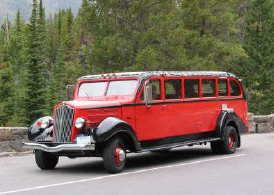
Those Historic Red Tour Buses
Kinnikinnick
Glacier’s First Ranger
Heavens Peak Fire Lookout
Mary Roberts Rinehart
The Scenery Behind My Stories
While working as a bellman at a Glacier Park hotel, I fell in love with the park. I’ve been back several times, but it’s too far from northeast Georgia for easy commuting. I returned in my imagination, though, while setting three novels in the park: The Sun Singer (contemporary fantasy, 2004), Garden of Heaven: an Odyssey (magical realism, 2010) and Sarabande (contemporary fantasy, 2011). If you’ve visited Many Glacier Hotel on the east side of the park, you’ll recognize many of the settings in all three books from Swiftcurrent Lake to Grinnell Glacier
I hope you will enjoy Celebrate Glacier National Park and the scenery behind my stories with a bit of the history of how Glacier came to be and who took part in developing it as both a park and a playground. Of course, you need to do more than read about “backbone of the world” in northwestern Montana.
How about a trip? You’ll need to stay for a couple of days so you have time to see both sides of the park, experience Going-to-the-Sun Road, hike to Sperry or Grinnell Glacier, take a launch trip on Lake McDonald, Swiftcurrent Lake or Lake Josephine, and ride in one of those ancient red buses with the top down so you can enjoy the mountain air.
In April, I began my book review of The Tiger’s Wife with the following: Gather around, my friends, and I will tell you the story of the man who could never die, who, some say, still walks the streets of our village at night, and then—if most of you are still awake—I’ll tell you the story of the tiger Shere Khan whose eyes burn brightly in the night when he prowls near campfires like this looking for his wife.
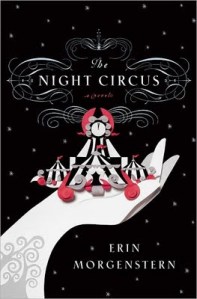
As a storyteller, I’m drawn to stories that sparkle with probabilities, magic, a sense of mystery, and a raw potential for being real beneath the guise of the novelist’s art. In April, I didn’t think anyone would do better in 2011 than Téa Obreht. Then I started seeing the hype for Erin Morgenstern’s novel of fantasy and magical realism The Night Circus. Hype bothers me because it smacks of money-fed, well-oiled machines churning out literary propaganda for those favored authors who get the rare treatment of a real, book-selling campaign. As a storyteller and author, I am jealous of those authors and that alone kicks in a nasty attitude of bias against whatever it is they are selling.
Yet, when it came to The Tiger’s Wife and The Night Circus, my intuition told me I was going to like these books in spite of my bias and in spite of the fact that I really wanted my 2011 favorite to come from a small press. Perhaps The Night Circus edged out The Tiger’s Wife because I finished reading it later in the year. Or perhaps it was because the magic of two dueling magicians in the Le Cirque des Rêves in Morgenstern’s novel reminded me of the dueling magicians in Susanna Clarke’s Jonathan Strange & Mr Norrell, my favorite novel in 2004.
Complete Worlds
Both Susanna Clarke and Erin Morgenstern paint rich pictures of complete worlds, worlds where there is room to experience the magic in depth and to believe that it fits there and really did happen or could happen. Booklist saw this complete world in Jonathan Strange & Mr. Norrell in its starred review: The brilliance of the novel lies in how Clarke so completely and believably creates a world within a world: the “outside” world being early-nineteenth-century England, as Napoleon the eagle looms over all of Europe; the “inner” world being the community of English magicians.
Likewise, Library Journal saw an equally complete world in Morgenstern’s novel this year: To enter the black-and-white-striped tents of Le Cirque des Rêves is to enter a world where objects really do turn into birds and people really do disappear…Debut novelist Morgenstern has written a 19th-century flight of fancy that is, nevertheless, completely believable. The smells, textures, sounds, and sights are almost palpable. A literary “Mr. Toad’s Wild Ride,” this read is completely magical.
Mysterious Plot
In The Night Circus, two young illusionists, Celia and Marco, are magically bound by their mentors into an endless competition without rules or time limits that is destined to play itself out in a mysterious circus of dreams that arrives in towns with no advance notice and is only open from sunset to dawn. Celia and Marco use real magic, but because the public doesn’t believe in such things, they pretend to be illusionists.
Neither magician knows when or how his or her illusions will be judged or when or how a winner will be declared, but only that they are not allowed to tell the outside world about the competition. In fact, the competition itself influences how the circus is maintained, what the patrons see or think they see, and creates a rather dream-like realm where it’s difficult for readers and circus visitors to know where the fantasy of it all begins and ends.
While most of the reader reviews for The Night Circus are positive (three to five stars), as of today, the novel’s 64 one-and-two-star reviewers saw no plot in the book at all. Generally, they found the book to be boring and pointless. One way or the other, these reviewers’ expectations were not met. I suspect they were looking for an overt storyline more like Harry Potter’s battles with the evil Voldemort throughout J. K. Rowling’s popular series. Rowling has also created a very complete world, yet what happens in it happens faster and with more splash and consequence and that garners more happy readers.
Storytelling Itself
Near the end of The Night Circus, one of the two devious mentors tells a circus performer about the imporance of stories themselves and how they connect writer and reader in intersting ways and spin out consequences outside the control of either of them:
Someone needs to tell those tales. When the battles are fought and won and lost, when the pirates find their treasures and the dragons eat their foes for breakfast with a nice cup of Lapsang souchong, someone needs to tell their bits of overlapping narrative. There’s magic in that. It’s in the listener, and for each and every ear it will be different, and it will affect them in ways they can never predict. From the mundane to the profound. You may tell a tale that takes up residence in someone’s soul, becomes their blood and self and purpose. That tale will move them and drive them and who knows what they might do because of it, because of your words. That is your role, your gift. Your sister may be able to see the future, but you yourself can shape it, boy. Do not forget that…there are many kinds of magic, after all.
I love blurring reality and fiction together in my writing. My wont to do this, as a trickster and storyteller, led me to enjoy reading both The Tiger’s Wife and The Night Circus. Both Téa Obreht and Erin Morgenstern have created believable worlds with strong characters that can move and drive readers. Even though I have always loved tigers and have always disliked circuses, Le Cirque des Rêves has manged nonetheless to connect with my blood and self and purpose.
–
Coming Soon: a review of Mister Blueby Jacques Poulin, to be released later this month by archipelago books. Published in 1989 as Le Vieux Chagrin, the novel first appeared in English in 1993.
You May Also Like: Yesterday, I announced an end-of-the-year book give-away challenge for my contemporary fantasy Sarabande. If you enter, you might just win a free copy.
“Edward Hopper found stillness in motion and geometry in light. His simultaneously strong and subtle images of houses, streets and intimate rooms invite us to quiet our minds and open our eyes to the beauty of the commonplace as revealed by shadow, sun and the warmth or artificial lights.” — Charley Parker
Walk through an exhibit of Edward Hopper paintings and you’ll immediately see he was drawn to windows from both sides and in every magnitude of light. He is best known for his painting of a brighly lit diner as viewed from the dark street outside called “Nighthawks.” Painted in 1942, the original can be found at the Art Institute of Chicago. If I were an art collector, most of the rooms in my house would be filled with the work of Jamie Wyeth and Andrew Wyeth, but hidden away in my den in the company of paintings of mountains and mountain trails would be Nighthawks.
Nighthawks by Edward Hopper
I am a nighthawk. I like lonely diners where nighthawks can stop for coffee or a piece of pie. I wrote somewhere that in the days before gasoline was expensive, my best ideas came from driving at night, and there was a time when I knew every waitress and fry cook in a one hundred mile radius around Tallahassee, Florida, where I grew up.
Doorways and Supersitions
While windows draw me to look in or out, figuratively or literally, I cannot resist the allure of doorways. Of the many sounds our four cats hear throughout the week, the doorbell causes the greatest disruption. Their response is a mixture of excitement and foreboding until they see who is there and what they want. There are so many doorway-related symbols and superstitions, I won’t even begin to list examples, but most of them come down to the fact that a threshold is a portal between worlds or areas of activity.
The front door to my house separates, in terms of custom and use, inside from outside. Doors separate rooms from each other and often define the activities on one side or the other. The doorway itself is where the danger lies because, as anthropologist Victor Turner observed, the space within the entryway is “betwixt and between.” It reflects both inside and out, but is—in fact—neither.
Doorway superstitions revolve around the spirits and tricksters that are said to lurk, live and cause mischief or bad luck at the undertain spaces between rooms, zones, worlds, and realms. Doorways themselves can make us feel welcome or unwelcome, hopeful, fearful or inspired. They can symbolize the steps in a project, rites of passage, personal development and transcendent expirences.
Shamanistic journeying often begins with a portal, door, or cave entrance. The children in The Chronicles of Narnia fantasy novels by C. S. Lewis enter another world through a doorway in an old wardrobe. Alice’s Adventures in Wonderland by Lewis Carroll uses a rabbit hole to link our world with a world of magic. In my contemporary fantasies The Sun Singerand Sarabande, I use arches, a waterfall cave and a special door in a cabin to connect the world of Glacier National Park with a look-alike universe.
Liminal Space
In myth and psychology, thresholds such as those between worlds and those encountered during rites of passage ceremonies and meditation, are referred to as liminal space. The term comes from “limin,” Latin for threshold. It’s considered an intermediate state, rather like the twilight zone, dusk and dawn, a sleeper’s focus as they begin to awake, and transitional in nature.
Personally, I am drawn to doorways because my point of view about the world is very much shaped by what happens or what can happen in liminal space. As an author, I find that doorways and the boundaries between worlds, either hinted at or utilized, literal or figurative, with or without a guardian entitity or ritual of passage, are among the important tools of the art and craft of fantasy.
Doorways not only open up worlds for my protagonists Robert Adams (The Sun Singer) and Sarabande (Sarabande) to find and step into, but a vast amount of symbolism relating to stages of life or development. In Sarabande, for example, a plunge into a cold mountain lake can be seen as just what it is (a wet and cold experience) as well as a figurative dive into the unconscious and/or a realm of dream and magic:
Her laugh had the rare quality of a wolf’s howl. She flung the dryas flower at Sarabande, then swam or somehow moved closer and playfully pushed her sister’s head under water like she did when they were children playing in Turquoise Lake. Then the light or the clouds changed and Dryad vanished.
Sarabande rubbed the water out of her eyes. The mare’s tail clouds were gone along with the sun and—from growing shadows within the spruce and fir forest in lower valleys—most of the day. She waded ashore, cold. There was no time to change. She ran down the valley’s long steps, wishing she could fly. Gem—what must she think?
The surface of the lake is the perfect place for fantasy authors and other tricksters to move a character in and our of dream or magic. The liminal space where rooms meet, where night and day come together at the blue hour, and where sleep and dream snuggle up next to each other is the place where things happen. Sometimes those things are obvious and filled with wonderment or terror and sometimes they are more intuited than visual.
Give a fantasy author a doorway (or even an everyday window) and he or she will build you a world, a place where the imagination is unfettered and where change itself is the order of the day.
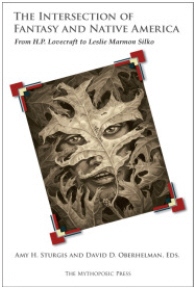
In 2006, author Amy Sturgis presented a paper at the Mythopoeic Society’s Mythcon 37 in which she suggested that specialists in fantasy studies and Native American studies have a lot to offer each other. In an August 2009 interview, Sturgis said, ‘Both sides I think are missing out on great opportunities to talk about and share the remarkable — and remarkably similar — literature in their respective fields. In my talk I recommended ways of bringing together those who love fantasy and those who love Native America.”
After her Mythcon talk, Sturgis was approached by the Mythopoeic Society Press and asked to edit a book of essays that would use her paper as a catalyst for exploring: (1) Native American mythology in literature, (2) Native American authors writing works with fantasy elements, (3) non-Native fantasy authors incorporating Native America into their own work.
As an author interested in the cultures and stories of the native nations traditionally associated with the locations in which my novels are set, I’m was happy to see the publication ofThe Intersection of Fantasy and Native America: From H.P. Lovecraft to Leslie Marmon Silko (Mythopoeic Society Press, October 2009) with pioneering work about the long-neglected impact of native themes in fantasy genre novels.
Publisher’s Description
A number of contemporary Native American authors incorporate elements of fantasy into their fiction, while several non-Native fantasy authors utilize elements of Native America in their storytelling. Nevertheless, few experts on fantasy consider American Indian works, and few experts on Native American studies explore the fantastic in literature. Now an international, multi-ethnic, and cross-disciplinary group of scholars investigates the meaningful ways in which fantasy and Native America intersect, examining classics by American Indian authors such as Louise Erdrich, Gerald Vizenor, and Leslie Marmon Silko, as well as non-Native fantasists such as H.P. Lovecraft, J.R.R. Tolkien, and J.K. Rowling. Thus these essayists pioneer new ways of thinking about fantasy texts by Native and non-Native authors, and challenge other academics, writers, and readers to do the same.
Author’s Comments
In an April 2009 interview in which she was asked about myth, fantasy and science fiction, Sturgis said, “All three are involved in the project of answering the question of what it means to be human: the nature of humanity; the nature of humanity’s relationship to the earth, the cosmos, the infinite; and other questions like these. The very first storytellers, through their mythological stories, parables, and other tales, were trying to come to some sense of the world and to figure out their place in it. I see mythology as a “mother figure” out of which the other two have grown.”
Reviewer Opinions
“With excellent and accessible scholarship, this book opens wide the door of Native American mythology and fantasy by connecting it with the fantasy many of us already know and love.” — Travis Prinzi, Author of Harry Potter and Imagination and editor of Hog’s Head Conversations.
“The essays in Sturgis and Oberhelman’s The Intersection of Fantasy and Native America open our eyes to the kinship between families of literature hitherto seen as separate-fantasy and Native American fiction-showing their interconnections in subject matter, in techniques of dream and trance and magical realism and post-modern meta-narrative, and most importantly, in their ability to penetrate appearances in search of underlying truths. The result is that we see each in light of the other and both as parts of the larger, so-called mainstream, and as essential to our understanding of literature, its writers and readers, in the 21st century. –Verlyn Flieger, Professor of English, University of Maryland at College Park, Author of Interrupted Music, A Question of Time, and Splintered Light.
The myths flowing out of classic Greek and Roman mythology and the impact of fact and fiction about kings and queens and elves and faerie folk from faraway worlds have, I believe, partially obscurred the role of Native American folktales and belief systems in creating both our world view and the fantasy fiction given birth by our imagionation in the place where we live. By examining the work of widely known authors, The Intersection of Fantasy and Native America helps interpret the rich landscape we may not have noticed just outside the front door.
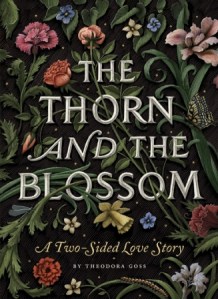 When Theodora Goss’ novella The Thorn and the Blossom: A Two-Sided Love Story was released last year, the book’s imagery, dual stories and unique construction created a bit of a stir. In the story, Evelyn Morgan and Brendan Thorne meet by chance and become lovers after he hands her a copy of a medieval romance.
 Malcolm R. Campbell is the author of contemporary fantasy, including the gritty, magical adventure “Sarabande.” His paranormal Kindle short story, “Moonlight and Ghosts” was released last month.











 Malcolm's Round Table