The writer has a conjurer

“Perhaps the most succinct evidence for the potent magic of written letters is to be found in the ambiguous meaning of our common English word ‘spell.’ As the Roman alphabet spread through oral Europe, the Old English word ‘spell, which had meant simply to recite a story or tale, took on a new double meaning: on the one hand, it now meant to arrange, in the proper order, the written letters that make up the name of a thing, in the correct order, was to effect a magic, to establish a new kind of influence over the entity, to summon it forth. To spell, to correctly arrange the letters to form a name or a phrase, seemed thus at the same time to cast a spell, to exert a new and lasting power over the things spelled.”

– David Abram in “The Spell of the Sensuous.”

The old adage “Sticks and stones may break my bones, but words will never hurt me” is rather false. Consider the sound-bite phrases and misleading comments in the current Presidential campaign alone that, once said, become gospel. Consider perjury in a courtroom, verbal bullying in a school, highly messaged government-speak, dear john letters, exaggerations on product labels and advertising, and phrases from religious books that are taken out of context. The pen and the voice really are mightier than the sword, the stick, or the stone.

In my Sun Singer’s Travels blog, I recently posted “What the hell are these important writers talking about?”  Primarily, this was a rant about the obscure (and possibly gibberish) discussions between some writers and some interviewers that make no sense whatsoever to most readers and natural writers. By natural writers, I mean those who discover their stories as they write and, while they usually know the ins and outs of style and technique, they don’t look upon words as requiring a doctoral dissertation to set down on the page in a story.

If a writer creates elaborate outlines, s/he also may write organically while putting words on the page if s/he uses the outline as a rough guide rather than a recipe to be followed precisely. Personally, I think outlines get in the way of the story, though that’s simply my approach.

Hoodoo Reading the Bones
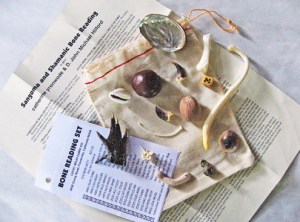
This kit is available from the Lucky Mojo Curio Company.

Traditional conjurers (also called hoodoo practitioners or root doctors) often use a form of divination called “reading he bones” to obtain answers to questions for themselves or their clients. Possum and chicken bones are often used; others (as the picture shows) add other objects such as stones, nuts and shells.

While some conjurers paint or number the bones, assign a meaning to each one–like the meanings assigned to individual Tarot cards–others throw the bones into a small circle drawn in the dirt (see picture here) and listen for the voices of their ancestors who were also conjurers. As with Tarot card readers who are advanced enough to forget the descriptions of each card that they read in a book, conjurers reading the bones may variously say they’re using their intuition, tapping into their inner selves, or hearing the voices of the “old ones” in their lineage.

In short, they use the bones as they view them on the ground as catalysts for channeling information from outside themselves. You can’t do this unless you can step away from the logical “what-ifs” that come to mind when you ask the bones a question. Too much logic destroys a reading because the conjurer is thinking of typical speculative answers to the question (my missing spouse stayed late at work, got in a car wreck, ran away with a co-worker, forgot to tell me s/he had a dinner meeting, etc.) rather than listening for the ancestors or intuition to speak.

Discovery writing

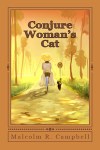
Writing with no outline–or a few sketchy ideas–is often called “discovery writing” because the writer discovers what the characters are going to do and say while writing rather than creating an outline or a list of scenes in advance. Many of us have a general idea what we’re going to do before we start writing. While writing “Conjure Woman’s Car,” for example, I knew that my main character was an old-style conjure woman living with her cat in the Florida Panhandle in the 1950s. I also knew that the Klan was going to do something bad and she was going to respond with hoodoo (folk magic).

Other than that, the story evolved as I told it. In a sense, my muse, my intuition, and even the developing characters “decided” what was going to happen next. When I finished a scene or a chapter, suddenly the thing that was going to happen next came to mind. I supported my intuition by reading a lot about conjurers, spells and related blues songs. Quite often, I’d learn what was going to happen next in my story by the “coincidental” reading of a certain conjuring practice or a historical KKK tactic.

I like to think that when a writer is using discovery writing, s/he is following a practice very similar to the traditional conjurer who throws the ones and listens for the voices of her ancestors for the answer. The conjure woman asks a question and allows the process to create the answer. The discovery writer asks “What If,” listens for the voice of his “muse” and or his unconscious mind and allows the writing process to create the story.

We are, in this way, attempting to cast a spell in the sense David Abram suggests in the quote at the beginning of this post. No, we are not using words to “force” our readers to write us large checks or leave town or change their political beliefs. We’re using words to cast a spell called a story that claims the reader’s imagination from the first word through “the end.”

When the short story or novel comes out well, we’re often praised for our imaginations. That’s okay, but really, our ability is simply to listen and record what we hear. When the story or novel doesn’t turn out well, we probably stepped in the way of the natural process and tried to plan or micro-manage the action down one road or another where it didn’t belong.

At best, we’re conjurers who know as our experience grows how to establish a process that works. Those who read the bones know that they get better results when they wash and dry the bones before throwing them on an animal hide or into a circle. They know not to touch the bones with their hands but to use a stick. Likewise, writers know what conditions make it easier for them to write: some listen to music; others like the background sounds of a natural setting or a coffee shop. Whatever conjurers and writers typically do when they work evolves into rituals that support hearing the true answer to the question or hearing where the story needs to go.

Answers and stories live and breathe on their own. If we have a talent, it’s being able to keep out of the way.

Malcolm

Haints, Plate-Eyes and Demons, oh my

Frankly, I don’t like reading specific directions for summoning evil spirits because I’m afraid I’ll accidentally think them or recite them and suddenly a hideous monster will appear.

demonFrom hoodoo to witchcraft to high magic, the lore is filled with cautions about the dangers of summoning bad stuff because unless you know what you’re doing, the bad stuff will come after you. This would be kind of like purchasing a rabid dog to keep traveling salesmen away from your door. The odds seem high that the dog will attack you first.
Another reason I don’t like reading specific directions for summoning evil spirits is the feds. They probably track this stuff and the last thing I need is the NSA telling the FBI that I used the search terms “black arts conjure oil” or “hoodoo demon-calling spell” enough times for it “to be a problem” as opposed to looking for crossword clues.

Writers often talk about stuff like this. We worry about doing research about how to kill people, make bombs, mix deadly and untraceable poisons, and making pacts with the devil. The people who have that kind of history on their computers usually tern out to be serial killers or the kind of nut cases who join ISIS and saying “I’m just writing a book” probably won’t cut it when the cops arrive.

I didn’t worry about this when I was writing Conjure Woman’s Cat because for that book, I was looking up good spells, good charms, and how to reverse jinxes. But in the sequel, my good conjure woman is combating a black arts root doctor and so I have to know more about that side of the business for her to be able to speculate about what he’s doing and how.

Since I try to make the spells and uses of herbs as realistic as possible within the world of conjure, I don’t feel right just making it up. Suffice it to say, the curses I’ve found aren’t going into the sequel verbatim. For one thing, I have to find a spell or recipe in multiple places before I’ll trust that it’s more than the imaginings of one resource. For another, what if the thing works as advertised? I don’t need to see on CNN that people are using my book to summon demons to go after their spouses’ lovers or to disrupt law-abiding governments (if any). So, everything has to be blurred around the edges: exact enough to make a real conjure woman nod in agreement but inexact enough to your child, spouse or neighborhood crook can’t use it.

By the way, plate-eyes aren’t seen very much any more, but generally they’re unpleasant, what with their glowing eyes the size of plates. If one bothers you, you can get rid of it with anything that smells bad. I’m pretty sure I’m not going to use any plate-eyes in the sequel to Conjure Woman’s Cat because nobody seems to know how to contact one of them. Haints, well, they’re okay, but they usually have their own agendas.

Demons, though, they’re looking pretty good, figuratively speaking, because they’re easier to summon that most people think and fewer people are going to question whether the author has used the right technique or the wrong technique to call them.

When the book comes out, I promise it won’t contain the exact technique for calling a demon. It will be close enough to make the book slightly dangerous. But that’s what readers want.

–Malcolm

KIndle cover 200x300(1)Malcolm R. Campbell is the author of “Conjure Woman’s Cat” and a batch of paranormal Kindle short stories.

Stop by my website.


Magnolia might help you keep your spouse at home

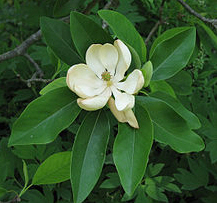
If you live in the South, you’ve probably seen ancient magnolia trees in the woods all your life, and possibly you’ve stopped by a local nursery on more than a few occasions to add the dark green leaves and white flowers to your yard. In Florida where I grew up, we had the Southern Magnolia and the Sweetbay Magnolia. Your local native nursery is a good place to start, or if you want to know more about the tree in general, stop by the Magnolia Society International and take a look at their resources tab for practical information.

Sweetbay Magnolia - Wikipedia photo
Sweetbay Magnolia – Wikipedia photo

The society notes that there are more than 200 species of the shrub/tree which are found in ” temperate, subtropical and tropical areas of southeastern Asia, eastern North America, Central America, the Caribbean and parts of South America. Many are now grown worldwide because of their beautiful flowers, shape and form.”

Medical Uses

Like many plants, the bark and leaves of magnolias have been made into medicine. Purportedly, the magnolia has been used to combat indigestion, stress, headaches, stroke and other aliments–including toothache. I can’t speak to the safety or efficacy of any of these, though you can find a blurb about it on WebMD here.

In the conjure department

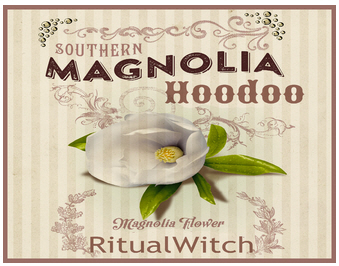
While researching my 2015 novella Conjure Woman’s Cat, I found that a lot of the plants I walked by in the Florida woods when I was young can be used for all sorts of magical purposes. For example, if you check out the web site of the Ritual Witch, you’ll find a section called Southern Magnolia Hoodoo.  Oils, bath salts, candles and mojo bags with a magnolia flavor to them can ramp up your romance.

magnoliahoodooOr, if you have your own magnolia tree in the yard and want to make sure your spouse isn’t following his or her wandering eye, hide or sew some of the leaves into your mattress.

This is cheaper than hiring a private detective and supposedly stops any “oops moments” from happening. There are a few more graphic spells and mojo bags that I’ll leave to your imagination, most of which seem to be sought after by jealous wives–yes, that sounds sexist, but I’m just reporting facts from my research.

As Catherine Yronwode mentions in her very handy “Hoodoo, Herb and Root Magic Book,” Will Batts recorded a song back in 1933 that said he didn’t want a jealous women because she would “put somethin’ in the mattress, make you wish you was dead.”  I have no experience with this, but why tempt fate?

Love magic and keeping your lover at home magic have always been a widely practiced area of conjure. Find a plant, and somebody has found a magical use for it. A quick Google search with the words “root doctor” or “conjure” in it along with the name of a plant or mineral will turn up more than most of us ever dreamt was out there.

Magnolia is more than a pretty flower it would seem.

–Malcolm

KIndle cover 200x300(1)Malcolm R. Campbell is the author of the novella “Conjure Woman’s Cat,” about a conjure woman who fights the KKK with folk magic and a very loyal cat.


Basil: powerful for more than pesto

My father escaped from his typewriter by experimenting with new food concoctions in the kitchen. Most of them came out very well. One of them even got into a cookbook. While the number of meals I cook is limited to a “safe group” that my wife and I have agreed are fit for weekly consumption, I seldom experiment in the kitchen except when it comes to herbs.

Basil - Wikipedia photo
Basil – Wikipedia photo

Basil, oregano and rosemary are my favorites and find their way into all kinds of things. My mother’s old Betty Crocker cookbook had a chart inside the front and back covers listing foods and the herbs that went with them. According to the chart, basil goes into lots of recipes. This chart has kept me from venturing too far into the inedible.

The last time we went to a high style restaurant, they were in their basil phase, creating numerous lunch and dinner dishes encrusted with, simmered with, or liberally garnished with fresh basil. While this was good stuff, it was a cautionary experience, reminding me to be careful with fresh herbs. Everything with basil on the restaurant’s menu was too strong.

I tend to use basil in stews and spaghetti sauce more often than not. However, as I discovered in my research for Conjure Woman’s Cat, one can also use basil outside the kitchen for bringing happiness (other than a tasty meal) or as a protection from evil. If you do this all the time, you might refer to the herb as “holy basil” or “sweet basil” and grow your own rather than getting it off the McCormick spice display at Kroger or Publix.

For example, basil–used alone–or with clover, rosebuds, lavender, etc.–can be placed in a bath or sprinkled or placed in sachets around doors and windows, or kept in bowls to bring happiness and love to your home. Likewise, when sprinkled dry or used as a cleansing wash, it is said to protect a home or a person from evil.

  • When you buy basil from a magic shop, you'll almost always see that it's sold as a curio, that is to say, not with any magical claims.
    When you buy basil from a magic shop, you’ll almost always see that it’s sold as a curio, that is to say, not with any magical claims.

    According to the Candle Spells website,  “It has been said that when tied in a cheesecloth bag and tossed into a hot bath, sweet basil will activate your money drawing abilities and you will be seeing money come to you.”

  • Carolina Conjure says that, “Basil is said to attract customers to a business by placing some in the cash register, or sprinkling basil-water near the threshold. “
  • Catherine Ywronwode (who also has a Hoodoo Herb and Root Magic book available on Amazon), writes on Conjure Lists by Hoodoo Psychics that basil is “A multi-talented magical herb, this one protects the home, brings love and peace to the family, and draws money to the kitchen; Sprinkle some on the floor and sweep it out the back door, for “No evil can come where Basil has been.”
  • Do a search on Google using something like “basil conjure” and you’ll get a lot more hits than you ever imagined the last time you put a little basil on your beef pot roast.
Basil Conjure Oil, meditation, relaxation, altar

Needless to say, I’m a passable cook (within fairly narrow parameters) and not a conjurer at all. So I pass these magical ideas along as curiosities only and as interesting beliefs. As a famous scientist (I forget who) once said when asked why he placed a horseshoe above his door, it’s there just in case.

One can always sprinkle basil outside the front door just in case. Otherwise, if you don’t use too much of it, Betty Crocker and others have plenty of basil suggestions for your cooking and eating pleasure.

I make sure I never run out of basil.

–Malcolm

KIndle cover 200x300(1)Malcolm R. Campbell is the author of “Conjure Woman’s Cat,” a 1950s story about a root doctor who fights the KKK with magic.

Conjure Woman’s Cat website


Got Cops on Your Tail? Try oregano.

If you like Italian-American food, grilled chicken and vegetables, or ramping up the dressing for your tossed salad, you probably have oregano on your spice rack.

oreganoI like growing it because fresh is better than dried for most things and it gives a nice scent to the garden. Or, perhaps you use it as a dietary supplement to reduce LDL cholesterol and increase HDL cholesterol.

However, unless you’re a fan of folk magic or frequent your neighborhood conjurer, you probably think of this tasty herb primarily as food rather than as protection.

Conjure Uses

Unfortunately, these require a bit of work; that is to say, you won’t keep the cops and annoying lawyers away by putting oregano in your spaghetti sauce.

That would be too easy, right?

hoodooherbAccording to catherine yronwode at herb-magic.com, oregano “is widely believed to be a protective herb with the power to ward off troublesome and meddling individuals, especially those who may wish to interfere with one’s personal financial dealings. Furthermore, oregano is said to have significant power to keep the law away.” She is the author of a handy book for conjurers called Hoodoo Herb and Root Magic.

  • Got Cops, Do This: Dig up the footprint of the police officer and stir it up with oregano, redbrick dust and black mustard seed and place the mixture outside at the corners of your house.  A large “X” at your doorsteps will help.
  • Got Nosy Lawyers, Do This:  A mixture of cascara sagrada bark and oregano burnt on charcoal in an ashtray or grill prior to your deposition or court date is said to turn destiny in your favor.

A good conjure woman or curio shop may also recommend burning special incense, using oils and lighting candles in addition to offering you packets of court case and keep-the-law-away powders.

I’m by no means a conjurer. As I research my next book, I am fascinated by the folk magic uses of culinary herbs, plants with purported medical uses and common household materials.

Needless to say, I make no warrants or promises for oregano in your life.

For additional conjure and herb information, see Kitchen Hoodoo -Using Oregano in Hoodoo, Conjure and Candle Spells and Cooking With Magical Herbs.

–Malcolm

KIndle cover 200x300(1)Malcolm R. Campbell is the author of the Jim Crow era novella “Conjure Woman’s Cat” set in a KKK-infested north Florida town in the 1950s.

Visit my web site.


Dill: it does more than season granny’s pickles

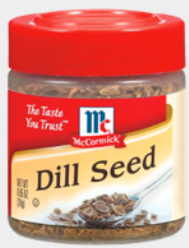
dillseedIf your granny taught you anything, she made sure you knew how to make a proper dill pickle. I’m not going to repeat the recipe here, because I ain’t your granny. Suffice it to say, it includes dill. Surprised?

Most people don’t grow their own dill. If you don’t, your pickles won’t do well at the state fair. Surely, granny told you this. Whether you’re using seeds or leaves (sprigs), pickles just taste better when you grow your own dill because factory fresh ain’t fresh.

If your granny was cagey, she probably didn’t tell you that you can attract a lover by soaking yourself in a “love-drawing bath.” Obviously, there are hundreds of spells you can add to the mix, but since taking a bath is a good idea before going out on a date, the dill seeds you collected and dried yourself are superior to those from the factory. (A fair number of sites tell you how to dry the seeds. Here’s one of them.)

The leaves from your fresh-from-the-garden dill will remove a jinx, possibly the kind of crossed condition a rival might have put on you to keep you from finding the mate of your dreams. Make a coction with the leaves and ginger root, strain it,  and rub it on yourself like sun screen. Think of it as a jinx screen. Do this for at nine days.

Maybe you’re not jinxed. Okay, then soak those dill seeds in water for three days and add them to your next bath. Soak yourself for a while (but not for nine days!).

Good luck.

Now, if you need something more powerful, there are dozens of hoodoo practitioners out there with hundreds of love spells involving candles, incense, oils, letters and even some properly obtained graveyard dirt. (Hint: get that, with a token of payment, from the grave of a good person, leaving out the black sheep in your family and/or a lunatic.)

I’m an author. I look this stuff up when writing stories like “Snakebit” and “Dream of Crows,” and my Conjure Woman’s Cat novella. That means that I “fake it,” I don’t prescribe it. My granny wasn’t a conjure woman (that I know of) so she didn’t hand down any spells. She often said, though, that “things are in a real pickle”–whatever that meant.

But, like suggesting sickly people should have a bowl of chicken soup, I’m in the clear by suggesting you throw some dill seeds in your bath.

If that doesn’t work, maybe you’re forgetting to brush your teeth.

–Malcolm

crowssmallcoverMalcolm R. Campbell is the author of “Dream of Crows,” a dark story about a sexy conjure woman, a swamp, a cemetery and–it goes without saying–some graveyard dirt. It’s free on Kindle for two more days.


Give auntie some sugar

When I was a kid and some long lost relative came to visit, they often said something horrifying like, “Come on, Malcolm, give Auntie some sugar.”

Truth be told, I still get the willies thinking about it.

However, if auntie had been a conjure woman, she could have made me run over and hug her without having to say a word. How?

A Sweetening Spell

brerrabbitThese make people like you, feel better about you, or appreciate you in some way whether it’s a relative, a co-worker or even a judge.

(In general, sweetening may help you attract a lover, but for true industrial-strength romance, check out these love spells.)

You’ll need:

  1. Something Sweet (sugar, honey, Karo Syrup, molasses)
  2. An empty jar (baby food jars work well)
  3. A piece of brown paper (a grocery sack is fine)
  4. Appropriate candles (see below)
If you want hot romance, well that usually requires something stronger.

What to do:

  1. Write the name of your auntie, co-worker, judge of whoever in the middle of the paper three times with a pencil.
  2. Now, turn the paper side ways and write your name across those three names three times. (Some say four times). Be thinking about what you’re wanting.
  3. Fold up the paper and push it down into the jar of sweetener. Say aloud you intention: “I want Bob to like me.”
  4. Close the jar and put it on a shelf, desk, workbench, or nightstand where it won’t be disturbed.
  5. To ramp up the power, burn candles next to the jar twice a week, white for general esteem, brown for court cases, red for passionate love and pink for friendship. (optional)

Now, when you need a friend or a favor or “a little sugar,” you won’t have to ask for it.

There are many variations of this trick, and you can find them on line by using search terms like sweetening spell and conjure honey jar. You’ll find a few sites like this one and this one.

So, here you have a bit of friendly white magic!

Malcolm

MaKIndle cover 200x300(1)lcolm R. Campbell is the author of “Conjure Woman’s Cat,” a Jim-Crow era novella set in the Florida Panhandle. The KKK was very strong in Florida in those years, so Eulalie has her work cut out for her. On sale for 99 cents June 4 and June 5, 2015.


Looking for lust in all the wrong places

While doing research for another short story that  includes a few conjuring tricks, I came across a lust potion.

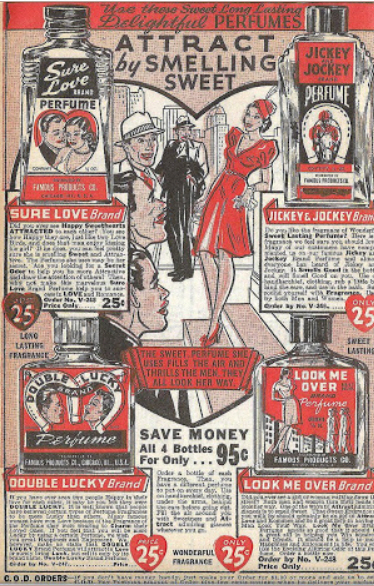
lustclipartTraditionally, a fair number of people stop by their local root doctor’s house for a little help getting lucky in love or gambling (which are pretty much the same thing, at times). While you can pick up powders and oils such as “Follow Me Boy (or Girl)” to persuade others to find you attractive, many practitioners don’t like tampering with a prospective lover’s free will.

It’s one thing to cast a spell to keep your spouse from cheating on you; it’s another thing to compel somebody to fall in love with you–that wouldn’t be true love, right?

This lust potion is powerful stuff. Heck, right after reading it and visualizing how it might work, I chanced to see a picture of the late Grandma Moses and my immediate reaction was, “Whoa, that chick is hot.”

Some writers have been criticized for, say, putting too many details in their work about how to cause death and destruction, that I feel I must say that causing lust in ones readers might be almost as dangerous.

Just as a responsible writer wouldn’t put the directions for making an A-bomb out of the stuff in a medicine cabinet, a merciful storyteller shouldn’t put the directions for causing lust in a story. Heaven help us if somebody rushed into a Walmart and sprinkled this stuff around or threw it out the car window on I-75.

Where would we be today if Jerry Leiber and Mike Stoller had listed the ingredients in their “Love Potion No. 9” classic back in 1963? We know the stuff smells like turpentine, but (fortunately) dowsing oneself in paint thinner doesn’t cause amorous feelings in normal passersby. But thank goodness we don’t know the complete recipe.

So, I’ll mention the potion in the story without the recipe and let all my readers who are looking for lust in all the wrong places create their own opportunities. Oddly enough, the potion includes nutmeg. Using nutmeg by itself won’t cause lust, though it might make a person remember their favorite pumpkin soup.

–Malcolm

KIndle cover 200x300(1)Malcolm R. Campbell is the author of Conjure Woman’s Cat, a 1950s-era novella about a black cat named Lena who helps  her best friend do magic.

Herbs: Holy Ghost Root

“Angelica Root (also known as Holy Ghost Root, Archangel Root, and Dong Quai) is widely thought to be a powerful Guardian and Healer, and to provide Strength to Women. We believe that Angelica Root is used by many people for the purpose of Warding Off Evil and bringing Good Luck in Health and Family Matters” – Lucky Mojo Curio Company

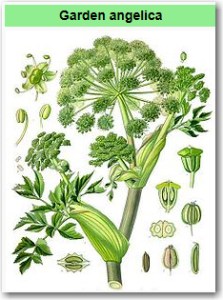
angelicarootThis biennial, Angelica archangelica, is known variously as angelica root, wild celery and holy ghost root. In myth, the Archanel Michael (or Gabriel) said it had medical uses, hence its name. There are over thirty varieties of the plant.

Herbs-Treat and Taste says that “because of its association with the archangel it was also believed to be associated with the Annunciation when the Archangel Gabriel appeared to the Virgin Mary and told her that she was pregnant. One legend says that an archangel revealed in someone’s dream that angelica was a cure for the plague. Because of these holy associations it was believed that it would rid places of evil spirits and protect against witchcraft and evil enchantments.”

In folk magic, it’s used variously to keep a home protected and peaceful, to ensuring that a marriage is a happy one, and to create the “Fiery Wall of Protection” that protects your property and yourself from evil people.

In folk medicine, the roots and leaves had multiple uses from purifying the blood to curing augues and infections as well as fighting coughs and colds. As an aromatic plant, it has also been used in pot pourris, essential oils and as a flavoring (similar to Juniper) in confectionery, perfumes and liqueurs. Some people turn the stems into jam or use them in salads.

According to WebMD, Angelica is used for heartburn, intestinal gas (flatulence), loss of appetite (anorexia), arthritis, circulation problems, “runny nose” (respiratory catarrh), nervousness, plague, and trouble sleeping (insomnia).

When researching my novels, I find the multiple uses of herbs fascinating because many have come into standard medicine and are now created synthetically, but also have purported magical uses or are old folk medicine remedies. As a writer, I an usually a bit vague in my descriptions of herbs and their uses because (a) I’m not a doctor or herbalist, and (b) Don’t want anyone to think that a fictional usage constitutes a medical prescription or an herbal tea.

Usages vary greatly depending on where you look and the culture you’re looking at.

–Malcolm

KIndle cover 200x300 Malcolm R. Campbell is the author of “Conjure Woman’s Cat,” a novella set in the Jim Crow era of the Florida Panhandle about Eulalie and her cat Lena who fight the KKK with spells and other magical means.

The grand myth of John the Conqueror

Like King Arthur of England, he has served his people. And, like King Arthur, he is not dead. He waits to return when his people shall call him again … High John de Conquer went back to Africa, but he left his power here, and placed his American dwelling in the root of a certain plant. Only possess that root, and he can be summoned at any time. Zora Neale Hurston in “High John De Conquer”

When an author plunges into background information and themes for his stories, as I did while writing my upcoming novella Conjure Woman’s Cat, it doesn’t take long to discover mythic characters. John the Conqueror is perhaps the king of conjure, looming larger than life through blues songs, stories, root doctor herbal books, and an oral tradition dating back prior to the Civil War.

The roots of Ipomoea jalapa, when dried, are carried as the John the Conquer root amulet. - Wikipedia Photo
The roots of Ipomoea jalapa, when dried, are carried as the John the Conquer root amulet. – Wikipedia Photo

Today, conjure women–and those requesting their services–know a lot about the “three Johns,” the herbs named after the mythic hero:

  • The much sought after High John root, Ipomoea jalapa, is thought to create sexual power.
  • Southern John, from the Wake Robin, Trillium grandiflorum, used in medicine under the name Birth Root to facilitate childbirth and reduce menstrual cramps, is used in folk magic to solve family problems and love issues.
  • Chewing John (AKA Court Case Root) is Galangal, Alpinia galangal, used in medicine to reduce stomach ache and in folk magic to help a client prevail in court.

For information about spells, check here on the Lucky Mojo site.

The Myth

Charles W. Chesnutt’s 1899 book The Conjure Woman taught mainstream audiences about conjure in a fashion similar to the way Alan Lomax’s books taught them about true country music. Chesnutt collected stories. Lomax collected folk songs.

HyattWhether they trusted them or feared them, African Americans’ awareness of conjure women pre-dates slavery in America. Most White people knew little about the myths and practices of conjure before Chesnutt–and later, Harry Middleton Hyatt and Zora Neale Hurston–collected stories and put them into print.

Oral stories about John the Conqueror fed on themselves and on the hope such tales brought to slaves.

  • He was an African Prince
  • He was a slave
  • He played tricks on his masters and got away with it
  • Stories may have started with a real person
  • He was seen as a trickster like Coyote and Bre’r Rabbitt
  • Strange doings of unknown origin were attributed to him

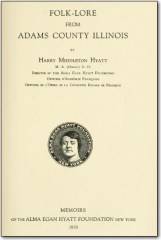
The mythic prince/slave was seen as so powerful that, as Hyatt wrote in Folk-Lore from Adams County Illinois in 1835,  “If you think that someone is trying to hoodoo you or do you some harm, and you meet them, walk backward six steps, spitting right and left, and saying, ‘John over John’–and, ‘John the conqueror’–and they can’t hurt you.” (The book is available in PDF.)

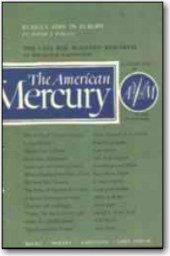
AmericanMercuryHurston brought the myth into the modern day when she wrote, in a 1943 “American Mercury” article, “So the brother in black offers to these United States the source of courage that endures, and laughter. High John de Conquer. If the news from overseas reads bad, if the nation inside seems like it is stuck in the Tar Baby, listen hard, and you will hear High John de Conquer treading on his singing-drum. You will know then, that no matter how bad things look now, it will be worse for those who seek to oppress us…. White America, take a laugh from out of our black mouths, and win! We give you High John de Conquer.” The article is available in PDF.

Conjure subjects fed into blues music and blues music supported conjure. White Americans learned about conjure through songs sung by such well-known artists as Willie Dixon, Muddy Waters and others. It should come as no surprise, then, that Dixon wrote a song called “My John the Conqueror Root.”

My pistol may snap, my mojo is frail
But i rub my root, my luck will never fail
When i rub my root, my John the Conquer root
Aww, you know there ain’t nothin’ she can do, Lord,
I rub my John the Conquer root

(Listen to Muddy Waters sing it here.)

As an author, I think it’s important to keep the old stories alive, whether they’re about King Arthur, John the Conqueror or Joel Chandler Harris’s Uncle Remus stories. They’re part of our culture and our history. Today, I suppose, most of the John the Conqueror focus is on the three roots and the qualities they have in the lore of folk magic.

I’m a novelist and don’t purport to be an anthropologist, much less a collector of myths and folktales. When we write ethically, the research we discover while planning a story isn’t pasted into the work like background music in an elevator. It helps shape the story and make it real. I’ll leave the theories to others and focus on storytelling with as much tradition as I can discover–and that includes John the Conqueror.

Malcolm

Malcolm R. Campbell’s novel “Conjure Woman’s Cat” was released in March 2015 by Thomas-Jacob Publishing.