Enhanced Fire Ants

We live in uncertain times. Interesting times, some would say. According to a little-known Second Amendment footnote, fire ants constitute a well-regulated militia.

Wikipedia Photo

With that in mind, we have increased the weaponization of our fire ants to ensure they are providing “enhanced protection” for our 2006 Buick, the quintessential American car brand. The utilization of military-grade fire ants comes with responsibilities that we don’t take lightly.

We are required by law to place a protected by fire ants sign in our yard and a similar bumper sticker notification on our Buick. We are also required to upgrade our enhanced fire ants license every year; that includes an examination based on the information in our FIRE ANT MANUAL DOD-1322-FA.

Included in the features of our new fire ants are facial recognition software with night vision capability, video recording of all perpetrators who threaten the Buick, and industrial-strength love for my wife and me. While the ants care deeply about friends and family, please don’t leave any untended children in our yard, especially those who might be considered a threat to the Buick.

Our enhanced fire ants are on duty 24/7, giving us the peace of mind that comes from living in a secure environment.

Malcolm

Malcolm R. Campbell occasionally writes satire.

Briefly noted: ‘We’re Still Here Ya Bastards’

Katrina Myths

Myth: Katrina was a “natural disaster.”

Fact: Katrina has been recognized as the most catastrophic failure in the history of American engineering.

Myth: The levees were “overtopped” by the intensity of the high water.

Fact: The levees collapsed in fifty-three places due to engineering design errors and “were responsible for 87 percent of the flooding, by volume.”

– Roberta Brandes Gratz

About the Book

Using the traditional journalism techniques of shoes pointing the pavement, observation, interviews, and a long-time experience with the ways cities work, Gratz explores how New Orleans–in the years following the 2005 storm– has managed to rebuild faster and stronger after Katrina than even the most optimistic of experts could have predicted.

One primary conclusion is this: local people using local plans do a better job than government agencies and large developers that don’t understand who’s doing the real work (and can’t get them financial help) and/or who often want to bulldoze what’s broken and put up generic structures that don’t fit the history and the culture of the city.

From The Publisher

The aftermath of Hurricane Katrina is one of the darkest chapters in American history. The storm caused unprecedented destruction, and a toxic combination of government neglect and socioeconomic inequality turned a crisis into a tragedy. But among the rubble, there is hope.

We’re Still Here Ya Bastards presents an extraordinary panoramic look at New Orleans’s revival in the years following the hurricane. Award-winning journalist Roberta Brandes Gratz shares the stories of people who returned to their homes and have taken the rebuilding of their city into their own hands. She shows how the city — from the Lower Ninth Ward to the storied French Quarter to Bayou Bienvenue — is recovering despite flawed governmental policies that promote disaster capitalism rather than the public good. While tracing positive trends, Gratz also investigates the most fiercely debated issues and challenges facing the city: a violent and corrupt prison system, the tragic closing of Charity Hospital, the future of public education, and the rise of gentrification.

By telling stories that are often ignored by the mainstream media, We’re Still Here Ya Bastards shows the strength and resilience of a community that continues to work to rebuild New Orleans and reveals what Katrina couldn’t destroy: the vibrant culture, epic history, and unwavering pride of one of the greatest cities in America.

Fix local. That should be apparent. Historic neighborhoods–and other segments of cities with unique styles–that aren’t understood or even apparent to outsiders. Yes, government funds are needed, but the government should ask what’s needed and where before it blunders into stricken areas like a bull in a China shop. And, as is obvious, don’t rebuild the levees the same foolish piecemeal and incorrectly designed way they were built the first time.

Malcolm

Malcolm R. Campbell is the former chairman of a local Historic Preservation Commission that oversaw repair and design projects in historic neighborhoods.

Glacier Park Montana Books

Geology Along the Going-to-the-Sun-Road

I worked as an editorial assistant on the first edition (1983) of this book that uses photographs and a fold-out map to show ripple marks and fossil evidence of ancient times in the rock formations along Glacier National Park’s Going-to-the-Sun Road. I’m happy to see that the book’s new edition (2018) by Teagan Tomlin maintains the best features of the original while adding new photographs and updates.

From the Publisher

With this newly updated colorful and lively guide, Glacier National Park visitors can take a self-guided tour of the fascinating geological events that created the park’s majestic scenery.  Complete with an easy-to-read map that offers a three-dimensional perspective on the area’s geology.  Geology Along Going-to-the-Sun Road gives lay readers and geologists alike a unique opportunity to get behind-the-scenery at 21 stops along this famous highway. 

The Park’s red bus tours mention the large scale geology of the park from its cirque lakes to its glacier-carved arêtes. But they don’t usually mention the smaller evidence of the past within the rock itself. This is a wonderful guide for those traveling Sun Road in their cars or on their bicycles. Or, on foot.

The book includes information about the park’s rock formations, the Lewis thrust fault, and the actions of weathering and glaciation over time.

Malcolm

Pat’s Publisher Needs a Maserati

Well, isn’t that special?

She wrote in her blog that she needs to sell a ton of copies of her new book Bob, The Right Hand of God, maybe 3000 copies, so her publisher can buy a new Maserati. The convertible is only $150,000 and change.

My publisher doesn’t need a new car. On the other hand, my Buick is a 2006, so I think I’ll deserve something if I sell 3000 copies of Fate’s Arrows.

But I don’t need a Maserati. Think of the insurance costs and, even for minor hail storms and shopping cart collisions, the repair costs.

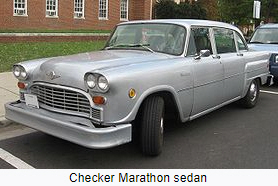
Here’s what I need (but not this color):

Years ago, a lot of people road in Checker’s larger model which was used by a lot of Taxi companies. This family model was available between 1961 and 1982. My feeling is that if it collided with a Maserati, the Maserati would be toast.

I can get a used/restored model for less than $13,400. I don’t think that’s asking too much.

Malcolm

This and That

  • Before I lived in the country, I always wondered why so many roadside mailboxes were messed up. Everyone said the cause was mailbox baseball, you know, driving down the road in a pickup and smashing mailboxes with a bat. Our mailbox has been busted twice, first by a semi-truck that was too big for the road pulling out and knocking it off with a side mirror. The second was the right-of-way mowers who ran into it with their tractor. Now I understand why some folks build brick structures that enclose their mailboxes. This time the thing is skewed and no amount of bending will twist it back into shape so the door will close. I guess I’m going to the hardware store tomorrow.
  • Another nice review from BigAl’s Books and Pals from another reviewer. Writers love this! Both reviewers liked the novel, but their approaches to the review were very different. And one of them is from the UK, and that means there are a big culture and dialect barriers she had to wade through–about like me trying to review J. J. Rowling’s The Casual Vacancy which was filled with British slang that we don’t hear in the States.
  • Wow, both of our cars are working at the same time. One is a GM product and one is a Ford product. My wife and I grew up on opposite sides of the great divide between GM families and Ford families. We inherited the Ford at about the same time our 1997 Saturn finally stopped working a few years ago. We’re old school: that means we don’t buy foreign cars.
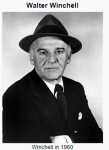
  • We watched an interesting Walter Winchell documentary on TV last night, wondering how many people today have a clue who that is. He was a real presence on radio, TV, and the newspapers when I was growing up. Hung out at the Stork Club (well!). Personally, I think he would fit in with today’s agenda-driven reporting.
  • My publisher and I are still waiting for the printer to get the colors right for the dust jacket for the hardcover edition of Fate’s Arrows. (The paperback is currently available in bookstores via their Ingram Catalogue.)
  • My wife made a quiche for supper and you can’t have any.

Malcolm

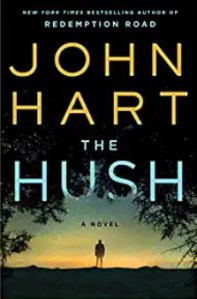
‘The Hush’ by John Hart

As I read this powerful novel for the third time, I wonder why I didn’t review it in February of 2019 when it was published as a sequel to Hart’s The Lost Child. The book is dark, features a forbidding land of swamps and woods where outsiders get lost or killed, is fawned over by hunters and a family who has gone to court to extract it from owner Johnny Merrimon, and is as close to Johnny as his psyche.

“The Hush” refers to a hush arbor, one of many places where slaves worshipped in private to avoid trouble with their owners. The lives of slaves and the Merrimons are tangled together on this property in ways that even the current generation don’t know–though stronger and stronger dreams are hinting at the sins of the past.

I’ve read many of Hart’s books. All of them are strong–visceral, almost–and well written. This one–for me–is the strongest novel because of the linkage between the land, the people, and the folklore.

“The Hush,” wrote Washington Post reviewer Bill Sheehan, “is a harsh, inimical landscape in which disorientation rules and trees, paths and familiar landmarks seem to shift and disappear. It is a self-contained world in which unwelcome visitors are sometimes driven to madness and sometimes destroyed, and Hart evokes that surreal landscape with a power and economy worthy of the great British horror novelist Ramsey Campbell. ‘In that first hour, the forest was still,’ Hart writes, ‘but as light strengthened, a dawn chorus rose around them, a symphony of catbird and Carolina wren, of mourning dove and cardinal and the deep-throated gunk of green frogs in the pocosins that fingered up from the distant swamp.’”

In this novel, the reader doesn’t escape from the land which, perhaps, is the real protagonist, though most of the townspeople see Johnny as more an inexplicable anomaly than the land he owns–to the extent anyone can own such land as this.  His best friend Jack, who suffered through the past with him in The Lost Child, risks everything to help him. That might prove impossible.

Multiple readings of novels tend to bring out secrets we didn’t notice the first time through. When it comes to The Hush, those of us who seek out the mysteries of land and people may be too close to see the real from the unreal.

Highly recommended for readers of dark fantasy.

–Malcolm

Malcolm R. Campbell is the author of “Fate’s Arrows,” magical realism set in the Florida Panhandle during the days when the KKK ruled the world.

BigAl’s Books and Pals: Review

Malcolm R Campbell is an author who has lived in the Florida panhandle (where this novel is set) and is old enough to remember the final days of the KKK. His anger about that organisation continues to burn, and this is an angry book. Coincidentally, it has been released when we must, once again, reiterate that Black Lives Matter and that racism is a foul thing which must be resisted wherever it is encountered.

I enjoyed this book a lot. It’s set in Torreya, a fictional town in the Florida panhandle, in the mid-nineteen fifties. Domination by the KKK ran deep at that time in those southern places. All the same, although it put their lives in danger, there were those who resisted.

Source: BigAl’s Books and Pals: Review: Fate’s Arrows: 4 (Florida Folk Magic Stories) by Malcolm R Campbell

If you’ve ever seen any old movies about the cast of a play sitting around in a restaurant on opening night waiting for the reviews to come in, then you know how an author feels waiting for a reviewer to find a new book.

Whew, she liked it. And she’s from the UK where customs and language (including Southern dialect) are much different.  Click on the link above to read the complete review. Now I can get some sleep.

–Malcolm

The magic in my books

One way or the other, most of my novels include magic. Over time, this blog has often sought a comfortable niche. Apparently, that niche is magic even though I do a few book reviews, some posts about writing, conservation and wilderness, and some opinion posts.

The existence of this niche has become apparent of late when I see that most of my readers are stopping by to read posts about magic (many of those posts are old) and fewer readers are stopping by to look at everything else. My views of consensual reality and magic are more blurred than most people’s, meaning that I often think I’m writing realism and others think I’m writing something else. So, here’s how the books sort themselves out:

  1. Florida Folk Magic Series (Conjure Woman’s Cat, Eulalie and Washerwoman, Lena, and Fate’s Arrows – Magical realism based on hoodoo (conjure) as it’s generally viewed in the South. These are set in Florida.
  2. Mountain Song and At Sea – Both of these books are realism, but with fantasy elements and (in Mountain Song) spirituality in the form of a vision quest. These are set in Montana, Florida, and the South China Sea.
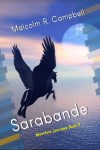
  3. The Sun Singer and Sarabande – Contemporary fantasy set primarily in Glacier National Park. The Sun Singer follows a hero’s journey theme and Sarabande (the sequel) follows a heroine’s journey theme.
  4. Widely Scattered Ghosts – paranormal short stories in a variety of settings.
  5. En Route to the Diddy-Wah-Diddy Landfill While the Dogwoods Were in Bloom – Short story within the Florida folklore and magical realism genres.
  6. Emily’s Stories (audiobook) – Three contemporary fantasy short stories. One of the stories is set in Montana and two are set in north Florida.

So, apparently, I’m writing about magic when I’m not even aware I’m writing about magic.

Malcolm

Some say we’re too stupid for freedom of speech

When Facebook and Twitter decided to partially censor a New York Post article about Biden family e-mails, they did so because they favor Biden. Similar posts pointing at President Trump’s purported screw-ups were allowed. Okay, Big Tech wants to help Biden and not run afoul of countries in the EU that are more restrictive of speech and press freedoms than we are in the U.S.

While flipping through news channels last night, I happened upon a comment from a member of Congress who said he thought the government might need to step in and regulate our freedom of speech because everyday people didn’t have the knowledge required to tell the difference between truth, opinion, and lies.

I don’t buy it.

I’ll agree that we need more objective news sources rather than newspapers, networks, and programs that come with an agenda. Even so, I think people are smart enough to check multiple sources before believing one report or another is gospel.

As I see it, the only “stupid” people out there are those who say they believe everything CNN says or everything Fox News says. Those people only know issues from one partisan agenda or another. As we used to say, they believe those who are preaching to the choir.

Moderates and conservatives used to say that many of those on the left side of the aisle planned to destroy or dilute the Second Amendment before doing anything else. They (moderates and conservatives) were wrong: the first priority of many (not all) of those on the left side of the aisle seems to be diluting the First Amendment.

I hope that’s not true of the majority of Democrats. If it is true, what a shame. If it is true, I believe it’s still possible to book a flight to China or Russia where freedom of speech isn’t even part of the discussion.

Malcolm

So many causes, so few dollars

Requests from organizations appear regularly in my e-mail, my Facebook newsfeed, and my mailbox out by the road. Some send calendars. Some send return address stickers. A few still send car window decals. Most of them send a message that’s hard to ignore. Over the years, I’ve probably supported more conservation organizations than anything else: that explains all the free scenic calendars.

Many of them hope I’ll make a minimum donation of $25. That’s not so bad if there are only one or two nonprofits involved. But, doing this can get expensive when you see a lot of worthy causes. What do you think is best, giving $25 to ten organizations or $250 to one organization? I can never decide.

My website includes the logos for four organizations, beginning with PEN America on the home page: “PEN America stands at the intersection of literature and human rights to protect free expression in the United States and worldwide. We champion the freedom to write, recognizing the power of the word to transform the world. Our mission is to unite writers and their allies to celebrate creative expression and defend the liberties that make it possible.” For a writer, the freedom to write is basic.

Next is WaterKeeper Alliance. I like their focus on clean rivers and the fact that you can donate and/or volunteer: “Waterkeeper Alliance ensures that the world’s Waterkeeper groups are as connected to each other as they are to their local waters, organizing the fight for clean water into a coordinated global movement.” Many of these groups, called river keepers, focus on specific rivers, often near enough to make it easy to, say, participate in river cleanup days.

I support the Glacier Park Conservancy because I’ve worked in Glacier Park, helped with publications in an earlier incarnation of the group, and like the fact they not only help support park projects but put on their own programs as well: “The Glacier National Park Conservancy is the official non-profit fundraising partner of Glacier National Park.” Their website always lists ongoing and upcoming projects to help park friends understand the need.

Since I live in a rural area, I’m attuned to the fact that a lot of people buy horses and then leave them on the property when they move away, or if they don’t move, ignore the horses at their peril. Just up the road is Sunkissed Acres which rescues old horses that are often sick or takes on horses when owners can no longer afford them: “Since our official beginning in 2004, hundreds of horses have been rescued, rehabilitated, rehomed, and if their pain is too much to bear… a humane and peaceful passing becomes our mission. The horses teach us so many valuable lessons from life skills to kindness, and they have become an integral part of our work.” As they say, they are often a horse’s last, best home.

Malcolm

Malcolm R. Campbell’s coming-of-age adventure novel “Mountain Song” is free on Kindle October 15-17, 2020. The novel is set partly in Glacier National Park Montana.