
That amazing Selectric Typewriter
Every once in a while, I come across a writer who composes his/her stories on a typewriter. Growing up, the sound of a manual typewriter was the most constant sound in our house. Dad was an author and typed everything on a Royal. When IBM introduced the Selectric in 1961, I wanted Dad to get an electric typewriter.
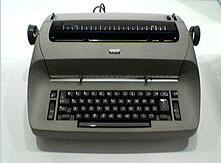 He never would. Perhaps it was the initial cost. Or perhaps it was the fact that repairs on Selectrics–like similar typewriters made by other companies–cost more than fixing that old Royal. I used a Selectric while in the navy and at my first civilian jobs. I liked the ease of typing, when compared to a manual, and I liked the typeballs because they made it so easy to change fonts.
And, if you liked the sound, the typeball hitting the ribbon made a sound sort of like the keys on an old Royal or Underwood–only faster. And, you still had the profanity that occurred when a writer made a mistake on a clean copy while ripping the sheet of paper out of the machine and throwing it (the paper) somewhere on the floor near the trashcan. (Yes, there was a “Correcting Selectric” but if you were typing with carbon paper, the correction made the carbon copy worse.)
The good news for me was that my wife-to-be was a journalist and owned Remington’s version of the Selectric which worked just fine. Maybe that’s why I married her.
But then computers came along and people started swapping out their electric typewriters for computers with so-called word processing software. (I disliked the term intensely, but couldn’t say so because I worked for a computer company that made the hardware and software.) At that point, we not only swapped out our typewriters for early computers but traded the celestial sound of manual keys for the hideous noise of dot matrix printers.
No, I can’t go back, though if my wife’s Remmington still worked, we might use it for typing notes and addressing envelopes. My Dell computer is quiet. But sometimes I wonder if it would help my inspiration to play a sound-effects audio file of a Selectric burning ribbon at 125 words per minute. Yeah, I’d be cooking with gas then.
 When I found my agent for “The Sun Singer,” the manuscript was typed on a Selectric-style typewriter. Seems like the dark ages now, even though I think the contemporary fantasy novel still reads fine in 2020.
In Indigo is the Preservation of the Cosmos
My favorite book in 1962 was In Wildness Is the Preservation of the World by Eliot Porter. That title, supported by the book’s amazing photographs, has served as a glorious mantra for many people in many lifetimes. I have always thought that if we were had not been so busy destroying the natural world, we would be more mentally and spiritually healthy–and that means never having a pandemic.
In an era where many people don’t believe in climate change or–if they do–have any idea what they can do about it–I keep coming back to Joseph Campbell’s admonition that, “We’re not on our journey to save the world but to save ourselves. But in doing that you save the world. The influence of a vital person vitalizes.” So, in many ways, we’re learning that concentrating on the big picture may not be the best way to fix the big picture.

Whether the matter is pseudoscience or spiritual truth, we have been since the 1970s work of Nancy Ann Tappe been hearing about Indigo children, often as near-mentally-ill children who need to be feared, cured, or coddled, and occasionally as the wild ones who will ultimately save the known universe.
“Indios,” writes Alex Myles, “are the rebels of the world; they are the game changers, the curious ones, the philosophers, the truth seekers, the daydreamers, the creators, the unconventional ones, the peacekeepers, the mystical and magical ones, the quirky ones, the warriors, the free spirits, the feisty ones with tender hearts and tough unbreakable spirits.”
Society tends to see such people as “wildness” intruding into the so-called civilized world of conformity. I see such people as our salvation because I identify with and support their focus in every possible way. In simplistic terms, Indigos not only think outside the box, but they also don’t see a box. I want to ask: “What box, what envelope?”
When it comes to wildness, the current Presidential administration rolled back environmental protections it took years to create. So, we still have a complete lack of understanding about the value of the Earth or of wildness. And we watched it happen. Perhaps the rollbacks will be rolled back. The trouble is, we’re looking at environmental protections as matters of public opinion rather than science.
So, I suggest we must aim higher than the environment to save ourselves and preserve our planet and the universe we know. Instead of focusing on ways to make Indigo children fit in, we need–my opinion–to make sure that they don’t. We need them as they are, as leaders of the massive changes in consciousness that have been predicted.
New kinds of thinking, new ideas, higher goals, and the kind of wildness that sends the comfortable status-quo thinkers running back to their beds where they can hide.
The sky’s not the limit. It’s a starting point.
Malcolm R. Campbell is the author of “Fate’s Arrows.” Set in the early 1950s in the Florida Panhandle, this novel features a skilled young lady who fights the KKK.
Were you awake at 5:02 a.m. today?”
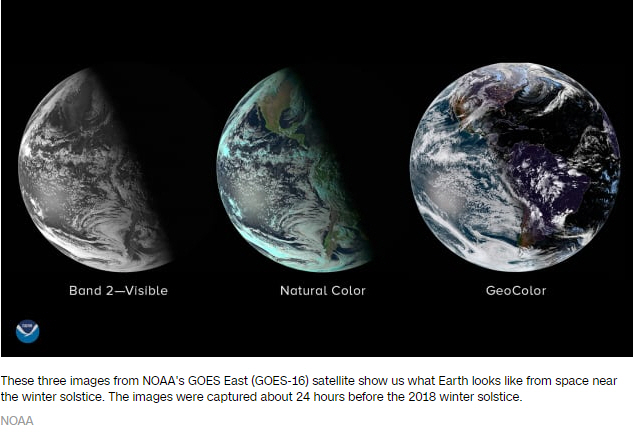
Winter Solstice 2020
If so, you watched the winter solstice roar into the eastern time zone. Personally, I slept through it. No worries. It’s not like there was anything to see, actually. I’m just happy that tonight is as much darkness as we’re going to see and more and more light will be arriving. And we can use that, especially this year.
 Growing up, my Christmas had a lot of the old Yule in it. Yule traditionally begins today and runs through January 1. The twelve days of Christmas traditionally begin December 25 and run through Twelfth Night (Epiphany). Suffice it to say, we had a Yule log, holly, plenty of greenery, and mistletoe (which I avoided). I hope some people are still carrying on these traditions.
However you celebrate the season and decorate your house, I hope you find hope and happiness in spite of the 2020 headlines. I like the older traditions, so if you were to drive by my house, you’ll find my outside decorations up until the night of January 5th. The neighborhood doesn’t mind: they just think I’m lazy.
When my wife and I lived in a townhome in a close-in Atlanta suburb, we bought a live Christmas Tree (spruce, of course). At the end of the season, we planted it in a shady spot and were surprised that the tree liked the place and was taller than the house when we moved ten years later. I hope it’s still there.
It’s nice to think that in spite of the on-going commercialization of the season that some traditions endure.
Body counts and broken dreams
During the Vietnam War, the primary news was daily body counts. While the consensus was that was no way to cover a war, nobody thought of anything better. As for the collateral damage in wounded and broken men, mostly forgotten along with their equally broken families, we’re still living with it forty-five years later.
 During the COVID-19 invasion, the news has also provided daily body counts, primarily cases, and death tolls. Once again, these figures didn’t tell us much about the pandemic, except that it got better, and then it got worse. As for the collateral damage of grieving survivors, a shattered health care system, lost jobs, bankrupted businesses, and related and unrelated social unrest and violence, we can say with a fair matter of certainty the pandemic has broken just about everything.
There are now rays of hope as a second vaccine is set to begin distribution tomorrow and Congress, in its typical dinosaur fashion, races deadlines to get a new stimulus package approved. So now the wait begins: how long will it take for the vaccines to make a dent in the deluge of body counts and broken dreams?
No matter what happens, we can count on dealing with the repercussions of COVID for the rest of our lives. The 45-year Vietnam fallout will be long forgotten before the door will finally be closed on the long term pandemic impacts.
In general, I’m an optimist in spite of my bouts of cynicism, so I’m going to hold onto my dream of a healthy, unified United States that provides opportunities for everyone. But we will need to pitch in and work at it. I hope we’re willing to do that.
Nervously watching ‘The Queen’s Gambit’
As I watched “The Queen’s Gambit” about an orphan chess prodigy named Beth Harmon in the miniseries on Netflix, I kept thinking about Bobby Fischer whom I think was the United States’ best chess player ever. He, too, was a prodigy and after achieving great things in chess, things went badly for him. From a layperson’s viewpoint, he became (or possibly always was) a psychological mess. And we all watched him self-destruct.
 There are two gifted people in my family. One is gone. One struggles on. Like those I’ve read about, they were and are at odds with life itself. Anya Taylor-Joy does a wonderful job portraying a fictional gifted child who becomes a prodigy and achieves great things in chess.
She has huge issues with alcohol and drugs and implodes occasionally throughout the series into multi-day episodes that might well end her life and career. As the episodes moved toward the all-important-big-game finish, I came to dread the ending of the series because, having imploded during one big match, Harmon seemed likely to implode again.
The series was so well done, I expected to see the main character fall apart, Bobby-Fischer-like before all was said and done. I’ll give you no spoilers here, but the ending was better than I expected.
I fear for the gifted child. I have seen several up close and nobody knew what to do with them, much less how to save them. If you like drama, whether you play chess or not, this is a wonderful series. And yet, it will haunt me because it reminds me of people I have known.
Malcolm R. Campbell is the author of multiple magical realism, contemporary fantasy, and paranormal novels and short stories. The most recent is “Fate’s Arrows.”
Need Help Christmas Shopping
If you have put off your Christmas shopping until the last minute, here are a few ideas from your host (AKA, me) for your quality friends. Books, of course, because books are what I do.
Special Investigative Reporter
 This book can be classified as a sarcastic, satirical humorous mystery. It’s a great book for people who like to laugh and who also happen to distrust authority–as my main character Jock Stewart does. And as I do. Jock is probably my favorite protagonist because he reminds me of me, the kind of guy who’s likely to say anything to anybody, especially people who are really full of themselves.
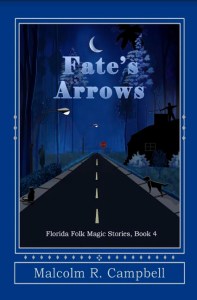
Fate’s Arrows
This is my most recent novel, the fourth in my Florida Folk Magic Series which began with Conjure Woman’s Cat. I’m partial to the series because it’s set where I grew up, with places and people I knew.
Number of journalists jailed worldwide hits record amid unrest, pandemic
News Release from Committee to Protect Journalists
New York, December 15, 2020–A record number of journalists were imprisoned because of their work in 2020, as governments clamped down on news coverage of civil unrest and the coronavirus pandemic, the Committee to Protect Journalists found in its latest annual census.

“It’s shocking and appalling that we are seeing a record number of journalists imprisoned in the midst of a global pandemic,” said CPJ Executive Director Joel Simon. “This wave of repression is a form of censorship that is disrupting the flow of information and fueling the infodemic. With COVID 19 raging through the world’s prison, it’s also putting the lives of journalists at risk.”
At least 274 journalists were jailed as of December 1, the most since CPJ began collecting data in the early 1990s, and the fifth consecutive year with at least 250 journalists imprisoned. China, Turkey, Egypt, and Saudi Arabia were the worst jailers.
Protests and political tensions were a catalyst for many arrests. Two countries with significant increases in jailed journalists were Ethiopia, where unrest has degenerated into armed conflict, and Belarus, where journalists were detained while covering protests against President Aleksandr Lukashenko, who claimed victory in an election widely seen as fraudulent.
While no journalists were jailed in the U.S. at the time of CPJ’s prison census, an unprecedented 110 were arrested or charged in 2020, many while covering demonstrations against police violence; at least 12 still face charges, according to the U.S. Press Freedom Tracker.
President Donald Trump’s harsh rhetoric throughout his term, including calling critical reports “fake news,” gave cover to authoritarians to crack down on journalists in their own countries. Globally, 34 journalists were jailed for “false news,” compared with 31 last year. CPJ recently published recommendations to the incoming Biden administration for restoring U.S. leadership on press freedom, including prioritizing the issue in foreign policy and appointing a Special Presidential Envoy for Press Freedom.
“The record number of journalists imprisoned around the world is President Trump’s press freedom legacy,” Simon said. “The incoming Biden administration must work as part of a global coalition to bring the number down.”
Amid the pandemic, authoritarian leaders tried to control the narrative by arresting journalists; they also delayed trials, restricted visitors, and disregarded the increased health risk in prison; at least two journalists died after contracting the disease in custody. CPJ documented more than 200 press freedom violations related to COVID-19 and launched the #FreeThePress campaign to call on world leaders to release all imprisoned journalists.
CPJ’s census is a snapshot of those incarcerated at 12:01 a.m. on December 1, 2020. It does not include the many journalists imprisoned and released throughout the year; accounts of those cases can be found at http://cpj.org. Journalists remain on CPJ’s list until the organization determines with reasonable certainty that they have been released or have died in custody. CPJ advocacy helped lead to the early release of at least 75 imprisoned journalists worldwide this year.
**
As a former journalist and college journalism instructor, I strongly support the work of CPJ in support of journalists and other newsroom personnel in fighting police actions in the course of their work. — Malcolm
Mary Magdalen Painting in ‘The Little Mermaid’
I saw “The Little Mermaid” (1989) several years after it came out and after I had read Margaret Starbird’s 1993 book The Woman With the Alabaster Jar about Mary Magdalen. Having focused on Mary Magdalen, who would receive a greater public interest after The Da Vinci Code appeared ten years later, I recognized a famous painting of the Magdalen in Ariel’s grotto of treasures and wondered how it came to be there.
 Called “The Penitent Magdalene,” (or “Magdalen with the Smoking Flame”) the painting is one of several with that name by French artist Georges de La Tour done in 1640. In the Disney film, Ariel is shown looking at the painting, most especially the candle, as she tries to figure out the nature of fire–not something she would know about under the sea. Was Disney, for reasons unknown, comparing the red-haired Ariel with the red-haired Mary Magdalen?
Not really, at least not intentionally (that we know of). Writing in his blog on uCatholic in 2019, Billy Ryan says that animator Glen Keane “picked out that painting because he wanted a picture, an image, of a fire underwater to go with the lyric.” (Click on the word “blog” above to see a still and a video clip of Ariel looking at the painting.)
Regardless of what Disney and/or Keane intended, Starbird–whose focus is the sacred feminine–saw a deeper meaning in the painting in the film in her 1999 article: “Of all the possible pictures available from art galleries around the world, it is incredibly significant that the directors of the Disney® film chose to place Mary Magdalene at the bottom of the sea, for it is SHE who represents the lost Bride and the archetype of the ‘Sacred Feminine’ as partner in Christian mythology.” (Click on the word “article” to read the entire article.)
Perhaps Keane, who was Catholic, was aware of the painting because of his faith. It would surprise me if, in 1989, he was consciously thinking of the sacred feminine for that terminology and line of thought hadn’t come into the national consciousness (other than scholars) yet.
We may never know whether the painting was a convenient prop or whether it was intentionally used to make a larger point. Starbird thinks the painting’s use was more than coincidental, however it got there. I hope she’s right.
Writers conceal first, then reveal (possibly)
In a news story, the important gist of the story appears in the headline and the lead. In a short story, novel, or investigative non-fiction piece, the important point(s) are concealed until the end of the book or movie. Two kinds of stories, two kinds of approaches.
 Since many of our regular TV dramas were COVID-delayed going into production, my wife and I have found ourselves watching documentaries, including “History’s Greatest Mysteries” narrated by Laurence Fishburne on the History Channel
The episode about the escape of John Wilkes Booth focused on whether or not he (or somebody else) was killed by federal troops while hiding in a tobacco barn and subsequently if any of the Booth sightings, marriages, and fathered children were real or myth.
Near the beginning of the program, we learned that the lore of several families included the possibility that Booth was part of their family trees and that this question was going to be solved once and for all by DNA analysis. Ultimately, the DNA analysis proved that the families interviewed on the program had no connection with Booth.
We were told this at the end of the show. Had this been a news program, that information would have been at the beginning: FAMILY LORE ABOUT BOOTH RELATIONSHIP DISPROVEN BY DNA ANALYSIS. But, if the History Channel series had divulged that at the beginning, the rest of the program would have disappeared. So, they concealed the ultimate truth to keep us watching.
 Likewise, a program about a professional search for the submerged remains of Shackleton’s lost ship Endurance showed an expedition into the dangerous waters of Antarctica with a powerful ship and cutting-edge equipment to locate the ship which hasn’t been found for over one hundred years.
Had this been a news story, the headline might have been: LOCATION OF ENDURANCE STILL A MYSTERY AS EXPEDITION’S EQUIPMENT FAILS. But, since the producers wanted to keep us watching, they concealed this point until the end of the program. The equipment, designed to operate at the pressure and temperature where the wreck lay all broke down. But, we kept watching, thinking the ship might be found with one last attempt. Nope.
While I can understand the need for an exciting, as-it-happened program, I always end up feeling cheated when I learn that the producers knew it failed before they started putting together their TV show or movie. I want to shout, “cut to the chase.” But then, I don’t feel that way when I read a novel because it’s more fun to go with the flow of the story than to have the author say on page one, “Everybody’s gonna dies before the last chapter, just saying.”
That spoils the story, doesn’t it? But non-fiction, hmm, I think I’d rather know the answers at the beginning and then see how those answers were discovered, news story style.
 As I wrote “Fate’s Arrows,” I felt no remorse whatsoever as I concealed most of the story’s truths until late in the story. After all, I viewed the book as a novel and not a news report.
 Malcolm's Round Table