Feds Establish Star Chamber Bureau to Tell Citizens What’s True and What’s False

Washington, D.C., April 29, 2022, Star-Gazer News Service–The Imperial Federal Government has announced the creation of a new Star Chamber Bureau within the Department of Homeland Insecurity to winnow out opinions that the government does not like.

Inspired by the FISA Courts, the new bureau will monitor newspapers, bloggers, and social media for signs of any discouraging words about government policies and programs.

According to a bureau spokesperson, “dictatorships around the world have created a sense of ease and happiness via so-called bureaus of truth that determined who was lying and who wasn’t. As always, truth is the first casualty.”

Adolph Stalin, speaking under an immunity clause to keep his name out of the newspapers said that “for speech to be truly free, it must first be vetted by the government to ensure that it’s wholesome for all concerned rather than a rant by an opposing political party, PAC, news organization, or misguided Facebook commenter.”

“Today’s liberals are no longer your daddy’s liberals,” Stalin added.

Homeland Security Secretary Sam Smith said during a congressional hearing Wednesday the department is forming the disinformation bureau to protect the homeland and election security.

“We no longer have the luxury of public and private discourse based on a democratic marketplace of ideas,” said Smith. “Now we will tell you those things you must consider as the truth whether they are true or not.”

-30-

Story by Jock Stewart, Special Investigative Reporter

Remembering ‘Pay Dirt!: San Francisco, The Romance of a Great City’

My late uncle Maury B. Campbell edited this lavish, spiral-bound love letter to San Francisco in 1949. As a child, I was a little scared of the old prospector on the cover but found myself drawn to the photographs inside. If you search for the book on Google, you’ll find it for sale (used) for $30 to $50.
Like Tony Bennet, I left my heart in this town and saw Pay Dirt as a book of dreams about the place where, one day, I would return. After all, the Campbell family could be found in multiple cities throughout the Bay Area where I was born.

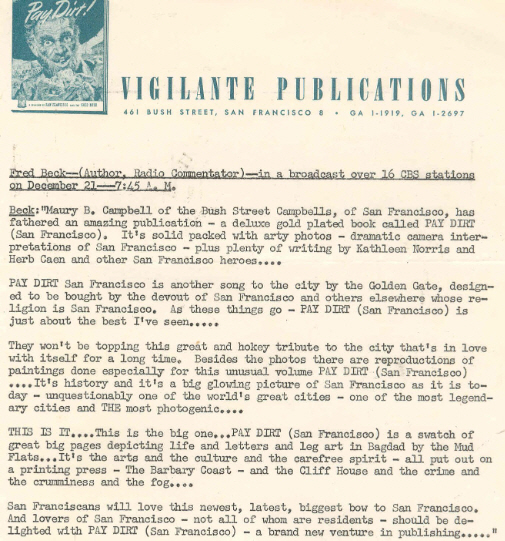
The book comes to mind today because there was a thread about it in Facebook’s “San Francisco Remembered” group that my brother Barry and I follow. I said something like “nice to see the book edited by my uncle showing up here.” Barry did me one better, he posted the news release that came out when the book came out. That was a surprise to everyone but me (since I know Barry has scanned in copies of everything).

The book was, I believe, well received by the city’s movers and shakers and is in demand today by people who love Frisco. As for me, I went back a few times and briefly had an apartment there in the Mission District when my ship was in port in Alameda. The J Church streetcar ran past my front door (and still does). I looked at real estate values lately and see that the three-flat building where my aunt lived is now valued at over a million dollars. That’s why I never went back for good.

But, I digress; The news release begins like this:

After all these years, how nice to see people are still talking about it and looking for copies.

Malcolm

‘I write as if to save somebody’s life. Probably my own.’

I wonder if all writers feel this way. The quote is often shown in this form, though the complete thought comes from Clarice Lispector’s novel A Breath of Life: “I write as if to save somebody’s life. Probably my own. Life is a kind of madness that death makes. Long live the dead because we live in them.” Now, if you’re a writer do you still agree, or does the second part of the quote change your mind?
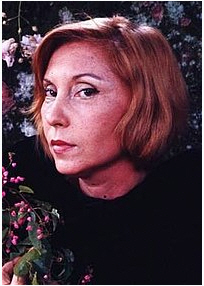
Lispector was a Ukrainian-born Brazilian novelist (1920-1977) who wrote novels and short stories in an unconventional style; very interior in approach. I may be proven wrong, but I suspect most readers don’t know of her, have never heard her name, much less read her books. She’s been compared to Joyce and Woolf, an idea she discounts.

I suspect many artists and musicians live (literally and figuratively) through their work. We often hear that creative people get drunk when they’re not composing, singing, painting, or writing. I can understand this. I’m sure people in other professions might feel this way as well, that they are not truly alive whenever they’re outside their element.

In a 1977 TV interview after she released The Hour of the Star, she said, “When I don’t write, I am dead. For the moment I’m dead. I’m speaking from my tomb.” She died later that year.

Most writers, including Lispector, I would think, create various forms of life support to keep them alive when they’re not writing. One of those is thinking about the next work in the queue while doing other tasks. Another is sitting at a table with others and not really listening because one’s characters are not only more interesting but need to have their say about what will be written next.

Perhaps a quote from The Hour of the Star, a novella I like a lot, brings more perspective: “I write because I have nothing better to do in this world: I am superfluous and last in the world of men. I write because I am desperate and weary. I can no longer bear the routine of my existence and, were it not for the constant novelty of writing, I should die symbolically each day.” 

Perhaps the writer isn’t literally dead when s/he’s not writing, but residing in a drunk tank or an asylum.

So much for retirement.

Malcolm

Malcolm R. Campbell is the author of magical realism and contemporary fantasy.

Retirement, maybe

My father who was a college dean and author worked into his 70s. Now, I’m doing the same thing even though I haven’t taught a college course for years, opting to rely on money saved during my successful years in the gigolo business to help make ends meet. There are, of course, writers older than I am who don’t have the resources from a shady past to supplement their literary output.

When I was in his school, I looked at the careers of Salinger, Elison, Bradbury, Ginsberg, Rand, and others and told people that’s what I wanted to do after I graduated from college. Most of them laughed. Now, years later, I see why they did even though then and now I don’t see that laugh as very supportive.
I view the notion of retirement as the time in a person’s life when s/he stops doing what s/he was passionate about for most of his/her life. S/he ends up with no salary, few benefits, and ends up moving into a home where everyone eats jello three times a day. There was nothing exciting about that kind of life, so retirement seemed like a silly thing to do unless you had a lot of stolen wealth hidden in offshore accounts to pay for a big-ass RV and a lifetime of driving around from one scenic tourist destination to another.

That doesn’t excite me either, though I think the odds have gotten pretty slim that I’m suddenly going to be the next James Patterson. So, I think about just stopping writing books and spending my days reading. Everyone has to think about this sooner or later unless they’re Tom Clancy who keeps churning out books even though he’s been dead since 2013. Maybe that cap he wears in his author’s picture is magic and allows him to submit manuscripts from “the other side.”

I used to have a cap like that but during the dark days of Vietnam, I traded it for a pack of cigarettes.

Of course, I might still get a call from Oprah’s book club.

My bookshelves have an infinite number of books, so if I want to retire, I’ve got enough stuff to read to last me, well, forever.

Malcolm

Sunday’s Goulash

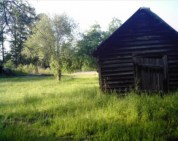
  • Yard Mowing: One thing is certain. When we mow the yard on Saturday, we’re going to be stiff and sore on Sunday. Much of what we’re mowing is old fields rather than a yard. That means when we sit on our riding mowers for a couple of hours, we’re subjecting ourselves to a bone-jarring ride. The picture shows the fields on one side of the house, stretching eastward past the original smokehouse.
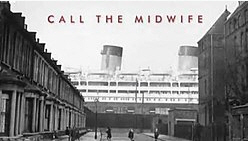
  • Call the Midwife:  We’ve been watching this 1950s/60s PBS drama since it first aired in 2012. The writing and acting are compelling, and it’s interesting seeing how medicine and midwives existed somewhat differently than they did during the same time period in the States. At the outset, the program was based on former midwife Jennifer Worth’s memoir of working in East London.

  • Ukraine. I posted a few words about this brutal genocide on my Depot Cafe blog because it’s difficult watching the daily tragedy without feeling angry, sad, and helpless. If I were a poet, I might turn to literature as one way of trying to understand the pointless death and destruction. There’s precedent for Putin’s madness. Stalin orchestrated the terror-famine in 1932 and 1933 that killed millions of Ukrainians. Most of the world views this famine as intentional genocide–just as we view what’s happening now.
  • Thomas-Jacob Publishing Anthology. I hope those of you who would like to read this free book in a PDF, MOBI, or EPUB file have been able to download it from the publisher’s site here. Since the stories, poems, and excerpts are arranged alphabetically by author, my short story “The Smokey Hollow Blues” leads off the collection. Smokey Hollow was a real neighborhood in Tallahassee, Florida, a place I knew about when I was growing up. The city wanted to destroy it via so-called urban renewal, and they did.
  • Cats! Our cats sleep in the bedroom at night. When we turn off the TV late in the evening, they hover around the bedroom door waiting to be let in. Katy sleeps on the bed. Robbie curls up in a box with a towel. They’re kicked out in the morning as soon as one or both of them starts committing infractions. As you can see, I’ve used clip art here rather than any real pictures of the crimes. We’re too sleepy to take pictures at 4:30 a.m.
Malcolm

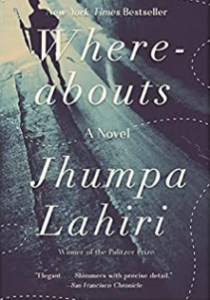
Looking forward to Jhumpa Lahiri’s new novel ‘Whereabouts’

I’m a huge fan of this author and have read most of her work. But this novel will be a first, in a way, because she wrote it in Italian and did the English translation herself. That’s rather unusual. In part, I want to see if her novel flows differently than The NamesakeThe Lowland, and Interpreter of Maladies. 

I’m impressed with anyone who can learn a new language and gain enough skill and fluency to write a book using it.

Lahiri, who grew up in the States was born in England to Indian parents. So, her native language is Bengali, though she doesn’t speak it well. At the same time, she didn’t feel that much at home in English even though she handled it well enough (!) to win a Pulitzer Prize and be shortlisted for other awards even though she once said that in both Bengali and English she felt like “a linguistic exile.”

Learning Italian wasn’t easy, even after she moved to Italy. Finally, she found people willing to speak nothing but Italian to her and to correct her mistakes as though she were a child. It worked.

From the Publisher

Exuberance and dread, attachment and estrangement: in this novel, Jhumpa Lahiri stretches her themes to the limit. In the arc of one year, an unnamed narrator in an unnamed city, in the middle of her life’s journey, realizes that she’s lost her way. The city she calls home acts as a companion and interlocutor: traversing the streets around her house, and in parks, piazzas, museums, stores, and coffee bars, she feels less alone.

We follow her to the pool she frequents, and to the train station that leads to her mother, who is mired in her own solitude after her husband’s untimely death. Among those who appear on this woman’s path are colleagues with whom she feels ill at ease, casual acquaintances, and “him,” a shadow who both consoles and unsettles her. Until one day at the sea, both overwhelmed and replenished by the sun’s vital heat, her perspective will abruptly change.
 
This is the first novel Lahiri has written in Italian and translated into English. The reader will find the qualities that make Lahiri’s work so beloved: deep intelligence and feeling, richly textured physical and emotional landscapes, and a poetics of dislocation. But Whereabouts, brimming with the impulse to cross barriers, also signals a bold shift of style and sensibility. By grafting herself onto a new literary language, Lahiri has pushed herself to a new level of artistic achievement.

The reviews are good, so I have high hopes for this one.

Malcolm

Kentucky library bill potentially jeopardizes our freedom to read

from PEN America

Bill Allows County Executives to Reject Appointees Recommended by Library Boards and Appoint Whomever They Want

FOR IMMEDIATE RELEASE

(New York)– PEN America has issued the following statement in response to a new bill passed by the Kentucky Legislature, Senate Bill 167, which would, in effect, politicize county library boards, allowing county executives to reject recommended appointees and take control of the boards through political appointees. The bill becomes law in January 2023.

In response, Summer Lopez, Senior Director of Free Expression programs at PEN America, stated: “Though often unheralded as such, public libraries are the beating heart of democracy, making access to the universe of knowledge and information open and equitable for all. At a moment when book bans are sweeping the nation, this effort to hand power to politicians to wield vast control over libraries in Kentucky should be viewed as a massive alarm bell. These attempts to politicize decisions about what information the public can access and what books they can or can’t read, pose a direct threat to the freedom to read.”

Under the bill, county library boards would make initial recommendations of appointees for the boards. Previously, the county judge or executive was required to choose from among the library boards’ recommendations. Under the new law, the county judge/executive can reject all the recommended names and reject the next set of recommendations from the state Department of Libraries and Archives, and then appoint whomever they want.

Senate Bill 167 appeared dead last week following a veto from Governor Andy Beshear and not enough votes from the state House of Representatives. But it was revived by supporters through an override vote and passed on Tuesday.

About PEN America

PEN America stands at the intersection of literature and human rights to protect open expression in the United States and worldwide. We champion the freedom to write, recognizing the power of the word to transform the world. Our mission is to unite writers and their allies to celebrate creative expression and defend the liberties that make it possible. Learn more at pen.org.

Upcoming Title: ‘A Black Woman’s West – the life of Rose B. Gordon’

A Black Woman’s West: The Life of Rose B. Gordon, by Michael K. Johnson, 256pp, will be released on April 22 by the Montana Historical Society Press. It’s available for pre-order on Amazon. As a member of the society, I look forward to the release of important new books by the MHS Press.

From the Publisher

Born in the Barker mining district of central Montana Territory, Rose Beatrice Gordon (1883-1968) was the daughter of an African American chef and an emancipated slave who migrated to the West in the early 1880s. This book tells the story of the Gordon family―John, Anna, Robert, Rose, John Francis Jr., George, and Taylor―and pays tribute to Rose, who lived most of her life in White Sulphur Springs. In her youth, Rose excelled academically and distinguished herself as a musical performer. As an adult, she established her economic independence as a restaurant owner, massage therapist, and caregiver. She also made a place for herself in the public sphere through letters to the editor and eventually through a regular newspaper column for the Meagher County News―a remarkable undertaking at a time when Black women in America were largely denied a public voice. As a Black woman in the West, Gordon’s life was ordinary in terms of its day-to-day struggles but extraordinary in its sum.

Editorial Review

“The story of a single life, well told, always amounts to more than the sum of its parts. Critically, Johnson allows the lives that Rose Gordon and her family led in White Sulphur Springs to stand on their own. But through Rose’s story, he recovers a much wider history of Montana’s society and culture that is seldom told. As a book meditating on race, belonging and the meaning of home, A Black Woman’s West has much to say to all students of Montana and Western history.” – Anthony W. Wood, author of Black Montana

Author

Michael K. Johnson is a Professor of American literature at the University of Maine at Farmington. His previous works include Black Masculinity and the Frontier Myth in American Literature, Hoo-Doo Cowboys and Bronze Buckaroos: Conceptions of the African American West and Can’t Stand Still: Taylor Gordon and the Harlem Renaissance.

Malcolm

I’m addicted to Cajun food and it’s my parents’ fault

Our family went on a trip to New Orleans when I was in junior high school. I was already in love with the blues, but the food there was an epiphany. Living in North Florida, we already had plenty of seafood, much of which we caught, but I had no idea how much food could be “enhanced” before we made a tour of all the “in” places to eat in and around the French Quarter.

I’m the only one in the family who became addicted, so I have no volunteers when I say, “Who’s up for Cajun tonight?” or “Anyone want to go on a road trip to Louisiana?” So, I’m stuck with nothing better to do than sneak over to a Popeye’s for chicken and dirty rice when I’m out running errands.

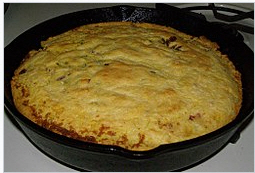
Don’t forget the cornbread

Needless to say, yesterday’s post about Slap Ya Mama Cajun seasonings wasn’t a fluke. I could live on that kind of coolness–or, perhaps I should say “hotness.”

I should mention here and now that Creole food is okay, but it doesn’t quite cut it when I have a choice and can order Cajun food. And far be it from me to try to explain the difference here except to say that I take offense when people serve gumbo without any gumbo in it. Gumbo needs, of course, okra, not the filé powder people keep wanting to substitute. Above all else, Cajun is rustic!

I could live off of Cajun Jambalaya (unlike the Creole version, it has no tomatoes in it).  The Internet lists a few other ideas if you’re new at this:

  • Gumbo.
  • Boiled crawfish.
  • Pecan pie.
  • Boudin sausage.
  • Shrimp and grits.
  • Wild duck.
  • Alligator.

Hungry yet, Cher?

Malcolm

Man arrested for slapping his mama

Junction City Texas, April 19, 2022, Star-Gazer News Service–Joe Smith was arrested here today for slapping his mama silly while cooking up a frying pan of dirty rice with a tablespoon of hot blend Slap Ya Mama™ cajun seasoning for extra excitement.

According to police, Smith’s Cajun cookbook included a potentially apocryphal story that the seasoning sold by the Walker family of Ville Platte, Louisiana, made food so good you were supposed to slap your mama for never cooking anything that great.

According to the Walker Family, Anthony “TW” Walker (who invented the blend) has never slapped his mama, never even considered it. In reality, according to TW, ”When you use this seasoning, the food tastes so good, you’ll receive a loving slap on the back and a kiss on the cheek for creating such a great tasting Cajun dish.”

Smith’s attorney, Aurelie Jones said that Smith missed the memo and/or the footnote in the recipe about mama slapping.

“I thought I had to slap my mama just after mincing the chicken gizzards or the recipe wouldn’t work,” said Smith. “That mojo was the conjure behind the cooking.”

Smith’s father, Wesson, said that if his boy had been cooking Slap Yo’ Daddy BBQ, his son would be in the morgue because “Nobody slaps me and gets away with it. My wife Irene thinks the dirty rice faux pas was kind of funny after she iced down her face.”

The family is pressing assault and battery charges to “teach Joe a lesson.”

Jones told reporters that the dirty rice was spectacular, “though not worth jail time.”

-30-

Story by Jock Stewart, Special Investigative Reporter