Transport Canada Bans People on Flights to U.S.

Ottawa, January 5, 2010–As a result of a terrorist incident on Northwest Flight 253 from Amsterdam to Detroit, Transport Canada has decided to ban persons, individuals, people, creatures and living things of all kinds to provide for the well-being of air travel and all of those enjoying air services thereof.

“The total lunacy of our approach will prove itself in the long term,” said Transport Minister Baird Johnson. “We began by banning books and other dangerous objects. That was a first step. Further testing has indicated–as an American might say–books don’t kill people, people kill people.”

According to informed sources, the inconvenience of the new regulations will be offset by the benefits. Experts say that once people are removed from the equation, air travel will become so safe that when a plane occasionally falls out of the sky, nobody will be there to hear it, rendering the moment soundless.

U.S. officials are considering shutting down the Transportation Security Administration, a cost savings that many believe will completely erase the national debt.

Security Tsar Jim Bob Smith noted, with a gleam in his one eye and a spring in his step, that “planes are now going to be flying on time, every time without the needless security delays we’ve tolerated for the past nine years.”

“Après la pluie le beau temps,” Johnson added, using an old proverb to succinctly say that knives will soon be banned from kitchens, fire from the hearths, and cars from the roads in an attempt to make life so safe, it will no longer be worth living.”

Air travelers who first heard of the new regulations approached security check points on both sides of the US/Canadian border with their mouths agape, whereupon they were taken away for their threatening show of teeth.

-30-

From the Morning Satirical News

Author Interviews from Visual Arts Junction

Shelagh Watkins, author of Mr. Planemaker’s Flying Machine, has compiled and published a book of author interviews conducted during the past year at Visual Arts Junction. The authors discuss their styles and influences as well as recent works, excerpts of which are included.

This Mandinam Press book can be viewed or downloaded free in multiple formats at Smashwords or purchased as a paperback via Lulu.

It was a pleasure being included in this volume with authors Pat Bertram, D. K. Christi, Caryn Gottlieb FitzGerald, Jean Holloway and others. Watkins’ hope is that “the interviews will entertain and inspire readers to find out more about the authors and their books.”

As 2009 winds down, I would like to thank those who have found adventure and magic in The Sun Singer, humor in Jock Sterwart and the Missing Sea of Fire, and yarns and tall tales in A View Inside Glacier National Park: 100 Years, 100 Stories. Best wishes for an exciting 2010 which, I hope, will include an infinite stack of books on your desk and nightstand.

Malcolm

Glacier Centennial: Helen P. Clarke

As the 2010 centennial of Montana’s Glacier National Park approaches, I’ve been looking at the histories and stories of those who are part of the park’s heritage.

Helen Piotopowaka Clarke (1843-1923)–known by many as “Miss Nellie”–was the first woman in the Montana Territory to be elected to public office (1880) when she became Superintendent of Public Instruction for the county now named Lewis and Clark. Previously, she had worked as a teacher in Ft. Benton.

After the Indian Allotment Act was passed by Congress in 1887, Clarke, helped the Blackfeet establish their allotments, and then was appointed as an allotment agent by President Benjamin Harrison in October 1890. She worked with multiple tribes out of the Ponca Agency in the Oklahoma Territory where she was the only female agent.

When prospectors and developers found gold, copper and other minerals on the Piegans’ mountain land in the years after the Civil War, public pressure forced the Federal Government into negotiations to obtain the land so that legal claims could be filed and worked. Helen helped her tribe in the negotiations that eventually led to the sale of the land east of the continental divide in today’s Glacier National Park in 1896. The boom–which included a mining town named Altyn in the current park’s Swiftcurrent Valley–lasted only a few years before it was obvious that the mineral deposits were insufficient to support mining operations. This mountain land has historically been called the ceded strip. The park was created in 1910.

Helen’s parents were a Scottish-American fur trader and rancher Egbert Malcolm Clarke and Kakokima (often spelled Cothcocoma), daughter of the Piegan (Blackfeet) Chief Big Snake. Malcolm Clarke had an excellent relationship with the Piegan in spite of the growing hostilities between whites and the Piegan at the time. His Piegan name was Nisohkyaiyo (Four Bears). In addition to Helen, he and Kakokima had three other children, Horace, Nathan and Isabel.

Helen P. Clarke’s name often surfaces in history as a survivor of the night when Piegan relatives murdered her father and wounded her brother Horace after weeks of disputes over Malcolm Clarke’s stolen horses. The Piegan side of Helen’s family had always been welcome on her father’s ranch on Prickly Pear Creek along with others from the tribe; most of the tribe mourned his murder. Helen blamed only Eagle Ribs (who killed Clarke) and Pete Owl Child (who wounded Horace). Owl Child was Helen’s mother’s cousin and Eagle Ribs was a son of Mountain Chief.

The public saw Clarke’s murder as another in a long series of incidents of unacceptable unrest in the territory and demanded retribution against the overtly hostile Mountain Chief. While a grand jury had indicted five Piegans in the murder of Malcolm Clarke and had requested their apprehension by the Army, General Philip H. Sheridan preferred to “strike” Indian Camps. William T Sherman, General of the Army, approved of Sheridan’s approach even though officers in Montana said the solution required a police-style approach.

Colonel E. M. Baker was sent with a troop to “chastise” Mountain Chief and his band of Piegans. The orders stated specifically that friendly Chief Heavy Runner and his band on the Marias River was not to be harmed. On the morning of January 23, 1870, Baker’s troop swept through the village of Heavy Runner, killing the Chief and 173 others, including 140 women and children. Even though he was told by his scouts it was the wrong camp, Baker would maintain later that he did not know this. Baker’s superiors supported his action. The action is now known alternately as “The Baker Massacre” and “The Marias Massacre.”

After the death of her father, Helen went east where she studied drama. Subsequently, she would perform for a short period of time to much acclaim, especially her Shakespeare, in London, Paris and Berlin. After serving as the school superintendent and the allotment agent, she taught briefly in San Francisco before returning to a ranch with her bother Horace in Midvale (now East Glacier) on land that came from their allotments.

Glacier Park Lodge in East Glacier, sits on a portion of Horace’s allotment which was purchased by the Great Northern Railway for the hotel site. The Hotel was built in 1913.

Although the source of Glacier National Park’s Lake Helen is debated, explorer, writer and friend of the Piegan Jame Willard Schultz attributes the name to Helen Clarke.

Author Jack Holterman has written that when Miss Nellie was in her 70s, she was described as a woman with a large bony, stooped frame, black sparkling eyes, beautiful white hair, and a deep theatrical voice. She is buried in the family cemetery at Midvale.

Today, more people know of her for her father’s murder than for her own good works. Helen’s Piegan name, Piotopowaka, is certainly apt. It is best translated as “The Bird That Comes Back.”

For More Information, consult the following books in addition to Internet resources:

Who was Who in Glacier Land, by Jack Holterman
Walking in Two Worlds: Mixed-Blood Indian Women Seeking Their Own Path, by Nancy M. Peterson
The Blackfeet: Raiders on the Northwestern Plains, by John C. Ewers

Copyright (c) 2009 by Malcolm R. Campbell author of “The Sun Singer,” a novel set in Glacier National Park.

December 24 Fun, Family and Faith

While I’m happy to hear that some merchants are experiencing a late rush of shoppers today, I’m much happier when I hear stories about people celebrating Winter Solstice, Chanukah, or Christmas traditions and the transcendent magic of the season.

Whatever your traditions, I hope you have time to step away from the day-to-day tasks of earning a living and tending to the household for some quality time and old fashioned fun with your family and the god of your heart.

–Malcolm

All That Is, Is Light

“All that is, is light.” – Erigena

“In a very real sense, we’re all made of sunlight.” – Thom Hartman

“Light gives of itself freely, filling all available space. It does not seek anything in return; it asks not whether you are friend or foe. It gives of itself and is not thereby diminished.” — Michael Strassfeld

“When you possess light within, you see it externally.” — Anaïs Nin

“Ever since we crawled out of that primordial slime, that’s been our unifying cry, ‘More light.’ Sunlight. Torchlight. Candlelight. Neon, incandescent lights that banish the darkness from our caves to illuminate our roads, the insides of our refrigerators. Big floods for the night games at Soldier’s Field. Little tiny flashlights for those books we read under the covers when we’re supposed to be asleep. Light is more than watts and footcandles. Light is metaphor. Light is knowledge, light is life, light is light.” — Diane Frolov and Andrew Schneider

“Death is not extinguishing the light; it is putting out the lamp because dawn has come.” — Rabindranath Tagore

“There is a muscular energy in sunlight corresponding to the spiritual energy of wind.” –Annie Dillard

“If you are in a spaceship that is traveling at the speed of light, and you turn on the headlights, does anything happen?” — Steven Wright

“Truly, it is in darkness that one finds the light, so when we are in sorrow, then this light is nearest of all to us.” — Meister Eckhart

“Our deepest fear is not that we are inadequate. Our deepest fear is that we are powerful beyond measure. It is our Light, not our Darkness, that most frightens us.” — Marianne Williamson

“God’s first creature, which was light.” — Francis Bacon

“The original religion of the Blackfeet was the worship of light personified.” — James Willard Schultz

Coming soon in a new edition from Vanilla Heart Publishing, “The Sun Singer,” a celebration of light.

See the book trailer!

Malcolm

Book Review: ‘When Memaids Sing’

When Mermaids Sing When Mermaids Sing by Mark Zvonkovic

My rating: 4 of 5 stars
Larry Brown’s musings about life as he observes it are insightful, humorous and often jaded. Outwardly, the protagonist of Mark Zvonkovic’s gently written novel “When Mermaids Sing” is a pleasant, unassuming Medford, PA high school English teacher who tries to get along with everyone and avoid conflicts.

He often feels manipulated by the requirements of his teaching job and the endless expectations of his parents and his girl friend Millie. Brown’s parents, both college teachers, expect him to play a role in their world, while Millie–an actress who might be cheating on him–expects him to make dutiful appearances in her social and family life. At work, where he may not really be happy, he’s hoping to be granted tenure. And, his cousin Bradley has joined a cult and might have lost himself in the addictive peace it provides.

Brown can ponder the humor and the irony of such realities because he has a “cure.” He copes with the chaos of his job and his relationships by retreating into memories of the halcyon summer days of his youth at a Cape Cod vacation house with his siblings and cousins. Those were the best years of his life. The present cannot compete with them. He doesn’t want it to.

Henry David Thoreau once said of Cape Cod’s Outer Beach, “A man may stand there and put all America behind him.” Likewise, Brown retreats to the house of his youth to put all of life’s troubling challenges behind him.

While making an obligatory appearance at his father’s annual party for freshmen college students, Brown meets a personable young woman named Jenny with a strong aversion to cults. Her brother Josh has joined the charismatic Path to God, the same group to which Bradley as sworn allegiance, if not his soul.

Jenny complains that Josh has repudiated their father as Satan and “become a different person.” A psychiatrist at the party remarks that the sudden personality change exhibited by cult members is due to brainwashing, not hypnosis. This, and the lack of fences and armed guards at an ashram, make it difficult for families to intervene.

Brown vacillates about the difference between the freedom to choose a path others don’t agree with and losing one’s freedom through brainwashing and choosing the same path. Jenny’s family is no longer splitting hairs. They’ve engaged the services of a well-known deprogrammer to help them extract Josh from the Cape Cod ashram even though everyone involved might end up being charged with kidnapping.

When Jenny points out that Bradley and Josh are together at the same place and enlists Brown’s help, he can no longer ignore the issue as a mere philosophical topic for debate.

Will Brown help Jenny, Bradley and Josh? He would rather not, because if he does, he will have to admit there’s more involved here than the rescue of two impressionable young people from the brainwashing of a cult. He will finally have to take a stand on something and answer a lingering question. Is escaping life by running away to a cult different than running away to the past?

The title of Zvonkovic’s carefully written novel is suggested by a line from John Donne’s playful “Go and Catch A Falling Star.” Catching falling stars and hearing mermaids singing are, in Donne’s thinking, rather unlikely events. Readers of “When Mermaids Sing” may wonder whether substantive change in Larry Brown is also unlikely. As literary fiction, the story relies heavily on theme, interior monologue and a strong sense of place rather than non-stop action on its introspective journey to a powerful conclusion.

–Malcolm R. Campbell for POD Book Reviews & More

View all my reviews >>

Have Fun and Lose Weight

Riding in Christmas Parade
The feds won’t let me promise you anything, but let’s just say that anyone reading my comedy/thriller novel Jock Stewart and the Missing Sea of Fire might just laugh their butt off.

Now, for some people, that’s going to be a hell of a lot of weight lost in only 220 pages for only $11.86! The price is lower on Kindle.

So, it’s win/lose for everyone.

Really Brief Excerpt

Jock’s dear old daddy always said, “Jock, take my word for it. Sloppy people are all going to hell.” He also said, “If a man smells like a whore house, he’s going to hell.” Smith had two strikes against him today and it wasn’t even noon yet.

“What did Lucinda Trail have to say?” asked Jock while Smith was licking his plate like an all day sucker.

Smith almost dropped the plate.

“Are your people following me around?”

Jock shrugged. “That, plus you’re wearing her perfume.”


It was an honor being among the local authors serving as grand marshals in this year’s Christmas parade in Jefferson, Georgia. The theme was “A Storybook Christmas.” Each of the authors tossed handfuls of candy to the kids along the 40-minute route. I’m shown here in the photograph with my wife, Lesa.

Malcolm

Interview with Author Helen Osterman

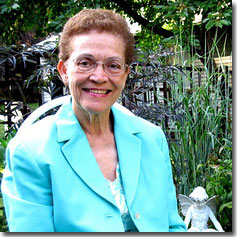
It’s a pleasure to welcome Helen Macie Osterman, author of the new novel “Notes in a Mirror.”
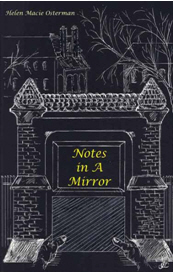
The year is 1950. The place is Hillside State Mental Hospital, a dark brooding place, located outside of Chicago. At the time, the treatment of the mentally ill is archaic, consisting of hydrotherapy, electroshock and Insulin coma therapies, and, in the extreme, pre-frontal lobotomy. Tranquilizers and anti-psychotic drugs have not yet appeared.

In this atmosphere of hopelessness and despair come student nurses from nearby hospitals for their three-month psychiatric rotation. Mary Lou Hammond and Kate Stephens are two of these young girls.

Malcolm: During your 45-year nursing career, you wrote articles for medical journals. What tempted you into turning to fiction?

Helen: I was always a dreamer. As a child I made up stories in my head. They were always adventurous, including jungle settings, the wild west, and, of course, Buck Rogers.

When my children were young, I wrote children’s stories for them. So, it was easy to gravitate to adult fiction.

Malcolm: Are the ambiance, descriptions and nurses’ training at the fictional institution in “Notes in a Mirror” fairly close to what you experienced in your training at the former Chicago State Mental Hospital?

Helen: Absolutely! The place was as I described it, bleak and frightening. The wards were cold and dreary, and the people were hopeless.

Malcolm: Your main character, Mary Lou, had an unpleasant upbringing with a mother who appears smothering and overly strict. If you were taking your best friend to meet Mary Lou, how would you describe her? What kind of person is she?

Helen: Mary Lou is a somewhat like myself as a young girl. Although I had a very loving family, my mother was over protective. I was afraid of everything, mostly of dying and going to hell. I was also born left handed and was forced to learn to write with mt right hand. I am able to write mirror-image with my left. That’s what gave me the idea.

Malcolm: Mary Lou’s friend Kate is an outgoing person who loves making fun of everything and generally taking a lighthearted approach to life. Mary Lou and Kate are such opposites; as you were writing “Notes in a Mirror,” did you have fun thinking of situations where they would interact?

Helen: Kate is very much like one of my classmates, named Katie. She was always in some sort of trouble, so it was easy to mimic her.

Malcolm: “Notes in a Mirror” contains frightening events. How does it differ in tone and plot from your two Emma Winberry mysteries “The Accidental Sleuth” (2007) and “The Stranger in the Opera House” (2009)

Helen: My cozy mystery series is not based on any of my experiences. It come directly from my mind. I love my characters, Emma Winberry, and her significant other, Nate Sandler. They have become part of my life. It’s fun dreaming of situations for Emma to get in trouble.

Malcolm: Did you find “Notes in a Mirror” difficult to write due to your own memories of the conditions and manner of patient care you saw at the hospital?

Helen: Actually I wrote the first draft twenty years ago and put it in a drawer. But it kept calling to me. It was not difficult to write but therapeutic to get those words on paper. I’ll never forget that experience.

Malcolm: In the early 1970s, I was a manager of one of the group homes at the Waukegan Developmental Center that was part of Illinois’ new wave of treatment for the developmentally disabled. Did your nursing career ever take you to any of the newer facilities?

Helen: I was there in 1950. The place closed in the mid-seventies. So I had no experience with any transfers. I never had an desire to work with the mentally ill.

Malcolm: I expect you saw a lot of changes in settings and treatments during your career. Did you write “Notes in a Mirror” because the setting was so perfect for a good mystery, or was it more to show how archaic the treatment of the mentally ill was in our recent history?

Helen: I wrote it because I experienced it and felt it should be told. It was very much like The Snake Pit, published in the 1940s and later made into a movie.

Malcolm: As I read your book, I couldn’t help but think of an expose reporter Nellie Bly wrote about Blackwell’s Island asylum in 1887 called “Ten Days in a Mad House.” She faked being mentally ill in order to get inside. After her experience, she, wrote: “It’s easy to get in, but once there it is impossible to get out.” While, the 1950s era Hillside State Mental Hospital in your novel isn’t as archaic as the institution Bly visited 63 years earlier, your protagonist Mary Lou could hardly force herself to stay for her training. Did your three month rotation seem like an eternity to you?

Helen: Yes it did. Someone was always threatening to go home. But we were senior students and it was out last rotation before graduation. The nice part about it was that we got to go home every weekend, if we lived in the area.

Malcolm: When Mary Lou begins dreaming about a former patient who claimed to have died at Hillside in 1911, she’s looking almost as far back in history as the “Mad House” Nellie Bly wrote about. These dreams—and the notes that show up in the mirror—lead your protagonist as well as the reader into a terrifying chain of events. How were you able to put yourself in the shoes of a character with paranormal sensitivities who was looking back to conditions worse than what she was seeing during her training?

Helen: Imagination can lead a person anywhere. I just followed the ideas that came to me.

Malcolm: Other than a great story, what else do you hope your readers discover while reading “Notes in a Mirror”?

Helen: I hope that anyone reading the book will appreciate how far the medical profession has come in treating the mentally ill. It is no longer a stigma. Mental illness is a disease like any other, and most of the patients, with the proper treatment, can lead normal lives. However, these state hospitals served a purpose. They house the people who are now living on the street because they fail to take their medications. Some are in jail when they should be hospitalized.

Malcolm: Thank you for your visit, Helen. Best of luck with “Notes in a Mirror.

For more information, visit Helen Osterman’s website or see the novel’s listing on Amazon.

In today’s Writer’s Notebook, First Look: ‘A View Inside Glacier National Park,’ the park’s new centennial book of stories.

To view my FriendFeed posts about books and publishing, click on the icon below.

Subscribe to me on FriendFeed

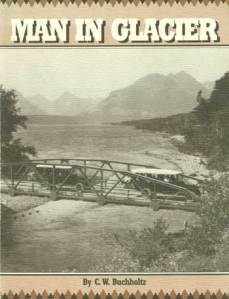
‘Man in Glacier’

“In Glacier National Park, remains of the past are not always as difficult to locate. Old snowshoe cabins and ranger stations can be found in many parts of the park; a few old homesteads, including their houses, fences, and outbuildings can still be found; exploration shafts as well as mines, along with the miners’ cabins, recall the mining era, just as rusting oil rigs mark that transitory search; the Swiss-type architecture of the huge park hotels, chalets, and lodges reminds the viewer of a grandeur and style no longer used in contemporary buildings. All of these relics remain as monuments to the people who lived and worked in Glacier and associated this mountainous region with their personal concept of ‘utopia,’ success, and adventure. Only a small group of people ever settled within today’s Glacier Park; even fewer people could be classified as “explorers” of the region; and the number of people active in insuring Glacier’s preservation is even smaller.” — C. W. Buchholtz

C. W. Buchholtz’s “Man in Glacier” has, since its publication in 1976 by the Glacier Association, been the definitive overview for those interested in the history of Glacier National Park.

This 88-page, illustrated 10.9 x 8.3 book includes the following chapters:

The Red Man Roams the Mountains
The White Man Cometh
Explorers and Exploiters
Preservationists, Politicians, and a Park
Producers of a Playground
Guardians of Glacier
Man and Nature in Glacier National Park

As a long-time member of the Glacier Association (formerly The Glacier Natural History Association), I have turned to this book many times for dates, details and yarns about the shining mountains.

Guest post for writers on author Pat Bertram’s blog: “The Place is More Than Scenery.”

Coming December 8: An interview with Helen Macie Osterman, author of the new novel “Notes in a Mirror”

Malcolm

The Thirteen Days of Christmas

On the first day of Christmas,
My true love sent me for fun
A cartridge for my shot gun.

On the second day of Christmas,
My true love sent me for fun
Two Victoria’s secrets,
And a cartridge for my shot gun.

On the third day of Christmas,
My true love sent me for fun
Three French kisses,
Two Victoria’s secrets,
And a cartridge for my shot gun.

On the fourth day of Christmas,
My true love sent me for fun
Four calling cards,
Three French kisses,
Two Victoria’s secrets,
And a cartridge for my shot gun.

On the fifth day of Christmas,
My true love sent me for fun
Five beholden kings,
Four calling cards,
Three French kisses,
Two Victoria’s secrets,
And a cartridge for my shot gun.

On the sixth day of Christmas,
My true love sent me for fun
Six hounds a-baying,
Five beholden kings,
Four calling cards,
Three French kisses,
Two Victoria’s secrets,
And a cartridge for my shot gun.

On the seventh day of Christmas,
My true love sent me for fun
Seven mugs a-brimming,
Six hounds a-baying,
Five beholden kings,
Four calling cards,
Three French kisses,
Two Victoria’s secrets,
And a cartridge for my shot gun.

On the eighth day of Christmas,
My true love sent me for fun
Eight aides a-bilking,
Seven mugs a-brimming,
Six hounds a-baying,
Five beholden kings,
Four calling cards,
Three French kisses,
Two Victoria’s secrets,
And a cartridge for my shot gun.

On the ninth day of Christmas,
My true love sent me for fun
Nine caddies prancing,
Eight aides a-bilking,
Seven mugs a-brimming,
Six hounds a-baying,
Five beholden kings,
Four calling cards,
Three French kisses,
Two Victoria’s secrets,
And a cartridge for my shot gun.

On the tenth day of Christmas,
My true love sent me for fun
Ten hordes a-pillaging,
Nine caddies prancing,
Eight aides a-bilking
Seven mugs a-brimming
Six hounds a-baying,
Five beholden kings,
Four calling cards,
Three French kisses,
Two Victoria’s secrets,
And a cartridge for my shot gun.

On the eleventh day of Christmas,
My true love sent me for fun
Eleven gripers pissing,
Ten hordes a-pillaging,
Nine caddies prancing,
Eight aides a-bilking,
Seven mugs a-brimming
Six hounds a-baying,
Five beholden kings,
Four calling cards,
Three French kisses,
Two Victoria’s secrets,
And a cartridge for my shot gun.

On the twelfth day of Christmas,
My true love sent me for fun
Twelve grenades with pins a-missing,
Eleven gripers pissing,
Ten hordes a-pillaging,
Nine caddies prancing,
Eight aides a-bilking,
Seven mugs a-brimming
Six hounds a-baying,
Five beholden kings,
Four calling cards,
Three French kisses,
Two Victoria’s secrets,
And a cartridge for my shot gun.

On the thirteenth day of Christmas,
My true love sent me for fun
A baker’s dozen epiphanies,
Twelve grenades with pins a-missing,
Eleven gripers pissing,
Ten hordes a-pillaging,
Nine caddies prancing,
Eight aides a-bilking,
Seven mugs a-brimming,
Six hounds a-baying,
Five beholden kings,
Four calling cards,
Three French kisses,
Two Victoria’s secrets,
And a cartridge for my shot gun.

–Jock Stewart

To view my FriendFeed posts about books and publishing, click on the icon below.

Subscribe to me on FriendFeed