Kinnikinnik: Plants of Glacier Park

In the woods and along the lower slopes in Glacier National Park, it’s easy to walk past a low, trailing shrub called Kinnikinnik (also Kinnickinnik). It’s rather unobtrusive when the white and pinkish flowers aren’t blooming in June and when the bright red berries haven’t shown up yet in the fall.
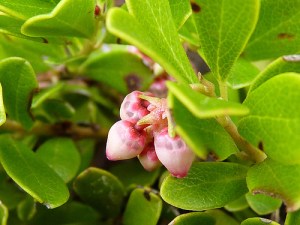
from FancyLady on Flickr
The plant is better known as the Common Bearberry (Arctostaphylos uva-ursi), dwarf manzanita and other local names. You’ll find it in the northern hemisphere from Scottish heaths to California gardens to the mountains of the Rocky Mountain Front.

In folk medicine, the bark and leathery evergreen leaves have been used for teas and infusions, typically for their diuretic properties. The name Kinnikinnik refers specifically to smoking mixtures used by Native Americans that, in addition to tobacco, red willow bark, etc.) included the bearberry’s leaves and purplish-red bark. The name kinnikinnik rather stuck to the bearberry.

According to the Kinnickinnick Native Plant Society, “It is pronounced KINNY-kin-ICK, or Kinn-ICK-innick, and comes from the aboriginal – most scholars say the Alonquin – meaning “smoking mixture.” Although the plant was native here, it seems to have been the fur traders’ employees who brought the name west with them. Its other common name, Bear Berry, comes from its genus ARCTOSTAPHYLOS, from the Greek word for bear – Arktos and staphylos – a bunch of grapes, which its berries resemble. The species name of “uva-ursi” is apparently from the Latin “uva” (grape) and “ursus” (bear).”

In Glacier, the shrub often grows in large mats along park roads. You can see it along the lake level trails near Many Glacier Hotel.

In my novel “The Sun Singer,” Robert Adams was told he could always remember the name of this plant because it was spelled the same way from both directions.

Take a few notes: you might write about this place some day

In fiction writing, we have the freedom to create settings of our choice. But readers will pick up on phony settings pretty quickly. The more realistic and more interesting your setting, the more likely the characters who inhabit it will be believable and interesting to the reader. — Robert Hays (“The Life and Death of Lizzie Morris”)

Liberty Port in the Philippines
When I was in high school, I tried multiple times to keep a log or journal. But that required more extended discipline than I had. While I began each attempt with the best of intentions, the entries quickly morphed from wordy and detailed into sketchy and infrequent.

A little discipline then could have saved me a lot of trouble when I began writing my novel “Garden of Heaven.” It uses settings I should know well: Glacier National Park, Montana; Tate’s Hell Forest and Tallahassee, Florida; Olongapo, Philippines; the aircraft carrier USS Ranger; Decatur, Illinois; Gronigen, Netherlands.

Each of these places holds memories for me that fit the plot and themes of the novel. Yet, when it comes to nitty-gritty details, memory can be tricky. When exactly did the USS Ranger leave Alameda for Vietnam in 1968 and what stores existed on Tallahassee’s College Avenue a few years before that? What year did the Decatur transfer house get moved and how far was the Galaxy Bar from the main gate?

Fortunately, books, magazines and online research helped fill in the gaps. So did e-mail correspondence with people at Glacier, Tate’s Hell, and Decatur. Frankly, a good journal would have taken me a lot less time. Not that I would have recorded everything I might have needed in a novel written decades later. But recording my observations would have given me a good start.

USS Ranger (CVA-61)
Since it’s quite likely that a writer will end up using places he has a passion for or where defining moments occurred–whether it’s the town where he grew up, the theater where his military service unfolded or the destination for his favorite vacation–I’m thinking it just makes good sense to become a bit more of a packrat.

In addition to photographs, a few notes, brochures, newspaper clippings, ticket stubs, itineraries, and other materials will not only reinforce the writer’s observations when he’s there; they’ll support his memory years later when he puts his protagonist into the deep swamp he saw when he was a kid or the sailor’s liberty town he saw when he was in the Navy.

Such details don’t need to turn into the pages and pages of description readers of today’s novels often skip over. They do bring a place to life. They’re the difference between a setting with depth and one that appears plastic and ill-formed.

And if you have the discipline, keep a diary, log, journal or notebook: your readers will thank you and your writing will be all the stronger for it whether you’re writing about stealing cookies on the mess-decks of an aircraft carrier or the sound a panther makes in a notorious Florida Swamp.

Wanted: Dead Rather Than Alive

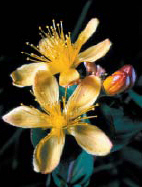
St. Johnswort - NPS Photo
When they arrive in Glacier National Park, it’s not necessarily by the dead of night, for seeds are so small most people don’t notice them. They’re blowing on the wind, carried by birds, hidden on your trousers and shoes, clinging to your backpack, and even on your car and pop-up camper.

We’re talking about plants out of place, better known as noxious invasive weeds such as St. Johnswort and spotted knapweed. Unfortunately, such weeds are hardy and adaptable. Worse yet, they disrupt the natural plants in otherwise well-balanced park habitats including wildlife.

Spotted Knapweed - NPS Photo
According to the Crown of the Continent Research Center, there are 126 invasive plant species in Glacier, fifteen of which are considered noxious. One of those–spotted knapweed–is so nasty that it kills nearby plants by secreting a toxic chemical into the soil!

Wanted: Dead, if Not Gone: Glacier’s Noxious Weeds

Spotted Knapweed
Canada Thistle
Leafy Spurge
Dalmatian Toadfl ax
Yellow Toadfl ax
Sulfur Cinquefoil
St. Johnswort
Oxeye Daisy
Houndstongue
Common Tansy
Field Bindweed
Orange Hawkweed
Meadow Hawkweed Complex
Tall Buttercup
Tansy Ragwort

Citizen Scientists

On Friday, July 30th, the park will hold its first annual Noxious Weed Blitz. Noxious Weed Blitz participants will be trained to assist Glacier’s Invasive Plant Management Program by learning to identify, map and pull invasive plants. They’re encouraged to bring water, clothes suitable for hiking, and heavy gloves.

The heavy gloves will be used after lunch as volunteers head out on the western side of the park to pull weeds. Interested in weeding Glacier National Park? Contact the Crown of the Continent Research Center at 406-888-7986 or via e-mail to sign up.

Volunteers will assemble at the West Glacier Community Building. The blitz will run from 10 a.m. to 4 p.m. Participants will be provided with a free lunch and a noxious weeds field guide.

Sales of this Glacier Park novel benefit the park.

New Exhibits Help Tell Glacier’s Native American Story

from NPS Glacier National Park:

Visitor Center at Saint Mary - Wikipedia Photo
WEST GLACIER, MONT. – New exhibits now greet Glacier National Park visitors at the St. Mary Visitor Center. The new visitor center exhibit entitled “At Home in This Place” focuses on tribal perspectives about the place we today call Glacier National Park.

The new exhibits were installed in early July and were viewed by tribal leaders and elders Wednesday afternoon, July 14 during a dedication ceremony. As part of the dedication, tribal perspectives and remarks were offered by Peter (Rusty) Tatsey (Blackfeet), Vernon Finley (Kootenai) and Thompson Smith (Salish-Pend d’Oreille).

According to Glacier National Park Superintendent Chas Cartwright, “Several years of consultation with cultural experts from the Blackfeet, Kootenai and Salish and Pend d’Oreille tribes provided authenticity and a true tribal perspective on issues related to land, plants, animals, mountains and history of this area.”

There are five new main exhibits: 1) Welcome-panels from each of the tribes detailing local Native peoples and their historic and current relationship with the land; 2) Bittersweet Meanings looks at changes faced by tribes with the creation of Glacier National Park; some good, others difficult; 3) Backbone of the World provides native perspectives on the land, mountains, creation stories, and place names; 4) The Wisdom in Spoken Words features oral histories and traditions with video of stories about Glacier by tribal elders. The exhibit includes an indoor tipi setting for sitting and listening to these stories; 5) Animal Lessons is a large winter scene diorama featuring elk, wolves, coyote, and grizzly bear which includes animal stories told by tribal leaders.

Additional exhibits in the lobby focus on other park stories and help interpret resources seen from the building.

These include the following panels: Where the Prairie Meets the Mountains, Who Lives in the Meadows, and Glaciers on the Move.

There is also a new interactive 3-D park topographic map with optic fiber lights highlighting the following: Continental Divides depicts the Continental Divide, Hudson Bay Divide, Triple Divide Peak; Glacier’s 10,000-foot Mountains; Tourism and Early Park Days shows locations of historic hotels and chalets; and Goodbye to the Glaciers is an animated look at the disappearance of park glaciers from 1850 to 2020.

These new exhibits will be permanently on display at the St. Mary Visitor Center. Summer hours of operation at the St. Mary Visitor Center are 7 a.m. to 9 p.m.

Each Purchase Benefits Glacier National Park

Public Comments Sought for Glacier Fire Lookout Project

from NPS Glacier National Park:

Heaven's Peak Lookout - NPS photo
WEST GLACIER, MONT. – Officials at Glacier National Park today announced plans to seek public comments for a proposed project to stabilize the existing Heavens Peak Lookout.

The National Park Service (NPS) has decided to prepare an environmental assessment (EA) for the project to review all possible resource issues from the proposed Heavens Peak Lookout stabilization. This environmental analysis will begin this summer (2010), with a goal of having the EA completed by spring 2011.

The goal of the project is to stabilize the historic Heavens Peak fire lookout that was built by conscientious objectors during World War II. Stabilization of the lookout would slow down the accelerating deterioration so that this historic structure can remain on the landscape as part of Glacier National Park’s cultural history.

Constructed in 1945, the Heavens Peak Lookout was listed in the National Register of Historic Places in 1986 and embodies the NPS rustic design philosophy of buildings that are “harmonious” with the landscape. The lookout is located on Heavens Peak, within recommended wilderness inside Glacier National Park. It lies within an area of high grizzly bear density.

Heavens Peak Lookout is structurally sound at this time, but the deteriorating roof and missing shutters threaten its long-term survival. The proposed project would repair the roof, shutters and exposed exterior wood surfaces, paint the exterior and stabilize the masonry. Glacier National Park Fund would pay for the stabilization as one of their legacy projects in honor of the park’s Centennial.

In addition to the proposed action, two other alternatives have been identified to date: 1) no action, in which case the lookout would eventually be lost, and 2) rehabilitation which would fully rehabilitate the lookout and re-build the trail access to the lookout.

Comments and concerns on the proposed Heavens Peak Stabilization project should be submitted online by Monday, August 16, 2010, at http://www.parkplanning.nps.gov/glac or mailed to: Superintendent, Glacier National Park, Heavens Peak Lookout EA, P.O. Box 128, West Glacier, MT 59936. There will be another opportunity for review and comment when the environmental assessment is completed.


This announcement appears to represent a change in plans. This fully funded Glacier Park Fund legacy project was supposed to get underway next month according to earlier announcements.

Malcolm

Every purchase of this mountain adventure novel set in Swiftcurrent Valley, the Belly River Valley and Chief Mountain benefits the Glacier National Park centennial committee.

Buy the book, then head for the park and follow Robert Adams’ quest yourself while celebrating the centennial.

‘A View Inside Glacier National Park’ Reception

A reception honoring the National Park Service Glacier Centennial Book A View Inside Glacier National Park: 100 Years, 100 Stores will be held at the West Glacier Montana Depot on August 3rd.

The reception and open house runs from noon until 4 p.m. Several of the authors included in this anthology of memories about the park will be on hand to read and discuss their essays and articles.

The book is available at the park and via the Glacier Association.

Book’s Description: 100 YEARS – 100 STORIES Celebrating the rich history of preservation and enjoyment through personal recollections or the land. Stories and experiences from 100 people whose lives have been enriched and who have been inspired by the grandeur and beauty of Glacier National Park. All proceeds from sales of this book support the Glacier Centennial Program. 371 pages. Black and white photography.

As an author of one of the book’s essays, I see this reception as a wonderful opportunity for area residents and other park visitors to learn more about the book and the great memories in contains from the last one hundred years.

Malcolm

Each purchase of this mountain adventure benefits Glacier Park

An Immodest Proposal

The SPAM I Grew Up With
During the three years I’ve had this blog, I’ve made 415 posts, received 1,527 real comments and watched the Akismet filter trash 22,014 attempted SPAM comments. Without a doubt, none of the trashed comments were about the Hormel product I grew up with.

I’ll stipulate that I feel a slight–but fleeting–sense of embarrassment having to report that spammers have been busier trying to add their thoughts to the flow of words on Malcolm’s Round Table than I have.

And they’re bolder. I post something about Glacier, a spammer says, “Hi Dude, this reminds me of a place to get cheap Viagra.” I post something about one of my books, and here comes a long spam message about an automotive training school in London.

Most of these comments don’t see the light of day, thanks to Akismet.

I know this might sound like bribery, but I have a proposal, one that may sound a bit vain and immodest. When I see virtual SPAM, I ask “what’s in it for me?” That is, why should I provide free Internet space to somebody I don’t know who sells Viagra for a living?

But there could be something in it for me. For each spammer who buys a copy of one of my books (you have three to choose from), I will make a deal with Akismet to let you tell the world about your Viagra, downstream Internet marketing system, or your teliseminar about weight loss in the comments section here.

Simply buy a book, read it, enjoy it (or else) and post a glowing review on Amazon that proves you really know what the book’s about, and then send me your SPAM. You help me, I help you.

Send me a comment with your real name, picture, home address, Amazon account number and tell me what you think.

Otherwise, I much prefer the SPAM I grew up with.

Malcolm

Experience the magic of Robert Adams' Quest

How influential are you?

FastCompany Magazine is using social networking to learn more about influence via The Influence Project. (Story is here.)

Once you sign up on The Influence Project (it’s free), you get a unique URL and you send that around in blogs, tweets and facebook status updates to see how many people will click on it and also sign up. Obviously, the more people who click on your link to the project, the more influential you are. Participants might just end up with their photo (I have a feeling it will be part of a collage) in FastCompany Magazine this fall.

So, are you tempted? If so, I hope you’ll click HERE to get started.

About 6,000 people have signed up so far–in about 24 hours. I wonder what it will be by the end of the week.

Each purchase of this adventure story benefits Glacier Park

Weight Loss Club Uses Novel as Diet Aid

from the Morning Satirical News:

Athens, Georgia, July 7, 2010–The Athens-Clarke County Lard Ass Club (ACCLAC) celebrated its one-year anniversary at the Krispy Kreme on Atlanta highway this morning by announcing they were changing the club’s name to The Buttless Wonders. The club’s one thousand members have lost a combined total of 75,000 pounds during the last 12 months.

According to ACCLAC president Bob “Big Daddy” Horton, club members are now petite enough to carpool to meetings.

“We owe it all to Malcolm Campbell’s novel Jock Stewart and the Missing Sea of Fire,” said Horton. “Last summer when Campbell spoke to our friends of the library group, somebody in the back row shouted out ‘what’s in it for me?'”

“You’ll laugh you ass off,” replied Campbell. “By the look of you, you need the therapy.”

Instead of getting mad, that guy in the back row had an epiphany along with his box of doughnuts: he didn’t need as much ass as he had.

“The greatest moment of my life,” said ACCLAC recording secretary Sue “Big Mama” Patterson, “came during our New Year’s Eve pilgrimage to Junction City, Texas, where we met Jock Stewart. I kissed him on the mouth when he said, ‘Nice to meet you, Little Lady.'”

According to sources at the Junction City Star-Gazer, Stewart “got those ACCLAC people” drunk on cheap Scotch, and then he gave them some words to live by.

“My Dear Old Daddy always used to tell me that it’s a plain and simple fact of anatomy that an asshole is going to be on your tail for your whole life. That being the case, you might as well make it comfortably fit in one chair,” said Stewart.

“We wanted to take those words sitting down,” said Patterson, “but we couldn’t. The chairs in Jock’s house were just too small. Right then and there, we resolved, to start laughing our asses off.”

ACCLAC meetings begin and end with a reading from Jock Stewart and the Missing Sea of Fire. The club’s personal trainer, librarian Naomi Clements, estimates that the club loses an average of 98.6 pounds per meeting even though everyone is “slamming down doughnuts like there’s no tomorrow.”

Small-assed sources in Washington, D.C., claim that ACCLAC has sought FDA approval to start marketing the novel and its special Lard-Ass Reading Guide as a prescription diet aid.

“Laughter really is the best medicine,” Horton said. “Now, when I haul ass, it doesn’t take two trips.”

-30-

Book Review: ‘Sweet Music on Moonlight Ridge’

Sweet Music on Moonlight Ridge Sweet Music on Moonlight Ridge by Ramey Channell

My rating: 5 of 5 stars
Perhaps it was fate, but cousins Lily Claire and Willie T. were born the very same instant just after their mothers Sara Onselle Nash and Rachel Bodicea Nock got into a fight about something or other and just about trashed their shared hospital room.

After that, Lily Claire and Willie T. couldn’t help but be inseparable friends and playmates throughout the old roads and backwoods of Moonlight Ridge near Eden, Alabama during a long-ago time when skinned knees, grubby hands and natural music were more prevalent than they are today.

Protagonist Lily Claire relates that Willy T. “was the meanest little booger you’d ever want to see. In the early years, before we started to school, we fought about as much as we played. And then it got so that, for the most part, we couldn’t tell the difference between fighting and playing.”

There’s a lot of laughter in “Sweet Music on Moonlight Ridge.” Author Ramey Channell has filled her charming story with a boocoos (that’s a Southern word meaning “a lot”) of well-drawn, quasi-eccentric mountain people. When they come together, they’re just naturally funny even though that’s not always their intention.

They’re good people, too, and no-nonsence pragmatic, the kind it would be a pleasure to know. In the novel’s introduction, Channell says that even though she’s not Lily Claire, she used to be a lot like her. Channell grew up on a mountain like Moonlight ridge, one that “seemed like a mystical place then.”

Channell has a good memory, and she writes in the kind of lyrical prose that comes from a writer with an ear for the language of the place where her characters are coming to life on the page. Moonlight Ridge is filled with magic and mystery. As it turns out, Lily Claire and Willy T. have a better handle on what’s what in the magic and mystery department than the adults.

After this charming story comes to an end, readers will discover a handy glossary that defines words like “boocoos” and “Arby-vida.” There are some recipes, too, for those who can’t wait to try Granny’s Persimmon Cookies, Cabbage Chow-Chow or barbecued ribs with Sam Nash’s “Secret” sauce.

While one expects a talented storyteller like Ramey Channell to spin a fine backwoodsy yarn, finding food at the end of the tale is a bonus. As Lily Claire says about almost every wise revelation, “I guess it just goes to show you.”

View all my reviews >>

Malcolm