This wise, well-told 1930s-era story about a young woman from the back woods of Bittersweet Creek, Alabama, who moves to a nearby city to work for the newspaper will haunt the jaded cloak off a cynic and the bloom off a Southern Magnolia in the arena of pure beauty.
A preacher’s daughter, protagonist Mercy Land is steeped in the spiritual and plain-spoken common sense of the rural South. She carries her heritage deep in her humble soul when she begins work for Doc on the Bay City “Banner.” While Doc is the epitome of a caring, community oriented small town newspaper editor, his kindness contains sad flaws.
The focal point of the novel is a shining book of light that appears out of nowhere on Doc’s desk. The book knows everything, roads taken and roads not taken, about the residents of Bay City. It contains secrets only an arrogant individual would dare to know. But then, why did it appear? To read or not to read is the bittersweet question that follows Doc and Mercy with more urgency than the daily news.
Like any good editor, Doc finds it difficult to sit on the story of a lifetime. Like any young woman who fondly recalls her formative years, Mercy cannot ignore what the book knows about a childhood companion who vanished without a trace years ago.
From Mercy’s point of view, “To say that it became a distraction would be a flat-out lie. It became an obsession. Doc swore me to complete secrecy so that no one in town knew a thing. But that wasn’t the toughest part; he swore me to keep the secret from everyone in Bittersweet Creek.”
As Jordan writes in a note to the reader at the end of the book, this is a story about choices and their impact on a person’s interconnected relationships. The novel’s fine-spun wisdom, mysterious and engaging plot and shimmering magical realism are the stuff of dreams and wondrous storytelling.
Author and Jungian analyst Patricia Damery and her husband Donald grow grapes and heather in California’s Napa Vally where their biodynamic farming practices and spiritual attention to the land have brought them a rich harvest. That harvest, as described in “Farming Soul: A Tale of Initiation,” is simultaneously agricultural, psychological and transcendent.
“Storytelling opens us to aspects of ourselves that we override in every day life,” writers Damery in the book’s introduction. “It weaves both teller and listener into a larger fabric, suggesting correlations and increasing understanding.”
Damery’s story echoes John Muir’s words, “I only went out for a walk and finally concluded to stay out till sundown, for going out, I found, was really going in.” Going out and going in intertwine in Damery’s journey where the lessons learned en route to becoming a Jungian analyst complement lessons learned in the vineyard.
Rudolf Steiner, the father of biodynamic agriculture, wrote that “All of nature begins to whisper its secrets to us through its sounds. Sounds that were previously incomprehensible to our soul now become the meaningful language of nature.”
We discover through Damery’s holistic journey that Steiner’s words also apply to the process of discovering one’s true self. Damery quotes an old Tewa prayer to Mother Earth and Father Sky that includes the lines, “Weave for us a garment of brightness that we may walk fittingly where birds sing, that we may walk fittingly where grass is green.”
Damery’s memories, dreams and reflections are woven from the warp and woof of her experiences arising out of analysis, meditation, shamanism and farming. “I understood,” she writes, “that the ‘garment of brightness’ from the Tewa song was being woven for me, and that, in time, perhaps I could ‘walk fittingly’ on this earth.”
Farmers, psychologists and other seekers on the path will find many correlations between their own journeys and the one that so beautifully unfolds in “Farming Soul.” Damery’s garment of brightness is kind lamp for eager eyes.
“Some Cupid kills with arrows, some with traps.” — William Shakespeare
Puberty hits us like the opening of a starting gate in a horse race. And, what a horse race it is: sex, drugs, and rock and roll for a short-term rush that often has long-term consequences.
We meet in homeroom, date during first and second period, have sex during the lunch hour, and are married or living together before school is out. College students move about as fast, but often with more booze.
We’re so sure at 17 or 18 that we have met the love of our life. We can’t imagine being with anyone else. In our young eyes, this is clearly forever. So how does life unfold when one becomes a mother or a father and/or a husband or a wife before s/he is all the way out of his or her own childhood nest?
Time to roll the dice?
Some of us step out of the way of cupid’s arrows or, with luck, are only slightly wounded. Some of us are careful and some of us aren’t. To use an understatement, it’s quite a learning experience, one that may haunt us or define us or challenge us for the rest of our lives.
Now, in matters of both head and heart, I don’t believe in fate. For better or worse, I think we are–at least subconsciously–aware of the choices we are making whether they are leading us toward oblivion or a fairytale life of happiness.
Yes, I know, my view is controversial. But, in terms of what we do with the messes and smart choices we’ve made, at the nitty gritty level of experience it doesn’t matter how it happened and whether it was destiny or fate.
Both messes and smart choices present opportunities and challenges. However we make our beds, we can allow the consequences to either control our lives into hell on earth or lift our lives up above the norm.
I explore these ideas in my novel Garden of Heaven about a young college student named David Ward who is certain a young woman named Anne Hill is his soul mate. Things go horribly wrong as is common in fiction as well as real life. David and Anne betray each other and one of them is out for revenge–that also happens in real life, and it all begins with cupid’s poison arrows.
When Cassandra Martin attends Crush Weekend at Virginia’s Thomas Hall Winery with her good friends Sarah and Michael, she experiences the multiple meanings of the word “crush” in Beth Sorensen’s soon-to-be-released romantic mystery Crush at Thomas Hall.
In wine making, the crush–often called a grape stomp when it’s done with bare feet–gently splits the skins of the recently harvested grapes allowing the juice to escape. Thomas Hall’s annual Crush Weekend is a festive event in which long-time friends of the powerful Baker family gather to help with the harvest, taste the wine and enjoy each others company.
Cassandra quickly develops a crush on winery CEO and confirmed bachelor Edward Baker. The feeling is mutual. Yet, she has recently buried an abusive and controlling husband, and Edward–for all his gentle intentions–is used to being in charge. His behavior is not only emotionally crushing, but reminds her of the worst moments of her marriage.
A college professor on sabbatical to rediscover her life, Cassandra is a highly intelligent protagonist, eager to soak up not only the ambiance but the art and science of wine making. Yet, in personal matters, she is indecisive, vacillating between losing herself in Edward’s arms and running away to a safe place where she can avoid the danger of emotional commitments.
Complicating her evolving romance is talk of millions of dollars of funds embezzled from the winery, a dead body in the wine cellar, and an attack that sends Cassandra to the hospital. Beth Sorensen has spun a compelling mystery of champagne dreams and family intrigues in Crush at Thomas Hall. Sorensen’s protagonist must decide whether to continue her round-the-world travels or seriously consider whether she should make a commitment to Edward and his winery. No matter that she decides, she’s in jeopardy, for there is every indication that the killer wants her stomped dead and out of the complicated picture.
Crush at Thomas Hall is an exciting, romantic and highly recommended fine-vintage debut novel.
–Malcolm R. Campbell is the author of “The Sun Singer,” “Jock Stewart and the Missing Sea of Fire,” and “Garden of Heaven.”
What do the rich and famous, a Florida swamp, an expensive upscale spa, a rat-faced dog, state-of-the-art galas, NASCAR, pot, an inner garden of rare hybrid plants and vampires have in common?
The standard answer is nothing.
But in Evenings on Dark Island authors Rhett DeVane and Larry Rock have turned the highly improbable into a hilarious and tastefully bloody neck biter that’s quite something.
Vincent Bedsloe, who has party planning in blood that’s not altogether his, is the flamboyant, details-oriented master of an exclusive spa set in the middle of an isolated Florida island where the rich and spoiled come to be drained of their income–and perhaps a bit more–while they are ramped up into an ecstatic level of health and fitness.
Bedsloe, who ponders over the emotions of his guests–emotions he no longer has–often retreats into an inner sanctum where he watches old movies and gets his kicks by debunking the silly vampire lore flowing out of Hollywood like blood from a burst artery.
Vincent is a kind-hearted vampire who cares about his human guests. Even his NASCAR-crazed, white trash vampire mechanic Jimmy Rob has an occasional redeeming thought: “He led her to the far, shadowy corner of the bar, behind a thick hedge. Kissed her again. Nibbled her neck. Bit down and drank until he felt her knees buckle. He pulled back abruptly. No need to kill the gal. She’d had a hard enough life.”
The only somewhat normal person in the book is DEA agent Reanita Geneva Register who has been inserted into the mix by the Feds at great expense to prove the obscure island is a haven for drug smugglers. Posing as a rich heiress, Register not only feels naked without her gun but a little nonplussed by her ability to enjoy the island’s pleasures.
The tight-lipped Dark Island staff are notoriously loyal to their employer and, with the annual Blue Blood Ball benefit for the American Hemophiliac Association fast approaching, much too busy to be easily questioned about the strange boats passing in the night.
The authors advertise Evenings on Dark Island as a fang-in-tooth spoof of the vampire genre. And what a spoof it is. This book is not only inventive and well crafted, but it’s filled with the kinds of one-liners and puns that will even wake the undead.
The plot, characters and setting work to perfection without blood, gore and body counts. While the spa at Dark Island may not be the transfusion you need for your physical health and well being in real life, DeVane’s and Rock’s collaboration has a high-clotting factor as well as the kinds of hijinks that will have you laughing all the way to the blood bank.
MYTHRIDER: Did you know Adam and Eve were created in north Florida? Preacher E. E. Callaway thought so and, for years, promoted Florida’s Garden of Eden on the Apalachicola River fifty miles west of Tallahassee. Now the preserve with its rare trees and ravines is managed by the Nature Conservancy, but it still has a Garden of Eden trail for old time’s sake.
I used the Garden of Eden as one of the settings in my novel Garden of Heaven.
–
MORNING SATIRICAL NEWS: Jock talks about the new study which claims it’s better for your health to drink than to abstain: “Before sobering up this morning I read a paper in the Alcoholism: Clinical and Experimental Research Journal about a new study that claims sobering up is bad for a man’s health.”
You can always count on Jock Stewart to tell you the true facts about the important news of the day.
–
WRITER’S NOTEBOOK: My friend Rhett DeVane has co-written (with Larry Rock) a fabulous spoof of the latest vampire fad in fiction called “Evenings on Dark Island.” I couldn’t resist posting a snippet or two in today’s Teaser Tuesday blog.
This book is so good, it almost makes a guy feel like biting somebody’s neck.
Thursday, September 2, 2010 (registration required) Glacier Institute Course
The mountain goat, neither true goat nor sheep, now lives exclusively in North America. Despite increasing threats to their habitat, goats continue to thrive in what remains. Although mountain goats sometimes frequent lower elevations, their normal home is a stark alpine aerie above the timberline and sometimes as high as 10,000 feet above sea level. The rugged high country of Glacier National Park is part of that habitat.
–
Calling all Belton Chalet alumni and employees! Join the Belton Chalet for a celebration of 100 years of history with generations of past employees- sharing stories, reviving old recipes and uniforms, and highlighting our tie to Glacier National Park and the Great Northern Railway.
–
Gear Jammer Reunion
Wednesday-Friday, September 8-10, 2010 (registration required)
Glacier Celebration and Gear Jammer Reunion
Glacier Park Lodge, East Glacier, MT
Red Bus tours have been an integral part of the Glacier experience for most of the 100 years Glacier has been a national park. Through sun, rain, snow, wind, bears, and adversity, Gearjammers have made sure that visitors have reached their destinations safely and provided them with a fun-filled informative commentary on the unsurpassed, gorgeous scenery. The unbroken history of gearjamming in Glacier is unique to the United States. To become one of the special breed of Red Bus drivers has always been a high honor.
This reunion affords former Gearjammers a Glacier revisit to recall their youth, renew old acquaintances, and a chance to revisit a park that was a pivotal point in their lives.
–
Rotary International Peace Park Ceremony
September 9-12, 2010 (registration required)
Hands Across the Border Rotary International Peace Park Ceremony Many Glacier Hotel, Glacier National Park, MT
Local Rotary Clubs on each side of the 49th parallel inspired the U.S. Congress and Canada’s Parliament to establish the world’s first International Peace Park in 1932. Rotarians, park managers, and school children reaffirm the peace with an annual hands across the border pledge. The conjoined park is now a United Nations World Heritage Site.
–
Great Northern Railway Historical Society Convention
When I write fiction set in real places, I like including the real names of stores, streets and attractions, both past and present.
These little true-life facts help describe the places even though readers unfamiliar with the areas usually won’t know whether those details are real or made up–especially if the details don’t refer to widely known local attractions and buildings.
For example, in my adventure novel The Sun Singer, I mention Glacier National Park’s Many Glacier Hotel.
Cypress at Tate's HellIn Garden of Heaven, I mention Florida panhandle locations such as Alligator Point and Tate’s Hell Swamp. The names alone conjure up impressions in the readers’ minds even before my characters get there and experience the beach and swamp locations that aptly characterize the North Florida environment.
In some cases, my details come out of the past, adding to the “historical record” so to speak while functioning in the novel as places to shop and things to see. Set in the 1960s to 1980s, Garden of Heaven mentions the particulars of the family’s 1950 Nash Ambassador as well as the fact that it was purchased at Bopp Motors in Decatur, Illinois.
In this case, it was easy to write about my protagonist David Ward’s family traveling in a Nash since that’s what my family had when I was six years old. As for Bopp motors, I could have called it Smith Motors or Illinois Motors, but our Nash came from Bopp, so I used the real name of the dealership.
The old Nash was part of my experience as a child just as, in Garden of Heaven, it’s part of David Ward’s experience as a child. To some extent, the little true-life details are simply part of “writing that you know.” But they also help nail down both the action sequences and the place settings in the story.
Example from the book:
He was riding with his parents and grandparents in the proud 1950, blue Nash Ambassador equipped with latest of everything from Airflyte Construction to Duo-Servo brakes to Hydra-Matic drive, from Great Falls, where they visited random aunts and uncles to Pincher Creek, Alberta, where they visited assorted cousins. The car was hot, in spite of the Weather Eye ventilating system.
Many Glacier Hotel in Glacier Park’s Swiftcurrent Valley adds ambiance to The Sun Singer whether I made up the name or not. So, too, Tate’s Hell Swamp near the mouth of the Apalachicola River at Carrabelle, Florida. I could have called these locations Glacier Resort Hotel and Murky Waters Swamp, but I like the authenticity of the real names and places.
In some ways, those obscure true-life details give readers who remember the old days and/or who have traveled through an area in my novels, a little something extra.
Related Post: Impeach Earl Warren – About the old signs that used to appear throughout the Florida and Georgia countryside at the time Garden of Heaven is set.
—
The Sun Singer is gloriously convoluted, with threads that turn on themselves and lyrical prose on which you can float down the mysterious, sun-shaded channels of this charmingly liquid story. –Diana Gabaldon, Echo in the Bone (Outlander)
When I think of sacred ground, I do not necessarily mean churches, shrines, disaster areas, or the holy places of Native Americans. While any of these sites may be sacred for one person or another, they aren’t all there is.
Cirque, Glacier National Park by cloudsoup on FlickrFor me, sacred ground is a special place, public or private, where I am comfortable, in harmony with the plants and animals and landforms, and am able to tune into the place at a spiritual level and “hear” it speak to me.
Such a place might be the garden in one’s back yard, a public park or recreational area, a family farm, a hiking trail in a national forest, or a state or national park. For some people it can even be a city, whether hardscape or park, where they find a multitude of values from culture to creature comforts to their psychic health.
My approach to wild places leads me to “hear” not only the place itself, but the people who have been there over time. Places tend to store up the emotions of the people who frequent them, so the comfort or discomfort I may feel in them is not simply because I either like or feel intimidated by the view or the vegetation or the animals there. The place includes the joys and sorrows of its visitors.
Of course, when we like a place, we tend to go back there again and again, and that builds up not only a personal history but an increased sensitivity to what the place has to say to us. Once there, one can tune into the place simply by sitting on a mountain summit and watching the clouds or by walking along the shore and simply being there with the waves wrapping around our feet. One can tune in by quietly observing wildlife or (if nobody’s around to make us feel self conscious), we can talk to the trees or the water or the animals.
Other people prefer to “open themselves up” to a place by sleeping beneath a tree or sipping water in a sunny meadow or through various meditation techniques. It’s been my experience that if one goes into a place while thinking of the office and the economic crunch and the impending car repairs, they might leave the place feeling better than they did when they walked into it.
Yet, if one walks into their backyard garden or a few miles down their favorite trail attending to the place itself rather than to projects and worries that don’t belong there, they will be better able to hear the place and leave at the end of the day with greater understanding, serenity and appreciation for their sacred ground.
–
The Junior Earth Mage Club, based on the work of author Smoky Trudeau (“Observations of an Earth Mage”), presents inspiration and activities that teach young people respect for nature and how to best experience the out of doors.
Malcolm R; Campbell is the author of two novels set in Glacier National Park, his sacred ground. Purchases of “The Sun Singer” and the e-book edition of “Garden of Heaven” benefit the park through donations from Vanilla Heart Publishing.
This story about the beginning of the USS Ranger’s “Lone Ranger and Silver” theme appeared April 7, 1969 as U.S. Navy News Release 101-69 (USS Ranger) and subsequently in the May, 1969 issue of the ship’s magazine “Shield.” The Ranger, a Forrestal Class aircraft carrier, was in service between April 10, 1957 and July 10, 1993. Decommissioned after Desert Storm, the ship is currently docked in Bremerton, Washington. The USS Ranger Museum Foundation is working to save the former TOP GUN of the Pacific Fleet and preserve it for use as a museum and educational facility at Fairview, Oregon.
Flight Ops
USS RANGER (CVA-61) April 7, 1969–Early this year, Ranger was informed by the sheriff and stockmen of Freemont County, Wyoming, that the ship was violating the state’s range laws. The problem was not that the carrier was steaming wildly up and down Wyoming’s North Platte or Big Horn Rivers. The violation was the fact that the Lone Ranger’s horse Silver was running wild on Ranger without a brand.
Sheriff C.A. “Pee Wee” McDougall directed that the horse be branded as soon as possible. A copy of the brand should, then be sent to him for forwarding to the Registrar of Brands, State of Wyoming.
Even though the fiberglass, life-sized model horse was foaled at the Alkire Fiberglass Company of Billings, Montana, the people of Lander, Wyoming, located the stallion and feel responsible for its welfare.
Lander, Wyoming Connection
Captain Livingston wrote to the people of Lander and expressed concern that his command was in violation of their range laws.
He wrote, “The desirability of the brand was brought most forcibly and near tragically to the attention of all hands during Ranger’s last in-port period at Subic Bay, Republic of the Philippines.
“While grazing on authorized liberty, the great white stallion was rustled by a band of shifty eyed varmints professing to be United States Marines. Only the exceptional alertness of the ‘Top Gun’ crew prevented the scoundrels from carrying Silver to Vietnam.”
Finding the TOP GUN BAR NONE Brand for Silver
Captain Livingston assured them, however, that the horse was recovered unharmed and that a contest was being started to allow the crew to design a suitable brand. The prize for the best brand submitted would be $50, money that would be handy in Yokosuka, Japan, when the ship pulled in there in late March.
In the “Plan of the. Day,” Executive Officer CDR H. Edward Graham told the crew; “Help keep varmints from rustling Silver and the sheriff from capturing the Captain.”
And the crew responded. Over 200 entries were turned in to CDR R.J. Brunskill (AIMD), Ranger’s Horse Control Officer. On March 24, during a bingo game in the hangar bay, Captain Livingston announced the winner, AEI Charles 0. Brill from Mobile, Alabama. Petty Officer Brill is the shop supervisor of AIMD’s Shop.
Brill, who reported a-board Ranger in August 1966, submitted the brand “Top Gun Bar None.” Brill, who has had experience on an Alabama dairy farm and has done some branding, said that a brand should be simple, original and must say something.
The brands were judged by a panel of three Ranger cowboys, all of whom have worked on ranches. The men were CDR Louis Page (CAG), from Cushing, Oklahoma; LT Richard “Cowboy” Neifert, (VA-I54), from Townsend, Montana; and DC3 Bob Creech (DC Division), from Waco, Texas.
CDR Page said that of all the brands, about 40 were real brands. He said that a brand is somewhat like a sentence that conveys a thought or expression. Petty Officer Brill’s “Top Gun Bar None” brand was appropriate for Ranger. “A real cowboy, knowing of Ranger’s nickname, could read the brand in a snap,” Page said.
LT Neifert said the panel of judges looked for a brand that stood out and was registerable. Brill’s entry was just that, as well as being subtle. Petty Officer Creech said hat the “Top Gun Bar None” brand was catchy and was a normal looking brand that could be made into an iron. The judges all mentioned that they were looking for a realistic brand that had a special significance for Ranger.
Brand Officially Registered
Horse Control Officer, CDR Brunskill made arrangements to have a copy of the brand send to the Wyoming State Registrar of brands. CDR Brunskill had Silver shipped to Ranger from Billings, Montana, and has been responsible for the horse’s feeding and stabling. (NOTE: Ranger’s brand was dropped in 1975 when it was not renewed.)
One thing is certain, and that is the greater feeling of security aboard Ranger not that Silver has been properly branded. The Ranger ranch encompasses the largest grazing area in the world, from California to Japan. And if the horse were missing out there somewhere in the seaweed sagebrush, the Lone Ranger would have no horse to ride across the flight deck when the ship pulls in and out of port. As it is, he can brandish his six-guns and yell “Hi, Yo Silver, Away” from a properly squared away horse.
Ensign Jim Block as the Lone Ranger
Article and news release by Malcolm R. Campbell who, in 1969, was a Navy Journalist in the Ranger Public Affairs Office. While public affairs officer Ensign Jim Block sat the horse (firing his six guns) as Silver “trotted” along the flight deck at the end of underway replenishments, the enlisted men in the office pushed the cart on which the fiberglass horse was positioned.
My days aboard the USS Ranger were the inspiration behind my 2013 novel, “The Sailor.” Unfortunately, the Ranger is being, or already has been, scrapped in 2014.
 The Miracle of Mercy Land: A Novel by River Jordan


 Puberty hits us like the opening of a starting gate in a horse race. And, what a horse race it is: sex, drugs, and rock and roll for a short-term rush that often has long-term consequences.
 When Cassandra Martin attends Crush Weekend at Virginia’s Thomas Hall Winery with her good friends Sarah and Michael, she experiences the multiple meanings of the word “crush” in
 MYTHRIDER: Did you know Adam and Eve were created in north Florida? Preacher E. E. Callaway thought so and, for years, promoted
  MORNING SATIRICAL NEWS: Jock talks about the new study which claims it’s
  WRITER’S NOTEBOOK: My friend Rhett DeVane has co-written (with Larry Rock) a fabulous spoof of the latest vampire fad in fiction called “Evenings on Dark Island.” I couldn’t resist posting a snippet or two in today’s
  Thursday, September 2, 2010 (registration required)
 Sunday, September 5, 2010 (registration required)
  Wednesday-Friday, September 8-10, 2010 (registration required)
  September 9-12, 2010 (registration required)
  September 12-15, 2010 (sold out)

 The Sun Singer is gloriously convoluted, with threads that turn on themselves and lyrical prose on which you can float down the mysterious, sun-shaded channels of this charmingly liquid story. –Diana Gabaldon, Echo in the Bone (Outlander)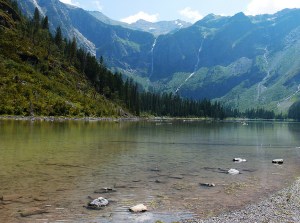



 Malcolm's Round Table