Vila SpiderHawk’s Books Reflect a Love of the Natural World

Vila SpiderHawk is the author of three magical novels that follow the coming-of-age adventures of protagonist Judy Bauman in the disputed German-Polish border territories prior to and during World War II: Forest Song: Finding Home (2008), Forest Song: Little Mother (2009) and Forest Song: Letting Go (2010). Vila is also the author of the Forest Song Cookbook (2009), featuring recipes from the series, and Hidden Passages: Tales to Honor the Crones (2007), a collection of stories about old women and their celebration of life and wisdom. Vila and her husband live in a log house in the Pennsylvania forestland.

Malcolm: Welcome to Malcolm’s Round Table, Vila. You introduced readers to protagonist Judy Bauman in Forest Song: Finding Home set in 1929 to 1933 in territory claimed by both Germany and Poland on the eve of World War II. What attracted you to this time and place for your novel’s setting?

Vila: Thank you for your hospitality and thoughtful questions, Malcolm. It’s very kind of you to do this interview with me.

Why the World War II era in the Polish-German Corridor? I am of German descent and was born in 1945. I grew up in careful silence about the horror of the Holocaust. We didn’t even learn it in school, since it was still too new to be in the history books. It wasn’t until I went to high school that I got my introduction to the period, and that was very sketchy. Nonetheless, I have always felt a pull to the time and place. Call it racial guilt. Call it something else. Whatever it is, I needed to know what caused a people to do such terrible things. And so I studied the era in college.

However, I was never satisfied with the answers the books gave for that terrible time, and so I have carried this need around all these years. Therefore, when I met Judy and she turned out to have lived in that time, I invited her in to tell me her story.

You see, I do not create my characters. They come to me, fully formed and talkative. Judy is downright overbearing sometimes. In any case, I channeled her, since she, too, cares deeply about the “whys” of things.

But there is an additional reason. I worry that our country could become the Germany of the Holocaust. I worry about Guantanamo and the attitude we generally have about Muslims just now. While I am sure some Jews in Germany fit the Nazi stereotype, since all stereotypes have a glimmer of truth to them, I believe and indeed have found that most Jews were just hardworking people trying to live decently and to raise their children well while keeping the bills paid. And, while some Muslims fit the stereotype we have created for them, most, I believe, are like the majority of German Jews. All they want is to live decent lives, to raise moral and educated children, and to pay the bills. It’s not rocket science. People are people. Most are, at bottom, very conscientious.
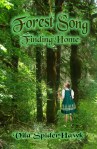
Malcolm: As I read Forest Song: Finding Home, I discovered an interwoven mix of history, German and Polish life and culture, Craft traditions and rituals, and faerie magic. When prospective writers ask what you write about, how do you describe the Forest Song books’ genre and overarching themes?

Vila: Oh boy it’s really difficult for me to place the Forest Song series into a tidy little box. I have classified it as historical fiction, since it has elements of that. I have also classified it as fantasy, since it has aspects that people like to call fantasy. But in truth, it doesn’t really fit tidily into any single category.

When people ask me what I write about, I usually tell them I write about life, in all its complexities. As is true of all of us, Judy’s is a creature of her culture and her era. Her spirituality is an important aspect of her attitudes as well, as it is with most of us. Sometimes she believes she’s going from point A to point B and she ends up at point H, as often happens in life. My stories are not straightforward, because life isn’t straightforward. This becomes more obvious in the later volumes of the Forest Song series but is already visible in Finding Home.

Malcolm: Fairy tales and myths frequently use the forest outside the city gates as a dangerous and/or magical realm of non-ordinary reality where characters go for heroes’ adventures and seekers’ coming of age stories with a strong focus on the protagonist’s transcendent or psychological “the inner journey.” Did a life-long appreciation of myths and folktales greatly influence your approach to Judy’s story and her drive to leave the claustrophobic and limiting world of her parents’ farm for the freedom of the forest?

Vila: Fairy tales are highly allegorical. The forest in fairy tales usually symbolizes the darkness and the space in which people reflect and learn, acquiring wisdom. Thus Persephone goes into the Underworld as a child and emerges with a woman’s wisdom and responsibilities. The forest is our Underworld.

Having said that, I did not grow up reading and loving fairy tales. That came later. But I have always felt the pull of the woods. I always felt I would not satisfy my destiny until I had escaped the clatter, stench, and hustle of the city and had moved into the green serenity of the trees. And, in truth, I didn’t. Though I have always written, it wasn’t until I had moved here and had explored my inner wisdom that I finally felt ready to write for publication.

Malcolm: I am amazed at the breadth and scope of the Forest Song books insofar as the author’s personal knowledge and research required for the plot and setting. How did you approach and organize the books’ details so that they fit hand in glove with recorded history, actual trees and plants available (and seasonally, when they bloomed) in the disputed territories, local customs, Craft traditions specific to Germany and Poland at that time, relevant folktales, and even kinds of clothing, furnishings and products available in a typical farm family’s house?

Vila: I don’t organize my books. My characters do that. They tell me their basic stories in bare bones language. Then it’s up to me to make art of their tales. Once I have the basic facts, I spend a great deal of time researching. One of the reasons I am such a slow writer is that I try to check every little detail to be sure it’s true. Judy opens herself up to me. She lays herself bare. That requires a great deal of trust. I need to be worthy of that trust. That means that I have to be sure that every detail I include in her story is true. I read many books before I sat down to write this series, and I have read many more along the way.

Malcolm: Your pseudonym combines “Vila,” a goddess, with “Spider” and “Hawk.” How did you choose this unique pseudonym and how does its meaning correlate with the intentions and perspectives behind your writing?

Vila: I chose Vila SpiderHawk very carefully. Vila is an eastern European Goddess of the woods. She is a shape shifter and the protector of the forest and all who live there. She heals with herbs. I identify with all that. She also dances hunters to death. There are times when I really identify with that as well, since I am a vegan. I chose the name long before I realized I’d be telling Judy’s story, though.

Spider is a contemplative creature. Spider spends her time between earth, the concrete, and air, inspiration. She chooses not to hunt. Instead she waits for food to come to her. She is patient. She knows that the Universe will provide her daily needs. She reminds us to see the importance of patience and spirituality. She reminds us to see the divine in all creatures, however small, however mundane.

Hawk, on the other hand, is aggressive. Her vision is sharp, and her reflexes are quick. She is a merciless hunter. She soars. She spreads her wings and touches the clouds. She is as free as it is possible to be in this life.

I am both Spider and Hawk. I am contemplative and introspective. I understand that the Universe will provide what I need as long as I have the wit to ask for it and the patience to accept that it will come in its own good time. But I am also Hawk. I can be aggressive and merciless. I tend to see sharply. And there are times when I positively soar. The Spider in me tempers the Hawk. The Hawk in me reminds me that sometimes it is necessary to be aggressive and to see sharply. And, while it’s wonderful to experience a meditative state, it is such a delight to soar.

Malcolm: In addition to exciting stories, what memories, dreams and reflections do you hope your readers will carry away with them after reading the Forest Song novels?

Vila: What the reader takes away from my books is really up to the reader. Each person brings her own experience, her own baggage, her own spirituality, and her own longings to the books she reads. Each person will take away an individual package of dreams and reflections. I don’t feel I can dictate or even suggest the “right” hopes, the “right” insights for the reader. I simply hope that each book sings to each individual in a way that feeds her soul.
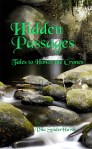
Malcolm: The use of the word “crone” in your Hidden Passages collection of stories straddles a paradox. In mainstream society, the seldom-used word is generally used to malign and discount older women in a patriarchal society. Yet, in historical matriarchal societies and in the Craft and goddess traditions, the word is used as a reverent term of endearment and respect. Did you have any second thoughts or concerns about using the word “crone” in your title or was it especially appropriate to the book’s theme and intent in spite of some mainstream connotations?

Vila: I was very adamant about using the word “Crone” in the title of Hidden Passages. I deeply resent the fact that we dismiss old women in particular but old men too as useless dead weight when, given their experience and wisdom, they have so very much to offer. I think we would be a better society if we actually respected more the feminine principle of giving and nurturing life and if we understood down to the marrow of our bones how very much we owe those wonderful women who raised us.

I grew up in the company of old women. I have always treasured them. And now that I am one, I value old women even more. I understand now that, while those wonderful women who raised me were old and wise and generous and dear, they still had all the eagerness and, yes, insecurities of youth. To me the word “Crone” encapsulates all that is woman—the maiden who is brash and flirty, fearless yet vulnerable; the mother who will sacrifice anything to give her child a better life, the woman who teaches and nurtures and worries and rejoices in and about her children; and the creature we see superficially as the Crone who knows pain, who has experienced death and loss and has endured anyway. The word Crone to me is not simply a title of respect. It is, in my opinion, the finest appellation anyone can call a woman.

Malcolm: Your characters use a lot of herbs found growing naturally in the woods where they live. If one chanced by your log cabin, would they find you out in the woods gathering and drying herbs, and then using them in the teas and meals you serve at your table?
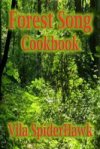
Vila: Oh boy would they ever! Of course, I have an herb garden. Well, I wouldn’t exactly call it that. I’m not sure it’s organized enough to warrant the name “garden”. But I grow all kinds of culinary and other herbs as ground covers instead of grass. And I do cut from the herbs for cooking and other purposes during growing season. I dry herbs in autumn for winter use as well. My house smells like vegetable soup through the autumn with all the herbs drying. But I also harvest herbs from the woods. Mostly that’s just an excuse to go out into the trees and to feel the woodland energy all around me. But yes, herbs are very important to me. Not only do they make food taste fantastic, they have enormous healing power that many European countries still recognize. Hopefully, we’ll get back to more natural healing methods in this country too.

Malcolm: Thank you so much for stopping by and chatting today.

Malcolm

Crawford W. Long Museum Included in Civil War Sites Guidebook

The Crawford W. Long Museum in Jefferson is among the 350 historic sites included in Crossroads of Conflict: Guide to Civil War Sites in Georgia from the University of Georgia Press.

The entry, which includes a photograph of the museum’s historic 1858 Pendergrass Store, notes that the facility “honors the physician Crawford W. Long, who attended the University of Georgia where he roomed with Alexander H. Stephens, the future vice president of the Confederacy. Long is credited as the first physician to use ether for surgical purposes.” Long served in the Athens, Georgia Home Guard and as a surgeon for the Confederacy.

Written by Barry L. Brown and Gordon R. Elwell, the Georgia Civil War Commission publication is an expanded update of the 1994 edition of the guidebook. The 304-page new edition, which arranges Georgia sites into nine regions beginning with the Chickamauga Battlefield in the northwest, includes 65 black and white photographs, 190 color photographs and images, and twenty maps.

According to the University of Georgia Press, “The impact of the Civil War on Georgia was greater than any other event in the state’s history. Approximately eleven thousand Georgians were killed and the state suffered more than one hundred thousand in total casualties. Georgia was extremely influential in this nation’s most tragic conflict, and the war touched every corner of the state.”

Born in Danielsville, Georgia, Crawford W. Long (1815-1878) first used ether for surgical anesthesia on March 30, 1842.

“Do a Georgia resident, friend planning a cultural tourism vacation to the South, or student of the Civil War might enjoy this guidebook? If so, click the Share This button below to send a link by email or recommend this post on your favorite social site.”

Coming Attractions on Malcolm’s Round Table

November 17 – An interview with author Vila Spiderhawk
November 21 – Second Annual Blog Jog Day
December 17 – Virtual VHP Dine-a-Round

Malcolm

Book Review: ‘Song of the Twice Born’

Song of the Twice Born: Book 1 The Mirror of SirrusSong of the Twice Born: Book 1 The Mirror of Sirrus by Seth Mullins
My rating: 5 of 5 stars

Seth Mullins has followed his mythic quest novel “Song of an Untamed Land” (2005) with “Song of the Twice Born – Book I: The Mirror of Sirrus.” Set in a mythical land reminiscent of America’s wild west during the age of discovery, this first installment of an epic fantasy trilogy tells the individual stories of a small group of characters who live in a veritable oasis of calm in a world of warring peoples.

This ambitious novel shows what happens to individuals living within perilous times when they are confronted with the more perilous truths about themselves. A dwarf named Sirrus has introduced a magic mirror into the temporary serenity of Aspen Meadows. When an individual gazes into the mirror, s/he sees an unflinchingly accurate portrayal of his or her bedrock truths and goals. In as much as truths are quite startling, if not potentially debilitating, Sirrus provides commentary and spiritual advice.

Since Sirrus’ advice to Eden, Galya, Marek, Brieran, Ejol, Jin and Enofor (whom we met in “Song of and Untamed Land”) is often more blunt than comforting, he asks each of them to spend time contemplating the revelations by recording his or her spiritual experiences in a journal. Like any journal, each entry records the spiritual and psychological truths unearthed via the mirror within the context of memories and day-today life and struggles. Each character must not only come to terms with past triumphs and losses, but with the seeming inevitability of death or capture when either the Assymyan or Churan army overruns their sanctuary.

Mullins paints landscapes, cultures, peoples and spirituality on a wide canvas that may remind readers of such classics as Stephen R. Donaldson’s “The Chronicles of Thomas Covenant” and J. R. R. Tolkien’s “Lord of the Rings.” The epic scope of this story is made human and vibrant by the very personal journal entries of each character. In less capable hands, “Song of the Twice Born” might have become a collection of indirectly related character studies or short stories. Instead, the character’s points of view link together well into a very real and readable transcendent adventure.

View all my reviews

–Malcolm R. Campbell is the author of the hero’s quest novels, “The Sun Singer” and “Garden of Heaven: an Odyssey.”

NaNoWriMo: Sarabande begins to speak

I am using National Novel Writing Month (NaNoWriMo) as an incentive to get out of the planning stage and into the writing stage for Sarabande, the sequel to my novel The Sun Singer.  Every year, NaNoWriMo participants attempt to write a 50,000-word rough draft of a new novel between November 1 and November 30.

To accomplish this goal, writers must average 1,667 words per day. At 1,938 words written so far, I am 1,396 words behind schedule. I have an excuse. The opening action scene of Sarabande must synchronize perfectly with a battle scene near the end of The Sun Singer. So, I’m having to refer to The Sun Singer a lot, and that’s slowing me down.

Prior to Sarabande’s first action scene, I began the novel with a paragraph that–like an overture for a musical composition–sets the stage for the book. Since the young woman, Sarabande, is going on a “lunar journey,” the introductory paragraph is exactly the opposite of the first words of The Sun Singer. In The Sun Singer, my protagonist was going on a “solar journey.”

Sarabande, Opening Paragraph

Fiery order of day and exuberant sun, young primroses drenched in the light of a long afternoon await like phantoms seeking night, any shade. She traverses a limestone ledge, hears marmots whistle, smells ferns, close, supported into the sky by rock, feels blue bird’s chatter—sweet and dear up from the green mountain valley. Whispers scrape her aura overhead. Scoop throw: like a Judo master, dulled light flings her away. She fights for Mother Earth, would sell her heart for her, and hears, is hearing, “There are numerous ways to live, little girl.” Warm blooded, that voice is the sister of chaos.
The Sun Singer, Opening Paragraph

Cold chaos of night and strangled moon, the great old trees drenched in sap’s perfume rise up like gaunt fingers out of the valley gloom seeking stars, any light. He shoves through tangled vines, hears small creatures running away in the dark, smells bones, close, crushed beneath the weight of eyes, feels owl’s call—sharp and true down off the black mountain’s ridge—hoooo hoo-oooo, hoo hoo, tear through his veins as mocking ice. A twig snaps beneath his boot. Choke hold. Shadows drag him down. He fights for breath, would sell his soul for it, and hears, is hearing, “There are numerous ways to die, little boy.” Cold blooded, that voice is mother of snakes.

Now, Back to Work!

As you can see from these openings, these are very different books. Solar and lunar journeys, in the sense used here, refer to what’s happening within the mind and body of an individual while on an adventure of some kind.

For more information about solar journeys, take a look at Joseph Campbell’s The Hero With a Thousand Faces, where he describes the “hero’s journey” structure found in many myths as well as movies and novels.

For more information about lunar journeys, refer to Maureen Murdock’s The Heroine’s Journey, Sylvia Brinton Perera’s Descent to the Goddess: A Way of Initiation for Women, and Demetra George’s Mysteries of the Dark Moon.

Now that I’ve procrastinated for a few more minutes by writing this post, it’s time to get back to chapter one of Sarabande.

Malcolm

E-Book Available for $4.99 until November 16th!

Novel excerpts Copyright (c) 2004 and 2010 by Malcolm R. Campbell. Moon artwork Copyright (c) 2010 by Jupiter Images.

Kick the Bucket on Hallowe’en

an encore post from “Worst of Jock Stewart”

Frank N. Stein, owner and operator of the Ghost-of-a-Chance Cemetery at 666 Deadline Road plans a Death by Chocolate Hallowe’en for kids trick-or-treating at “death’s door.”

“This year, we’ll be handing out our usual death bells, death watches, and door-nails to everyone who knocks at the Death’s Door entrance to the cemetery,” said Stein. “We’re especially excited about this year’s ASK NOT FOR WHOM THE OPEN GRAVE CALLS gala. I think we’re going to top last year’s BABY, CAN YOU HEAR DEATH’S RATTLE sing-along.”

Chief gravedigger T. Stone, who laughingly claims he’s the only one on the premises who knows where all the bodies are buried, said he almost worked himself into an early grave getting all the holes dug in time.

“I’m death-warmed-over exhausted,” he said, “but I’ll be cheating the grim reaper again by Sunday night.”

According to a dead letter posted at the cemetery door, every kid who successfully kicks a plastic bucket of dead men’s fingers into an open grave from six feet away will be presented with a “Dead Weight of Chocolate.”

“Most of them aren’t real dead men’s fingers,” said Stein. “We chopped up a bunch of old mannequins and littered the pieces around the place to scare the life out of the younger kids. We had enough dead hands left over to pretty much give everyone the finger.”

“I practiced kicking the bucket all afternoon,” Stone said, “and it’s not as easy as you think. Those kids will have to use a little dead reckoning to get it in the grave.”

Plans to offer vodka labeled as embalming fluid were deep-sixed once the Deadline Road Homeowners Association got wind of it and raised a stink.

“We don’t mind the spirits so much as the thought of hearing the words of that hideous old song ‘National Embalming School’ blasting away all night loud enough to wake the dead,” said association president Darla Norris. “We’re not teetotalers out here. After all, we snapped up our share of the icy six-packs they gave away during the CRYING IN MY BIER festival three years ago.”

Ghost-of-a-Chance began inviting trick-or-treaters onto cemetery grounds 25 years ago when Stein’s father Charles announced that he could no longer afford to “buy enough deadlights and deadlocks to keep out the deadbeats who sneak in every year to knock over a tombstone or two after knocking up their girlfriends.”

Norris, who has lived on Deadline Road for 26 years, said that almost everyone in her neighborhood was conceived as a Hallowe’en trick in the years before “old Charlie Stein made vandalism a dead issue while making death and cemeteries a real treat again.”

The police department’s Dead-to-Rights Hallowe’en Task Force will work the graveyard shift again this year to provide security and to pick up anyone who is dead drunk. Doctors from Memorial Hospital will be on hand to assist anyone who gets one foot caught in the grave. Overflow parking will be available in Potter’s field.

“We’ll be dead to the world by the time the night’s over,” Stein said. “It’s worth it, though. We’re putting the boot back into boot hill to make life better for kids in the here and now while reminding their aging parents to consider us in their plans for the hereafter.”

For more Jock Stewart comedy and satire, give all of your Hallowe’en visitors a copy of “Jock Stewart and the Missing Sea of Fire”  from Vanilla Heart Publishing.

“From the opening paragraph, Jock finds himself sucked into a world of deception, murder, and illicit trysts. Despite being set in modern times (as evidenced by the existence of Krispy Kremes), Sea of Fire has a delightfully old-time noir feel, kicked up a notch by fast-paced dialog and laugh out loud puns.” — Nancy Whitney-Reiter

Francine Cousteau: Danube Delta Water Monitoring Needed

from the Cousteau Society:

Since October 4, Hungary has suffered from an unprecedented environmental catastrophe: a reservoir belonging to Magyar Aluminum (MAL), ruptured, for unknown reasons, and poured a mini-tsunami of more than 1.1 million cubic meters of red sludge full of heavy metals and acids into the Raab River, a tributary of the Danube. The caustic mud devastated everything in its path, killed half-a-dozen people and destroyed the fauna and flora in its way.

Since October 10, water samples have shown that the pollution has reached the Danube. The flow of the sludge could ravage the entire ecosystem—plants and animals. Days after this spill, while Hungary fears a second flood of toxic mud, the retaining walls of the reservoir are showing major cracks.

This sludge is part of the wastes inherent in the production of aluminum: for every ton of aluminum, three tons of red mud are produced. This mud is made up of iron, aluminum oxide and lead, among other things. According to initial reports, the reservoir ruptured because it was filled beyond capacity with waste. For its part, the company states that it abided by all safety measures. But now that Europe’s great river, the Danube, has been affected, the problem is an international one: Romania will inherit the catastrophe and, ultimately, it is in the delta that the deadly mud, however diluted, will end up.

As President of the Cousteau Society and Equipe Cousteau and ambassadress for the Danube Delta, I call for responsibility on the part of the countries that border the Danube to create a common authority to monitor and oversee installations that pose such risks and to adopt rigorous common measures to manage the aquatic environment in order to protect against such risks. Moreover, I demand that a legal system be quickly put in place, which will apply to all 18 countries that border the Danube, as well as a Permanent International Court of the Environment where polluters will be judged.

In 2010, Europe can no longer tolerate an “every man for himself” approach to water management. In cooperation with scientists from the region, Francine Cousteau is organizing an urgent on-site mission to analyze all the consequences of this major environmental catastrophe.

L. E. Harvey’s novels focus on women’s strengths

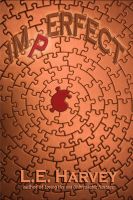
L. E. Harvey, author of “Loving Her” (2009), a collection of short stories and “Unbreakable Hostage” (2010), a suspense/thriller, turns her attention in her latest novel “Imperfect” to the love and chaos of a relationship between life partners who are not only confronted with small-town prejudice against interracial gay couples, but are also coping with AIDS. As a sickly child, Carol Mathers received a blood transfusion in the early 1980s before blood donors were screened as they are now. When she is diagnosed with AIDS in her mid-30s, she fears she may have unknowingly infected Alexandria, her partner of twelve years. The e-book addition of “Imperfect” is available now from Vanilla Heart Publishing. The trade paperback is scheduled for a November release.
Malcolm: Welcome to the Round Table, Lauren. In Unbreakable Hostage, released earlier this year, your protagonist, a PhD candidate in algebra, is kidnapped by one of her classmates and ends up using algebra-related messages to get word to the outside world. How difficult was it to shift gears from the life of a hostage to the world of a young couple who meet in Imperfect, fall in love and decide to share their lives together?

Lauren: Thanks so much for having me, Malcolm! I’m thrilled to be here! There was actually no real transition for me. The intensity of Unbreakable Hostage mirrors the intensity an interracial lesbian couple would face in a not-so-gay-friendly environment. Granted the situations are different, but on an emotional level, they’re actually quite similar. Fear is fear, hatred is hatred and love is love, no matter what situation you’re in.

Malcolm: To what extent is the tone of your daily life affected by the joys, sorrows and challenges of the fictional characters you’re writing about? That is, did you feel tense while writing about the kidnapping and angry and sad while writing about Carol and Alexandria?

Lauren: Very much so. I’m a very emotional person as it is, and I get swept up into my characters’ emotional states as well. To boot, I typically play music that’s reflective of what I’m writing, so I am very much engrossed and enveloped in their lives and emotional states. My books can easily sway my emotions! LOL. I’m sure that can’t be easy on my family! 🙂

Malcolm: What do you hope your will take away from reading Imperfect?

Lauren: My hope is that this book really causes people to stop and think. I want them to throw out any stereotypes or judgments they may have had after reading Imperfect. Perhaps it’s a lofty goal, but I really want my readers to walk away from this book seeing us all as human beings, hopefully diminishing some prejudicial thoughts/assumptions.

Malcolm: To what extent does your women’s rights and gay rights activism shape the plots and themes in your fiction?

Lauren: I think it shapes my books tremendously. If you look, I have very strong heroines. Not that the male characters are weak, mind you, but the women definitely take the spotlight! Whether intentional or subconscious, my three current titles all have themes regarding the strength and capabilities of women, equality for all people, etc. I guess I have a hard time separating my various passions & work!

Malcolm: I haven’t met many authors who also work as “pin-up girls.” How did you get started in that business? Are you finding any good story material in your modeling experiences?

Lauren: LOL. I kind of accidentally fell into modeling. I’m only 5’1″ and don’t look “model-ish” at all! 🙂 But for some reason, people like taking my picture! It’s fun, so I won’t stop ’em! 🙂 As far as pinup work goes, I just happen to be naturally inclined to make those silly, over-the-top cheesecake pinup facial expressions, so it all just kind of worked itself out. 🙂 You know, I haven’t thought to look at my modeling work for inspiration, but now that you said that, I’m going to start thinking about that! 🙂

Malcolm: Your website is promising a sequel to Imperfect. What can you tell us about that without giving away too many spoilers?

Lauren: Well, what I can tell you that is that Impeccable, the sequel to Imperfect, lives up to its name. I hate to sound like an ego maniac, but I am just so proud of this book! I really think it’s going to touch people’s hearts. You will have the same cast of characters, but you get to know them on a much deeper level. You’ll learn things about them that you never could have imagined. It gives you a more clear and defined understanding of the entire story and all of the players involved. Impeccable is very cerebral and also very emotional. If you liked Imperfect, you’ll love Impeccable! 😉

Malcolm: When you’re not writing and not modeling, do you find time to relax and smell the roses?

Lauren: Do I find the time to relax and smell the roses? LOL. Ummm…I am a self-admitted workaholic. Actually, working with my partner on our house or her sculptures is very relaxing for me. Doing anything with my family is really the best down time I can ask for. Whether it’s sanding wood or making dinner with our little one, family time is my down time. So, I do stop and smell the roses, in my own unconventional kind of way.

Malcolm: I’ve enjoyed our conversation, Lauren. I must tell you that after your powerful ending for Imperfect, I’ll be waiting to read Impeccable as soon as it’s hot off the press.

You can also find Lauren’s work in Vanilla Heart’s With Arms Wide Open anthology of poems and prose celebrating living and loving. You can read excerpts from “Loving Her,” “Unbreakable Hostage,” and “Imperfect” on fReado. Lauren’s books are also available to coalition troops serving overseas via Operation E-Book Drop.

To keep up with Lauren and her work, visit her blog “The writings and ramblings of a Philadelphian.”

Malcolm

Joshua Tree National Park Kicks-off Restoration Projects

from NPCA

Photo by Alex E. Proimos
Twentynine Palms, Calif. – In partnership with the National Parks Conservation Association, Arrowhead® Brand Mountain Spring Water has announced the first jointly supported, volunteer-based restoration project at the iconic Joshua Tree National Park to help revitalize and restore the park, leading up to its 75th Anniversary.

Breaking ground this weekend, Arrowhead Mountain Spring Water employees will team-up with park officials and community volunteers to restore two highly travelled areas of the park – the Hidden Valley Trailhead and trails leading out to the popular rock climbing area, Houser Buttress.

Once a refuge for cattle rustlers and mountain lions, Hidden Valley is now one of the park’s most popular rock climbing, picnicking and hiking destinations, and it’s in critical need of conservation and restoration efforts.

Among the group of volunteers are Boys and Girls clubs from Yucca Valley and Desert Hot Springs and marines from the Marine Corps Air Ground Combat Center located in Twentynine Palms, CA.

Volunteers will perform critical work to prevent soil erosion and destruction around the trailhead, which has created a slipping hazard to hikers. Volunteers will also eliminate “social trails” created when visitors walk off the designated trail-areas. Additionally, participants will plant native vegetation, lay vertical mulching to curtail erosion, remove wooden ties that line the trail and replace them with rocks to restore the area, and dig postholes for fencing to secure the site. Finally, old trail signage will be replaced with new ones that better describe trails for hikers and help preserve the desert’s natural landscape.

The Park

One hundred and forty miles east of Los Angeles, the 800,000-acre Joshua Tree National Park features a fragile desert ecosystem. Visitors can explore both “low” and “high” desert landscapes here where the Colorado and the Mojave deserts meet.

Photo by thirteenthbat
Joshua trees are found in the cooler, wetter Mojave in the western portion of the park. Explorer John Fremont reportedly called them “…the most repulsive tree in the vegetable Kingdom.”

A member of the Yucca genus, the fast-growing Joshua trees get their name from 19th century Mormons crossing the Mojave Desert who said the trees’ limbs resembled the outstretched arms raised to the heavens in prayer.

The trees, with their multi-fiber trunks and extensive root systems can survive in the desert for hundreds of years, with some trees living up to a thousand years. Joshua trees bloom in the spring, displaying creamy white flowers to complement the dark green spear-shaped leaves.

Malcolm

Preparing for National Novel Writing Month

If you’re bold and/or crazy enough to sign up for National Novel Writing Month (NaNoWriMo), then you know it begins November 1. On that day, thousands of people will write the words “Once upon a time” and then work feverishly to complete another 49,996 words by November 30.

For those of us who may falter, a panel of inspiring people has been assembled to provide pep talks during the month. They will, I believe, remind us that we have it in us, that we have what it takes, that we can go the distance, that we can just do it.

The NaNoWriMo folks remind us going in just why we’re doing this: The reasons are endless! To actively participate in one of our era’s most enchanting art forms! To write without having to obsess over quality. To be able to make obscure references to passages from our novels at parties. To be able to mock real novelists who dawdle on and on, taking far longer than 30 days to produce their work.

My primary reason for writing 50,000 words in one month is avoiding Georgia’s leaf raking season. As of November 1, it is considered excessive gauche to continue “taking care of” the leaves in one’s yard by mowing them into nowhere. If you have a leaf vac, you’re in business. If you don’t, it’s rake city. I, on the other hand, will be churning out words.

We’ve been warned not to fudge on this. It is also considered gauche to begin writing a 300,000-word novel in January or even 20 years ago, and then dump it into the NaNoWriMo system while screaming, “hey suckers, look at me.”

Having taken the pledge to go the distance and just do it, I am contemplating several novels that have been waiting on the drawing board. Among them are:

One Flew Over the Vulture’s Nest: a cautionary tale about the lives and loves of a roadkill cleanup crew.

The Girl Who Kicked The Outhouse Door: A girl “who just can’t wait” kicks open the door to a campground privy and discovers all that glitters is not gold.

Chipmunk Steals Squirrel’s Nuts: A chipmunk born with crooked stripes sneaks into squirrel’s house one dark and stormy night and grabs all the nuts, leading to a caper that eventually turns everyone in the 100-acre wood against each other.

I know I have it in me even though I’m not sure yet what “it” is or how “it” will end. But the point is, it doesn’t matter because on the morning after eating two or three sacks of Halloween candy, we’re supposed to work off those calories by writing faster than a bat can fly out of hell.

At the end of the month, we’ll all swap war stories, tell lies about how we did whatever we did, and then take a nap.

Coming Friday, October 22: An interview with author L. E. Harvey

You May Also Like: End of Earth Rescheduled (from Jock Stewart and the “Morning Satirical News”)

–Malcolm R. Campbell is the author of Jock Stewart and the Missing Sea of Fire, a bold and crazy novel about a reporter who thinks writing 50,000 words in a month is child’s play, especially if he has plenty of Scotch.

We’re Throwing Eggs at Dads Again This Year

Guest Post by Trick Falls

With Halloween approaching faster than a bat out of hell, my brother Pratt, my sister Niagara and I are making plans once again to gas up Dad’s old Packard for our yearly pilgrimage to One Egg, Alabama for some hard fried trick or treat fun.

Throwing Eggs at Dads began in 1957 when three fresh-face graduates from reform school (my siblings and I) borrowed Dad’s two-tone baby blue and white 1956 Packard Clipper Touring Sedan for some Halloween fun. Fifteen or twenty large sacks of Candy Corn later, we ended up in Alabama’s Houston County with a trunk load of Piggly Wiggly eggs.

Niagara, who was wearing an itsy bitsy teenie weenie yellow polka dot bikini, discovered that 98.6% of the Dads walking their kids around the small town of One Egg were more interested in her tricks than their children’s treats. Just when things were getting really interesting, Pratt and I would hit the poor slobs with a barrage of jumbo eggs.

In the resulting chaos, the kids dropped their candy, we scooped it up and roared off down the road.

The dads, most of whom were in the serious business of growing cotton, corn and peanuts along the road to Cottonwood, had never been egged on by a pretty girl before, so as the years went by, they began looking forward to the “sweet lady who tempts us to take an egg shower.”

It stood to reason, something like this would ultimately happen in One Egg because the town was founded in 1942 by Norfolk Grey after he was run out of Two Egg, Florida for “being a bad egg” and smelling like sulfur when he passed gas in the general store.

Niagara was so popular with the One Egg dads that she began to get innocently provocative pen pal letters from them stating that a Halloween without Niagara was like a fried egg sandwich without mayo.

Pratt, who was disgusted with the idea of stealing kids candy after he got fat in the early 1960s wanted to quit making the trips. Fortunately, we had enough blackmail material to keep him driving that Packard up and down highway 53 year after year after year.

Early on, Niagara’s fame down in Houston County was such that her bikini inspired a song that reached the top of the charts. Today, as the nation’s number two Viagra salesman, Niagara dangles the bottom half of that old bathing suit from her rear view mirror to bring her good luck. Most of the prospective customers who meet her at Waffle Houses and truck stops across the country don’t mind getting a little egg on their face while buying their meds.

This year, our custom bumper sticker for the Clipper will say, “Scrambling Dads for Sweets.” Pratt designed it and, truth be told, he’s very proud of his work.

As for yours truly, I’ll be the driver again on this year’s caper since my trick knee causes me to fall whenever I try to run away from anything. Sure, we’re almost too old for this kind of stunt, but the now-grown-up children of the dads we egged on in those days of yesteryear would never forgive us if we didn’t trick them again while shouting, “The Yolk’s On You, Sugar Daddy.”


Trick Falls is one of the secret pen names of the author of “Jock Stewart and the Missing Sea of Fire,” a satire in which an ass-kicking reporter finds humorous ways to insure his town’s corrupt politicians always have egg on their faces.