All Aboard for Glacier National Park

When Glacier National Park, Montana, celebrated its centennial last year, 2.2 million visitors came to the park, setting a new attendance record. While Amtrak’s Empire Builder serves the park, most of today’s visitors arrived by plane and automobile.
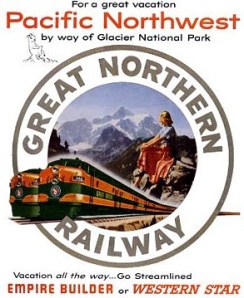
The park’s hotels and early infrastructure were developed by James J. Hill’s Great Northern Railway (GN), now a part of the Burlington Northern Santa Fe (see downloadable history), as a means of increasing passenger rail traffic on the route between Minneapolis and Seattle. The route, which went through North Dakota, Montana and Idaho, is the northernmost transcontinental railroad in the United States. Hill and his railroad prided themselves in the fact that, unlike other transcontinental railroads, GN used no federal land grants to built the track.

Before Amtrak took over most U.S. intercity passenger rail service in 1971, Great Northern delivered visitors to East Glacier and West Glacier via many named trains over the years, the last of which were its premier Empire Builder and the Western Star. Considered a secondary passenger train, the Western Star (train #27) left Minneapolis daily for the west coast, arriving in East Glacier before breakfast the following day. When Amtrak took over passenger service on the route in 1971, it kept the Empire Builder and discontinued the Western Star which had been in operation since 1951.
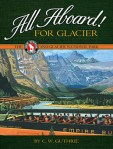
Carol Guthrie’s All Aboard for Glacier National Park (2004) captures the heady days of passenger rail travel and the park.  Even though the trains are mostly gone, you can still see the Great Northern Railway’s influence throughout the park, especially in the hotels managed by Glacier Park, Inc. (The company was owned by the railroad until 1960.)

When I worked as a bellman at the park’s Many Glacier Hotel in the 1960s, I traveled from my home in Florida to the park by rail, and that included the Western Star. The railroad still offered hotel employees reduced-fare tickets even though most railroads’ passenger trains were, by then, operating at a loss. Since the train ride was part of my Glacier National Park experience, I couldn’t help but include the Great Northern Railway and the Western Star in my novel Garden of Heaven. (Now out of print.)

Garden of Heaven Excerpt

In the novel, my main character David Ward gets to do what I always wanted to do: run the Western Star for a few miles just east of Glacier National Park:

“Climb up, Mr. Ward, it’s only 24 miles, and I’ll be close by.”

“You run like a god damned freight engineer,” said Jim as he lit another cigarette, “and there will be hell to pay.”

“I won’t spill a drop of coffee,” said David.

They followed him up into the cab. Jim slouched in the fireman’s seat with his newspaper and Big Ed stood by silently while David sat, noted the positions of the brake handles and the needles on air gauges, then looked out the window at the track ahead of them. There was seldom any rust on these rails lying easy on the fine, well-drained roadbed, and now as the day wound down, the tracks were becoming a true hi-line into night. Ahead, in the middle distance, two tall trees stood equidistant from the center of track—the right bathed in full sun, the left now in shade—a gate to the future, all aboard for Blackfoot, Sundance, Cutbank, Shelby, and points east with connections to RTC Great Lakes and Vietnam. He stepped on the dead man’s pedal and looked back at Ed and said he was ready.

“It’s 5:12 and we are clear to proceed,” Ed said. “You won’t need the transition lever, go easy out of here and then one day tell your grandkids you ran the Western Star.” Ed punctuated the sentiment with two loud blasts of the horn.

He put the reverser lever in forward, pushed the throttle into notch 1 and felt the engines load as he carefully feathered off the independent brake.

“Good,” said Jim. “Big Ed didn’t leave any slack in the train.”

“Damn sure didn’t,” said Ed. “I care very deeply about those Pullman passengers and their eagle eyes conductor back there.”

David eased the throttle out a notch at a time, slowly, so far so good, he hadn’t jostled anybody, felt the automatic transition as they passed between the two trees and throttled back to avoid any wheel slip, then began easing the throttle forward again until they reached track speed.


SunSinger4coverMalcolm R. Campbell is the author of “Conjure woman’s Cat” and “The Sun Singer.” “The Sun Singer” is set in Glacier National Park.


‘The Wolverine Way’

“These animals’ off-the-charts strength and survival skills had become a source of inspiration for me by now. Even so, I was never going to get used to dealing with the intensity of a wolverine when it’s up close and cornered.” — Douglas Chadwick, National Parks Magazine, Winter 2011

Seven years ago, author and biologist Douglas Chadwick volunteered for The Wolverine project, a five-year study conducted in Glacier National Park by The Wolverine Foundation. Chadwick has compiled his experiences into The Wolverine Way, a 250-page book released in May by Pantagonia. (There’s a detailed story in the June18th issue of The Missoulian.)

Chadwick’s book and the related article in the current issue of National Parks may help dispel some of the myths and misunderstandings about this seldom-seen animal that is, as Chadwick says, “more complex than the legends that surround it.

As the non-profit Wolverine Foundation notes on its website, it is focusing on the wolverine not “because we feel the wolverine is in danger of extinction, but because it is in need of attention.” The site includes links to the growing database of wolverine information that will suit the needs of wildlife biologists and the general public.

The Wolverine Way is a nice addition to the library of those with a passion for Glacier National Park.

One can only stand in awe of an animal with a strategy that Chadwick suggests might sound like this:  “Go hard, and high, and steep, and never back down, not even from the biggest grizzly, and least of all from a mountain.”

Set partly in Glacier Park, the e-book edition of this novel is only $5.99

Eagle Scout Goes to Hell

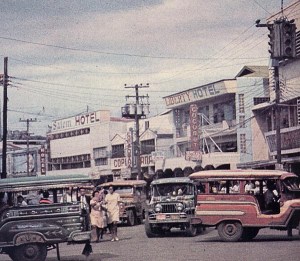
Olongapo as it was then

Everyone aboard every Navy ship that cruised between California and Vietnam in the late 1960s knew about liberty in Olongapo, Republic of the Philippines. The city stood just outside the main gate of the U. S. Naval base at Subic Bay, a regular port of call for Western Pacific (WESTPAC) ships.

Old salts called the town “hell” and promised Seaman Recruits coming on board the carrier USS Ranger out of bootcamp that anyone leaving the main gate of the base on liberty would be corrupted immediately by booze, drugs, girls, gambling and crime. They called the drainage ditch separating the base’s main gate from the town “the shit river,” though I saw it as the River Styx.

I crossed the shit river multiple times and found the world there to be everything the old salts described. As a former Eagle Scout, it crossed my mind on more than one occasion, “if only my Scout master could see me now.” Our Scout troop was sponsored by a church, so the Scout master was the least of my worries when I thought of how the deacons, elders and Sunday school teachers should they ever see a photo taken on Magsaysay Drive.

As a writer in training, I saw Magsaysay Drive and the Galaxy Bar and the touts and the constant ruckus in the streets as “research.” But I doubt my Scout master would have understood, or anybody else I knew, for that matter. Luckily, webcams and cell phones hadn’t been invented yet. There was no Facebook either in 1968. This meant that no pictures of me crossing the shit river appeared anywhere–and since a lot of time has gone by since then, I doubt they ever will.

Everyone who might know the Eagle Scout and paperboy who went to hell and then put his research into a novel called Garden of Heaven is long gone by now. So, I think I can safely post this excerpt without word getting back to the old neighborhood.

Excerpt from Garden of Heaven:

Standing on the bridge over the Shit River listening to the half-naked children in flimsy boats below shouting for a handful of centavos, the city in his face was—with more pride than apology—very much a city with its tattered underwear showing. If Magellan only knew what was here now. If Dad only knew David was here now.

Night was settling down over the hazy first lights of the bars and hourly rate hotels along Magsaysay Drive and the razor-sharp edges of Kalaklan Ridge like an old whore.

David dropped several 25-centavo coins over the railing, heard an explosion of whitewater, heard the laughter and the shouting, ‘Salamat, Joe, Salamat.’

He crossed Perimeter Road, ignored the hopeful greetings of the money changers behind their well-caged windows, then dodged a badly mixed throng of sailors, girls and honking multi-coloured jeepneys that swelled out into the Gordon Avenue intersection. He cut across the street, smiling, waiving at imagined friends in the distance, and moved with the deliberate intent of a man who had crossed this street hundreds of times.

‘Casual alertness, that’s the key to surviving Olongapo’s jungle of thieves, gangs, girls, high-strung Marines, bored Shore Patrol and Hard Hats, and drunk boatswain’s mates and snipes,’ Lowell had said.

“Hey Joe, cold beer cold beer cold beer, nice girls.”

Touts were everywhere below the slapdash smorgasbord of disheveled signs and awnings, leaning telephone polls, and the rag-tag assortment of buildings with upper floors stacked up in odd strata.

Assorted conversations flew past, barely audible in the close heat… ‘Hintayin mo aki,’ …‘Magandang amaga, Carlo, kumusta ang bagong sanggol?’… ‘Hey Joe’… ‘Tao po! Tao po!’… ‘Hoy, tulungan mo akong magdiskarga sa trak na ito, pwede ba?’… ‘Good food here, Joe!’…Galing akong Maynila. Nasaan ang Zambales Bank?’… ‘Balut, Balut!’… ‘Tayo na’t kumuha ng makakain’ ‘Magandang ideya, handa na ako sa napunan’… ‘Nagustuhan mo ba ang bago kong kamera?’

The sign for the Galaxy Bar was plainer than most. An unadorned interior stairway led to the second-floor club, a large room strewn with tables occupied by sailors, many with girls whose eyes caught the low light like predators or gods. David didn’t see anyone he knew. He had a small envelope in his back pocket for Maria.

Two girls who had bathed in perfume and spackled their faces with makeup were leaning against the bar watching a waitress organise a tray full of San Miguel beer bottles.

“Maria, tingnan mo itong malambing na lalaki.”

“Lamayo ka sa kanya, Adelaide.”

Assuming he’d actually heard her name in those quick Tagalog comments, Maria was the one wearing a red dress, thrusting herself forward to him as he approached, posing her sweet curves, allowing her long hair to seductively frame her face, smiling as though they were friends with a history. He could almost see himself in the high gloss of her lipstick.

Copyright (c) 2010 by Malcolm R. Campbell

USS Ranger (CVA-61)

Ranger - Wikipedia Photo

The USS Ranger has been decommissioned. The USS Ranger Foundation is working diligently to convert the aircraft carrier into a museum on the Columbia Driver near Portland, Oregon.  The effort requires multiple phases, the next being a comprehensive environmental site analysis of the propose mooring location.

The Foundation is seeking donations to help pay for its on-going work. If you would like to contribute to the $15 million dollar fund raising project to bring a historic ship to Oregon as a museum, please click on the link above. Once you’re there, you’ll find some handy PayPal buttons.

2010 in review – stats and more stats

The stats helper monkeys at WordPress.com mulled over how this blog did in 2010, and here’s a high level summary of its overall blog health:

Healthy blog!

The Blog-Health-o-Meter™ reads Wow.

Crunchy numbers

Featured image

A Boeing 747-400 passenger jet can hold 416 passengers. This blog was viewed about 7,700 times in 2010. That’s about 19 full 747s.


In 2010, there were 183 new posts, growing the total archive of this blog to 488 posts. There were 311 pictures uploaded, taking up a total of 36mb. That’s about 6 pictures per week.

The busiest day of the year was November 21st with 119 views. The most popular post that day was Songs and Whispers of the Living Earth.

Where did they come from?

The top referring sites in 2010 were networkedblogs.com, facebook.com, WordPress Dashboard, en.wordpress.com, and alphainventions.com.

Some visitors came searching, mostly for wicked leeks, the last templar, earth day 2010, “big bad slam poet”, and uss ranger fairview oregon.

Attractions in 2010

These are the posts and pages that got the most views in 2010.

1

Songs and Whispers of the Living Earth November 2010
28 comments

2

Fairview, Oregon selected for Super Carrier Museum July 2010
14 comments

3

Book Review: ‘The Last Templar’ October 2010
2 comments

4

Glacier Centennial: Heavens Peak Fire Lookout April 2010
3 comments

5

Wicked Leeks Site Under Fire for Leaking Leek Recipes December 2010
9 comments


Glacier Artist-in-Residence Applications Due by February 15

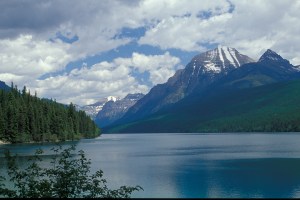
Bowman Lake - NPS photo

Glacier National Park’s artist-in-residence program is open to artists and writers who want to experience the wonder of the park for four weeks this coming summer and, while there, donate their time, inspiration and creative work in support of the park’s environmental education program.

Applicants for the summer of 2011 will be reviewed based on their ability to “produce children’s educational art and materials including scientific illustrations, drawings and graphics; poetry, prose and stories; puppet shows, plays, and song lyrics (for existing or original music); music; and educational lesson plans and resource information guides. These products must be about Glacier and its plants, animals, habitats, geology, natural processes, history and beauty and suitable for use with elementary and middle school children. Thus, the 2011 Artist-in-Residence Program is open to children’s artists, writers, poets, composers, song writers, musicians and academics with relevant experience and backgrounds.”

Applications must be postmarked by February 15, 2011. Click here for information and the address for submissions. The National Park Service will make its selection of one or two individuals for the program in March for residencies to be conducted between mid-June and Labor Day.

Malcolm

A Glacier Park Adventure Available on Kindle

People who need to shut up in 2011

Guest post by Jock Stewart, Special Investigative Reporter, the Star-Gazer

At the end of the year, hack reporters traditionally make inane statements about what has been important during the past twelve months and what will be important during the next twelve months.  Truth be told, I don’t have a clue. I’m paid to tell you what happens, not why you ought to care about it.
These days, many journalists are breaking that rule. Here’s what that means to you. You know what they think before you know what facts led them to think what they think. What a shame. Why should anyone care what a hack reporter thinks? Reporters aren’t gods, sages or soothsayers. Hell, a lot of them are just plain stupid.

My profoundest hope for 2011–other than getting rid of the IRS and TSA–is that journalists who tell me what they think will shut up.

Whether I’m watching FOX or CNN, I’m pretty well guaranteed to see a bevy of talking heads (usual suspects) who are paraded before my wondering eyes who just happen to feel the same way about the issues that the network feels. Hell, what are the odds that an objective panel of experts would all think the same way?

My profoundest hope–other than not seeing celebrity divorces and affairs spattered all around the Internet like they’re real news–is that those CNN and FOX news panels of “experts” will shut up in 2011.

There’s a fair number of celebrities who need to shut up in 2011 because, quite frankly, we’re tired of hearing how they hate the “evil rich” even though they’re rich and/or seeing them testify before Congress because they’re famous rather than actually knowledgeable about a cause or an issue.

My profoundest hope–other than not seeing boring trailers for movies that are supposed to be funny–is that most celebrities will just speak the lines the writers give them and then shut up in 2011.

“Silence,” Lao Tzu reportedly said, “is a source of great strength.”

Why then, do we admire those who never shut up? This is a puzzlement, if not a paradox. As a hack reporter with credentials that will get me inside any meeting, press conference or sanitarium, I would like to report stories about the strong, silent types rather than the noisy weaklings who occupy so much of our attention, column inches and air time.

Alas, we live in a noisy world of sound bites. As a reporter, I have to report that the beauty queen really wants to feed the hungry, that the movie star who earns more than my neighborhood really cares for the poor, and that the politician cares more about his constituents than his next election. In the world of sound bites, I know from experience that all the usual suspects won’t shut up in 2011. So, my profoundest hope–other than learning that soup makers have decided we don’t need all that damn salt–is that we’ll just stop listening to the people who can’t stop talking.

If silence is golden, then noise must be fool’s gold. All the more reason in 2011 to ask why the people who should shut up won’t give us a moment’s peace.

As a hack writer, I’m paid to listen. Since you’re not, you can tune out all those people who need to shut up in 2011.

Jock

Promises to keep

The woods are lovely, dark and deep.
But I have promises to keep,
And miles to go before I sleep,
And miles to go before I sleep.

–Robert Frost in “Stopping By Woods on a Snowy Evening.”

Cattle behind the house watching me watching them

As snow fell across central and north Georgia on Christmas Day, weathermen told us this was Atlanta’s first white Christmas in over a century. In contrast with northern states where snow, salted roads and blizzards occur multiple times during the winter, Georgia snow is a big deal. Our one-to-six-inch snowfall (depending on where you were) caught the attention of local TV stations and the Weather Channel for many hours.

My wife and I were spending Christmas with her father on his farm in NW Georgia. The quiet of an evening of wood smoke and moonlight carried a hint of magic, a reminder, perhaps, of the way we felt during the best of our Christmas eves and Christmas mornings as children.

In the cycle of changing seasons, we often say that the period between the Winter Solstice and Ground Hog Day is not only the best time for planting trees, but the best time for planting figurative seeds. Our plans, goals and intentions germinate in the safe darkness of the soil beneath a fine winter snow, awaiting the sunny days when first shoots will appear, followed by leaves. The enchantment of a cold winter night in a snowy field or along the fence line margin where the world of cows ends and the dark of the woods begins, it’s easier to see one’s hopes for the future more clearly. The smoke from the chimney carries them into the heavens like prayers.

While New Year’s resolutions, at whatever level of seriousness we make them, present our public face, promises made in the quiet of the woods on a snowy evening represent our most sacred intentions. These are the promises that matter. They define who we are, why we are here, and the very best of our goals for the future.
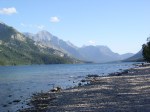
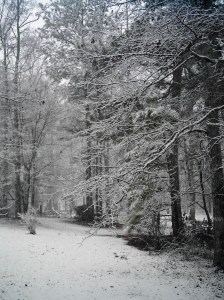
Made in secret, they are the easiest promises to break for we suffer no public shame in failing to accomplish what nobody knew we planned to accomplish.

Made in secret, these promises are the best ones to keep. They are promises to ourselves that touch the soul. Yes, “the woods are lovely, dark and deep,” but there is work to be done, the most sacred of all work.

For now, the woods must wait.

Malcolm

The e-book is only $5.99 on OmniLit

Expanded Waterton-Glacier Watershed Protections Needed

from National Parks and Conservation Assn:

Former National Park Superintendents Call for Waterton-Glacier Expansion, Watershed Protections

Waterton Lakes - Chris Phan photo

Whitefish, MT — An international coalition of retired superintendents from Waterton Lakes National Park in Canada and Glacier National Park in the United States has voiced their concern for the future of those parks and the need for immediate actions by both countries to complete park protection measures begun earlier this year.

“Waterton-Glacier International Peace Park is a treasure that we all share as North Americans,” said former Glacier Superintendent Mick Holm.  “In joining our voice with our Canadian counterparts, we’re hoping public officials in both countries will view our communication as a call to action on behalf of this globally significant World Heritage site.”

Waterton Lakes - Lesa Campbell photo

The letter, signed by nearly all of the parks’ former superintendents, comes in the closing days of Glacier’s centennial year, as Congress considers a bi-partisan public-lands omnibus bill (America’s Great Outdoors Act of 2010) that includes several key park-protection measures. The package legislation encompasses more than 110 individual bills, aimed at protecting the country’s land, water and wildlife resources. Senate Majority Leader Harry Reid has said he would like to see passage before Congress adjourns early in the New Year.

In their letter, the former superintendents endorse a long-standing proposal for Canada to expand Waterton Lakes National Park westward, into one-third of the British Columbian Flathead.  They also call for Canada to establish a wildlife management area connecting Waterton-Glacier to other Canadian Rocky Mountain parks, including Banff.

Glacier - St. Mary's Lake - NPS

The former superintendents noted the historic nature of recent steps taken by both countries to prohibit coal strip-mines, hard-rock mining, and oil and gas leases on public lands upstream from Waterton-Glacier, including action to protect 400,000 acres in Canada and the voluntary relinquishment of 200,000 acres of oil and gas leases by energy companies in the United States. They note, however, that legislation to finalize the mining and drilling ban has yet to become law in the United States, and urge prompt action on that front.

They also call for expanded environmental cooperation across the border, and a formal international agreement between both countries to protect Waterton-Glacier and the surrounding Crown of the Continent ecosystem in Montana, British Columbia, and Alberta.

“To have nearly every retired superintendent from Waterton and Glacier calling for these measures is beyond significant,” said Tim Stevens, Northern Rockies regional director of the National Parks Conservation Association.  “These individuals spent their entire careers managing protected areas.  They understand better than anyone what steps are needed to ensure the ecological integrity and clean headwaters of Waterton-Glacier.”

In 2009, proposed mining activities in the Canadian Flathead Valley gained the attention of the UNESCO World Heritage Committee, which voted unanimously to send an international team of scientists to investigate whether the negative impacts of proposed coal strip mines warranted listing Waterton-Glacier as a “World Heritage site in Danger.”  The UNESCO report concluded that the proposed strip-mine would result in environmental harm to the World Heritage site.

Only $3.99 on Kindle

In search of stocking stuffers

I put on my best suit this morning for the yearly pilgrimage over to the “On the Run” shoppe at the Exxon station for stocking stuffers. While browsing, I enjoyed a giant sausage biscuit, several Krispy Kreme doughnuts and a giant cup of coffee with a dash of skimmed milk in it.

Shopping at Exxon isn’t as much fun as it was in the old days when it was called Esso (still is in Canada) when potential stocking stuffers included spark plugs, fan belts, radiator hoses and clamps. These days, service stations don’t know anything about your car anymore exept that it needs gasoline.

While healthy and tasty, those greasy sausage biscuits don’t mesh well with the other stuffers in the stocking, especially after sitting there for a few days and attracting the cats. So, it’s all packaged delights this year: beef jerky,  fried pork rinds, Twinkies, Snickers, gum and more gum, Lance crackers and a quart of Quaker State.

I felt good about myself and my purchases when I left the store, especially when I heard on the radio that a lot of people haven’t even started Christmas shopping this year because they were either drunk or thought that if they closed their eyes, it (Christmas) would go away. Those who did remember at the last minute were down at ritzy stores like Walmart and BestBuys the feed & seed using up 2-3 tanks of Exxon gasoline looking for a parking space.

Gift Wrapping

The gifts hadn’t yet been wrapped (not counting the stocking stuffers), so I hit that project as soon as I got home. Since my wrapped presents usually look like they’ve been used as clay pigeons and/or run over by an F-150, I hung the paper between to pine trees and and blasted away at it with my 12-gauge and some #4 shot. Then I backed the tractor over it.

I put the resulting mess in a 33-gallon leaf bag along with the unwrapped gifts, shook it up, and attached a bow on top. It’s going to be a big hit.

I hope your stocking stuffers, gifts and wrapping are under control. If not, just say you couldn’t find a parking place at the feed & seed and that the gifts over at Exxon had already been picked through by long-haul truckers.

–Malcolm

The Kindle editions of Jock Stewart and the Missing Sea of Fire and The Sun Singer are currently on sale for only $3.99.

So are other fine e-books by authors from Vanilla Heart Publishing.

Glacier’s Aspens Love Glacier’s Wolves

Healthy aspen trees are returning to Glacier National Park’s north fork after the Moose Fire of 2001 in part because of the presence of wolves.

Extensive research by conservation biologist Cristina Eisenberg suggests that wolves in the area are having a positive impact of the aspens. The relationship between predators, prey and plants is called trophic cascades.

Simply put, if there were no wolves, the park’s elk would have free access to the stands of aspen where they would eat so many buds of potential new trees that the trees would be stunted if they survived at all. When wolves are present, the elk are more circumspect, eating a little here and a little there.

Fear of wolves alone restricts some of the elk’s behavior, keeping them from “over-grazing” the forest. The presence of healthy aspens highly impacts the entire ecosystem leading to a domino-effect of positive benefits for other species even though a few of the elk may be killed by the wolves.

This is nature’s dynamic state of balance. You can learn more about trophic cascades in Eisenberg’s book “The Wolf’s Tooth.”

According to publisher IslandPress:  At their most fundamental level, trophic cascades are powerful stories about ecosystem processes—of predators and their prey, of what it takes to survive in a landscape, of the flow of nutrients. The Wolf’s Tooth is the first book to focus on the vital connection between trophic cascades and restoring biodiversity and habitats, and to do so in a way that is accessible to a diverse readership.

Congratulations to Jami Belt and her successful two-year High Country Citizen Science Project that trained 140 volunteers to help with the park’s mountain goat count. Best estimates are that there are between 1,700 and 2,300 mountain goats in the park. Avid Glacier hikers know from experience that mountain goats are not always easy to see. With persistence, you can find them–and even count them.

Malcolm

On sale on Kindle for only $3.99