Is there a Red Herring in the room?

Today’s guest post is by Chelle Cordero, author of the recently released novel Hyphema (Kindle Edition, Vanilla Heart Publishing, April 15). She is the author of eight novels, including “Bartlett’s Rule,” “Hostage Heart,” and “Final Sin.”

You can see the “Hyphema” book trailer here , Chelle’s web site here and Chelle’s blog here.

Is there a Red Herring in the room?

The heroine of my latest novel, Hyphema, is a recent immigrant from Pakistan. Sudah has a reasonable command of the English language, but American idioms sometimes confuse her. I wonder what she would think of the expression “Red Herring”?

According to Wikipedia, the idiom “Red Herring” in a mystery story refers to something thrown in to distract the reader, perhaps to make the “whodunit” a bit harder to figure out.

I used Sudah’s ethnic background, and her Muslim religion, as an excuse in my story ~ an excuse for the local police and her husband’s coworkers to assume the strange happenings threatening Sudah’s family were just the locals letting their feelings be known. In today’s contemporary society, isn’t that what often happens? Even though Muslims have been in this country for years, since September 2001 there has been a heightened suspicion of this group of people. Add to that Sudah’s brown skin and the hajib (scarf) she wears in public, and a lot of people look at her with resentment and mistrust in their eyes.

Sudah is married to Matt Garratti, an “All American male” (at least a few generations), a flight medic, a Christian, and a New York transplant. They share a son. Sudah was just a child in Pakistan the day extremists hijacked four airplanes to use as weapons. She remembers her mother consoling a friend whose husband had come to America and hoped to become a citizen and bring his family along only to die along with three thousand innocent souls simply because he ran to the towers to try to help.

It’s a sad commentary when we accept intolerance and it’s sad when we direct our hyper-vigilance towards an entire ethnic group. And just perhaps, the police in this story are a little too quick to assume that someone is out to get them because of Sudah’s ethnic background.

Excerpt from Hyphema
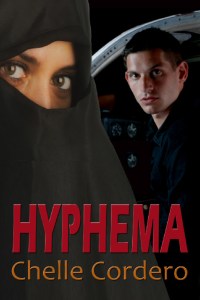
Click cover for sample

“I don’t have to calm the hell down!” Matt’s voice rose. “We could have died a couple a weeks ago because somebody messed with the stove pipe and my CO detector. And you didn’t do anything then. And now someone tried to kidnap my son. They probably would’ve gotten away with it if I hadn’t pulled down the road when I did.”…

 “Sit down and be quiet.” Matt blustered and finally sat. He was furious. “You’ve been making a lot of noise that the police down here aren’t doing their jobs. Now I know you’ve had a few incidents of vandalism…”

“It’s been more than a few incidents of vandalism.”

“Shut your mouth. I am still talking.” The detective stood over Matt and waited. “Now I admit you probably got a few folks around here upset thinking they might have a terrorist living here.” He tilted his head towards Sudah. “And they really should be more open minded, so you have a reason to be upset.”

“My wife is not a terrorist!”

You can purchase “Hyphema” for Kindle from Amazon (http://amzn.to/fEYUR7) or Smashwords for multiple e-book formats (http://bit.ly/epqtjy


What are your favorite comfort books?

When people are feeling stressed, tired, depressed or overworked, they often head for comfort food like macaroni and cheese, a pizza, Kentucky Fried Chicken or that tasty TV dinner with all the salt. Of course, there’s always a stiff drink.

When things are really bad, people add a movie to the menu. Once upon a time, folks would grab a musical like “The Music Man” or “Singing in the Rain.” Now, maybe they head for “Babe” or “Finding Neno” or something light and romantic like “Notting Hill” or “You’ve Got Mail.”

Comfort Books

And then there are books, either the real thing or something on a Nook or Kindle to cuddle up with on a cold winter night or take out to the beach during the summer.

Some people define comfort books as spiritual books or something with an uplifting story and a happy ending. Others want a good adventure, a story that has twists and turns and enough action to make them forget how tired, overworked, depressed or burnt out they are.

Personally, I have so many books on my to-be-read list that I can hardly keep up with them, much less opt to re-read older books.  One blogger said she turns to the Harry Potter books for comfort books. While, I haven’t re-read any of them, the Harry Potter movies do make good comfort movies around our house.

For comfort books, I’ve re-read Katherine Neville’s The Fire and The Eight multiple times. Why? Not totally sure, but it’s probably because they are long and have involved plots. They are fun as well as distracting. For me, if a comfort book is too light weight, it doesn’t hold my attention well enough to keep from thinking whatever dark thoughts led me to search for an old friendly book to read.
Suggestions?

Last December, the Overdecorated Bookcase blog listed these as great comfort books:

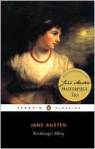
  • Northanger Abbey (Austen)
  • Persuasion (Austen)
  • Leave It To Psmith (Wodehouse)
  • 84 Charing Cross Road (Hanff)
  • The Importance of Being Earnest (Wilde)

Meanwhile, Reading in Reykjavík includes these on her top ten list:

  • My Family and Other Animals (Durrell)
  • All Creatures Great and Small (Herriot)
  • Moving Pictures (Pratchett)
  • The Hobbit (Tolkien)
  • Anne of Green Gables (Montgomery)

To these, I can add:

  • The Prince of Tides (Conroy)
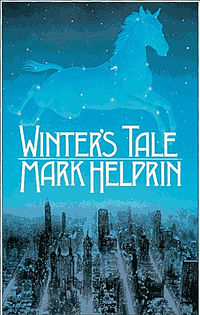
  • Winter’s Tale (Helprin)
  • Lonesome Dove (McMurtry)
  • To Dance With the White Dog (Kay)
  • Shadow of the Wind (Zafón)

It Depends on My Mood

There are days, when watching the first or second Terminator movie is just what the doctor ordered, while a week later, I might prefer Sleepless in Seattle. Same thing is true with books. How about you?

Do you use books to help you relax and/or chase the blues away? If so, how does your mood play into it? That is, do some moods require a good romance while others definitely need a mystery or a fantasy?

Only one problem I haven’t solved with comfort books—unlike comfort movies, it’s hard to enjoy them with comfort food. I don’t want pizza toppings all over my books. Reading, perhaps, requires something that works well with a straw.

At any rate, books, movies and food are much cheaper than a trip to the shrink.

–Malcolm

–Jock Stewart, Special Investigative Reporter for the Star-Gazer. Download his free “Jock Talks…Satirical News” e-book from Smashwords.

JTSATIRICAL

Harding: ‘Teapot Dome Spirit Pushing Up Oil Prices’

Oilwellfrom Morning Satirical News

Blooming Grove, Ohio, May 2, 2010–With oil prices on the rise, members of the Warren G. Harding Seance and Spook Association (WGHSASA), asked the ghost of the former President at his annual Walpurgis Night appearance if he knew “what’s up with big oil?”

“The Spirit of Teapot Dome is pushing up oil prices,” said Harding (1865-1923), “and this time out, none of my friends are going to take the fall for it.”

Harding, who is often called America’s least-effective President, has appeared to paranormal people on the thirteenth floor of the historic Argus Hotel in metropolitan Blooming Grove near his birthplace every Walpurgis Night since 1924.

When the former President appeared to be a no-show for his yearly Not Nostrums, But Normalcy meeting with CIA operatives, thrill seekers and Presidential hopefuls, WGHSASA members lit an extra bonfire on the hotel balcony and began changing the immortal lines of writer John Hodgman:

Fiddle, diddle, fiddle fee,

Teapot Dome has come for me.

Fiddle, diddle, middle, me,

Harding’s corpse will come for thee.

Harding, who materialized dead-center on an overstuffed couch, shouted, “Who interupts my sleep tonight when the powers of darkness are abroad in the land?”

“It is I, Master, your humble servant, Mikey De Wolfe, president of the Blooming Grove chapter of your fan club.”

“What have you to ask of me, Mikey?”

“We are concerned about Benchmark oil for June delivery prices as reflected in trading on the New York Mercantile Exchange and on the ICE Futures Exchange in London,” said Mikey.

Teapot “Mikey, dear boy, you must always remember my credo, Not Agitation, But Adjustment,” said Harding. “As you ponder oil prices, ponder where the oil is and who has it.”

“Big oil has it, Sir.”

“Have they really?”

Harding leaned back on the couch and seemed to fall asleep. When Hodgman’s immortal lines failed to hold him to the earth plane, Mikey and other WGHSASA members served the traditional post-seance snack of Alaskan King crab to all who had gathered at the Argus.

On-the-scene historians reminded reporters that the meal is a brave tribute to a former President who, some say, died of bad crabs in San Francisco during his 1923 cross-country “Voyage of Misunderstanding,” rail trip.

According to well-placed insiders, “Big Oil” representives attending the seance where “white faced” during Harding’s pronouncements. One grey haired man dropped his teapot.

According to Old Maxie, the elevator boy at the Argus, the hotel doesn’t have a thirteenth floor.

“But every year they come here,” he said, with a grin on his face, “to re-enact Odgen Nash’s most famous epic, A Tale of the Thirteenth Floor. As Nash said, conversations like this are ‘table talk in hell.’ Let’s depart in peace in a spirit of Not Experiment, But Equipoise and let our dearly departed Presidents lie.”

Mikey laughed when Maxie said that.

–Jock Stewart, Special Investigative Reporter for the Star-Gazer. Download his free “Jock Talks…Satirical News” e-book from Smashwords.

JTSATIRICAL

Review: ‘The Swan Thieves’

The Swan ThievesThe Swan Thieves by Elizabeth Kostova
My rating: 4 of 5 stars

Elizabeth Kostova has written a mysterious novel with finely-drawn characters, excellent descriptions of artists and the process of making art, and an engaging storyline. While “The Swan Thieves” is basically a modern-day story about a psychiatrist treating a troubled artist, the story unfolds via multiple points of view in multiple time periods.

Artist Robert Oliver attacks a painting of a swan at the National Gallery of Art and is subsequently committed to a psychiatric hospital under the care of Andrew Marlow. It becomes clear that Oliver is obsessed with an unknown woman who appears in many of his sketches and paintings. Is this obsession connected to the attack on the painting? Neither the reader nor the psychiatrist can easily answer this question because Oliver refuses to speak. Marlow bends the rules and provides Oliver with paints and canvases, allowing Oliver to “speak” in a sense through the art he creates in his hospital room. But otherwise, he is mute.

Multiple Characters and Viewpoints

The mute and enigmatic artist is the axis on which the world of “The Swan Thieves” turns. This device enhances the mystery and gives Kostova and her psychiatrist the rationale for bringing a lot of other characters and their viewpoints into a plot that otherwise might unfold in half the time. To learn more about Oliver, Marlow visits the painter’s former wife Kate and former lover Mary and their relationships with Oliver are told as smaller stories within the book. Marlow also visits art experts and museums in multiple cities to find learn more about the real or imaginary woman Oliver paints over and over.

For the book to “work,” the reader must accept the fiction that a psychiatrist at a facility with many patients would go to such lengths—even to the point of becoming obsessed with Oliver’s obsession himself. Some of Kostova’s best writing in the book focuses on the techniques exhibited in the relevant paintings as well as the thoughts, viewpoints and brush strokes of artists at work. A cynical reviewer might suggest that the author was an artist and/or had a great love of impressionism and needed an excuse to spend a considerable amount of space writing about her avocation.

The World of Artists

As the device behind the plot structure is Oliver’s refusal to speak, the device behind the massive amount of detail about artists and their work is the fact that almost every character in the book, including psychiatrist Andrew Marlow, is a professional or highly skilled amateur painter. True, the matter of artists and their work is part of the “evidence” Marlow considers as he searches for Oliver’s demons. Yet, I cannot help but think that the “artists and their work” theme is a bit over done even though it has been done very well.

A Young Impressionist Painter from Another Time

The primary plot of “The Swan Thieves” is interrupted first by the presentation of the text of a series of letters between a promising artist, Beatrice, in the 1870s and her uncle (and artist) Olivier. Written in French, the letters are translated for Marlow over a period of some weeks, so they appear out of nowhere in between the other chapters. Subsequently, the letters chapters morph into chapters devoted to Beatrice and her life almost a century and a half ago.

The storylines finally come together, and by the time they do, the haunting puzzle with all its characters, paintings, artists, museums, easels, palettes and brushstrokes becomes a clear picture of obsession and its impact on others. “The Swan Thieves” has great depth in spite of its somewhat tortuous route to its conclusion.

View all my reviews

Coming May 5th: A visit from Chelle Cordero, author of the new novel “Hyphema.”

My One School, an organization I support in the Orlando area, has entered the Pepsi Challenge to help raise money for local libraries. If you like the sound of this, you can vote here.

Malcolm R. Campbell is the author of “The Sun Singer,” “Garden of Heaven: an Odyssey,” and “Jock Stewart and the Missing Sea of Fire.”

Light Conquers All

Today’s guest post is by Pat Bertram, author of the recently released novel Light Bringer (Second Wind Publishing, March 27). She is also the author of “More Deaths Than One,” “A Spark of Heavenly Fire,” and “Daughter Am I.”

Pat and I discussed “Daughter Am I” here on Malcolm’s Round Table on October 19, 2009 and October 20, 2009

Planet X

The Sumerians believed there were twelve celestial bodies in our solar system: the sun, the moon, the planets we know — including poor demoted Pluto — and one other. This twelfth planet goes by many names. Astronomers today call it planet X. Sumerians called it Nibiru, Babylonians Marduk, Greeks Nemesis, Hebrews the Winged Globe. Prophets called it the Fiery Messenger and the Comet of Doom. They also called it Lucifer, which means light bringer, because it brought its own light rather than reflecting the light of the sun like the moon does.

Light Bringer

Hence, the title of my latest book: Light Bringer. Though it doesn’t make an appearance, this Planet X, this bringer of light and destruction, is the reason for the happenings of the story.

Light Bringer is not only the title; it is also a statement of the theme, or at least one of them. All of my novels explore the same themes, such as love in its various guises and a search for identity, but Light Bringer has one theme uniquely it’s own: bringing light. This light is both figurative and metaphorical. During the course of the story, light is brought to hidden places, both in the world and in my characters’ hearts. Light is brought to truth, or at least the possibility of truth. Light, as love, is brought into the lives of my characters.

Harmonics of Light and Sound

This theme of bringing light also refers to different aspects of light itself, including the harmonics of light and sound (where sound becomes light and light becomes sound) and color (different wave lengths of reflected light).

Light Bringer took years of research, of enlightenment. The plot demanded extensive information about mythology, conspiracies, UFOs, history, cosmologies, forgotten technologies, ancient monuments, and color. Especially color. Color is the thread connecting all the story elements, and all the colors have a special meaning. (You can find a brief listing of color meanings here: The Meaning of Color.)

Auras

Rena’s dark eyes brighten to amber when she is delighted, (yellow denotes joy and intelligence). The auras that envelop her and Philip show their moods: a magenta cloud of distrust, a mauve of confusion, a pale pink of love and devotion. And the world itself reflects their growing love: After the sun set, they headed home in a rich, warm alpenglow that turned the world to gold. (Gold counteracts feelings of loss, enhances feelings of security.)

Because of this theme of light, it is fitting, then, that Light Bringer begins with a bright light in the sky and ends with a new clarity of light in my little town. Perhaps the novel will even bring a bit of light into your life.

You May Also Like

Sandra Shwayder Sanchez’s review of Light Bringer on Bookpleasures.

A free preview of the first chapter of Light Bringer is available here.

Review: ‘After the Jug Was Broken’

After the Jug Was BrokenAfter the Jug Was Broken by Leah Shelleda
My rating: 5 of 5 stars

Students of the ancient texts tell us that when the infinite flowed into the original vessels of the finite, the vessels shattered. Their shards, each with a spark of light, comprise all we know in a world of apparent opposites.

In the title poem in After the Jug Was Broken, Leah Shelleda writes that if the vessels were too fragile to contain the light, “Then I will be a gatherer of shards.” Shelleda organizes her shards in this luminous collection of sparks into Myth, Experience, Place and Spirit.

Some of the shards are transcendent. In Myth, her “Invocation” asks the Lamias of old to “Send sudden gusts of wild song” and Mary Magdalene asks again the old riddle, “How may a woman also enter?”

Some of the shards are sharp. In Experience, “The Memory of Light” cuts deep when it says “How rare when joy enters history/like fireworks and lasting/about as long” and “Extinct Birds” draws blood when it says “The Great Auk the Madagascar hawk/ the last ones died of indifference.”

Some of the shards are kaleidoscopic, reflecting the visions of multiple places. In Place, Shelleda writes in “Behind the Sacred Heart” that she doesn’t want to write about the Sacred Heart, preferring to tell us about a dream “of an openhearted wise man/who arrives four times a year/once in each season/but that comes later/in a language/that is not yet spoken.”

None of the shards are like the shards of broken pottery displayed dead under glass in museums. They shine with their apportioned photons of light. They live and breathe and if we take them into ourselves with our apportioned share of the infinite breath, we will be changed in ways we should not try to predict. In Spirit, the final poem “Heenayni,” whispers “I am here/here in this world as it is.”

“Heenayni,” from the Hebrew for “I am here” is, according to the students of the ancient texts, the moment where categories, worlds, photons and shards come together and the poet and the reader of the poems experience the whole as divine and as one.

View all my reviews

Coming April 29: Author Pat Bertram contributes a guest post about the light behind her new novel Light Bringer.

Malcolm

No need to destroy a Georgia mountain to build a new road

When I lived in Rome, Georgia in the late 1970s, driving to Atlanta—a mere 56 miles to the southeast, as the crow flies—became problematic in Bartow County. Quite simply, the route that began as a four-lane highway at Rome turned into a mess of urban sprawl before one reached I-75 South for the remainder of the trip.

Today, when I visit friends in Rome, the US 41/411/SR 20 interchange has another 30 years worth of development around it to make it a driver’s nightmare. The Georgia Department of Transportation (GDOT) has a proposed a 411 Connector solution.

For reasons that are not easy to comprehend, DGOT favors a costly and an environmentally unsound solution (Route D-VE) that includes the destruction of the beautiful Dobbins Mountain.

Members of the Coalition for the Right Road (CORR) want a 411 Connector. But they believe alternative routes are not only cheaper, but also avoid destroying a mountain.

If you live in northeast Georgia and believe it’s important to guard the environment against massive and unnecessary civil engineering projects that also represent a waste of taxpayer dollars, you can sign the petition here asking GDOT to select a cheaper and shorter route.

According to the latest CORR update, GDOT has announced it is studying up to three modified routes for the 411 connector. The cost of the original GDOT “solution” may be as high as $279.5 million. The estimated cost of at least one alternative route is $98.4 million.

Upcoming CORR events

  • Saturday, April 30: Taste of Cartersville at Friendship Plaza in downtown Cartersville.
  • Saturday, April 30: Southern Veterans Festival at Adairsville Middle School from 10 am to 7 pm.
  • Saturday, May 7: Spring Fling Festival in Kingston from 11 am to 4 pm.
  • Saturday, May 14: Duck Derby Day at Riverside Park Day Use Area in Cartersville from 10 am to 5 pm.
  • Monday, July 4: Stars, Stripes & Cartersville at Dellinger Park in Cartersville. Parade starts at 9 am; activities at 10 am.

We Need a Road

Drivers between Rome and Atlanta need the new road. It will cut time off the trip and reduce gasoline usage. Those who live and work around the current US 41/411/SR 20 interchange need long-distance traffic removed from their surface streets.

We just don’t need to move a mountain to make this happen.

Malcolm

CORR graphic showing proposed mountain cut

Handy Guidebook for Glacier Park’s Wildflowers

During the Spring and Summer, hikers throughout Glacier National Park report being enchanted by the colorful profusion of wildflowers from McDonald Valley to Granite Park to the Belly River Valley. For years, I counted on Guide to Glacier National Park by George C. Ruhle and Plants of Waterton-Glacier National Parks by Richard J. Shaw and Danny On for identifying just what I was seeing along the trail.

Sad to say, both of these books are out of print and relatively hard to find. The pages of my old wildflower book are now a loose-leaf collection of sheets; the same would also be true of Ruhle’s book if it were not spiral bound.

Last year, Mountain Press Publishing came out with a wonderful replacement for the book by Shaw and On: Wildflowers of Glacier National Park and Surrounding Areas. Written by botanists Shannon Fitzpatrick Kimball and Peter Lesica, the book features beautiful photographs and layperson friendly details.

A botanist for 15 years, Kimball has served as a consultant for the park. Lesica is also the co-author (with Debbie McNeil) of A Flora of Glacier National Park, Montana and other books based on his 25 years as a Montana botanist.

Published in April 2010, this 260-page guide is an easy-to-use wonder for Glacier’s visitors from Red Bus tourists to casual hikers to ardent backpackers and climbers. The book is available from Amazon and through the Glacier Association. Like my earlier book, this one also groups flowers by color—a very handy technique.

Readers of Glacier Park Magazine will also enjoy Kimball’s article “The Healthy Rose” in the magazine’s Spring 2011 issue.

You May Also Like

The first time I drove to the lake it was a lakemy Earth Day post about a lake that now exists more in my memory than in fact

Malcolm

A Glacier Park Novel

On Writing as Entertainment

Today’s guest post is by L. E. Harvey, author of “Loving Her,” “Unbreakable Hostage” and “Imperfect.” Lauren posts articles about writing and related joys on her blog “The writings & ramblings of a Philadelphian.”

On Writing as Entertainment

I recently caught a co-worker reading a well-known author’s book. Like any good writer, I asked her if she was an avid reader. She told me she was. My excitement level sky-rocketed. It was when I asked her what her favorite genre was, though, that I was surprised by her answer: smutty romances. The smuttier the better, in fact.

Now, she did have a point in the fact that we work at an intense, high-paced practice and that as medical professionals we deal with death, heart-break and the like. She wants to escape from reality and not think. She wants entertainment.

That caused me to think. As a writer, I’ll admit that I have never considered my books as entertainment. There was always a social or political purpose to them. No escapism here. So now, who is better: the famous author whose work is strictly mind-less entertainment or me, the no-name who writes with the purpose of making people think?

Can you really compare apples to oranges?

Not in my world.

Every writer, ever genre has its place. There is nothing wrong with any genre, nor is one genre better than another. Though not comparable, they are all equal.

I will admit that my bubble had been burst when my co-worker informed me of her lust for entertainment. This person in particular is someone who I would love to have read Imperfect. She still might. I am an optimist, after all.

So what does this mean to me? Do I abandon my genre and personal writing style to simply entertain?

No.

Do I write books and stories that are simply cerebral?

No.

Balancing Purpose and Entertainment

A good writer finds a balance between purpose and entertainment. I may not be there, but it is a good goal; something for which I will continue to strive.

At the same time, I cannot and will not dismiss my works thus far.

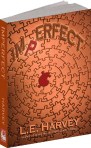
Imperfect is very emotional and thought-provoking. It is entertaining too. You can’t tell me that driving a muscle car on a perfect summer day, cranking out the classic rock music isn’t entertaining.

By all accounts, I’m a realist: my writing background is in historical and scientific non-fiction (not to mention the fact that I work in a scientific/medical field). Boring, I know. Black and white. Factual. Not entertaining. I am, however, coming around. Imperfect is my first full-length novel I ever attempted to write. The facts and reality may be in there, but there are definitely elements of entertainment as well.

My bottom line: the truth is, ALL stories are entertaining. My book is just as much a form of entertainment as that famous author’s book. It may not be smut, but it is definitely a story you can get swept into.

Celebrating Earth Day 2011

Lauren’s “A Summer of Butterflies” appears in Celebrating Earth Day 2011 from Vanilla Heart Publishing. Click on the book cover to download a PDF copy of this FREE GIFT from the Giveaway Anthology page at PayLoadz.

The book includes the work of Anne K. Albert, Charmaine Gordon, Chelle Cordero, L.E. Harvey, Malcolm R. Campbell, Marilyn Celeste Morris, Melinda Clayton, Robert Hays, S.R. Claridge, Smoky Trudeau Zeidel, Victoria Howard and Vila SpiderHawk.

Review: ‘The Seas’ by Samantha Hunt

The Seas: A NovelThe Seas: A Novel by Samantha Hunt
My rating: 4 of 5 stars

“Yet when she comes to earth she comes to seek for that without which her beauty will be forever cold, cold and chill as the surge of the salt, salt sea.” — Mary MacGregor in her telling of “Undine.”

Samantha Hunt’s dark, yet often whimsical, 2004 novel “The Seas” draws on the classic mythology of mermaids and mortals. The alchemist Paracelsus (1493-1521) theorized that Ondines were elemental water nymphs. According to legends, Ondines (or Undines) had no souls unless they married mortal men. Friedrich de la Motte Fouqué drew upon these legends in his highly popular German novel “Undine” (1811) as did Hans Christian Anderson in his classic “The Little Mermaid” (1837).

In “The Seas,” a nineteen-year-old protagonist whose name we never know is convinced to a certainty that she is a mermaid because her father told her so before he disappeared at sea years ago. She falls in love with a shell-shocked veteran almost twice her age who drinks and hides from his war experiences. Jude, however, is the only person in this despairing, northern coastal fishing and tourist town who cares for her. Like everyone else in town, Jude and the prospective mermaid are trapped in a life where alcoholism, boredom and a bit of fishing are the primary pursuits.

As the prologue explains, “If you were to try to leave, people who have known you since the day you were born would recognize your car and see you leaving. They would wonder where you were going and they would wave with two fingers off the steering wheel, a wave that might seem like a stop sign or a warning to someone trying to forget this very small town. It would be much easier to stay.”

She has few social skills, is viewed as deeply disturbed, if not retarded, by everyone else in town including her own mother who waits, and will probably always be waiting, for the return of her husband. Our young protagonist, who narrates her own story and–it appears–believes that we (as readers) are understanding and humane enough to be taken into her confidence, knows the mermaid legends. She fears her love will end up killing Jude.

“The Seas” is awash with water, with bleak satire and bleaker images. The writing is lyrical and precise, blending reality and fable in a way that blurs the littoral zone where the sea and the land meet, where reality and fairytale collide, where sanity and obsession become twisted together. If “The Seas” has failings–other than being darker than we can bear–it’s the occasional overly robust presentation of the author’s and/or the main character’s anti-war and society-without-pity themes.

Our narrator wants to return to the sea. Perhaps she does. Perhaps she dies. Perhaps she loses the last vestiges of her cold and chill sanity in exchange for all that she loves.

View all my reviews

Coming April 22 – “On Writing as Entertainment,” a guest post by Lauren E. Harvey, author of “Imperfect”