Avalanche Damages Historic Glacier Park Chalet

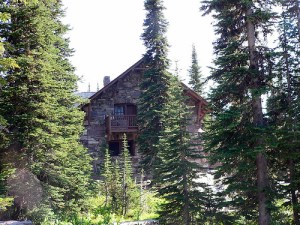
Sperry - Lee Coursey photo

Skiers have discovered that an avalanche hit Glacier National Park’s historic Sperry Chalet over the Winter. Windows, doors, interior walls and fixtures in the south end of the remote structure have been damaged, and several of the rooms were filled with snow.

While some of the rooms may not open this season, Chalet Coordinator Kevin Warrington hopes the chalet will open on July 8th as planned. However, the assessment of the damage is incomplete. Check for updates on the chalet website.

Sperry Chalet, which can be reached only by trail, is 6.5 miles from Lake McDonald Hotel on Glacier’s west side. The chalet was built in 1913 by the Great Northern Railway.

Malcolm

Malcolm R. Campbell is the author of two novels set partially in Glacier National Park. “The Sun Singer” and “Garden of Heaven: an Odyssey.”

‘Jock Talks – The Collection’ Gobsmacks Readers

Everett, WA, May 29, 2011 (Star-Gazer News Service)–Vanilla Heart Publishing is seriously gobsmacked to announce that invesitigative reporter Jock Stewart might not be a real person.

Stewart, whose Jock Talks – The Collection was released by Vanilla Heart today, used an autopen to tell reporters that he’s just as real as Betty Crocker and Cap’n Crunch.

Jock Talks – The Collection is, first of all, a collection,” the autopen said. “For only 3.99, readers who want to be seriously gobsmacked and/or laugh their butts off will find 117 pages of satire, parody and other lies from four stunning e-books:”

  • Jock Talks… Satirical News
  • Jock Talks… Politics
  • Jock Talks… Strange People
  • Jock Talks… Outlandish Happenings

A Few Choice Excerpts

Washington, D.C.—The U.S. Capitol building will be dismantled by the end of the day to clear the way for an Almighty Dollar Big Box Store, the Manifest Destiny Development Corporation (MDDC) announced this morning.

“I blame news editors for the dumbing down of America,” said DDAS president Mary Worth. “Today, while the Libyan Civil war rages on, the two biggest stories are ―UNEXPECTED PAIR SENT HOME ON DANCING WITH THE STARS and PIA TOSCANO SENT HOME FROM AMERICAN IDOL.'”

Junction City, TX—Last night, I dreamt I’d fallen on hard times and had once again been forced to take a job as Britney Spears’ cook.

Dubbed the Shit to Shinola Highway, Interstate 666 rips through Junction City‘s primeval forest where the wind stings the toes and bites the nose.

Daytona Beach, FL―The latest racket in the death business is the sale of skyscraper crypts for those who want to advertise how high they climbed before they died.

Greg, Jim, Dixie and Sweetie Pie of Junction City’s Cry of the Raven Memorial Gardens are among the 72,000 dead Americans who received stimulus checks of $250 each from the Social Security Administration (SSA) as part of a massive economic recovery package intended to stimulate a dying economy.

“I may be butt ugly, but the rest of me is pure goddess.”

At a press conference at high noon today, Vanilla Heart Publishing’s Satire Editor Bill Smith (not his real name) said he used the word gobsmacked after hearing Chef Gordon Ramsay use the expression a thousand times on Fox Broadcasting’s “Kitchen Nightmares.”

“Gordon also screams, IT’S RAW, IT’S RAW,” said Smith, “but the phrase seemed totally inappropriate for a collection of satire.”

Malcolm R. Campbell is the author of the “Jock Talks” series of satirical e-books and the novel “Jock Stewart and the Missing Sea of Fire.”

The Hero’s Journey: A Guide to Literature and Life

The Hero’s Journey: A Guide to Literature and Life by Reg Harris and Susan Thompson is a teacher’s guidebook for presenting Joseph Campbell’s hero’s journey concepts in the classroom.

As teachers in the 1990s, Harris and Thompson felt that traditional methods of teaching literature left students with a disconnect between the materials studied in the classroom and their lives. When I was a student, I read in class because I already liked to read. But I saw clearly that peers who didn’t come into the class with a love of reading, seldom loved literature when the class war over. In short, old books were viewed as irrelevant.

Harris and Thompson found a solution in the classic hero’s journey structure because it linked what the students read about in a novel (or viewed in a film) with real life challenges, crises and questions. Harris puts it this way on the Hero’s Journey website:

“We discovered that the Hero’s Journey is the fundamental pattern of human experience, so it could be used as a foundation for studying literature and film. As a bonus, we found that when students learned the pattern, they were able to relate the themes from literature to their own experience and to better understand the journeys in their own lives.”  The URL has changed to: http://www.yourheroicjourney.com/shop/

Star Wars – The Perfect Example

The guide begins with an overview of rituals, especially rites of passage, how they serve as validating road maps for day-to-day harmonious living within society and to navigating the major stages. Harris and Thompson use Luke Skywalker’s journey in Star Wars to illustrate the hero’s journey.

Like the rite of passage, the journey focuses on personal transformation. Once students can identify the journey’s major steps and resulting transformation in fictional characters, they will begin to understand how similar journeys are cropping up in their own lives even though they may be less dramatic than a popular novel or feature film.

This well-organized curriculum is organized into ten parts and a supplementary appendix:

  1. Ritual and the Rite of Passage: an introduction to the transformation as a foundation for studying the journey
  2. The Hero’s Journey: an introduction to the eight-stage hero’s journey pattern, its stages and dynamics
  3. Gawain and the Green Knight: a retelling of the traditional legend to study the journey in literature
  4. The End of Eternal Spring: a retelling of the Greek myth of Demeter and Persephone, emphasizing the role that compromise plays in our journeys
  5. The Legend of the Buddha: a retelling of the legend of Siddhartha as a model of the spiritual journey
  6. Hero’s Journey Film Project: uses Field of Dreams (or a film of your choice) to explore the journey in a modern story
  7. Write a Hero’s Journey Short Story: students write their own hero’s journey story using the pattern
  8. The Call Refused: uses Groundhog Day (or a film of your choice) and the Greek myth “Minos and the Minotaur” to explore the dangers of refusing the call
  9. Hero’s Journey Group Presentation: project in which student groups research non-Greek/Roman hero myths and present them to the class
  10. My Journey: two projects in which students to explore their own journeys: a personal mandala and an autobiographical essay
  11. Appendix: materials and handouts you can use with the book and to explore the journey pattern in other works

High school teachers of “English” and “Literature” courses can mix and match modules into their own lesson plans or present the complete curriculum. The guide should also be valuable to writers studying the hero’s journey for use in their own stories as well as for youth group leaders and camp counselors who are presenting “lessons in life” programs.

You can find articles about the hero’s journey in the Mr. Harris’ online library here.

–Malcolm

sun
sun

SarabandeCover2015Malcolm R. Campbell is the author of the hero’s journey novel “The Sun Singer” and the heroine’s journey novel “Sarabande.”


Book Review: ‘Adagio & Lamentation’

Adagio & LamentationAdagio & Lamentation by Naomi Ruth Lowinsky

My rating: 5 of 5 stars

A delicate writing desk stands ready for use in a sunny room on the cover of Naomi Ruth Lowinsky’s collection of poems, Adagio & Lamentation. The room is filled with light from the world outside the high arched window. The watercolor painting by the poet’s grandmother Emma Hoffman (“Oma”) displays a room Lowinsky saw many times as a teenager when she visited Oma’s house.

One can imagine Lowinsky working in such a room with a pen so sharp that it tears the paper, cutting through the desk’s polished veneer to carry ink and light deep into the primary wood. “I wish you could stop being dead,” Lowinsky writes to Oma in the opening poem, “so I could talk to you about the light.”

The nib on Lowinsky’s pen shreds the curtain of time that conceals her ancestors and allows them to speak. “The spirit of my dead grandmother came to us as we lay after love in the renovated Old Milano on the northern California coast.” The spirit’s words in “ghost gtory” cut deep. In “Adagio and Lamentation,” the poet hears her father playing the piano while “our dead came in and sat around us a ghostly variation/and my grandmother sang lieder of long ago.”

Lowinsky’s collection of poems is organized into four sections, “before the beginning and after the end,” “what broke?,” “great lake of my mother” and “what flesh does to flesh.” With strength, certainty and intuition, the poems live and breathe on their pages, and when experienced together, comprise an ever-new song about long-ago wars, colors, shadows, moments and people.

Joy and sorrow dance slowly in the light throughout Adagio & Lamentation. From the opening invocation to Oma to the closing “almost summer,” Lowinsky’s words—written with “a flicker of serpent’s tongue in her ear”—tear through the paper-thin present and drive their way deep into the underworld of the unconscious where the inspirations of her muse are fiery, erotic, earthy, transcendent and whole.
View all my reviews

–Malcolm R. Campbell is the author of “The Sun Singer,” “Garden of Heaven: an Odyssey” and “Jock Stewart and the Missing Sea of Fire.”

Glacier Park Fund Continues Trail Maintenance Support

The Glacier National Park Fund partners with the National Park Service in the Save the Trails Project. Past work has included the McDonald Creek overlook and the reconstruction of the Horse Bridge.

This year, most of the park’s historic hotels and campgrounds will be open by mid-June and hikers will be out on their favorite hikes. Trail flooding is just one of the yearly spring problems that necessitates maintenance.

If you would like to help support Glacier year-around, the Glacier Park Fund offers a way to do it. Click here for information. In addition to maintenance, work will continue this year on a wheelchair accessible trail across the lake from Many Glacier Hotel and the Hidden Lake trail boardwalk.

Budget cuts at the federal level make volunteer help and donations via the Glacier Park Fund urgent. Keeping over 700 miles of trails in good shape takes a fair amount of effort. Those who have been going to Glacier for years will remember that the park once advertised over a thousand miles of trails. Let’s not lose any more of them.

Malcolm

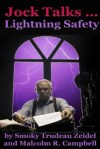
Vanilla Heart Publishing announced today the release of a new satirical e-book in the “Jock Talks Series.” Authored by Smoky Trudeau Zeidel and Malcolm R. Campbell, Jock Talks Lightning Safety is a parody of the summertime helpful hints articles that often run in daily newspapers. Along with the fun, the book takes a look at safety myths which really are nothing more than myths.

Click on the link for Amazon and on the cover for OmniLit.

Tracking Montana’s History

I recently received a letter from the Montana Historical Society reminding me that my membership renewal date was coming up in June. I’ve been a member for over twenty years, and though I’ve never once set foot inside the Society’s museum and library at 225 N. Roberts Street in Helena, I was happy to renew.

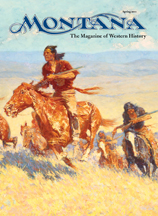
By far, the best magazine that arrives in my mailbox four times a year is the Society’s award-winning, thoroughly researched Montana the Magazine of Western History. As it celebrates its 60th year, the magazine recently one another national award, the Westerners International Coke Wood Award for Monographs and Articles. The magazine has a free, searchable index on the Society’s web site.

In his renewal letter, Mike Cooney, the MHS interim director, noted that the society “provides free public access to over 50,000 books, 455,000 historical monographs, 8,000 maps, 2000 oral history reviews and more. Our education and outreach program has grown, reaching over 5,000 students from over 53 communities and thousands of adults throughout Montana.”

In addition to Montana the Magazine of Western History, MHS also helps members who live outside the state. Using my member’s research question benefit, I had historical questions tracked down and answered for my novels The Sun Singer and Garden of Heaven: an Odyssey and for my article “Bears, Where They Fought,” about Glacier National Park’s Swiftcurrent Valley that appears in Vanilla Heart Publishing’s Nature’s Gifts Anthology.

The Society’s professional, yet accessible approach, to Montana History was recently validated by its re-accreditation by the American Association of Museums (AAM). Re-accreditation is an intensive, two-year process that occurs every 15 years. According to the MHS newsletter Society Star, “There are an estimated 17,500 museums in the nation and only 777 are currently accredited by the AAM.” As a former museum manager and a museum grant writer, I know just how difficult and exacting the AAM standards are.

While AAM standards are designed to fit a wide variety of museums and collections, all museums must successfuly answer two core questions:

  • How well does the museum achieve its stated mission and goals?
  • How well does the museum’s performance meet standards and best practices, as they are generally understood in the field, appropriate to its circumstances?

The success of the MHS and its research, collections policy, artifacts conservatorship, programs, publications, historic properties and its National Register sign program are a dynamic testament to just how well the Society continues to answer those core questions.

As for me, I’ve saved every issue of the magazine since my membership began: for Montana, they are gospel.

Montana teachers will find help on the Montana: Stories of the Land site. You may also like Montana Place Names from Alzada to Zortman and the Centennial Farm and Ranch Program sites.

Malcolm R. Campbell

Author’s ‘In a Flash’ Recounts Being Struck by Lightning

In July 1989, Chicago Tribune headlines brought readers the first chapter of the saga of a young woman who was struck by lightning:

  • 3 INJURED BY BOLT OF LIGHTNING
  • 2 HIT BY LIGHTNING SHOW IMPROVEMENT; MOM IS STILL IN CRITICAL CONDITION
  • LIGHTNING VICTIM ON THE REBOUND

Today, my guest is author Smoky Trudeau Zeidel whose new Kindle story In a Flash recounts the lightning strike, the immediate aftermath and the twenty two years of pain and suffering that followed.

Malcolm: In the story, you say that you didn’t know you were struck by lightning until you woke up in the hospital. Did you believe them when they told you what happened or did it sound too farfetched?

Smoky: It was confusing at first, because I had no memory of the event, but I was in such a fog from the morphine I guess I would have believed anything they told me. I couldn’t speak, because I was on a respirator, so I was in no position to question them. I guess I realized how seriously injured I was when I saw that all my siblings—who lived as far away as Georgia to the east and Washington to the west—had gathered at my bedside.

Malcolm: Do you see the incident as random bad luck that could have happened to anyone or as something that was meant to be? That is, was it destiny?

Smoky: Both. I believe it was random luck—I was simply in the wrong place at the wrong time. I don’t believe God was out to get me, as one misguided person wrote me in a letter shortly afterward. However, I believe that random luck can force a person to confront their destiny if they’ve been on the wrong path, and that happened to me. I came to that realization when I met a Native American teacher at a lecture on native healing. Somehow, the story of my being touched by lightning came up. He urged me to explore and study shamanism. “With many indigenous peoples, their shamans are people who have been touched by the Thunder People,” he told me.  You were struck by lightning—touched by the Thunder People.  You are being called for something.” I take that charge seriously.

Malcolm: Since the story got into the newspapers, did you go for a while constantly being hounded by reporters for the latest update? If so, did you ever get tired of all the attention? Did people on the street recognize you from a picture in the paper and say, “hey, there goes that lady who do struck by lightning?”

Smoky: I did get hounded by the press, especially once they found out the following spring that I was pregnant. One exuberant reporter asked to be present at my first ultrasound so they could report that on the news! At that point, I had to ask the press to please back off and give me my privacy. I promised the reporter I’d call him before any other reporter after the baby was born, and I did that. News spread quickly; when I was discharged from the hospital there were reporters from every major news station in Chicago filming me leaving the hospital with Robin!

Even years afterward, I would get calls to make comments on stories about people being hit by lightning. Eventually, the bruhaha settled down, but it took years.

Fortunately, people on the street didn’t seem to notice me that much. You know how it is—when you see someone out of context you might think they look familiar, but not be able to place who they are. Medical personnel, however, all seemed to know my story.

Malcolm: When reporters and others asked “what was it like,” were they disappointed when you told them the lightning caused short-term memory loss and that you didn’t really know what it was like? That is, were they hoping for a dramatic story?

Smoky: I don’t think anyone was disappointed. Plenty of witnesses saw the event, so the press got the lurid details from then. And because I had so many serious issues that developed as a result of the event, they got fresh story material on a pretty regular basis. It did get tiring after a while.

Malcolm: Do you do anything every year on the anniversary of the lightning strike?

Smoky: When I still lived in the Chicago area, I would take donuts or cupcakes to the paramedics at the firehouse—the team that saved my life initially, and who continued to save me every time I had a health crisis and had to call them. But once I moved away, I stopped doing anything like that. Now, I just stop at 10:21 on July 11 for a moment and give thanks for my life and the blessings I’ve had since that day.

Malcolm: What was it about the lightning strike and its aftermath that made you decide to change you career plans from social work to writing?

Smoky: I was so seriously injured I could no longer attend graduate school. Nor could I hold any kind of full-time job. Who would hire a person who was in the hospital for a week every month? But as broken as my body was, my mind was just fine, blessed be. Writing gave me an outlet to do something worthwhile, something that mattered. I started out as a freelance feature writing for my community’s newspaper. I had a great editor, a guy who was familiar with my story. He gave me stories when I felt well enough to work, and let me be when I was not. It was perfect for me. I gradually expanded to working for other newspapers, and doing magazine stories. But my lifelong dream had been to write a book. Once my first book, Redeeming Grace, was published, I retired from feature writing an focused all my attention on creative writing.

Malcolm: And, the story continues. Your recent knee surgery ended up being more difficult than the doctors expected. What’s their latest prognosis on the long-term viability and functionality of the replacement knee?

Smoky: It’s finally doing better. I have to wear a splint for eight hours a day that is helping loosen the stiff muscles and tendons—a splint I have affectionately named Gizmo Sally. It’s working quite well, and I now have hopes the knee will be working almost normally in another few months.

Malcolm: During your recovery, you met an energy healer who, in the process of helping you deal with the pain, led you to discover Bear, your totem animal. Does Bear still appear to you in dreams and meditations or as an aspect of your intuition when you have important decisions to make?

Smoky: Absolutely! Bear still is a constant presence in my life. People who walk with Bear tend to be introspective, to have inner strength. I would not be alive today if Bear did not share her inner strength with me. I live in almost constant pain, and sometimes that pain reaches almost unbearable levels. But what is in the center of the word un-BEAR-able? Bear herself! Letting me know that even though I hurt, she is with me.

Bear also introduced me to Snake—Rattlesnake, to be more specific. Snake energy tends to awaken in women in the midlife, and appears as a burst of creative energy—awakening kundalini. Bear taught me I could not rid myself of my pain, but that I could use that pain to do wonderful things. When Bear awakened Snake, my creative, artistic side really blossomed. I branched out from writing and began expressing my creativity in a variety of ways. I now consider myself not only a writer, but a visual artist as well.

I have both Bear and Rattlesnake tattooed on my arm as a constant reminder that, no matter what life throws me, I walk side by side with powerful protection. Seeing them on my arm also reminds me to slow down, to focus (Bear energy) on channeling my pain into more useful, creative outcomes (Snake energy).

I believe, ultimately, this was my gift from the Thunder People—Bear and Rattlesnake as my companions in life, keeping me strong, keeping my creative energy, my kundalini energy, flowing. Sometimes, it is hard to live up to this gift. Sometimes, I just want to lie in bed and moan and groan and scream, “Why me?” But ultimately, Bear and Rattlesnake won’t let me do it, at least not for long. I’m a better person because of them, and that is something I will never take for granted.

Malcolm: Than you for stopping by Malcolm’s Round Table, Smoky. Readers will find my review of In a Flash here.

Excerpt from In a Flash

Forty thousand amps of raw electrical power tore through my body and into Bob, who was still holding my hand. The force of the lightning was so great that we were literally catapulted out of our shoes and tossed twenty feet through the air like rag dolls. Hit by the wall of intense heat created by the blast, Steven tumbled over backward. Bob’s plastic key ring melted into his hand. I ended up face-down in a pool of blood, my pierced earrings blasted out of my earlobes like miniature missiles, my gold and opal necklace vaporized into my chest skin. To all outward appearances, we were dead.

Smoky is also the author of “The Cabin” and “Observations of an Earth Mage.” Malcolm is the author of “The Sun Singer” and “Jock Stewart and the Missing Sea of Fire.”
Blue Highways at Night

“Beware thoughts that come in the night. They aren’t turned properly; they come in askew, free of sense and restriction, deriving from the most remote of sources.” — William Least Heat-Moon in “Blue Highways: a Journey into America.”

Forest Service Road - Wikipedia Photo

In the early 1960s when gasoline was 31 cents a gallon, my decrepit 1954 Chevrolet knew every unpaved national forest road in Florida between Tallahassee, St. Marks, Woodville, Sopchoppy, Carrabelle, Sumatra and Chattahoochee. Almost nightly, I drove late into the night and all the graveyard shift fry cooks and waitresses knew my name.

The car at night was a sanctuary and such guidance as I received from the universe was both welcome and askew.

In the early 1970s when gasoline as 35 cents a gallon, my 1970 Kaiser Jeep knew the secondary roads across northern Illinois and southern Wisconsin from Waukegan to Fox Lake to Lake Geneva to Kenosha. I’d take the doors off and make the Jeep’s noisy, nighttime world into a place of meditation where the best of wisdom was free of sense and restriction.

Sweet Highway

Montana Plains - Wikipedia Photo

In time, the Jeep also learned the beauty of the empty daylight highways that led through Minnesota and North Dakota to the Rocky Mountains following the route of the old Great Northern Railway. The “sweet highway,” as author Linda Niemann once called it, was the best route to the most remote sources my mind sought out in those days.

I have always understood why some people like repetitive factory jobs, sitting in the right-hand seat of a freight locomotive, or sailing for days with no sight of land. The widgets passing by on the line, the sound of steel wheels on steel rails, and the rhythmic movement of a boat in mid-ocean are the perfect mantras for unlimited thought.

For a young writer trying either to hide from the world or to find his place in it, unlimted thought behind the wheel of a Bellaire or a CJ5 was perfect escape and therapy. Quite literally, driving saved my life and most of my sanity while giving me a first look at the plots and themes of the novels I would one day write.

The Jeep and I in 1975

Driving blue highways at night isn’t for everyone, and thank goodness, because it was the roads would be too crowded to be of any value. The real world expects those who enter the workplace to have the validation that comes from a high school diploma and a college degree. There’s value in a formal education.

The Cost of a Good Education

Yet, I learned more about myself and about writing on Forest Road 13 in Florida and Heart Butte Road in Montana than I did in high school or college. Today, when I compare the tuition costs with the gasoline prices nearing $4 per gallon, I can’t help but wonder if Blue Highways at Night are still a better value.

Malcolm

You can download a free copy of my satirical (fake) news stories “Jock Talks Satirical News” in multiple e-book formats at Smashwords.

Also available at Smashwords and Kindle for only 99 cents, are Jock Talks Strange People, Jock Talks Politics, and Jock Talks Outlandish Happenings.

Book Review: ‘In a Flash’

Mark Twain once wrote that “thunder is good, thunder is impressive; but it is lightning that does the work.”

Smoky Trudeau Zeidel’s “In a Flash” describes the kind of work lightning does when the “lightning rod” it selects is the umbrella in a young woman’s hand.

The woman died. That was to be expected. But not for long.

Lightning struck Smoky Trudeau Zeidel twenty two years ago on an overcast day in a Chicago suburb. Life since then has not been easy: the number of trips to the hospital, the number of surgeries and the number of days and nights in pain are sufficient evidence of that.

This is a well-told story about courage, strength and the work lightning does. Surprisingly, it’s also a story about counting one’s blessings. One can only read it and weep, and then experience a lingering euphoria for the challenges a person can endure.

You May Also Like

Other short stories recently released on Kindle by Vanilla Heart Publishing include:

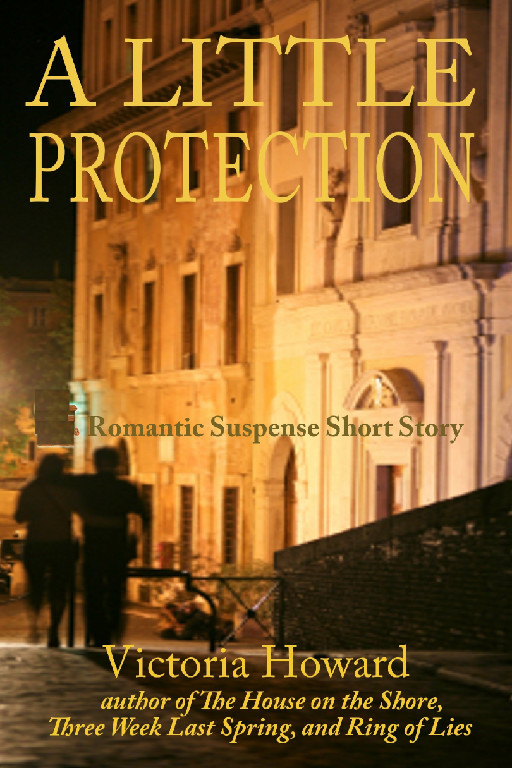
A Little Protection by Victoria Howard – Handsome Matt Hemmings meets scientist Alexa McAllistair at a conference on nuclear energy in Rome…and against his professional judgment, he is smitten. The vulnerable – and beautiful – scientist arouses his protective instincts, and the desire to kiss her senseless. And it’s more than evident that she feels the same way about him.

Paco’s Visions by Robert Hays – Paco has visions, and his most recent vision helps him believe in the power of love. For a twelve year old boy, it is a big revelation. He and his sister, Rosa, live with Mama Jan, in a rich man’s mansion on Sanibel Island. Will his vision become their reality?

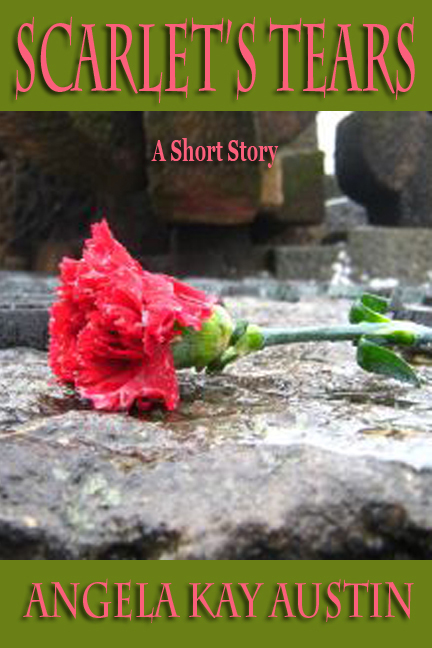
Scarlet’s Tears by Angela Kay Austin – When you lose everything you love, how are you supposed to believe it won’t happen again? The knife at her throat didn’t frighten Scarlet Anderson.  In fact, it was a relief.  Finally, she didn’t have to worry any longer about living another empty day.  She’d be reunited with the ones she loved. Joshua Davis had faced a lot of challenges in his life, his faith and the love of his family had seen him through his latest battles.  But, no person could help him, now.  How had he managed to fall in love with someone who’d stopped loving herself?  And what was he supposed to do?

Kindle Edition

Snow Pack to Delay Some Glacier Openings

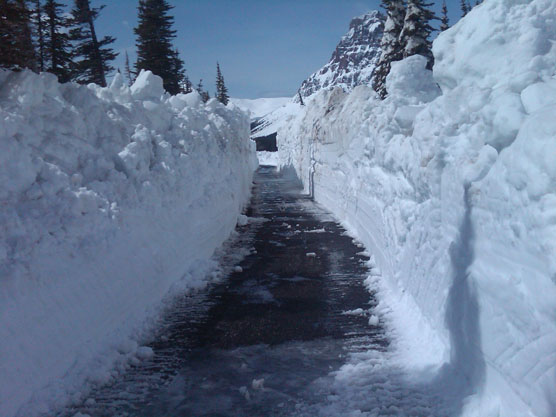
I couldn’t resist posting this great NPS Glacier photograph of the deep snow along the road to Swiftcurrent on Glacier’s east side. You can see part of Mt. Wilbur on the right side of the picture.

NPS Photo

from NPS Glacier:

Due to an unusually large,  lingering snowpack and cool temperatures, Glacier National Park officials announced delays in opening some east side campgrounds and the Swiftcurrent Motor Inn. The opening date of the Many Glacier, Cutbank and Two Medicine Campgrounds will be June 10th, instead of the usual Memorial Day Weekend opening date. The Swiftcurrent Motor Inn opening will also be delayed until June 10th rather than the previously anticipated June 3rd. Visitors with reservations at Swiftcurrent Motor Inn will be accommodated at other Glacier Park, Inc. properties. Park crews are working diligently to get facilities uncovered, water and wastewater services turned on, utilities repaired and roads dug out.  

A Glacier Park Novel