‘No Ordinary Time’ history conference set for Sept. 22-24

from the Montana Historical Society
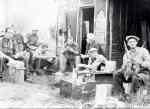
1942 "V for Victory" work party of Italian detainees

The Montana Historical Society presents the 38th annual history conference “No Ordinary Time: War, Resistance and the Montana Experience” in Missoula, September 22-24, 2011. For information, including a brochure and an online registration form, click here.

From the time of the First Peoples to the present day, conflict has always been part of the Montana story. Join us in Missoula for the 38th annual Montana History Conference where we will explore the role of warfare in traditional Native American culture, the contributions that Montanans have made to our nation’s wars, the impact that those wars had on life in the Treasure State, and the efforts of those who fought to resist armed conflict. In commemoration of the 70th anniversary of the United States’ entry into WWII, conference highlights will include sessions on, and a visit to, Fort Missoula, an internment camp for Italian detainees and Japanese-American citizens.

  • Unless otherwise noted, all events will be held at the DoubleTree by Hilton Missoula-Edgewater, 100 Madison St., Missoula.
  • Pre-conference opportunity: The Montana Preservation Alliance will be hosting its Preservation Excellence Awards Ceremony on Wednesday, September 21, 5:30 p.m., at the Florence Hotel, 111 N. Higgins Ave., Missoula. For more information visit http://www.preservemontana.org/or call 406.457.2822.
  • Post-conference tour: Fort Missoula. The tour will cover the fort’s colorful 134-year history while highlighting its ADC (Alien Detention Center) features and the two museums now located onsite.

As a long-time member of the Montana Historical Society, I received a brochure about this conference several days ago. I wish I could attend. What an exciting opportunity for teachers, students and historians who can make the trip.

Malcolm

99 cents

Malcolm R. Campbell is the author of the recently released Bears; Where they Fought: Life in Glacier Park’s Swiftcurrent Valley, a glimpse at the dramatic history of the most beautiful place on Earth. A Natural Wonderland… Amazing Animals… Early Pioneers…Native Peoples… A Great Flood… Kinnickinnick… Adventures… The Great Northern Railway.

“Give a month at least to this precious reserve.  The time will not be taken from the sum of your life. Instead of shortening, it will indefinitely lengthen it and will make you truly immortal. — John Muir, “Our National Parks,” 1901

Novel samplers – Examples of a writer’s work

1760 Sampler - Wikipedia

Students learning needlework used to demonstrate their skills in samplers that showed examples of what they could do. Traditional samplers included motifs, borders and alphabets in various kinds of stitches. Those of us who like chocolate see the same approach in the famous Whitman’s Samplers, the boxes of candy with a representative assortment of the company’s many varieties.

Vanilla Heart Publishing is taking the same approach to its novelists’ and short story writers’ work. The publisher is bringing together samples of a writer’s work in free PDF documents that can be easily downloaded and then sampled.

I like the idea. As publishing transitions from bricks and mortar bookstores to online bookstores that provide either paperbacks or e-books, it’s nice having a way to see what we’re buying before we click on the BUY button. In a neighborhood bookstore, you can pick up a book and see what it’s like, browsing, reading a bit here and a bit there. Amazon has addressed the issue of excerpts with its READ INSIDE service. Smashwords gives readers a free look at the first chapter or so of each book.

Malcolm's Sampler

The samplers, though, bring multiple works together in one document. My sampler, for example, includes examples of my Jock Stewart stories, excerpts from my two Glacier Park novels (“The Sun Singer” and “Garden of Heaven: an Odyssey”) and some of the lunacy from my satirical “Jock Stewart and the Missing Sea of Fire.”

I can’t demonstrate my skill with the many variations of chain stitches on a decorative square of fabric. But my publisher’s sampler brings a bit of humor, adventure, description, and excitement together in one file. In an e-book world, it’s a good way to get the feel for a book before you decide to put it on your Kindle or your Nook, or order the paperback version for your shelf.

Malcolm

You can find more novel samplers for Vanilla Heart Publishing’s authors here.

Zen and the Art of Editing

“When you seek it, you cannot find it.” — Zen Proverb

When editing and revising a novel in progress, I try not to seek anything. While I sometimes jot down things to consider, I don’t make lists of characters, events, dialogue snippets or internal monologues as I ponder the latest draft of my manuscript. If I do, I suddenly can’t see the forest for the trees.

Like a hiker on an unknown trail, I try to get a sense of the place–in this case, that place is the world created by the novel. Casually, I wonder: What is going on here? Who are these people? What do they want?

If I were to look too hard for specifics, it would blind me to what is missing, what could have been said, what might have been done. In many ways, I’m reading my manuscript the way I would read another author’s novel for the first time—with as few expectations as possible.

In my Sarabande’s Journey blog, I have been writing about some of the issues, symbols, motifs, and themes that are often found in a heroine’s journey story.  While my novel in progress, Sarabande, is a heroine’s journey, I do not read my manuscript looking for those issues, symbols, motifs and themes.

First, I need to internalize all of that before I begin writing; otherwise, the novel sounds like I’m simply pasting ideas into a story say, the way somebody might randomly use words in a language they don’t know in a conversation with a native speaker. Second, I don’t intend for my fiction to be a demonstration of the heroine’s journey theme or to explore everything that has been written, say, about women in a man’s world. The novel is a story before it’s anything else.

I know before I begin writing where my character is going and why. I know how the novel will end. I try to keep everything in between loose and flexible until I begin to write. Then, I go where the story carries me. When I edit and revise a manuscript, I try not to have a destination. I want to see where I am being carried by the currents and tides of the work. Editing this way is relaxing if you don’t fret about it.

Worrying about whether one ought to be doing one thing or another thing with the story doesn’t help the work. Actually, nothing helps the work more than staying out of the way of the story as much as possible. When I put on my editing hat, I’ll “fix” a lot of things and re-do a lot of things without being heavy handed.

Does this sound chaotic? Not at all. When you’re not actively looking for a result, the novel begins to edit itself.

Malcolm

Malcolm R. Campbell is the author of the recently released Bears; Where they Fought: Life in Glacier Park’s Swiftcurrent Valley, a glimpse at the dramatic history of the most beautiful place on Earth. A Natural Wonderland… Amazing Animals… Early Pioneers…Native Peoples… A Great Flood… Kinnickinnick… Adventures… The Great Northern Railway.

“Give a month at least to this precious reserve.  The time will not be taken from the sum of your life. Instead of shortening, it will indefinitely lengthen it and will make you truly immortal. — John Muir, “Our National Parks,” 1901

Where do writers go when they write?

When I’m working on a novel, I’m not really here in the real world. That’s what my wife tells me.

I’m variously not present, not listening, forgetful, zoned out, in limbo, or in a cocoon.  When I emerge—hopefully with a completed manuscript for a book that will no doubt soar to the top of the New York Times Bestseller list—I hear what I’ve missed:

  • The neighborhood was taken over by rogue ground squirrels.
  • Iran and Iraq both filled out the paperwork to become U.S. states.
  • Jennifer Lopez appeared at the front door in her new snakeskin blouse and miniskirt and asked if Malcolm could go library and museum hopping with her.
  • All the known planets lined up, creating some interesting birth charts and a few more predictions about the end of the world and/or the end of good taste.

My wife is always the first to know when I type the words THE END on a major draft of a manuscript. I’m like a man who’s just come home from the war, amnesia or prison. And trust me, I have a lot of catching up to do.

Meanwhile, as I typed the words THE END on the manuscript for my newest Glacier National Park novel, Sarabande, today I felt like a child on Christmas morning. Those are very exciting words for an author even though they don’t mean the book, much less the work, is done.

They are a new beginning. The manuscript is fine-tuned. An editor takes a serious look at it, weeding out all the misspelled words, punctuation glitches and any inconsistencies the author hasn’t discovered yet. Cover artwork and release dates are discussed.  And, as I wondered when The Sun Singer and Garden of Heaven were in their about-to-emerge-from-the-cocoon status, I thought how will readers react?

After an author lives inside his story for a while, missing J. Lo’s visit to the front door and the ground squirrels romping through the yard, he hopes readers will also enjoy losing themselves in the story as soon as it appears as an e-book and a paperback.

I don’t put a warning label on it, though. You’re on your own recognizance. If you zone out and miss exciting international events or important wedding anniveraries and birthdays, don’t call me. I’ll be zoned out in another universe.

Malcolm

Malcolm R. Campbell is the author of the recently released Bears; Where they Fought: Life in Glacier Park’s Swiftcurrent Valley, a glimpse at the dramatic history of the most beautiful place on Earth. A Natural Wonderland… Amazing Animals… Early Pioneers…Native Peoples… A Great Flood… Kinnickinnick… Adventures… The Great Northern Railway.

“Give a month at least to this precious reserve.  The time will not be taken from the sum of your life. Instead of shortening, it will indefinitely lengthen it and will make you truly immortal. — John Muir, “Our National Parks,” 1901

New Glacier Park E-Book Explores Swiftcurrent Valley

Swiftcurrent Valley two months ago - NPS photo

“The road up to Swift Current in its present condition has been known to make a preacher curse, and I have my opinion of the man who makes the trip over this road (!) without breaking the 3rd commandment or perhaps all ten of them.” — Dupuyer, Montana “Acantha,” March 3, 1900

Bears; Where They Fought: Life in Glacier Park’s Swiftcurrent Valley, a new e-book by Malcolm R. Campbell, steps back in time to the short-lived mining boom town of Altyn that prospectors and developers believed would be Montana’s great center of copper and gold mining.

Today, the remains of Altyn sit at the bottom of Lake Sherburne less than a mile from the present-day location of Many Glacier Hotel. Altyn came and went as did the two grizzly bears whose fight attracted the attention of a Piegan hunting party about 1860 and lent a long-forgotten place name that came out of one of the valley’s many stories.

The new e-book, from Vanilla Heart Publishing, looks at some of the valley’s other milestones between those long-ago fighting bears and, the hotel’s construction and development by the Great Northern Railway and the floods of 1964 and 1975.

After employees saved Many Glacier Hotel from the Heaven’s Peak Fire in 1936 and wired the Great Northern that the structure survived, the railroad sent a telegram back with the word “Why?” Though the railroad was beginning to doubt the viability of its Glacier Park holdings, they owned an operated Many Glacier and other hotels and chalets in the park for almost another 30 years.

The hotel was saved in 1936 and, since then, it’s become a National Register property and another enduring legacy of a valley that stretches far back into the past in the land of shining mountains. I first walked into the Swiftcurrent Valley in 1963. Since then, I’ve gone back many times. Bears: Where They Fought is my way of capturing the spirit of the most beautiful country on the planet.

Bears; Where They Fought is available for 99 cents on Kindle and in multiple e-book formats (including PDF) at Smashwords.

“On a quiet day, however, those walking alongside the relatively recent Lake Sherburne reservoir may hear the voice of grandfather rock whispering a secret: within the scope of geologic time, all rivers are new, and the men and women who follow them are as ephemeral as monarch butterflies on a summer afternoon.” — “Bears; Where They Fought”

Malcolm

Many Glacier Hotel Summer 2011 Restoration

Hotel Dining Room - David Restivo, NPS

Many Glacier Hotel, on the east side of Glacier National Park, Montana, will be running at 50% capacity this summer due to a massive restoration project. Check with the concessionaire, Glacier Park, Inc.,  for restoration updates as well as this summer’s late openings of Swiftcurrent Motor Inn and Rising Sun Motor Inn due to the heavy snow pack.

Hotel facilities impacted during the 2011 summer season include: 50% of the guest rooms, Annex 1, North Bridge, the main Dining Room, the Interlaken and Swiss Lounges, Kitchen, and Employee Dining Area.

Guests will be served meals in a modified dining room space since the kitchen will remain open during the project with regular menus and full services. Red bus tours, boating operations and the horse concession will not be impacted by the restoration.

According to Glacier Park, Inc., “There will be normal construction type noise in the northern half of the building during daytime hours. Early mornings, evenings, and weekends will be quiet. There should be limited noise in the lobby area and for guests staying overnight; there will be no construction noise in the wing where guest rooms are located.”

This phase of the restoration project is expected to be completed prior to the hotel’s opening for the 2012 summer season. Since future restoration work is planned and will be scheduled when funding is available, guests planning trips to Many Glacier Hotel in upcoming summers may wish to monitor the concessionaire’s website for room availability.

Malcolm, a former summer employee at Many Glacier Hotel and the author of two novels (“The Sun Singer” and “Garden of Heaven: an Odyssey”) partially set in the Swiftcurrent Valley

Western Books, Briefly Noted

“Forced to Abandon Our Fields: The 1914 Clay Southworth Gila River Pima Interviews” by David H. DeJong – 192 pages with eight photographs and three maps, March 31. 2011.

Publisher’s Description: During the nineteenth century, upstream diversions from the Gila River decreased the arable land on the Gila River Indian Reservation to only a few thousand acres. As a result the Pima Indians, primarily an agricultural people, fell into poverty. Many Pima farmers and leaders lamented this suffering and in 1914 the United States Indian Irrigation Service assigned a 33-year-old engineer named Clay “Charles” Southworth to oversee the Gila River adjudication. As part of that process, Southworth interviewed 34 Pima elders, thus putting a face on the depth of hardships facing many Indians in the late nineteenth century.

Reviewer’s Comment: “DeJong’s presentation of the oral interview transcripts is excellent. These interviews are a rich source of cultural and historical information about the Pimas.”—David Rich Lewis, Utah State University

“Montana Moments: History on the Go” by Ellen Baumlier – 200 pages, September 14, 2010, by the Montana Historical Society’s interpretative historian.

Publisher’s Description: Forget dreary dates and boring facts. Montana Moments distills the most funny, bizarre, and interesting stories from Montana’s history into pure entertainment. Meet the colorful cast of the famous and not-so-famous desperadoes, vigilantes, madams, and darned good men and women (and a few critters) who made the state’s history. You’ll get a laugh from the story of the transient vaudevillian who wrote Montana’s state song. Captain James C. Kerr’s tale of the Flathead Lake monster might make you shiver. No matter your reaction, the episodes recounted here always entertain. Best of all, each vignette takes about ninety seconds to read. So have fun exploring Montana – and enjoy a little history as you go.

Reviewer’s Comment: “The pages of Montana Moments overflow with enjoyable historical vignettes that cover nearly everything important that has happened in Montana’s history. Newcomers will find an excellent introduction to what makes Montana tick, while Baumler’s careful research and entertaining writing style will delight old timers.” — Harry Fritz, University of Montana

You may also like:

Montana’s Historical Highway Markers by Jon Axline and Glenda Clay Bradshaw

Montana Place Names from Alzada to Zortman by MHS Research Staff

Montana Native Plants and Early Peoples by Jeff Hart

–Malcolm


set in Glacier National Park


New STRAT Recording Released

Orlando, FL, PRLOGJun 07, 2011 – A recording of Dave Campbell (aka STRAT) performing his poem “only love”, was released this month and is available from lulu.com.  

Previous releases include the CD “big bad slam poet” which has a collection of 14 poems written and performed by Campbell and a book with the same name as the CD.   

Campbell, who died in 2008, won numerous poetry slams and rap battles.  He is known to many in the Orlando area arts community and beyond as a talented poet and hip hop artist.  He grew up in the Orlando area and refined his poetry and hip hop skills while working at various jobs.

Malcolm

Glacier Park Volunteer Opportunities

Glacier National Park relies on 50,000 hours of of volunteer help from over 500 individuals every year. You can find information about programs and requirements here. And, you can find an application form here.  There is a limited amount of no-cost housing for volunteers working 32 or more hours per week.

Volunteers, primarily for work between June and September, are needed in the following programs:

  • Nurturing Native Plants
  • Transit Center
  • Visitor Center
  • Interpretation
  • Campground Host
  • Citizen Science
  • Back Country Patrol
  • Aquatic Invasive Species
  • Headquarters Phone Volunteers
  • Group Projects

The Glacier Institute

The private nonprofit Glacier Institute offers educational programs and adventures within the park and the Flathead National Forest. Offerings include outdoor education courses, youth camps and the discovery school. According to the institute, “Volunteers are always appreciated at our field sites and include various duties such as assisting with educational programs and facility maintenance and cleaning.” Volunteer and staff position information can be found here.

Glacier National Park Fund

The Glacier National Park Fund was established in 1999 to conduct fund raising activities on behalf of the park. Their efforts support NPS and volunteer group projects such as the planned restoration of the Heaven’s Peak Fire Lookout.

For a list of events requiring Glacier Park Fund volunteers, click here. For a list of current projects for which the fund is raising money, click here.

Boy Scouts of America

Scouts volunteering in Glacier National Park dates back to the 1920s when Eagle Scounts helped create some of the park’s first trails. In 2010, both Glacier and the BSA celebrated their 100th birthdays; appropriately, the Scouts were volunteering again. Scouts, scout leaders, and parents who are interested in Glacier volunteer projects should contact the Nu-Ooh-Sa District for programs and information.

For information and volunteer needs throughout the nation’s 400 National Parks, click here. On the western site of the park, check with the North Fork Preservation Association for trail clearing and other opportunities.

Malcolm

Set partially in Glacier National Park

Summer Reading…as the LA Times Sees It

Can you hear the bandwagon, the buzz and the hype? All that sound and fury is the mad rush of newspapers, magazines and blogs to trot out their lists of the hottest, sexiest, and scariest summer reads for beach, boudoir and ballpark. Yes, there’s a lot to like. I have already found some “must reads” on the lists, including The Final Storm by Jeff Shaara and The Chieu Hoi Saloon by Michael Harris.

Yet, from my perspective, the LA Times doesn’t “get it.” Neither do most of the other summer reading lists bring disseminated by the older, well-established newspapers and magazines. What we have here is “old media” promoting “old media.” By that, I mean the traditional big boys in the fading world of print are promoting large, old media publishers as though the congomerates are the only game in town.

It’s been an elite club for years. Look at the names of the publishers on the LA Times’ list. You’ll be hard-pressed to find an independent and/or small press publisher in the group. You’ll find Scribner, W. W. Norton, Penguin, Random House, Knopf and William Morrow.

I’ll stipulate that even in a world where many old-line publishers are in trouble, where book stores are failing, and where e-books are overtaking print books in sales, most of the buzz and the books sold are still coming from the old-media conglomerate publishers. But that’s just the tip of the iceberg when it comes to reading opportunities.

Depending on those estimate you like, there are about 300 medium sized pubishers in the U.S. Most of them, much less the small publishers, never appear on the summer reads or the Christmas reads lists. (I was happily surprised to see a McSweeney’s book on the LA Times list.) But otherwise, what a shame, ignoring most of the publishers in the country.

New Pages features a fine list of Independent Publishers and University Presses here. The majority of the reading public either doesn’t know those publishers exist or inaccurately presumes the books coming from them are filled with footnotes and niche-market symbolism and weird experimental stuff. But take a look. See what you’ve been missing.

Alternative Selections

A Heaven of Others by Joshua Cohen from Dzanc Books.

Knuckleheads by Jeff Hass from Dzanc Books.

Bogmeadow’s Wish by Terry Kay from Mercer University Press.

The Coffins of Little Hope by Timothy Schaffert from Unbridled Books.

Scorpion Bay by Michael Murphy from Second Wind Publishing.

Light Bringer by Pat Bertram from Second Wind Publishing.

Hyphema by Chelle Cordero from Vanilla Heart Publishing.

Maze in Blue by Debra H. Goldstein from Chalet Publishers.

These books ought to be enough to get you started this summer.

Malcolm

Jock Talks…The Collection combines four e-books in one for only $3.99.

Jock Stewart, who refutes charges that he was raised either by alligators or hyenas, believes that modern-day journalism would be going to hell in a hand basket if hand baskets were still readily available. He has chosen to make his stand for old-fashioned reporting at the Junction City Star-Gazer, a newspaper that—while run by fools and buffoons—knows the difference between real news and “stuff that sounds like real news.”