I look forward to my yearly calendars from the Montana Historical Society that come as part of my membership. They are filled with western scenes from the society’s photographic collection. Calendars are 8.5 x 11 inches and feature black and white photography.
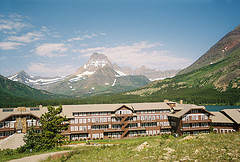
The front of the 2012 calendar features a historic photo of Mt. Wilbur and Swiftcurrent Lake from Glacier National Park. If you love western history, you can join the MHS by calling 406-444-2918 or heading out to their website at www.montanahistoricalsociety.0rg. Memberships are $55 per year and include a subscription to the quarterly Montana The Magazine of Western History. Or, you can buy the calendar alone for $8.50, order from the museum store.
Maybe the 2012 calendar will inspire me to get started on my next novel set in Glacier National Park. Maybe it will inspire you to think of wild places in the Rocky Mountains.
–
Ledger Art by Curly, Crow - MHS
New Museum Exhibits: Two exhibits open tonight (December 1, 2011) from 6-8 p.m. at the Montana Historical Society’s museum at 225 North Roberts in Helena, The Art of Story Telling: Plains Indian Perspectives and Mapping Montana: Two Centuries of Cartography. Wish I could be there.
The drawing pictured here is an example of “ledger art,” a transitional approach to recording stories and events by plains Indian nations between 1860 and 1900 as artists switched from the traditional paints and hides to ledger paper with crayon, colored pencils and water colors. The new exhibit will include the Walter Bone Shirt ledger book, on loan to the society.
According to the Plains Indian Ledger art Project, “Changes in the content of pictographic art, the rapid adjustment of Plains artists to the relatively small size of a sheet of ledger paper, and the wealth of detail possible with new coloring materials, marks Plains ledger drawings as a new form of Native American art.” For more information about ledger art, click here.
“A long time ago there lived a poor woodsman. One day he was walking in the forest when a man came out of the trees and hailed him. ‘Good day,’ the man said. ‘And how are you doing today?’
“‘Very poorly,’ the woodsman said. ‘My family and I have not eaten for three days, and if I do not find food for them soon I fear we will all die.’
“‘I can help you,’ the man said. ‘But you must promise to give me the first thing you see when you return home today.'”
All long-time readers of fairy tales are familiar with stories that begin like this, or similar to this, and they all involve people who are down on their luck who are mysteriously offered a great boon. The boon isn’t free because it involves a bargain that may change the lives of a family throughout time forever.
Just stories, of course, with morals in them about getting something for nothing, being too quick to give away something not clearly specified, and trusting anything that happens at crossroads, boundaries and other undertain places.
In Lisa Goldstein’s wonderful contemporary fantasy “The Uncertain Places,” protagonist Will Taylor looks back on the events that occurred after his college roommate Ben introduced him to Livvy Feierabend in 1971. Will is smitten with Livvy; Ben is smitten with Livvy’s sister Maddie. Livvy and Maddie live with their mother Sylvie and younger sister Rose in an odd and rambling house in the Napa Valley.
Will notices on his first trip to Napa that Sylvie is rather scattered. On subsequent visits, it becomes more and more obvious that the house and the family are, in ways that cannot be pinned down, also scattered as though they aren’t quite living in the here and now, or that if they are present in the here and now, that the line between the family’s house and vineyard on one hand and their secrets on the other hand is not altogether well defined.
Will and Ben slowly discover that stories they always believed were “just stories” might be more than that. How exactly did the Brothers Grimm come by old fairytales about woodsmen and witches in their famous books of “Children’s Tales” published in multiple editions beginning in 1812? Growing up, the Feierabend sisters were not allowed to read fairytales. How odd. But Will finds out why, and that “why” has to do with the kinds of fortune and fate that befall those who find themselves confronted by friendly helpers in the uncertain places.
The consequences of decisions made in such places are forever. There’s good fortune, to be sure. But it comes at a price, one that Will doesn’t want Livvy to pay. All of this happened in California during the rather abnormal times of the 1960s and early 1970s, and Will narrates the events that followed the weekend when he became smitten with Livvy Feierabend as though he’s telling a fairytale that contains fairy tales.
Will’s telling of the story is one of the novel’s greatest strengths, but also a lingering weakness. Looking back, as he is, Will places Ben, Livvy, Rose, Maddie and Sylvie into the world of “once upon a time,” and this adds to the ephemeral nature of “The Uncertain Places.” The Feierabend sisters’ world is vague in all the secret ways magic and boundary areas are vague, and that makes them all the more plausible and delightful.
The flasback structure of the novel also blurs the impact of the story because there periods of normal reality in between the odd events Will is telling us about. Readers who are more accustomed to constantly forward-moving plot might say, “get back to the story.” While these gaps filled with normacy are not large, they are somewhat distracting.
Nonetheless, the novel sparkles like stars and faerie lights in the woods and old secrets on the cusp of revelation, and is highly recommended for all lovers of fantasy whose ancestors didn’t make long-term bargains with those they met in uncertain places.
We remember some friends because they tell lame jokes and other friends because they’re guilty of non-stop puns. Perhaps these traits have little or nothing to do with these folks’ jobs, causes, abilities as parents, or the heroic deeds they may perform. Yet, they are one of the ways we know them.
A sense of humor, or the inadvertent habit of doing funny or odd things, can also help readers get to know your characters in a novel or short story.
For example, in my contemporary fantasy novel The Sun Singer, my fiery red-headed character Cinnabar’s favorite phrase is “Holy Bear Puke” and the blustery blacksmith in charge of weapons constantly misuses everyday words. Such traits become “signature traits,” rather like the theme songs that accompany characters in movies. They not only make the characters three-dimensional, but are like comfort food to readers whenever the humor repeats itself randomly through a story.
I thought of the beauty of humor—as a character trait and as a way of suddenly lightening up the tone of a fast-paced or frightening story—when I found veteran author Lisa Goldstein using it in her fantasy The Uncertain Places to show us “something extra” about protagonist Will Taylor and his long-time friend Ben Avery.
As with many people who’ve known each other since childhood, they’ve developed their own brand of wild-and-crazy repartee. The humor is part of who they are, and Goldstein uses it to good advantage in developing these characters.
For example, Goldstein drops this old Will-and-Ben riff into a dinner-table conversation:
“Will and I are thinking about writing a movie,” Ben said. “It’s called ‘Theater Closed for Repairs.'”
We’d told this joke before, of course. It was one of the routines we did, our two-man band. People either got it or told us we were idiots. This time Livvy and Maddie laughed, though Mrs. Feierabend looked a little confused.
I like this because it defines everyone at the table. It’s not only typical Will and Ben, but includes the kinds of reactions the reader is coming to expect from Livvy, Maddie, and their mother. Also, Goldstein doesn’t belabor the joke. Some readers won’t get it. Some will smile and move on. Others (like me) will stop and ponder the beauty of the words THEATER CLOSED FOR REPAIRS on a marquee while wondering about the reactions of passersby.
Set in 1971, The Uncertain Places makes frequent counter-culture references. Maddie, for example mentions marching in a protest parade with a group called the Young Socialist Alliance, leading to this exchange with Will:
“Wait a minute,” I said.”You’re a Trotskyite!”
“Trotskyist,” Maddie said. “Yeah, what about it?”
I knew she had radical politics, but I’d had no idea. To me, Trotskyists were like Cubs fans—their team was never going to win, but you had to admiore their loyalty.
Since my mother was a Cubs fan, I have to smile at this, not to mention knowing full well what her (and any other Cubs fan’s) reaction to such a comment would be. Will and Maddie’s conversation occurs on page 34 of the book, but even this early in the story, everything about it is so typical of both Will and Maddie, that I nod as I read it, and think, “Yes, that’s the kind of thing Maddie would say and the kind of thing Will would think—but leave unsaid.”
I’m getting to know and care about the characters of the book, partly because the there are a lot of strange things going on in the Feierabend household and Will, with some help from Ben, is trying to figure out the mystery. The humor doesn’t move the plot forward, but it is a wonderful part of the author’s character development.
A Word of Caution
As you consider using a bit of humor to develop the characters in your stories, a word of caution. The humor needs to fit the character. It needs to be just what the reader would expect from him or her. Mrs. Feierabend never would come up with the THEATER CLOSED FOR REPAIRS gag any more than she would burst forth with a string old genie jokes or flirty stories filled with sexual innendos. She’s not that kind of person.
My thought is: make the humor fit and don’t run it into the ground turning it into the kind of flaw in the story reviewers like to point out. A quick laugh, and then get on with the plot.
Holding Each Elephant’s Tail: Voices from the Iraq and Afghanistan Wars
The Missouri Warrior Writers Project, in partnership with the Missouri Humanities Council, is pleased to announce a contest and call for submissions for its national anthology of writing by veterans and active military service personnel of Afghanistan and Iraq about their wartime experience. This experience includes deployments and those who have never been deployed. Transition back into civilian life is also a topic of interest for this anthology. The contest will award 250.00 each to the top entries in poetry, fiction, and creative nonfiction. All entries will be considered for publication in the anthology. There is no entry fee. Guidelines are listed below:
-Prose limited to 5000 words. Up to 3 poems (max 5 pages). Submissions that exceed these limits will be disqualified.
– Deadline December 30, 2011. Winners will be announced by April 1, 2012.
– There is no entry fee for submission, but submissions must be limited to one per person per genera
– Manuscripts must be submitted electronically as a Microsoft Word document. (Save with a *.doc extension). Please combine all poems into one document and use first poem as title. Send to: submissions@mowarriorwriters.com
-Put your name and contact information on the first page of your submission document and nowhere else within the manuscript.
-Please include a brief (75 words or less) bio with your submission.
-Work previously published will be considered, but new work is preferred.
-Simultaneous submissions are permitted, but we ask that you notify us immediately if your work is accepted elsewhere. (This will avoid potentially awkward situations.)
-Southeast Missouri State University Press acquires first-time North American rights for previously unpublished work. After publication, all rights revert to the author and the work may be reprinted as long as appropriate acknowledgement to the anthology is made. All entries will be considered for publication.
JUDGES: Brian Turner, poetry. Mark Bowden, nonfiction. William Pancoast, fiction.
The anthology will be released on Armed Forces Day, 2012.
Contact submissions@mowarriorwriters.com for additional information
–
What a great project and a wonderful idea for an anthology.
I like finding fantasy from small presses. One place I check regularly is the “Small Press Bookwatch” on the Midwest Book Review site. Their capsule reviews give bookstore owners and readers a quick look at each book along with the name of the publisher and the publisher’s web site. The following recently reviewed books are all available on Amazon. Click the book covers for the links.
The Guardians of Time by Damian Lawrence
Kirkus: This is a compelling, detailed read, and one that offers its audience something solid to chew on. Lawrence does a masterful job of drawing readers into his fully realized, morally complex vision of the future.
Midwest: When the world is out of time, anything to buy some would be very much welcomed. “The Guardians of Time” is a fantasy by Damian Lawrence as he constructs a tale of the world on the brink of destruction faced with the environment revolting. With the assistance of time travel, Mark Lawson tries to buy the world much more but in the process may only expedite the process. Blending the history of Greece into a tale of balance, “The Guardians of Time” is a choice and much recommended read for fantasy readers.
Remember Me To Paradise by Amy J. Benesch
Publisher: A Shapeshifter from a planet known as Paradise, comes to Earth on a mission to rescue other Shapeshifters who may have become trapped in Earth shapes and are unable to return to their home planet. During his time on Earth the Shapeshifter becomes a dog, a duck, a pigeon, a human male, and a human female. It is as a human female that the Shapeshifter begins to forget his true identity. Although her dreams terrify her (she can’t understand why she dreams of flying and of making love to women), she keeps working to put the pieces of the puzzle together and recover her memory, although with each passing day she becomes more identified with her current shape and less likely to believe the truth of who she really is.
Midwest: It is hard to remember what we truly are at times. “Remember Me to Paradise” is a fantasy telling of Shapeshifters and their efforts to return to their home planet of Paradise. Trapped in earthly forms with little memory of their true identity, they feel disconnected as humans and must slowly come to terms with their true nature. “Remember Me to Paradise” is a fun and much recommended pick for fantasy collections.
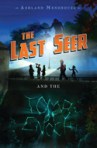
The Last Seer and the Tomb of Enoch by Ashland Menshouse
Publisher: Aubrey Taylor’s quaint and cozy life in the subdued, Appalachian town of Lake Julian had never been exceptional. Shouldered by his lifelong friends, Buzz Reiselstein and Rodriqa Auerbach, he quietly endured the puerile punishments of a persistent pack of pesky bullies that included the most-feared kid in school, Magnos Strumgarten, and his own obnoxiously, well-accomplished brother, Gaetan. Comfortable in his humdrum niche of the absolutely average, Aubrey never pushed back. Until…fate dug a little too deep…and the unseen darkness of unspoken places rattled his mediocrity. When spurious specters and elusive mountain men battle for a tomb of Watchers, buried in ages past, only those who choose to look beyond the surface feel the grip of the ancients’ revenge. Unusual disappearances, a colorful cadre of insightful townsfolk and a whirlwind of blunders and mishaps exposes the struggling forces that transform Aubrey and his friends into more than spectators amidst the oldest war of all.
Midwest: Trapped in a conflict of time, the world struggles to squeak through. “The Last Seer and the Tomb of Enoch” is a science fiction and fantasy epic from Ashland Menshouse as he spins a tale of angels and watchers looking over the fate of the world as our traditional world is torn apart by its march to the future and the pull of the past legends and mythology. “The Last Seer and the Tomb of Enoch” is an excellent pick for fiction fans looking for a massive overreaching and unique tale, highly recommended.
Finding Magic by Ray Rhamey
Publisher: Annie is a gifted healer in the Hidden Clans, descendants of a Celtic ancestress with a genetic inheritance of mental abilities that enable them to do magical things. She can slow aging, cure disease, heal a heart from the inside . . . or crush an enemy’s as it beats. They hide to escape persecution that has haunted them through the ages, and they’ve moved safely among us since the Salem witch trials. But a Homeland Security agent penetrates Annie’s disguise, and she’s forced to flee. On the run as a suspected terrorist, Annie is desperate to protect her kin from discovery. Then a greater threat arises when a clansman bent on avenging the murder of his son creates an unstoppable killer plague. Annie is the only hope for billions of people . . . if she can evade capture. With high-stakes conflict and human drama, Finding Magic explores loss, prejudice, family, and the human magic within each of us.
Midwest: When something is not understood, it is feared. “Finding Magic” follows Annie, the latest in a long line of a priestess clan with the power to save or destroy lives. When a government agent finds that her clan has this power, she finds her people under the gun as terrorists, and with the outbreak a new plague that could end humanity, she finds that more than ever she must live and be free or else there will be nothing to protect. “Finding Magic” is a riveting work of modern fantasy, highly recommended.
Bridge at West Glacier - Photo by Mel Ruder, who later won a Pulitzer Prize for his coverage of the flood. See also his book "Pictures, a Park & a Pulitzer"
“When torrential rains poured on top of a heavy mountain snowpack on June 8-9, 1964, it caused, by some measures, one of the most powerful flash floods in the United States during the 20th century.” — Daily Inter Lake
When I returned to Many Glacier Hotel in late May of 1964 for another summer of work as a bellman, porter and houseman, I looked forward to meeting returning friends from the 1963 season, adding to my growing list of hikes taken and mountains climbed, and simply enjoying three and a half months in the land known as The Shining Mountains.
Those of us who arrived before the seaon began were there to clean, unpack, set-up and get the hotel ready for the new season after it had been dormant during the fall, winter and spring months.
Flooded Valley
Mother Nature had other ideas: the Montana Flood of 1964. While Glacier Park was cut off from the rest of the world, Many Glacier Hotel was cut off from the rest of the park: the only road into Swiftcurrent Valley was washed out. As we raced to save the furniture in the lake level rooms and then began cleaning up the mess when the water receded back into Swiftcurrent Lake, we didn’t know at the outset just how widespread the flood was.
According to the Daily Inter Lake, “More than 20 miles of U.S. 2 were damaged or destroyed, along with six miles of Great Northern track. A section of Blankenship Bridge collapsed Monday night and the bridge at West Glacier buckled. The eastern half of the Old Red Bridge in Columbia Falls also washed away, together with three homes; another 50 homes south and east of town were flooded.” Damages were estimated at $63 million ($438 million in today’s dollars) as “At least 28 people died and more than 2,200 homes and buildings were damaged or destroyed in seven counties and a dozen communities in Montana.”
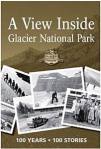
I wrote about the flood in an essay that appeared in the National Park Service’s Glacier Park Centennial book, 100 YEARS – 100 STORIES. That essay is a short, factual account that focuses on the hotel itself. While I changed the names for my account of the flood in Garden of Heaven: an Odyssey, the true details in my novel present a larger account of the flood, as shown in this excerpt:
“They follow him down through the rain into the lobby. Jed and James, the professional staff, are in the lobby already, haggard automatons, barely recognizable in old clothes, bathed in the unreal glow of flames from the stone fireplace. The power is out, the phones are out, the road is out, the water is out, except for the lake which is a living creature in the hallway at the bottom of the stairwell. David is in this hall with others of the skeleton crew who came to the hotel several weeks ago to shake out the winter cobwebs before opening day of the 1964 season. They rescue braided rugs, heavy when wet, and beds, dressers, mattresses, chests of drawers, pictures off the walls, the piano from the stage in the St. Moritz room. Jed won’t allow anyone to work downstairs for more than a few minutes at a time because the water is cold. He orders them upstairs to be wrapped up tight in blankets and force-fed coffee from the makeshift lobby kitchen. They are constructing history already, reports are coming in, well-intentioned and half true, that hotels, towns, roads, bridges, livestock, dams, railroad tracks, families whose faces we will see later in the newspapers, are out, down, broken, undercut, missing, rent, ruined, swept away.
Storm over Mt. Wilbur - M. R. Campbell photo
“As June 8th flows into June 9th and June 9th flows into June 10th, a discovery is made, and that is that mortal men have no meaningful words left for describing the scope of this event. They’ve already spent their words on small things. In a story headlined ‘NATURE TURNS OUTLAW,’ a Missoulian reporter writes that ‘Natural disaster brings a terror like the terror of a mob: Destructive, terrifying, unpredictable, inexorable, and heartless.’
“It came down to lists. Adjectives, acres flooded, bridges out, dams compromised, dollars in damages, head of cattle drowned, homes lost, miles of track torn away, miles of road destroyed, people killed or missing or homeless, power and phone lines down, rivers rising and falling, towns under water, visits by government officials.
“The Hungry Horse News prints lists of names. The paper ‘would appreciate any further information.’ He reads the names again and again: he knows so many of them. Sam keeps a list of towns. Nobody knows where he gets his information, though it’s probably KOFI and KGEZ radio in Kalispell, and random reports. He posts the lists behind the lobby information desk and makes entries with a black laundry marker every hour.
“‘It reads like a list of war dead, don’t you know,’ he tells David. St. Mary, East Glacier, West Glacier, Pendroy, Simms, Sun River, Fort Shaw, Fairfield, Big Fork, Whitefish, Lowery, Great Falls, Augusta, Choteau, Loma, Browning, Dupuyer, Babb, Ft. Benton, Kalispell, Essex, Nyack, Columbia Falls, Polebridge, Missoula, Deer Lodge, Plains, Butte, Conrad, Lincoln, Shelby.
“An alphabet soup of agencies and organisations is mobilized. ASC, BIA, BLM, BPR, BUREC, DHEW, FEC, FHA, NFS, NPS, MPC, OEP, PP&L, SBA, USDA, in addition to the Army, Air Force, and Red Cross.
“Anecdotes serve when the lists grow old.
“Prior to the flood, the BIA was studying drought conditions on the Blackfeet Indian Reservation. After the flood, the Indians don’t lose their wry sense of humour. They tell the BIA rep that his medicine was too strong.
“A man finds an overturned boat in his back yard; a woman finds a bridge. Owners please claim.
“Grateful that his son who was vacationing in the mountains is unharmed, a Louisiana man sends a check to help pay for the flood damage.
“The guys working on a dike along the Clark Fork down in Missoula are shooting rattlesnakes by the dozen.
“A GNRR lineman slips off a pole into the rising waters of the Flathead over in Bad Rock Canyon and is rescued through the combined efforts of a fellow lineman, a boat crew, and an Air Force helicopter.
“A truck on Central Avenue attempts to outrun the flooding Sun River and is abandoned as the water climbs up to the bottom of the windshield. Trees shoot through a bridge on the west side of the divide like giant arrows.
“Near Plains, an Associated Press photographer takes a picture of a sopping wet bunny floating down the river on a plank of wood.
“The lake level rooms in the hotel are an explosion of mud. Cleanup and repair crews work past meals, work past sleep, and hone the stories they will tell the employees who have been put up at other hotels until the roads are open.
“David and Al are the designated water carriers. An artesian well near the caretaker’s cabin is the only uncontaminated source. Water for toilet tanks and the cleanup crews goes into old garbage cans, water for cooking and drinking goes into new garbage cans, hauled in the red Thames van to multiple sites—hotel, camp store, cabins, dorms—day after day until their unvarying route is a deep channel carved into consciousness and time, until they are more river than men.
“The county health department flies a nurse to the isolated compound in a helicopter. She brings messages from the outside and enough typhoid serum to go around.
“During a lunch break, David drives the Thames downriver to the curve where the road is cut. He takes pictures but they explain little.”
In real life, I was too busy to take photographs inside or outside Many Glacier Hotel. I wish I had some even though, as that fictionalized version of me says in the novel, they would explain little. Even so, after the hotel opened (a bit late), those pictures would be part the story about Many Glacier Hotel in 1964.
Malcolm R. Campbell is the author of three novels set in Glacier National Park, including the recently released contemporary fantasy “Sarabande” available on Kindle.
In June, the management of Many Glacier Hotel in Glacier National Park figures out a way to pose the entire staff in front of a photographer for the summer picture. I no longer remember how many takes it took to make the photographer happy. And, though I thought I would always remember the names, home towns, and colleges of all the students in this picture, the details have long since become hazy.
We came from all around the country during the last week in May and spent the summer in the fantasy land of the Swiftcurrent Valley working as cooks, waiters, desk clerks and bellmen until mid-September. A lot of us came back the following summer, and some the summer after that, as has been the custom with the concessionaire’s summer help since the days when the Great Northern Railway (now, BNSF) owned and managed the facility.
For a Florida boy who had always wanted to see the mountains, Glacier Park’s horn-shaped mountains, stair-step valleys, cool summer nights, and old Swiss-style hotels were a fantasy land in spite of the hard work. We carried luggage, cleared dining room tables, mopped the floors, made the beds, and told guests yarns about the mountains.
Our summer included bridge games, long hikes, fresh fish, romances, twisted ankles, mountain climbing, boating, broken hearts and a lot of pictures more personal than this old black and white that doesn’t quite fit on my scanner.
I studied writing in high school and college and the craft I learned there was well worth the time. While I spent less time in the park, my total of seven months there over the span of several summers shaped my life and work more than any college course. Perhaps I was more impressionable than most or perhaps it is a writer’s natural focus on experience that has made this place loom larger than life.
For a writer, time neither steals away old joys nor heals old wounds, and I came away from the park with my fair share of both. For better or worse, they have sustained me and defined my outlook, while becoming the setting for my magical realism (Mountain Song) novel and two contemporary fantasies (The Sun Singer and Sarabande).
Virginia Woolf once wrote that all of a writer’s secrets loom large in his work. I think that might be true because this setting impacted me just as much as Hogwarts impacted Harry Potter and “The Land” impacted Thomas Covenant. So it is that this faraway place flows out onto the page in my storytelling as a true love of mountains, wildflowers, bears and all the events that did happen or might have happened in the shining mountains.
Malcolm R. Campbell is the author of paranormal short stories and contemporary fantasy adventure novels, including “The Sun Singer,” and “Sarabande,” both of which are set in Glacier National Park.
“Aquatic Invasive Species (AIS) are aquatic and terrestrial organisms and plants that have been introduced into new ecosystems (i.e. Great Lakes, San Francisco Bay, Florida, Hawaii) throughout the United States and the world and are both harming the natural resources in these ecosystems and threatening the human use of these resources. AIS are also considered to be ‘nuisance’ species or ‘exotic’ species and the terms are often used interchangeably.” NOAA Research
from NPS Glacier National Park:
Glacier National Park personnel performed almost 1,300 boat inspections during this past summer intended to reduce the risk of unintentional movement of aquatic invasive species (AIS) into park waters.
New Zealand mud snails - Nature Conservancy photo
“We put a lot of energy and resources into this program, but realize this is just the beginning of a long-term effort to protect the pristine waters of Glacier National Park and the Crown of the Continent Ecosystem against the devastating effects of aquatic invasive species,” said Glacier National Park Superintendent Chas Cartwright.
Glacier National Park contains the headwaters of three continental-scale watersheds. An infestation would pose a serious threat to all downstream waterways.
In 2010 the park initiated a boat inspection and permit program that required all motorized boats users to obtain a boat-launch permit prior to launching in any water body within the park. Inspections were only focused on boats believed to pose a high risk of transport of aquatic invasive species to park waters. The program also included an educational awareness component.
In May of this year, the park began an expanded boat inspection and permit program in response to an increasing threat of aquatic invasive species, which required an inspection and permit for all boaters. A free permit is required to launch any motorized or trailered watercraft in Glacier National Park. Hand-propelled water craft and personal flotation devices such as float tubes do not require a permit at this time. After an inspection of the watercraft indicates no signs of aquatic invasive species present, a launch permit will be issued. Boats must be clean, drained and thoroughly dry, including the bilge areas and livewells, upon inspection. A new permit is required upon each entry into the park.
From January to the beginning of October, 1,257 boats were inspected in the park. Six boats were denied launch permits for a variety of reasons, including that some that were not clean enough to properly inspect. No aquatic invasive species were found. The majority of the inspections were boats launching in Lake McDonald. Approximately 88% of the boats were registered from Montana with the remainder coming from 18 states and two Canadian Provinces.
Park visitors planning to launch a boat into any park waters throughout the winter are encouraged to call the park at 406-888-7801 to arrange for an inspection. Launching a boat without an inspection in Glacier National Park threatens park resources and is illegal, with a fine up to $500. Waterton Lakes National Park also has a boat inspection program.
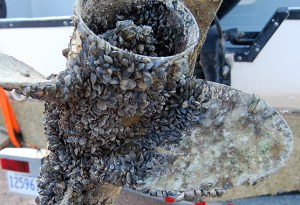
Cartwright said, “Trailered boats with mussels attached to the boat and/or the trailer have been detected in Montana, as well as some aquatic invasive plants in local waters recently. This is a serious threat and we must be proactive to reduce any risk.”
Park managers and specialists recently met with Glen Canyon Recreation Area representatives to learn and share ideas on additional prevention measures, and to develop a response plan if something is detected in the area. Glacier National Park is also cooperating with other federal, state and local agencies and organizations, and Parks Canada to protect the lakes, rivers and streams of Montana.
Cartwright conveys his appreciation to park visitors for helping maintain the pristine waters in Glacier National Park by complying with the boat inspection and permit program.
Aquatic Invasive Species Threats to Glacier – NPS AIS “Resource Bulletin in PDF format that includes information about non-native species already in the park as well as “what’s on the way.” Primary threats include: Zebra mussels/quagga mussels, New Zealand mud snails, Eurasian watermilfoil and Purple loosestrife.
Glacier Park Volunteer Opportunities includes information about specific opportunities for volunteers, including work in the Aquatic Invasive Species program.
Malcolm R. Campbell is the author of three novels set in Glacier National Park, including the recently released contemporary fantasy “Sarabande” available on Kindle.
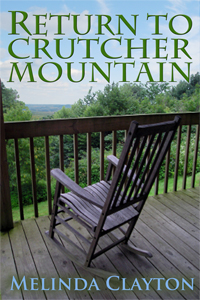
Vanilla Heart Publishing and author Melinda Clayton are extending their donation period to benefit the Tipton County Adult Developmental Center of Covington, Tennessee. All sales of Clayton’s novel, Return to Crutcher Mountain, print and electronic, will earn a donation to the center, direct from VHP and Clayton. The TCADC fundraiser began in October.
Clayton wrote in her blog that, “TCADC currently serves seventeen adults with physical and/or developmental disabilities. As in all human service fields, money is a constant concern. TCADC operates on a shoestring budget, with a payroll of less than $100,000 for a staff of six. As a professional in the field of mental health and developmental disabilities, I hold centers such as TCADC near to my heart. As Sam’s sister, I am forever indebted to them for the services they provide my brother.”
Return to Crutcher Mountain – Publisher’s Description
Jessie is a success, at least by all outward appearances. She’s helped establish a wilderness retreat for special needs children on top of Crutcher Mountain. Everything has come together beautifully, until a series of strange events threatens to shut down the operation. Unsure what to expect, Jessie returns to West Virginia in search of answers and finds more than she bargained for.
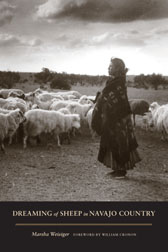
Dreaming of Sheep in Navajo Country, by Marsha L. Weisiger, Foreword by William Cronon, paperback (University of Washington Press, October 25, 2011), 418 pages.
From the Publisher: Dreaming of Sheep in Navajo Country offers a fresh interpretation of the history of Navajo (Diné) pastoralism. The dramatic reduction of livestock on the Navajo Reservation in the 1930s – when hundreds of thousands of sheep, goats, and horses were killed – was an ambitious attempt by the federal government to eliminate overgrazing on an arid landscape and to better the lives of the people who lived there. Instead, the policy was a disaster, resulting in the loss of livelihood for Navajos – especially women, the primary owners and tenders of the animals – without significant improvement of the grazing lands.
Awards: Winner of the Hal K. Rothman Award, the Norris and Carol Hundley Prize, the Caroline Bancroft Honor Prize, and the Gaspar Perez de Villagra Award
From the Reviewers: “While past accounts have either emphasized the view of the New Dealers or the Dine, Marsha Weisiger uses both fresh and refreshed data, adds layers of gender and ecological analyses, and brings a variety of interpretive lenses to this history. . . . Her work is the most comprehensive examination of this episode to date, and her use of interdisciplinary techniques to see an issue from a multitude of perspectives makes this book a new model for environmental history.” – Agricultural History
Contents
FOREWORD: Sheep Are Good to Think With / William Cronon
Preface
Acknowledgments
PROLOGUE: A View from Sheep Springs
PART 1: FAULT LINES
1. Counting Sheep
2. Range Wars
PART 2: BEDROCK
3. With Our Sheep We Were Created
4. A Woman’s Place
PART 3: TERRA FIRMA
5. Herding Sheep
6. Hoofed Locusts
PART 4: EROSION
7. Mourning Livestock
8. Drawing Lines on a Map
9. Making Memories
 I look forward to my yearly calendars from the Montana Historical Society that come as part of my membership. They are filled with western scenes from the society’s photographic collection. Calendars are 8.5 x 11 inches and feature black and white photography.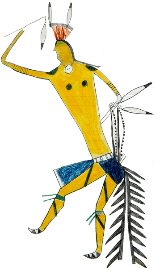









 Malcolm's Round Table
