Glacier Park Fund’s “Spring for Glacier”

The Glacier Park Fund’s “Spring for Glacier” is a annual  fundraising event benefiting Glacier National Park’s four non-profit partners. It features local silent auction items and live auction art from several well known artists.  Lodging is also available at a special rate for the event night only – at both the Belton Chalet and Lake McDonald Lodge.

If I didn’t live on the far side of the country, I would definitely put on some railroad man clothes and show up for this event. For more information, click on the invitation graphic here:

Malcolm

Three out of four of Malcolm R. Campbell’s contemporary fantasy novels are set in the park, including the recent heroine’s journey “Sarabande”

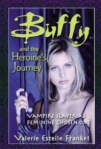
Briefly Noted: ‘Buffy and the Heroine’s Journey’ by Valerie Estelle Frankel

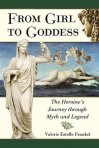
In February 20121, McFarland released a new book for authors and readers interested in the heroine’s journey in fiction and myth and for fans of the Buffy the Vampire Slayer movie (1992) and the subsequent television series (1997 – 2003).  A well-researched book, Buffy and the Heroine’s Journey is a natural extension of Valerie Frankel’s work in From Girl to Goddess: The Heroine’s Journey through Myth (McFarland, 2010).

On her website, Frankel writes that “Though scholars often place heroine tales on Campbell’s hero’s journey point by point, the girl has always had a notably different journey than the boy. She quests to rescue her loved ones, not destroy the tyrant as Harry Potter or Luke Skywalker does. The heroine’s friends augment her natural feminine insight with masculine rationality and order, while her lover is a shapeshifting monster of the magical world—a frog prince or beast-husband (or two-faced vampire!). The epic heroine wields a magic charm or prophetic mirror, not a sword. And she destroys murderers and their undead servants as the champion of life. As she struggles against the Patriarchy—the distant or unloving father—she grows into someone who creates her own destiny.”

A new era in film and fiction for three-dimensional female action characters?

Frankel’s new book appears at a time when readers, authors and reviewers are discussing whether or not Lisbeth Salander (in Stieg Larsson’s Millennium series) and Katniss (in Suzanne Collins’ The Hunger Games series) represent a positive trend in the development of female protagonists that are more than male-gaze eye candy. That is, can authors and film makers step away from the patriarchal idea that women—whether they kick ass or not—are little more than sex objects?

Unfortunately, Frankel—along with author Maureen Murdock (The Heroine’s Journey)—appear to represent a minority view. Most film makers are still trotting out female characters in mini-skirts and bikinis fighting alongside male counterparts who are dressed in normal uniforms or SWAT team gear, while many authors and screenwriters are arguing that the heroine’s journey is no more than a female character following Joseph Campbell’s hero’s journey sequence.

As the author of a contemporary fantasy novel featuring the hero’s journey (The Sun Singer) and another that features the heroine’s journey (Sarabande), I find it refreshing to find another author/researcher who sees a difference between solar and lunar journeys. While I think my heroine’s journey story would make a great film, I don’t want Hollywood to turn my title character into a male-gaze Lara Croft-style protagonist transported to the mountains and plains of Montana in a tight and/or skimpy outfit.

Publisher’s Description: The worlds of Percy Jackson, Harry Potter, and other modern epics feature the Chosen One–an adolescent boy who defeats the Dark Lord and battles the sorrows of the world. Television’s Buffy the Vampire Slayer represents a different kind of epic–the heroine’s journey, not the hero’s. This provocative study explores how Buffy blends 1990s girl power and the path of the warrior woman with the oldest of mythic traditions. It chronicles her descent into death and subsequent return like the great goddesses of antiquity. As she sacrifices her life for the helpless, Buffy experiences the classic heroine’s quest, ascending to protector and queen in this timeless metaphor for growing into adulthood.

The paperback edition, for reasons that are not readily apparent, is priced considerably higher ($35.00) than other paperbacks of a similar length (226 pages ). However, at $9.99, the Kindle edition is more in line with today’s prices.

I bought the Kindle edition even though I didn’t see the Buffy the Vampire Slayer television series or feature film. I liked From Girl to Goddess: The Heroine’s Journey through Myth and am finding Buffy and the Heroine’s Journey to be another very readable and credible look at the heroine’s journey.

Malcolm

contemporary fantasy on Kindle at $4.99

Historic Newspapers on line help researchers and hobbyists

Nothing is more frustrating to an author, researcher or individual with a passion for a place or a historical period than to discover that the records they want to see are stored in a university or historical society library where they are classified in terms of linear feet. Internet searches that yield such hits are a real barrier to learning more, finding family histories, or finishing a book.

Fortunately, more and more organizations and units of government are funding the creation of searchable databases of digitized records. If you know anyone searching for their great great grandparents on Ancestry.com, then you’ve probably heard that new material is becoming available daily.

Now, Chronicling America is bringing old newspapers into the modern world by scanning them into a publicly accessible database with full-text search capabilities via names, topics, places and keywords. Called the National Digital Newspaper Program, the project represents a joint effort of the National Endowment for the Humanities (NEH) and the Library of Congress (LC).

The Montana Historical Society noted in the current edition of “Montana, the Magazine of Western History,” that issues of the Anaconda Standard, Butte New Age, The Colored Citizen, Daily Yellowstone Journal, Fergus County Argus, Helena Independent, Mineral Argus, Montana News and Montana Post in the late 1800s are now available. Many more papers and issues will come online between now and 2013.

As a fan of Glacier National Park, I found an immediate number of hits for materials I’d never had access to before unless I was willing to pay a researcher or staff member at a library several dollars per page to Xerox and snail mail me materials out of a collection—and then hope I guessed right about the dates and page numbers.

Your special places may be covered by newspapers that are already available. The searches are easy and free. Of, if you’re just browsing, the site’s homepage displays old newspapers from the current date.

–Malcolm

‘Top Gun’ on the Big Screen in Gresham, Oregon

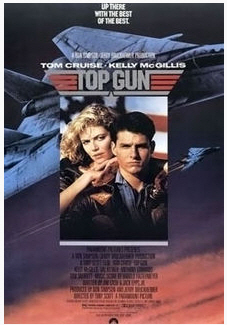
Did you know that many of the scenes in the 1986 action/adventure movie “Top Gun” were filmed aboard the aircraft carrier USS Ranger (CVA-61) pretending to be the USS Enterprise?

Now decommissioned, the USS Ranger is en route to becoming a museum in Fairview, Oregon through the efforts of the USS Ranger Foundation.

In support of this project, the foundation is sponsoring a 25th anniversary showing of “Top Gun” as a fundraising project on Sunday, May 6, 2012 at the Mt. Hood Theatre, 401 E. Powell Blvd, Gresham, OR 97030, 12-3pm.

Click here for more information along with a nice film trailer showing some realistic launch and recovery operations along with the kind of flying hi-jinks you might expect out of any character played by Tom Cruise.

If you live in or near Gresham, this movie will make for a great afternoon of entertainment in support of a good cause!

Malcolm

Glacier Park Updates

Front End Loader near the West Tunnel 1

While updating the Glacier page on my author’s website, I was happy to discover that the park’s concessionaire, Glacier Park, Inc. has also updated its website with fresh graphics and new information. I like the words on the company site: “Where the ordinary stops and the journey begins.”

Spring Plowing: According to the National Park Service, “Currently 17.0 miles of the Going-to-the-Sun Road are open for travel. Visitors can drive 11.5 miles from the West Entrance to Lake McDonald Lodge, and 5.5 miles from the St. Mary Entrance to Rising Sun.” With luck, the spring plowing won’t be as lengthy as it was last year. Check here for the latest on road status.

Proposed Apgar Transit Center Parking Expansion: According to NPS Glacier, The Apgar Transit Center Parking Lot Expansion Environmental Assessment conducted by Glacier National Park specialists is available for public review and comment. Comments are due by May 7, 2012. The park is proposing to expand the Apgar Transit Center parking lot to accommodate increased visitor use of the transit center following the relocation of activities of the Apgar Visitor Center to the transit center. Click here if you wish you wish to comment.

11th Annual Crown of Continent Managers’ Forum: The 2012 Crown Manager’s Forum was held March 19-20 at the Lethbridge Lodge in Lethbridge, Alberta with “Tribes and First Nations in the Crown of the Continent” as this year’s theme. For information about the forum, click here.

Glacier National Park Fund Projects: Current projects include Historic Art and Archives, Historic Structures, Red Bus Endowment, Trails Endowment, Trails Rehabilitation and Native Plant Nursery. For information on these projects and ongoing research, click here. While the Fund has a $100,000 annual goal for trail restoration, I’ve seen no information yet on the proposed adopt-a-trail program mentioned in an earlier post.

Many Glacier Hotel Rehabilitation: According to NPS Glacier, “the rehab work is continuing this spring, but it will be complete by the opening on June 15th. All of the rooms will be available unlike last summer. The dining room is complete as well and the ceiling has been restored to its original height. In the future there is a potential there will be more work done, but at present, the rehab work is finished.”  Updated 4/14/2012.

Malcolm

A Glacier Park novel for your Kindle

No Pulitzer for Fiction: Disappointing

Major book awards focus attention on what we hope are the best and the brightest of books. They also create controversy when the winner and/or the named finalists don’t meet the expectations of the public and/or the critics. This year, no novel received a Pulitzer Prize, and that has focused public attention on the process.

The process includes a three-person panel of book-savvy jurors who, for this year’s prizes, spent the second half of 2011 reading over 300 nominated books. In December, they presented the Pulitzer Prize board with the names of three books. The 18-person board’s job was to select, by vote, the winner and two named finalists.

The jurors’ recommendations were Train Dreams by Denis Johnson, Swamplandia! by Karen Russell and The Pale King by the late David Foster Wallace. While the first two of these books are on my to-be-read list, I have no knowledge about any the selections other than what I’ve read in the reviews and news stories.

Since the conversations and procedures in the board room are confidential, we don’t know what happened there. We don’t even know if the board votes like a trial jury, has a discussion, and then votes again. We also don’t know if, after the first vote, no book has a majority, the book with the fewest votes is eliminated prior to another vote.

Prospective Improvements

Many suggestions have been made about the process:

  1. The jurors should pick the winner. Reasonable, but unlikely, since boards have the final say and cannot give away their responsibilities.
  2. The board should have more than one author on it. Reasonable, but with the Pulitzer Prizes’ focus on journalism, adding an author might be seen as diluting the journalist knowledge base.
  3. Include provisions that allow the board to call for a back-up list of recommendations if it doesn’t like the first group. This has potential but if the board can’t reach a majority decision on a winner, it might not be able to reach a majority decision to call for the backup list.
  4. Add another board member so that ties are impossible. This makes sense, primarily because no board is ever supposed to have an even number of members unless an otherwise non-voting chairman is permitted to vote in the event of a tie.

Many commentators have spoken eloquently on behalf of this year’s recommended books while others have suggested reasons why one or more of them may have been unacceptable. In my view, presenting no award due to the lack of a board majority for any one book is not acceptable. So what happened to make 2012 the first time since 1977 that no award for fiction was given? We may never know.

If I were to speculate, I would say that possibly nine people on the board held out for The Pale King because they considered the book superior to the others and/or viewed Wallace as a great writer who shouldn’t play second fiddle to anyone else. If this happened, the only vote the board could arrive at—due to its ill-advised even number of members—would be a tie.

The powers that be probably have the power to prevent hung juries in the future. It’s too late for 2012, and that’s disappointing.

–Malcolm

Review: ‘Cathead Crazy’ by Rhett Devane

“All she wanted in this life was a small slice of peace. Maybe add in some attention from her husband. Respect from her kids. A clean house. But she’d settle for peace.” – Rhett DeVane in “Cathead Crazy.”

Hannah Olsen wears multiple hats, and their combined weight is well-known to any woman who has done a portion of her life as a member of the sandwich generation stuck like thin cheese between an aging parent and demanding children. She has a full-time job, a household with a husband and kids to look after, and an ever-changeable mother called Ma-Mae at a nearby nursing home who needs and expects her dutiful daughter to be present around the clock.

In “Cathead Crazy,” Rhett DeVane tells Hannah’s story with grace, sweet-and-sour reality, humor during hard times, and a heaping helping of the down-home Florida Panhandle lifestyle. Immensely readable, this novel is about a family caught in the crosshairs of the difficult choices everyone with aging parents will ultimately face. Even so, there are still good days, laughter and memories that will serve well for a lifetime.

Rhett DeVane knows the territory, and she has made of it a moving story with realistic, multidimensional characters with universal cares and needs who try their best to navigate life without going “cathead crazy.”

The eight recipes, including “Ma-Mae’s Buttermilk Cathead Biscuits,” are a mouthwatering extra treat. Would you like sweet tea with your lunch, hon?

Malcolm

Author of four novels, Malcolm R. Campbell grew up in the Florida Panhandle where this novel is set, and thoroughly enjoyed seeing it again through Rhett DeVane’s wide-angle lens even though he never learned to like sugar in his iced tea. His novel, “Garden of Heaven: an Odyssey” is partially set in Tallahassee, Carrabelle, Tate’s Hell and other areas very close to Hannah Olsen’s neck of the piney woods.

Writing Prompts for the Bold, Insane and Desperate

“The Muse is an ornery creature and rarely comes when called. She wears feathers in her hair and birkenstocks on her feet and is often out in the woods when you are home at your keyboard.” – Jane Yolen

On the day Isaac Asimov died, the muses of the world formed a union because they no longer wanted to be at the beck and call of prolific writers who expected free ideas 24/7. Some authors were exempt, including Nora Roberts who–according to informed sources–has a stable full of muses that supply “enough ideas for ten normal writers” just to keep those bestsellers flowing.

In school, writers are encouraged to become bold, insane or desperate as a means of churning out poems, plays and promises to publishers. Usually, this procedure fails. Why? Nobody knows what to say any more. Enter, the writing prompt. This is a sentence, paragraph or shot of Scotch that starts a writer writing. If your muse is on vacation, here are some a few prompts to get you started:

  1. Hire a mob hit man to shoot you in the knee every day you write less than 5,000 words. (Alternately, you can write about a writer who does this, especially after both of your knees are in casts.)
  2. Write a modestly erotic novel with the title “Josie has a screw loose.” (Try to avoid bad puns or the kinds of unsavory words your mamma taught you to avoid using unless you were being threatened by a hit man.)
  3. Visualize the end of human life as we know it. How would the smarter insects react to that? (This is likely to be a cautionary tale.)
  4. For a somewhat speculative story, visualize what might happen to literature as we know it if William Shakespeare returned to the world of the living and started writing chick lit. (Potentially, this could be a bittersweet comedy that catches the conscience of  the reader.)
  5. After having an affair with an older woman, a graduate goes into the plastics business.
  6. Write a letter to Nora Roberts in which you explain patiently that since she has more ideas than she can shake a stick at, you’ll be willing to take thirty or forty of them off her hands assuming she doesn’t get any lawyers involved. (If you’re not bold enough to do this, write about a bold protagonist who writes the famous author with unintended and calamitous results.)
  7. Consider writing an essay about the origin of the birkenstock, citing informed sources about what might induce a person wear such a thing in this day and age.
  8. A writer—possibly you—becomes trapped in the Twilight Zone and realizes that when s/he calls 911, s/he can only speak in limericks.
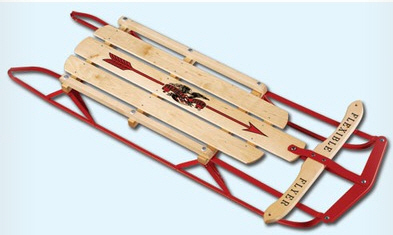
  9. After hearing that the Eskimos have over 300 words for “snow,” you bet the guys down at the factory that you can put all of them (the words for snow, not the guys) into an epic poem of great beauty about an old newspaper publisher whose favorite possession is a sled named “Rosebud.”
  10. Fearing that he has immeasurably harmed the environment by making the plastic bags used by stores, an old man shuts down his factory and goes into the strip mining business “to even things out.”
  11. While sending an e-mail, a disoriented preacher realizes that the entire online world is nothing but but an illusion or, possibly, a Fellini movie or Dali painting, and does on a quest to return the world to real reality. (Speculative fiction.)
  12. Write a black comedy about a cult that resolves to get all the sleds off the streets, hills, vales, or wherever they may be, entitled “Gather Ye Rosebuds While Ye May.”
  13. A man spends a lifetime climbing Mt. Everest only to find a wise man at the top who says “coming up here was damn stupid.” What happens after that?
  14. You (or a fictional character sort of like you) discover that “your” muse is cheating by “keeping company” with the plumber at the local recycling plant and resolve “to set things right” (without resorting to foul language) by drinking a potion that turns you into a powerful wizard who teaches the plumbers of the world a powerful, but amusing, lesson.
  15. What would happen if somebody, possibly you, brought Isaac Asimov back from the dead?

By the way, ideas like these don’t grow on trees. So, if none of them work for you, and you can’t get Isaac Asimov or Nora Roberts to help, you might want to think about sucking up to your muse with candy, praise, Scotch, and a new pair of birkenstocks (whatever the hell they are).

Malcolm

Malcolm R. Campbell is the author of the comedy/satire Jock Stewart and the Missing Sea of Fire, available on Kindle and as a trade paperback.

Review: ‘The Comrades’ by Lynne Sears Williams

Lynne Sears Williams’ beautifully told historical romance “The Comrades,” carries readers back into Medieval Wales when the post-Roman Kingdoms of Powys and Gwynedd were at odds with each other while contending with ongoing threats from the English and the Norse.

In Williams’ 9th century tale, Evan, King of Powys, responds to a nasty cross-border raid from Gwynedd by ordering his commanders to kidnap Gwynedd’s princess Morleyna to use as leverage in negotiations with the neighboring kingdom. Carefully planned and boldly implemented, the successful abduction brings consequences the king and his warbrothers aren’t prepared for: a shrewd, highly intelligent “guest” at the castle who is also blessed with The Sight.

“The Comrades” is a stirring romance, graced with memorable characters, historically accurate place settings and customs, a first-rate writing style, and a rousing good plot. The interplay between Evan and his men, his aunt, his concubine and the princess is believable and flows easily between humor, statecraft and crisis. The story unfolds as the kingdom waits for a response from Morleyna’s brothers. Will they bring an army, a ransom or both?

Williams’ decision to tell the story from multiple points of view was a wise one. Readers see castle life and the world of Powys from the from the perspectives of Evan, Morlenya and other principal characters. While that world is long ago and far away, it shines clearly and brightly in “The Comrades.”

The story is supported by a helpful map and glossary.

–Malcolm

The Internet is Drugs

As I sit here in the sunny kitchen of my father-in-law’s farmhouse, I’m going through withdrawal because the Internet does not exist here. On a typical morning, I would have checked e-mail (pot), looked at several news screens (cocaine) and read everything in my Facebook (meth) news feed.

My Facebook status would be a no-brainer: blitzed, spaced out, and higher than the summit of Mount Everest. I recall those old, fried-egg-in-a-skillet public service announcements: This is your brain. This is your brain on drugs. Any questions?

Ever addictive, the Internet provides 24/7 instant gratification. Everything is now and now we can trip out anywhere we want from the illusions of You Tube right now to the mirages of web cams. On celestial days, the endless supply of self-evident platitudes on Twitter (hash) empowers us. On tense days, we can discuss causes on Linked-In (ether) or play free-base flame wars in the comments sections of news pages and friends’ profile pages and hope the experience doesn’t turn into the bad trip of being unfriended or banned.

Here on the farm, life is also now, but it’s a slower, less ubiquitous now. I cannot move at light speed from the kitchen table to the creek. There’s no creek icon on the window. While I can randomly hear the sounds of birds and horses and tractors, they are farther away than MP3 files and have no volume controls. Time was, contentment was easy to find in a farm or old forest because when I arrived at such places, my perception synchronized itself with the rhythms of the real world.

Today, the worlds of beach, river and mountain top begin as cold-turkey experiences away from the lovable and addictive noise of radios, televisions, cell phones and WiFi. Real-world taste, touch, hearing, seeing, smell and intuition have become dulled from lack of use. I can’t wrinkle my nose and download a new sight program nor stick out my tongue and update my tastes.

Daily, it takes more and more effort to see and hear the real world, especially the more subtle voices of trees and snakes and flowers. In fact, when I’m high on Facebook, I have my doubts about the existence of pastures outside my father-in-law’s sunny kitchen, much less the cries of gulls along the gulf coast or the songs of wolves in the Montana high country. The Internet will give me a semblance of all that. Truth be told, that semblance is faster and cheaper than walking out my front door and driving six hours south to Alligator Point, Florida, much less three days north by northwest to East Glacier, Montana on the edge of the shining mountains.

If the Internet existed here on the farm, I could experience, semblance-wise, the mountains and the sea right here, right now. I do see flowers blooming in the garden out past the kitchen sink. I remember once knowing what they were and what they smelled like but, without the Internet, I can’t “touch” the flowers’ images and see alt-text tags with that instant information.

The real world has become difficult to navigate and harder to imagine. I’ll be okay when I get back home and smoke a little e-mail and do a little Facebook. I’ll be fine because my brain will once again become part of the Internet and I won’t have any questions.

Malcolm