Glacier Park Modifies Transportation Contract to Retain Red Bus Fleet

from NPS Glacier National Park

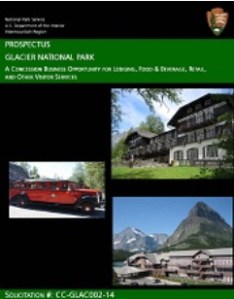
Buses at Glacier Park Lodge

WEST GLACIER, MT. – The National Park Service announced today that it was modifying the terms of a prospectus for the concessions operations at Glacier National Park to reinforce the park’s intention to retain the operation of the entire fleet of red buses while providing safe, informative and memorable experiences for Glacier National Park visitors.

These modifications supersede original plans to retire half of the red bus fleet, replacing them with modern equipment.

Acting Glacier National Park Superintendent Kym Hall said, “We love the red buses and our intent has been to retain this iconic symbol of the park.”

Changes to the prospectus clarify how maintenance and rehabilitation of the bus fleet will occur.  The newly selected concessioner will be responsible for the management and upkeep of the red buses. The National Park Service owns all

NPS Photo
NPS Photo

the existing 33 historic red buses in the fleet.  Through the terms of the pending concessions contract, the National Park Service intends to monitor the condition of the red buses and rehabilitate the buses as needed over the course of the 16-year contract.  Hall said that modifications of the prospectus for the new concessions contract are being developed to clarify those requirements. The modifications to the prospectus will be posted on the agency’s commercial services website at http://www.concessions.nps.gov/prospectuses.htm in mid-February.

Hall said, “We appreciate the advocacy for the red buses by the Glacier Park Foundation and others, and their dedication to preserving the fleet of 33 iconic and historic buses.”

As the historic buses age, rehabilitation work is required to keep the fleet safe and operational.  The buses have 1930s–era bodies adapted to modern chassis.  It is recognized that the required custom rehabilitation work on the buses will be very expensive.

A complete and custom restoration of the buses was last completed in 2002 with the generous assistance of the Ford Motor Company through the National Park Foundation.   At that time the cost for the rehabilitation of the buses was more than $6 million dollars.

Hall said, “We want to maintain and continue the tradition of the iconic red buses on the road in Glacier National Park.”

–Malcolm

TSScover2014Malcolm R. Campbell is the author of paranormal short stories and contemporary fantasy adventure novels, including “The Seeker” and “The Sun Singer,” both of which are set in Glacier National Park.

Have You Ever Been in a Book Discussion Club?

bookclubMany of us, authors included, have a few unsettling memories of some of the book discussions that occurred during our high school and college English classes. I wondered at the time how many prospective readers would swear off books forever after being subjected to highly technical book criticism discussions in survey and other general literature courses.

In contrast, book discussion clubs and readers’ groups can provide a breath of fresh air. The catch is, you have give some thought to your club’s membership, book selection methods and discussion format at the beginning, and then select a moderator who keeps things on track and gives everyone a chance to talk. Rachel Jacobsohn provides a few tips that will get you started. The American Library Association also has had some great ideas.

In fact, if you search on line with search terms like “readers group tips” and “how to start a book discussion club,” you’ll find more than enough ideas from publishers, The Library of Congress and libraries to get your group up and running.

Basic Discussion

Personally, I think you can have a great evening talking about a novel by focusing on relatively standard discussion questions:

  • What happened?
  • What plot twists surprised you?
  • Who were the main characters and how did they interact with each other?
  • Did the characters change during the course of the story?
  • Did the author have a theme and/or a message behind the story?

If a novel fits into a specific genre, you might want to add a question about, say, its approach to fantasy, how romance fit into the storyline, or whether the mystery/thriller aspects of the plot were set up and then resolved.

Adding Depth

Many publishers provide discussion guides or book club starter questions to help reading group moderators lead memorable discussions. You can decide whether this information should be handed out to all members after they read the book but before the discussion begins, or whether to keep these materials on hand for use by the discussion leader as needed.

Since most clubs are discussing novels for the members’ enjoyment rather than approaching fiction as it might be taught in a college course, I think you’ll usually get more spontaneity out of your group if you don’t show them in-depth discussion questions in advance. Sure, these questions provide food for thought, but they can also lead to members planning their answers in advance rather than listening to and responding to what other members are saying as the discussion unfolds.

I’ve spent the morning writing “starter questions” for the novels in my upcoming series of fantasy adventures. As I wrote them, I wished I could turn myself invisible and listen in on some of the discussions. I haven’t been in a reading group for a long time and miss the great discussions that come up right after people finish reading a memorable novel.

Malcolm

trilogybanner

Will NPS Split Up Glacier’s Red Bus Fleet?

from the Glacier Park Foundation

NPScommercialThe National Park Service is seeking tenders for a concessioner to operate its facilities in Glacier National Park. The proposed concession contract would see 18 of the 33 Red buses decommissioned and replaced with new vehicles. This decision was made without any consultation with the public.

The Glacier Park Foundation wants to see the Red bus fleet remain intact. Bidding for the concession closes March 14. The foundation urges all its members and fans of Glacier to raise their voices in any manner they can, including contacting the National Park Service, and Montana state and federal officials. Let them know you oppose any breakup of the Red bus fleet and are requesting a delay in the concession contract process until the matter has been aired in public.

NPS proposal: http://www.concessions.nps.gov/glac002-14.htm

I agree with the Foundation’s suggestion that the contract process should be put on hold until the public is fully informed about the rationale behind the plan as well as the other alternatives available. If you agree, please let the Park Service and your Senators and Representatives know of your concerns.

Malcolm

The Messy Spiral of Grief

patToday’s guest post about grief and coping with the death of a spouse or a life mate, is by author Pat Bertram (“Light Bringer,” “Daughter Am I,” “More Deaths Than One” “A Spark of Heavenly Fire”)  who, I’m happy to say, has stopped by Malcolm’s Round Table several times before for some great discussions.

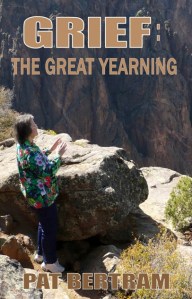
Pat’s most recent book is “Grief: The Great Yearning.”

The Messy Spiral of Grief

I am no stranger to grief. In December, 2006, I lost my younger brother, and exactly a year later, I lost my mother. I thought I knew what grief was all about, but the grief over those deaths in no way prepared me for the depth and breadth of the grief I experienced after the loss of my life mate/soul mate.

I’d known he was dying, and I’d prepared myself for the inevitable — in fact, at the moment of his death, I felt only relief that his suffering was over. When I returned home without him, I realized he was truly gone, and grief slammed into me with such ferocity it stunned me. It wasn’t just mental agony, but also physical pain. My chest ached so much I felt sure my heart had shattered. My stomach hurt. My arms ached. I felt dizzy and nauseous. I couldn’t breathe, couldn’t swallow, couldn’t even think. The only way I could relieve the incredible stress was to scream. And so I did.

One of the worst aspects of grief was the feeling of his goneness. I could feel the void in my life and my soul where he’d been ripped from me, but I couldn’t sense him at all. Toward the end, as we struggled to go our separate ways — he to death, me to continued life — we spent much of our time in separate rooms, and somehow I figured that’s what it would feel like after he died, but it was like nothing I’d ever experienced before. I still have no words to describe the finality, the undoableness, the vacuum of death. He was part of my life for thirty-four years. We breathed the same air. We were connected by our thoughts, our shared experiences, the zillion words we’d spoken to each other. And then he was gone from this earth. Erased. Deleted. Almost three years later, I still can’t wrap my mind around that.

griefOne of the ways I handled my grief from the beginning was to write letters to him. For all those years, I’d talked over everything with him, and I desperately needed to talk to him about this horror that had befallen us. So I wrote him. Sometimes it even made me feel connected to him for a few brief moments, as if perhaps we were still in this situation together. I also did some stream of consciousness writing to help me try to figure out what was going on.

My grief, and the grief of most people I have met since, does not follow the neat timeline of Kübler-Ross’s stages of grief. Grief is such a messy spiral of hundreds of different physical, mental, emotional, and spiritual permutations that it’s almost impossible to know what is going on, and writing helped me make sense of it.

I never intended to make my grief public, but shortly after he died, I read a novel about a woman who lost her husband, and the only acknowledgment of her grief was a single sentence: She went through all five of the Kübler-Ross stages of grief. That so appalled me that I decided to tell the truth about grief after the loss of a spouse, if for nothing else, to keep novelists from such superficial descriptions.

Selections from my letters, journal entries, and blogs have been combined into a book, Grief: The Great Yearning, which chronicles my struggle to survive the first year after his death. Grief: The Great Yearning was published by Second Wind Publishing, and is available from Amazon, B&N, and other online stores.

Pat’s Website: http://www.patbertram.com/

Pat’s Blog: http://ptbertram.wordpress.com/

The tedious (but necessary) part of editing

When I read an author’s work for the first time, I quickly discover his or her habits, pet phrases, favorite sentence structures, and unique approaches to dialogue or description. I also see whether or not s/he has taken a word, phrase or mannerism that was magical the first time it appeared and then reduced its impact by using it excessively throughout the rest of the novel.

For example, if the author describes war in chapter one as “an honorable horror” or sex with a main character as “wanton enchantment,” I might like the creativity of those phrases. If, as I read, I begin to see “honorable horror” or “wanton enchantment” showing up multiple times, I think, what a pity, you’ve just destroyed the impact of the right words at the right time, by using them every time.

Habit Words

Most of us are so used to the way we talk and write, we don’t always notice our own beautiful phrases and favorite words, much less those occasions when we overuse them. You’ve probably seen talk show hosts and others joking about people who can’t say anything without saying “like” and “you know” several times per paragraph. In most cases, the “like” and “you know” people don’t know how odd they sound to others because they don’t realize how often they say those words.

As writers, we’re often unaware of the special phrases in our own work that become trite through overuse by the end of an article, novel or short story, much less the everyday words we habitually rely upon so often that they become as trite as “like” and “you know.”  For one person, foods may typically be “tasty” or friends might be “dear” or one thing or another might be “memorable.”

In conversation, perhaps we can get away with our habit words. In writing, they become blemishes.This is not to say we need to eliminate them or, worse yet, use a thesaurus for a series of minor variations on them. But we do need to see how we’re using them and whether they are really serving us well when they appear frequently in our work.

Editing

A good editor will not only find your errors and inconsistencies, s/he will also find your watered down beautiful phrases and your overused habit words. For authors, the task is more difficult because we’re often focusing on scenes, chapters and plots while our distracting habits fly by unnoticed.

When we copy edit our manuscripts closely, though, pet phrases and habit words might start getting our attention. Perhaps we change them on the spot or perhaps we start making a list of words we might be overusing. Once the major elements of a work are fixed, the spelling and grammatical errors caught and the punctuation and overly complex sentence structures are fixed, it’s time to go through the manuscript again with what (for me) is a tedious by necessary part of editing.

I suggest using your word processing software’s search feature as one way to find your habit words. If you creatively wrote “an honorable horror” in page one of your book, search on the word “honorable” and see how often it appears. You may be shocked to discover you not only used “an honorable horror” multiple times in your 80,000-word book, but that you started using the word “honorable” in other combinations, i.e., “an honorable moment,” “an honorable job,” or “an honorable disposition.” Worse yet, the word combination will be coming out of the mouths of multiple characters as though they met somewhere and agreed to adopt a new pet phrase.

The search feature will also show you whether you’ve used habit words so often they’ll become a distraction to readers. One author might describe everything from people to days to dinners to experiences as “fine,” while another may use the word “dear” over an over. If the search feature tells you the word “fine” appears a hundred times in your book, you might want to go look at why that’s the case.

By the time you clean the pet phrases and habit words out of your manuscripts, I think you’ll see that your prose is not only stronger, it’s more on point in every scene and sequence of dialogue.

Malcolm

Malcolm R. Campbell is the author of the contemporary fantasy novels “Sarabande.” “The Sun Singer,” and the upcoming “The Seeker.”

Getting Started in Fantasy Reading

wikifantasy

“Fantasy: A general term for any kind of fictional work that is not primarily devoted to a realistic representation of the known world. This category includes several literary genres describing imagined worlds in which magical powers and other impossibilities are accepted.” – The Concise Oxford Dictionary of Literary Terms

When I tell people I write contemporary fantasy, sometimes they say, “wow, cool” and sometimes they say, “I read the Chronicles of Narnia when I was little, but know little about the genre.”

There are so many types, styles, flavors an sub-genres in fantasy, the wealth of material out there to read is often hard to explain to those wanting to know more. I agree with Terry Pratchett when he says that  “Fantasy is an exercise bicycle for the mind. It might not take you anywhere, but it tones up the muscles that can. Of course, I could be wrong.” However, here are a few links and ideas that are a bit more specific.

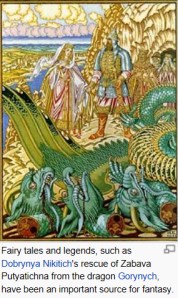
Wikipedia has a decent article on fantasy that works as a starting point. (Click on the graphic to read it.) The main article branches off into a series of additional links for sub-genres, books, and authors.

When people want to know more about the types of fantasies, I often send them to sites like Focus on Fantasy for a quick overview and Top 50 SciFi & Fantasy Novels blogs where they can sample some of the viewpoints and commentary out there.

bestfantasyI like Best Fantasy Books because it introduces newcomers to fantasy by listing books in various groupings and then, for each book, showing others that are similar to it. If you look at this site, you’ll find stand-alone books, books in a series, influential books, and a cool list called “Fantasy That Blows Your Mind.”

To keep up with recent books and new titles, you can subscribe to Amazon’s list via RSS. This puts it on your browser where you can click on it easily and see the names of the titles. You’ll find recent fantasy book reviews on Fantasy Book Critic. This site also displays an excellent blogroll that will send you off on an exploration of fantasy blogs, most of which links you to more blogs.

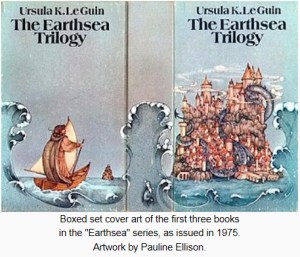
earthseaOnce you find a favorite author and genre, s/he will often be another source via comments, interviews and viewpoints in a personal blog or web site.  Fantasy is so diverse, that it’s really hard to nail it down and say that any one book of series is representative of the genre. Personally, I like contemporary fantasy the best because it overlaps are known world as J. K. Rowling did with her Harry Potter series. Rowling, though, is apples and oranges different from, say, Tolkien, or Erin Morgenstern’s recent The Night Circus or Ursula K. Le Guin’s classic Earthsea series.

Kindle, Nook and other e-readers make it easy to sample a variety of fantasy books at a lower cost before adding your newly discovered favorites to your bookshelf in hardcover or paperback. You can even find some of the older fantasies available on Project Gutenberg and other sites as free downloads. Happy exploring!

–Malcolm

Malcolm R. Campbell is the author of contemporary fantasy, including “The Sun Singer,” “Sarabande,” and the upcoming “The Seeker” (March 2013).

trilogybanner

“How the Snake Bird Learned to Dry His Feathers”

snakebirdWhen friends and family visited us in north Florida, we would often take them to nearby Wakulla Springs to ride in the glass bottom boats and then on the so-called “Jungle Cruise” along the St. Marks River. First, they noticed all the alligators along the river’s bank. And the turtles.

The anhingas, also called snake birds, attracted a lot of attention, because they spent a fair amount of time on tree limbs holding their wings out while drying their feathers. Why? Their plumage lacks the oil of ducks and other water birds and takes a while to dry before they can easily take off again. As the excerpt below shows, taking off with wet wings was a noisy business.

Snake birds swim under water with only their heads and above the surface. They look like snakes. Well, odd snakes. We always told tall tales about this. I finally wrote one down. It appears in Quail Bell Magazine and can be read the story here .

It begins like this:

On a long-ago summer afternoon in the land between the rivers, Tcheecateh was enjoying a long, cat-like stretch of a nap on a fallen sabal palm until the snake bird created a raucous spectacle by running, splashing and wing flapping across the previously calm water of the swamp. Although the blissful quiet returned when the bird finally became airborne, the panther kitten hissed at a blowing leaf out of frustration and stood up to see who else was awakened by Chentetivimketv’s noisy takeoff.

Hope you like it.

Malcolm

trilogybanner

Briefly Noted: ‘I Do: A Cultural History of Montana Weddings’

“A young and plucky eastern girl moves to the Wild West to be swept off her feet by a handsome and muscular cowboy: it’s the stereotypical plot of countless romance novels set in Montana.” – Montana Historical Society Press

We’ve all seen wedding stories like this in movies, novels and television shows. Some of those stories might even be real. However, historian Martha Kohl, a fifteen-year specialist at the the Montana Historical Society in Helena, found that the reality of Montana weddings over a 150-year period was every bit as romantic and absorbing as the fiction.

If you live in or near Helena, you can meet the author and enjoy the society’s new exhibit “And the Bride Wore…Montana Weddings, 1900-1960” on January 10th, between 6:30 and 8:30 p.m. at the MHS headquarters at 225 North Roberts.

IdoFrom the Publisher:

Through engaging stories of romance, insightful analysis, and historic intriguing photographs, I Do: A Cultural History of Montana Weddings provides an intimate and surprising look at an important tradition. I Do journeys through the last 150 years of Montana history, from the 1860s gold rush to the internet age, to reveal the lives of ordinary people, from Finnish homesteaders, Chinese restaurateurs, and Métis fiddlers to struggling miners, Blackfeet students, and Jewish merchants.

About the Exhibit:

MHSlogoThe Montana Historical Society’s newest temporary exhibit, will examine how history has shaped weddings—and particularly wedding fashion—during the first half of the twentieth century. Sixteen delightful and diverse dresses will be on display, including a hand-stitched dress made of white lace and yellow silk ribbon (worn in Butte in 1907), a Crow elk-tooth dress (worn in Lodge Grass in 1945), and a ballerina-style white dress of synthetic satin, lace and tulle (worn in Hardin in 1957). An opening reception will be held January 10, 2013, from 6:30-8:00. The opening will feature a wedding dress fashion show, a 1950s style cake and punch reception, a book signing by Martha Kohl, author of I Do: A Cultural History of Montana Weddings, and Slovenian wedding dance music. Don’t miss the fun! Viewers will be asked to participate in the exhibit by voting for their favorite ensemble and trying their hand at an old-fashioned Singer treadle sewing machine. The dresses will remain on exhibit through November 2013.

The exhibit is listed on line here with contact information and other details.

Malcolm

A long-time member of the Montana Historical Society, Malcolm R. Campbell is the author of contemporary fantasy novels partially set in Glacier National Park, including “The Sun Singer,” “Sarabande,” and the upcoming new adventure, “The Seeker.” Watch the trailer.

gohFBcover

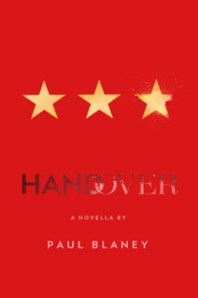
Book Review: ‘Handover’ by Paul Blaney

handoverOn July 1, 1997, the British Crown Colony of Hong Kong became the unique Hong Kong Special Administrative Region  of the People’s Republic of China, ending 156 years of colonial rule. Hong Kong, which translates to “Fragrant Harbor,” had for years been considered in financial, governmental and tourism circles, as a shining jewel.

The colony attracted many expatriates who were lured there for the heady “East-Meets-West” mix of people, the city’s dazzling cultural attractions and nightlife, the innovative high-density architecture and by the prospects of fortunes to be made and new lives to be started. Expats, however, always live within a curious limbo because they are never quite native and never quite who they were before they arrived. This limbo became more intense in Kong Kong as the date of the handover from British to Chinese rule approached.

Three interlocking stories comprise Paul Blaney’s novella Handover (Signal 8 Press, November 2012). His three expat Brits arrive in Hong Kong and find that the complexities of their own lives are somehow made more urgent and dear because of the changes and potential turbulence of the long-awaited handover.

Tess, whose aunt and uncle live in Kong Kong, graduates from college and then arrives and  finds work as a photo editor. Rob arrives with a head filled with memories of a former girlfriend who once lived there and begins to relive them while working as a bartender. Sally, a magazine editor, must confront on-the-job sexual harassment and the abandonment of her family when she defends herself and ends up in the colony’s criminal justice system.

The novella’s sections, each of which is—like Kong Kong—a compact and shining jewel, are bound together by the setting, minor characters and by the looming political and cultural manifestations of the handover. The stories are told in a non-linear style, giving them a kaleidoscopic organization and texture akin to that of Hong Kong itself. As such, the the novella depicts multiple slices of life rather than a traditional tale with a plot line leading through conflicts to an overt resolution.

Well-read readers may see the dark and gritty world of Blaney’s expats as a prospective new level of hell for Dante’s Divine Comedy: here in a heady world where everything wonderful is so close and so possible, doom is a likely result. Adventurous readers, those who love new things, new things with a hint of danger and intrigue, will discover that Paul Blaney’s Handover has many gritty delights to offer.

The novella is also a spot-on description of the the beauty and poverty of Kong Kong during a time in its history when nothing was certain.

Malcolm

The author of contemporary fantasy and paranormal short stories, Malcolm R. Campbell enjoyed his long-ago visit to Hong Kong and was happy when Signal 8 Press supplied a complimentary copy of a novel set in one of his favorite tourist destinations.

Thank you for the 14,000 views in 2012

WordPress claims—and I believe them—that Malcolm’s Round Table had 14,000 views of its 115 new posts this past year. Thanks for visiting.

whitehousebook1A fair number of you were reading my post about an organization called “The White House Boys”, an ongoing story about alleged abuses at the now-closed Marianna, Florida  Arthur G Dozier School for Boys. I grew up 90 miles away from that school in Tallahassee.

Obviously, I was aware of the school. I drove past it multiple times. Classmates at my high school always speculated about the people who ended up there. But abuses, that was all new to me until this year. I mentioned this school indirectly in “Cora’s Crossing,” my Kindle short story about the nearby (and purportedly haunted) Bellamy Bridge.

goatsongA lot of you have stopped by to read the book reviews both here and on Literary Aficionado. I saw in GalleyCat this morning that GoodReads users published 20,000,000 reviews on that site this past year. I can’t compete with that even though some of those reviews are mine! In 2012, I liked The Casual Vacancy by J. K. Rowling, In Sunlight and In Shadow by Mark Helprin, Goatsong by Patricia Damery and The Storyteller’s Bracelet by Smoky Zeidel.

Many of you stopped by while searching for information about the hero’s journey. Since my reading and writing have been influenced by Joseph Campbell’s The Hero With a Thousand Faces, I write about the steps on the heropath frequently.

Coming in 2013

Kindle Edition
Kindle Edition

You’ll see more about the hero’s journey on this blog in 2013 as my publisher releases my series of novels called The Garden of Heaven Trilogy. Two of my 2012 short stories (“Moonlight and Ghosts” and “Cora’s Crossing”) are now available on Kindle, but there are more on the way. That means, you’ll also be seeing more posts about ghosts, swampy Florida settings, and stuff that happens on dark and stormy nights.

There will be more reviews, too, beginning in January with Paul Blaney’s Handover which is set in Hong Kong during the country’s transfer of power from British to Chinese rule. I had a chance to visit Hong Kong in the 1960s, so I was interested in the author’s perspective of the city as it was in 1997.

I’m waiting for the second installment in Maggie Stiefvater’s four-book series The Raven Boys and Diana Gabaldon’s Written in My Own Heart’s Blood (coming in the fall of 2013). Yes, we’ve had to wait a while for the eighth book in her Outlander series.

As a writer, I don’t like being rushed. As a reader, I’m always in a hurry for the next best thing. With a bit of luck, 2013 will be another great year for both reading and writing, and for sharing thoughts about our favorite books with each other.

Malcolm

MRCcoversDec2013