Clean up your plate: people are starving in. . .

Even though this is only 212 pages, a lot of people didn't have time to finish it.
Even though this is only 212 pages, a lot of people didn’t have time to finish it.

This is a post about books even though you wouldn’t know it from the title. Hopefully, I can connect the dots with or without logic.

My brothers and I were taught that it was not only rude, but just plain wrong, to leave food on our plates. Why?

Generally speaking, food left was food wasted. Years later the giant chow hall sigh at Navy boot camp “suggested”: TAKE ALL YOU WANT BUT EAT ALL YOU TAKE.

It was okay to be a pig as long as you didn’t leave anything in the trough.

Why was leaving food wrong? Because people were starving in country XYZ. We were informed that while eating two or three times the amount of food we needed wouldn’t harm anybody, that throwing away food literally took it off their plates. Asking how that worked in practical terms was considered rude and/or that you thought your parents, school teachers and pastors were liars.

Later, we were told that books cost money (so does food, as it turned out) and that reading only half a book meant that–figuratively and/or literally speaking–you had thrown away half the book’s cover price. Of course, by today’s standards in which people are slinging books out there on Kindle for 99 cents, reading only a third of it means you only threw away 66 cents even though–had you sent that to countries where money goes farther (and often further)–life in general would be better for everyone.

The bottom line on unfinished dinners and unfinished books was shame. Whether it was Aunt Naomi’s brick-hard fruitcake or a dreadfully depressing novel like All Quiet on the Western Front, we were supposed to soldier on to the final battle no matter how much collateral damage our stomachs and psyches suffered in the process.

Lured into the book by its sexy cover, people apparently thought 21 was the number of centuries it would take to finish it.

Today, that shame isn’t quite gone with the wind, but it’s getting there. In fact, reviewers on Amazon and GoodReads often confess that “This book sucks even though I stopped reading on page 10.” How brazen is that, shame-wise? You really need to finish the book because some kid in city XYZ is going without a story tonight.

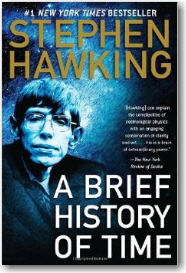
Now we’re getting statistics on unfinished books. People mean well, but like boring stews and bland deserts, their eyes are bigger than their reading endurance. So, consequently, they bought “Capital in the Twenty-First Century” by Thomas Piketty and “A Brief History of Time” by Stephen Hawking seriously intending to eat up every word, but then lost interest a few pages into their literary meals.

Using something called a Hawking Index (H.I.)–explained in The Summer’s Most Unread Book Is…–scientists determined that these two books top the list of unfinished books with folks getting only 2.4% and 6.6% of the way through. These days, fewer people believe in such admonitions as TAKE ALL YOU WANT BUT READ ALL YOU TAKE.

People seem to care less about waste, shame or the value of soldiering on. We’re more comfortable with tweets, texting and sound bites, even though such things often leave us ignorant of the big pictures, full course meals and lengthy tomes the world has to offer. We’re more of a TAKE VERY LITTLE AND PURSUE IT UNTIL BORED kind of society these days. More information, words and food all require commitment and frankly, we don’t want to promise that.

I’ve been tempted of late to throw several books out the window before finishing them. But, I kept on going, not so much because people are staving for words on continent XYZ but because I didn’t have any more fresh books in the house. When that happens, it’s like throwing away your last cracker because it’s a Ritz rather than a Triscuit.

As I read on in spite of the hardships involved, I try not to feel pride for soldiering on or shame for wishing I weren’t. In case it matters, I still clean up my plate.

You May Also Like: Can the Hawking Index tell us when people give up on books? in  The Guardian.

–Malcolm

Hello Florida Readers: Need fantasy, magic and ghosts?

One of my contemporary fantasy novels, three paranormal short stories and a collection of three folk tales have Florida settings. I grew up in Tallahassee and explored most of the state’s panhandle, so I enjoy going back for story locations.

  • The Seeker: (Tallahassee, Panacea, Carrabelle, Tate’s Hell Forest) – Contemporary fanntasy novel about a perfect love gone horribly wrong between a young man from Montana and a young woman from Carrabelle who meet on a summer job in Montana’s Glacier National Park. Misunderstandings arise after the young woman is assaulted on a dark, Tallahassee street.

    Paperback, Kindle and Audiobook, and they are family friendly.
    Paperback, Kindle and Audiobook, and they are family friendly.
  • Emily’s Stories: (Tallahassee, St. Marks) – This three story set of magical paranormal stories features a 14-year-old girl who talks to ghosts and birds to solve problems. She doesn’t want a housing development in her favorite woods, sees a bear stalking her father on a Montana vacation, and wonders why her grandmother loves the sweetbay magnolia tree in her back yard so much. The audiobook was narrated by actress Kelley Hazen who makes you feel like you’re right there in the stories.
  • Cora’s Crossing (Marianna) – In this paranormal story, two college students driving home on a stormy night find their route oddly detoured across an ancient, haunted bridge north of Marianna. What they find there, and the danger it gets them into, will make them truly believe that Bellamy Bridge is haunted. The bridge, which is still there, is closed to vehicles but can be reached by a trail.
  • Moonlight and Ghosts (Tallahassee) – An abandoned and purportedly haunted mental hospital attracts the attention of a young man who used to work there. Something or someone wants him to return and, as it turns out, solve a crime in progress. Needless to say, this is a paranormal story, but it also ties into my experiences years ago as a manager at a center for the developmentally disabled.
  • Spooky Stories (Marianna, Tallahassee) – This two-story set bundles “Cora’s Crossing” and “Moonlight and Ghosts” together in one volume. This edition is also available as an audiobook.
  • Kindle and Audiobook
    Kindle and Audiobook

    The Land Between the Rivers (Tate’s Hell Forest) – This three-story set of folktales features Panther, Snakebird and Bear at the dawn of time as they make their way through the wetlands and flatwoods between the Apalachicola and the Ochlockonee rivers. I camped and hiked throughout this area when I was growing up, so it’s a favorite of mine–one that still needs the determined efforts of those protecting Florida’s endangered species of plants and animals in the state’s at-risk ecosystems.

  • My work in progress is a folk magic story set in Liberty County in the 1950s. The characters include a conjure woman, her cat, her customers, and some really nasty people who need to be jinxed. More on this later.

Malcolm

New Personal Note: The HVAC Georgia Summer Blues

Secrets – a writer’s stock in trade

I started thinking about secrets after reading author Dora Goss’ post about keeping secrets. Looking at the relationships between men and women, she writes, “It seems to me that there are women men keep secrets from, and women men tell secrets to. Most women, at different points in their lives, occupy both of these positions: secrets are kept from them, and they are told secrets.”

Bloomsbury - adult edition
Bloomsbury – adult edition

In “real life,” I don’t like being told secrets because those who are asked to help hide one thing or another are usually part of the collateral damage when the truth comes out. As a writer, though, I love secrets because every novel begins with the unsaid premise that there are secrets within that the reader must uncover while reading the book.

I liked the imagery in Rowling’s Harry Potter and the Chamber of Secrets. For one thing–like so many novels about extraordinary youths–here we had within Hogwarts School a secret room that all the master wizards of the realm could not (or did not) find, open up, and neutralize. To enjoy the story, the reader has to play along with the ruse that wizards many times more powerful and knowledgeable than young Harry Potter really had no clue about the chamber other than as an old myth about the castle.

Putting a Christian spin on the meaning of the chamber of secrets, John Granger sees Harry Potter as “everyman” the chamber as the world, the snake in the chamber as sin, the evil Lord Voldemort as Satan, etc. One can make a strong case for this interpretation in line with many religions and myths.

I tend to see a chamber of secrets as man’s unconscious mind and that like the powerful wizard teachers at Hogwarts, most of us see that part of the psyche as either a myth or–if real–a place too dangerous to visit. Using this view, a writer looks at his or her protagonist as an individual, badly flawed or otherwise, who doesn’t wholly know himself or herself, much less all of his/her capabilities.

When I start writing a story, my aim is always to conceal as much as possible from the reader without appearing to be concealing anything. I drop hints, many of which will only make sense later when the secrets home out. Like stage magicians, writers are presenting for your entertainment an illusion that obscures the mechanics of what’s really going on in front of your face.

A good magician seldom reveals how assistants disappear out of boxes, how rabbits appear in empty hats or how playing cards disappear into oranges, locked safes or the pockets of people sitting out in the audience. Of course, a great book has a climax to it and that’s when the reader finds out everything (maybe) that was happening that wasn’t apparent up to that point.

With the discovery, there is often surprise, but if the author has done his or her job well, there’s also a”but of course” moment of recognition. Later, the reviewers and critics will argue about how the author kept the secrets for so many pages and what those secrets really mean. Once all the reviews, articles and books have been written about the story, everyone will think they know everything.

But they won’t because authors never tell everything not even to the women men tell their secrets to.

Malcolm

Malcolm R. Campbell is the author of the Garden of Heaven Trilogy of fantasy novels: “The Seeker,” “The Sailor” and “The Betrayed.”

Glacier Conservancy’s Backpacker’s Ball Set for August 2

from the Glacier National Park Conservancy

Glacier Park…it’s why we live here…what we LOVE here…
“Celebrate it in style.”

backpackersballThe evening will be elegant…the setting – spectacular. But leave your heels at home and your hat on your head…THIS is a party for people who LOVE the outdoors! The Backpacker’s Ball is our one and only, most magnificent celebration of the year!

Join us at the historic Green Valley Ranch at the edge of Glacier National Park, where the beauty is borrowed from the land we live in – the real-life murals made by mountains in our own backyard.

Wear your dancing shoes, so you won’t be stuck in your chair when the Ashley Creek Ramblers take the stage. You’ll have to fight your feet NOT to dance to this toe-tapping, must-move music.

Come hungry…because you won’t soon find another feast like this. Locally harvested specialties are the menu’s mainstays as a nod to our nation’s heritage. Wonderful wines complement the array.

Get swept up in the excitement of our Live Auction, or quietly acquire some amazing items in our Silent Auction. You’ll find everything from one-of-a-kind artisan creations to once-in-a-lifetime adventures. This is just a small part of our evening, so the focus is on having fun!

The Backpacker’s Ball is our once-a-year rally to raise needed funds so that we can continue to share this precious place with nature lovers from around the world.

The Glacier National Park Conservancy assures the Glacier National Park experience by providing support for preservation, education, and research through philanthropy and outreach.

If I lived closer, I’d be there. Click on the graphic for the Conservancy’s page with additional information.

Malcolm


What’s wrong with ‘he said’ and ‘she said’?

Victor Appleton, author of the Tom Swift series of books, went to a lot of trouble to avoid using the word “said.” His gyrations gave rise to the “Tom Swifty,” a gag line of dialogue and attribution that basically made fun o Appleton’s approach to dialogue.

The Wikipedia entry for the Tom Swifty provides typical examples such as “‘Who left the toilet seat down?’ Tom asked peevishly” and “‘Hurry up and get to the back of the ship!’ Tom said sternly.”

saidThe gurus of writing suggest “he said” and “she said” for most of your dialogue needs because most attempts at variety call attention to themselves and–in time–annoy the reader.

I’m reading a thriller novel by a New York Times bestselling author of some 30 books. I won’t mention his name or the book because I really have no need to speak ill of another author. I’ll stipulate that authors always face difficult decisions when one character has a vast amount of information to convey to another character.

No author wants to have a five page quote. So, s/he is likely to try to orchestrate some back and forth dialogue between the “teacher” and the “learner.” This helps. But it can soon lead to another annoyance: The learner asks a three-word question and then the teacher replies with a half a page of information, followed by another short question and another long answer.

The author of the thriller did a little of this, but his habit (and I’m making up the name of the character to obscure who I’m talking about, was the use of paragraph openings consisting of “Joe went on” and “Joe continued” and “Joe shifted to his next point,” all followed by long paragraphs of information. The author’s habit stood out because he used the same construction multiple times per page.

I hoped that once we got past the section of the book where the leaders of the black ops mission were done filling in the new operatives about the scenario, I wouldn’t keep seeing that clumsy writing. Unfortunately not. While this author doesn’t date himself by using Tom Swiftys, he continues with his awkward dialogue in a way that makes me consider flinging the book into the next box going to the library’s used books sale.

Here’s an example (without the characters’ real names and real dialogue) from one page:

“We can’t,”Bob replied, but we can work around it.”

“We’re in a major city,” I reminded him.

Bob replied, “We are now, but we won’t be tomorrow.” He further informed us, “The day after tomorrow, we’re talking the back  roads to a more lawless area.”

It seemed to me that this plan had flaws.

Sam let us know, “We can’t be certain that this will draw The Hyena out of hiding, but it’s our best shot.”

A fair amount of the book’s dialogue is written like this. It’s so over-the-top stylistic in an unattractive way, that such a paragraph would be covered with red pencil marks if it were handed in as an assignment in a college creative writing class. Most teachers would scribble in giant letters at the top of the page, “What’s wrong with ‘he said’ and ‘she said.”

One might otherwise suggest–even though Dan Brown certainly kept his readers even though many of his characters gave long lectures in history in the middle of action scenes–that giving one character a thousand words of facts to tell another character makes for a larger flaw in the book.

I found Dan Brown’s novels compelling because of the short chapters and the on-going action. Yet I did have to smile when professor ABC spent ten minutes lecturing police inspector XYZ about ancient history while they were in a shootout with the bad guys.

I’m about 20% of the way through the thriller on my nightstand, and the vast amounts of information being conveyed from one character to another in such an awkward fashion is so tedious that I want to quit reading. If I had another fresh book from the store, I would.

Obviously, this author has sold a lot of books. That alone makes me hope that this book delivers in spite of its style. Those of us who aren’t New York Times bestselling authors don’t need to throw out “he said” and “she said” as our primary dialogue tags because doing so will lose us a lot of readers.

You may also like: The Invisible Said—Three Reasons Why You Shouldn’t Ban Said.

Malcolm

EScover2014Malcolm R. Campbell is the author of paranormal fantasy stories including the three-story set “Emily’s Stories,” now with a brand new cover.

On Location: the Apalachicola River

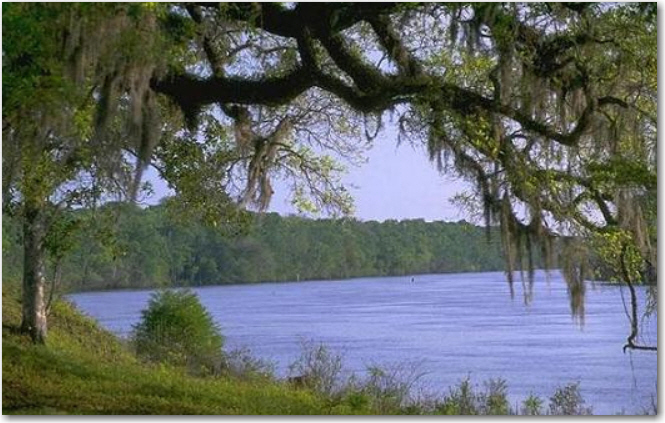
Near Ft. Gadsden - U.S. Dept of Agriculture photo on Flickr
Near Ft. Gadsden – U.S. Dept of Agriculture photo on Flickr

The Apalachicola River in the Florida Panhandle is created at the Georgia border by the Flint and Chattahoochee rivers and then flows 112 miles to the Gulf of Mexico. The river has been in the news in recent years as Florida, Georgia and Alabama fight over who owns the water. Atlanta takes more than its fair share, some say, starving natural areas North to South down the panhandle and, worse yet, the fragile ecosystem of Apalachicola Bay.

From the air, there are places where the river looks like a very large green snake because it twists and turns and almost coils back on itself. The ecosystems have been under stress for years. The river has been improperly dredged; the pine forests have been over logged and–when it comes to longleaf pines–poorly managed; roads to the timber have blocked natural water flows through swamps and other wetlands. The rare Florida Panther can no longer be found in the river’s watershed.

The Apalachicola River was the western boundary of my childhood, for we camped along its banks and on the barrier islands protecting the bay, sailed from its mouth to and from Alligator Point and the St. Marks River to the east, drove or walked every forest service road from Tallahassee to Tate’s Hell Forest (near the mouth of the river at Carrabelle), and experienced one of the most unique ecosystems in the country.

The Apalachicola Riverkeeper says that the river’s basin is home to 127 very rare plant and animal species along with more reptiles and amphibians than any other place in the in the northern hemisphere. The river is not only a resource many habitats, but also for kayakers, fishermen, paddle boaters, swimmers, photographers and–in the bay–a very large fishing industry.

Pine flatwoods, typical of much of the areas national forests
Pine flatwoods, typical of much of the areas national forests – Geoff Gallico on Flickr

I’ve always been rather jealous of those who knew every plant in the swamp and forest as well as those who knew how to chart river flows, analyze soil and restore forest lands. The Nature Conservancy is at work in this area, trying to undo many years of damage while protecting lands from more “development.” Since I’m not a scientist or a naturalist, I try to focus on natural resources in my fiction. It’s my way of drawing attention to the environment.

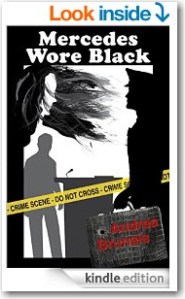
Lately, I’ve been at work on a novella set in a fictional town a few miles from the Apalachicola River in Liberty County, the Florida county with the lowest population. In many ways it’s like going home to look at these areas again and put them into stories. I recently finished reading a political thriller novel called Mercedes Wore Black (which I review here.) The main character is an environmental reporter, making the book a very strong window framing Florida’s ongoing developers vs. the environment battles.

The author of that book lived in Florida more recently than I have and as a long-time reporter, she could focus more clearly on the issues from a practical standpoint. I try to focus on the locations and make readers aware of the ecosystems’ value in the scheme of things without getting into many political rants.

Some of my poet friends write poems about the environment. Photographers are taking pictures of things the way they are while hoping they won’t become the way they were. I’m pleased at the number of groups, blogs, Facebook pages and initiatives that are campaigning for various ways to save the land before we ruin it all.

Click on the photo to learn more about the river and the threats to it.

I’m not a political activist, though I’ve dabbled in it from time to time. My focus is fiction. Many of my readers’ focus is travel and outdoor recreation, often with a spiritual component. If you’re a writer, you can “go on location” in a dozen ways to pinpoint natural resources and the need to keep them natural.

There are times when I think that the land itself is an important “character” in my novels and stories. If the land draws you, then your pen, camera, blog and voice can help preserve it.

You May Also Like:

Malcolm

Malcolm R. Campbell’s novel “The Seeker” is partially set in Tate’s Hell Forest, while his short stories “The Land Between the Rivers,” “Emily’s Stories,” “Cora’s Crossing” and “Moonlight and Ghosts” also have Florida settings.

Briefly noted: ‘Mercedes Wore Black,’ by Andrea Brunais

Mercedes Wore Black, by Andrea Brunais, Southern Yellow Pine Publishing (June 14, 2014), 291pp.

mercedesworeblackI’m enjoying this smartly written political thriller set in Florida where I grew up. As a former college publications adviser from a “journalist family,” I see immediately that Andrea Brunais knows the world of reporting and gets it right, especially in the domains of murder, political intrigue and the often-losing out Florida environment.

From the Publisher

Florida Politics. The only thing predictable is the unpredictability. When Janis is fired from her job at the newspaper, she focuses on the causes that matter to her. The environment and the economy. That embroils her in the 2014 election.

When her good friend Mercedes encounters danger and is brutally murdered, Janis begins to investigate. She finds herself in a political maelstrom of big money, lottery, and interests with opposing goals. Will she be able to find the crux of the problem—and Mercedes’ killer? Will she be able to expose corruption before anyone else is put in danger?

Quotes from the Reviews

  • “Fast-paced, exquisitely written, Mercedes Wore Black vividly depicts the underbelly of the newspaper industry and the all-too-real shenanigans of those who are ever willing to sacrifice Florida’s natural treasures” – Joe Guidry, The Tampa Tribune
  • “A fast-moving story with as much Florida flavor as a grouper sandwich.” Daniel Berger, Amazon reader review.

Floridians especially will enjoy this novel for it is rich in recent political history, on-going environmental issues pitting development against the land, and places state residents know well such as Tate’s Hell Forest, Sopchoppy, Bradenton, Tallahassee and Wakulla Springs. While these strengths will endear the book to Florida readers, they could be a little too much for those in other parts of the country–could be, for the intrigue is high level and will carry readers past the heavy local color.

I spent many hours at Wakulla Springs, a half hour south of Tallahassee where I grew up, and I always saw its old-Florida charm as unique and a bit strange. Now, after the protagonist’s best friend is murdered there  in Mercedes Wore Black, I don’t think I’ll ever see this home of snake birds, limpkins, turtles, and icy cold water the same again.

Highly recommended. See the full review here.

Malcolm

Malcolm R. Campbell’s Florida short stories include “Moonlight and Ghosts,” (Tallahassee) “Cora’s Crossing,” (Marianna) “Emily’s Stories,” (St. Marks)  and “The Land Between the Rivers.” (Tate’s Hell Swamp) His novel “The Seeker” includes major scenes at Alligator Point and Tate’s Hell.


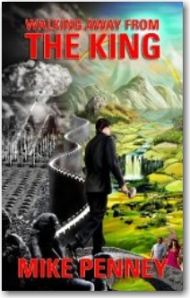
Briefly Noted: ‘Walking away from the King’

walkingawayAs I read this book on Kindle, I cannot ignore the fact that we need more page-turners like this that speak to the values in the current debate about ecology and our changing world. Mike Penney’s novel, released in March, is both entertainment and education. And, at present, the price is right if you’re of a mind to sample the story: it’s currently free on Kindle.

From the Publisher

The time has arrived to “walk away from the king.” The change necessary to save the human species and salvage the planet from impending ecological disaster cannot come from the powers that be, who only perpetuate their own ill-fated system.

A swell of diverse grassroots movements has arisen to create a very different culture than our contemporary world controlled by corporations and plutocrats. Rather than the status quo with its patriarchal, domineering, and exploitative culture of Empire, these groups favor a truly democratic Global Community, centered on bottom-up ecological revival, gender equality, cooperative action and individual responsibility. Collectively, they have determined they must “walk away from the king,” in preparation for a Grand Transition from contemporary self-destruction to a world of resilience and sustainability.

A prominent co-partner in the struggle is an organization calling itself Gaia/Universe. Many have galvanized behind its spokesperson, Bruno Panoka. A charismatic third generation televangelist that has turned from the “Heavenly Father” to “Mother Earth,” Panoka steps over the line and enrages the powers that be when he espouses the use of psychedelic mushrooms to expand consciousness, so as to jumpstart massive cultural change, and in turn economic and political change.

The book has some great reviews on Amazon with a 4.7 overall rating.

Malcolm

How a writer sees locations for prospective stories

In How to be doomed as a writer, I mentioned that author Stephen King prefers to look at story possibilities as situations rather than plots.

Over time, a writer becomes attracted to certain kinds of settings and the kinds of situations that might occur there. I’m attracted to natural wonders, especially mountains, as well as old buildings. My novels The Sun Singer and The Seeker both arise from a natural wonders setting, Glacier National Park. When I contemplated writing about the park, my first thoughts were about the kinds of things (situations) that might happen there. My Kindle short story “Moonlight and Ghosts” came to mind when I looked at an abandoned building near the house where I grew up.

Suppose you’re in a writing class and the instructor shows you the following picture obtained from the Florida Division of Historical Resources. All you’re told is that it’s an old and restored opera house in a small north Florida town.

PerkinsOperaHouse

Perhaps the instructor has influenced your brainstorming about this picture by showing you the building on a sunny afternoon with cars along the street. If s/he had shown you a photograph of the same structure as it sat on a moonlit night with the trees missing leaves during December, you’d come up with a different set of situations.

  • If you’re a fan of TV police shows, perhaps this looks like a place where a crime is committed.
  • If you’re drawn to opera and/or to theater, maybe you’ll think of stars, set designers, directors, little theater groups, professional “theater people” or amateurs coming together to put on a play that somebody hopes will fail.
  • Maybe there’s a secret about the building, some old legend or a will uncovered in a dusty attic that describes how, when the building was constructed, several hundred bars of gold were hidden beneath the box seats.
This picture gives you a very different feeling about the building.
This picture gives you a very different feeling about the building. – Florida Division of Historical Resources.

Okay, I’ve withheld some information, so with a few more facts, are your prospective story situations the same or do you change them?

  • The Opera House, which consists of a large second-floor theater and first floor shops, was built in 1880.
  • Traveling productions, including vaudeville groups, put on shows at this theater for a number of years. But then, when the railroads re-routed their lines and there was no easy way for out-of-town visitors to get to town, the theater fell into disuse.
  • Ghost hunters claim the owner died of a broken heart and still haunts the now-restored building. Purportedly, the former owner has been “seen” by the ghost hunters and a glowing orb of light.
  • The building is now used as a venue for weddings, local-area stage productions, and other functions where a seating capacity of 600 is desired.

If your instructor asked you to write a short story about this building, would you see it as just a building where anything might happen, a setting for a theater-oriented tale filled with clashing egos and temperamental stars, or would you try to link the local legends and the history of the building into your story? The only catch is, the instructor will expect you to convey–one way or another–a sense of the building. So, it can’t be a generic structure.

Well, unless you know the building already and/or are a historic preservation specialist, you’rre at a disadvantage when you try to describe it. If I were the instructor, I’d have several information sheets prepared as handouts.

  1. Those who wanted to use the building as a place setting would get a general description of the interior and some architectural information about the architectural style of the building, it’s size, etc.
  2. Those who wanted to use the location for a theater-oriented story, would receive information about the stage, the seating, the lighting, and the dressing rooms.
  3. Those who didn’t know yet what was going to happen but wanted real background, would be told about the building’s history and the ghostly legends.

What do you see here?

Interior as it looks now. - The Florida Center for Instructional Technology, University of South Florida photo.
Interior as it looks now. – The Florida Center for Instructional Technology, University of South Florida photo.

In a classroom exercise, you’re “research”–if you think any is needed–is limited by what you see in the photograph and what the instructor will tell you either in a lecture, a question and answer session, or via handouts. Since I am attracted by legends, especially paranormal stories, I’m going to see this as a place where something ghostly will happen.

How you tend to view real locations, whether they’re lakes, mountains, buildings, or city streets, will influence what “your muse” draws you to consider. Your inclinations may suggest that the instructor should have had several more handouts about the building. One might be how the building is used today. Another might be the kinds of businesses on the first floor and on adjacent streets.

As writers, we look at locations as places where something might happen or where something did happen. Whether you like tying in real history and legends or whether you see locations in terms of what’s happening there in the present day, once you’re attracted to a setting for who knows what reason, story situations may come to mind as you Google (or go to) the setting.

When I first saw pictures of this building, my first thought was, “Good, here’s a cool old building in the Florida Panhandle where I’ve been placing many of my recent stories.”

As I learned about the building–its history, its ghosts, its restoration–ideas began to float around for prospective stories. As this process unfolds, we may never write a story…unless we’re in a classroom and have no choice. If a story comes out of it, the setting was the catalyst and the result was a marriage of the real and the writer’s imagination.

Malcolm

P.S. If the actual building intrigues you, you can learn more about it here.

Brown Bag Presentation: Glacier’s Butterflies

from the Crown of the Continent Research Learning Center:

ChinnColor in Motion: A Look at Glacier’s Butterflies

 by Bob Chinn

Monday, July 14, 2014
12 noon-1 PM
Glacier National Park Community Building

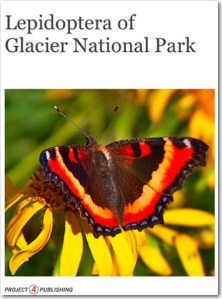
Over 100 species of butterflies and many more species of moths play an important role in Glacier National Park. For some they catch the eye as beautiful flowers on the move, while for others they bring special delight by landing on a finger. Through photographs and video clips, Bob Chinn will share his eBook and take guests on a virtual tour of Glacier’s Lepidoptera.

Click here for more information about the brown bag presentations.

Park visitors often miss the butterflies while looking at grand vistas and hoping to see mountain goats and bears. This presentation, and Bob Chinn’s soon-to-be-available e-book show you there’s a lot of small color in the park if you know where to look.

Malcolm