Review: ‘The Improbable Wonders of Moojie Littleman’ by Robin Gregory

The Improbable Wonders of Moojie Littleman, by Robin Gregory ( Mad Mystical Journey Press, December 14, 2015), 294 pp.

Moojie has so many strikes against him that survival of any kind seems improbable. He’s born with physical disabilities; is slow to talk and when he finally does, he stutters; he loses his mother and his father won’t have him; almost everyone taunts him; and he’s sent to live with a cantankerous grandfather at a place called St. Isidore’s Fainting Goat Dairy. If being named “Moojie” was the first curse, being sent to the dairy was just about the last straw.

MoojieBut were more last straws to come.

His grandfather drinks, curses, works Moojie hard in spite of the young man’s weak legs and weak arms, constantly threatens to send him to an orphanage, and passionately has it out for the so-called “hostiles” who live in the surrounding forests.

While the hostiles first appear to have come from the land of faerie, Moojie discovers they’re a magical race tasked with demonstrating harmony in our world. He hopes their clan will accept him because, among other things, he has no true family to call his own. But will they trust him? He can scarcely trust himself. But he’s learning, and the realism of this process is well handled by the author.

Moojie, his grandfather, his meddlesome aunt, the clan members, and the townspeople are defined in spot-on detail. They have depth, though Moojie believes he’s shallow and inept at the beginning of this well-crafted and beautifully told tale. The book’s magical realism accentuates the abilities of the off-world clan family as well as the dormant gifts Moojie has been blessed (or possibly cursed) with.

Many will call this a coming-of-age novel. Yes it is. But that assessment is much too stale for such a fresh, rich story. The story is about making choices and the probable transformations that follow them. Other than a bit of sentimentality at the end, Robin Gregory’s novel is a wonder about wonders and highly recommended.

–Malcolm

Malcolm R. Campbell is the author of magical realism and contemporary fantasy novels and short stories.

Is having your book ‘out there’ enough for you?

This article (Only 40 Self-Published Authors are a Success, says Amazon) has prompted some people, including me, to ask why Amazon defines financial “success” as having sold a million e-books over the last five years. Self-published writers tend to price their books between $3 and $5, and often at only $0.99. They can earn up to 70% of the retail price. In my view, one can sell a lot fewer than a million copies and still be earning a decent income.

amazonlogoAt the same time, the article has prompted others to say that just having their books “out there” is all they need to feel successful. They feel that if they do a great job of writing a story, have a great editor and a wonderful cover artist/designer, they are fine with the results of their avocation. Far be it from me to criticize that view. One might have similar feelings about creating music, making art, sewing quilts and other creative arts and crafts.

I am grateful for each reader, for every honest reviewer, for having a wonderful publisher and editor, and for all of those who’ve interviewed me, talked about my books, and otherwise been supportive. All of that is a viable form of success.

If you sense that a “however” is coming, you’re right.

However

Even the IRS considers that if we never show a net profit as a writer, we aren’t really a business. Writing books isn’t a free undertaking. One has to buy reference books, a computer, an Internet connection, office supplies, travel to locations where the novel is set, and (if self published) pay for your editor and cover designer. If these costs exceed the amount of money from royalties and direct sales, then one is running at a loss. Whether one calls his or her writing a business or an avocation, those costs can reduce the happy feeling one gets for having his or her books in print and getting some good reviews.

The people who run stores will seldom hear about self-published books.

I grew up in another era, long before e-books and Kindle Direct Publishing, so I believe writing (fiction, especially) is always a long-shot proposition. One can never expect to earn a John Grisham or a J. K. Rowling income, or even enough to write full time. Most writers can’t survive on writing income alone and, as more and more readers expect 99 cent or free books, it’s getting harder and harder for most writers to cover costs, much less see real profits. So, my “however” is that if one wants to have a successful writing career, that “success” has to at least provide enough income to cover expenses.

Creative people are somehow expected to take pleasure in the work they do even if they are bankrupt. I suppose you can say that writing passion exceeds having a viable business, or that we feel at our best when we’re creating what we create. However, while I don’t need to sell a million e-books to feel successful, I do need not to be running in the red. I don’t think that’s too much to ask in order to feel successful in a career where–some have said–winning the Powerball is a better bet.

So, having my books “out there” is not enough. It’s wonderful, but if “out there” is all there is, it’s not paying the bills. Worse yet, it’s costing writers money and taking them away from their families.

If you’re a reader and/or a writer, do you think it’s possible to feel successful as a writer–or any other creative artist–if you’re expenses are higher than your sales?

See alsoFalling book prices could force authors to abandon their keyboards – The article notes Amazon’s penchant for running at a loss with low prices and low payouts to writers.

–Malcolm

On location: Carrabelle, Florida

Carrabelle waterfront as it looked in the 1960s. - Photo from the Florida Memory Project.
Carrabelle waterfront as it looked in the 1960s. – Photo from the Florida Memory Project.

Carrabelle sits on the gulf coast in the Florida Panhandle and has three rivers running through it. I lived an hour away in Tallahassee from the first grade through college and loved those rivers,  Carrabelle River, Crooked River and Ochlockonee River. I also liked the unspoiled coast–still called the Forgotten Coast–and the nearby Tate’s Hell State Forest. Except for the unfortunate logging in Tate’s Hell, which is currently in recovery, the beaches, swamps and rivers were more pristine than those in the crowded peninsula section of the state.

Across the bay from Carrabelle is Dog Island. In the 1950s and 1960s, my Scout Troop often went camping there. My best friend and I went there by speed boat and sail boat to explore the dunes along its coast. The island remains sparsely developed while the nearby St. George Island has more traffic since it’s connected to the mainland by a bridge. I was against the bridge when it was being built, but they the state department of transportation didn’t ask me.

Carrabelle as it looks today.

In addition to the great seafood and the well-publicized “world’s smallest police station,” visitors will enjoy Alligator Point, Carrabelle Beach, St. George Island State Park, Ochlockonee State Park, and the Ft. Gadsden Historic Site. Highway 98 is a scenic coastal road and highway 67 is a scenic route through state and national forests. With 1300 residents, Carrabelle is not crowded except on warm summer days when people drive down from Tallahassee to enjoy the beaches.

I figuratively traveled to Carrabelle last week while working on a new short story set there in the late 1960s. I wish it weren’t seven hours away from my home in northwest Georgia. I would have taken a fresh look at a place out of my childhood for hushpuppies and mullet–along with the ambiance. Called “Visiting Aunt Ruby,” my short story will be released on Kindle by Thomas-Jacob Publishing February 12 as part of our Stories from Tate’s Hell series.

carrabellemapquestIf you live closer to the gulf coast and haven’t been to Carrabelle, go take a look, and while you’re there, climb to the top of the Crooked River Lighthouse and explore the World War II museum at Camp Gordon Johnston.  If you dare to hike into Tate’s Hell and end up getting lost, don’t call me on your cell phone (if it even works there) and ask me how to get the hell out.
“The history of Dog Island and Carrabelle, Florida, includes a wonderful mix of Indians, shipping, bootlegging, logging and battles. This charming town was a fishing village prior to the Civil War, isolated from the rest of Franklin County by the lack of bridges and paved roads. After the war, it became an internationally known lumber town, shipping wood from the hundreds of thousands of acres of surrounding virgin forest. Turpentine, distilled from pine sap, was shipped via schooners from the natural deep water port on the Carrabelle River. ” – Get Hooked on Carrabelle

— Malcolm

Malcolm R. Campbell is the author of “Conjure Woman’s Cat,” a 1950s-era novella set in the Florida Panhandle. It features a conjure woman who claims to be older than dirt, but not too old to fight the KKK when her town’s police force refuses to investigate the murder of a Black girl.

Briefly Noted: ‘Downwind: a People’s History of the Nuclear West’

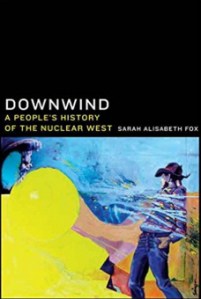
Downwind: a People’s History of the Nuclear West, by  Sarah Alisabeth Fox (Bison Books: November 2014), 304 pp.

downwindThe opening lines of this book begin a frightening story: “By the time five-year-old Claudia returned to her swing set, a strangely colored cloud was all that remained of her flying saucer. Years later, she leaned the apparition she had seen in the sky was not a UFO but the mushroom cloud of a nuclear explosion. Her childhood home in southern Utah was about a hundred miles east of the Nevada Test Site.”

Author Sarah Fox goes on to say that the site which was operational between 1951 and 1992 was one of the world’s most heavily used nuclear weapons testing areas.

From the Publisher

Downwind is an unflinching tale of the atomic West that reveals the intentional disregard for human and animal life through nuclear testing by the federal government and uranium extraction by mining corporations during and after the Cold War.

In chilling detail Downwind brings to light the stories and concerns of these groups whose voices have been silenced and marginalized for decades in the name of “patriotism” and “national security.”

With the renewed boom in mining in the American West, Fox’s look at this hidden history, unearthed from years of field interviews, archival research, and epidemiological studies, is a must-read for every American concerned about the fate of our western lands and communities.

From the Reviewers

  • “Comprehensive and incisive, Downwind also adds heart and soul to an epic story of resilience in the aftermath of reckless arrogance. Sarah Fox gives the history of the nuclear age back to the people who had it written in their bones. The testimony she captured is both shocking and inspiring.” – Chip Ward, author of Canaries on the Rim: Living Downwind in the West
  • “Fox’s narrative forces the reader to choose whether to accept the official version of events or to believe the people who lived downwind of the nuclear tests and who worked in the uranium industry. There is no middle ground in her argument. According to Fox, repeated nuclear tests led to cancers and other diseases and to the deaths of innumerable people.” – David Mills in “Montana: The Magazine of Western History,” Winter 2015.

downwindwindpatternsIn her January 27, 2016 blog post, Day of Remembrance for Downwinders: the 65th Anniversary of the Inception of Nuclear Testing in Nevada, Fox says that there were over 900 nuclear tests at the site. Her accompanying graphic illustrates where wind patterns carried the resulting pollution.

In both the blog and the book’s introduction, she says that the proceeds from the sale of the book are being donated Heal Utah, “an environmental non-profit that promotes renewable energy and protects Utah’s public health and environment from nuclear, toxic, and dirty energy threats.”

In an era when the United States’ nuclear weapons program is supposedly a relic of the past, Downwind reminds us that the sins of the past are very much still with us even if we never again use a nuclear weapon. The book has a 4.3 review rating on Amazon with five five-star reviews and one one-star review. The one-star reviewer states that Fox’s stories are not only not new, but that her information about reported illnesses and deaths isn’t accurate. If the author has refuted this claim, I haven’t found it. It’s worth noting that a commenter believes this review is based a less-than-accurate, self-published book.

On balance, the book has stories we should know about if we haven’t heard them already. If readers follow this up by looking at the Heal Utah site, they’ll see that the past is a warning to those currently mining uranium in close proximity to the Grand Canyon.

–Malcolm

Men stage “cry in” for old ‘Playboy Magazine’

Junction City, Texas, Star Gazer News Service–The tear gas fired at protesters who refused to move out of the doorway of the Main Street Book Emporium was ineffective because the men protesting the loss of the “old version” of Playboy Magazine were already crying.

playboyThe protest began when Playboy Magazine collector Jerry Smith walked into the downtown Junction City bookstore for his monthly dose of nudity not categorized as pornography and discovered that the March issue of Playboy wasn’t “his daddy’s Playboy.”

“Has Hugh Hefner come down with Alzheimer’s, ” shouted Smith in front of the monthly meeting of the third Methodist Church’s reading club. “The fully nude chicks are gone. I’m calling out the troops.”

According to author Cane Molasses, who was working the cash register today, Smith called his friends and they “arrived on pickup trucks with large tires and demanded we sell the old Playboy.”

Jaimie McPheeters, who works at a local wagon store said, “My wife allows me to buy Playboy because she knows I’m reading it for the interview, fiction and the articles.  But no fully nude women, that’s just unAmerican.”

According to Playboy, the new version of the magazine–which still features scantily clad women–is “safe for work.” Yet both Smith and McPheeters believe the old version was safe for work and more “just fine” for today’s audience.

Informed sources who claim to have seen Hugh Hefner somewhere said “there’s a reason why General Motors isn’t selling ‘your father’s Buick.’ Playboy believes that men have evolved and that if they can’t find nude women anywhere else these days, they’re not fit to read the 2016 version of the magazine.

The men refused to leave until a representative for Bonnie’s Whorehouse invited the protesters out for a “free look and feel” day at the establishment.

“Men are wired differently than women, and praise the good Lord for that,” said Bonnie Jones (aka “Queen of the Concubines”). “They need a monthly dose of nudity in order to survive as fully functioning human beings.”

Spokesmen for the book store said that while they appreciate the men’s patronage, “Playboy Magazine no longer makes the world go ’round.”

–Story by Jock Stewart


The gold in old manuscripts

Those of us who aren’t poets occasionally think up interesting couplets and quatrains that never go anywhere because the rest of the poem never comes together. Maybe professional poets also have this problem.

manuscriptWhat’s more likely for novelists is writing about a wonderful character or an exciting event in novel manuscript that never gels as a whole. Perhaps we write the entire novel, but see that it doesn’t quite work. Unlike the couplet that comes out of the blue without a poem to go with it, the pure gold scenes in unfinished or unsubmitted novels might not have originally caught our attention when we viewed them as part of a larger work.

Old manuscripts gather dust if we printed them out or were often saved in earlier versions of Word and filed away in an archive with a directory (folder) name like “OldStuff” or “Archive.”

If you’re in between major projects–or stuck in your current work in progress–reading through those old manuscripts might be the jolt you need to throw off your temporary writer’s block; or just maybe one of your favorite scenes with a memorable character can be pulled out of the “OldStuff” bin and turned into a short story.

Odds are, the scene will require rewriting so that it stands on its own as a short story with a beginning, middle and end rather than being a wandering slice of life that disappoints readers. Your options are unlimited because the scene you choose no longer has to fit into the novel you extract it from.

goldmineI’m thinking of this idea because I have some older books that are out of print that include a few scenes I happen to like a lot. Fixing them up was a lot more fun than I expected. Characters I liked when I wrote the original, suddenly emerged more fully formed in the revision. If they were evil, they became really evil in the short story. Or, if they were funny, they turned into first class hoots.

We often waste time trying to resurrect old novels that we already know are hopeless messes–good practice works, perhaps. But when we find a scene we can upload as a great Kindle short story, it’s like going into an abandoned mine and finding a shining nugget that got overlooked the last time anyone was there.

–Malcolm

KIndle cover 200x300(1)Malcolm R. Campbell is the author of “Conjure Woman’s Cat,” a 1950s-era story about granny vs. the KKK that will be 99¢ on Kindle February 4, 2016.

Learn more at: http://www.conjurewomanscat.com/

Dear Hertz, about that smoke-scented car

Dear Hertz,

My answer to this question is "no" since Hertz isn't enforcing the policy by penalizing customers who smoke in the cars.
My answer to this question is “no” since Hertz isn’t enforcing the policy by penalizing customers who smoke in the cars.

About that smoke-scented car from the Baltimore airport we rented on January 20th , it doesn’t really help to try and perfume away the smell left in a car left by the last user who apparently smoked like a chimney in spite of the DON’T THE HELL SMOKE STICKER.

Frankly, we think you should have charged that person more for ruining the car interior for future customers; then you could have given those of us who are allergic to cigarette smoke a debate.

When we rented a “no smoking car” we thought that meant the car wouldn’t smell like smoke. What do you think?

Blizzard rebate?
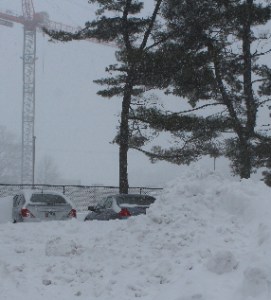
Blizzard rebate? (Rental car on left.)

On the plus side (health-wise) our allergies didn’t kick in as badly as they usually do because Jonas descended on the greater Baltimore area where we were visiting family and we couldn’t drive the car much at all because: (a) we couldn’t see the road, (b) the cops were giving tickets to people driving in the blizzard, (c) the car was blocked in the parking lot for several days.

Since Baltimore and Washington, D.C. had ample warning about the impending storm of the century, it would have helped if the car had been equipped with studded snow tires and a plough.

Do we get a blizzard rebate?

Just wondering,

Malcolm

P.S. When we asked your desk clerk how to get from the airport’s offsite car rental facility to the Interstate, his directions sent us into a fantasy world with streets nobody’s ever heard of.


Free Kindle Short Story: “Dream of Crows”

My Kindle short “Dream of Crows” will be free on Amazon between January 21 and January 23. (The story is always free for Kindle Unlimited subscribers.)

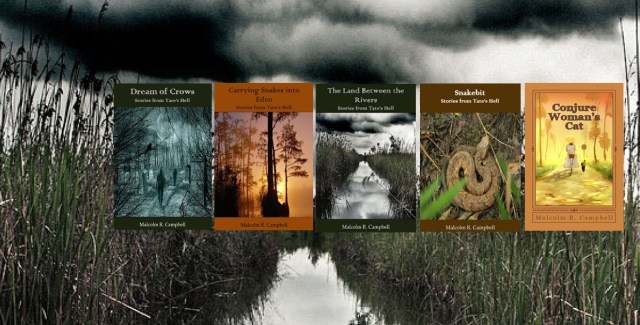
crowssmallcoverDescription: After going on a business trip to north Florida, you have strange dreams about something lurid and/or dangerous that happened in a cemetery next to Tate’s Hell Swamp. You try to remember and when you do, that’s all she wrote.

Picture This: When a person has too much to drink and gets mixed up with a stunning conjure woman, exciting things can turn into dangerous things. That’s why folks need to be careful when walking into a bluesy bar where a temptress is serving drinks–and more.

Tate’s Hell Stories: This story is one of a series of books that are connected by one thing only: a forbidding swamp. The swamp, which is real, is on Florida’s Gulf Coast near the town of Carrabelle. You probably haven’t heard of the swamp or the town because they’re in what’s often called “the forgotten coast.” Those of us who grew up there hope it stays forgotten.

Obviously, this short story leans a bit into the paranormal side of things. You might also say it’s a bit experimental since you are the main character.

Have fun reading the story–if you dare.

Malcolm

FBfivebooksCOVER


about those days when we fight with our words

We try, don’t we, to make the words in our stories and novels flow smoothly like a languid river on a summer day. That seldom happens naturally; that smooth flow is often created with a lot of fits and starts before we get the words right.

There are days, though, when we fight with our words. On those days, smoothly flowing prose seems impossible.

If we don't relax, we'll never get the words right.
If we don’t relax, we’ll never get the words right.

That often happens when we go into a scene not fully decided what it’s supposed to accomplish. Or, if we do know, then something else is out of sync: the character’s motivations and beliefs, our background research about subject matter outside our comfort zones, or that we’re trying to cram far too many things into a scene–which, in reality–would play out as a very casual moment.

What do you do when this happens to you?

I glanced at my last post here which was about moonshine, and thought maybe a few swallows of white lightning would smooth out the words. As tempting as that may be, it seldom works.

Fighting with the words usually doesn’t work either because the longer it goes on, the worse the scene looks. Pretty soon, it’s real easy to think that one ought to just quit the writing business and do something more honorable like teaching or working on the railroad or beekeeping.

One way or the other, one needs to take a break from the words whether it’s for an hour or a day and think about something else. This is why so many of us surf the Internet: we’re doing something else so we can avoid looking at that messy paragraph where we’re temporary bogged down.

If I stay away from the manuscript for a while with things seriously divert my attention, I’ll sooner or later start hearing the words of that troublesome scene flowing like a river again. Then I go back to it and start typing, wondering why the solution wasn’t obvious from the beginning.

Knowing when to step away is, I think, an important part of the writing process. Since none of us quite know how the creative process works, it’s easy for a fight with words to turn into serious doubts about our abilities as writers: How can such a simple scene become impossible to write? Why don’t we know what the characters need to say and do here? Where’s that smooth-flowing river of words?

I’m guessing most writers know what I’m talking about. We might follow different prescriptions for curing the problem? Maybe you go to a movie, read a magazine, work in the yard, stop at a bar where your friends hang out, anything to take your mind off the words that aren’t coming out right.

If you have a sure-fire cure, tell us about it in the comments. Your secret won’t make you rich, but you’ll feel better about yourself for sharing it.

–Malcolm

selfeselect

Librarians: My novella “Conjure Woman’s Cat” has been selected by Library Journal for its national Self-e Selection listing.  If your library is not already part of the program, click here for more information.

Moonshiners were misunderstood by too many for too long

“The South is no stranger to small-batch spirits. Moonshiners were microdistilling long before such a word existed. The clear (often questionable) spirit was available only if you knew someone who knew someone. But the landscape of legal moonshine has changed dramatically. Now, this grain distillate sits conspicuously in stores—all taxes paid. And according to the American Distilling Institute, the number of craft distilleries is growing by 30% each year. Here are some of our favorite “moonshines” to come out of the woodwork. And they actually taste good.” – Southern Living

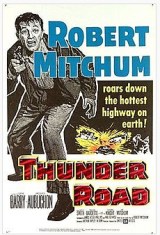
thunderroadI’m glad to see legal moonshine showing up in restaurants and liquor stores. Try a glass. You might be surprised. And now that it’s legal and sort of a fad, you won’t need to worry about lead poisoning because some clown used the radiator of his Ford truck in the still.

When I watch old movies that I’ve seen before, I always pretend I haven’t seen them before. That means pretending, for example, as I watch Kate Winslet running through the ship, that this time Titanic won’t sink and that Jack won’t die in the icy waters. I felt the same way about the moonshiner movie “Thunder Road.” I always wanted the movie to end well with moonshiner  Lucas Doolin (Robert Mitchum) getting away from the Feds forever and retiring in Cuba or Bermuda.

I grew up in a shine-free house (not counting furniture polish and floor wax) 

My parents, who didn’t allow booze in the house in those days, couldn’t figure out why I liked that movie, much less why I was on the moonshiners’ side in real life. Then, as now, I thought people should be able to make all the spirits whey wanted without any interference from the government. And what’s the deal with those taxes–really out of line, I thought then–and still think now.

This is one of the eight brands featured in the Southern Living article.

Moonshining was big in Florida where I grew up and big in the Smoky Mountains where we went on many vacations. I wanted my parents to pay somebody who knew somebody to get us a Kerr jar full of high quality shine. But they never did, stealing from my brothers and I what could have been a wonderful part of the vacation experience. Seemed like it would have helped us in school and kept us from getting summer colds and chigger bites.

Now, for research purposes only, I can taste it so that when I describe Eulalie in Conjure Woman’s Cat as making plenty of her own jick and sipping it regularly, I can make the scenes accurate. There’s nothing better than accuracy.

One challenge for the moonshiner, of course, was buying all that sugar and all that corn for the mash without attracting attention. Fortunately, in Florida one could grow sugar cane and buy the corn from a farmer across the road who loved the shine.

Nothing beats telling stories while passing the jar back and forth on the back porch. As kids, we had all the sugar cane stalks to chew and juice to drink we wanted because it was old on street corners. If we could have dipped those stalks in sweet, syrupy smooth shine, life would have been better for everyone.

Now with it being legal (as long as you take care of all those licenses and fees), the newspapers are no longer filled with those horrifying pictures of a bunch of cops chopping apart beautiful stills or smashing bottles of moonshine so it all went to waste.

Good Lord, it must have taken a special kind of stupid to dump a hundred gallons of Granny Henderson’s best hooch into the Wakulla River. 

Folks would be better off if there was more sipping happening now. At any rate, for those of you who are keeping score, when Eulalie and her friend Willie talk about the taste of apple-flavored shine in the novella, I’m writing what I know.

–Malcolm