Reduced price just in time for your holiday shopping

The Kindle edition of my conjure and crime novel Eulalie and Washerwoman, from Thomas-Jacob Publishing, has been reduced to only $2.99 for the holidays. Ah, the books you can give (or keep for yourself)!

From the publisher:

Torreya, a small 1950s Florida Panhandle town, is losing its men. They disappear on nights with no moon and no witnesses. Foreclosure signs appear in their yards the following day while thugs associated with the Klan take everything of value from inside treasured homes that will soon be torn down. The police won’t investigate, and the church keeps its distance from all social and political discord.

Conjure woman Eulalie Jenkins, her shamanistic cat, Lena, and neighbor Willie Tate discover that the new “whites only” policy at the once friendly mercantile and the creation of a plantation-style subdivision are linked to corrupt city fathers, the disappearing men, rigged numbers gambling, and a powerful hoodoo man named Washerwoman. After he refuses to carry Eulalie’s herbs and eggs and Willie’s corn, mercantile owner Lane Walker is drawn into the web of lies before he, too, disappears.

Washerwoman knows how to cover his tracks with the magic he learned from Florida’s most famous root doctor, Uncle Monday, so he is more elusive than hen’s teeth, more dangerous that the Klan, and threatens to brutally remove any obstacle in the way of his profits. In this follow up to Conjure Woman’s Cat, Eulalie and Lena face their greatest challenge with scarce support from townspeople who are scared of their own shadows. Even though Eulalie is older than dirt, her faith in the good Lord and her endless supply of spells guarantee she will give Washerwoman a run for his ill-gotten money in this swamps and piney woods story.

And a reviewer says:

Told through the narrative voice of Lena, Eulalie’s shamanistic cat, the fast-paced story comes alive. The approach is fresh and clever; Malcolm R. Campbell manages Lena’s viewpoint seamlessly, adding interest and a unique perspective. Beyond the obvious abilities of this author to weave an enjoyable and engaging tale, I found the book rich with descriptive elements. So many passages caused me to pause and savor. ‘The air…heavy with wood smoke, turpentine, and melancholy.’ ‘ …the Apalachicola National Forest, world of wiregrass and pine, wildflower prairies, and savannahs of grass and small ponds… a maze of unpaved roads, flowing water drawing thirsty men…’ ‘…of the prayers of silk grass and blazing star and butterfly pea, of a brightly colored bottle tree trapping spirits searching for Washerwoman…of the holy woman who opened up the books of Moses and brought down pillars of fire and cloud so that those who were lost could find their way.'”

– Rhett DeVane, Tallahassee Democrat

I hope you (and the friends on your holiday list) enjoy the story.

–Malcollm

Briefly Noted: ‘Uncle Monday and Other Florida Tales’

Uncle Monday and Other Florida Tales, Edited by Kristin G. Congdon, Illustrated by Kitty Kitson Peterson (University Press of Mississippp, 2001), 196pp

unclemonday“Uncle Monday” is a widely known legend about a central Florida shape shifter and conjure man first collected in print by Zora Neale Hurston in the 1930s as part of her fieldwork throughout the state.

It’s an apt title story for this collection of oral-tradition stories compiled and annotated by Kirstin G. Congdon. I have the hard cover edition which is out of print; the paperback is available via Amazon. Unfortunately, it’s not available on Kindle.

These stories are part of what makes Florida, Florida. This volume makes them accessible, though some can be found throughout the Internet (oddly enough, sometimes copyrighted by those who own the sites) as well as in Florida’s Folklore Programs archives and volumes published by the Federal Writers Project.

Congdon is also the author of Happy Clouds, Happy Trees: The Bob Ross Phenomenon (with Doug Brandy) and Just Above the Water: Florida Folk Art (with Tina Bucuvalas).

From the Publisher

Few states can boast the multitude of cultures that created Florida. Native American, African American, Afro-Caribbean, White, and Hispanic traditions all brought their styles of storytelling to fashion Florida’s legends and lore.

Uncle Monday and Other Florida Tales captures the way the state of Florida has been shaped by its unique environment and inhabitants.

Written for adults, children, and folklorists, this gathering of forty-nine folktales comes from a wide variety of sources with many drawn from the WPA materials in Florida’s Department of State archives. Kitty Kitson Petterson’s detailed pen-and-ink drawings illustrate each narrative. The stories represent a cross-section of the ethnic diversity of the state.

The book is divided into five sections: “How Things Came to Be the Way They Are,” “People with Special Powers,” “Food, Friends and Family,” “Unusual Places, Spaces, and Events,” and “Ghosts and the Supernatural.” Within these sections are stories with titles ranging from “How the Gopher Turtle was Made” to the improbable “The Woman Who Fed Her Husband a Leg Which She Dug Up from a Cemetery.” In these tales Florida is a world full of magic, humor, and adventure. There are tall tales, old magical legends, even quirky, almost straightforward narratives about everyday living, such as one story titled, “My First Job.”

Kristin G. Congdon’s informative introduction discusses the origins of Florida tales and the state’s storytelling tradition. A reflection accompanies each story to guide readers to a deeper understanding of historical context, morals, and issues. Although oriented towards children, Uncle Monday and Other Florida Tales is also accessible to adults, particularly scholars interested in the state’s folklore and oral traditions. Whether in a classroom or home, this guide adds great value to the collection.

Reviews

The book has three five-star reviews on Amazon, including this one by “grasshopper4”:  “Uncle Monday is a shape-shifter who for years has resided in a lake near Orlando. Uncle Monday is also a terrific compilation of folklore from Florida. There are myths, legends, tall tales, fairy tales, family stories, and a plethora of excellent oral narratives that have been and remain told in Florida. The introduction to the book is well-written, and each section provides good background information on various characters and tale types. The book also has wonderful illustrations that capture the feel of various stories, and the book includes excellent ideas for teachers to use when presenting the texts in class. It’s a model study by a fine folklorist.”

The book is a wonder for folklore students, writers researching old legends for use in Florida stories, and anyone enjoying a great story.

–Malcolm

Uncle Monday is mentioned in my novel “Eulalie and Washerwoman.” This post originally appeared on “Sun Singer’s Travels”

CIA Operation Rounds Up Mexican Ladders

Langley, Virginia, October 16, 2017, Star-Gazer News Service–CIA officials announced this morning the “unqualified success” of Operation Ladder Purge, an eight-month effort to round-up and detain Mexican ladders that pose a threat to the proposed border wall.

“We’ve known for some time that a $10000000000 wall can easily be defeated by professional coyotajes and polleros and other people smugglers with a garage full of two-peso ladders,” said Deputy Director of Wall-Scaling Technology, Robert Hook. “Build a 10 foot wall, you’ll see an 11-foot ladder; build a 15 foot wall, you’ll see a 16 foot ladder.”
Spokesmen say that to date, Operation Ladder Purge has stolen, confiscated, destroyed, or otherwise neutralized 79.8% of all Mexican ladders. The operation began when it became clear that U.S. muscle could not convince the Mexican government to outlaw the manufacture or importation of ladders.

One Mexican law maker who prefers to remain anonymous, said, “It was our feeling that such legislation would drive painters, carpenters, and fire departments out of business because honest people would then be without ladders while criminals had easy access to black market ladders imported from rogue states like North Korea.”

According to CIA studies, people smugglers say to clients, “Something there is that doesn’t love a wall, that swells tunnels in the ground under it, and spews the upper bricks with ladders reaching for the sun.”

“We’re fighting that mentality and fighting it hard,” Hook said. “On the humanitarian side, top brass learned that the suffering people of Puerto Rico cannot pull themselves up by their bootstraps because they don’t have any boots. So we sent them the ladders we collected in Mexico as part of our Up The Ladder For Success Program.”

CIA station agents say that so far children’s step ladders are not being targeted.

According to informed sources, Americans supporting the building of a border wall may have a false sense of security once that edifice is completed if Mexican ladders aren’t neutralized.

Rumors that “sanctuary state” California is sending free ladder kits to Mexico disguised as children’s toys are currently being investigated.

Story by Jock Stewart, Special Investigative Reporter

Throwing the Bones

What do bones bring to mind? Perhaps, the bones left on a dinner plate, the fish or chicken bones you try not to swallow, the bones you break when you fall, the bones that ache as you grow older, or perhaps you think of the recent TV show “Bones” based on the novels of forensic anthropologist Kathy Reichs.

Fans of the TV show and Reichs’ novels know that bones are used in forensics to determine identity and potentially the natural or criminal cause of death. Conjurers and others who “throw the bones” do so as a method of divination. The use of bones as oracles or to determine the future of a person in relation to a question is ancient. The method is also rare inasmuch as most people tend to focus more these days on Tarot cards, I Ching readings, crystals, and psychic skills.

“Bone Reading is a form of divination that uses animal bones, nuts, shells, and curios such as dice or beads…collectively known as ‘bones’ …to divine information . . .In times past, the bones were often tossed into a circle drawn on the ground; however, modern bone readers are more inclined to toss them onto a specially marked cloth. ” – Carolina Conjure

Possum Skeleton – Wikipedia

Conjurers use a variety of methods, with many relying on the bones of one animal–often a possum or a chicken–that are kept in a pouch or basket–and used multiple times for multiple readings. Some use natural colorings, marks or paints to create a heads/tails side of each bone. This tends to limit the reading to one or more yes/no questions.

Others consider the layout of the circle whether it has been printed on a cloth or drawn on the ground. Some visualize a single cross that’s called a crossroads and consider the quadrants where the bones fall. Others divide the circle into sections based on the face of a clock, the “wheel of the year” (seasons, solstices, equinoxes), or the signs of the zodiac.

Those who visualize the circle where they toss the bones as being divided into sections, may also interpret the bones partially on bone type (what it means by itself), intuition, or the guidance of spirits (typically ancestors). Depending on the question being considered, they may include a domino, seeds, dice, shells, stones or other objects in the circle. Whatever falls outside the circle when the bones are thrown (tossed, scattered) does not figure in the reading other than noting that it was excluded.

Introduction to Bone Throwing

Bone readers typically don’t use the entire skeleton of an animal. Their collection may include bones obtained in various ways so that each has a special significance. Others may not seem to apply to a particular question. In addition, those using, say, possum or chicken bones, see meanings in each bone: good or bad news, travel, health, relationships. Those reading possum bones may throw only six of them, the right and left jawbone, the right and left front legs, and the right and left back legs,

The circle is considered sacred space. It contains the reading just as a particular Tarot card spread contains the cards to be considered. Many readers begin the reading with a prayer, the recitation of a psalm, and settling themselves into a relaxed posture and frame of mind so as to be receptive to the messages found when they throw the bones.

Bone reading is difficult–and some say, impossible–to learn out of a book or from a website even if you’re using the bones to answer yes/no questions. Interpreting the bones–as with tea leaves–depends on practice, a wise mentor, and sometimes initiation into a religion or a system. I find it fascinating while writing my conjure and crime novels, but would never attempt it myself. On the other hand, my Tarot deck is an old friend.

Malcolm

For information about my hoodoo novels “Conjure Woman’s Cat,” “Eulalie and Washerwoman,” “Lena,” and “Fate’s Arrows,” click on my name to see my website.

Should Authors Use Chapter Titles? 

“I ran across this question recently in a Facebook group, and noted there was a lot of opinion on it. Some authors are vehemently opposed to using chapter titles, while others adore them. So, what’s best?Well, the simplest answer is that it’s entirely up to the author. However, chapter titles do tend to be more prevalent in certain genres, so if that’s one you write in, you may want to adopt them.”

Source: Should Authors Use Chapter Titles? ‹ Indies Unlimited ‹ Reader — WordPress.com

R. J. Crayton provides tasty food for thought about the use of chapter titles, noting that some genres tend to use them more than others. I tend not to use them because I don’t like to tip off readers about what’s coming up.

Fortunately, Crayton doesn’t suggest a return to old fashioned chapter titles of the sort that were (a) long, and (b) spoilers, such as: Chapter Three – Where Bob Learns That When His Ship Goes Down Near Cuba, There Are Real Sharks in the Water.

Indies Unlimited offers another good post for writers.

–Malcolm

a few of my favorite Kazuo Ishiguro quotes

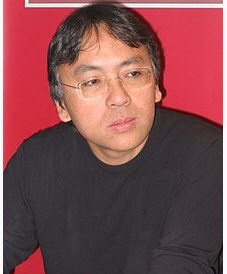
According to the Nobel Prizes website, the selection committee commended Ishiguro as an author “who, in novels of great emotional force, has uncovered the abyss beneath our illusory sense of connection with the world”

Wikipedia photo

In his Nobel interview, Ishiguro said, “No, I don’t think it will sink in for a long time. I mean, it’s a ridiculously prestigious honour, in as far as these kinds of things go. I don’t think you would have a more prestigious prize than the Nobel Prize. And comments I would make, I mean, one is, a lot of that prestige must come from the fact that the Swedish Academy has successfully, I think, kept above the fray of partisan politics and so on. And I think it’s remained one of the few things that’s respected, whose integrity is respected by many people around the world, and so I think a lot of the sense of honour of receiving the Prize comes from the actual status of the Swedish Academy. And I think that’s a great achievement unto itself, over all these years the Swedish Academy has managed to retain that high ground, in all the different walks of life that it honours. And then the other reason it’s a terrific honour for me is because … you know I come in a line of lots of my greatest heroes, absolutely great authors. The greatest authors in history have received this Prize, and I have to say, you know, it’s great to come one year after Bob Dylan who was my hero since the age of 13. He’s probably my biggest hero.”

Some of my favorite quotes from Ishiguro’s work

“I have this feeling that all it will take will be one moment, even a tiny moment, provided it’s the correct one. Like a cord suddenly snapping and a thick curtain dropping to the floor to reveal a whole new world, a world full of sunlight and warmth.” – The Unconsoled

Wikipedia photo

“What is the point of worrying oneself too much about what one could or could not have done to control the course one’s life took? Surely it is enough that the likes of you and I at least try to make our small contribution count for something true and worthy. And if some of us are prepared to sacrifice much in life in order to pursue such aspirations, surely that in itself, whatever the outcome, cause for pride and contentment.” – The Remains of the Day

“That was the only time, as I stood there, looking at that strange rubbish, feeling the wind coming across those empty fields, that I started to imagine just a little fantasy thing, because this was Norfolk after all, and it was only a couple of weeks since I’d lost him. I was thinking about the rubbish, the flapping plastic in the branches, the shore-line of odd stuff caught along the fencing, and I half-closed my eyes and imagined this was the spot where everything I’d ever lost since my childhood had washed up, and I was now standing here in front of it, and if I waited long enough, a tiny figure would appear on the horizon across the field, and gradually get larger until I’d see it was Tommy, and he’d wave, maybe even call. The fantasy never got beyond that –I didn’t let it– and though the tears rolled down my face, I wasn’t sobbing or out of control. I just waited a bit, then turned back to the car, to drive off to wherever it was I was supposed to be.” – Never Let Me Go

“The evening’s the best part of the day. You’ve done your day’s work. Now you can put your feet up and enjoy it.” – The Remains of the Day

“If you are under the impression you have already perfected yourself, you will never rise to the heights you are no doubt capable of.” – The Remains of the Day

Wikipedia photo

“Perhaps there are those who are able to go about their lives unfettered by such concerns. But for those like us, our fate is to face the world as orphans, chasing through long years the shadows of vanished parents. There is nothing for it but to try and see through our missions to the end, as best we can, for until we do so, we will be permitted no calm.” – When We Were Orphans

“When you are young, there are many things which appear dull and lifeless. But as you get older, you will find these are the very things that are most important to you.” – An Artist of the Floating World

“But God will know the slow tread of an old couple’s love for each other, and understand how black shadows make part of its whole.” – The Buried Giant

“If I’m alone at home, I get increasingly restless, bothered by the idea that I’m missing some crucial encounter out there somewhere. But if I’m left by myself in someone else’s place, I often find myself a nice sense of peace engulfing me. I love sinking into an unfamiliar sofa with whatever book happens to be lying nearby.” – Nocturnes: Five Stories of Music and Nightfall

Malcolm

Las Vegas – those we mourn

Our mourning does not begin and end with the dead. It includes the injured, the relatives of the dead and injured, their friends, their co-workers, and the others attending the concert. It includes the first responders and those at the hospitals where the dead and injured we carried. The list has no end.

Here are the dead whose names we know at this point:

Wikipedia map.

Hannah Ahlers, Murrieta, Calif.
Heather Alvarado, 35, Cedar City, Utah
Neysa Tonks, 46, Las Vegas, Nev.
Thomas Day Jr., 54, Corona, Calif.
Melissa Ramirez, 26, Los Angeles, Calif.
Jack Beaton, 54, Bakersfield, Calif.
Christiana Duarte, 22, Redondo Beach, Calif.
Denise Burditus, 50, Martinsburg, W.Va.
Dorene Anderson, 49, Anchorage, Alaska
Adrian Murfitt, 35, Anchorage, Alaska
Lisa Patterson, Lomita, Calif.
Jennifer Irvine, 42, San Diego, Calif.
John Phippen, 56, Santa Clarita, Calif.
Michelle Vo, 32, Los Angeles
Charleston Hartfield, 34, Henderson, Nev.
Rocio Guillen Rocha, 40, Eastvale, Calif.
Jenny Parks, 35, Palmdale, Calif.
Angie Gomez, 20, Riverside, Calif.
Jordan McIldoon, 23, Maple Ridge, Canada
Bailey Schweitzer, 20, Bakersfield, Calif.
Christopher Roybal, 28, Corona, Calif.
Stacee Etcheber, 50, Novato, Calif.
Carrie Barnette, 34, Riverside, Calif.
Susan Smith, 53, Simi Valley, Calif.
Jessica Klymchuk, 34, Canada.
Rhonda LeRocque, 42, Tewksbury, Ma.
Quinton Robbins, 20, Henderson, Nev.
Dana Gardner, 52, Grand Terrace, Calif.
Sonny Melton, 29, Big Sandy, Tenn.
Lisa Romero-Muniz, 48, Gallup, N.M.
Sandy Casey, 35, California
Rachael Parker, 33, Manhattan Beach, Calif.

The murderer is also dead, but I won’t sully the names of the innocent by including the guilty.

We’re slowly hearing information about the dead in addition to their names: their lives, their jobs, their photographs. We’re also hearing stories about those who helped and saved others in the middle of this tragedy.  There were many heroes. We may never know the names of all of the dead and injured, the first responders and hospital personnel, or the heroes on the scene who pulled people out of harm’s way.

Journalists and others who keep records will call this the worst shooting in the United States. Others will discuss prospective gun control legislation and concert security measures. This is probably necessary as long as we don’t forget those who died, those who were injured, and those who tried to help them. The real tragedy is what happened at ground zero, and those who were in that place are those we mourn.

–Malcolm

See the CNN In Memoriam Page for updates.

Review: ‘Curva Peligrosa’ by Lily Iona MacKenzie

Curva PeligrosaCurva Peligrosa by Lily Iona MacKenzie
My rating: 5 of 5 stars

Mexican Curva Peligrosa follows America’s first “superhighway,” the Old North Trail that has seen many hooves, bare feet and moccasins traveling between Southern Mexico and Canada over the past 12,500 years, and after 20 years of dreams and exuberant experiences, she settles in the small town of Weed, Alberta.

Magic follows her, to hovers around her and her mysterious green house, her herbal cures, her skills as a midwife, her sharpshooting, her otherworldly dandelion wine, her lusty appreciation of sex, and her larger-than-life approach to living that astounds and intrigues the residents of her adopted town. They are scared of her but can’t stay away.

Time and reality blur in this well-written and carefully researched novel, in part because the chapters are–in a sense–a series of slices life and mini-stories that are not exactly presented in chronological order. Along the trail, Curva writes letters to her dead brother Xavier who will become a frequent visitor to her spread near Weed. The prostitute and fortune teller Suelita and Billie, the Blackfoot chief from the nearby reservation, are also frequent visitors. Everyone drinks the wine. Lots of it.

And then there’s the man named Shirley from Sweet Grass, Montana who wants to drill for oil throughout the region. Shirley thinks he can tame Curva’s strange ideas, alluring body, and potentially oil-rich land.

Kadeem, the leader of a traveling troupe of acrobats and other performers tells Curva, “Nothing is what it seems. Carpets fly. Plants give birth to animals. Characters escape from novels. All this is normal.” Such things occur as regularly as the rising and setting of the sun and moon throughout the inventive magical realism, addictive plot, and exotic character development of Lily Iona MacKenzie’s “Curva Peligrosa.”

Chances are good that Curva, Sabina (her daughter of unclear origins), Xavier (who dislikes being called dead, much less a corpse), Billie (who talks to old bones), Suelita (who longs for wings), and even Shirley (who thinks material riches are everything) will ultimately escape from from this novel. If so, they will visit you during storms, fog, and dreams. This is normal.

View all my reviews

Briefly noted: ‘Refiner’s Fire’ by Mark Helprin

While Kirkus Reviews called Mark Helprin’s first novel Refiner’s Fire (1978) “grandiose,” it received more positive reviews from other major media outlets. I first read it five years after it came out when, my excited reading of Winter’s Tale (1983), led me on a search for another Helprin book. Winter’s Tale remains my favorite, followed by A Soldier of the Great War (1991). While In Sunlight and Shadow (2012) seemed to be to be less successful than the others, it contains the same dazzling images, imagination, and prose I loved in Winter’s Tale and Refiner’s Fire. In rereading Refiner’ Fire this past week, I believe it still holds up as a compelling novel about a man whose diverse experience refine and purify him as surely as a refiner’s fire purifies silver.

Publisher’s Description: “Born on an illegal immigrant ship off the coast of Palestine, Marshall Pearl is immediately orphaned and soon brought to America, where he grows up amidst fascinating and idiosyncratic privilege that is, however, not nearly as influential in regard to his formation as the pull of his origins though they are unknown to him. A cross between Fielding´s Tom Jones and the story of Moses, Refiner´s Fire is a great and colorful adventure that ends in a crucible of battle, suffering, and death, from which Marshall Pearl rises purely by the grace of God. Addressing the holy and the profane, but never heavy handedly, it is not so much a meditation on the fate of the Jews after the Holocaust, the rise of Israel, and the spirit of America, as it is an elegy and a song in which the powers of life and regeneration are shown to gorgeous effect.”

From the Reviews: 

  • “Mark Helprin, who must be legend to his friends, risks more than most novelists dare in ten years. Helprin writes like a saint, plots like a demon, and has an imagination that would be felonious in all but the larger democracies . . . . The sound that drowns all others in this novel is that of kingdom-come ignition.” (The Village Voice)
  • “Marvelous . . . . A brilliantly sinuous tale that sets an Augie March-like young man into a Gabriel Garcia Marquez universe . . . There are so many things to admire in Mark Helprin’s first novel that one’s problem is where to begin.” (Joyce Carol Oates, The New York Times Book Review)

From the Novel: “You know,” said Al in a daze of hunger and cold, “when you see this, you realize that despite all the crap that goes on in the cities, despite all the words and accusations, the country has balance and momentum. The whole thing is symmetrical and beautiful; it works. The cities are like bulbs on a Christmas tree. They may bum, swell, and shatter, but the green stays green. Look at it,” he said, eyes fixed on the horizon, not unmoved by the motion of the train. “Look at it. It’s alive.”

There is a lot of magic in Helprin’s writing, though I believe he doesn’t care for the term “magical realism” and doesn’t see his work in that way. However, the fact that much of this novel is told in flashbacks dreamt by protagonist Matther Pearl, allows Helprin a lot of flexibility in his use of dazzling images and exuberant language. I’m glad I experienced the story again.

–Malcolm

Malcolm R. Campbell is the author of two, magical realism “conjure and crime” novels, “Conjure Woman’s Cat” and “Eulalie and Washerwoman.”

Harriet Tubman never lost a passenger

Harriet Tubman is quoted as saying, “I was the conductor of the Underground Railroad for eight years, and I can say what most conductors can’t say–I never ran my train off the track and I never lost a passenger.”

Click on photo to see the site’s “things to do” page.

If you subscribe or have access to “National Parks Magazine,” you might enjoy “Remember Aunt Harriett” by Rona Kobell about the recently completed Harriet Tubman visitor center in a new historical park in Maryland. It’s part of a coordinating group of sites near Chesapeake Bay, including the Harriet Tubman Memorial Garden and the Harriett Tubman Museum in Cambridge, The Bucktown Village Store, Bestpitch Ferry Bridge, and Brodess Farm.

The visitor center, which is managed by Maryland and the National Park Service offers a handy guide here.

As Kobell wrote: “She taught them courage and endurance. Now Harriet Tubman’s descendants can walk the paths she walked and pay their respects at a park honoring the great liberator.”

–Malcolm