To be completely honest, I’m not comfortable with being completely honest.
For one thing, if we had total honesty, there would be no privacy, and that would be like eating, reading, and having sex in glass houses.
People and agencies of government advocating unconstitutional snooping and searches are famous for saying, “If you have nothing to hide, you can’t complain about such programs.”
The thing is, I do have something to hide: the stuff that’s nobody’s business. That’s my right to privacy.
While I may have to accept the possibility that the Creator knows all and sees all as the Eye of Providence on our dollar bill suggests, I don’t accept the notion that anyone who is not the Creator needs an all-seeing eye. I don’t want Sauron’s eye from “The Lord of the Rings” watching–must less recording–what I’m having for breakfast and what book I’m reading before lunch.
Some people say that if they (or the Feds or the Cops) have the all-seeing eye of Sauron (and promise to use it in a purportedly proper manner), we will all be safer. I’ve never seen any evidence that proves the truth of that fable, and even if it were true, it would make us all manacled to those using the eye.
When it comes to spies with eyes, I’m keeping my curtains closed, and if you ask me what I’m doing inside those curtains, I will lie about it. Sure, I know the day will come when somebody will invent an all-knowing brain that will hear every thought we have. When that happens, we’ll probably have people lobbying for a PreCrime division of the department of justice similar to what we saw in the Tom Cuise movie “Minority Report.”
Except the all knowing brain will be worse, for not only will it be able to predict and stop crimes before they happen, it will stop whatever we’re planning to do before we can do it. The brain sees that I’m planning to drink a bottle of booze, so it alerts the authorities. Or the brain sees that I’m planning to read a book the brain doesn’t want me to read, so the people that own the brain come to my house on a warrantless search and take away the book.
You can see the potential of that, right?
Perhaps, on the day when the eye of Sauron and the all knowing brain are created by Congress or implemented by one alphabet soup department or another without Congress’ knowledge, writers will be given magic rings that make them immune. After all, it’s our job to make stuff up. I’m cynical about that. If we were given immunity, there would probably be an override button so that–say, for national security or some other catchphrase–those with the proper clearances will know that on Friday, I will put sugar on my sugar cookie before sitting down to write a post called “Is Honesty the Best Policy?”
I don’t think so.
Gosh, such a notion might destroy government as we know it because what if people swore they were telling the truth when they weren’t telling the truth? Some say we’re not telling the truth even when we think we’re telling the truth. We’ve all heard that eye-witness testimony is often wrong even though the witnesses providing it don’t think they’re lying. Perhaps all testimony is perjury, one way or another.
Some quantum physicists believe that everything that can happen does happen. If so, then lies really can’t exist can they?
Until we accept that reality, what we need when our privacy is at stake is well-crafted perjury that can’t be detected. I’m comfortable with that.
–Malcolm
As you might suspect even without the help of an all-seeing eye, Malcolm R. Campbell writes novels that are often labeled as fantasy and/or magic.
“Masada The last bastion of the Jewish freedom fighters against the Roman army symbolizes the end of the Kingdom of Judah at the end of the Second Temple period and its violent destruction. On the mountaintop there are remains of magnificent palaces from the reign of King Herod and silent committees for the Roman siege and the bitter end. The mountain that became a symbol.” – Masada National Park Website
Our knowledge of the siege of Masada by the Roman legion comes to us primarily from the chronicle written by Josephus, a Jewish rebel leader who was captured by Rome in an earlier battle, became a Roman Citizen, and was commissioned to write about the Jewish-Roman war. Josephus’ account, which some consider problematic and likely to have a Roman bias, has been enhanced by conservation, restoration, geographical, and archaeological work that’s ongoing at the site in modern-day Israel.
Alice Hoffman’s imagined and heavily researched retelling of those final days at Masada through the eyes of four strong and complex women characters, Aziza, Yael, Revka, and Shirah, breathes new life into our understanding of what has been called the Giant Revolt as well as the freedom fighters’ culture, daily lives and spiritual beliefs. These four women are Masada’s dovekeepers, looking after massive dovecotes where the birds are fed and cared for, the eggs gathered for food, and the excrement taken to enrich the mountain’s gardens and fields.
The storyline follows these women–who to varying degrees follow the outlawed practices of witchcraft–as they travel to the mountain, become part of the daily life and commerce of the community there, and as the Roman Legion approaches and begins its siege, how they coped with the developing reality of a Roman victory.
These four women, as well as many other players in the story, are deeply developed by Hoffman to the extent that we know their inner-most thoughts and dreams and the secrets of their souls. Hoffman’s penchant for magic plays a strong role here. Since the outcome of the novel cannot go against history, the magic will not defeat the Romans. But it will play a role in the characters’ lives.
Magical realism ties the book together in many respects because magic cannot be separated from the four women’s view of the world or their daily practices. Also, like modern-day traditional witchcraft and conjure, magic cannot be easily separated from the place where it lives. The result for the reader is an immersion into Masada. What we know after reading the novel may not be wholly factual (thought Hoffman defers to Josephus’ account), but it is definitely true.
The truth of the matter is that we come away from this wondrous book, having read a compelling story and with a greater understanding of what it might have been like to be trapped within that mountain fortress nearly 2000 years ago. Some critics say The Dovekeepers is Hoffman’s masterpiece. That’s an understatement. You must read it when you’re ready to read it, for it’s not an easy story. It will probably change you. Some day–but not today–I will forgive Alice Hoffman for plunging me into the horrors and triumphs of that faraway world.
–Malcolm
Malcolm R. Campbell is the author of two Florida folk magic novels, “Conjure Woman’s Cat” and “Eulalie and Washerwoman.” Learn more on his website.
Washington, D.C., January 2, 2018, Star-Gazer News Service–Homeland Security Agents announced here today that a massive sting operation has resulted in the arrest of thousands of writers with low Amazon rankings committing crimes with the help of plot generator software rather than writing great American novels.
Chief of station Liberty Valance said that the writers were caught when the modus operandi of a “larger than usual” number of crimes matched the formal structure of short stories and novels.
“Over and over again, we were seeing exposition, conflict, rising action, climax, falling action, and resolution,” said Valance. “We also saw a correlation between writers who purchased plot generator software who were getting rich even though their Amazon rankings–with numerous one-star reviews–were in the toilet.”
Publishing insiders have worried for years that plot generator software was more likely to be used for planning perfect crimes rather than perfect fiction.
“If a writer’s any good, s/he doesn’t need a software package to create the plots for his or her novels,” said Bennett Surf, director of the American Association of MFA (manufactured authors) Colleges and Universities.
Analysts discovered that writers were launching their plot generator apps and typing in phrases like “knock over liquor store,” “make money via insider training,” “run over granny with a reindeer,” and “overthrow government” rather than using the software for the purpose for which it was intended.
“That purpose,” said Surf, “was bilking prospective writers out of hundreds of dollars by selling them a product that promised that a lack of imagination and writing skill need not keep their fiction off the New York Times bestseller list of the Pulitzer and Booker prize winners circles.”
Valance said that most of those caught designed first person crimes rather than third person or omniscient narrator crimes, making it easy for profilers to “pin the tales on the wannabees.”
A white paper issued by attorneys for the top ten plot generation applications said that the programs were dispensed for purposes of fun and relaxation, and that all of those “spending hard-earned cash” for the products signed terms of service agreements in which they promised not to use computer-assisted plotting for anything other than novels, novellas, novelettes, and short stories.
“We even banned the use of plot generators for poetry because sonnets and limericks are usually horrible and potentially criminal,” said Plots-R-Us CEO Bill Smith.”
“There never have been any writing shortcuts (other than sleeping with somebody in the publishing business) and now–thanks to the Homeland Security Department’s agents and analysts–crime no longer pays as well as it did,” Valance said.
The White House praised Valance for no longer being a decorative drapery. “Today, it’s curtains for wordy criminals,” President Trump tweeted.
–Story by Jock Stewart, Special Investigative Reporter
“Good resolutions are simply checks that men draw on a bank where they have no account.” – Oscar Wilde
If you are driving along a wilderness highway and approach a bridge with a sign that says, “80% of the cars trying to cross this bridge will fall off,” would you drive across the bridge?
Most people will probably say “no.” Ironically, nearly all of those people who say “no” make New Year’s resolutions even though (according to this study) 80% of these resolutions will fail.
Experts (whoever the hell they are) say that we make resolutions because we feel guilty for being naughty during the holidays when we ate too much, drank too much, slept around too much, and stole too many of our kids’ presents out from under the tree.
Mama’s view of resolutions was this: “If you’re so all-fired gung-ho about reforming, you would have done it already.” Since Mama didn’t care much about what the neighbors thought, she didn’t care much about the peer pressure that induces people to announce on January 1 that they’re turning over a new leaf.
She tended to think resolutions were an all talk, no action way of life. While it’s easy in the middle of a hangover from hell to blurt out, “With God as my witness, I’me never going to drink again,” it’s sheer vanity to stand up in front of a bunch of your best friends and say, “In 2018, I will be kind to my fine feathered friends because they might be somebody’s mother.” Everybody applauds, and thinks, “wow, what a saint.”
If you’re lucky, none of those people will be around when you take your 12-gauge shotgun out to the duck blind and shoot a lot of Mallards out of the sky for dinner.
Like Mama, I think resolutions are just showing off. Many are probably made because people are staring at you expecting you to reform or because you’re drunk and don’t know any better or because Mr. Jones caught you sleeping with Mrs. Jones whereupon you thought it best to say, “Oops, wrong bedroom, but rest assured I’ll never do this again.”
Some resolutions may have a dash of merit, as in Jame’s Agate’s “New Year’s Resolution: To tolerate fools more gladly, provided this does not encourage them to take up more of my time.” I like Marlene Dietrich’s “I resolve always to be myself, and not to let them influence me!”
Basically, most of us are who we are and, in spite of a few complaints, we’re comfortable with that. No wonder we fail on January 1st when we tell a bunch of drunks at a party, “I’m going to stop being who I am.”
I grew up thinking that most of what I did wasn’t any of Mama’s business. If I made a New Year’s resolution, I didn’t tell anybody about it, least of all her. If it failed, well, no problem, it only had a 20% chance of succeeding anyway. If it succeeded, people thought I was simply walking the straight and narrow more often than before.
It wouldn’t be a vanity thing, you understand.
Otherwise, I tend to be fairly comfortable with my faults as well as my strengths. Being superstitious, I worry that if I got rid of a fault, I’d crash and burn somehow because it was sustaining me more than I knew.
So, I have no resolutions for 2018 because I don’t want to get rid of anything that seems wrong but that’s actually working. Maybe some of the so-called positive things about me are ruining my life. Needless to say, it’s best not to tamper with the way things are.
If pressured by drunks at a party, I always have a few resolutions handy. I resolve to stop running with scissors. I resolve to wear clean underwear when I leave the house. I’m going to stop brushing my teeth with Sani-Flush. I resolve not to sleep with Mrs. Jones if Mr. Jones is in town.
That’s throw away stuff, but it’s handy at New Year’s Eve parties.
“I was recently tasked with putting together a publishing workshop for my local library. As I researched and gathered information, I realized everything they needed to know was available right here, on IndiesUnlimited.com.”
As author Melinda Clayton says, there’s a wealth of information stashed under the Knowledge Base and Resource Pages menu selections on the Indies Unlimited main screen. Sometimes I think we become so accustomed to the menu selections on blog-oriented sites, we forget they’re there and miss out on the links and other information they lead to. We read the posts of the day and move on.
“My darling girl, when are you going to realize that being normal is not necessarily a virtue? It rather denotes a lack of courage.” – Alice Hoffman in “Practical Magic”
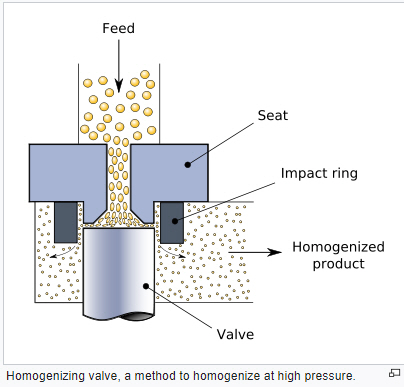
When I was little, I despised the arrival of homogenized milk because I believed it was synonymous with milk that had lost its character, in part because milk from different breeds of cattle was mixed into a blander product (such as the Guernsey/Jersey/Holstein Triple Blend championed by Foremost). And, practically speaking, there was no cream on top for coffee or cereal.
Some folks use the word “homogenized” to speak of a world in which all cultures, races, traditions, and religions are accepted. I have always hoped to see such a world. But there is a danger in putting the wrong spin to it, that is, shaking it up like homogenized milk so that all of its wondrous components lose their identity.
Every culture, religion, race, and tradition has unique gifts to add to a nation’s culture, to the world’s culture, to our discussions of issues and values and goals. When we gloss over these gifts for the sake of convenience–or perhaps for the sake of an easy conformity–we are burying the gold each of us has to offer.
We used to laugh about all the individualists in high school, college, and first jobs who went out of their way to look the same as everyone else. While we saw them as lemmings, that view was an insult to lemmings. Star Trek would later capture mindless conformity with its Borg civilization. As Wikipedia describes it, “The Borg are a vast collection of ‘drones,’ or cybernetic organisms, linked in a hive mind called ‘the Collective’ or ‘the Hive.'” When an individual was assimilated into the Borg, s/he lost his or her individuality. One had to admit, the Borg was a very efficient (and as the good guys on the Starship Enterprise discovered) very deadly.
Long before Star Trek’s Borg cautionary tale about homogenization turning sour, authors and other thinkers who had not yet been assimilated into the addictive sameness we often find (and willingly create) in modern society warned us about the evils of (figuratively speaking) of same-same homogenized milk. My favorite has always been Emerson’s comment in Self-Reliance:
“A foolish consistency is the hobgoblin of little minds, adored by little statesmen and philosophers and divines. With consistency a great soul has simply nothing to do. He may as well concern himself with his shadow on the wall. Speak what you think now in hard words, and to-morrow speak what to-morrow thinks in hard words again, though it contradict every thing you said to-day. — ‘Ah, so you shall be sure to be misunderstood.’ — Is it so bad, then, to be misunderstood? Pythagoras was misunderstood, and Socrates, and Jesus, and Luther, and Copernicus, and Galileo, and Newton, and every pure and wise spirit that ever took flesh. To be great is to be misunderstood.”
I was a terror when any of my teachers in high school and college advocated doing things a certain way because that was “what as done” or because they (those misguided teachers) saw education as hammering out children on a Henry Ford assembly line. They hated my Emerson comment, telling me that (like recruits in a boot camp), you need to be broken down and made all the same so that you will emerge from school with a firm foundation. I was told to leave the classroom more than once for responding that “by the time I have that firm foundation I’ll be a mindless automaton.”
I saw that foundation not as a Brave New World wonder, but as soul-stifling indoctrination. Some say our schools have gotten worse in that respect since I was a student. I applaud those who say that we should celebrate our differences even though I think most little minds are ruled by the hobgoblin that wants to sandpaper away those differences because automatons are easier to predict and control, living and working as they do–as Pete Seeger sang in his famous 1963 song “Little Boxes”–“And they’re all made out of ticky tacky and they all look just the same.”
Walmart is a manifestation of over-homogenization because it kills off local businesses run by local people, each of whom as a different looking storefront, a different philosophy, and an individualistic approach to his or her products and customers. Social medial debates are often a manifestation of over-homogenization because they play out with all the people on the left sounding just the same and all the people on the right sounding just the same as though each group acts via ticky tacky pronouncements from its own Borg mother ship. Since I grew up at a time when people still remembered where our Christmas traditions came from, I mourn the fact that across the county so many of them have been lost or, worse yet, shaken up into a plastic bottle of homogenized celebration in which we’re told that the components have new meanings–as in the fiction that the Twelve Days of Christmas end on December 25th instead of beginning on December 25th.
I’m not a fan of New Year’s resolutions because they tend to sound like practices we should have all began a long time ago rather than waiting until January 1 to proclaim “I’m no longer going to kill people I don’t like” or “I’m no longer going to drink a quart of whiskey a day” or “I’m going to stop hating people who aren’t just like me.” Good Lord, are we so homogenized that we need a specific day each year to see the light or turn the other cheek or find our true path? Even though most of these resolutions sound good, they will fail because–as Tanya Tucker sang in 1992, “Well it’s a little too late to do the right thing now.”
Pasteurized, non-homogenized milk was delivered to our Tallahassee, Florida doorstep by the local dairy that was about a mile from our house. (No, this is not our house.) – Florida Memory Photo.
The fact that it’s too late is the fault of that “good foundation” we were all given in school and the little-minds-ticky-tacky approach the movers and shakers who tell us what to do have done with that foundation after graduation. As you’ve probably noticed, we’re told that being all the same is being normal.
My feeling is that if we need a real New Year’s resolution to try on for size, it’s “I will no longer be normal.” Yes, I know, if you’ve a Star Trek fan, you know that it’s nearly impossible to escape from the Borg collective, and if you live in a typical suburb, you know there are homeowners associations that insist that all the homes maintain the same ticky tacky look the builder bestowed upon them, and if you live in many communities, you know that if you question the quality of produce that comes from the local supermarket, the city council has passed laws to keep you from growing vegetables in your front yard because then all the yards will stop looking all the same.
Some scientists tell us that no matter what we do about humankind’s contribution to the natural cycles of global warming and cooling, that it’s too late to do the right thing now. Likewise, it may be too late to escape the ticky tacky society that results from homogenization run amok.
But let’s give it a shot. Let’s say spilt milk is something to celebrate rather than something to cry over.
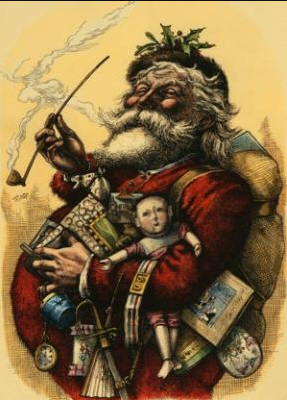
At some point in my life, giving gifts became a lot more fun than receiving gifts–not that I plan to turn down gifts. I don’t know when it happened. Perhaps, I became less greedy as I got older after left my parents’ household and started my own. Perhaps, my focus was on utilitarian needs that seemed too lame to serve as Christmas gift ideas for those who asked for them. I’m at a loss to explain when it happened.
Thomas Nast, 1881 – Wikimedia Commons Photo
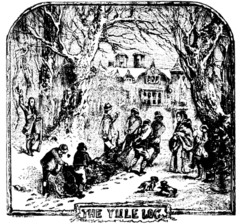
As for why, that’s easy. Whether one see’s Christmas as “Yule” or Chrismas as a Christian holiday, Spirit takes precedence over getting stuff. We invite Spirit into our homes with wreathes and garlands and trees and lights–and for those of us who recall earlier times–with holly and Yule logs and candles and those twelve days between December 25th and Twelfth Night. Spirit encourages us to see the smiles on loved one’s faces when they open their gifts. And yes, Spirit reminds us to be gracious when we open our own gifts, items others have carefully chosen.
Spirit reminds us how to love each other within the ancient continuity of the changing seasons and their holy days. When we listen to Spirit, we see Christmas and/or Yule as more than a race to the Christmas tree on Christmas morning. It’s a series of days, a time of beauty and lights and song, a time of doing for others, a time that shows us how wonderful the world would be if the Spirit of that time stayed overtly with us throughout the year.
I’m not sure Spirit is with us on Black Friday because on that day, excessive consumerism seems to grab us by our throats and propel us toward big dollars and large numbers of presents (often from children’s lengthy Christmas lists) rather than finding that one special gift that will never be forgotten. Okay, if we get it at half price, I guess that’s okay, but not if we have to wrestle a horde of shoppers in multiple store aisles to filch it from the unwashed rabble.
Spirit probably doesn’t mind how we focus our celebrations–Hanukkah, St. Lucia Day, Christmas, Kwanza, Yule, Epiphany/Twelfth Night–as long as we conjure that Spirit into our lives and share it with others. Trappings and gifts without Spirit are empty. If you have a favorite movie that helps you step away from the cares of the world into the wonders of this time, Spirit approves whether you prefer White Christmas or A Christmas Carol or Holiday Inn or The Polar Express or It’s a Wonderful Life. No doubt, Spirit loves more songs than we can count.
My intuition tells me Spirit loves eggnog because, as an 1890 article in the Times said, “And what is eggnog? Worcester says, “A drink made up of spirit, milk, sugar, and eggs beaten up together.” I like eggnog almost as much as mulled wine and mince pies and an endless pot of hot chocolate. Since these things are among those that remind me of Spirit, Spirit smiles upon them.
Spirit is not a shelf of booze, though being a little tipsy from time to time might help us notice Spirit because losing ourselves is the only way to find Spirit. The morning hangover reminds us there are better ways to conjure Spirit than getting drunk. Most of us know that, of course. However you celebrate this time of year year, I hope you find the true spirit of your beliefs and share your smiles with those you love.
“Wherever the creative power of desire is, there springs the soil’s own seed. But do not forget to wait.”
– C.G. Jung, The Red Book
If you are not a winter person, Winter requires patience in addition to bracing oneself against the cold and the extended time of darkness.
Some folks welcome the solstice because once the shortest day and longest night have come and gone, they feel like they can begin the happy countdown to Spring. Others–and I am one of them–believe Winter and darkness are part of the natural progression of everything throughout nature. Seeds require Winter, a time of waiting and preparing before flowering and fruiting are even possible.
Humans are like that, too, I think, though I’ll admit that being a Winter person becomes more difficult with age. One discards short sleeved shirts sooner, starts wearing heavier jackets, and copes less well with the cold.
Mentally, more than physically, I still welcome a time of patience, of waiting for ideas to germinate, and noting the temporal and spiritual components of ancient Yule celebrations.
As more and more of us become further separated from farms and their harvest cycles, it’s not easy to maintain ones place in the annual cycle of things. This is a pity, I think, for our mental and spiritual development has so much in common with the natural world’s “great wheel of the year” throughout the seasons.
However you see Winter and the solstice, best wishes and seasons greetings.
For every successful magazine, hundreds fail either because they’re flat stupid, were published before their time, or were written and edited by nuts. Here are my memories of those that didn’t make the grade.
Jupiter Images graphic
Bad House Keeping – Written by trailer trash for trailer trash, but went off the rails when it also tried to appeal to artists, writers and other dreamers who didn’t have time to keep house.
Bizarre – Featured photographs taken by readers while they were drunk about stuff that seemed funny at the time but, as it turned out, was trivial and boring later on.
Croquet Digest: Readers were never sure whether this magazine was about the game or fried rolls of bread and meat. Those who thought it was about croquettes unsubscribed then many of those who thought the magazine was about croquet claimed to be using croquettes instead of balls because what else were they good for?
Hades Home Journal: Editors thought this take-off on “Ladies Home Journal” would document what life was like for most housewives, that is to say, life in a hell of dirty diapers, burnt food, endless dust, and unfaithful husbands. Even those who sent in true stories hated the magazine because they wanted to pretend life in housewife hell didn’t exist.
HayBoy: This original spoof of “Playboy” failed because–contrary to marketing predictions–nobody wanted to see cartoons and photographs about scantily clad men working on a farm. Even the dazzling articles about crop rotation and the center spreads featuring John Deere, Ford, Massey Fergusson, Case, and Farmall tractors couldn’t save the magazine.
Homewrecker: Based on high divorce rates, publishing moguls decided there was probably a huge audience of wanton women who were being neglected by mainstream media. This publication pioneered in the publication of ground-breaking techniques for stealing a man away from goody-two-shoes women who were reading “Good Housekeeping” and “House Beautiful.” Basically, the church got ticked off at this magazine and said everyone associated with it was going to hell, so that pretty much scared advertisers and readers away.
McBalls: This magazine, aimed at the husbands of women who lived their lives by the gospel of “McCalls,” focused on dangerous methods of barbecuing, high-energy and potentially fatal sports, living lives based on the “hey, honey, watch this” philosophy, and featured centerfolds of stuff that blew up or caught on fire. The magazine had a spectacular first year, but after that it lost readers when most of them died.
Photoclay – A bunch of potters in a collective run by visionary manufacturers of wheels, kilns, and other craft supplies, saw the success of “Photoplay” and thought, “why not clay?” As it turned out, nobody much cared about pictures of clay or even the gory pictures of stuff that blew up in the kilns.
Popular Seance – This magazine was the best of the best during the spiritualism craze, featuring articles by spirits such as Patience Worth, Ouija Board techniques, and how to contact uncle Danny in the afterworld to find out where the hid all his gold. Then a horde of spoilsports came along and said spiritualism was mostly frauds taking people’s money. Subscribers thought that was a real downer and left the magazine to become Tarot card readers.
Everyone can’t produce a successful magazine.
Popular Quantum Mechanics: When the magazine came out, nobody knew squat about quantum physics, so naturally they thought everything in the magazine was about a bunch of frauds taking people’s money. How, people asked, could there be multiple universes when one was bad enough? How could a butterfly flapping its wings in Tallahassee, Florida, cause a rain form in Walla Walla, Washington? The magazine was a true gem that failed before people were ready for it.
La Vie Fille de la Joie: Hookers, according to the magazine’s cover blurb, brought an infinite amount of joy to men who “weren’t getting any at home.” The photographs and articles, according to even the most Victorian critics, were tastefully done and “made calling a call girl seem like a religious experience.” As had happened before with people just having a bit of fun, the church got ticked off at this magazine and said everyone sleeping with daughters of joy was going to hell. This idea bothered people and they canceled their subscriptions even though they continued to find love with unknown ladies leaning against lamp posts.
New Porker: This brave magazine was the champion of pigs and could tell you how to bring home the best bacon, carve a pork roast, and cook center-cut pork chops with out drying them out. The trouble was, most people think pigs are gross, stupid, and filthy and balked at the idea of leaning anything more about them. Even the hog-calling “Sooie Short Stories” series couldn’t save the magazine.
Saturday Evening Fencepost: The trouble began when the magazine couldn’t entice Norman Rockwell to do their covers art featuring farmers, farmers’ wives, and hired hands sitting on fence posts creating sonnets about barbed wire, gates, barns, and silos. Somehow, a nasty campaign by other magazines convinced readers that this magazine was for people who were “dumb as a post.” Even those who knew they were dumb as a post didn’t want to be told they were dumb as a post.
Silver Scream: Since “Silver Screen” was a popular magazine, why not focus on the dark site of making movies, starting out with some of the best screams anyone ever heard in a feature film? As it turned out, readers didn’t want to focus on the shower scene in “Psycho” as much as editors thought, so the magazine went under with a whimper a few years after it began.
The Smart Seat: This magazine, a jibe at the popular “Smart Set,” featured seats, mainly toilet seats, but occasionally various hot seats and other places people found themselves sitting. The magazine was funny at first and then it wasn’t, some say because a story called “Toilet Seats I’ve Known and Loved” grossed people out. Then, too, legislatures claimed that using the word “ass” in a periodical made the whole thing obscene and got the copies removed from the shelves.
If you can’t be Vogue, be Vague.
The UnAmerican Girl: With “American Girl” all the rage in those days, girls who weren’t American weren’t getting any news coverage. Unfortunately, the name of the magazine gave readers the impression that the magazine was about commies and other nefarious women who were out to take away America’s freedoms. Actually, that was probably true, though it was never proven. Even though many men thought dating an unAmerican girl was sexy, the FBI thought it wasn’t, and that pretty much killed the magazine.
Vague: The publisher wanted to compete with “Vogue,” but never figured out how to do it. The result was a wishy-washy magazine that wasn’t about anything other than people who had no idea what they were doing. It was not surprise that those people didn’t have any money, consequently they could afford subscriptions or buy anything from the magazine’s advertisers. The whole thing was so nebulous that nobody ever knew when there the magazine was sold, what it was about, or when it went out of business.
It’s getting more and more difficult to talk about books, publishing, and authors without straying into political issues that often have a very polarized reader-base. Some people believe CNN 100%, while others believe FOX 100%. I’ve more or less stopped posting anything political on my Facebook page because it always ends up with people shouting at each other. Sexual harassment is one of those issues. I mention this here because Publishers Weekly ran into a few snags with a recent article about sexual harassment in our business (Item 1). Maybe they’ll get it sorted out this time.
Issues: Letter from the Editors: Covering Sexual Abuse in the Book Business, By Jim Milliot, Rachel Deahl, and John Maher – “The difficult nature of covering the subject hit home on December 5, when we ran a story announcing the resignation of Giuseppe Castellano, executive art director of Penguin Workshop, following claims of sexual harassment by actress and comedian Charlyne Yi. The article we published was intended to be a balanced account based on verifiable facts. Not everyone agreed that it was. Some readers expressed frustration that we put too much emphasis on Castellano’s account over Yi’s.” Publishers Weekly
News: Notable Literary Deaths in 2017, by Emily Temple – “This has not been the best year. In addition to, well everything, we lost a number of literary luminaries in 2017: beloved novelists, champions of the written word, legendary editors, and genre-defining journalists.” Literary Hub
One of the new forums focusing on book and writers.
News: The Tale of Two Literary Forums, by Malcolm R. Campbell – “If you were out on the Internet in the 1980s, you probably remember that CompuServe was a major ISP, providing e-mail and forums for millions of users. In those days, almost every hi-tech company, whether hardware or software, had a forum staffed in part by representatives of the company to help people with bugs, usage issues, and other information. In addition to these forums, CompuServe also maintained forums for pets, religion, political discussions, hobbies, and literature.” Malcolm’s Round Table
Film: Hollywood’s Once and Future Classic, Hollywood’s Once and Future Classic, Why it took 54 years to turn A Wrinkle in Time into a movie, By Eliza Berman – “A Wrinkle in Time, a Disney movie based on Madeleine L’Engle’s 1962 novel of the same name, will come out on March 9, 2018. The film brings to life the story of Meg Murry, a gangly adolescent who travels across dimensions to rescue her scientist father. Meg is guided by a trio of guardian angels collectively called “the Mrs.” The book, and the movie, is about what it means to be a source of light in a world in which darkness seems only to proliferate. It also makes the case for thinking independently when conformity is the norm.” Time Magazine
Quotation: “When I see a store, I MUST GO IN. I’m a sucker for books, but indie bookstores take that up a few levels because they’ll curate for me. I go in saying I want to learn about some obscure topic and they won’t look at me as if I’m from Mars! Instead it’s almost as if I see my own curiosity reflected back at me, and they share it instantly. I’ve had that same experience happen in multiple cities, so I think it’s common to independent bookstore owners and I love them for it.” – Author Jessee Mecham Shelf Awareness
Review:THE ICE HOUSE – Home is a long way from here, by Laura Lee Smith, reviewed by Thane Tierney – “The Scots didn’t invent stubbornness, but they perfected it, raised it to a high art where irresistible force and immovable object are sometimes locked like two neutron stars in a perilous dance. So it is with American immigrant Johnny MacKinnon and his Scottish son, Corran, in Laura Lee Smith’s second novel, ‘The Ice House.'” Book Page
Lists: The Ultimate Best Books of 2017 List, by Emily Temple – “It’s the end of the year, and everybody has an opinion. And of course, where there’s an opinion, there’s a listicle. The river of Best of 2017 lists can be exhausting this time of year, so as a public service, and because my math skills are always in need of a little exercise, I’ve created a streamlined master list of the books that the most people loved this year.” Literary Hub
Review: LITTLE LEADERS: Bold Women in Black History, by Vashti Harrison ; illustrated by Vashti Harrison (Age Range: 6 – 12) – “Visual artist Harrison introduces 40 trailblazing black women from United States history in this inspiring volume for young readers…Perfect for exploring together at bedtime or for children to browse independently, a gorgeous invitation for children of all backgrounds, and especially for black girls, to learn about black women who were pioneers.” Kirkus Reviews
News: Indie Bookstores Tell Us About Their Most Stolen Books – Which volumes walk out the door most often, and why? by Jo Lou – “Independent bookstores are magical, endangered places. Stealing from these small, often struggling establishments is a mortal sin and the Book Gods will smite you. If you must kidnap books (which you shouldn’t, because libraries exist) then steal from big box stores instead.” Electic Lit
Book Bits is compiled randomly by Malcolm R. Campbell, author of paranormal, contemporary fantasy, and magical realism novels and short stories.
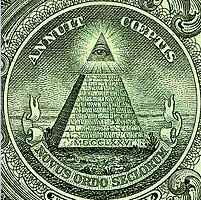 People and agencies of government advocating unconstitutional snooping and searches are famous for saying, “If you have nothing to hide, you can’t complain about such programs.”
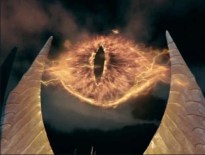 Some people say that if they (or the Feds or the Cops) have the all-seeing eye of Sauron (and promise to use it in a purportedly proper manner), we will all be safer. I’ve never seen any evidence that proves the truth of that fable, and even if it were true, it would make us all manacled to those using the eye.
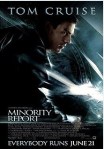 Except the all knowing brain will be worse, for not only will it be able to predict and stop crimes before they happen, it will stop whatever we’re planning to do before we can do it. The brain sees that I’m planning to drink a bottle of booze, so it alerts the authorities. Or the brain sees that I’m planning to read a book the brain doesn’t want me to read, so the people that own the brain come to my house on a warrantless search and take away the book.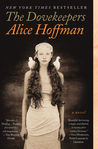
 Chief of station Liberty Valance said that the writers were caught when the modus operandi of a “larger than usual” number of crimes matched the formal structure of short stories and novels.
 Experts (whoever the hell they are) say that we make resolutions because we feel guilty for being naughty during the holidays when we ate too much, drank too much, slept around too much, and stole too many of our kids’ presents out from under the tree.
 Some folks use the word “homogenized” to speak of a world in which all cultures, races, traditions, and religions are accepted. I have always hoped to see such a world. But there is a danger in putting the wrong spin to it, that is, shaking it up like homogenized milk so that all of its wondrous components lose their identity.
 I was a terror when any of my teachers in high school and college advocated doing things a certain way because that was “what as done” or because they (those misguided teachers) saw education as hammering out children on a Henry Ford assembly line. They hated my Emerson comment, telling me that (like recruits in a boot camp), you need to be broken down and made all the same so that you will emerge from school with a firm foundation. I was told to leave the classroom more than once for responding that “by the time I have that firm foundation I’ll be a mindless automaton.”
 Some folks welcome the solstice because once the shortest day and longest night have come and gone, they feel like they can begin the happy countdown to Spring. Others–and I am one of them–believe Winter and darkness are part of the natural progression of everything throughout nature. Seeds require Winter, a time of waiting and preparing before flowering and fruiting are even possible.


 It’s getting more and more difficult to talk about books, publishing, and authors without straying into political issues that often have a very polarized reader-base. Some people believe CNN 100%, while others believe FOX 100%. I’ve more or less stopped posting anything political on my Facebook page because it always ends up with people shouting at each other. Sexual harassment is one of those issues. I mention this here because Publishers Weekly ran into a few snags with a recent article about sexual harassment in our business (Item 1). Maybe they’ll get it sorted out this time.
 Issues:


 Malcolm's Round Table