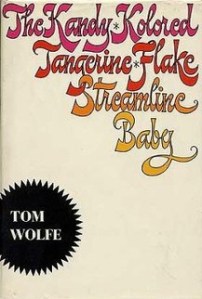
If you get most of your “news” from Yahoo and Facebook, you’re a slide show victim waiting to happen. They usually begin with a headline like this:
Here’s the scene that got “I Dream of Jeannie” cancelled.
So an so was famous and had billions. See how they’re living now.
What’s her face was really hot 25 years ago. See what she looks like today.
The answer to any of those questions might not fit on a postage stamp, but it will fit on a 3X5 card.
Instead, you’re “treated to a slide show,” the first page of which has nothing to do with the headline you clicked on. Let’s say you clicked on So an so was famous and had billions. See how they’re living now. Lately, Yahoo has been using Sean Connery as click bait. Instead of seeing Sean Connery, you see some other actor on a page filled with pop-up ads and a graphic called “Next slide.”
As you click “Next slide,” you realize that you’re going to have to wade through 49 other slides before you come to Sean Connery, “I Dream of Jeannie,” or the hot actress from 1994.
Click on this graphic if you have had the joy of the slide show experience:
OR:
The bad news is, these slides load at a snail’s pace unless you bought the latest hot computer 25 minutes ago.
The worst news is, the slide shows paint in on the screen in such a jerky fashion, it’s easy to click on an advertisement by mistake and get shunted off onto a site telling you how to get hot Russian wives.
Seems like we ought to be able to sue, or even kill, somebody for this bait-and-switch game because these slide shows are almost as annoying as the real slide shows years ago when we went over to friends’ houses for dinner and they hauled out a Carousel projector with 100000000 vacation slides.
Or, maybe if we can’t beat them, we should join them. I’ve got a lot of boxes of vacation slides in the closet that will give me a head start in something like:
Malcolm Shows You Where to Find the Best Hookers.
or
How To Find Hit Men Who Don’t Like Slide Show Creators.
I suggest that you don’t run both of these at the same time.
Jack Ryan, now President of the United States, and his son, Jack Ryan, Jr., analyst and black ops specialist at “The Campus,” are enduring characters in the Tom Clancey series ever since “The Hunt for Red October” appeared in 1984. As fans know, the series has been written by other authors since Clancey’s death.
Mike Maden, the author of “Line of Sight,” has written a fair number of the books sharing the series with Mark Greaney and others in what has been an amazingly consistent run of political action thrillers that has maintained the Clancey Style, fast-paced plots, and love of military equipment. Fans of the series will appreciate the tangled plot in this yarn that focuses on Jack Ryan, Jr. as he goes to Bosnia look for a former patient of his mother (Cathy Ryan) who saved the girl’s sight and then lost track of her.
Other forces are, of course, at play, including terrorists who want to destabilize Bosnia’s fragile peace and an international crime organization that has placed “kill orders” on several people, including Jack. Unaware of either group, Jack focuses on tracking down Dr. Cathy Ryan’s former patient and friend Aida Curić. The disparate subplots of this story turn toward each other like an impending train wreck as other members of The Campus become involved in minor roles.
The weakness of the book comes from the fact that the subplots need time to develop and while they are brewing, the reader is treated to lengthy travelogue sections for entertaining Jack with others or alone. Every tourist destination but the kitchen sink in the surrounding area becomes a sightseeing stop, interspersed with a love interest that, while well handled, doesn’t reduce the author’s reliance on in-country experience and/or Internet research to pad out the story. Potentially, 25% of the text is the kind of travel and historical information we usually get in a Dan Brown novel.
The book reads well, especially if one skims the travel sections, and in spite of those sections, the conclusion doesn’t disappoint.
WordPress keeps sending me notices that more and more people are following this blog. That’s a little scary because it means I can’t slack off and write these posts drunk and blindfolded. Thank you!
While many of my posts do sound drunk and blindfolded, I also have fun reviewing a few books, talking about authors, and occasionally saying a few things about writing. Yet, I have madness in my method and that is something that I believe needs to be said. I say it in fiction. This Facebook cover picture pretty well sums it up:
My publisher is working on a new edition. She just sent me photographs of it this morning. Wow, for a grey and rainy day, they really make me happy. You’re going to like it. More on that later, of course.
Some authors can write while on a sinking ship or as bombs fall outside their windows. I’m not that kind of person.
No, things aren’t quite that bad–other than too much rain and grass too high to mow–but the things that are happening and are disruptive enough to make it difficult to write.
Sure, at my age (and my wife’s age) one should expect more doctors’ appointments. They fill up the calendar sometimes and often get scheduled on top of each other by offices that unilaterally select appointment times, send out an e-mail, and don’t worry about the fact their appointment conflicts with something already on the calendar.
Where one fears they’ll end up.
To some extent, many these appointments have to do with teeth that must be cleaned by a hygienist, old eyes that need prescriptions, and hearing problems that need magical hearing aids. Then there’s the usual sciatica and arthritis.
My wife was in several car wrecks (not her fault) some years ago, and the lack of compensation by the perpetrators’ insurance companies then leads to long term problems. The laws keep getting tighter, so that means more appointments so the doctor can say s/he saw us and can keep writing the same prescription one or the other of us has needed for years.
Several years ago, I had cancer surgery. It was a success. No chemo or radiation follow-up was needed. Today I learned that I might be facing something like that again. I’m pissed off about it because some test results last fall weren’t the best, but I was led to believe a wait-and-see approach was best. Now the test results are worse. So, that means more doctors’ appointments and worries.
I’m not a big fan of doctors, hospitals, regulations about the hoops one has to go through to get medications, and all that. I think “they” sense that my trust is always guarded. They think I should kowtow to them and I won’t do it. Yet, I wish I could hypnotize myself to move ahead normally until the next appointment without dwelling on all the possibilities that could occur after the new test results.
At least I could get some writing done rather than letting my imagination run wild about all the worst scenarios.
Having said that, here’s a bit of shameless promotion from your sponsor (AKA, me)
My 2017 Kindle short story “En Route to the Diddy-Wah-Diddy Landfill While the Dogwoods Were in Bloom” has a long title. But it reads fast, is satirical (with a bite), and is based on Florida folklore about a magical sound called Diddy-Wah-Diddy. The place was hard to find, but if you did find it, you could eat all you wanted to eat.
My re-telling takes a lot of liberties with the original because, well, I felt like setting it in modern times and made it about a junk food junkie obsessed with finding the town and providing it is real.
I don’t advise looking for it, but if you happen to find it, let the rest of us know where it is.
With yesterday’s catastrophic fire at Notre-Dame of Paris, I couldn’t help but think of Victor Hugo’s comment in The Hunchback of Notre-Dame (1831) that “The church of Notre-Dame de Paris is still no doubt, a majestic and sublime edifice. But, beautiful as it has been preserved in growing old, it is difficult not to sigh, not to wax indignant, before the numberless degradations and mutilations which time and men have both caused the venerable monument to suffer, without respect for Charlemagne, who laid its first stone, or for Philip Augustus, who laid the last.”
Tourists, Catholics and other Christians, mystics of all faiths, architects, and especially the French nation have used many superlatives to describe the beauty and importance of this cathedral. And yet, the church is more than it seems. It is, as the pseudonymous author Fucanelli wrote in the original version of The Mystery of the Cathedrals, a veritable hermetic textbook in living stone to the alchemical process.
Most people probably view the hermetic symbols as the flourishes of Gothic architecture. However, for students of chemical or spiritual alchemy, the is much to learn from those symbols as well as from The Mystery of the Cathedrals (1926) and its sequel Dwellings of the Philosophers (1929). Modern-day students will find a great deal of help in the work of Carl Jung and others who view alchemy as more than trying to turn lead into gold but as a spiritual/psychological means of becoming wholly one’s divine self.
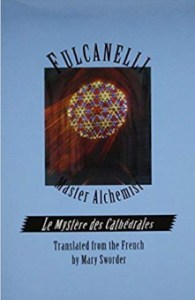
I have been studying this book since the 1971 English (U.K – Neville Spearman edition) came out and grasp only a fraction of it. As Wikipedia says of the two books, “The books are written in a cryptic and erudite manner, replete with Latin and Greek puns, alchemical symbolism, double entendres, and lectures on and in Argot and Cant, all of which serve to keep casual readers ignorant.”
From the Publisher (The cover shown here comes from a reprint edition.)
In 1926 the fabled alchemist Fulcanelli left his remarkable manuscript concerning the Hermetic Study of Gothic Cathedral Construction with a student. He then disappeared. The book decodes the symbology found upon and within the Gothic Cathedrals of Europe which have openly displayed the secrets of alchemy for 700 years.
From the Book
“The gothic cathedral, that sanctuary of Tradition, Science and Art, should not be regarded as a work dedicated solely to the glory of Christianity, but rather as a vast concretion of ideas, of tendencies, of popular beliefs; a perfect whole, to which we can refer without fear, whenever we would penetrate the religious, secular, philosophic or social thoughts of our ancestors.”
Amazon Reader Review
Wikipedia Photo of 2019 fire
Seminal work by the mysterious master French alchemist Fulcanelli. Companion to his other book “The Dwellings of the Philosophers.” The author explores in depth secrets contained within the Gothic cathedrals of France. He reveals a number of secrets, providing crucial clues into the occult work of the alchemists, contained in these massive repositories of knowledge preserved in stone. Warning: this is not a work for the uninitiated or those unfamiliar with alchemy. In order to understand this book, one must have at the very least knowledge of Gothic art and architecture as well as an understanding of the rudiments of alchemy. This is necessary in order for Fulcanelli’s work to make any sense to the reader. I would recommend Loius Charpentier’s “Mysteries of Chartres Cathedral” and Tobias Churton’s “The Golden Builders” to familiarize oneself with the subject matter before diving headlong into Fulcanelli’s masterpiece.
I agree with the reviewer’s suggestions about reading several other books first before attempting this one. Also, you’ll find an interesting commentary of Mysteries of the Cathedrals included in Jay Widner and Vincent Bridges book The Mysteries of the Great Cross of Hendaye” Alchemy and the End of Time.
In spite of the difficulties, Mysteries of the Cathedrals is time well spent.
Hi there! I’m Kylie Chan, an Australian writer of Fantasy and Science Fiction based on the Gold Coast.
My books are successful in my home country of Australia, and I’ve been shortlisted many times for awards in my country. Not so much overseas. This means that although I’m popular and well-known here, I don’t have the same sort of profile (and success) elsewhere. Australia has a small population (and book-buying market) so this dramatically affects my earnings.
I’m making enough to live on as a full-time writer: I’m not rich but I’m getting by. (I make much less than most people think I do. If I worked nine-to-five I’d be bringing in minimum wage. This isn’t really relevant, though, because 1. It’s a fourteen-hour-day and 2. I don’t really consider it work.)
Students of literature and other arts know that in years gone by, many writers, composers, and artists had patrons. From time to time, I read of modern-day authors setting up subscription services and crowdfunding plans to help them raise money for their work. In addition to that, grants and awards help many authors complete work they’d otherwise be unable to do.
So, I support the concept and hope that Kylie Chan’s multi-tiered benefits for various levels of monthly subscriptions will help her travel for research and go to conventions for her promotional efforts.
I am currently on my second reading through her nine-volume Xuan Wu epic fantasy series (three linked trilogies) set in Hong Kong and its traditional celestial realms. It’s an enjoyable and ambitious work.
Many authors are not widely enough known to apply for grants and/or set up patron-style crowdfunding plans. Chan’s readers will note, of course, that she is published by Harper (not an easy thing to accomplish) so she is starting from a higher platform than small-press authors who find it next to impossible to even get their work reviewed by mainstream media outlets, much less have it considered by major competitions or best-of-the-year lists. Whether one goes Chan’s route with a major publisher or goes the self-published or small-press route, the odds of success for authors are more discouraging than going to Vegas and making a profit at the casinos.
I wish Chan well and I wish the media would expand its book coverage and actively consider saying something about authors who don’t have huge conglomerate publishers behind their work.
If Ada Limón stopped writing poetry today–hard to imagine as that is–she would probably be remembered for Bright Dead Things and her most recent collection The Carrying. However, I want to mention her 2010 collection sharks in the rivers because–as with many singers, for example–a writer’s earlier words are often created and executed through raw, wild power that, in time, often becomes more polished as the years go by. I think this searching, magical volume will always stand out as a primal voice that time will always be trying to tame.
“Rivers and sharks are grand metaphors in these ruminative soliloquies—as much about going with the flow as facing down your demons. Bravery and fear, like opposing eyes peering through the murk, inform Ada Limón’s vision. Not one to be obsessively reductive, minnows, angelfish, and barracudas round out “the City of Sharks” she navigates.
“Limón allegorizes other creatures as well: owls, sparrows, cormorants, and butterflies. ‘Every one of us with a bear inside.’ This penchant for mixed metaphors could be disastrous in a more rigid, less expansive treatment, but here it is compelling. Candor and artifice intertwine with (human) nature and Surrealism—think Sharon Olds (her teacher) dancing with Pablo Neruda.”
Publisher’s Description
“The speaker in this extraordinary collection finds herself multiply dislocated: from her childhood in California, from her family’s roots in Mexico, from a dying parent, from her prior self. The world is always in motion — both toward and away from us—and it is also full of risk: from sharks unexpectedly lurking beneath estuarial rivers to the dangers of New York City, where, as Limón reminds us, even rats find themselves trapped by the garbage cans they’ve crawled into. In such a world, how should one proceed? Throughout Sharks in the Rivers, Limón suggests that we must cleave to the world as it ‘keep[s] opening before us,’ for, if we pay attention, we can be one with its complex, ephemeral, and beautiful strangeness. Loss is perpetual, and each person’s mouth ‘is the same / mouth as everyone’s, all trying to say the same thing.’ For Limón, it’s the saying—individual and collective — that transforms each of us into ‘a wound overcome by wonder,’ that allows ‘the wind itself’ to be our ‘own wild whisper.'”
As you read these poems, you might not always be sure whether the lines are magical realism or metaphor. Or both. Or, just how the speaker has seemingly merged with that about which she speaks.
“I saw myself by the Rio Grande watching a crane swoops down over the collection pond.
I was the fish in the drainage ditch, you, the crane’s scissoring shadow.”
–
“Every one of us has a sparrow underneath her tongue, bouncing and burrowing.”
–
“(Sharks are listening right now, I’m sending out signals.)
I’m dreaming of them. I’m wrapping my arms around their cold, gray, magnificent bodies.
We’re both sleeping with our shark-eyes open”
The object (or critter) and the observer become one and the same.
Writers are usually advised to have websites and blogs. There are lots of reasons even though blogs aren’t as popular as they were, say, back in the 1990s when the concept began. Blogs become, so say the experts, part of your platform or presence on the Internet.
Nonfiction
No, I don’t look anything like this clip art.
Not counting widely known writers, blogs seem almost mandatory for those writing nonfiction because they help establish subject-matter credibility. Such blogs have a built-in niche and tend to draw readers who are interested in beekeeping, home repair, investing, or whatever the author’s subject matter is. If the author is busy, s/he may have announcements of upcoming events related to that niche along with links to his/her articles along with resources links to sites and articles written by others. So the blog becomes another clearinghouse of information and (so the author hopes) will be a way of publicizing the books.
Fiction
Widely known fiction writers have a built-in audience of readers who are looking for them; they want to know the latest news about new books, presentations, panels, signings, etc. Unknown writers don’t have people looking for them. So, they are often told to blog about the subject-matter and locations of their books more than their books. If they write several posts a week about their books, that’s often considered SPAM. On the other hand, after maintaining this blog for a number of years filled with posts about Montana, Florida, mountains, swamps, hero’s journey, hoodoo, the environment and related subjects that relate to my novels, I can say that after a while, the writer runs out of book-related subject matter to talk about.
And, as far as I can see, there’s little correlation between those who read my posts about hoodoo, for example, and the sales of my books in which the main character is a conjure woman. Of course, most of the people who read this blog aren’t fans of hoodoo and related subjects, so I can’t establish a “hoodoo niche” and write about that all the time. But even if I did, I suspect that readers searching on hoodoo and conjure are looking for how-to more than fiction.
This brings me to the point that some writers make: blogging takes time away from writing the novels one is supposed to be writing. Yes, it does, and while I appreciate all of you who follow this blog greatly, I’m wondering if the blog is “earning its keep.”
Politics
J. K. Rowling, Stephen King, and other well-known and wealthy writers can make political comments on Twitter all the time without harming their authors’ reputations. They may lose a few readers, but I’m sure they don’t care. I wrote a political post on this blog yesterday and deleted it today. Why? I guess I wish I hadn’t written it even though writers–among others–are being urged to speak out more and more about political matters. The thing is, politics has become so polarized these days, one can hardly say anything that doesn’t bring down the wrath of the multitudes. Suffice it to say, I’m a political moderate, yet the polarization in venues such as Facebook is so extreme that moderates get beat up by both conservatives and liberals. I don’t see a lot of real dialogue on Facebook. Just a lot of nastiness from people who wouldn’t dare say the things they say at a backyard barbecue or a bar or a party. I don’t think I want to bring that nastiness into this blog even though my political views are just as real as everyone else’s views.
So, What’s Left to Say?
My first thought is “not a lot.” I’ve been blogging for a long time on many platforms over the years. I’ve met a lot of cool people, found interesting discussions, been lured into exciting blogs of others, and had fun shooting off my mouth. But after 25 years of that, I’m not sure I know what I’m doing here on WordPress. As people reach my age (I’m not telling you what it is) they often find they’re out of sync with the world. That is to say, it becomes more and more obvious with each passing year that they are part of the older generation which is variously considered to be: (a) responsible for what’s wrong with the world, (b) out of touch with the major thrusts of culture and popular culture, (c) trapped in the past.
The days are long gone when old people were venerated for their wisdom. (Hell, my generation grew up with the admonition not to trust anyone over 30.) Not that I have any wisdom. When I was a kid, I thought I would know lots of stuff by the time I was a grandfather. Boy, was I fooled!
“Haints in the Woods” is one of nine short stories in my recently released collection Widely Scattered Ghosts. Here a brief excerpt featuring characters from my novel Lena:
Praise the good Lord, as the deacon would say, for Pollyanna chose that moment to drive her grey Ford truck through the busted section of the wrought iron fence into the back yard. She wore her favorite green capri pants, black blouse, black slingback sandals, and a wide smile that showed off her new black lipstick and matching nail polish.
“Young people,” whispered Eulalie.
Pollyanna came up to the porch with an Alligator Supreme orange crate chuck full of who knows what covered over in butcher paper.
“Did you see a soused sinner riding his hinny back home?” asked Eulalie.
“Why, is one missing?”
“I was just telling Lena that I think Willie’s sharing jelly and juice with some dusty butt miles away from where he’s supposed to be.”
Pollyanna set down the orange crate. “I don’t even know what that means.”
“Sex and booze with a ho,” Eulalie said.
“Holy shit.” Pollyanna slumped down into the sagging couch with a fading smile. When Eulalie handed her the Mason jar of shine, she wasn’t shy about drinking her fill.
“I ain’t really po’ moufin’ my brand-new husband,” said Eulalie. “I’m hopin’ he is a soused sinner today.”
“I know I’m repeating myself, but holy shit.”
“Beats bein’ among the dead. I threw the bones an hour ago, and they said he’s with the dead. Then Lena went lookin’ for him on a spirit journey, and she saw nothin’ but ace-of-spades blackness. As you white folks sometimes say, we’re on tenterhooks.”



 Tom Wolfe’s 1965 collection of essays
 I have been studying this book since the 1971 English (U.K – Neville Spearman edition) came out and grasp only a fraction of it. As

 I am currently on my second reading through her nine-volume Xuan Wu epic fantasy series (three linked trilogies) set in Hong Kong and its traditional celestial realms. It’s an enjoyable and ambitious work.

 Praise the good Lord, as the deacon would say, for Pollyanna chose that moment to drive her grey Ford truck through the busted section of the wrought iron fence into the back yard. She wore her favorite green capri pants, black blouse, black slingback sandals, and a wide smile that showed off her new black lipstick and matching nail polish.
  Malcolm's Round Table