Pirating Books: Graycity.net and others

A friend recently notifiegraycity2d me that there was a site offering eBooks for free download, and several of my books were among those offered. The site is called graycity.net, and it’s got quite an extensive library of “free” books— extensive enough to have ten of mine and several of many other indie authors I know.

Source: The Business of Pirating Books: Graycity.net ‹ Indies Unlimited ‹ Reader — WordPress.com

Book piracy sites seemed to be a dime a dozen. They spring up like weeds. This particular site got taken down a day or two ago, and now it’s operating again.

This post from Indies Unlimited gives you some of the basics about dealing with such sites if you’re an author and find some of your books there. And also, Melissa points out that if you’re a reader who thinks it’s okay to rip off an author there are some hidden dangers in many of these pirate sites.

Gray City is run from a country far away and that cuts down our options for getting rid of them once and for all.

I keep hoping that an author who also knows how to write flawless malware will target book pirate sites and tear them to shreds.  I’m keeping my fingers crossed about that.

–Malcolm

Weather or not

  • I was going to gripe about the rain, but that seems a bit lame while Florida and the Carolinas are getting way too much. Here, the grass grows incessantly when there’s no rain, but the smaller trees have to be watered during dry spells.
  • For those of you scoring at home–as opposed to elsewhere–I am now at 15 out 40 days of radiation therapy. Quite tedious, actually, though the people there are friendly and professional. One of them actually loves tennis: that’s a plus.
  • My contemporary fantasy novel The Sun Singer will be free on Kindle September 6 through September 10. This was my first novel and I still like it. OMG, I was actually talking about it back when MySpace was the place for writers to hang out.
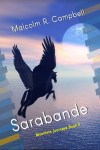
  • This is a hero’s journey book. The sequel, Sarabande, is a heroine’s journey book. Both of them are greatly influenced by Joseph Campbell’s The Hero With a Thousand Faces. No, Joseph Campbell and I are not related.
  • Small publishers and self-published authors are still waiting to see what happens with Audible’s attempt to add closed-captioning to our audiobook without paying for it. There’s nothing in our contracts that allows them to do this. Major publishers are suing and those who represent small publishers have supported the suit. We shall see.
  • I must be out of touch. Several writer’s magazines I subscribe too are heavily supported by advertising from schools with MFA programs. These ads list “distinguished faculty.” Usually, I haven’t heard of any of them. Out of 15-20 names, you’d think somebody would be a known writer. If you saw that the program director was named Bubba Smith, would you be in a hurry to sign up? (Me, neither.)
  • Amazon is getting some flak for releasing copies of Margaret Atwood’s Testaments prior to the official release date of September 10. A clerical error? A misunderstanding? Another way to harm independent book stores? What do you think?

Malcolm

The sequel is a Thomas-Jacob Publishing release.


I worry about all the shouting these days

Politics has become very confrontational these days, so much so that the Congress would rather provoke the opposition with tirades rather than work together to actually accomplish something. Even a watered-down improvement in a major issue is likely to be better than inaction.

Most of us know that when a business meeting, city council meeting, or family discussion turns into exaggerations and shouting matches, nothing good will come out of it. Protestors and members of Congress seem to have forgotten this.

In a Facebook discussion yesterday, I got into a debate with somebody who said we are duty-bound as citizens to become counter-protesters whenever a group we despise holds a rally or a “parade.” I disagreed. When certain groups, and their opposites, meet on a city street, the result is shouting. By itself, that accomplishes nothing. Sometimes it leads to violence and property destruction. The news media has a field day and the group that scheduled the march gets a lot of publicity.

I would rather ignore them. Let them have a march that’s met with absolute silence. That hardly makes the news. I grew up in a county where the KKK had a march about once every month or so. Those who supported the KKK stood and watched them go by on the street. Those who didn’t support them stayed away. The result: the news media had nothing to report and nobody got killed or arrested.

Then, as now, anyone yelling verbal threats at the marchers (or getting in their faces) is committing a crime (assault). Is it worth getting arrested to tell members of a group one doesn’t like that they’re really full of it? That’s what they want you to do. That gives them news coverage and lends some of their opposition in jail. Who’s the winner here?

When this kind of thing happens, we all lose. Instead of dialogue that might lead somewhere, we maintain the angry status quo where nothing gets fixed.

–Malcolm

Why can’t bars have poet laureates and writers in residence?

The phrase “scattered, smothered, and covered” has a certain poetic ring, so it’s fitting that Waffle House has its own poet laureate. Georgia Tech poetry professor Karen Head is the first to lay claim to that title. – Atlanta

Followers of this blog know I like Waffle House food, especially their coffee. Yet “the elites” tend to turn up their noses up at Waffle House while supporting White Castle, Krystal, and Burger King. Yeah, those are the best places for health nuts.

At any rate, if Waffle House can have a poet laureate, why can’t Publix, Taco Bell, and Sears? Maybe Sears could save itself by embracing the arts. A poet, perhaps. A writer in residence. Soon, these poets and authors would become famous and people would flock to Sears for book signings, bedding, and a new dishwasher. You heard it here first.

Michael Shaara, who won the Pulitzer Prize for The Killer Angels, taught my college creative writing class. He had a theory–one that we could never test in a university environment–that if people who were too introverted to write good stuff got drunk, they might write good stuff. Drink a shot, write a line, slam down another shot, slam down another line.

Let’s say the theory works and we learn that drinking really does lead to bestselling novels.

Look at this. Nothing happening. It’s deadsville. A writer would fill the place.

Authors could sit at the end of the bar with a laptop or legal pad and pencil and write. All they’d need from the bar would be a bottle of Scotch or a pitcher of the region’s best microbrew. Every 30 minutes or so, the author would write one of his/her latest lines on a bar napkin and sail it into the crowd. The bar would get more business and maybe a cut of the action from the next bestseller.

This is win-win for everybody. The bar sells more booze. The authors get drunk for free. And creativity goes off the scale. What could possibly go wrong? Today’s bestseller is brought to you by Alfred Knopf and Joe’s Biker Bar and Brothel.

If you own a bar and think the idea has promise, please contact me by private message on Facebook. To prove you’re sincere, send me a bottle of Talisker single malt Scotch.

Seriously, what better way to support the arts?

–Malcolm

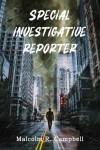
Malcolm R. Campbell is the author of “Special Investigative Reporter.”


Tinkering with the blog and the website

One never knows for sure what works.

So, this weekend, I got rid of two of the pages on this blog and updated the “About Me” page. One new page will rotate through a series of excerpts from my novels. The other will have related pictures of all kinds. Right now, it’s showing examples of the page proofs for the dust jackets when we came out with the hardcover editions.

When I first came out with Conjure Woman’s Cat, my website included a page about conjure. I decided that after adding two more conjure novels to the series, I really didn’t need a “conjure page” per se. Initially, I thought such a page would attract people interested in conjure who would then discover the novels. I don’t think that happened.

That page is now a page for excerpts. There are three there now. I hope to remain organized enough to change them from time to time so that there’s always something new on the website.

My publisher tells me that Thomas-Jacob Publishing’s hardcover books are selling. That’s certainly good news. My colleagues at T-J and I thank you.

My website is always in a state of flux. Frankly, that’s because I never know what information there attracts readers and what doesn’t. I also debate (with myself) how long something should stay there. I want more people to see items, but I don’t want them to come out to the site a few weeks later and find the same stuff. I’m winging it on this but usually, try to include something new every week.

My blog posts and tweets have feeds on the website. I have no clue whether that’s bad or good. At the very least, those feeds represent “new material.”

Most days, I think that bookselling is more of a gamble than either an art or a science.

Malcolm

Review: ‘The Nickel Boys’ by Colson Whitehead

The Nickel BoysThe Nickel Boys by Colson Whitehead
My rating: 3 of 5 stars

This powerful story needed to be told. That power comes, in part, through Whitehead’s restraint as he tells a fictionalized story about Florida’s notorious Dozier School (called Nickel in the novel) in a straightforward, almost deadpan style. That is, he lets most of the atrocities speak for themselves rather than resorting to purple prose and sentimentality.

Floridians, who grew up in the panhandle and knew Dozier was a hell hole before the authorities knew (or admitted) it was a hell hole, will appreciate the care Whitehead took with his research into the school itself, the environment, and the Tallahassee neighborhood where college-bound Elwood Curtis grew up. The random and unfair vicissitudes of life for African Americans are aptly and horrifyingly demonstrated early on via the event that sends Curtis to the Nickel School.

Yet, I was disappointed in this novel and ended up with mixed feelings about it. One flaw came from the sudden uses of an omniscient author to explain Nickel customs and realities that should have been communicated to readers via dialogue or through the actions of the characters. Suddenly, Whitehead was more reporter than novelist.

Without giving away a spoiler here, suffice it to say that the authorial trickery in several places where the narrative jumps into the future are intolerable. The sections are not only jolting when they suddenly appear out of sequence with the chronological story but mislead the reader so that Whitehead can enhance the drama surrounding Curtis near the end of the novel. The realities here are interesting and make for an engaging subplot that could have been written without lying to the reader.

The protagonist’s near-worship of Dr. Martin Luther King, especially King’s belief that no matter what was done to the African American race, it should return only love–serves as an effective counterpoint throughout the novel. Can Curtis love his tormentors? The Nickel School tests Curtis over and over again, making it difficult for him–and the other “students”–to maintain a true sense of self in a land where the realities inside the school are similar to the realities outside the school.

The book is strong. It could have been stronger. I recommend it in spite of the flaws.

View all my reviews

–Malcolm

Malcolm R. Campbell grew up in the Florida Panhandle in the era when the novel is set, delivered telegrams in the Frenchtown neighborhood where the protagonist grew up, and saw the Dozier school many times before it became a news story. He mentioned the Dozier school in his short story “Cora’s Crossing,” included in the collection Widely Scattered Ghosts.

This is the best blog since sliced bread

I have no idea what that means. But 99 out of 100 spammers can’t be wrong. They tell me, I’ve got what it takes to be their most visited blog in the galaxy. Oh, swell. They tell me they’re going to bookmark this place and come back often. Well, you won’t hurt my feelings if you don’t.

As I see it, I’m here to shoot the breeze about all kinds of stuff and keep readers up to date on my books. My goal has never been to help promote cheap loans, cheap Viagra, or cheap hookers. Fortunately, the Word Press anti-spam software throws most of your comments in the trash before I even see them. But, you gotta keep on trying, right?

Not that I think you actually visited this blog personally. You have bots for that, yes? Because, if you personally visited this site, you might (a) actually like what’s here, and/or (b) note that I’m not selling loans, Viagra, and hookers. We could have a dialogue about that and lots of other things if you came here and asked to talk.

If you did that, I would be here for you. We could try primal scream therapy, behavioural modification, transactional analysis, and Jungian analysis to root our the daemons that tell you to drop spam into innocent blogs just to make a buck. We could play the I’m Okay, You’re Not Okay game and see if that helps. I’m not a fan of Freud, but we can discuss when a cigar is just a cigar and whether or not you’re in love with your mother. No judgements here. All complexes welcome.

If you like, we can play the games people play and infuse the discussion with some of Eric Berne’s snarky comments. If you’ve read Erik Erikson, we can start with trust vs. mistrust, and perhaps when we get through all of his proposed life stages, you’ll no longer feel the need to SPAM my blog or if there’s some strange transference going on, I’ll learn to love your SPAM.

As an author, who really wanted to be a Jungian analyst, I’m forever trying to discover what makes people tick. As Jung could have said, “The Shadow knows.” Of course, it does, but the shadow and I aren’t always on speaking terms. Or, maybe that’s all BS and I should say I might buy your Viagra if you buy my books. What say you?

Malcolm


All of my books from Thomas-Jacob Publishing are available in hardcover

I like the way they look on my bookshelf: Sarabande, Conjure Woman’s Cat, Eulalie and Washerwoman, Lena, Widely Scattered Ghosts, and Special Investigative Reporter.

En route to becoming hardcovers, each book requires a cover design and that’s a bit tricky because the size and layout of the cover depend on the number of pages in the book. The cover for A Distant Flame certainly won’t fit on a Southern Storm or A Stillness at Appomattox. Unlike the paperback, there’s also the space on the front and back cover flaps to consider as well. The dust jacket proof looks like this:

If you plan to keep a book and read it multiple times, hardbacks usually last a lot longer than paperbacks. Of course, that makes them suitable for libraries. Unfortunately, libraries don’t usually keep the book jackets. Traditionally, the purpose of the book jacket was to protect the book, but we haven’t figured out how to protect the book jackets from library patrons who often use the flaps as bookmarks (and other crimes).

Technically, I know how the dust jacket should be set up. But, practically speaking, forget it. That’s one of the many reasons those of us at Thomas-Jacob Publishing are lucky to have, in Melinda Clayton, a managing editor who bit the bullet–or a handful of bullets–and mastered the nitty-gritty details. Clayton, who is also an outstanding author (Appalachian Justice), does all the interior book formatting for each edition of each book as well as the covers. Thank you, Melinda!

Since she’s just finished up all the work for Special Investigative Reporter, I’m going to let some time go by before I suggest that my next novel might be as large as Southern Storm (see photo above).

Malcolm


Just starting ‘The Nickel Boys’

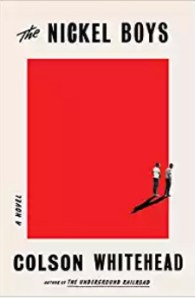
There are some books I don’t want to read. The latest is The Nickel Boys, by Colson Whitehead, based on north Florida’s notorious Dozier reform school.

I don’t want to read it because the real school was used by teachers and coaches in my Tallahassee, Florida high school as the ultimate threat should we transgress too often, or just once if we were black. At the time, there weren’t any black people in our school, but the newspaper was filled with accounts of students from other schools who were shipped to Marianna 57 miles west of us.

Some people, you know which ones I mean, disappeared from our high school and were never seen again. Some were in jail. Some were in reform school and might never emerge. We never knew.

We didn’t know how bad the reform school in Marianna was until much later. There were always inuendos, ghost stories, and talk in the barbershop. But nothing much came of it until relatively recently. No matter where you live, you’ve probably read the stories of the so-called White House Boys who survived the beatings and the stories about the graves of those who didn’t.

I would like to say that I’m horrified. But so many things in this world have gotten so much worse than we ever imagined, that I’m starting to lose bits and pieces of my humanity and become hardened, somewhat jaded, and partially immune to such things. So far, I still have the capacity to be angry at those responsible.

So now I have a copy of The Nickel Boys. The first sentence in the prologue is “Even in death the boys were trouble.” I want to set the book down, but I can’t and I won’t.

–Malcolm

Malcolm R. Campbell is the author of the mystery satire “Special Investigative Reporter.”

If I Buy One Wrench, Should the Rest of the Set Be Free?

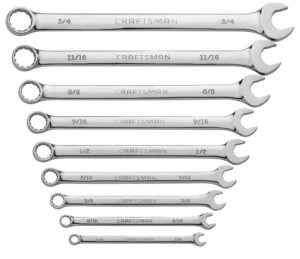
Look at this fine set of Craftsman Wrenches available at Ace Hardware. Now, using many online book buyers’ expectations, I should be able to walk into the hardware store, buy the ¾” wrench and get the rest of the set for free. This is the online mindset publishers and writers face these days.

This mindset is probably behind the fact that Audible wants to add closed captions to audiobooks without compensating the authors and publishers. Our agreements with Audible call for them to make available an audio copy of our books, a copy we must pay a professional narrator to produce.

Now, major publishers are suing Audible for copyright infringement, and well the should, for none of us–large and small publishers–have granted Audible the rights to a print version of the text. Many of us think that publishers should have an opt-in/opt-out choice. If we opt-in, Audible pays for essentially distributing a print and an audio version of the book.

Audible claims the captions will help the deaf and the hard of hearing. I don’t doubt it because I rely on closed-captioning to watch TV shows. But Audible cannot expect to offer the service without paying those who created the material.

Many readers will probably side with Audible because they think when you buy one edition, all the other editions of the book should be available at no charge. Well, for one thing, paperback and hardcover books don’t cost the same to produce, so I can’t imagine a publisher throwing in a free hardcover edition for everyone who bought the e-book or the paperback. All of these editions (e-book, paperback, hardcover, and audiobook) are not produced by a giant computer on demand. Each one has been created separately by the publisher or self-published author.

  • The formatting and cover requirements for e-books and physical books are different.
  • If you add a paperback edition, you need a high-res image for the printing, back-cover art, and you must consider how thick the book will be, based on the number of pages, in order to properly format the front cover/spine/back cover.
  • If you add a hardback edition, usually printed by a separate company for small presses, you also have to consider the dimensions of the dustjacket and what will be printed on the front and back flaps.
  • If you add an audiobook, you have to find a producer/narrator whom you can afford–or contract for a royalty/share provision–and then work with them to make sure they have pronunciations and ambience right. My Florida Folk Magic Series wasn’t easy for narrators because it had phrases in African American dialect and North Florida’s dialect. So, pronunciation lists must be compiled and every file must be listened to before it’s approved for publication.

Publisher expenses, actual or work hours, are incurred to produce every edition of every book. So, I side with the authors, printers, narrators, and editors who feel discounted when buyers say they are entitled to a free copy of every edition after buying one copy of one edition.

Right. Just try that nonsense with the people at Craftsman or Ace Hardware and see how it works out. Or, walk into an expensive restaurant and ask if buying an appetizer entitles you to an entire meal (Including cocktails and wine) at no extra charge.

Malcolm

Malcolm R. Campbell is the author of a whole bunch of stuff.