Military Fiction: it teaches of a lot we didn’t learn in school

I first met bestselling military history novelist Jeff Shaara when he was a teenager, though there’s no reason he would remember it. His father, the Pulitzer Prize-winning author of The Killer Angels (made into the movie Gettysburg) was my creative writing teacher at Florida State University. We met at Mike’s house once a week. His wife, Helen, prepared a smorgasbord for us to consume during the class break. Jeff spent the evening (or so it seemed) hovering around the dining room table.

Inasmuch as I am a pacifist, people find it odd that I often read military history novels. I do this because they teach me more history than I learned in high school and college history classes. Authors such as Shaara (both Mike and Jeff) and Philip Lee Williams whose outstanding Civil War novel A Distant Flame was the winner of the 2004 Michael Shaara Prize, do a tremenous amount of research and then wrap their findings into compelling stories, and readers benefit from it.

Williams told me that while creating A Distant Flame, he created an hourly timeline of the battle of Atlanta to keep his facts straight. I’m sure Jeff Shaara does the same thing because his works are flawless. And, suffice it to say, Jeff is prolific:

Publication Order of World War II Books
The Rising Tide (2006)
The Steel Wave (2008)
No Less Than Victory (2009)
The Final Storm (2011)
Publication Order of Civil War Trilogy Books
A Blaze of Glory (2012)
A Chain of Thunder (2013)
The Smoke at Dawn (2014)
The Fateful Lightning (2015)
Publication Order of Standalone Novels
Gods and Generals (1996)
The Last Full Measure (1998)
Gone For Soldiers (2000)
Rise to Rebellion (2001)
The Glorious Cause (2002)
To the Last Man (2004)
The Frozen Hours (2017)

His next novel is about Pearl Harbor. I will definitely be reading it after buying The Frozen Hours about the Korean War, a war that was ongoing when I was in grade school and often in the headlines then.

I appreciate these novels because I learn so much about our history from each one of them.
Malcolm

Malcolm R, Campbell is the author of the Vietnam war novel “At Sea.” The novel is a personal story of one man’s service in the navy during the war and not military fiction.

 

I never know why what happens happens

That title applies to a lot of things. Once again, it applies to my bewilderment about old posts that are suddenly found by more readers long after the fact than read them when they were written.

Lately, two reviews, ‘Paris in the Present Tense’ by Mark Helprin and Briefly Noted: ‘The Hart Brand’ by Johnny D. Boggs have suddenly gotten a lot of hits.

I used to spend time trying to figure out what suddenly drew so many readers to old posts. I’d search Google to see if the subject was in the news or if there were a fresh scandal afoot. I seldom found anything. Nonetheless, I appreciate the readers who spend their time here whether it’s to read something from months ago or something I wrote today.

I never know why what happens happens is probably the story of my life. I don’t believe in coincidences, luck, or fate. So, most of the time when I can’t explain something, I just shrug and move on. Wondering about things I can’t explain usually doesn’t get me anywhere.
When I worked as a journalist and a journalism teacher, I taught the so-called 5Ws and the H, the who, what, when, where, why, and how that reporters need to cover in the early paragraphs of their news stories. To know something, when it comes to news, these things are what readers ask about. So, part of my training as a journalist and college journalism instructor still nags at me now–out of habit, I ask why?

Age and/or laziness have shown me that I’m not always going to know why about a lot of things. I realize that why? is an important question in a lot of professions: why did the bridge fall down, why did the sinkhole swallow a Florida town, why did the wreck happen, why did the plane crash, why did the fire start, &c. Why, in such instances, helps us fix what’s broken and makes it less likely that bad things won’t happen again.

But applying why to non-technical questions, such as why are so many people reading an old Mark Helprin review or why do bad things happen to good people (and vice versa) often seems like a fool’s errand. That doesn’t mean we don’t care. It seems to mean we don’t know and haven’t figured how to know.

I suspect that if we truly discovered the why behind mysterious and/or transcendent occurrences, we wouldn’t believe it because it would conflict greatly with our view of the world. My views about why conflict with most people’s views about why don’t make sense to most people, so I don’t mention them. I find comfort in my idiosyncratic views about why and, smart or stupid, they keep me reasonably sane.

I often wonder if a lot of people are like this when confronted with unanswered or unanswerable question. They have a theory about such things, perhaps, but otherwise, don’t worry about it. That seems to be better than going flat nuts.

On the other hand, being human, we’re still curious, but we are smart enough to keep our curiosity under control.

Malcolm


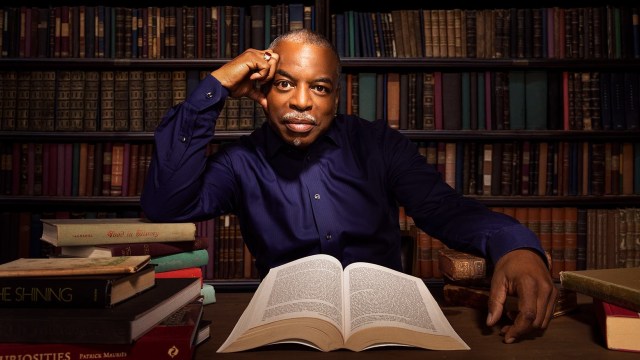
LeVar Burton to Host 70th National Book Awards

The National Book Foundation announced that LeVar Burton, acclaimed actor and entertainment industry professional, will host the 70th National Book Awards on November 20, 2019 at Cipriani Wall Street in New York City. Burton, who is known around the world as Chief Engineer Geordi La Forge in the iconic Star Trek: The Next Generation television and film series, and as the host and executive producer of Reading Rainbow, will serve as master of ceremonies for the event that will announce the National Book Awards Winners in the categories of Fiction, Nonfiction, Poetry, Translated Literature, and Young People’s Literature. The ceremony will also include the presentation of two lifetime achievement awards, to Oren J. Teicher, CEO of the American Booksellers Association and pioneering writer Edmund White.In addition to announcing the winners of the National Book Awards, the benefit dinner on November 20 serves to fund the educational and programming work of the National Book Foundation year-round.

Source: LeVar Burton, Actor and Education Advocate, to Host 70th National Book Awards – National Book Foundation

I think it helps awards programs when an individual known to the general public serves as the host. This man is a great choice for we’ve watched in on the screen for years and he has been active in publishing. So, unlike some of the celebrities who testify before Congressional committees, Burton knows publishing and books.

Wish I could be there.

Malcolm

“Mountain Song” is free on Kindle from October 27 through October 1. This novel about a summer romance gone wrong is set in Glacier National Park and Tate’s Hell in the Florida Panhandle.

The Radiation Blues

I got them ol’ radiation blues,
Yes, I got them ol’ radiation blues,
Too tired to drink and fight,
glow in the dark, I’m a sight,
can’t never sleep at night
from all the extra light.

It’s my understanding that while the radiation beam is fairly well defined, the machine can’t actually see the cancer cells. The biopsy said there they were, to the beam goes into that area.

This means it wipes out some innocent cells, cells that are minding their own business, don’t have a criminal record, never swear in church, you get the picture. So, I’m tired because my body is mobilizing against the threat to the system.

All that causes the radiation blues.

Today is day 30 out of 43. Then there will be a few more hormone injections. Yet, when all is said and done, we don’t know at that point how effective the treatment was. It might take three months for my test scores to go back down into the “he’s okay” part of the scale. The doctor said it could take as long as 18 months to see normal test scores.

I told him we needed Star Trek technology. He didn’t disagree even though he doesn’t think I glow in the dark.

Malcolm

My Glacier National Park novel “Mountain Song” will be free on Kindle from September 27 through October 1.

Where have all the reviewers gone?

Small press and self-published authors have noticed over the past year or so that their books are getting fewer and fewer reader reviews on Amazon and B&N. Meanwhile, the big books that don’t need any reader reviews to survive, often have a thousand or so people saying they loved the book. Here is my response:

Meh, too much trouble.

Where have all the reviewers gone, long time passing?
Where have all the reviewers gone, long time ago?
Where have all the reviewers gone?
Big books have picked them everyone.
Oh, when will they ever learn?

Where have all the big books gone, long time passing?
Where have all the big books gone, long time ago?
Where have all the big books gone?
Gone for big publishers everyone.
Oh, when will they ever learn?

Where have all the big publishers gone, long time passing?
Where have all the big publishers gone, long time ago?
Where have all the big publishers gone?
Gone for conglomerates everyone.
Oh, when will they ever learn?

Where have all the conglomerates gone, long time passing?
Where have all the conglomerates gone, long time ago?
Where have all the conglomerates gone?
Gone for Amazon everyone.
Oh, when will they ever learn?

Where has Amazon gone, long time passing?
Where has Amazon gone, long time ago?
Where has Amazon gone?
Gone for a billion other products everyone.
Oh, when will they ever learn?

Where have the billion products gone, long time passing?
When have the billion products gone, long time ago?
Where have the billion products gone?
Gone for a monopoly everyone.
Oh, when will they ever learn?

Where, then, have the small presses gone, long time passing?
Where have the small presses gone, long time ago?
Where have the small presses gone?
Gone to graveyards, nearly everyone.
Oh, when will they ever learn?

Where have all the graveyards gone?
Where have all the graveyards gone, long time ago?
Where have all the graveyards gone?
Gone to amnesia everyone.
Oh, when will they ever learn?

Where have all the reviewers gone, long time passing?
Where have all the reviewers gone, long time ago?
Where have all the reviewers gone?
The void has picked them everyone.
Oh, when will they ever learn?

Copyright © 2019 by Malcolm R. Campbell

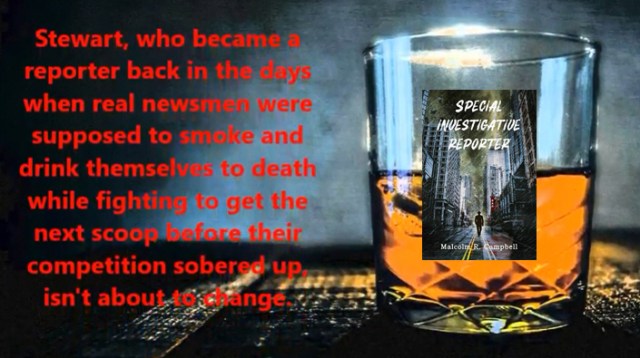
Malcolm R. Campbell is the author of the comedy/satire Special Investigative Reporter.

Best Books of the Century (already!)

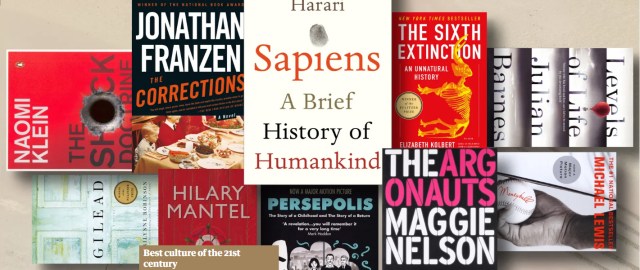
The Guardian has already come out with a list of the best books of the 21st century. (Dazzling debut novels, searing polemics, the history of humanity and trailblazing memoirs … Read our pick of the best books since 2000).

Er, isn’t it a bit early for such pronouncements?

I’m not surprised to see this, for every year, everyone and their brother comes out with a best books of the year list about August or September–like no books are published in the fall that could possibly be worthy of consideration. (I’ll spare you my usual rant about that practice.)

Looking at the past ten years, I think they’ve got a fair number of great books. Needless to say, they consider major publishers and let the rest of the industry’s output go unmentioned.

Yet, for a list like this, maybe they should have waited until 2050 for a look of the best books so far as of that point.

Malcolm

Malcolm R. Campbell is the author of Eulalie and Washerwoman, a 1950s struggle between a conjure woman and a man who runs a gambling operation called policy.

The novel is available in e-book, audiobook, paperback, and hardback.


‘I Love Little Baby Ducks’

I don’t think “I Love Little Baby Ducks” (1973) has been played on Ken Burns’ Country Music mini-series, but Tom T. Hall has appeared frequently. That forces me to think of this song.

When the song first came out, I was working at Northwestern University and discovered I was part of a group who couldn’t get the song out of my head once it was played on the radio 100000 times. With therapy, I finally got rid of it. Now it’s come back.

So, I’ve had a relapse. When I told my wife what happened, she said I better not tell her what song it is, or she’ll be stuck with it, too.  My hearing is so bad that even if the song had been played on Burns’ documentary, I wouldn’t have been able to hear it. So, I thought I was safe. But then Hall showed up and the song came to mind.

Burns’ documentary does, however, display the song lyrics in its closed captioning. A lot of old memories there from “Ode to Billie Joe” to “Coal Miner’s Daughter.” Porter Wagoner looked just as goofy in the old clips as he did in real life when we used to watch his syndicated variety show.

Burns has done a wonderful thing for those of us who like music, who care about it in some depth, including how disparate genres are interwoven.

Now, if I could just take a pill and forget the ducks.

Malcolm

Malcolm R. Campbell is the author of “Conjure Woman’s Cat,” a story about a 1954 conjure woman fighting the KKK in the Florida Panhandle. The novel is available in e-book, audiobook, paperback, and hardback editions. The audiobook was an Ear Phones Award Winner on AudioFile Magazine.

Review: ‘The Lake of Learning’ by Rose and Berry

The Lake of Learning (Cassiopeia Vitt Adventure, #3)The Lake of Learning by Steve Berry
My rating: 5 of 5 stars

This novella, and “The Museum of Mysteries,” represent everything a good novella should provide for readers: strong characters, mysterious stories based on heavily researched history, conflicts that are not easy to resolve, and a compelling storyline that leaves the reader wishing the book went another 500 pages farther than it did.

This story focusses on the Cathar religion, a system of beliefs that the Catholic church considered heretical and then killed the adherents in a crusade launched in 1209 and later during the inquisition. However, Cathars still exist today, and it’s about them–and the discovery of an old Cathar book of hours–that’s the focus of this story.

An old book is found on a construction site, and suddenly opposing Papist and Cathar individuals insert themselves into the story, creating a dangerous game for the protagonist Cassiopeia Vitt. Old conflicts die hard, it seems, as those who believe and those who don’t believe put Vitt’s life, wealth, and company in danger.

Books like this not only have compelling stories but teach readers a lot about the subject matter. In this case, the authors’ note at the end of the book what separates fact from fiction so that readers can see what’s true, what’s imaginary (but possible), and where to follow the historical record for themselves.

The characters in this novel (both the ones you like the and the ones you don’t like) not only have great depth to them, but they’re experts in their fields and savvy about everything that surrounds their areas of interest. If you have an interest in the Cathars, you will enjoy this novella. But even if you don’t, the fascination of a well-told tale will keep you reading.

View all my reviews

Malcolm

Ken Burns’ Documentary Brings Back Many Memories

Like most people my age, I listened to the primary performers covered in Ken Burns’ Country Music documentary as well as the stars who were 15-20 years before my time. Our popular American music is a mix of blues, jazz, folk, gospel, bluegrass, country, ragtime, and rock. I liked everything but rock when I was in high school, but tended toward folk, though it’s hard to say where one form began and another ended.

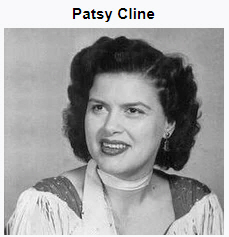
I liked Joan Baez and Patsy Cline, among others. The episode of Burns’ documentary that ended with the death of Patsy Cline was difficult for me to watch, especially with her voice over the closing credits. I remember when it happened. I took it hard then, and Burns’ documentary brought it all back. When Cline sang, it felt like she was in the room with me. Yes, I know, a million other people thought the same thing because her voice was personal and perfect.
As I watched the documentary, I knew we were leading up to the 1963 plane crash that killed Cline. I hoped they would leave that until the next episode. And I hoped maybe knew evidence would show the crash never happened or, if it did, that everyone survived. No such luck.

No, I didn’t have a crush on Patsy Cline. I just liked her music from her recordings to the shows we heard on the clear-channel radio station WSM from the Grand Ole Opry. My wife and I once heard Gordon Lightfoot sing from Nashville’s Ryman auditorium. He’s a favorite of mine, too. As we sat there in those church-pew style seats, I could imagine what the place would have been like in the days when the Opry originated there.

I’ve listened to the music of almost every performer who’s appeared in Burns’ documentary. Seeing it all again has been a trip back in 4/4 time.

Malcolm

The 2019 National Book Awards Longlist: Fiction 

This week, The New Yorker is announcing the longlists for the 2019 National Book Awards. This morning, we present the ten contenders in the category of Fiction. Earlier this week, we published longlists for Nonfiction, Poetry, Translated Literature, and Young People’s Literature.

Source: The 2019 National Book Awards Longlist: Fiction | The New Yorker

As a follow-up to yesterday’s post, here’s the long list for the fiction category the National Book Awards.

One criticism, I often hear for these awards and the Pulitzer Prizes for fiction is that most people have either never heard of, much less read, many of the winners.

That makes me wonder whether the fiction awards really focus on work that is viable, important, and in tune with the times or if they focus on material which is so far off the beaten track that they are actually oblivious to the times.

What do you think?

Here’s the list from New Yorker Magazine:

Taffy Brodesser-Akner, “Fleishman Is in Trouble
Random House / Penguin Random House

Susan Choi, “Trust Exercise
Henry Holt & Company / Macmillan Publishers

Kali Fajardo-Anstine, “Sabrina & Corina: Stories
One World / Penguin Random House

Marlon James, “Black Leopard, Red Wolf
Riverhead Books / Penguin Random House

Laila Lalami, “The Other Americans
Pantheon Books / Penguin Random House

Kimberly King Parsons, “Black Light: Stories
Vintage / Penguin Random House

Helen Phillips, “The Need
Simon & Schuster

Julia Phillips, “Disappearing Earth
Alfred A. Knopf / Penguin Random House

Ocean Vuong, “On Earth We’re Briefly Gorgeous
Penguin Press / Penguin Random House

Colson Whitehead, “The Nickel Boys
Doubleday / Penguin Random House

I’ve read The Nickel Boys and, while it was powerful, I thought it had an author’s trickery in it that kept it from working for me.

–Malcolm