What Your Choice of Dialogue Tags Says About You

One way to look at it is to consider any movement away from the exclusive use of said or asked a step away from the very “best” writing, from the kind of writing intended to be considered “literary.” If you spend any small amount of time examining blogs or books on writing, you will find that this is a very common directive: use said, asked, and nothing else.

There are a number of reasons for this, but the most common works in conjunction with that other famous maxim: show, don’t tell. If you use the word ranted to describe the speech act of one of your characters, you’re telling your readers how to understand what is happening rather than illustrating through action and dialogue.

Source: What Your Choice of Dialogue Tags Says About You | Jane Friedman

One of the first things a new writer hears about dialogue tags is how annoying it is when somebody finds a thesaurus and inserts a dozen synonyms into his/her story for “said” and “asked.” The result is often highly annoying except when it is done sparingly.

For humor, where was the ever-popular, “‘Ouch,’ he explained” approach and the campy Tom Swifty insertion of a punning adverb such as: “‘Let’s get married,’ Tom said engagingly.”

I see nothing wrong with substituting the word “shouted” when the people are far apart from each other or in a noisy place. Otherwise–as the article says–we have author intrusion into the story and telling rather than showing when we substitute words for “said.”

Writers can avoid the fact they’re inserting an editorial opinion into the story when they, for example, substitute a word like “ranted” for “said.” The character’s thoughts can show that he’s ranting and so can his facial expressions and movements during the conversation.

Big-name authors often take a stylistic approach to dialogue tags. One in particular constantly uses “observed.” That’s really not a good general synonym for “said,” especially, in quick back-and-forth dialogue because it implies that the comment is measured and based on logic rather than simply uttered.

When an author goes nuts looking at a manuscript page of dialogue with the word “said” all over it, one way to avoid this repetition is to ask how many of those dialogue tags are needed. A back-and-forth conversation doesn’t need a dialogue tag after every line as long as the reader can always tell which person is speaking.

A lot of food for thought in this blog post from Christopher Hoffmann on Jane Friedman’s blog!
Malcolm


Twelfth Night Thoughts

“A real artist is the one who has learned to recognize and to render… the ‘radiance’ of all things as an epiphany or showing forth of the truth.”

– Joseph Campbell

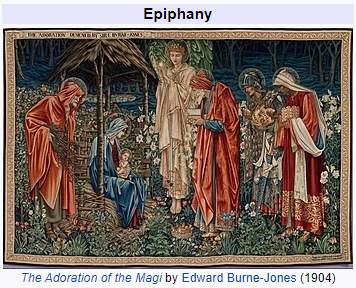
Twelfth Night, the twelfth day of Christmas, is also known as Epiphany Eve. Many traditions surround this time, but many of them consider Twelfth Night to be January 5th with Epiphany celebrated on January 6th. Some refer to Epiphany as Three Kings Day, and see it as a celebration (primarily) of the visit of the Magi and the revelation of the incarnation of God in Jesus. Others link the day to Jesus’ baptism.

The symbolism here would take multiple posts to discuss and, regardless of one’s church or sect or denomination, the meaning, I believe, transcends temporal orgnizations and faiths and instead reminds us of the most important epiphany each of us can have: the realization of the divine within ourselves.

Wikipedia Photo

Originally, when people spoke of having an epiphany, the default value of the experience was that the insight they found came from the god of their hearts. Now, such realizations are often considered to be of a logical or scientific or psychological origin. It’s all the same, I think.

As writers, our best work seems to come from multiple epiphanies, from having our fingers or thoughts on the pulse of the universe and the channels through which cosmic energies flow.

Or, perhaps you are more comfortable with the idea of inspiration or having a real or figurative muse. Looking at it that way seems less presumptuous!

My muse tells me to follow the old traditions and to take down my Christmas decorations today or otherwise be stuck leaving them up until Candlemas. It’s hard enough explaining to neighbors why our decorations are up longer than most people’s; it would be more difficult if our lights and greenery were up until February 2. The decorations, when they go up, and when they’re put away are guidelines, not rules, for the paths we’re following.

Perhaps the decorations symbolize a person’s readiness to discover and interpret the radiance of all things.

Malcolm


An invitation to visit my Facebook author’s page

If you’re a savvy reader, your first question should be, “What’s in it for me?”

If you’ve been reading this blog long enough to remember the Book Bits posts that featured links to books and authors news, reviews, interviews, and publishing trends, then you’ll know the general format of the page.

Every day, I post four or five links to these kinds of topics. So, it’s a quick place to check for publishing news, obituaries, and news of upcoming books.

I also post a link to this blog and every once in awhile a link to one of my book pages at an online bookseller.

It’s a page for “book people.”

Click on this graphic to stop by and take a look:

–Malcolm


We do not need a war with Iran

“War with Iran would be disastrous and wholly unnecessary. Military and diplomatic leaders have warned it could bring costs, in both blood and treasure, greater than the wars with Iraq and Afghanistan combined. We now face a stark choice: continue down the current path, with its catastrophic consequences, or immediately de-escalate: walk back aggressive rhetoric, end the cycle of military retaliation, and engage meaningfully in a diplomatic process for peace.

Source: Statement: We Must Pull Back From the Brink of War | Win Without War

We have been promised that the U.S. will withdraw its troops from Iraq (and the surrounding area) and Afghanistan. And yet, we just can’t seem to do it.

As Marianne Williamson said recently, “The killing of Soleimani is extremely serious, and will almost certainly cause a significant reaction from Iran. It’s not that Soleimani was a good man; he was not. But that’s not what this is about. It’s about the wise versus unwise, responsible versus irresponsible use of military power.”

Unfortunately, the hawks in Congress keep re-authorizing the horrible National Defense Authorization Act which gives the President broad powers to take action purportedly in the nation’s defense without a specific act or resolution from Congress. Supposedly, killing Soleimani saved American lives from actions he was planning.

However, if we weren’t there, Soleimani’s throughout the region wouldn’t be a threat to American lives. Now more troops are headed to the Middle East to shore up a presence we don’t need.

I look forward to the day when the American public says it’s had enough.

–Malcolm


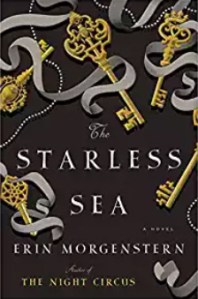
Review: ‘The Starless Sea’ by Erin Morganstern

This novel is a breathtaking display of exuberant lyrical prose, wondrously detailed imagery, and elaborate plotting. Interlocking tales and snippets of tales comprise this brilliant celebration of storytellers and how the times and places and characters of their art become woven, often covertly, into readers’ lives.

The purported protagonist, Vermont college student Zachary Ezra Rawlins, checks out a book called Sweet Sorrows from the library and finds within it a story from his childhood. At first, he can’t believe it, but then as he tries to find out where the book originated and how it was catalogued by the library, he discovers over time that he can’t truly believe anything.

Rawlins initially discovers that simply having the book has placed his life in danger. He’s not sure why. In fact, he may never be sure. As it turns out, there are doors everywhere that lead to an immense and seemingly infinite realm of books stored in ever-shifting below-ground castles and caverns.

One is reminded of Neil Gaiman’s Neverwhere tale about a hidden-away realm beneath the streets of London where the culture is quite different from everything at street level. In Morganstern’s unique world, which comes with its own mythologies and origin stories, the culture is not only different from the “real life” we know, but changes constantly like the play of moonlight on the surface of the sea.

Stories are not content to confine themselves to their original plots. Instead, they update and morph themselves not only into other stories but into the reality of the inhabitants and structures of the underground world itself. In one respect it’s chaos, but everything is tied together as though the stories themselves got together and made sure their changes meshed perfectly with the changes in other stories like the gears in a perfectly designed machine.

The stories, in fact, are all there is. They are not only the motive power and intelligence behind the underground library on the shore of the Starless Sea but impact the direction of the science and technology world that innocently exists outside the doors leading into the depths.

In defense of readers who enjoyed The Night Circus and were disappointed with The Starless Sea, Morgenstern’s new novel strays dangerously close to being a work of experimental fiction rather than a true fantasy. The plot isn’t linear and may not even exist cohesively from one chapter to the next. The ending–which works perfectly within the confines of the novel–will anger those who read through some 500 pages hoping for a resolution.

I’m content simply to experience the world Morgenstern has created in The Starless Sea and the immeasurable beauty of her storytelling. Fantasy or experimental–either way, it’s a gem.

–Malcolm


Affirming tomorrow

I’ve been going ’round and ’round with a few people on Facebook who believe New Year’s Eve marks the beginning of a new decade. I say it doesn’t. They say it does. But, no matter.

Whatever is being marked by New Year’s Eve can be marked with a symbolic step toward your hopes for 2020.

My symbolic step was to open a doc file containing the first two chapters of a novel I’ve been blocked on for the better part of the year. My symbolic step was writing a new beginning. Now, my mind sees the book as underway again rather than stalled.
I still don’t know whether my radiation and hormone treatments got rid of the cancer. Tests near the end of January may give me a clue. But using a Cancer Navigators program called iThrive, I’ve taken steps to improve my diet, my supplements, and other things that should have a positive effect on my health.

Perhaps most of us are in this boat at the end of a calendar year with plans for the texture and ambience of the following year. Affirmations work best when we take symbolic steps to jump-start them. Those who want to quit smoking, throw out their last cigarette. Those who want to quit drinking “too much,” throw away the last inch in a bottle of booze. There are a hundred ways, perhaps a million ways, to add power to the affirmations we’re making for tomorrow.

They need not be earthshaking because small steps can lead to large results. Whatever your hopes are for 2020, I hope you realize them.

Malcolm

To all who come here

I appreciate it. Your presence has made 2019 a better year and it needed to be better.

Wikipedia Photo

Those of us who tell stories–in books, at parties, around the dinner table, or even in blogs like this one–hope that some of the stories will connect with some of those who have come to the storyteller’s place.

Even the storyteller knows not the ending of a story when s/he begins telling it, just as now I am typing this line with no idea what line will follow it.

Is it luck? No, I don’t think so because one thing has become clear over time; stories know where they are going and just need somebody there to serve as a channel to allow them out into the world.

You have your stories, too, even if you don’t put them in books or blogs. Maybe they’re about your life or maybe they come unbidden from your dreams and your imagination. To all who hear and read your stories, the stories and the listeners/readers are gifts.

From the universe perhaps or from your heart and soul.

Malcolm

An Indie Alternative to Amazon? 

The past few years have been rocky for Chris Doeblin, owner and cofounder of Book Culture, four beloved independent bookstores in New York City. “Before Amazon we had a viable company. I made a decent living in New York City. We bought an apartment,” he says. “Twenty-five years later I’m on the verge of bankruptcy. Our stores can go out of business any minute.”

Source: An Indie Alternative to Amazon? | Poets & Writers

The website is already up, perhaps as a teaser or a priming-the-pump-before-launch kind of thing at https://comingsoon.bookshop.org/signup

I hope these folks can make their plan work because Amazon, while it has provided a service to indie authors who can’t get their books into bricks and mortar stores, has become a big problem: a monopoly.

I link my books to other online sites as often as possible, but I think people just read the books’ descriptions and then go buy them at Amazon. (I do appreciate the people who buy them.)  But we need alternatives in addition to Powell’s, B&N.com, and even IndieBound.

I’m keeping my fingers crossed about this venture.

Malcolm


According to some insane professor, New Year’s resolutions are due December 31

Fortunately, I’m only auditing the course. That means I don’t have to do the assignments or take the tests. It also means I don’t get any CEUs, much less college credit, for taking the course. I don’t mind because, really, I don’t need the grief or the deadlines.

The course is called “Fixing Your Life for Fun and Profit.”

All of us are shunted through the course because it’s part of our general education requirements. Compared to grad school where grades lower than As and Bs don’t count, you can skate through the GE courses with a C average.
According to the syllabus, the criterion objectives include: (a) the student will learn how to write affirmations that speak of a better life than s/he had at the beginning of the course, and (b) how to write New Year’s resolutions that, while powerless, impress all who hear them.

Do you see the flaw in the course?

Resolutions and other affirmations don’t accomplish diddly squat unless those who write them or say them or proclaim actually want to change. So there it is. If they wanted to change, they would have done it already–no need to write it down as an action step.

Since I like pulling people’s chains, I usually say that my New Year’s resolutions include “Killing fewer people than last year” and “Fighting the urge to throw fools under the bus.” If I say this in “real life,” there’s a lot of silence in the room. If I say this online, I get a lot of laughing smiley faces like the whole thing’s a joke.

Do you notice that when people post heartfelt resolutions on Facebook and in their blogs that they do so with an expectation of praise? You know, like they’ve already accomplished something? Studies show that most New Year’s resolutions are broken or forgotten before February.

Of course they are because they’re all for show and/or for a passing grade in the smoke-and-mirrors “Fixing Your Life for Fun and Profit” course. It’s all snake oil and very expensive. Like patent medicine, it cures everything from gout to malice to bad breath.

Every once in awhile, placebos cure people. Perhaps January 1 is your day, but I wouldn’t bet the farm on it.

Malcolm

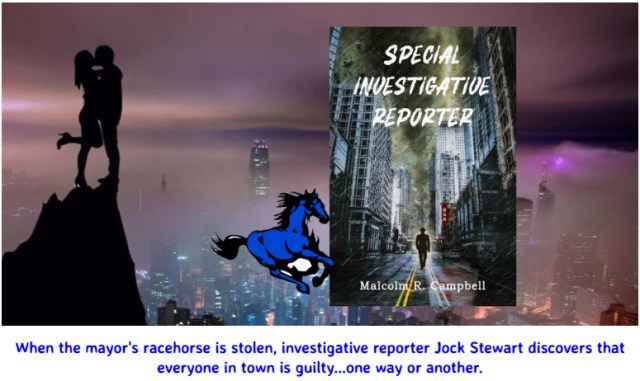
Malcolm R. Campbell is the author of the satirical mystery “Special Investigative Reporter.”


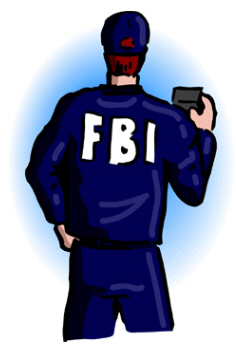
A writer’s concern: what if the FEDs look at my browsing history

As a writer, I hear other writers talking about the browsing history on their computers. Sites about murder, poison, making bombs, laundering money, you know, stuff that doesn’t look good after the FEDs kick open the front door to your house, announce that you have a right to remain silent while hoping you don’t, and then run off with your computer.

Let’s say your arrested for a crime of which you’re innocent but your browsing history includes sites about how to murder your spouse without getting caught. When the trial comes, the D.A. asks you to explain these searches and you say you were doing research for a book. When asked to produce the manuscript, you can’t since you haven’t started writing it yet.

If you watch the series “Bull” on TV about a company that specializes in jury selection and find people like that to defend you, you might have a prayer. Otherwise, it’s going to be a life sentence without any chance of parole. Or, at the very least, if I ever run for President, my opponents will ask why I spent 10000 hours on murder for fun and profit sites.

Since I believe in Murphy’s Law, I think of this when I head out to incriminating sites. “Yep, the NSA/CIA/FBI are probably monitoring this site,” I think. Frankly, I think authors ought to be given a “Get out of Jail Free” card to cover innocent research that makes them look guilty.

I’ve been doing more research into the KKK, supplementing what I did before writing the three books in my Florida Folk Magic Series. Every time I access a KKK site, I think I hear some FBI Special Agent saying, “Ah, Malcolm again, Now I’ve got you, you son of a bitch.” What if the Southern Poverty Law Center finds out; will I be labelled as a Hate Site? That won’t be good for book sales.

If you’re not a writer, you have no idea of the risks we take to bring you true-to-life, accurate, and frightening stories about evil people. We’re walking in harm’s way to give you a good story. So, when we get rounded up in a sting operation at the library, we hope you’ll be there with bail money.

When I was in high school, I hid “questionable” novels under the mattress so my folks wouldn’t find them. I never told them what movies I was going to see because I didn’t want to get in trouble. But they didn’t have today’s technology. They didn’t know how to hack into the GPS system and/or live-feed traffic cams to see where I was. But, apparently, the FEDs know where I am 24/7. There ought to be a law against that but when people complain, they’re told, “If you have nothing to hide, there’s nothing to worry about.”

Everyone has something to hide, but especially writers.

Malcolm