Always waiting for factory fresh books

“They” say that Scots and those of Scots ancestry are cheap. “They” might be right since we’re part of that group who spends both sides of every penny.

Bookwise, this means that unless a book is on my “MUST HAVE IT RIGHT NOW” list, I’m going to wait for the trade paperback, or even the mass market paperback, edition of books I’m waiting for. Oddly, these days the paperback version might be more expensive than the hardcover.

I do the same thing with movies because trying to set up closed captioning at a theater is a who needs it, so I seldom see any film before it reaches TV with closed captioning. I guess this is just part of getting old. By the time I read a book or see a film, the discussion has moved on to something newer. Sigh.

So, while waiting for the cheapest edition of the newer books, I’m constant grabbing books off my shelves and reading them again. (I think that if I read it two or three times, that cuts the cost by 1/2 or 1/3 and gets me into less trouble with my wife for sneaking books into the house.)

Yes, there’s Kindle, but that’s not my thing. I read stuff off the screen all day, so that’s the last thing I want while reading for 30 minutes before going to sleep.

Right now, I’m re-reading another Jeff Shaara novel, Gone for Soldiers, about the U.S. invasion of Mexico in 1846 while we fought over just where the southern border of Texas was going to be. Many of the soldiers who became well known during the Civil War fought in this war.

Sometimes historians call the Korean War the forgotten war. One might say the same thing about the Mexican War. It falls into one of those gaps in our history lessons in school. I’ve always found history interesting, so this is an enjoyable book to read while waiting for the John Hart novel I ordered from B&N.

What about you? Do you hold out for the cheaper editions of new novels or do you say, “what the hell?” and buy them as soon as the hardcover edition is released?

Malcolm

Malcolm R. Campbell is the author of Special Investigative Reporter.


What the hell was I thinking?

“Romance novels are big business. According to the Romance Writers of America®, the romance fiction industry is worth $1.08 billion dollars a year,* which makes it about a third larger than the inspirational book industry, and about the size of the mystery novel genre and science fiction/fantasy genre markets combined. Romance novels regularly top the major bestseller lists (New York Times, Publishers Weekly and USA Today), and have a large, dedicated audience of readers.”

– Valerie Peterson in “What You Need to Know About Romance Genre Fiction”

Learning About TaleFlick

The trouble started when a writer friend told me her novel was listed on TaleFlick and perhaps I’d consider voting for it. TaleFlick tries to bring novels to the attention of Hollywood through reader votes, one per person. After voting for my friend’s novel, I entered one of my own, Conjure Woman’s Cat.

What the Hell Was I Thinking?

The answers to this question vary from, (a) I was drunk, (b) I mixed up pot with oregano when I made spaghetti sauce that day, (c) Mindless Vanity, (d) Magical thinking that Hollywood needed this story, (e) An illogical belief that an anti-KKK novel set in the 1950s could possibly compete against–wait for it–Romance.

Getting My Ass Kicked

If I’d known that a romance novel with a title similar to a famous Hollywood movie, one categorized on Amazon as Erotic Thrillers, Romantic Erotica, Erotic Suspense, was in the running, would have waited a few weeks before signing up for another contest.
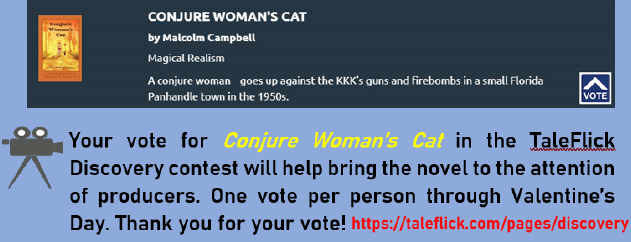
At this moment (2:33 p. m. ET, 2/13/20202) this week’s contest has 1 day, 4 hours, and 25 minutes left to run. Double Identity has 1,850 votes; Conjure Woman’s Cat has 15 votes. So it’s close, what with the vote counts from outlying precincts being somewhat slow to come in.

In general, though, I should know better than to fight romance with magical realism. So, lesson learned. My next book’s going to begin with an orgy on page one that lasts as long as the readers can stand it. No doubt, it will be banned in Boston.

Malcolm


These are the times that try men’s souls

“THESE are the times that try men’s souls. The summer soldier and the sunshine patriot will, in this crisis, shrink from the service of their country; but he that stands by it now, deserves the love and thanks of man and woman. Tyranny, like hell, is not easily conquered; yet we have this consolation with us, that the harder the conflict, the more glorious the triumph. What we obtain too cheap, we esteem too lightly: it is dearness only that gives every thing its value.”

 – Thomas Paine in “The American Crisis”

Thomas Paine (Common Sense) wrote the essays that comprise The American Crisis between 1776 and 1783. We have had many such times between 1783 and this moment and may, in fact, be living during such times today.

Wikipedia Photo

I have always liked the phrase The summer soldier and the sunshine patriot because those terms encapsulate so many of the oftentimes lazy and safe responses to the ideals we revere as a country as well as to the comfortable people one never finds “down in the trenches” when the moment comes to not only make a commitment but to sacrifice one’s time and money to engrave our ideals into the real fabric of everyone’s daily reality.

In Congress, business, the organized church, and other groups the committee is often mocked as a group that talks and ponders but never takes definitive action. If you want to bury a proposal, assign it to a committee. At the same time, committee members (like groups of concerned citizens talking during barbecues and dinner parties) believe talking and pondering is synonymous with action.

If asked, these summer soldiers and the sunshine patriots will say “I’m very involved with cleaning up rivers and lakes. . .saving and restoring-old growth forests. . .stopping human trafficking and female genital mutilation,” etc.

It’s tempting to respond with: “How many riverkeeper/keep-my-county-beautiful treks have you made to haul garbage bags of trash out of rivers, lakes, and shorelines. . .how many trees did you save or did you plant. . .how many mutilations did you stop?” Or, alternatively, are you an active (that is to say, a working) member of any groups or agencies working to improve the status quo of such issues?

It’s wrong to criticize friends, neighbors, and co-workers in this way, so the typical response to “I’m involved with…” is silence, and that’s one of the reasons why these are the times that try men’s souls.

–Malcolm


How about a movie version of ‘Conjure Woman’s Cat’?

TaleFlick holds contests in which site visitors can vote for the novel they think a producer/director ought to consider for a feature film.

One vote per person. Nothing to buy. Just find my book on the list and click on the vote button.

The audio edition of this book was well-received in an AudioFile Magazine review. Maybe movie reviewers will like it to. (Of course, I’m a bit biased.)

There’s supposed to be a chevron at the bottom of the entry to display more info. Since it’s randomly missing, here’s the publisher’s description from Amazon:

Lena, a shamanistic cat, and her conjure woman Eulalie live in a small town near the Apalachicola River in Florida’s lightly populated Liberty County, where longleaf pines own the world. In Eulalie’s time, women of color look after white children in the homes of white families and are respected, even loved, but distrusted and kept separated as a group. A palpable gloss, sweeter than the state’s prized tupelo honey, holds their worlds firmly apart. When that gloss fails, the Klan restores its own brand of order.

When some white boys rape and murder a black girl named Mattie near the sawmill, the police have no suspects and don’t intend to find any. Eulalie, who sees conjure as a way of helping the good Lord work His will, intends to set things right by “laying tricks.”

But Eulalie has secrets of her own, and it’s hard not to look back on her own life and ponder how the decisions she made while drinking and singing at the local juke were, perhaps, the beginning of Mattie’s ending.

Voting is open through Friday, February 14th. Tell your friends. Tell people you don’t know on the streets and juke joints. Scribble thhe URL on the bottom of all the Valentine’s Day cards you’re sending.

Thank you,

Malcolm

The usual Sunday potpourri

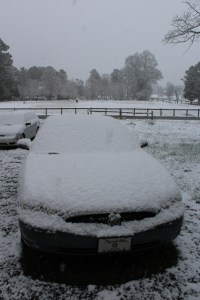
  • We had a bit of Northwest Georgia snow for a while yesterday, thick enough to cover the yards and mess up your hair if you walked out into it with a camera. It all melted away by mid-afternoon.
  • My novel Conjure Woman’s Cat will be among those listed on TaleFlick this coming week. According to their web site, “TaleFlick Discovery is a weekly contest that allows the public to vote on which stories they want to see adapted to the screen. Fans can now be involved earlier in the filmmaking process than ever before.” Personally, if Conjure Woman’s Cat became a movie, I’d like to see Viola Davis in the lead role of Eulalie–not that anyone would ask me for casting advice.
  • In spite of my criticism about the amount of backstory in Cemetery Road, I enjoyed reading the novel. The small-town alliances and secrets make for a very complex story that’s even hard for a man returning to his old hometown to figure out. Suffice it to say, there is great depth in the characters and enough lies to cover almost everything that happens.
  • I’m actually writing again, at work on a novel that might be considered a sequel of sorts to the three Florida Folk Magic novels set in the Florida Panhandle in the 1950s. It’s fun while I’m writing and frustrating while I’m researching the specifics from hospital care and to dishwashing soap promotions of the era.
  • My website will expire on the 20th of this month. I’m sad to see it go, but it’s no longer financially viable. I’ve deleted most of the information on it, leaving a home page with links to my writing. I’m happy to say that a fair number of people visited this site every month. Thank you.
  • My eyes are starting to glaze over about the American Dirt controversy. I see most of the complaints about the novel as a spurious tempest in a teapot.

Malcolm

I know Facebook and website gurus are just trying to help, but. . .

Facebook constantly leans on me to add more information to my author’s page. Among other things, they want a street address, a map, office hours, and a phone number. I can’t convince them that authors write from their houses and apartments and sure as hell don’t want anyone calling or stopping by.

I hear similar exhortations from website gurus: “If you don’t have a map showing directions to your place of business, prospective customers won’t take your company seriously.”
For one thing, an author is not a company. For another, do these gurus every look at authors’ websites and see them as no different than hardware stores? Or, are the guru’s really clueless, thinking (I guess) that authors should display addresses, maps, and sets of directions to help readers find their houses?

I just checked Madonna’s website. Her store is on line. My “stores” are bookstores since, like most authors, I don’t have a fulfilment center in the basement (partly because I don’t have a basement), much less a storefront. A lot of people around here sell produce from stands out in front of their houses, but I’m not sure that a “Boiled peanuts, okra, and books” approach would be worth the time.

Noticeably, Madonna doesn’t have a map on her website showing me how to get to her house.

My suggestion–though nobody sought it–is that Facebook and all those website gurus figure out how authors’ pages and sites work instead of advising us to do what is, frankly, stupid. An old joke comes to mind: “Question: What’s an expert.” “Answer: a (has been) drip under pressure.”

Meanwhile, I’m getting urgent messages from my website provider: “Crikey, Malcolm, haven’t you noticed that your whole website’s going down the toilet on February 20th?” I guess the powers that be haven’t noticed that I’ve deleted everything except for a boilerplate home page with alternative URLs for information about my books.

There’s plenty of room for a map to the nearest B&N store. Maybe that will get people off my back.

Malcolm

Oscar Nominations Prove That Hollywood Still Hasn’t Waked Up and Smelled the Coffee 

Donald Trump’s 2016 presidential campaign slogan, “Make America Great Again,” appealed to a dangerous brand of white, male nostalgia that evoked a mythologized time that was good for them and no one else. The 2020 Oscar nominations are an embarrassingly transparent primal scream by the Hollywood establishment hearkening back to the same.

Source: The 2020 Oscar Nominations Prove That Hollywood Still Hasn’t Seen Through the Smoke | Literary Hub

For several years now, acerbic pundits–including hosts and others of the televised Academy Awards ceremony–have said that the Oscars are really the “White People’s Movie Awards.” We’re also hearing that the awards are quickly becoming irrelevant because they don’t reflect population trends or attempts by various politicians and groups at greater diversity in all areas of the country, including publishing and filmmaking.

At present, whites (other than Hispanic whites) make up 73% of the U.S. population, while African Americans are at 12.7% and Hispanics are at 16.6%. We read that by 2044, the majority race in the U. S. will no longer be white. This is the reality. Some say that minorities should be represented (in various fields) to an extent larger than their percentage of the population due to long-time discrimination. (That’s a discussion for another kind of blog.)

It would be kind of petty for the Academy of Motion Picture Arts and Sciences to establish a policy that 12.7% of its nominations must be African American and 16.6% must be Hispanic. Needless to say–and this is perhaps debatable–nominations are based on merit rather than race or gender. It’s easy to see, though, that the nominations are skewed toward the traditional mainstream white (or WASP) idea of America.

We can and should do better.

Malcolm


Backstory adds depth while slowing down the primary action

Greg Iles Cemetery Road is a compelling thriller; I’ll stipulate that’s an early opinion inasmuch as I haven’t reached the half-way point yet.

The protagonist, Pulitzer-prize winning journalist Marshall McEwan, returns to the small town where he grew up because his father is in ill health and his newspaper business is failing. (I would have used a different name since this one is too close to Marshall McLuhan, the famous media expert and philosopher). Marshall’s old friend is murdered and thus begins the current-day primary plot of the novel.

Having lived in a small town, I understand what Iles is doing when he shows how interconnected people are, including those who leave for the big city and then return. There are many kinds of loyalties and associations (including a former love interest) that make solving the murder about as tricky and running through a minefield.

The book has great depth in the development of its characters and is a page-turner when Marshall and others are up against entrenched and hostile movers and shakers who consider that murder to be a benefit to their business interests. The problems begin when the backstory segments get too lengthy; for example, Marshall was a reporter in Iraq, embedded with a group run by another long-time friend. But, my view is that when a description of what happened in Iraq runs to 16 pages, the backstory has run amok.

Suddenly, we’re in a different novel while the main story is put on hold. I think the Iraq relationship of two primary characters could have been explained in several paragraphs rather than taking us on such a long diversion. And, this is not the only time such a diversion happens. My cynical side says that without these diversions, the story would be pretty slim if it stuck to solving the murder.

I don’t know how things end up, of course. So, isn’t a review, but an an example of the problems of using too much backstory.

Malcolm

Do you read the acknowledgements sections of novels

I skip the acknowledgement section unless I’m reading a book that posits an alternative history or a modern take on a real history because I want to know what parts of such books are true. Otherwise, acknowledgements seem like sucking up:
A big thank you to my wife who decided not to divorce me when she discovered this book was likely to make us rich.

No greater editorial team exists that can top Tom, Julie, Wes, Jim, and Sandra at BIG ASS PUBLISHERS, LTD. Without them, I’d still be selling used cemetery plots.

A special thanks to the intensely personal help of the girls at Nevada’s Rising Sin Gentlemen’s Club who showed me the ins and out of selling sex. 

Bob and Mary, if you’re still married when this book is published, thank you for taking me into your home and showing me your illegal gun collection. Wow, we could launch a revolution. I’ve changed your names here so the FEDS won’t be able to find you.

Frankly, I don’t want to read all this smarmy stuff. I guess it’s there only for one’s spouse, Tom, Julie, Wes, Jim, Sandra, Bob, Mary, and the ladies of the evening at one’s writer’s get-a-way location.

On the other hand, I’m intrigued by short and sweet:

For Zeke, who knows where all the bodies are buried.

For Emily, who only cheated on her husband once during the Vermont Writer’s Conference last year (Thanks for last night.)

For my wife (who still thinks my pseudonym is “Stephen King”).

Now those are the kinds of sentiments that tempt me to look for more of an author’s books.

How about you. Do you read the acknowledgements?

–Malcolm

I’ve added a spotlight page to this blog. I invite you to stop by and take a look.


Be careful where you say you’re from on Facebook

I no longer list Berkeley, California as the place where I’m from on Facebook because in “debates,” people say, “well, of course, Malcolm would say that, look where he’s from. We don’t need him telling people in Georgia what to think.”

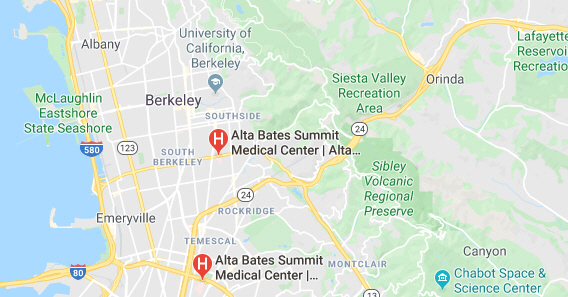
I was born at Alta Bates Hospital, but don’t tell anyone.

My family is basically from California, with my late relatives living in Berkeley, Los Gatos, Santa Cruz, and Palo Alto. I think I was in high school (in Florida) when my father told me he could never go back because the farms and orchards had all been ploughed up and turned into developments, the places Pete Seeger said were houses like little boxes all made of ticky tacky and just the same.

I can’t go back either. For one thing, I can’t afford it. For another, I think the state has lost its connection to reality, a connection that always was fairly tenous on a good day.  Sorry, folks, but I really can’t support a state that says illegal immigrants should have a right to vote.

So, in these Facebook “debates,” I suppose people thought I support all the lunacy associated with California these days. During the Vietnam War protest era, I was part of that lunacy because (a) I hated the war, and (b) had an apartment in San Francisco’s Mission District while my ship was in port across the Bay and had trouble anywhere I went in a Navy uniform.

When I was told on Facebook that “they” (the people in the thread) didn’t need a person from a crazy state telling people in the South that he (meaning me) thought the state and federal governments had no right to legislate or otherwise mess up women’s health care, including the right to an abortion, I said, “ladies, I’ve lived in the South longer than anyone else commenting on this thread.”

Huh? I said that I grew up in Florida from the first grade to college and now live in Georgia where my wife was born. We live on a farm that’s been in her family for five generations. They were surprised. They were happy to see that I had changed the town where I’m from to Tallahassee, Florida, and appreciated the fact that I like boiled peanuts, collard greens, mullet, grits, and cathead biscuits.

However, according to their assessment, a California birth certificate meant that even if you left the state at an early age, you were more or less the devil’s spawn and couldn’t possibly go to enough church services to get even with the Lord. If not that, then I was probably dropped on my head in the hospital.

So there it was. Clearly, my identification with California was an albatross around my neck. In the old days (whatever that means) people said Florida really wasn’t truly Southern. My response was that North Florida was/is about as Southern as you can get and that unlike other states in the Confederacy, “we” weren’t conquered by the North during the Civil War. Okay, so we’re overrun by snowbirds every year and from Live Oak to Miami, the state’s been pretty much ruined by developers who’ve paved over everything there that used to be good and created endless sprawl.

But, I digress.

On the minus side, now that I’ve changed my Facebook hometown to Tallahassee, everyone thinks I’m a racist. When they push that view too hard, I mention that the biggest race riots in the country all happened outside the South.

Is there a safe place out there I can claim as my hometown?

Malcolm

Malcolm R. Campbell has written a bunch of novels set in the South, or partly in the South, including the Florida Folk Magic Trilogy.