Special Investigative Reporter: it will make you happier during these blue times

A message from your sponsor (AKA, me)

On sale for 99 cents:

This novel is just what you need to get through these difficult times. Why? It’s about an old-style reporter who’s not afraid to say what he thinks even though a lot of what he thinks isn’t politically correct.

From the publisher: In this satirical and somewhat insane lament about the fall of traditional journalism into an abyss of news without facts, Special Investigative Reporter Jock Stewart specializes in tracking down Junction City’s inept and corrupt movers and shakers for his newspaper The Star-Gazer. Since Stewart is not a team player, he doesn’t trust anyone, especially colleagues and news sources. Stewart, who became a reporter back in the days when real newsmen were supposed to smoke and drink themselves to death while fighting to get the scoop before their competition sobered up, isn’t about to change. Stewart’s girlfriend leaves him, the mayor’s racehorse is stolen, people are having sex in all the wrong places (whatever that means), and townspeople have fallen into the habit of sneaking around and lying to reporters and cops. Sure, everyone lies to the cops, but reporters expect gospel truths or else. Stewart may get himself killed doing what he was taught to do in journalism school, but that’s all in a day’s work.

I like this novel because the main character, Jock Steward, says what I would say if I could get away with it. Let’s just say its a comedy with a bite.
Malcolm

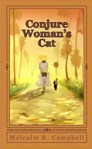
Conjure Woman’s Cat is also on sale on Kindle for 99 cents.


Some novels impact me so strongly it’s hard to function

Years ago when I read Erich Maria Remarque’s 1929 novel All Quiet on the Western Front about World War I, I couldn’t function for days because the book plunged its readers into the worst the world can offer. Dalton Trumbo’s 1939 anti-war novel Johnny Got His Gun also had a strong impact on me. Such novels fit into my personal fiction category of too much to bear.

Recently, I’ve been catching up on John Hart’s novels. They are invariably dark, a label that certainly describes The Hush which I finished reading last week. The Hush is a sequel to The Last Child.

The hush is an old hush arbor, a place where slaves worshipped in secret away from the prying eyes of their owners. The slaves’ focus was Christian in orientation with many of the trappings of the religious beliefs they had in Africa.

The Hush impacted me because of the novel’s descriptions of a landscape that’s filled with magic and menace to everyone but its current owner of the 6,000-acred tract. He walks at ease through his property while everyone else becomes lost, confused, or dead.

The lives of slaves and owners are intertwined on this property and the impacts of old terrors are still active in the present day. Since Johnny Merrimon is more or less an outcast, he is blamed for everything that happens on his land. Law enforcement and others want to bring him down even though nobody can prove anything.

I am in awe of Hart’s use of landscape, myths, and stories because he has the grit to do what I cannot bring myself to do. That is, I cannot bring myself to write the kind of horror that appears in All Quiet on the Western Front, Johnny Got His Gun or the novels for which John Hart keeps winning awards. I think it takes great strength for an author to write such books without ending up in an asylum.

I agree with the Washington Post’s review: “Ambitious and surprising… an engrossing, cumulatively disturbing narrative that encompasses murder, magic, madness, betrayal and obsessive, undying love. The result is unlike anything Hart has done before.”

I just wish they’d included a warning that reading the book might kill you.

–Malcolm

Malcolm R. Campbell is the author of “Conjure Woman’s Cat.”


Protect your writing time

Protect the time and space in which you write. Keep everybody away from it, even the people who are most important to you. ~Zadie Smith

Perhaps this will seem like a surprising time to talk about protecting one’s writing time. We’re all facing the possibility of empty store shelves, prospective quarantines, disruptions of travel plans–not to mention getting COVID-19.

Many of those who write say it’s as important as breathing and that they can’t live without it. I’ve written before about the challenges the stay-at-home writing spouse has with protecting his/her time. If that time is not bringing income into the household, then the 8-5 spouse/partner who is supporting the family might assume the writing is a hobby and can be disrupted as need be with calls to pick up something at the store, prepare dinner for the boss with little notice, keep the house clean, and do all the shopping.

Now, as the U.S. has raised the threat level of the virus from “What, me worry?” to “Find out who’s to blame,” conserving time to write will probably become more difficult; if you were around during the 1970s gasoline shortage, then you know that thousands of people spent a good portion of each week trying to find a service station with any gasoline and, once they did, there might have been a wait of an hour or more in a long line.

If this happens again with such essentials as toilet paper and food, then trips to the grocery store might take many hours per week. Obviously, the family comes first, whether it’s food or safety. The 8-5 working spouse might get furloughed if they work for a company whose product or service takes a huge hit from the emergency.

Yet, I encourage you to write and/or do the online research or library research your stories need because this is what defines you as a person whether it’s bringing in money or not. Yes, I know it’s difficult seeing multiple hours of daily writing time collapse down to an hour or 30 minutes. Perhaps your approach shifts gears from poetry or a period novel to something like “Pandemic, a Diary.”

Even stolen moments of time can be enough to keep you breathing and give you a reason to hope that when the pandemic’s over, you’ll be a fulltime storyteller again.

Malcolm


The virus may impact my travel plans – yours, too?

Pandemic.

Wikipedia photo

How will that impact each of us? It’s hard to gripe about it when people are dying and others’ lives are being disrupted.

Italy is closed. Travel from Europe to the U.S. is restricted. Many of us wonder how long it will be before travel around the U. S. will be impossible.

Due to my cancer problems last year, I didn’t see my daughter and granddaughters in Maryland. We’d planned to visit them in April and take a few cool side trips while we were there. So far, none of our flights has been cancelled.

But, we wonder. We miss the granddaughters. We dislike going long periods of time without seeing them because their lives move so fast it’s easy for us to get out of the loop and never get back in. They grow up so fast that a year away from them is hard to recover.

So, we worry. My brother and his wife had plans to see Australia. Those fell through when the place burnt down. Now they have plans for a river trip in Europe, but as borders close, that might not happen.

It’s not that we’re worried about getting COVD-19, though that could happen. We’re more concerned about mandatory quantities and travel restrictions.

Do you face similar problems or is it more a matter of whether the toilet paper runs out?

Malcolm

The Jane Hawk novels by Dean Koontz

Koontz is a careful and literate writer who knows how to create complex plots, maintain suspense, and decorate his scenes with weather and landscape imagery that synchronizes with the moods and plights of his characters.

The five-book series about a rogue FBI agent concluded with The Night Window, a book I’ve been looking forward to while patiently waiting for it to come out in paperback.

Hawk, who left the FBI after her husband’s death was ruled a suicide that she believed was murder, began a long trek to clear his name. Law enforcement is after her because they believe she’s operating off a “frontier justice model” and the people who killed her husband–a huge and secret group that’s slowly taking over the country–are after her. Everyone who’s after her is also after her child whom she has to keep hiding. By the time one gets to The Forbidden Door, it’s apparent that Hawk has nine lives and/or the skills of James Bond.

According to the Booklist starred review, “The spectacular finale to Jane’s story…will hit series fans with all the impact of a carefully calibrated hammer blow.”

Yes and no.

Had there not been so many co-opted law enforcement agencies, leaving nobody trustworthy to whom Hawk could turn over her evidence of the conspiracy, the book might have ended with a satisfying black-ops style gun battle after which the authorities take over and put the conspirators in jail. Hawk would then be interviewed on The View and other programs.

However, lacking that, the book–which still includes the nastiness of the bad guys in a tangled plot which look like lose-lose for Hawk–seems less explosive and interesting than the earlier books because there are few (if any) bad guy/Hawk confrontations. Hawk’s time is spent trying to ferret out who the conspirators are and how to expose them in a believable way.

The ending works because the how to tell the world about the conspiracy problem is aptly solved. Nonetheless, I felt a little let down because the focus became more about hacking into databases and less about kicking the shit out of the bad guys. And then, too, I kind of like Hawk and now she’s ridden off into the sunset forever.

Malcolm

In case you didn’t notice: Glimmer Train Magazine has left the station for good

When I was in college, a fair number of commercial U.S. magazines published short stories. Many of those are gone now. Those that aren’t gone, stopped publishing fiction–though I have seen rumors that Atlantic will begin including fiction again.

There are plenty of so-called “little magazines” that publish fiction. Competition is fierce. Payment is often low or in contributor’s copies unless you win one of the yearly contests where the competition is fiercer and requires an entry fee.
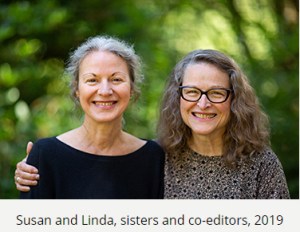

For thirty years, Glimmer Train Magazine (a quarterly) helped fill the gap. The Fall 2019 issue was its last as editors Linda Swanson-Davies and her sister, Susan Burmeister-Brown are moving on to (as folks say) the next phase of their lives. While the magazine had high standards and a lot of submissions (once again, meaning the competition was fierce), it included many emerging writers and paid fairly for stories that were published.

As Linda and Susan say on their website they hoped to:

  • Publish literary short stories that were emotionally significant. We knew that at its best, a story could add depth and breadth to real life, and those were the stories we wanted to print.
  • Present stories in a handsome physical publication that people would keep, giving the stories the long lives and future readings they deserved.
  • Keep a keen eye out for new voices, favoring pieces by emerging writers.
  • Pay writers well for stories we accepted for publication. (Each year we have paid nearly $50,000 to writers, almost 3/4 of that to emerging writers.)
Glimmer Train Photo

While I’m sorry to see the magazine go, I think it accomplished what it set out to do. Fortunately, the magazine has not been told, so it won’t linger around under new management that may not keep up the high standards of the publication.

Thank you, Linda and Susan, for all of your hard work and for helping keep the issues coming out with contributions from personal finances.

A labor of love, I would say.

Malcolm


International Women’s Day Theme – #EachforEqual

International Women’s Day 2020 campaign theme is #EachforEqual
An equal world is an enabled world.
Individually, we’re all responsible for our own thoughts and actions – all day, every day.
We can actively choose to challenge stereotypes, fight bias, broaden perceptions, improve situations and celebrate women’s achievements.
Collectively, each one of us can help create a gender-equal world.
Let’s all be #EachforEqual.

I like the theme for the upcoming International Women’s Day on March 8.  I hope it will show men–as well as women who haven’t yet signed on to the idea of their equal worth–that we are not only fighting for equality and safety for women, but for a world that’s made better for everyone.

When Elizabeth Warren’s Presidential campaign ended, political commentators were asking, “How did the Democrats begin with such a diverse field of candidates and end up with two old white men as the frontrunners?”

I think we know the answer, but we pretend we don’t.

The status quo favors men while devaluing the majority gender: Women make up almost 51% of the U.S. population, yet they are underrepresented in the House and Senate and most industries.

This situation is 1950s mentality when we “celebrated” the so-called little woman who was good for sex, having children, cooking the meals, and cleaning up the house. Many of today’s clueless reporters–as we saw in the 2016 election with Hillary’s pantsuit coverage–were more concerned about what women wore than what women said.

Thirty years ago, I got into a heated debate with a female co-worker who was probably the smartest employee on the technical writing/testing staff about the fact she did what her husband told her to do because he was head of the household.

When I told her that “head of the household” BS was an out-of-date concept, she said her Christian religion also said the husband is head of the household. When she quoted Bible verses to prove it, I said that her examples all came from the Old Testament in the days when there was not yet a Christian religion. Nonetheless, I didn’t “win” the argument. (Last I heard, they were still happily married. I would have felt bad if I caused a divorce.)

I think of this discussion because I many (most?) men and women still believe that the man is not only in charge of the household, but the office, the Congress, and the country. They believe that 51% of our nation’s wisdom should be confined to the kitchen and laundry room.

As a white man, permit me to say that patriarchy is stupid. Look where it’s gotten us.

Malcolm


On election nights, I want all those talking heads to shut up

All I need is a scorecard as the polls close.

Candidate A is now ahead of Candidate B while Candidate C is toast.

Instead, CNN, Fox and other the networks brought us an unending number of panels of people–most of whom I’d never heard of–telling me what it meant when Candidate A forged ahead of Candidate B.
I thought it meant that Candidate A currently had more votes. Since NCIS was pre-empted for this information, thought, “Dang, these panels that are shooting the breeze about what the night’s totals and trends mean better be good.”

Instead, they found one hundred ways to state the obvious:

  • “Well, Bob, what do you think Candidate X is going to do now?”
  • “Read the handwriting on the wall.”
  • “What wall is that?”
  • “The wall that says a woman can’t possibly beat two incredibly old white men with one foot in the grave.”
  • “That wall’s been around a long time.”

Was there anything new here, new enough to pre-empt Gibbs and the rest of the NCIS crew? No, there wasn’t. Who watches this stuff? I don’t. I mute the talking heads and check the voting totals from time to time.

Then I go and watch a taped episode of “Penn & Teller Fool Us” where the sleight of hand is more interesting than the candidates’ sleight of hand. And less harmful.

Malcolm


You better not hurt that kitty

When I began writing Conjure Woman’s Cat, I didn’t know how it would end, much less that it would lead to the sequel Eulalie and Washerwoman. When I started writing the sequel, I didn’t know how it would end, much less that it would lead to a third book named Lena which–of course–I had no clue what the ending was.

I did know one thing for sure: Eulalie, the conjure woman, and Lena, her cat, weren’t going to get killed no matter what else happened.

So, each time I told people I had started a new book in the series, I began getting comments like, “You better not hurt that kitty,” “Promise me I don’t need to look at the ending first to make sure nobody (you know who I mean) is dead,” and “If anything happens to that kitty, don’t think you can fix it with a bunch of that rainbow bridge stuff and that will make everything okay.”

It was fun hearing that a lot of people had connected with the main characters and were concerned about their welfare. After all, things were always touch-and-go in these books, what with bad cops and noxious KKK thugs. One person said she really liked the Pollyanna character who appeared in Lena and was happy to see she made it to the end of the book without dying.

Then she added, I want to see a Pollyanna book and she better be alive when I get to the last page. Okay, okay, I’m writing the Pollyanna book right now and she doesn’t get killed.  (I hope you’re happy, Linda, knowing you can read the book without worrying about the main character.)

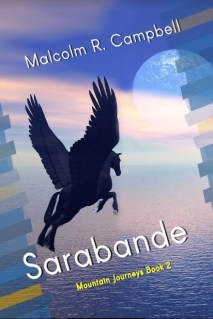
Previously, while I was writing my contemporary fantasy Sarabande, the sequel to The Sun Singer, people started saying “You better not kill off that black horse.” (I didn’t.) You see the pattern here, right? People don’t trust me, assume I’m hard-hearted and cold enough to kill off magical critters. My mama didn’t raise me that way.

I’m tempted to write a novel where all the main characters die on the first page of the book. That will prove I’m not some wimpy author who’s controlled by his readers and doesn’t have any artistic integrity. Perhaps it will begin, “Everybody is dead.” Then, the next chapter will be called SIX MONTHS EARLIER and we’ll see how it happened.

Naah, I don’t think I’ll do that. But I might. I might drink some bad whisky and go over to the dark side at any moment.

Malcolm


The Toxic Internet

A long-time online friend of mine is leaving Facebook because she’s tired of the toxicity there, among other things. I know what she’s talking about because those there who don’t like your point of view often respond with abusive comments and nasty threats.

My parents used to tell me that if a comment wasn’t inappropriate for the family dinner table, I shouldn’t say it.

Since I still believe that, I notice the toxic comments and slanders that are commonplace on Facebook, the comments sections following news stories on some media sites, and (of course) Twitter. I keep hoping that the people who are talking trash are in a minority, that–as some people say–“the crazies are the only ones who bother to comment” on news stories, posts, and tweets.

What do you think? Are polite, normal, well-spoken people leaving Facebook like my friend, possibly staying but staying out of the crazy threads, or are people in general turning into rude approximations of themselves via online anonymity?

Even though I’ve been online since the CompuServe days, I’m still surprised at the number of people who are willing to say, “Malcolm, you’re a naive piece of shit” in response to my low key comment. What’s that about? People who don’t know me have accused me online of all sorts of things, and I wonder what kind of gall it takes to say such things.

I see the toxicity my friend sees, but I guess I’m being expedient when I say that since I’m a writer, I need to have an online presence. So I stay. I hope that most people online are good people and fight against the toxic comments or find ways to stay out of trouble. Perhaps I am naive because I think that when good people are quiet the bad people end up owning the place.

Malcolm