Hoodoo Curio Catalogues

Hoodoo practitioners, as well as the general public, found supplies in so-called Curio Catalogues during the mid-1900s. Since none of the potions, spells, talismans, mojo bags, candles, powders, and herbs could be officially sold by advertising what they were used for in hoodoo, they were sold as curios. Let us say, just-for-fun curiosities.

These are a good source for people studying hoodoo history because the advertisements in the calatogues provide spells and product names you can further look up in books and online sites.

You can find examples of these catalogues online at sites like The Church of Good LuckLucky Mojo Curio Company (which has a section about hoodoo itself), and by searching under the names of the catalogues themselves, the most widely known being the King Curio Company and the de Laurence Company catalogues. You’ll find examples from the 1930s and 1940s.

–Malcolm

Malcolm R. Campbell is the author of three conjure novels (The Florida Folk Magic Series) which includes “Conjure Woman’s Cat,” “Eulalie and Washerwoman, and “Lena.”)

The vicissitudes of blogging

Publishers and publicists often ask authors who their readers are. The one thing you’re not supposed to do is pick a famous author’s book and say, “People who liked Fire Ants in the Birdbath will love my book.” That’s usually considered arrogant.

If a writer is a blogger, s/he is often asked about the blog’s demographics. If it has a niche, then how many people stop by every day? If it’s more general, what subjects get the most readers and comments?

My answer to the first question usually includes Floridians and/or those who like fantasy, magical realism, and paranormal short stories and novels. My answer to the second is “I get the most hits on stuff I’m not writing about now.”

Currently, most of my visitors are looking at blogs that focus on conjure. I wrote a lot of these when my novel Conjure Woman’s Cat first came out. I wrote these because authors are advised to blog about themes and subject matter from their novels rather than promoting the novels over and over again.

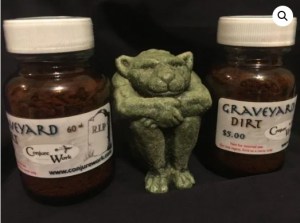
People are searching and reading about graveyard dirt. Makes me wonder if there’s a graveyard dirt scandal going on and folks are looking it up.

When I was writing the conjure posts, they didn’t get as many hits as silly posts, satirical posts, occasional rants, or posts about things going on in my life. Now that I’m writing posts about other subjects–some about my life, some about writing and publishing–those are getting very few hits compared with the massive number of hits on the conjure posts.

Go figure.

This means when it comes to blogging, I have no idea who my readers are except for people who know me in “real life” or on Facebook.  I suppose I should have called this post “Clueless in Georgia.” I wonder if that title would have attracted people from Georgia. Since I’m clueless, I have no idea.

Malcolm

Occasionally, I write something that isn’t fantasy. Examples are the comical satire “Special Investigative Reporter” and the realistic Vietnam war novel “At Sea.”


Briefly Noted: ‘The Outsider’ by Stephen King

Like his Mr. Mercedes trilogy, King’s The Outsider begins as a thriller/police procedural, then falls down the rabbit hole of the supernatural. I wasn’t happy with this in Mr. Mercedes, because after two books of standard police work, I thought changing the genre into a supernatural solution in book three was a mistake. However, in this standalone book, it works.

From the Publisher

An eleven-year-old boy’s violated corpse is discovered in a town park. Eyewitnesses and fingerprints point unmistakably to one of Flint City’s most popular citizens—Terry Maitland, Little League coach, English teacher, husband, and father of two girls. Detective Ralph Anderson, whose son Maitland once coached, orders a quick and very public arrest. Maitland has an alibi, but Anderson and the district attorney soon have DNA evidence to go with the fingerprints and witnesses. Their case seems ironclad.

As the investigation expands and horrifying details begin to emerge, King’s story kicks into high gear, generating strong tension and almost unbearable suspense. Terry Maitland seems like a nice guy, but is he wearing another face? When the answer comes, it will shock you as only Stephen King can.

The police seem to have Maitland dead to rights, But then more and more lapses in the investigation begin to occur. Mainly, how could Maitland be in two places at the same time? The star of the show is a private detective who specializes in skip tracer, lost dog, and missing persons work at a small agency called Finders Keepers named Holly Gibney. (She appeared in earlier King novels.)

She has seen doppelgänger cases before and is open to multiple solutions that don’t fit the standard police approach. King does a good job of building tension, showing the frustration of the police investigators, and allowing Gibney to slowly orient the investigation toward a supernatural solution.

I enjoyed the book.

–Malcolm

Malcolm R. Campbell is the author of magical realism, contemporary fantasy, and paranormal novels and short stories.


Small Press Publishing

“Since the profit margins for small presses can be narrow, many are driven by other motives, including the desire to help disseminate literature with only a small likely market. Many presses are also associated with crowdfunding efforts that help connect authors with readers. Small presses tend to fill the niches that larger publishers neglect. They can focus on regional titles, narrow specializations and niche genres. They can also make up for commercial clout by creating a reputation for academic knowledge, vigorously pursuing prestigious literature prizes and spending more effort nurturing the careers of new authors. At its most minimal, small press production consists of chapbooks. This role can now be taken on by desktop publishing and Web sites. This still leaves a continuum of small press publishing: from specialist periodicals, short runs or print-to-order of low-demand books, to fine art books and limited editions of collectors’ items printed to high standards.” – Wikipedia

Some say that a small press is a publisher with annual sales under $50,000 and/or that publishes ten or fewer titles per year. Jane Friedman notes that they tend to have more flexible contract terms than the giant publishers. Personally, I like small presses because they focus on niche areas, regions, and genres that might make them a better fit for my work than a giant publisher.

While authors often speak favorably of the staff associated with imprints and divisions of large publishers, I think one is more likely to find a family/community atmosphere at a small publisher. In my wrap party post, I mentioned that the late Pat Conroy said of one of his books that his publisher had assigned some 15+ people to get his book out–from editors to book designers to cover artists to publicists.

At a small press, those 15 jobs might be done by several people and, as is true with my publisher Thomas-Jacob, by one person with a little bit of contractor help. This tells you that those who own and manage small presses are working out of a strong passion for their specialty areas–a labor of love that’s similar to a two or three-person bookstore as contrasted with chains or major independents such as Powell’s.

Small Press Listings.

New Pages, a handy writer’s resource, maintains an alphabetized list of small presses here. Some are sponsored or featured and have more extensive writer ups. The New Pages blog is filled with a large assortment of writing opportunities.

Poets & Writers maintains a listing os small presses here. You can sort these by genre and sub-genre.

Bookfox maintains a list of the 30 Best Small and Indie Literary Publishers. This list is annotated.

Powell’s Books, the largest independent book store in the country, has a list of 24 of Our Favorite Small Presses.

I like Powell’s introduction to its small-press list: “Most readers are familiar with the big publishing houses, like Penguin Random House and HarperCollins, but there are thousands of independent, smaller presses in the US and abroad committed to publishing diverse and debut voices, unconventional narratives, and works in translation, as well as hosting workshops and community programs. In honor of National Small Press Month, and with no small amount of hand-wringing — there are so many excellent choices — we present 24 of our favorite indie presses.”

I’ve just scratched the surface here about listings and the publishing benefits of small presses. My point is, there are hundreds of opportunities out there for your books if you don’t want to try a so-called BIG NEW YORK PUBLISHER. Big publishers deal in volume, so if you’re sending, say, your second book to one of them, they might expect your first book to have sold 15,000 to 20,000 copies. Some won’t look at your work if they don’t think it can sell 50,000 copies. You need a special kind of writing and a remarkable platform to break into this world.

A small press is much more likely to leave the porch light on for you.

Malcolm

Suffering through years of piano lessons

In the old days years before I was born, people were expected to know how to play the piano. My parents grew up in a swing and big band era where the most popular person at a party was they guy who could sit down at a piano and play popular music that everyone else could sing to or dance to. I was, I think expected to be a modern version of Cosmo, the piano player in “Singin’ In the Rain.”

What I wanted to play.

Unfortunately, the guitar was fast becoming the instrument of choice long before I was old enough to go to a party. Unfortunately, I was what is often called “beat deaf,” defined in the Wikipedia entry as “a form of congenital amusia characterized by a person’s inability to distinguish musical rhythm or move in time to it.”

My music teacher, who probably suffered through my years of piano lessons more than I did, focused on classical music. I grew up on classical music and liked it fine, but learning to play Chopin, Lizst, and Schumann didn’t appeal to me, plus classical music was written with the assumption that the pianist could co-ordinate the use of his/her left hand on the bass clef with what the right hand was doing on the table clef.

What I music teacher wanted me to play (Chopin’s Polonaise in A♭ major, Op. 53)

The best I was ever able to do was play music themes and other songs which allowed the left hand to play chords rather than what was written. Needless to say, I wasn’t the hit at any parties.

According to my parents, the “worst” thing I could play was my own mix of the traditional wedding march and the traditional funeral march. I think mother was in the kitchen fixing pork chops while I was in the livingroom ostensibly for my daily practicing when I tried that tune on for size. It didn’t take long for her to appear and ask WHAT IS THAT? I said I was trying to use music to express what I thought about marriage. She shook her head and went back to the kitchen. I switched over to “The Darktown Strutter’s Ball” to which she shouted MUCH BETTER.

I never was invited to the Ed Sullivan Show or the Johnny Carson Show or to sit in with Paul Shaffer’s band on the Letterman show. I would have truly helped make it the world’s most dangerous band.

I still have the clarinet I used when my parents URGED me to play in my junior high and high school bands. But that’s another long and sordid story.

Malcolm

Book is done: should I throw a wrap party?

Authors react in a variety of ways to the completion of a book.

Some are at loose ends because their days and nights have been filled up with time spent working on the manuscript. Others feel empty: the plot and characters have been on their mind for so long, and now poof, they’re en route to the publisher. Multitasking authors already have a new book in mind and can jump right into it, staying busy rather than fretting about the book’s completion.

I started work on Fate’s Arrows two years ago, then got derailed for a year of cancer treatments, followed up by feeling bogged down by the virus and the nightly riots. I’m a bit of an empath and I write intuitively, so all kinds of stuff can become disruptive before a manuscript if complete.

Typical wrap party

When the production of a film is complete, cast and crew often attend a wrap party to celebrate reaching the finish line. Pat Conroy once said that a team of fifteen or more people helped with his books: editors, cover artists, book designers, fact-checkers, permissions people, publicists, etc. But, here it’s just me. Well, there is my publisher, but she lives in central Florida and probably isn’t going to meet me at the Rome, Georgia Applebee’s for a wrap party with our spouses. (I’ve urged her to buy a company jet to make traveling faster than the family car.)

I can’t very well invite the characters over since they exist in my mind and on paper. There’s probably a state law against having a party with imaginary people. In his novel The Outsider, Stephen King mentioned author Harlan Coben a number of times. Maybe Harlan came over for drinks when the book was done. Sadly, I didn’t mention either Stephen or Harlan in Fate’s Arrows. If I had, I’m sure they’d meet me at the Rome, Georgia Applebee’s. (They probably have their own planes.)

So, I’ll probably boil some water in the Dutch oven, toss in some macaroni, and fix Kraft Mac & Cheese for dinner, and tell my wife and cats, “well folks, that’s a wrap.”

Malcolm


Ain’t got no cigarettes or wisdom either

A commenter on my last post said, “Found a peanut? That’s your wisdom for the day?”
I’m neither a man of means nor the king of the road. That means I’ve made a dreadful mistake if I gave y’all the idea I have any wisdom to dispense. I’m just a country writer, folks, living on the remainder of a farm that’s been in the family for five generations. I’m writing about the South these days partly because I live here, though, with the current political environment, I hesitate to say I’m from the South because people in the social media and on some news programs are accusing those of us living here of starting the Civil War.

That’s absurd, of course, because none of us were here at the time. We’re called a lot of things because the country seems to enjoy making fun of the South, saying we’re all half ignorant and probably bumpkins even though some of the country’s best literature came from our part of the country.

Yes, we like grits and we consider sushi to be only good for baiting one’s hook on a fishing trip. So what?

I’ve been in almost every state in the union, went to college in New York, and lived and worked in the Chicago area. Nothing I’ve experienced or witnessed gives me any reason to think the South is better or worse than any other part of the country. It doesn’t take a guru to come to that conclusion. So, I’m okay with living here–except when the taunts against Southerners get started.

According to Wikipedia, “Wisdom, sapience, or sagacity is the ability to think and act using knowledge, experience, understanding, common sense and insight. Wisdom is associated with attributes such as unbiased judgment, compassion, experiential self-knowledge, self-transcendence and non-attachment, and virtues such as ethics and benevolence.” I don’t even know what that means, but I can tell you this, I ain’t got it.

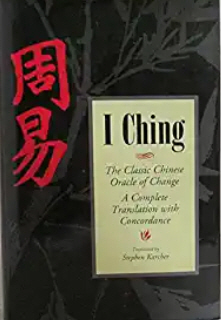
If I need a dose of Wisdom, I get out my copy of the “I Ching” just like everyone else. The oracle always tells me what’s up and what’s going down.

–Malcolm

Malcolm R. Campbell is the author of magical realism and contemporary fantasy novels and short stories, including “Conjure Woman’s Cat.”


Would you eat a rotten peanut?

In the old days when I was in Scouting, we often sang the song we called “Found a Peanut. Like “100 Bottles of Beer of the Wall” and “Can’t Get to Heaven,” it was repetitive, easy to remember, and allowed for a little improvisation.

Found a peanut, found a peanut, found a peanut last night.
last night I found a peanut, found a peanut last night.
Cracked it open, cracked it open, cracked it open last night last night I cracked it open, cracked it open last night.
It was rotten, it was rotten, it was rotten last night,last night it was rotten, it was rotten last night .

We always wondered why anyone walking along would pick up a rotten peanut and eat it. And, since almost everyone knew the song, you’d think the song itself would serve as a warning since the person eating the bad peanut dies near the end of the song. It (the song) had been around since the 1940s, so everyone should have known better than to eat anything off the street.

Wikipedia graphic

I sold “parched peanuts” at college football games when I was in high school. We called them parched to distinguish them from boiled peanuts which were very popular in the south.

We’d go up and down the aisles shouting out what we had. I felt sorry for the people selling Cokes because they were heavy. The hotdogs were too much trouble. Peanuts were easy and if somebody wanted one who was 10 seats away from the aisle, he’d pass the money own the row, and then we’d toss the pack of peanuts back to him.

You could get people to laugh if you shouted out “Hey, I found a peanut.” That worked best if we were losing the game and the fans still left in the stadium wanted something to divert their attention from the field. We never ever shouted, “Get your goobers here.”

If you found a peanut on the sidewalk,

  • Would you pick it up?
  • Eat it, even if it was rotten?
  • Call 911?
  • Feed it to a friend?

–Malcolm

Malcolm R. Campbell is the author of the comedy/satire novel “Special Investigative Reporter” from Thomas-Jacob Publishing.


Too poor to paint, too proud to whitwash

We don’t hear this much any more since most people see “whitewash” as a metaphor for covering stuff up, usually for unsavory reasons.

Actually, you can still buy whitewash, though those who need it often make their own.

To be flip about lack of money these days, one might say, “I’m too poor to pay attention.” Or, if you really mean you can’t paint your house, more people would understand “I’m as poor as a church mouse,” though that line has gotten a bit out of date because fewer and fewer people are going to church and those that do, don’t expect to see any mice there.

Organizations that are frugal often say they spend both sides of a penny. I’m not necessarily frugal, though I’ve spent a lot of years trying to spend both sides of a penny. I’m not sure what I’ll say when the government finally gets its way and stops making pennies.

I could start saying, I’m so broke I don’t have a pot to piss in or a window to throw it out of. That probably won’t scan too well since few people answer the call of nature that way anymore–which is just as well.

Perhaps it’s more modern to say my income has often been below the poverty line. Most people don’t know what the poverty line is (it’s $12,760 for a single person) other than it’s not enough for providing the better things of life. (A digression: when Obamacare first came along, my wife and I weren’t allowed to sign up because our income was below the poverty line. What a shock. I would have thought that that group would have been given first priority. )

My friends always thought I was probably raking in the big bucks because for most of my working life, I worked for computer companies. The trouble is, technical writers were always the first to go when the company needed to cut costs. After we were shown the door, the companies forced their programmers to write the documentation, and I think THAT is the main reason for the saying, “Nobody reads the documentation.”

My wife and I both grew up in families that had to spend both sides of a penny. My wife always told people that one reason people in the south eat a lot of biscuits and gravy is because a meal built around that is cheap and filling. My mother grew up in the midwest, so we didn’t have biscuits all that often; what we did have was meatloaf padded out with a lot of breadcrumbs or oatmeal. We had salmon croquettes so often that I can no longer tolerate them; my wife had them often, too, and still likes them. She won’t eat meatloaf and I won’t eat croquettes.
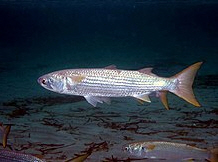
My parents were happy that I liked seafood, so living in Florida was a good thing. I also loved (and still do) hushpuppies. They taste great, are filling, and inexpensive to make. My parents would never eat mullet, a fish most Floridians considered a baitfish.  I loved it. Still do. I suppose in the old days, people might have said, “Too poor to eat pompano, too proud to eat mullet.”

I was blessed by the Gods who knew my financial future to love a lot of cheap food. Except salmon croquettes–or crab cakes either, for the same reason (we could catch all the crabs we wanted, but then we ruined them with breadcrumbs.)

I’m not whitewashing this because being broke isn’t as much fun as it sounds even though southerners have a lot of humorous ways of describing it—like, “I was so poor I couldn’t jump over a nickel to save a dime.”

Malcolm

Malcolm R. Campbell is the author of the satirical mystery novel “Special Investigative Reporter.”


Is today’s news giving us ‘truth actual’?

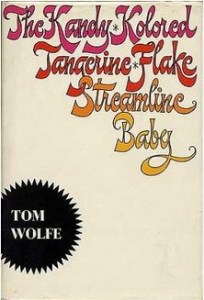
The Kandy-Kolored Tangerine-Flake Streamline Baby is the title of Tom Wolfe’s first collected book of essays, published in 1965. The book is named for one of the stories in the collection that was originally published in Esquire magazine in 1963 under the title “There Goes (Varoom! Varoom!) That Kandy-Kolored (Thphhhhhh!) Tangerine-Flake Streamline Baby (Rahghhh!) Around the Bend (Brummmmmmmmmmmmmmm)…” Wolfe’s essay for Esquire and this, his first book, are frequently heralded as early examples of New Journalism. – Wikipedia

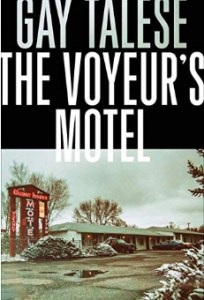
Those of us steeped in traditional journalism looked askance at the so-called “new journalism” of the 1960s. It was perpetrated (or lovingly brought into the world–depending on your feelings about it) by Tom Wolfe, Gay Talese and others who–while they had newspaper reporting experience–wrote their new stuff primarily for magazines like “Esquire” and “Atlantic”?
As you might guess from the title “There Goes (Varoom! Varoom!) That Kandy-Kolored (Thphhhhhh!) Tangerine-Flake Streamline Baby (Rahghhh!) Around the Bend (Brummmmmmmmmmmmmmm)…”, it focused on the immersion of the reporter into the subject matter and often used techniques common to fiction when they wrote their stories.

Truth Actual

Fiction writers, especially those of us who write and/or like stream of consciousness, magical realism, fairy tales, myth-based fiction, and other forms that are often called “literary fiction,” often call the result of our stories “truth actual” instead of “truth literal.”

This view comes from the theory that the knowledge, feelings, impressions, and intuition within the reader’s mind after reading a “truth actual” novel will be more accurate than what results from reading straight realism. We might say that we’re speaking here of “more important” truths than “how to fix your dishwasher” or “how do I get from Yellow Knife to Key West.”

At any rate, the new journalism reporters thought that’s what they were doing and, I think, when they wrote longer, quasi-commentary, creative nonfiction magazine pieces, they succeeded. The technique works less well for front-page news.

Opinion Journalism

New journalism, however, seems to have spawned a black sheep. Some call it fake news. Basically, it’s the warping of a story to fit ones personal opinion and/or the political agenda of the publication. I don’t think this kind of “reporting” provides us with any real truth at all, and I see it practiced with equal fervor on Fox News, CNN, and The New York Times. In the old days, we would say this approach was pure arrogance, the notion being that the facts of the world don’t revolve like planets around the sun of your opinion about them.

This is new journalism gone too far and the flip side of what all of us were taught in journalism school and on our first jobs in the field.

–Malcolm