Always shake up your readers

Readers are like a good martini: they need to be shaken and not stirred.

This scares them and/or brings out the best in them–if they survive. If something bothers them, do it a lot. It’s like saying “what can possibly go wrong” to a person who’s superstitious.

Weird combinations of words are one way to do it: God’s beautiful sunset was enhanced by his beautiful mosquitoes.
ironyOr: Her lips were like cherries from sucking blood out of her victims.

He was a good cook, using parsley, sage, rosemary, and time to create all his recipes.

In his book, A Scots Quair, Gibbon describes an old lady at the breakfast table poking at her grapefruit the way a sparrow pecks at dung. (What a nice breakfast time image.)

I like more than plot twists, I like language twists, warping proverbs into hash, making quiches our of cliches, turning good ideas upside down, and saying the very last thing the reader expects. As examples, here are a few proverbs with the shit slapped out of them:

  • Absence makes the heart wander.
  • Actions speak louder than words to those who are listening.
  • A journey of  a single step makes a more boring story than a journey of a thousand miles.
  • All ends begin with good things.
  • A watched pot never boils, especially when you’re smoking it.
  • Beggars can choose to be beggars.
  • Beauty is in the eye of the beholder before cataract surgery.
  • Better never than late.
  • Cleanliness is next to godliness and that explains why the shower is my church.
  • Don’t bite the hand that feeds you unless you don’t like the food.
  • Don’t count your chickens before the enemy opens fire.
  • Don’t book a judge without a cover story.
  • Don’t put off until tomorrow what’s due today.
  • A stitch in time wastes thread.
  • Bob wasn’t the sharpest marble in the box.

Sometimes, your twists become irony as in this well known example from George Orwell’s Burmese Days: “In the evening the wounded boy was taken to a Burmese doctor, who, by applying some poisonous concoction of crushed leaves to his left eye, succeeded in blinding him.”

Or Churchill’s response in this old joke: She:  “If I Were Your Wife I’d Put Poison in Your Tea!” He: “If I Were Your Husband I’d Drink It”

Or plays on words as in a prospective sign in the Leavenworth penitentiary kitchen: “NO UNLEAVENED BREAD.”

And, a sign on the door of a church restroom: No Holy Crap OR a sign in a brothel, “We’re proud to leave you f_cked up.”

Or a statement made by a Jewish mohel during a circumcision: “Let’s cut this bris short, I have an incoming call.”

It’s so easy to say things like “same old, same old” and “same difference” rather than something fresh, new and possibly dangerous like, “I’ve replaced ‘same old’ with ‘everything is new under the sun'” or, at least, “a different sameness.”

If everybody’s saying it, it doesn’t belong in your story–unless you’re twisting it up, using sarcasm, some nasty irony, or mocking somebody like a bird brain. While all this might be fatal for readers, it’s not serious.

–Malcolm

sofcoverIf you want to see this kind of a twisted approach to story telling taken to an extreme, I invite you to read my satirical novel Jock Stewart and the Missing Sea of Fire.


 

Review: ‘The Man Without a Shadow’ by Joyce Carol Oates

The Man Without a ShadowThe Man Without a Shadow by Joyce Carol Oates
My rating: 4 of 5 stars

After a brief illness destroys Elihu Hoopes’ short-term memory, he becomes frozen in time. Long term, he thinks he’s still the age he was when he became ill. Short term, he lives in the now of 70-second bursts of knowledge about what he’s doing and who he’s with. What he’s doing is living with a relative and coming to the university for testing intended to advance scientific knowledge about memory loss. This knowledge will help everyone but Elihu because he will probably never get any better.

In many ways, this novel reads like nonfiction with short scenes depicting the psychological testing Hoopes undergoes almost daily. As the novel proceeds, we learn more about the brilliant young researcher Margot Sharpe who begins work at the lab while working on her degree. She stays on. She becomes three-dimensional to the reader, but–we might speculate–one-dimensional to herself. And that one dimension appears to be an obsession with her “patient.”

The novel’s short scenes, with Oates’ typical reliance on up-close detail, tend to mimic Hoopes’ periods of contiguous present-day memory. As a person with a continuing existence, other characters (and the reader) know more about his life than he does–except for the past which for him is always yesterday. He sees others aging but is not aware he is aging.

As one reads, one suspects Sharpe’s life is in danger of losing it’s wholeness. She’s becoming famous for her brilliance as a researcher while becoming more single minded in her devotion to Hoopes. She questions not only the ethics of the testing, but also her own ethics wherein her feelings for Hoopes begin to look like a one-sided fantasy which has a history for her but not for him. He seems to have some consciousness of her over time even though she has to introduce herself every time she sees him–even if she leaves the room for a minute.

The opening lines of the novel tell you where all this is going:

“Notes on Amnesia Project ‘E.H.’ (1965-1996).
“She meets him, she falls in love. He forgets her.
“At last, she says good-bye to him, thirty-one years after they’ve first met. On his deathbed, he has forgotten her.”

It’s a bumpy ride. Some readers will get lost with the repetition of the testing scenes, while others might find their eyes glazing with the titles of the scholarly papers that arise out of what Sharpe and her colleagues learn. Others will enjoy the exploration of Hoopes’ and Sharpe’s loneliness and how their fragmented lives fit together, and then they don’t, and then fit together, and then they don’t, rather like a jigsaw puzzle in a windstorm.

With diligence, and an ability to live only within the present moment while reading, readers will discover this book has something profound to offer them.

View all my reviews

–Malcolm

Malcolm R. Campbell is the author of paranormal, magical realism, and contemporary fantasy.

Writing based on the slings and arrows of outrageous childhood

“I see shame as part of a process of becoming free: to create or, yes, to love. These sometimes have to be fundamental acts of disobedience to one’s upbringing or conditioned view of the world. In other words, one can feel ashamed of what one’s doing while at the same time knowing it’s the correct thing to do. I don’t doubt that, for me, part of the satisfaction in the act of writing is that it violates numerous taboos of my childhood that still weigh heavily on me. In the moment of writing, I can be free of them.”

– Rachel Cusk (“Outline,” “Transit”), in her Interview in BOMB

“One learns one’s mystery at the price of one’s innocence,” Canadian author Robertson Davies said. That is not only true of those cursed to write, but often serves as the reason they write and what they write about.

tabooThe taboos of childhood come in all shapes, sizes, colors and strengths. Some are merely household rules which seem odd, unfair or simply different than the household rules of one’s friends. They twist into the more grotesque shapes of poverty and abuse and every sacred truth that becomes a lie through the epiphanies of growing up. They are the political and social injustices we see through young eyes and the corruptions we feel to the marrow of young bones.
For Rachel Cusk, they are the seeds of the stories we will write, and we can thank our lucky stars that writing is the manner in which we learn to be free of them rather than everything ill begotten from drugs to terrorism. What the psychoanalyst’s couch cannot cure, our fiction finally harvests the strange fruit of those tainted seeds sown long ago.

Unfortunately, one must re-live those slings and arrows to bring them to life in a story. Doing so is like choosing a nightmare over a good night’s sleep. But the process is very cleansing and the weight of the world, or at least one’s past, becomes noticeably lighter and happier once the mystery behind the writer’s life and work is finally understood.

The results need not be heavy, depressing books. They might be mainstream, commercial romances and thrillers. Sometimes they’re page-turning yarns with exciting plots and an unobtrusive message (or no message at all). Yes, they’re also comedies and satires, and even poetry so sweet and dear that no one sees the vinegar within the words. Perhaps they only hint at the taboos they cast out, and that can be a fine thing.

Malcolm

Malcolm R. Campbell is the author of “Conjure Woman’s Cat” and “Eulalie and Washerwoman” that came about through banishing devils that were held close for half a century.


Jock Stewart’s Writing Prompts for ‘Dummies’

My name’s Jock Stewart and I’ve taken over this blog with a guest post for writers who can’t do squat without a writing prompt. Frankly, as a newspaper reporter, I’ve discovered that the best writing prompt in the world comes when the editor says something like, “Hey, Stewart, a dogshit truck tipped over at the corner of Fifth and Main. Write me a front page story without using the word ‘shit’ or making any jokes.”

I know it’s not politically correct to use the word “Dummies.” First, I don’t care. Second, the word adds spunk to the title of this post. Third, I put it in quotes and that means it’s tongue in cheek.

Here are your prompts:

  1. writerpromptsA reporter at a small-town newspaper learns that a dogshit truck tipped over at the corner of Fifth and Main. When he arrives, the truck driver screams, “It’s a Commie plot” before a one-armed man pushes him into a porta-potty that mysteriously slides down hill into the river. When the reporter tells the police what happened, they laugh, and say he’s acting like a fugitive. Possible title: IN A WORLD OF IT
  2. Bob and Monique are kissing on the front porch of Monique’s house after a rather successful date on lovers lane when the porch light goes out. “Oh hell,” shouts Monique, “Daddy’s caught us.” When Bob investigates rather than running like a bat our of hell, he discovers Daddy leaning stone cold dead against the wall in the front hallway with his fingers on the light switch. The police tell Bob he’s a fugitive. Possible title: THE LIGHT THAT FAILED
  3. A man who fell asleep twenty years ago while making out on lover’s lane, wakes up today to discover he’s a father and has five or more kids running around loose acting like he’s a no-account drunk that can’t do any better than sleep his life away in an old Buick on an overgrown road. When he asks, “Who’s your mama,” none of the kids know. Possible title: GETTING LUCKY
  4. A woman who got hit on the head by a baseball from a nearby semi-pro game, gets amnesia and can’t remember the address if the brothel where she believes she was working just a short time ago. The team manager, who claims he can get to first base whenever he wants to, tells the woman she’s not “the type” to be a lady of the evening and is more likely a preacher’s kid. Now she doesn’t know whether to fish or cut bait. Possible title: GET THEE TO A NUNNERY
  5. Two men walk into an abandoned house where absolutely nothing happens. Possible title: BEING AND NOTHINGNESS
  6. An owl and a pussy-Cat go to sea in a beautiful pea-green boat. Even though they have money, honey and a five pound note, they hit an iceberg and while the boat is sinking have a dream about Kate Winslet, Leonardo DiCaprio and a nude scene involving a valuable necklace.  When they’re rescued, police force them to eat mince and slices of quince with a runcible spoon while interrogating them about a jewelry store heist. Possible title: HEARTLESS OF THE OCEAN
  7. Vladimir and Estragon go to a train station to kill a man named Godot, but they can’t find him. They decide the whole mess they’ve gotten themselves into is Carl Jung’s fault and so they start waiting for him. After a while a lady who calls herself Mrs. Freud tells them they’re both crazy. They’re so pissed at her, they offer her an exploding cigar. Possible title: SHOULD A GENTLEMEN OFFER A LADY A TIPARILLO?
  8. A guy has a dream that he’s a robot from the future who’s been sent back in time to kill himself before he can kill himself and change a future that couldn’t possible happen if he’s successful. The police waste lots of bullets without hitting anything. His first act is to decide whether it’s live or it’s Memorex. Possible title: INDETERMINATE

Eight is enough, don’t you think?

–Jock Stewart, Special Investigative Reporter

The author as a crystal gazer

Let’s go out on a limb here with this idea. . .

The term “scrying’ is often called crystal gazing whether the medium/psychic stares into a crystal ball, a mirror, or the clear surface of a bowl of water to help them “see” the future. I thought of the term while writing about Tarot cards because many card readers use a form of scrying to better understand each card in the Tarot deck.

Wikipedia photo
Wikipedia photo

However, instead of staring at a crystal ball, they stare at the image on the card and, so to speak, imagine stepping inside the card to better see the image. If one does this often, one “sees” more than the symbols and drawings on the card and begins to imagine other things, visions or day dreams, perhaps, that begin as an active process of relaxed imagination and end up supplying information not previously known.

Of course, you can do that with a photograph of a person, a house, an outdoor scene, or anything else and imagine what is going on there.

Many writers do something similar when they write without necessarily thinking there’s anything like psychic ability or mediumship or fortune telling associated with it. What happens is this: when concentrating on a scene in the novel or short story in progress, the writer stops typing to use logic for puzzling out what needs to happen next in the story. They casually think about it. The imagination can be unleashed in much the same way a Tarot card reader’s imagination is given free reign while s/he looks at the image on a card.

When a writer does it, they’re not telling fortunes. They’re better seeing the story, daydreaming it–in a sense–to learn what’s going to happen next.

  • If you haven’t tried this, you can stare at your writing on the screen, say, an action scene or the description of a room or a character, with a “hmmm” kind of attitude. Basically, you let your eyes blur so that you’re not reading the words on the page over and over. Instead, you’re “looking at” or “stepping into” whatever it is those words are saying. If the words describe a room in a house, you’re pretending to be inside that room. If they’re describing a chase scene, you’re pretending to see the scene unfold before your eyes as though you’re watching a TV show.
  • If you have a photograph or drawing of a real or imagined place setting where your story is set, you can do the same thing. Look at it and imagine being there and watching the action. Some writers have found this works when they’re doing research and find themselves staring at the words on the page of a book about the subject their novel is about. Suddenly, new ideas for the story begin too come to mind–rather like free association.

Anyone who writes fiction over a period of time will find ways to jump start his or her imagination. Some of us idly think of our stories while driving or doing repetitive tasks. Others think about their stories while listening to music. And then, there’s being a crystal gazer (so to speak). All these things tend to put the author into the scene one way or the other so that the subconscious mind gets involved and shows you what you’re intending to do.

It beats fighting with words on the page while logically trying to brute force the story into place.

–Malcolm

Malcolm R. Campbell is the author of magical realism, contemporary fantasy, and paranormal books and stories, including Eulalie and Washerwoman.

Have you ever considered writing nonfiction?

“Selling nonfiction articles is most often done by pitching editors with article ideas that fit the publication’s needs, whether you’re pitching a magazine, newspaper, or online publication. It is key that you understand the needs of the specific publication and the audience, as well as the sections of the publication that need freelance writing.” – Writer’s Market

There’s more nonfiction published every year than fiction. Books aren’t the whole of it; there are also magazines and newspapers and a variety of online sites. So, where’s the biggest opportunity for freelancers? If you’ve been writing poetry, short stories and novels and are serious about increasing your published output and earnings, check sources like Writer’s Market for advice, lists of publications, and submission guidelines.

Here are a starling ideas list:

  • newsstandAs with fiction, you need to develop a platform. This includes ever expanding lists of articles in better and better magazines that show you can develop what editors want, get it finished on time, and have a certain level of acceptance in your specialty subjects.
  • Credentials are important. Think of this as resume material. In terms of subject matter, do you have college or technical school degrees to back up your writing, or profit and/or nonprofit work in your specialty areas? Working as a full-time staff member for a newspaper or magazine where you covered your specialty areas also helps. Unlike blogging, newsstand and prestigious quarterly publications don’t accept facts gathered from Wikipedia or a few hobbyists’ blogs as either research or solid credentials.
  • Follow the directions in the submission guidelines. Notice that many magazines are working on articles for issues that won’t be published for 6-9 months. Others have yearly themes or special themes. If these themes aren’t listed in the submission guidelines and/or aren’t obvious from reading the magazine, go to the publication’s web site and look for advertiser information. Quite often there will be a calendar there of one kind or another that lists the focus of the year’s issues.
  • If you can pitch an article, you’ll normally save time and have a better chance of acceptance even though competition for paying markets is tough. First, if you write an article and send it in unsolicited, the odds are about as bad as winning the lottery to expect that article to arrive in the mail at the same moment the editor is wishing s/he had such an article. If you send a query, including your credentials, focus/angle, and word count, you haven’t wasted time writing and researching anything that may not be what the editor needs; secondly, the editor may wish to ask you if you can write something slightly different than you’re proposing. Assignments, guaranteed or not, are always better than sending stuff in out of nowhere.
  • Knowing the magazine’s style, depth, and focus will help you deliver what makes sense to that magazine’s editor and readers. Articles are always written to address the needs of the readers, as in, what’s in it for them if they take the time to read the material? Some magazines like easy checklists; others use a lot of humor; some like a first-person approach; some want in-depth material that’s heavier in tone.

There are a lot of opportunities out there for freelance writers who develop their track records, specialties, abilities to adapt to editorial demands and deadlines, and a reputation for delivering high-quality material when promised.

If you go this route, you may never be as well-known as mainstream novelists, but you’ll make more money than writers who submit short stories and poetry alone.

–Malcolm


When does the research for a novel get out of hand?

If you’ve been reading my posts for a long time, you know I take issue with fiction that spends a lot of time teaching its readers something rather than telling a story. In different ways, The Da Vinci Code and the Celestine Prophecy are examples of this. Actually, I enjoyed both books–probably because I liked the messages. I’ve also like Katherine Neville, whose 1988 novel The Eight more or less introduced the heavy-on-teaching/mystery-thriller/ancient-secrets approach to fiction that Brown, Raymond Khoury, and others have used  in a fair number of other novels. When one finds the secret and/or the message fascinating, it’s easy to forgive the fact that these novels have too much lecturing in them.

researchFor the rest of us, our research gets out of hand when we become so fascinated by it, that we left it take over our fiction–presumably, this happens when think our readers will love that research as much as we do or when we’re just sloppy.
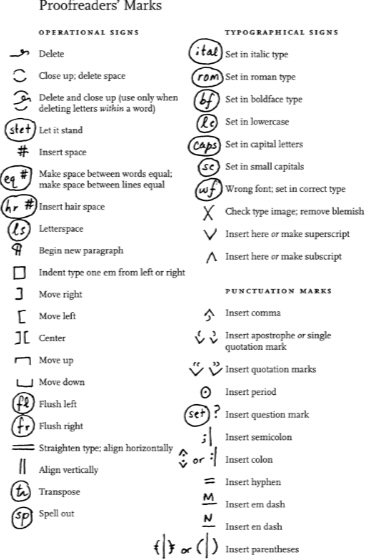
Before I write, my research always gets out of hand, as others see it, because I insist on knowing a lot more about the novels’ subject matter, location, and characters than I can possibly use. My conjure-related, blues-related, and other historical notes for Conjure Woman’s Cat and Eulalie and Washerwoman are longer than the combined word count of the books.

I do this because I want to internalize the information so that whenever and wherever it’s needed in the story, it naturally appears there without seeming to intrude. In “real life,” most of us act in accordance with our views and beliefs without the need for a Dan Brown-style lecture in the middle of an event that explains to others who are there why we’re doing what we’re doing.  I do too much research because I want the result of it to be a correct novel that doesn’t have to tell the readers why it’s a correct novel insofar as, say, conjure or the blues or the Florida piney woods go.

One never wants a reviewer to say “the research shows” about a book. When it does, it’s gotten out of hand.

One thing one learns when writing nonfiction is that the more often one quotes other people (other than in research papers where you have to do it), the less one understands the material. If you understand it, you don’t need to tell it through others’ words. I believe the same thing about research and the novel. If you have to keep pasting in globs of research, then you probably don’t understand your own subjects, locations and characters well enough to just tell the story.

Yes, it’s easy to say a little too much here and a little too much there and only realize later (probably after the book has been printed and it’s too late to change it) that while correct facts and ambiance are important, they need to support the story and the story’s wont to be continuously moving forward. Right now, my research for an upcoming novel is almost out of hand because I’m fascinated with the subject matter and could just as well keep reading about it if I don’t admit that–past a point–I’m delaying writing the book rather than creatively getting ready to write the book.

So, it’s almost time to stop and to let what I’ve learned become a part of me. Only then will it help the story. Just a few more pages to read, and then I’ll start writing, oh and just quickly check another book or two, yeah, right, that’s my story and I’m sticking to it.

–Malcolm

To learn more about my two conjure novels, read my spooky web page. 


Hire an editor who knows what a style guide is

As my publisher and I learned recently, college students and others who are interested in editing or proofreading novels might give you a blank stare when you ask them which style guide they prefer.

If you’re lucky, they’ll say they follow the Chicago Manual of Style (or an adaptation of it) since that’s the most prevalent one accepted by general book publishers in the United States.  When an editor looks at my work, s/he will almost always change things because–as a former journalist–I grew up using the Associated Press Stylebook which (obviously) focuses on newspapers and includes a handy section on media law.

When I was in college many years ago, we tended to use A Manual for Writers by Kate Turabian because it focused on research papers from the very formal doctoral dissertations and masters theses down to the more rudimentary papers our teachers often called “themes.” Needless to say, there was a lot of information in this about footnotes and citations and tables–not something you see in most novels or news stories. We were also encouraged to study Strunk and White’s The Elements of Style.

If an English major is thinking about the future, they’re going to be aware of the fact they’ll need a practical use for their B.A. or M.A. degree. In the so-called old days, a lot of companies that had little or nothing to do with novels, nonfiction books, news, or formal research writing liked to hire people with liberal arts degrees and then train them to do the specific work the available jobs required. Those days seem to be long gone.

from The Chicago Manual of Style

Of course, any college student is better off with a resume, and one good way of getting resume material is a college job that relates to one’s degree or, better yet, an internship. The starting point here, other than help with the college’s or department’s placement office or internship tsar (by whatever title they use), is finding out what prospective summer jobs and internships require. If one researches what proofreaders and various kinds of editors actually do, it’s quite likely the use of a style guide will come up fairly early on even if one has never heard the term before.

Chances are good, the college library, the college bookstore, and the English department itself will have a copy of the Chicago Manual of Style. A school of journalism will have a copy of the Associated Press Stylebook. Other disciplines will have copies of the specialized style guides their graduates might one day use.

Basic research is much easier today than it used to be because the Internet offers a quick and easy way to find out what we need to know about anything, including what a student needs to know before going on a job interview for a summer internship at a book publisher’s office.

When I look up proofreading online, here’s the Wikipedia information I find about how it’s done: “Before it is typeset, copy is often marked up by an editor or customer with various instructions as to typefaces, art, and layout. Often these individuals will consult a style guide of varying degrees of complexity and completeness. Such guides are usually produced in house by the staff or supplied by the customer, and should be distinguished from professional references such as The Chicago Manual of Style, the AP Stylebook, The Elements of Style, or Gregg Reference Manual. When appropriate, proofreaders may mark errors in accordance with their house guide instead of the copy when the two conflict. Where this is the case, the proofreader may justifiably be considered a copy editor.”

Those handy links will lead the prospective editorial job applicant to enough additional information about working for a publisher to suggest reading through–or even buying–a copy of the applicable style guide. Then, when the interviewer says, “We use a version of  the Chicago Manual of Style” or “Our style sheet is based on the AP Stylebook,” the hopeful English or journalism major will be ready to demonstrate that s/he knows what that is and is comfortable using it.

Frankly, I hope that if a student asks his or her English/Journalism professor or internship/placement specialist about the benefits of working for a book or newspaper publisher, the university would be ready with applicable advice about the work’s benefits and duties. That way, the student could decide whether they could learn from the experience or not and then be fully prepared for the kinds of questions the interviewer might ask.

–Malcolm

Climate Change: Impacts on Coastal Resources

from the EPA:

Impacts on Coastal Resources

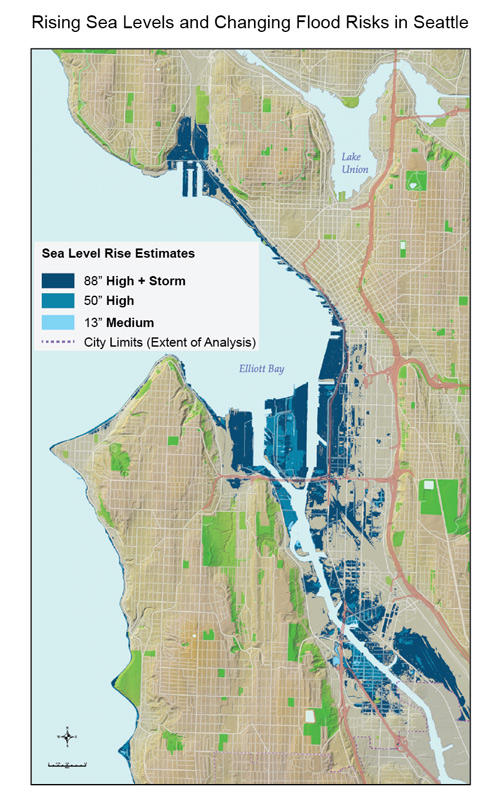
Climate change is damaging the Northwest coastline. Projections indicate an increase of 1 to 4 feet of global sea level rise by the end of the century, which may have implications for the 140,000 acres of the region that lie within 3.3 feet of high tide.[2] Sea level rise and storm surge pose a risk to people, infrastructure, and ecosystems, especially in low lying areas, which include Puget Sound. Warming waters and ocean acidification threaten economically important marine species and coastal ecosystems.[2]Map of Seattle showing areas projected to fall below sea level during high tide by end of the century. The high (50 inches) and medium (13 inches) estimates are within current projections. The highest level (88 inches) includes the effect of storm surge.Many areas of Seattle are projected to fall below sea level during high tide by the end of the century. Shaded blue areas depict three levels of sea level rise, assuming no adaptation. The high (50 inches) and medium (13 inches) estimates are within the range of current projections, while the highest level (88 inches) includes the effect of storm surge. Source: USGCRP 2014[6]

Flooding, seawater inundation, and erosion are expected to threaten coastal infrastructure, including properties, highways, railways, wastewater treatment plants, stormwater outfalls, and ferry terminals. Coastal wetlands, tidal flats, and beaches are likely to erode or be lost as a result of seawater inundation, which heightens the vulnerability of coastal infrastructure to coastal storms.

Some coastal habitats may disappear if organisms are unable to migrate inland because of topography or human infrastructure. This is expected to affect shorebirds and small forage fish, among other species. Warmer waters in regional estuaries, including Puget Sound, may contribute to an increase in harmful algal blooms, which could result in beach closures and declines in recreational shellfish harvests. Ocean acidification is also expected to negatively impact important economic species, including oysters and Pacific salmon.

For more information on climate change impacts on coastal resources, please visit the Coastal Resources page.

At present, this information can be found on the EPA site here. In the future, the work of our scientists is purportedly going to be reviewed by politicians before it can be released.

–Malcolm

Writing Prompts and Flash Fiction Contests

If you’re the kind of writer who lives and breathes flash fiction and/or who responds well to writing prompts, take a look at the frequent contest and prompt posts at Indies Unlimited.

indiesMost recent prompt: Dew Drops – photographic prompt.

Latest Contest (January 15th Deadline):  Aftermath -original, unpublished prose up to 500 words. No entry fee.  Prizes: 50 euro first prize; 25 euro second prize; 15 euro third prize; All winning entries (including shortlisted stories) will be published in the January 2017 issue of Brilliant Flash Fiction.”

Tempted? Looking for something to do this week? Plus, it might be fun.

Malcolm