When Facebook and Twitter decided to partially censor a New York Post article about Biden family e-mails, they did so because they favor Biden. Similar posts pointing at President Trump’s purported screw-ups were allowed. Okay, Big Tech wants to help Biden and not run afoul of countries in the EU that are more restrictive of speech and press freedoms than we are in the U.S.
 While flipping through news channels last night, I happened upon a comment from a member of Congress who said he thought the government might need to step in and regulate our freedom of speech because everyday people didn’t have the knowledge required to tell the difference between truth, opinion, and lies.
I don’t buy it.
I’ll agree that we need more objective news sources rather than newspapers, networks, and programs that come with an agenda. Even so, I think people are smart enough to check multiple sources before believing one report or another is gospel.
As I see it, the only “stupid” people out there are those who say they believe everything CNN says or everything Fox News says. Those people only know issues from one partisan agenda or another. As we used to say, they believe those who are preaching to the choir.
Moderates and conservatives used to say that many of those on the left side of the aisle planned to destroy or dilute the Second Amendment before doing anything else. They (moderates and conservatives) were wrong: the first priority of many (not all) of those on the left side of the aisle seems to be diluting the First Amendment.
I hope that’s not true of the majority of Democrats. If it is true, what a shame. If it is true, I believe it’s still possible to book a flight to China or Russia where freedom of speech isn’t even part of the discussion.
 Used to be a copyeditor would catch a lot of the misspelt names. Now, reporters and writers are expected to catch their own mistakes because copyediting has become a lost art as organizations cut costs. When a reporter covers a story, readers expect him/her to have a basic knowledge of the subject and when that proves not to be true, the story won’t be trusted.
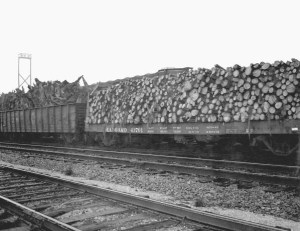
 The St. Joe Paper Company in the 1950s when my novels are set, had a massive influence in the panhandle: paper mill, landholdings, a railroad called the Apalachicola Northern that carried wood products from the coastal mill to Quincy, Florida for transfer to mainline railroads. The paper company, part of a trust established by the du Pont family, still exists but focuses on commercial and residential real estate. The railroad, named the Apalachicola Northern, was referred to as the Port St. Joe Route. (It still exists as part of a conglomerate.)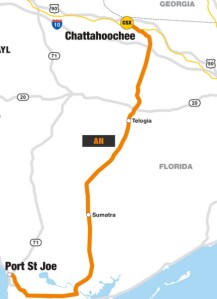

 Since most of us didn’t have a lot of experience (sex-wise) in those days, people in the books were constantly doing stuff many of us couldn’t figure out. Needless to say, we couldn’t ask our English teachers or parents what those characters were doing. It would be like reading a book that mentions the Cardi B song WAP (go look it up if you haven’t heard about it) and then going to mom and saying, “Exactly what is WAP?”


 Writers are used to saying, “What if.” So it feels completely natural to me when I happen to think of a bad moment out of the past to change it into a good moment. As if that moment is part of a novel, it’s as though I’ve changed my mind and I’m going to allow the protagonist to be happy rather than seeing them broken by criminals and car accidents and storms.
 Malcolm's Round Table