Etc. and &c.

  1. Fabiola Valentín (Miss Puerto Rico 2020) and Mariana Varela (Miss Argentina 2020) – CNN Photo

    According to CNN, “A former Miss Argentina and former Miss Puerto Rico shocked and delighted fans by announcing their surprise marriage on Instagram.” I don’t claim to understand it, but I do like imagining the horror of some who hear the news. In fact, some people will be so ticked off, they’ll probably whine on Facebook that they weren’t consulted. They did check with me and I said it was all right.

  2. Just in case it matters, I’m drinking Scotch while writing this post. I’m usually drinking red wine, but I got so excited about the news from Fabiola and Marianna, I broke out the good stuff.
  3. Our HRV finally starts up now that the dealership sheepishly admitted that they had sent the car out the door without checking the battery–which turned out to be crap.
  4. Yahoo “news” reports that we can “Save on JLo’s Booty Balm and other celeb faves at Sephora’s Beauty Insider sale.” I lived my whole life without knowing there was a product out there called Booty Balm and wish I were still innocent. Seriously, do people need to hydrate their butts? This stuff is supposed to fade imperfections for a “smoother-looking booty.” And, it’s clinically tested, so we know this product is based on science rather than magical thinking. I notice, however, that when I was looking at the Booty Balm ad, I didn’t see any before and after photographs of treated Booty.

  5. Fox News reported that “Biden blasted for new warning about ‘threats to democracy in midterms: ‘Their rhetoric is all a sham'” “During Wednesday night’s address, Biden focused his rhetoric on Republicans, asking Americans to vote for Democrats to protect democracy.” I like the old days when both major parties were trying to protect democracy. My feeling is that both parties have gone over the edge. And so have the news organizations that worship them.
  6. According to the Associated Press, “Musk: People banned from Twitter won’t be restored for weeks.” The story says that “Elon Musk said Wednesday that Twitter will not allow anyone who has been kicked off the site to return until it sets up procedures on how to do that, a process that will take at least a few weeks.” For me, this info is filed under the I don’t care category. I don’t need Twitter to survive.
  7. The New York Times reports that “The New Covid Boosters Are Incredible, and Everyone Should Get One.” I can’t say any more about it because the dreaded paywall showed up before I could read the editorial column. I have no idea whether the author works for Pfizer or Moderna or the CDC. I’m not rushing out for a shot (other than Scotch).
  8. According to a roundtable on The Onion, “As the oldest commander-in-chief in the history of our republic, the current president’s age demands a vigorous discussion to settle the question: Should President Joseph R. Biden run again?” This seems to be the consensus: “So go ahead and spit on me. Strangle me. Strip me naked and dog-walk me across the cement floor on a metal leash. Threaten my wife and children. Hell, murder my entire family. Nothing—nothing—will break my resolve. I will never reveal whether I believe Biden will have the mental and physical ability at 81 years of age to retain the most powerful office in the world.”

Well, there it is, the state of the nation at 4:57 EDT on 11/3/22.

–Malcolm

Why stuff is worse than it seems

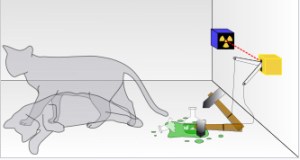
If you follow objective news sources–and that takes a lot of looking–you’ll know more than most people about the issues you’re passionate about. But that would be a 24/7/365 job, and who can spare the time? So whenever I click on a website like Pen America or the National Parks and Conservation Association after a long absence, I always find that the issues these sites track are in worse condition than they seem. I blame Schrödinger for this because stuff getting worse is too scary for me to take 100% responsibility for its status.

Of course, if you don’t look at the websites or read the news, there aren’t any issues. Schrödinger and his cat taught us that. Most the people arguing about issues on Facebook and never checked out the websites, much less read/watched objective news. Experience teaches us that.

Truth be told, I think we can be passionate about a lot of issues, but need pragmatic restraint in choosing which ones to study in depth. I gravitate toward conservation groups and press freedom groups. This morning, I realized that I hadn’t been out to read anything on the Freedom of the Press Foundation site for a while. As the home page says, “Freedom of the Press Foundation protects, defends, and empowers public-interest journalism in the 21st century.”

I come from a family of journalists and followed in their footsteps. But even if I hadn’t, I would still support strong, neutral, and comprehensive journalism. Without it, we’ll have trouble maintaining our democracy because the only thing people would know would be the propaganda that comes from their political party of choice–and the “news” sites that support it blindly.

There’s been a lot in the news lately about the erosion of our freedoms of speech and press. Obviously, I’m aware of that. But when I looked at the foundation’s site, I discovered that stuff is worse than it seems.

  • Outrageous social media laws await Supreme Court
  • In its quest to censor war reporting, the Russian government has dismantled all semblance of press freedom
  • Newsworthy leaks under attack in LA
  • Congress has a historic chance to protect journalists and whistleblowers in this year’s defense authorization bill
  • Supreme Court ruling limits paths for journalists to hold federal officers accountable
  • The extradition of Julian Assange must be condemned by all who believe in press freedom
  • Exploiting tragedy: Police in Uvalde and Buffalo clamp down on free press
  • Why press protections need legislative teeth, in DOJ’s own words

We take our freedom of speech and press as a given. So I don’t think it occurs to us that powerful groups, state and local governments, and federal agencies and individuals are constantly nibbling away at them. Most of us are aware of a lot of this, but cannot always cite specific examples. I look at this list and hope that I can make time to check the website at least once a week.

If things are getting worse, we can only speak out if we’re aware of them and how/why they are getting worse.

Malcolm

A character is alive or dead or both until the scene is written

If Schrödinger’s cat were my cat, I’d never open the box. I feel the same about a scene in my novel in progress in which Character A tells Character B that Character C is dead. I don’t want Character C to be dead, so I keep tinkering with other parts of the novel rather than writing that scene. (For those of you who worry about such things, Character C is not Lena the cat.)

Schrödinger proposed the cat in the box thought experiment in 1935 to illustrate the problems he saw with the Copenhagen interpretation of Quantum mechanics.  In this interpretation, the cat will be neither dead nor alive until the box is opened. I prefer the Many Worlds interpretation of quantum mechanics because it makes more sense to me than the other ways of looking at the world. But it doesn’t solve my problem because it suggests the cat is both alive and dead when the box is opened and that each version will spin off into a different universe as the cat and the observer become entangled. The universes and those within them are not aware of each other.

Suffice it to say, I’m not writing a novel that branches into two sections, one that you read if you think the character is dead and the other if you think the character is alive. I’ve done things like that in the past with my fiction and readers don’t want to go there.  If I did go there, new universes would form, one in which readers finish the book and one in which they don’t.

Now that I’ve clarified the arena where my probable scene remains in limbo, you no doubt understand why I have not written that scene. At present, I either write the scene or I don’t. Either way, the probable universes are infinite.

Unfortunately, the plot–to the extent that I even know it–doesn’t work if Character C is alive.

Perhaps Character C can appear to die but still be around. I don’t think the Many Worlds interpretation allows for that. Or, maybe that happens in a third universe.

Right now, of course, there’s a universe of people who read this post and another one with people who didn’t. I have no control over that because that’s simple reality. As you can see, the role of the writer in this world (or any world) is more complex than it seems.

Malcolm

Malcolm R. Campbell is either sane or insane. Until he’s released from the asylum, he continues to write books like Sarabande.

Our stories are like tourist destinations

If you’re a writer or a reader and have time to spare, I hope you’ll spend a few moments considering Sofia Samatar’s “Fiat Lux: On Literary Atmospheres” on the “Poets And Writers” Website. It’s one of their series of craft capsules.

At my age, I usually avoid these craft capsules because I know that the good and bad things I do with words will continue because, really, I’m not going to change. I almost didn’t read this article, but after a few words, I was hooked.

Words create places just as surely as the universe creates a river or a mountain. As Samatar puts it, “To write is to generate a space, with its topography, its temperature, the quality of its air.”

This is what we do when we tell a story.

Reality? Yes, I think so.

And like any other tourist destination, it is–for the reader–a real place just as surely as the Grand Canyon and Glacier National Park are living and breathing locations. And like these places which we may visit more than once, we can visit stories more than once.

As Samatar sees it, “A question of rereading. Once you know what a book contains, why read it again? Because literature is not information. It’s an atmosphere, a location, a space, a landscape you can enter, with its own weather and light that can be found nowhere else.” And also: “Rereading means returning to a landscape: running down ill-lit streets, gliding through radiant fields, climbing up mountains buffeted by the wind.”

Every time I visit a place, whether it’s a friend’s or relative’s house or a widely known location in a travel guide, I see what I missed the last time I was there. The same is true of a novel or a story. It may seem finite inasmuch as the words on the page are the same every time I return. But I am not the same. I experience the story differently every time I re-read it; or, perhaps, I find myself interested in chapters and sections that didn’t wholly capture my attention the first or second or third time through the material.

As writers, we create real places we hope others will visit and one day return to for another look.

–Malcolm

Four of Florida’s darker moments

When I research civil rights issues for the novel in progress, some of what I’m looking at happened while I was growing up there, and seeing it brings back vague memories of stories I saw in the newspaper. I often wonder if Florida’s current residents hear about these incidents in high school and college history classes. Sad to say, these four incidents aren’t the sum of the KKK violence in the state in the past. The first two happened before I was in Florida but were very much part of the conversation. Each of the blurbs below comes from Wikipedia.

Rosewood Massacre

The Rosewood massacre was a racially motivated massacre of black people and the destruction of a black town that took place during the first week of January 1923 in rural Levy County, Florida, United States. At least six black people and two white people were killed, though eyewitness accounts suggested a higher death toll of 27 to 150. The town of Rosewood was destroyed in what contemporary news reports characterized as a race riot. Florida had an especially high number of lynchings of black men in the years before the massacre,[2] including a well-publicized incident in December 1922.

Before the massacre, the town of Rosewood had been a quiet, primarily black, self-sufficient whistle-stop on the Seaboard Air Line Railway. Trouble began when white men from several nearby towns lynched a black Rosewood resident because of accusations that a white woman in nearby Sumner had been assaulted by a black drifter. A mob of several hundred whites combed the countryside hunting for black people and burned almost every structure in Rosewood. For several days, survivors from the town hid in nearby swamps until they were evacuated to larger towns by train and car. No arrests were made for what happened in Rosewood. The town was abandoned by its former black and white residents; none of them ever moved back, none of them were ever compensated for the loss of their land, and the town ceased to exist.

Groveland Four

The Groveland Four (or the Groveland Boys) were four African American men, Ernest Thomas, Charles Greenlee, Samuel Shepherd, and Walter Irvin. In July 1949, the four were accused of raping a white woman and severely beating her husband in Lake CountyFlorida. The oldest, Thomas, tried to elude capture and was killed that month. The others were put on trial. Shepard and Irvin received death sentences, and Greenlee was sentenced to life in prison. The events of the case led to serious questions about the arrests, allegedly coerced confessions and mistreatment, and the unusual sentencing following their convictions. Their incarceration was exacerbated by their systemic and unlawful treatment—including the death of Shepherd, and the near-fatal shooting of Irvin. Greenlee was paroled in 1962 and Irvin in 1968. All four were posthumously exonerated by the state of Florida in 2021.

Murder of Activist Harry T. Moore

Excellent resource from 1999.

Harry Tyson Moore (November 18, 1905 – December 25, 1951) was an African-American educator, a pioneer leader of the civil rights movement, founder of the first branch of the National Association for the Advancement of Colored People (NAACP) in Brevard County, Florida, and president of the state chapter of the NAACP.

Harry T. Moore and his wife, Harriette Moore, also an educator, were the victims of a bombing of their home in Mims, Florida, on Christmas night 1951. As the local hospital in Titusville would not treat Blacks, he died on the way to the nearest one that would, a Black hospital in Sanford, Florida, about 30 miles to the northwest. His wife died from her wounds nine days later, on January 3, 1952, at the same hospital. This followed their both having been fired from teaching because of their activism.

The murder case was investigated, including by the FBI in 1951–1952, but no one was ever prosecuted. Two more investigations were conducted in the 1970s and 1990s. A state investigation and forensic work in 2005–2006 resulted in naming the likely perpetrators as four Ku Klux Klan members, all long dead by that time. Harry T. Moore was the first NAACP member and official to be assassinated for civil rights activism; the couple are the only husband and wife to be killed for the movement. Moore has been called the first martyr of this stage of the civil rights movement that expanded in the 1960s.

The Tyranny of Sheriff Willis McCall

Willis Virgil McCall (July 21, 1909 – April 28, 1994) was sheriff of Lake County, Florida. He was elected for seven consecutive terms from 1944 to 1972. He gained national attention in the Groveland Case in 1949. In 1951, he shot two defendants in the case while he was transporting them to a new trial and killed one on the spot. Claiming self-defense, he was not indicted for this action. He also enforced anti-miscegenation laws and was a segregationist.

He lost his bid for an eighth term shortly after he had been acquitted of the murder in 1972 of Tommy J. Vickers, a mentally-disabled black prisoner who died in his custody. McCall’s notoriety outlived him. In 2007, the Lake County Commission voted unanimously to change a road named in his honor 20 years before because of his history as a “bully lawman whose notorious tenure was marked by charges of racial intolerance, brutality and murder.” During his 28-year tenure as sheriff, McCall was investigated multiple times for civil rights violations and inmate abuse and was tried for murder but was never convicted.

For me, this past isn’t that far away. I still get angry about it and find it hard to mention it in my fiction without preaching a sermon. The KKK, the police, and civic leaders were often one and the same group.

–Malcolm

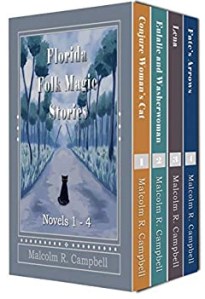
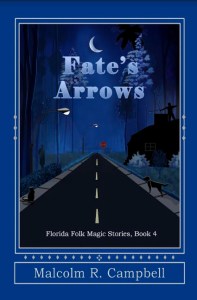
Malcolm R. Campbell is the author of the four-book Florida Folk Magic series set in the early 1950s when the Klan was still active.

Re-reading Dan Brown’s ‘Inferno’

This is the first time I’ve re-read this book since it came out in 2013. My feelings now are about the same as they were nine years ago. The storyline is another chase scene in which the bad guys are after Robert Langdon and a young doctor who befriends him through Florence.  Florence is one of my favorite cities, so it was fun reading about places I visited. If you’re about ready to travel to Florence, read this book first.
Otherwise, the story drags. Langdon wakes up in a hospital in Florence with a head wound (a bullet grazed his scalp) and has no idea why he’s in Italy. Always a handy plot crutch, retrograde amnesia keeps the main character in he dark about his circumstances while an assassin tries again to kill him–with the help of the U.S. Consulate–along with all the police in the country.

The book is a travelogue with two desperate people running through it. The catcher in the rye is the pariah of a scientist Bertrand Zobrist who advocates letting plagues run wild because that is–according to his research–the only way the Earth’s unsustainable population levels can be brought under control. I must admit that as global warming issues have become more pronounced, his view of the population’s fate is more chilling now than when I first read the book. (I enjoyed Dante’s Divine Comedy more than this book.)

Like all of Brown’s books, the story is heavy on exposition about history and art, in this case, Florence and Dante. If you took all that out of the book, it would be a novella. I re-read this book due to the lack of anything new in the house and really wish I’d picked something else to re-read like one of John Hart’s or Pat Conroy’s books.

Malcolm

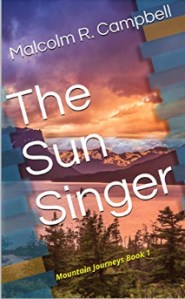
Malcolm R. Campbell is the author of magical realism, satire, and contemp[orary fantasy novels including The Sun Singer.

‘We need to re-do the kitchen: it’s soooo dated’

Not that we’re addicted, but we watch several of the house hunter shows on HGTV. They’re not quite what they seem. If the rules are the same as when I last looked, those hunting for a house have to actually buy a house before they visit three potential properties on the show. One of them, they already own.

My historic preservation background makes me a bit of a purist in that I think older houses should generally not be redone so that the inside looks like an open-concept 2022 house.  Well, nobody asked me, so it is as it is.

It’s hard for me to imagine looking at houses and making a list of move-in projects. Quite often, the prospective owners want to overhaul the kitchen with new paint, new appliances, removing the wall between the kitchen and dining room, new countertops, and a larger, more-spectacular island. Sometimes they ask the real estate agent how much a new kitchen would cost, and hear that it’s a mere $10,000 to $20,000.

Hell, the people are already spending a million bucks on the place, so what’s another twenty grand? It all seems so materialistic and excessive. I don’t get it. If I buy a new house with cream-colored kitchen cabinets, I’m not going into a snit to repaint them white just after we close on the house. I didn’t grow up with this kind of money and, with parents who lived through the depression and ran the household on a teacher’s salary, I’ve ended up with more of a make-do attitude than the spoilt brats buying the houses.

And here ends today’s rant.

Malcolm

That fried egg for breakfast

Before falling asleep at night, I have grand plans to cook a fried egg for breakfast. After all, that’s what I got used to as a child, eggs and bacon in a cast-iron frying pan with the grease saved in a small metal container on the stovetop for later.

Looks good, but over easy would look better – Wikipedia photo

But then when morning comes, I’m too sleepy to cook an egg–over easy with a few red pepper flakes scattered over it–much less having to wash the frying pan afterward. So, I toss two Jimmy Dean sausage biscuits in the microwave for 58 seconds and there’s breakfast.

A lot of things are like that fried egg for breakfast. The idea sounds good, but then when it comes time to do it, it’s simply too much trouble. When it comes down to it, most chores are too much trouble as are the more important things in life.

After a trip to Scotland, my brother said that nobody there knows how to cook a fried egg over easy or over medium. If you ask for it, they don’t know what you’re talking about–and still “don’t get it” after you explain how to do it. “Lads, it’s like anything else you fry on both sides!”

This probably explains why Scotland has been under the English thumb for so long. When a chance came to vote for independence, the idea sounded good but nobody quite knew how to flip a government.

But, I digress.

–Malcolm

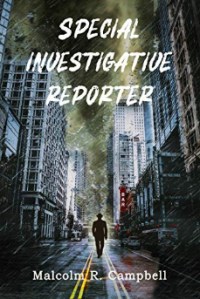
Malcolm R. Campbell is the author of the comedy/satire Special Investigative Reporter.

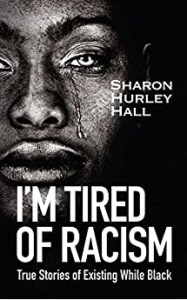
New Title: ‘I’m Tired of Racism: True Stories of Existing While Black’ by Sharon Hurley Hall

Writer and educator, Sharon Hurley Hall (Exploring Shadeism), released this book of essays on October 1, bringing the information and wisdom of her Anti-Racism Newsletter to a wider audience.

From the Publisher

To feel empathy, you need to walk a mile in someone else’s shoes. If the experiences of racism in a white supremacist system seem too far away from your daily reality, I’m Tired of Racism will change that. If you think of racism as something that only happens where you are, I’m Tired of Racism will change that, too. And if you’re wondering how you can be a true ally and avoid performative nonsense, this book is an excellent starting point.

“I’m Tired of Racism” collects many of Sharon Hurley Hall’s anti-racism essays, sharing her global perspective on racism, anti-racism, anti-Blackness, and white supremacy, born out of experiences in the Caribbean, the UK, the US, and elsewhere. Hurley Hall has lived and worked in multiple countries, enabling her to accurately reflect what’s the same and what’s different about experiences of racism in different locations.

The foreword, by Ashanti Maya Martin, says: “Because Sharon’s experience is rooted in the U.S., the Caribbean, and Europe, she’s able to tell us how the U.S. looks from the outside in (not great at the moment), and explain how even being a citizen of a Black-majority country comes with its own layered burdens rooted in colonialism and white supremacy.”

The book is available on Kindle and in hardcover. The audiobook and paperback editions will be available soon. I have known Sharon online for possibly 20 years and look forward to seeing her newsletter in my in-basket.

Malcolm

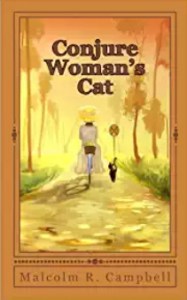
Malcolm R. Campbell is the author of the Florida Folk Magic Series about a conjure woman fighting the KKK in a 1950s-era town in the Florida Panhandle. The series begins with “Conjure Woman’s Cat.”

Weak, unintelligent people are trying to control the books you and your children read

  • From July 2021 to June 2022, PEN America’s Index of School Book Bans lists 2,532 instances of individual books being banned, affecting 1,648 unique book titles.
  • The 1,648 titles are by 1,261 different authors, 290 illustrators, and 18 translators, impacting the literary, scholarly, and creative work of 1,553 people altogether. —Banned in the USA

PEN America’s “Banned in America” summarizes what many of us have seen more and more often in the news: book bans.
They are a weapon used by weak people and weak groups who have so little confidence in their beliefs, they are fearful of what might happen if people are free to read about alternatives. The German government, controlled by the Nazi party, burnt the books in town squares, a more uncouth version of the book bans.

Book bans in government schools and government libraries are, of course, unconstitutional since they run counter to the Bill of Rights. And yet, how easily people flock to this method of stifling the free flow of ideas when a particular book bothers them.

In a September 22 news release, PEN said, “With free expression and the freedom to read being undermined in America’s schools, Congressman Jamie Raskin today introduced a resolution in the U.S. House of Representatives condemning the spread of book bans in schools nationwide, as Senator Brian Schatz leads a companion resolution in the U.S. Senate. PEN America commends the lawmakers’ efforts, which reaffirm Congress’ commitment to upholding free expression in the classroom and beyond.”

While I think this is good, I doubt that most people will even know that it happened, much less change their gutless, book-banning behavior if they did hear about it. I would like to hear more protests from those who abhor the book bans. Let’s put the banners under a microscope and embarrass the hell out of them for being too weak to admit they are weak.

–Malcolm

Malcolm R. Campbell is the author of the Florida Fok Magic Series.