
Many of my sources for books and authors links for this occasional feature have become politicized and/or issues-oriented. By that I mean, the links support authors and books speaking out about U.S. politics and/or the primary issues of the day. They’re not “bad,” they’re simply more commentary than literature.
In general, I try to avoid those links because I don’t want to appear to have an agenda, nor do I want to get away from the purpose of this blog: in part, providing books and authors readers might find interesting.
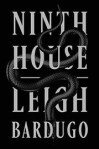 Review: Ninth House by Leigh Bardugo – “Yale’s secret societies hide a supernatural secret in this fantasy/murder mystery/school story…With an aura of both enchantment and authenticity, Bardugo’s compulsively readable novel leaves a portal ajar for equally dazzling sequels.” Kirkus Reviews.
- Obituary: “Mordicai Gerstein, author and illustrator of dozens of works for young readers, among them The Night World, Sleeping Gypsy, and I Am Pan, died September 24. Gerstein provided the artwork for numerous works by other writers, and was awarded the 2004 Caldecott Medal for his picture book The Man Who Walked Between the Towers.” Shelf Awareness
-

Jamison Interview: A Conversation Between Leslie Jamison and Kaveh Akbar – “Leslie Jamison makes her life more difficult than it needs to be. In her most recent essay collection, Make it Scream, Make it Burn, the subjects she chooses—the world’s loneliest whale, Second Life devotees, the Museum of Broken Relationships in Croatia—could carry the pieces with their propulsive novelty alone. Certainly, Jamison is brilliant enough as a sculptor of language that we’d happily oblige her. But what makes Jamison one of the essential essayists of our generation is her rigor. She renders her subjects, the world that made them, and her own gaze all within the same frame.” Paris Review
- Quotation: “What really knocks me out is a book that, when you’re all done reading it, you wish the author that wrote it was a terrific friend of yours and you could call him up on the phone whenever you felt like it. That doesn’t happen much, though.” ― J.D. Salinger
- Books to Film: Tarantino’s Next Big Project Is… a Book About a Guy Who Loves Movies – “Quentin Tarantino may follow through with his plan to stop making movies after his Star Trek one or his horror movie one or Kill Bill 3, but that doesn’t mean he’ll stop making other things. The filmmaker will probably shift over to directing plays or extremely long movies that Netflix will awkwardly chop up and pretend are miniseries, or maybe, he’ll just reinvent himself as a novelist—since the guy has already started on a book, apparently.” Vice
 Lists: The 10 Best Debut Novels of the Decade – “Friends, it’s true: the end of the decade approaches. It’s been a difficult, anxiety-provoking, morally compromised decade, but at least it’s been populated by some fine literature. We’ll take our silver linings where we can.” Literary Hub
- Feature: Book Gallery: Margaret Atwood and Octavia E. Butler – “Few authors get our pulses racing like Margaret Atwood and Octavia E. Butler, and luckily enough, our friends at The Folio Society have just released gorgeous new editions of important works by both.” Flavorwire
- Lists: Tuesday New Release Day: Starring Winterson, Lerner, Díaz, Walbert, and More – “Here’s a quick look at some notable books—new titles from the likes of Jeanette Winterson, Ben Lerner, Jaquira Díaz, Kate Walbert, and more—that are publishing this week.” The Millions.
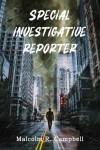
 Book Bits is compiled randomly by Malcolm R. Campbell, author of the comedy/satire Special Invetigative Reporter.



 A long-time online friend of mine is an acclaimed Canadian author. I’ve read most of her books. What bothers me about her publisher’s decision making is the fact that those books have different Canadian and U.S. Titles. Sometimes this is necessary. But in her case, those differing titles cause a lot of reader confusion about what book they’re buying. Frankly, I don’t think the U. S. and Canadian audiences are so different that a book requires separate titles for Amazon and Amazon.ca. I think this kind of thing hurts the author.
 Once upon a time, Publisher’s Weekly asked for a review copy of a children’s book our small press had in the works. We were new to the business then and had no clue how to accommodate them, so we lost the opportunity for a high-profile review. Ouch! Now that I know better, I won’t make the same mistake again. Better still, I’ll share what I’ve learned so you won’t, either.
 This is an interesting article by Kevin Larimer on the Poets & Writers website. It’s worth reading, I think, in spite of its length because many aspiring writers who want their books considered by mainstream publishers and reviewers forget that agents still exist. They are your route to big publishing. Yes, I know, in an era of Kindle Direct Publishing and CreateSpace, nobody thinks about agents or the standard methods for approaching major publishers.
 Sometimes I’m surprised. I was looking for magical realism books this morning and found one on Amazon that came from an author I’d never heard of from a publisher I’d never heard of that had almost 4,000 customer reviews. After getting rid of a few initial feelings of jealousy, I wanted to find out how they did this. Usually, 4,000 customer reviews is something you expect for titles by famous writers. So how does somebody “come out of nowhere” and get that kind of response?
 Malcolm's Round Table