Magic: Guided Visualizations and Meditations

If you search Google for either “Guided Visualization” or “Guided Meditation,” you’ll get a lot of hits. I first encountered these mental field trips in the 1970s when I was taking a relaxation/intuition seminar.

Briefly, a leader–in person or in a recording–leads individuals and groups through an imaginative (or recalled from memory) landscape, sets of affirmations, suggested visualizations, and other relaxing audio experiences that, faith-based or secular, are intended to help you experience deep relaxation and self-affirming statements/goals that are often accompanied by music.

In a group, people often lie on mats on the floor while the l leader reads from a prepared or spontaneous script; leaders also use pre-recorded visualizations or meditations. One beauty of the pre-recorded format is that it’s often available for purchase, so you can use it at home when it presents an experience that resonates with you.

Many visualizations begin with a relaxation method that’s akin to self-hypnosis. Some have you count down numbers, affirming that while you are doing this you are becoming more and more relaxed. Others ask you to pretend that you are doing down a stairway or an escalator or a trail to the valley floor.

While you are there, you might repeat scripted affirmations, imagine that you are meeting gurus or totem animals with messages for you, or simply listening to the music while pretending you are in a relaxing place. Leaders often give you a chance to say your own affirmations or think about your own psychological/spiritual journey.

(Note: Many experts say that affirmations–which often sound like New Year’s resolutions–are most effective when you do more than repeat them while relaxed or meditating. You need to do things in your waking world that support them. For example, if your affirmation is that you are getting more and more healthy every day, you need to tie this to doing healthy things–exercise, nutritious foods, etc.)

At the end of the visualization, the leader will usually end with a phrase such as, “Now I’m going to count from one to three. Then I say ‘three,’ you will be wide awake, feeling much better than before.”

If you use this process often, you will find that in time you can instantly “go” to your imagined relaxation status without having to count down. You know what it feels like to “be there,” so simply intend to feel that way as easily as you decide to raise your hand or sing a song.

The beauty of these visualizations/meditations is that you can listen to them often, learn how to replicate them, and–while you’re learning new skills–you’re having an enjoyable experience akin to listening to a favorite piece of music. If you listen to one at home, you’ll discover that you’ll often fall asleep. So, make sure you won’t be disturbed and that you really have time to fall asleep.

I haven’t listened to a guided meditation or visualization for a long time because I heard so many of them, that I can make up my own and/or reach the desired level of relaxation or active imagination without needing a series of steps. For most of us, this is the end result we want–a way to relax without medication, a way to handle stressful days, a way to discover the benefits of meditation, and a way of developing the so-called intuitive abilities that are latent in all of us.

–Malcolm

P.S. My thanks to Melinda for mentioning this subject in a comment in an earlier post. That reminded me it might be helpful to others.
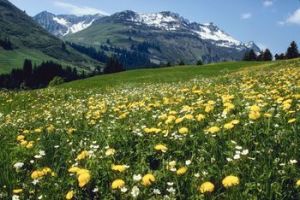
Magic: Your Favorite Place of Relaxation

Whether you’re meditating, using affirmations to improve your outlook on life, beginning a shamanic journey, visualizing a friend’s health needs, or listening to the promptings of your inner self (AKA conscience, subconscious mind), many “systems” will suggest that you begin by going to your favorite place of relaxation.

This place can be either real or imagined. Many people choose places associated with quiet and beauty–a mountain meadow, a shimmering pool,a moonlit lake, or even an easy chair in a room filled with books and perhaps a stone fireplace. The idea here, is that over time, you will be able to imagine/visualize this setting as a place of peace and serenity.

I use an imagined mountain cabin in a real place. Once I close my eyes and pretend to be there, my blood pressure goes down, my brainwaves slow, and I find myself in a state of mind where it’s easier to “do” magic.

At the beginning, you may need to monitor your breathing as you slow yourself down and think of this place. You may find that it takes you a while to fully believe you are “in” that visualized spot where you are at one with yourself. With practice, you’ll be able to simply think of it and find yourself in a state of relaxation that facilitates meditation.

It’s difficult to focus on magic, psychic visualizations, and healing yourself and others if you are in a logical frame of mind, worse yet, worried or uptight or feeling driven. Being able to silence our mind’s constant chattering and “go” (mentally) to a real of imagined relaxing place is a signal–almost like a post-hypnotic suggestion–that you are operating at a deeper level of mind than the one you use most of the time in your waking moments.

With practice, many people can slow down their brainwaves and breathing without having to (or visualizing) a relaxing scene. For others, the relaxing scene helps. For those it helps, the place becomes something of a place of power. That is to say, while one is imagining s/he is in this place, s/he can “see” the world in a different way than we do when we’re commuting to work or sitting at a computer. At first, what we “see” may appear to be imaginary, but in time, we discover that it is a mystical connection with “the big picture” and/or psychic impressions about the problem or issue on our minds.

When I began doing magic, I found it easier to start in my imagined favorite place of relaxation. I would spend time there in idleness before doing anything else. Later, I found that I no longer needed that place, that I could feel my relaxation and attunement with my intended plans without stopping by that place.

The place we select, though, is always available to us, as a retreat from the world, as a sanctuary, and as a place of mental power. It’s a powerful spot.

Malcolm

ion

Magic: preliminary ideas

As the future unfolds, I expect much that much of what we now label as magic will no longer be regarded as superstition, wishful thinking, charlatan fabrications, occult (in the negative sense as championed by Hollywood films), or general idiocy, and will be shown to have its basis in quantum-related mental powers that can be proven and replicated and taught to others as easily as the courses in a high school curriculum.

While magic takes practice like any other natural activity–swimming, jogging, hiking–it is at it’s basis very simple. The apparent complexities arise in part because many individuals and groups that support or teach one magical approach or another and use symbols and names for their techniques that are difficult to compare with other approaches.
This is a pet peeve of mine, one that began when I was in high school and discovered–with every book or article I read–that the authors wrote about their system as though no other system existed.

What I wanted was synthesis and evolving knowledge rather than the impression that every system was unique and had no correlation with other systems. It always seemed to me that the neophyte’s life would be so much easier if, say, a book on system ABC said that our technique #1 is similar to system XYZ’s technique #2. I see many symbols and techniques that are similar in purpose and intent that it would be so easy for authors to compare and contrast in a chart in the books’ appendices.

In general, we should take a distinction between mysticism and psychic abilities and other so-called magical techniques. The intent of a mystic is usually direct attunement with the Creator so that s/he will be able to align his/her life and thoughts with the Creator’s ways, means, and intentions. Many mystics regard psychic phenomena as secondary, and sometimes an annoying byproduct, of their primary goals.

When I was young, I clashed with “church fathers” over the benefits of mysticism because–as it seemed to me–the Christian church was against mysticism for everyone but the religion’s founders. We were taught, in part, from the writings of ancient Christian mystics, but scolded if we dared to practice mysticism ourselves. Of course, if a church allows mysticism, it no longer controls the message.

Hollywood, and many occult novelists, have clouded the waters of magic by suggesting that various natural occult principles are “devil worship.” I think the organized church has been a party to this. This makes it difficult to speak of magic in a generic sense as part of every individual’s birthright because they have been brought up too think that expanding their mental capacities is evil.

I approach magic from what has often been called “esoteric Christianity” as well as the mystery schools and Kabalistic ideas about “the big picture.” This puts me at odds with the organized Christian church. If you are a firm believer within one religion or another, this may well be your starting point when you consider magic’s larger ideas. This, I think, is easier and more natural than stepping into the cultural and religious beliefs of another religion from another part of the world.

I tend to think in terms of spirituality rather than religion. This approach makes a person open to whatever enhances his/her development within a universe that is much larger than what we perceive in our day-to-day jobs, hobbies, and interactions with others.

Malcolm

Malcolm R. Campbell is the author of contemporary fantasy, magical realism, and paranormal novels and short stories.


Magic and the theme parks

When my daughter was ten years old (give or take), my wife and I took her to see Disney World. She remembered. So this spring, she went back to Disney World and Universal Studios with her husband and two daughters. It was nice to meet them there and watch the reactions of another generation. As before, my brother and his wife were there for this visit.

Gringott’s at Universal Studios in Orlando – Malcolm R. Campbell photo

At my age, walking through theme parks for four days is hard on the legs and ankles and dangerous when one is hit by parents wielding strollers and run into by people gawking at the sights rather than watching where they are going. In spite of the sun screen, it’s hard to avoid getting sunburned.

On this trip, my wife and I enjoyed the nostalgia of the carousels. When it comes to riding in a car on rails combined with 3-D animation, life-sized automaton characters, and the design of the rooms, I thought the most creative ride at Universal Studios was the tour of Gringott’s Bank in Diagon Alley. The train ride to Hogwarts was also fun.

Unlike the children, I see the theme parks as huge, money making enterprises that play on the popularity of films to bring people into crowded attractions where the time spent waiting in lines is the longest part of the experience. Plus, I cannot help but note that the exit to every ride and attraction leads out through a gift shop. I see this for what it is.

I also see it has an experience that, for the children–and the children within each of us–can re-ignite the magical experiences of the films, and also create a few new memories. Anything that reminds us of the magic has my stamp of approval in spite of the commercialization of it. Parents need to hold the reins on spending, of course, but allowing the children time to let their imaginations run free is a wonderful gift.

The magic is certainly well-orchestrated by the parks, but it is nonetheless very real to all who believe,

Malcolm

I use magic in most of my novels and short stories, most recently “Conjure Woman’s Cat” and “Eulalie and Washerwoman,”

Try Magic: What have you got to lose?

If you’ve read this blog and/or my books for a while, you know that I don’t doubt the reality of magic. Magic is–or should be–an optional subset of mysticism, that is to say, a direct communion with the god of your heart. I have always thought magic worked better within the context of one’s belief system rather than as an end in itself.

When some people read books filled with promises–like “The Secret” they are often inspired to try what they otherwise might not try. Sometimes they succeed. They’re more likely to succeed right after reading the book because they are attuned to the idea that all things are possible. So, before doubts enter into their thoughts, they often see things happen that they might never have expected prior to reading the book.
Magic, and by that, I don’t mean the sleight of hand and illusions of stage magicians, is always part of a larger system of thought, a way of looking at the world that isn’t confined to the limitations of every-day logic. For example, the hoodoo practices I talk about in my Florida Folk Magic novels are part of the culture in which they thrive. One can’t extract the spells and modes of thinking from the culture and expect them to work.

The same could be said about magic within the “old religion” (true witchcraft rather than Wicca), Hawai’ian mysticism (Huna), the practices of shamans in multiple cultures, Celtic (Druid) worldviews, and others. The first problem many people have after they finish a book or a weekend retreat or a class on magic and/or psychic techniques is merging their new knowledge into their own culture.

If you live in, say, Orlando, Florida, it’s difficult to merge, for example, Huna practices into your daily life because Hawai’ian mysticism is not the world view of most people living in Orlando. So, whatever you have learned, you will be at a disadvantage unless you can shield yourself from the mainstream worldview where you live and work.

Magic need to be culturally dependent, that is, it can be eclectic and not an integral part of a specific culture. While the tenants of this magic don’t synchronize well with what most of one’s friends and colleagues believe in, they are easier to pursue than those that are part of a minority group or culture. Nonetheless, the magic is still part of an altered way of looking at truth and the world and the “big picture” and cannot be separated from it. I have found this an easier route than, say, following hoodoo or Huna or Native American belief systems. There is nothing wrong with those systems other than the fact that (for me) I’m not attuned to those cultures. So, my approach is based on my own culture instead of somebody else’s culture.

You can find magic and mysticism at The Rosicrucian Order and The Silva Method that aren’t based on the cultures and rituals of marginalized groups. These are, so to speak, somewhat generic. Or, if you’re looking for inspiration, perhaps you’ll find if at Duirweigh Studios or in the books by Joseph Campbell. These are all routes to magic.

One of the best books–which you can find free on the Internet–about magic is James Allen’s As a Man Thinketh. Really, this old book says it all. For magic to work in your life, your worldview–whether “generic” or based on a particular culture–must accept the tenants and practices of the magic. Seriously, the magic and everything that surrounds it must be part of your life.

When it comes down to the nitty gritty, magic won’t work if you don’t think it will work, or if you have doubts about it. That’s a tall order because we’re expected to believe before we have any proof. I know, that’s not logical, so you must set logic aside before you practice magic. And don’t rush it.

–Malcolm

Review: ‘Curva Peligrosa’ by Lily Iona MacKenzie

Curva PeligrosaCurva Peligrosa by Lily Iona MacKenzie
My rating: 5 of 5 stars

Mexican Curva Peligrosa follows America’s first “superhighway,” the Old North Trail that has seen many hooves, bare feet and moccasins traveling between Southern Mexico and Canada over the past 12,500 years, and after 20 years of dreams and exuberant experiences, she settles in the small town of Weed, Alberta.

Magic follows her, to hovers around her and her mysterious green house, her herbal cures, her skills as a midwife, her sharpshooting, her otherworldly dandelion wine, her lusty appreciation of sex, and her larger-than-life approach to living that astounds and intrigues the residents of her adopted town. They are scared of her but can’t stay away.

Time and reality blur in this well-written and carefully researched novel, in part because the chapters are–in a sense–a series of slices life and mini-stories that are not exactly presented in chronological order. Along the trail, Curva writes letters to her dead brother Xavier who will become a frequent visitor to her spread near Weed. The prostitute and fortune teller Suelita and Billie, the Blackfoot chief from the nearby reservation, are also frequent visitors. Everyone drinks the wine. Lots of it.

And then there’s the man named Shirley from Sweet Grass, Montana who wants to drill for oil throughout the region. Shirley thinks he can tame Curva’s strange ideas, alluring body, and potentially oil-rich land.

Kadeem, the leader of a traveling troupe of acrobats and other performers tells Curva, “Nothing is what it seems. Carpets fly. Plants give birth to animals. Characters escape from novels. All this is normal.” Such things occur as regularly as the rising and setting of the sun and moon throughout the inventive magical realism, addictive plot, and exotic character development of Lily Iona MacKenzie’s “Curva Peligrosa.”

Chances are good that Curva, Sabina (her daughter of unclear origins), Xavier (who dislikes being called dead, much less a corpse), Billie (who talks to old bones), Suelita (who longs for wings), and even Shirley (who thinks material riches are everything) will ultimately escape from from this novel. If so, they will visit you during storms, fog, and dreams. This is normal.

View all my reviews

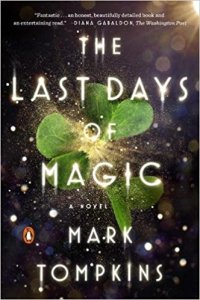
Review: ‘The Last Days of Magic’

Mark Tompkins’ The Last Days of Magic is a mixture of the historical record of the 1300s and an imagined prospective history based on legends. The history focuses on Richard II’s designs on Ireland and on the Catholic Church’s designs on unifying Christianity by driving out magic, pagans, and others who did not follow the dictates of Rome.

The book contains a wealth of history about the real power players of the era. It also contains a wealth of myth and legends about the opposing magical forces in Ireland. If you’re interested in the history of the times, this is not “alternative history” because–by the end of the novel–what happens is what history gave us. If you’re interested in the wealth of magical beings that opposed the English and the power of the Catholic church, the author has taken great pains to remain true to the stories about the Morrigna, Nephlim, Sidhe, witches and others who were presumed to be active in Ireland at the time.

Here’s the problem: The book is confined by history, so there is little suspense here because we know–or can Google–the historical outcome: Ireland is lost to Richard II. While it’s interesting to imagine what the Morrigna, Sidhe and others were doing to keep Ireland as it was, we know they will fail. This kills the suspense.

The book is not cohesive because there were so many players involved. This adds multiple characters and points of view. As Brown did in The Da Vinci Code, Tompkins has included a modern day prologue/epilogue that suggests that the magical bloodline continues into the modern era. While this is hopeful if you like magic more than the organized church, it lends nothing real to the story line. Interesting, yes, but otherwise it has little active association with the events of the 1300s.

The book is interesting for those of us who believe in magic. Otherwise, it’s standard history with a “what if” approach to what the opposition in Ireland might have been doing when the English and the Vatican invaded.

–Malcolm

Malcolm R. Campbell is he author of novels filled with magic including Sarabande, Conjure Woman’s Cat, and Eulalie and Washerwoman

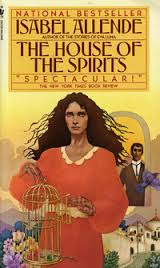
Re-reading a classic: ‘The House of the Spirits’

“One of the strongest impressions I took away from this book was that despite everything there is an optimism about the book’s ending. Throughout the book one has felt strongly the inevitability of events – that the blindness of the right-wing Esteban to the liberalism of his family, which one might argue is inherited from his wife’s parents, will lead to disaster, that Esteban’s casual abuse and rape of peasants will rebound on future generations of the family – and yet at the end Alba breaks the cycle of anger and hatred.” Zoe Brooks in Magical Realism

Books change each time we read them–unless we’re cursed with a photographic memory. Presumably, the words don’t re-arranged themselves on the pages, nor do heretofore unknown pages creep into the book with new characters and subplots from Central Casting.

The world is probably stranger than we know, so it’s safe to assume we change in between the readings. I’m not the same person I was when I first read The House of The Spirits in 1986 when my Bantam mass market paperback edition was published. Years have passed and governments and attitudes have come and gone since then.

Imagine the differences in first-reading perception of this 433-page saga between the rushed college student who has a few weeks to read it for a 400-level college course in order to compare and contrast it with the somewhat similar multi-generational magical realism sagas The Hummingbird’s Daughter and One Hundred Years of Solitude, and his/her twin reading the book on a rainy afternoon in a mountain cabin.

The first will be speed reading, taking notes, and writing in the margins. The second, (depending on whether the rain has interrupted planned outdoor activities or not) may be either relaxed or bored. They won’t see the same book. A third person who is reading the book leisurely in order to savor every line will come away with a very different memory of the story.

Like The Hummingbird’s Daughter (Mexican setting) and One Hundred Years of Solitude (South American setting), The House of Spirits (unspecified Latin American setting, but presumably Chile) includes peasant workers and their beliefs, strong patróns who control the people’s temporal destiny, harsh and potentially unstable governments, and leftist or other guerrillas seeking change.

To my mind, the magic in One Hundred Years of Solitude is more overt and widespread than the magic in the other two books, one with the young girl Teresita (in the very mystical “Hummingbird” based on  a real person) who can heal, the other with the family matriarch, Clara, who talks to spirits and moves objects without touching them. Before re-reading The House of the Spirits during the last several days, my memory of the book was that it contained a lot more magic than it does.  I remembered its gritty realism, but had blocked out the worst of it.

Had I taken a lie-detector test about the story in Allende’s debut novel several weeks ago, it would probably show (with no hint of fabrication) that my mind had mixed some of the characters and circumstances with those from her other books and that I recalled a much more ethereal tale than physically exists on the pages of my 31-year-old paperback. I don’t read books with the eye of a college English professor who also reads critical reviews and in-depth analyses of the books s/he teaches in class and/or writes papers about. So, if somebody asks me to tell them what the books I’ve read are about, my knowledge of the plots and characters will always be imperfect.

Somehow, books read by many an avid reader often run together over time unless the stories are constantly studied and compared with other books in the same genre. If there’s a blessing in a poor memory, it’s that in re-reading a book, the opportunity for fresh discoveries is all the greater for it. I suspect The House of the Spirits changed me more this time than it did in 1986, for now I am seeing more clearly a story that I had mythologized over the years. I am older, so I see the aging Clara with fresh but older eyes and, having come to terms to some extent with the amount of hatred and evil in the world, I see Alba’s hope at the end of her horrid torture as more authentic than when my anger–as a younger, more volatile man–at her treatment blinded me to her transformation.

Like absent old friends, old books usually aren’t the books we remember exactly. That’s the beauty of meeting up with them again and then going away all the wiser for it.

–Malcolm

Malcolm R. Campbell is the author of the magical realism novels “Conjure Woman’s Cat” and “Eulalie and Washerwoman.”


Tarot cards after all these years

“Tarot reading is an excellent way to learn more about one’s self, have a closer look at your inner self or to examine your very own intentions and ambitions.”

Raven’s Tarot Site

I’ve been tinkering with the I Ching and the Tarot since I was in high school. I don’t do readings for other people. In fact, most people don’t know that I know anything about these divination systems because once they know, they walk on the other side of the street whenever they see you.

knightofswordsI was happy that C. LaVielle contributed a Tarot and storytelling guest post on January 11th because she focused one of the reasons I like both the I Ching and the Tarot: understanding the characters in my stories.

Like Joseph Campbell’s Hero’s Journey, both the I Ching and the Tarot present ways of looking at the world. The Tarot, of course, is closely linked to the Tree of Life of the Kabbalists.  The future isn’t fixed. At least I don’t think it is. So I don’t use any of these ways of looking at the world for predicting the future. In fact, they tell me what I know that I don’t know that I know. That is to say, they tell me what the unconscious part of me knows to be true even though the conscious part of me hasn’t figured it out yet.

My sun sign is Leo and the card representing me in the Tarot is the Knight of Swords (called King of Swords in most decks). This is why the URL for this site includes “knight of swords.” When I do Tarot readings for myself, the knight is me. When I do readings about novels I’m writing, the knight is always the logic of the story, cruel at times, to be sure, but nonetheless the fiery part of air as the card is described.

As a character in one of my novels said, he doesn’t want to see the future because that would spoil the surprise. It would also impact what he (or any of us) choose to do right now. Our power is always in the now. I see that, but the characters in my stories don’t always notice it. Plus, seeing the future would give us the false idea the whole shebang out there is engraved in stone when, actually, nothing except epitaphs are engraved in stone.

As a knight of swords, I’m a trickster (among other things), so that means I’m always stirring things up. That’s one reason I write fiction–to stir things up. That’s also why I like my Tarot deck: it shows me that even when I don’t consciously know I’m doing it, I’m stirring things up–and creating ideas that I let other people carry out to completion after I’ve wandered off to something new.

I see this as the author’s first duty–sowing seeds, suggesting things that bother people while making them think, suggesting that things aren’t what they appear to be, telling people that whatever goes bump in the night is real, finding the story inside everything that happens.

It’s one hell of a thing to do, but somebody’s got to do it. Fortunately, my Tarot deck “advises me” when it’s time to step back before the mob shows up on my door step.

–Malcolm

“Do I feel lucky? Well, do ya, spammers?”

As many of you know, I take a dim view of spammers because they show up and do their business here without taking part in the conversation or sharing my posts on Twitter or Facebook. Just imagine yourself having a dinner table conversation with your family about the best books you’ve ever read when somebody you don’t know walks into your house, sits down at the table, eats a plate full of mashed potatoes and gravy, and says, “So, y’all want a way to get some cheap condoms?”

That’s a spammer for you.

Spin the wheel of fortune when you leave spam on my posts
Spin the wheel of fortune when you leave spam on my posts – Wikipedia Photo

I appreciate the fact that WordPress weeds out most of the people who try to stop by our blogs to steal all the gravy. But, there’s more work to be done.

With that in mind, I’ve installed my Anti-Spammer Hex App that tracks down those who show up on this blog and on my “Sun Singer’s Travels” blog and try to sell us stuff that has nothing to do with my posts–and worse yet–don’t pay for advertising on my site.

While working on Conjure Woman’s Cat and Eulalie and Washerwoman, I took a lot of notes about spells, magic, candles, plants and especially protection hexes. If you ever hired a hoodoo practitioner, you might have been handed a mojo bag filled with the ingredients of the “law keep away” spell. (It does just what you think it does.)

Well, I’ve modified the “law keep away” spell with extra graveyard dirt obtained from cemeteries that cater to sociopaths and have merged that into the traditional mix while burning a black candle during the new moon as a squinch owl shouted curses from a longleaf pine tree. The resulting formula has undergone rigorous testing at a town near you or maybe even in your neighborhood. If there have been any recent outbreaks of green apple quick step, lice, or mysteriously appearing vulgar tattoos, a spammer or two just wasn’t lucky.

The luck comes into the mix through a random number generator subroutine I added to my assembly language code. This gives spammers a 1 in 100 chance of getting away with leaving a free message here on my blog without being hexed. See, I can be a good sport about this even though the odds favor the house.

So, if you’ve stopped by with a spam message, just ask yourself. . .well, you know what.

Malcolm

Malcolm R. Campbell’s two hoodoo novels can be found at Amazon in paperback and e-book editions. The audio edition of “Conjure Woman’s Cat” received an Earphones Award Winner at AudioFile Magazine.