 The persecution of people, mainly women, isn’t something that just happened centuries ago in Europe or in Salem, Massachusetts in 1692 and 1693. It’s still happening today In Saudi Arabia, Nepal, Tanzania, Gambia, India, Uganda, New Guinea, and probably elsewhere.
This is one of my hot-button issues and it makes me see red especially when Christians are doing it, often outside the law, and today it came to mind because it’s part of the plot of the novel The Witches of New York (Ami McKay) that I just finished re-reading.
Over the years, the organized Christian church has characterized witches as Satan worshippers. The flaw behind this slander is that Satan is a Christian belief, not a concern of witches who (generally) don’t believe in him. In modern times in the U.S., hate groups still think witches believe in Satan. But then, if they wanted to, they could since we have freedom of religion, not freedom to practice what Christianity says is okay.
I generally like witches because they practice folk magic, know how to use plants for healing, and–like conjure women–often have strong Christian beliefs as well. They also use various methods for looking into the future and protecting themselves from negative people.
I’m not a witch (traditional) of a Wiccan (man-made alternative to true witchcraft) or a conjure doctor. I know enough about them to know neither set of beliefs is “mere superstition.” But, I suppose if one had a choice, it’s better to be disliked for practicing superstitions than purportedly worshipping the Christian devil.
I am very intuitive, use tarot cards, and believe in reincarnation (something witches don’t accept). So, I am used to being “on the outside” in terms of my spiritual beliefs and suspect strongly that is one reason I get upset when others are persecuted for beliefs that are different than the mainstream faith in the countries where they live.
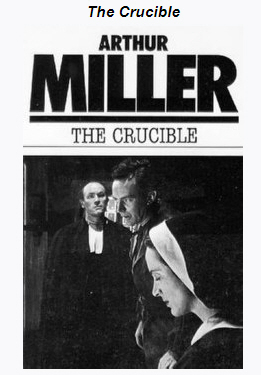
Plus, as a young man, I was strongly impacted by Arthur Miller’s “The Crucible” and while it’s not a true factual account of Salem, it was horrifying to me then. Still is.
In Salem and elsewhere, most–if not all–of the people persecuted as witches weren’t witches and wouldn’t have a clue how to become a witch if they were tempted. They are suspected, imprisoned, and killed due to what always appears to be mass hysteria and hatred of people who are (or might be) somehow different and, therefore, probably communicate with Satan. I don’t know why this mythical entity is so greatly feared by some denominations. I grew up in a mainstream Christian church, where we seldom mentioned him.
We knew enough to know that “he” wasn’t the god of the witches. In fact, our preacher spoke out strongly against modern-day witchhunts by hate groups. He said we should leave the witches alone and all these years later, I still agree with him as much as I fear the kinds of people “The Crucible” was about.

 Bullies often say I’m going to kick your ass into next week. Before confronting the bully further, I’d want to know if it’s just my ass or if the rest of me follows my ass into the future. Sometimes weather reporters say the wind is strong enough to blow you into next week. As with the bullies, the primary consideration is will I arrive alive.
 “Ley lines (/leɪ/) refer to straight alignments drawn between various historic structures and prominent landmarks. The idea was developed in early 20th-century Europe, with ley line believers arguing that these alignments were recognised by ancient societies that deliberately erected structures along them. Since the 1960s, members of the Earth Mysteries movement and other esoteric traditions have commonly believed that such ley lines demarcate “earth energies” and serve as guides for alien spacecraft. Archaeologists and scientists regard ley lines as an example of pseudo-archaeology and pseudo-science.” –
 ![Florida Folk Magic Stories: Novels 1-4 by [Malcolm R. Campbell]](https://m.media-amazon.com/images/I/51JM4A8GQFL.jpg)
 The
The  MGM’s feature film by the same name appeared in 1950 with Betty Hutton as Annie Oakley and Howard Keel as Frank Butler. While Merman, Hutton, Keel, Oakley, and Butler have almost faded into the mists of obscurity, the song maintains its traction through recordings by Reba McEntire and others.
 And yet, maybe the beauty of the sun and the moon in the sky has an impact on us, feeding our hungry souls. We can be thankful for that even if the food is metaphysical. Such food gives us the power to persevere and perhaps triumph, as Ollivander, the seller of wands in the Harry Potter series told the originally down-and-out wizard, “I think it is clear that we can expect great things from you, Mr. Potter.”
 To be sure, the connection between writer and reader depends not only on the skill of the writer, but the a reader’s (often) long-time experience with books (how they work), the subject matter, the reader’s state of mind and (probably) physical comfort. When conditions are optimal, the reader is swept up into the story as though s/he is sitting with the storyteller next to a fire in a quiet forest or within cabin’s sweet shadows.




 Malcolm's Round Table