I remember the Hallowe’en of my childhood when most people remembered that it’s a contraction for hallowed evening and left the apostrophe where it belongs. Kids, except for the very youngest, went around the neighborhood alone or in groups rather than going from street to street in a parent’s car (that would creep along while the kids rang doorbells). I remember when Hallowe’en was always celebrated on the 31st rather than being moved by law or proclamation by the city council to the nearest weekend day. And, I remember when a lot of kids saw it as a night to go out trickin’, which meant throwing eggs, tossing toilet paper up in the trees and messing up windows and screen by drawing on them with bars of soap.
 I suppose when you’re my age (you’ll know it when you get there), you’ll remember Hallowe’en as it is now instead of what it will probably turn into: banned or structured into Hallowe’en walks through selected parts of the town. It’s sad, I guess that progress has been forced to focus more and more on the predators that appear on the streets every year. Hell, you can go to jail if you allow your kid to walk or ride a bike to school.
When I was a kid, we’d have a hundred or maybe a hundred and fifty trick-or-treaters a night–often more. When we lived in a small town on the other side of Georgia, we were surprised if we had fifty–that, in spite of the pickup trucks bring in kids from neighborhoods far away. Now we live on a rural road and haven’t seen a trick-or-treater for five years.
When I was a kid, I thought Hallowe’en was fun. I suppose it was the candy and, to some extent, the costumes. As I got older, I hated it because I had better things to do than jump up from whatever I was doing every five to ten minutes to answer the doorbell and hand out candy. But, that was only fair since I rang a lot of doorbells and disrupted the evenings of a lot of adults when I was little.
I liked the little kids best since they were shy or joyful. I disliked the teenagers who thought they were entitled to all the candy in my basket and to hell with whoever came to my door after they left. I was proud of the African American and Korean [Korean is Georgia’s second language] parents who were brave enough to bring their children to a predominantly white neighborhood. I tended to be somewhat cranky with people who thought it was okay to ring my doorbell after 10 p.m.
And that reminds me, why is it now a standard to remove the periods from the “p. m.”? More lazy English, I think. But I refuse to change. I’m going to keep putting those periods there for the same reason I keep putting the hyphen in co-operation. (That hyphen had a purpose: it told you that “coop” wasn’t pronounced like a chicken coop but as two syllables.)
But, I digress.

 I held out my hands again. However, I was faster than she was. When she tried to teach me a lesson, I snatched the ruler out of her hands. I don’t think that had ever happened before.



 This is the best blog since sliced bread. I bookmarked it today and told all my friends about it. In return, we hope you’ll contact us whenever you’re ready to buy your own cemetery plot, burial urn, or headstone. We’re having a sale on pre-used epitaphs this week. (I emailed them and said I was using Dorothy Parker’s quote ““Time doth flit; oh shit” for my epitaph.)
 Some requests bother me, and those are the ones from everyday people like me who get behind on their mortgage payments (or whatever) and put up a crowdfunding link on Facebook and we’re all rather shamed into kicking in to help somebody we don’t know make ends meet. Yet, I read how they got into debt–because I’ve been there–and wish I could contribute.
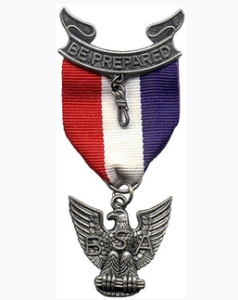 While growing up, I was part of a Boy Scout troop sponsored by my church. Many meaningful experiences came out of this, not the least of which were camping trips in the Florida Panhandle that would later serve as raw material for the novels I would write. At some point, long after I left town for college and the navy, the church gave up its sponsorship. I didn’t find out until many years later. When I e-mailed the church, nobody seemed to know that it had ever sponsored the troop and, if it had, why the relationship ended. This always bothered me. I kept wanting to find the culprit and ask what the hell they were thinking.
 When I mentioned on Facebook a week ago that my 40 days of radiation therapy had begun, one of my long-time online friends wrote, “Thank you for not giving up.” She’s a feisty New Yorker and deals with issues and events that are quite foreign to me–as I’m sure my Georgia farm life is to her–so we don’t communicate often. But this comment was almost too much for me to take in and to process.

 The trouble with addictions is this: they get linked to all kinds of things. A lot of people lit a cigarette after sex, when they picked up the telephone, when they sat down to write, when they went out onto the church steps after a funeral, went in a bar, when they got in the car, so all those things (and more) became associated with smoking. And, like post-hypnotic suggestions, all those cues are just as strong now as they were when I quit (finally).
 Malcolm's Round Table