If you like Italian-American food, grilled chicken and vegetables, or ramping up the dressing for your tossed salad, you probably have oregano on your spice rack.
I like growing it because fresh is better than dried for most things and it gives a nice scent to the garden. Or, perhaps you use it as a dietary supplement to reduce LDL cholesterol and increase HDL cholesterol.
However, unless you’re a fan of folk magic or frequent your neighborhood conjurer, you probably think of this tasty herb primarily as food rather than as protection.
Conjure Uses
Unfortunately, these require a bit of work; that is to say, you won’t keep the cops and annoying lawyers away by putting oregano in your spaghetti sauce.
That would be too easy, right?
According to catherine yronwode at herb-magic.com, oregano “is widely believed to be a protective herb with the power to ward off troublesome and meddling individuals, especially those who may wish to interfere with one’s personal financial dealings. Furthermore, oregano is said to have significant power to keep the law away.” She is the author of a handy book for conjurers called Hoodoo Herb and Root Magic.
Got Cops, Do This: Dig up the footprint of the police officer and stir it up with oregano, redbrick dust and black mustard seed and place the mixture outside at the corners of your house. A large “X” at your doorsteps will help.
Got Nosy Lawyers, Do This: A mixture of cascara sagrada bark and oregano burnt on charcoal in an ashtray or grill prior to your deposition or court date is said to turn destiny in your favor.
A good conjure woman or curio shop may also recommend burning special incense, using oils and lighting candles in addition to offering you packets of court case and keep-the-law-away powders.
I’m by no means a conjurer. As I research my next book, I am fascinated by the folk magic uses of culinary herbs, plants with purported medical uses and common household materials.
Needless to say, I make no warrants or promises for oregano in your life.
If your granny taught you anything, she made sure you knew how to make a proper dill pickle. I’m not going to repeat the recipe here, because I ain’t your granny. Suffice it to say, it includes dill. Surprised?
Most people don’t grow their own dill. If you don’t, your pickles won’t do well at the state fair. Surely, granny told you this. Whether you’re using seeds or leaves (sprigs), pickles just taste better when you grow your own dill because factory fresh ain’t fresh.
If your granny was cagey, she probably didn’t tell you that you can attract a lover by soaking yourself in a “love-drawing bath.” Obviously, there are hundreds of spells you can add to the mix, but since taking a bath is a good idea before going out on a date, the dill seeds you collected and dried yourself are superior to those from the factory. (A fair number of sites tell you how to dry the seeds. Here’s one of them.)
The leaves from your fresh-from-the-garden dill will remove a jinx, possibly the kind of crossed condition a rival might have put on you to keep you from finding the mate of your dreams. Make a coction with the leaves and ginger root, strain it, and rub it on yourself like sun screen. Think of it as a jinx screen. Do this for at nine days.
Maybe you’re not jinxed. Okay, then soak those dill seeds in water for three days and add them to your next bath. Soak yourself for a while (but not for nine days!).
Good luck.
Now, if you need something more powerful, there are dozens of hoodoo practitioners out there with hundreds of love spells involving candles, incense, oils, letters and even some properly obtained graveyard dirt. (Hint: get that, with a token of payment, from the grave of a good person, leaving out the black sheep in your family and/or a lunatic.)
I’m an author. I look this stuff up when writing stories like “Snakebit” and “Dream of Crows,” and my Conjure Woman’s Cat novella. That means that I “fake it,” I don’t prescribe it. My granny wasn’t a conjure woman (that I know of) so she didn’t hand down any spells. She often said, though, that “things are in a real pickle”–whatever that meant.
But, like suggesting sickly people should have a bowl of chicken soup, I’m in the clear by suggesting you throw some dill seeds in your bath.
If that doesn’t work, maybe you’re forgetting to brush your teeth.
–Malcolm
Malcolm R. Campbell is the author of “Dream of Crows,” a dark story about a sexy conjure woman, a swamp, a cemetery and–it goes without saying–some graveyard dirt. It’s free on Kindle for two more days.
Thomas-Jacob Publishing has released Conjure Woman’s Cat, a novella by Malcolm R. Campbell (“The Sun Singer”), set in the 1950s Florida Panhandle world of blues, turpentine camps, root doctors, the KKK and a region of the state so far away from everywhere else that it’s often called “the other Florida” and “the forgotten coast.”
Lena, a shamanistic cat, and her conjure woman Eulalie live in a small town near the Apalachicola River in Florida’s lightly populated Liberty County where longleaf pines own the world. Black women look after white children in the homes of white families and are respected, even loved as individuals, but distrusted and kept separated and other as a group.
A palpable gloss, sweeter than the state’s prized tupelo honey, holds the spiritual and temporal components of the Blacks’ and Whites’ worlds firmly in the stasis of their separate places. When that gloss fails, the Klan restores the unnatural disorder of ideas and people that have fallen out of favor.
Click her to see the trailer.
Lena and Eulalie know the Klan. When the same white boys who once treated Eulalie as a surrogate parent rape and murder a black girl named Mattie near the saw mill, the police have no suspects and don’t intend to find any. Eulalie, who sees conjure as a way of helping the good Lord work His will, intends to set things right by “laying tricks.”
Eulalie believes that when you do a thing, you don’t look back to check on it because that shows the good Lord one’s not certain about what she did. It’s hard, though, not to look back on her own life and ponder how the decisions she made while drinking and singing at the local juke were, perhaps, the beginning of Mattie’s ending.
All that’s too broke to fix, but beneath the sweet sugar that covers crimes against Blacks, Eulalie’s pragmatic, no-nonsense otherness is the best mojo for righting wrongs against both the world and the heart.
Like King Arthur of England, he has served his people. And, like King Arthur, he is not dead. He waits to return when his people shall call him again … High John de Conquer went back to Africa, but he left his power here, and placed his American dwelling in the root of a certain plant. Only possess that root, and he can be summoned at any time. Zora Neale Hurston in “High John De Conquer”
When an author plunges into background information and themes for his stories, as I did while writing my upcoming novella Conjure Woman’s Cat, it doesn’t take long to discover mythic characters. John the Conqueror is perhaps the king of conjure, looming larger than life through blues songs, stories, root doctor herbal books, and an oral tradition dating back prior to the Civil War.
The roots of Ipomoea jalapa, when dried, are carried as the John the Conquer root amulet. – Wikipedia Photo
Today, conjure women–and those requesting their services–know a lot about the “three Johns,” the herbs named after the mythic hero:
The much sought after High John root, Ipomoea jalapa, is thought to create sexual power.
Southern John, from the Wake Robin, Trillium grandiflorum, used in medicine under the name Birth Root to facilitate childbirth and reduce menstrual cramps, is used in folk magic to solve family problems and love issues.
Chewing John (AKA Court Case Root) is Galangal, Alpinia galangal, used in medicine to reduce stomach ache and in folk magic to help a client prevail in court.
Charles W. Chesnutt’s 1899 book The Conjure Woman taught mainstream audiences about conjure in a fashion similar to the way Alan Lomax’s books taught them about true country music. Chesnutt collected stories. Lomax collected folk songs.
Whether they trusted them or feared them, African Americans’ awareness of conjure women pre-dates slavery in America. Most White people knew little about the myths and practices of conjure before Chesnutt–and later, Harry Middleton Hyatt and Zora Neale Hurston–collected stories and put them into print.
Oral stories about John the Conqueror fed on themselves and on the hope such tales brought to slaves.
He was an African Prince
He was a slave
He played tricks on his masters and got away with it
Stories may have started with a real person
He was seen as a trickster like Coyote and Bre’r Rabbitt
Strange doings of unknown origin were attributed to him
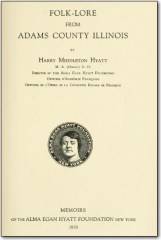
The mythic prince/slave was seen as so powerful that, as Hyatt wrote in Folk-Lore from Adams County Illinois in 1835, “If you think that someone is trying to hoodoo you or do you some harm, and you meet them, walk backward six steps, spitting right and left, and saying, ‘John over John’–and, ‘John the conqueror’–and they can’t hurt you.” (The book is available in PDF.)
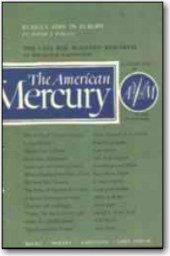
Hurston brought the myth into the modern day when she wrote, in a 1943 “American Mercury” article, “So the brother in black offers to these United States the source of courage that endures, and laughter. High John de Conquer. If the news from overseas reads bad, if the nation inside seems like it is stuck in the Tar Baby, listen hard, and you will hear High John de Conquer treading on his singing-drum. You will know then, that no matter how bad things look now, it will be worse for those who seek to oppress us…. White America, take a laugh from out of our black mouths, and win! We give you High John de Conquer.” The article is available in PDF.
Conjure subjects fed into blues music and blues music supported conjure. White Americans learned about conjure through songs sung by such well-known artists as Willie Dixon, Muddy Waters and others. It should come as no surprise, then, that Dixon wrote a song called “My John the Conqueror Root.”
My pistol may snap, my mojo is frail But i rub my root, my luck will never fail When i rub my root, my John the Conquer root Aww, you know there ain’t nothin’ she can do, Lord, I rub my John the Conquer root
As an author, I think it’s important to keep the old stories alive, whether they’re about King Arthur, John the Conqueror or Joel Chandler Harris’s Uncle Remus stories. They’re part of our culture and our history. Today, I suppose, most of the John the Conqueror focus is on the three roots and the qualities they have in the lore of folk magic.
I’m a novelist and don’t purport to be an anthropologist, much less a collector of myths and folktales. When we write ethically, the research we discover while planning a story isn’t pasted into the work like background music in an elevator. It helps shape the story and make it real. I’ll leave the theories to others and focus on storytelling with as much tradition as I can discover–and that includes John the Conqueror.
 I like growing it because fresh is better than dried for most things and it gives a nice scent to the garden. Or, perhaps you use it as a dietary supplement to reduce LDL cholesterol and increase HDL cholesterol.
 According to catherine yronwode at herb-magic.com, oregano “is widely believed to be a protective herb with the power to ward off troublesome and meddling individuals, especially those who may wish to interfere with one’s personal financial dealings. Furthermore, oregano is said to have significant power to keep the law away.” She is the author of a handy book for conjurers called Hoodoo Herb and Root Magic.
 Malcolm R. Campbell is the author of the Jim Crow era novella “Conjure Woman’s Cat” set in a KKK-infested north Florida town in the 1950s.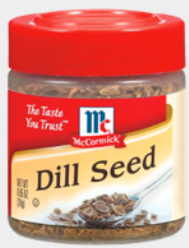



 Malcolm's Round Table