The Magic of Harry Potter

from Sarabande’s Journey:

J. R. R. Tolkien is credited with bringing epic fantasy back into the lives of mainstream readers. We can also claim that J. K. Rowling’s popular Harry Potter books not only fired up the reading public’s love of contemporary fantasy, but introduced the concept of books to people who seldom read novels at all.

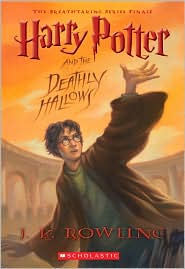
Fourteen years after her U. K. publisher (Bloomsbury) released the first, tentative thousand copies of  Harry Potter and the Philosopher’s Stone (renamed in the U.S.), her fans continue to wait for word, any word, that there might be another Harry Potter novel. In 2007, the release of Harry Potter and the Deathly Hallows sold a record 8.3 million copies in the United States in the first 24 hours.

Any other author would have been told not to use the word “hallows” in a book title since the term wasn’t in the public’s consciousness. But Potter fans lined up and bought the book while debates raged on about what “hallows” might be.

The popularity of  Rowling’s books has been called a “black swan event.” Developed by Nassim Nicholas Taleb and explained in his book The Black Swan: The Impact of the Highly Improbable, the theory examines rare events that could never have been predicted or planned and that even in hindsight, usually cannot be duplicated. Taleb himself considered Harry Potter, as a publishing event, a black swan.

Journalist Will Hutton believes Rowling’s success transcends the quality of the books themselves. “Rowling is repeating the Da Vinci Code effect – but much more shrewdly,” he writes. “In the creative industries success always begets more success, but in an era of globalisation the success can be very big indeed, as both Rowling and Dan Brown can testify.”

Hutton, and others, think globalization and the viral phenomenon of ideas, books, movies songs suddenly becoming popular seemingly everywhere is more responsible for Harry Potter’s popularity than the quality of Rowling’s books.
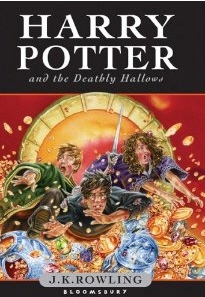
Is Harry Potter’s Success Simply Books Going Viral Around the Globe?
U.K. cover

Based on Hutton’s theory of why a Da Vinci Code Effect book does so well we could, let us say, create a look-alike universe without television, cell phones, satellites providing news in real time, and the Internet, and then display the Harry Potter books (one person at a time) to 8.3 million readers. Hutton would say that Rowling’s sales in that universe would be a fraction of what they are here. He may be right.

But that still leaves us with the question of: “If the outside influence of millions of people saying the books are great is what caused each reader to pick up a Harry Potter book, what caused them to enjoy it so thoroughly and read and re-read it so passionately?”

While peer influence is a powerful thing, reading is a solitary act. Top ten songs are easy to share in a way that further leads to their enjoyment and popularity. People listen to them together in cars and break rooms and parties and hear them in large groups at concerts. While the Harry Potter movies were shared by theater audiences in real time, the books were not. Each reader had to choose to sit in a chair, curl up in a hammock, or prop up in bed and read the book by himself and herself. Like all reading, Harry Potter represented an investment in time.

Many have said that in addition to Rowling’s creative and imaginative mix of characters, themes, and settings, the books’ success comes in part through their believable account of a rather geeky (yet lovable) underdog becoming so empowered, he was able to effectively battle against the adult, experienced and highly skilled bad wizards in the book. Noticeably, the good adult wizards teaching magic at Hogwarts had very little to do with the triumph of good over evil in each book.

In a world where most of the news is bad and most of the global issues seem impossible to solve, the prospective readers of the Harry Potter books found a wonderful antidote in Rowling’s books to the negativity, hopelessness and alienation prevalent in so many people’s lives and world views. Rowling’s stories are inspirational: even the most hard-hearted and logical adult can read them with a sense of wonderment and empowerment.

Far from being escapist reading that captures readers’ imaginations while they are reading, the Harry Potter books—through some we-don’t-really-understand-it mix of Rowling’s genius and a black swan publishing event—continue to delight and inspire readers after they finish the books.

In Fantasy, Magic is a Positive Symbol for What You Can Do in the Everyday World

While J. K. Rowling’s Voldemort is just as nasty as the bad guys found it occult horror books, the Harry Potter series illustrates one important difference between fantasy and other so-called paranormal books. In fantasy, magic is viewed as normal and a capability that the book’s protagonist can become allied with and even learn. This is the case even when there are Voldemort-type characters who are using the magic for evil reasons. In occult horror books, the magic, whether its seen as a typical component of the location or not, is something that is nonetheless alien and evil and to be feared. In supernatural horror stories and most mainstream fiction, the occult is considered abnormal, evil and threatening.

In fantasy, magic is seen as normal, as a talent both good guys and bad guys can utilize, and as something to be embraced. In many respects, the acceptance of and learned proficiency with magic represents a character’s personal transformation either figuratively or literally. Transformation is an important theme in fantasy. As such, we view it in fantasy fiction as symbolic of the non-magical transformations we can seek out an attain in our non-magical real world.

This is part of the empowerment one feels, I think, when they read Rowling’s books. The books stimulate the readers’ imagination, and they begin to feel the first inklings of wonderment about the prospects for their own success in becoming the best people they can be. They may still have a “Heart of Darkness,” as Joseph Conrad suggested in his novella published in 1902, but they can transcend it.

The Harry Potter books weren’t written as guides for living or as recipes for personal success. However, the magic (real and figurative) that readers discover in them and then internalize is a large part of their power.

–Malcolm

a contemporary fantasy of the dark moon

My Birthday Gift to You

Pennsylvanian L. E. Harvey, author of “Unbreakable Hostage,” “Loving Her,” “Imperfect,” and the recently released “Impeccable,” contributes today’s guest post. The Kindle edition of Impeccable was released on September 9 by Vanilla Heart Books. The trade paperback edition is due out in November. You may also like Lauren’s previous guest post “On Writing as Entertainment” which appeared here in April.

My Birthday Gift to You

Today is my birthday. Normally, I’ve hated my birthdays. And today throws me one foot deeper into my thirty-something’s and one frightening step closer to the big four-oh. Yet, today, I can’t help but have a stupid grin on my face.

You see today just plain rocks.  Today is bringing me quite a bit of change in my personal life in addition to the bigger number.  Professionally, though, I am celebrating not just my age, but also the release of my newest book, Impeccable.

Impeccable is the sequel to Imperfect, a book that I have discussed with the fabulous Malcolm Campbell previously. (See L. E. Harvey’s novels focus on women’s strengths.)  Now, we continue the story.  Now we see how everything from Imperfect ties together and affects every character.  Now we, and the characters, move forward.

So many people were shocked to hear there was a second book.  Ah ha!  Leave it to a writer to be tricky (we love doing that)!  Anyway, yes, there is a
second book.  Yes, Impeccable is it.  No, Imperfect is not the ending to it all.  And Impeccable is not the ending you expected.

Impeccable is the emotional, cerebral twin to the logical Imperfect.  Together, they blend and create a full story of which I am tremendously proud.  I always say that these two books are sure to touch your heart and change your mind.  I say that with good reason: as I wrote them, that is how they impacted me!

These books are not thrillers, nor are they erotic, nor are they fantasy, nor are they exciting.  They are simply touching.  They were written from my heart and I was literally transformed in the process of writing them.  I know that if I can be that affected by a book, you most certainly will be too!

So today, I am celebrating! I am celebrating my day, but moreover, I am celebrating my book.  I am celebrating a book that I loved writing.  I am celebrating a book that touched me on a spiritual level.  And I am celebrating a book that I hope – no I know – will have a tremendous impact on its readers and our society today. That is worth celebrating, don’t you think?

Would you please celebrate along with me?  Could you help me revel in my birthday?  Would you go out on a limb and purchase your copy of Impeccable today?  You might just be surprised at just how deeply this book touches you.  And it will only make my birthday grin bigger!

Thanks, and happy reading!

Publisher’s Description for Impeccable

Carol – abandoned – waiting… for what, she couldn’t know. She couldn’t see that there was more life waiting for her. Carol is forced to face the demons of her past as well as begin to face life without Alex. Struggling to make sense of it all, Carol experiences her new life and all of the highs and lows that come with that life. Will Carol finally make peace with both her past and present?

Teaser from the Novel

She couldn’t feel her body. She felt nothing, no pain, nothing, no heat, and no cold. She couldn’t feel anything. Where was she that she lacked all sensation? Carol diligently tried to focus on her surroundings and tried to make sense of all the activity going on around her, but she was unable to sustain that for long. Once again her eyes rolled back and Carol was consumed by black.

Fantasy briefly noted: Redemption in Indigo

Karen Lord’s debut novel Redemption in Indigo (Small Beer Press, July 2010) was this year’s winner of The Mythopoeic Fantasy Award for Adult Literature at Mythcon 42 in July. The novel also won the William L. Crawford Fantasy Award and Frank Collymore Literary Competition. The awards are a testimony to the book’s creative storytelling.

Writing in the Los Angeles Times, reviewer Jayna Brown, said that “Lord’s strengths as a writer are her witty, often satirical understatement and her ability to juxtapose folk- and fairy-tale devices with modern idioms and cultural references.” Brown noted Redemption in Indigo’s Senegalese, Caribbean, and European influences.

Publishers Weekly said that Lord’s “retelling of a Senegalese folktale, packs a great deal of subtly alluring storytelling into this small package.”

Publisher’s Description

Karen Lord’s debut novel is an intricately woven tale of adventure, magic, and the power of the human spirit. Paama’s husband is a fool and a glutton. Bad enough that he followed her to her parents’ home in the village of Makendha—now he’s disgraced himself by murdering livestock and stealing corn. When Paama leaves him for good, she attracts the attention of the undying ones—the djombi— who present her with a gift: the Chaos Stick, which allows her to manipulate the subtle forces of the world. Unfortunately, a wrathful djombi with indigo skin believes this power should be his and his alone.

Excerpt

A rival of mine once complained that my stories begin awkwardly and end untidily. I am willing to admit to many faults, but I will not burden my conscience with that one. All my tales are true, drawn from life, and a life story is not a tidy thing. It is a half-tamed horse that you seize on the run and ride with knees and teeth clenched, and then you regretfully slip off as gently and safely as you can, always wondering if you could have gone a few metres more.

Thus I seize this tale, starting with a hot afternoon in the town of Erria, a dusty side street near the financial quarter. But I will make one concession to tradition…

…Once upon a time—but whether a time that was, or a time that is, or a time that is to come, I may not tell—there was a man, a tracker by occupation, called Kwame. He had been born in a certain country in a certain year when history had reached that grey twilight in which fables of true love, the power of princes, and deeds of honour are told only to children. He regretted this oversight on the part of Fate, but he managed to curb his restless imagination and do the daily work that brought in the daily bread.

Today’s work will test his self-restraint.

–Malcolm

contemporary fantasy about a woman's trials and choices

Commentary: ‘The Help’ by Kathryn Stockett

Kathryn Stockett’s bestselling novel The Help focuses on a secret project (fictional) in Jackson, Mississippi (real)  in the early 1960s put together by an idealistic white girl named Skeeter and a group of black maids led by the stable Aibileen and the sassy Minny. Other primary characters include Skeeter’s young peer group for whom the maids work, Hilly and Elizabeth and Celia.

In those days, there were lines one did not cross when it came to the acceptable and unacceptable interactions between white employers and their black (this term wasn’t in general use in those days) domestic help. Skeeter, who is somewhat naive and hopeful about the future, crosses those lines. She takes risks and so do Aibileen and Minny. They fictionalize their names and call their town Niceville. If they are caught sharing stories with each other (much less writing them down), they might be beaten or killed. And then there’s the matter of trust, the trust the maids must put in a white woman who’s not acting like the other white women do.

I liked the book.

The Book Has Already Been Thoroughly Reviewed

Yet, there are already 4,523 Amazon reader reviews of The Help, and numerous articles and reviews of both the movie and the novel in the press. It’s unlikely that I have anything new to add to the discussion at this late date. In general, the book has been well received by readers and reviewers. Its controversial nature has brought out the usual kinds of dissatisfaction about miscellaneous errors of fact, the realism or lack of realism of some of Stockett’s characters’ viewpoints and actions, whether or not Jackson as characterized in the book approximates Jackson as it was almost 50 years ago. Some of the critics have forgotten that The Help is a work of fiction and not an anthropologist’s treatise about Southern race relations and domestic help of the 1960s.

On top of the controversy is, perhaps, one issue: denial. Because the picture of black and white relationships painted in The Help isn’t pretty and because it depicts bigoted (though usually nothing like the overtly nasty Hilly Holbrook in the novel) whites hiring generally accommodating blacks in a complex mix of discrimination and trust, most people want to hide this picture under the rug. Understandably, nobody wants to focus on it, much less applaud it. My view is that pretending that it didn’t happen doesn’t really help us move forward as a homogenized people.

In addition to being a well-told story, The Help brings to light what those of us living in the South saw day to day, but seldom hear talked about. As Stockett portrays in her book, whites did not see blacks as their equals, yet they trusted them as integral members of the household to cook, clean and look after the children. My family moved to the South when I was six years old, to a town I’ll call Nicetown, that was much smaller than Jackson but that featured some people who acted like most of the characters in Stockett’s novel. Very few people acted like Skeeter, or, if they did so, they kept it quiet. The closest person to Skeeter in the book was my mother who was fairly outspoken (as was my father) against segregation.

1960s Nicetown Fact of Life

Maids in our white neighborhood were a fact of life. They came on the city bus which let them out in front of our house, and from there they fanned out to nearby streets where they worked. My best friend’s family had a maid who was, while the parents were gone, the surrogate parent figure in the house. She was more stern than the parents, but also much loved as long as no lines were crossed. She did not eat with the family, ride in the front seat of their car, go to their church, or talk with them friend-to-friend.

Like Skeeter’s Niceville, my Nicetown provided separate schools for blacks and whites, separate swimming pools and restaurants and neighborhoods, restrooms labeled men, white and colored, and drinking fountains labeled white and colored. There were separate churches, too, until our minister said our church was open to everyone; those who didn’t like it left and started another church. Like them or not, the lines were hard to cross because “separate but equal” made certain that interaction was minimized. Stockett gets this right in her book.

My grandparents had a maid who kept their house spotless even though she was older than they were. She treated us, my brothers and I, as the surrogate grandparent when she was left in charge of the house. Like my best friend’s maid, she was friendly and talkative until one started to cross a line and act like we were black or she was white. It wasn’t done, and if you tried to do it, the maids grew quiet and their employers talked about how we’d get in trouble—the same kind of trouble Skeeter risks in the novel—if we didn’t act with proper decorum.

The picture Stockett paints in her novel is a picture I saw, though naturally (as a boy growing up) I wasn’t privy to either the adult conversations of the maids or to the discussions of the Skeeter Phelans or those few in my neighborhood what most resembled The Help’s pretentious Hilly Holbrook, more moderate Elizabeth Leefolt, or the redneck Celia Foote. While I can say that I saw Minny, Aibileen, Elizabeth, and Hilly in my neighborhood, I don’t see these characters in The Help either as stereotypes or as representatives of everyone else in 1960s Jackson.

Dialect, Southern Accents and Anger

Some have criticized Stockett for her use of black dialect. Her fictional maids speak the same way the real maids in my neighborhood in Nicetown spoke. Stockett’s use of this dialect in the book is not only accurate but works as an excellent means of showing the otherness with which whites saw their black help as well as how the black help felt about themselves. Language is a part of one’s culture, not the stereotyping put down of a white author writing about black characters.

I do think Stockett should have included the Southern accents of her white characters as well. She said, I believe, in an interview that she never thought of her own family when she was growing up in Jackson as having an accent. When I moved into the South, most of those I met thought I was the one with the accent. Perhaps Stockett saw it this way, and grew up believing that the Southern accent, while meanly ridiculed by people from other parts of the country was, in fact, Standard Speech. The book would, I think, have been a truer painting if Skeeter, Hilly, Elizabeth and Celia also spoke in their own dialect.

I also would have liked seeing a little more anger expressed by the maids when they talked amongst themselves, though maybe not even in Skeeter’s presence. In reality, of course, anything approaching anger would have been a difficult passion to hold onto in those days because feeling anger led people to say and do potentially dangerous things. The emotions tended to have calluses over them, for self preservation and perhaps sanity. Even so, readers will leave The Help knowing how the help feels about whites in general and their employers in particular.

These are my impressions, then, of The Help, rambling as they may be. Stockett has done a difficult piece of writing, trying to accurately portray another time and place to an audience who will for the most part judge everything in the book by today’s norms. Stockett is a bit like Skeeter, hopeful and undaunted by the likely criticism. There’s a lot to admire in The Help, and part of what I like about it is that it makes the painting of how we were out from under the rug so that we can no longer deny it.

Malcolm

Malcolm R. Campbell is the author of four novels, including the recently released contemporary fantasy Sarbande. He grew up in Florida and currently lives in northeast Georgia.

Review: ‘Hotel on the Corner of Bitter and Sweet’

Minidoka Relocation Center, Idaho

“A Pearl Harbor attack intensified hostility towards Japanese Americans. As wartime hysteria mounted, President Roosevelt signed Executive Order 9066 making over 120,000 West Coast persons of Japanese ancestry (Nikkei) leave their homes, jobs, and lives behind and move to one of ten Relocation Centers. This single largest forced relocation in U.S. history is Minidoka’s story.” — National Park Service, Minidoka National Historic Site

“Now, therefore, by virtue of the authority vested in me as President of the   United States, and Commander in Chief of the Army and Navy, I hereby authorize   and direct the Secretary of War, and the Military Commanders whom he may from   time to time designate, whenever he or any designated Commander deems such action necessary or desirable, to prescribe military areas in such places and of such   extent as he or the appropriate Military Commander may determine, from which any or all persons may be excluded, and with respect to which, the right of   any person to enter, remain in, or leave shall be subject to whatever restrictions the Secretary of War or appropriate Military Commander may impose in his  discretion. ” — Franklin D. Roosevelt, in Excutive Order 9066, February 19, 1942, resulting in the relocation into camps of 122,ooo Japanese, many of whom were born in the U.S. and were American citizens.

“The internment of individuals of Japanese ancestry was carried out without any documented acts of espionage or sabotage, or other acts of disloyalty by any citizens or permanent resident aliens of Japanese ancestry on the west coast;  there was no military or security reason for the internment; the internment of the individuals of Japanese ancestry was caused by racial prejudice, war hysteria, and a failure of political leadership.” — Commission on Wartime Relocation and Internment of Civilians, April 15, 1988.

Hotel on the Corner of Bitter and Sweet by Jamie Ford

Had I written this powerful novel, my black sense of humor would have tempted me to weaken the story of Chinese American Henry Lee and Japanese American Keiko Okabe by including Franklin D. Roosevelt’s name in the book’s acknowledgements. Without his failure of leadership, there would be no bittersweet story to tell.

Ford knew better than that. Lee and Okabe are fictional characters living out their story between 1942 and 1986 against a backdrop of historical fact. Seattle existed in 1942 with Japanese and Chinese enclaves. Many of the residents in both sections of town were property owners, merchants, wives, school children and American Citizens. The Japanese residents of Seattle were removed and taken to Idaho where they were placed within the Minidoka Relocation Center until the end of World War II. Ford lets these facts speak for themselves.

In the author’s note he writes, “My intent was not to create a morality play, with my voice being the loudest on the stage, but rather to defer to the reader’s sense of justice, of right and wrong, and let the facts speak plainly.”

Hotel on the Corner of Bitter and Sweet is a universal love story. School children from diverse backgrounds meet and become friends. Their friendship isn’t supported by the prevailing social customs, the political realities of the day, or their families. In 1942, Henry Lee was sent to a white school in Seattle because his father thought it was in his son’s best interests. Born in China, Lee’s father dispises the Japanese because they have invaded his homeland. China is an ally of the United States. Since he doesn’t want young Henry to be mistaken for the enemy, he makes him wear a button that proclaims “I am Chinese.”

The other students at the white school see “Chinks” and “Japs” as subhuman and other and too alien to tolerate or befriend. While Henry grew up speaking Cantonese, his father has forbidden him from using it. Becoming a full American means speaking Enlish. When Henry meets Keiko at the school, he is surprised to discover that she’s never spoken any language other than English. Born in the U. S., she’s a full-fledged American even though the students who taunt Henry see her only as his “Jap girlfriend.”

We know before the novel begins that Keiko will be taken away. What we don’t know—actually, what we can’t know unless we have experienced it—is how Henry and Keiko will cope with the daily threats from whites, the ever-present fear of soldiers and FBI agents, the forced removal of people from the “Japantown” enclave in Seattle, or the forced separation that looms large and infinite in a person’s life. In part, the power of this story comes not only from the fact Ford lets the historical facts speak for themselves, but the thoughts and actions of his fictional characters as well. His understatement is finely tuned and carries the story well across its alternating time periods.

In 1942, Henry lives through the days of fear and friendships lost. In 1986, when the old Panama Hotel—a real Seattle Landmark—makes the news because its basement holds the stored-away belongings of many of the “evacuated Japense families,” Henry relives the old days, and wonders if he can come to terms with them and all that he lost and how he lost it. Even “now,” in the 1986 “present day” of the story, he is still wondering and still searching—for exactly what, he’s not sure—but he will know it when he finds  it.

Ford has written a terrifying and poignant love story that’s as haunting as the ever-present jazz music Henry and Keiko love and as filled with hope as two young people in any time period of culture or circumstance who promise they will wait for each other forever.

Malcolm

Coming September 6: Knock It Off, a guest post by Author Smoky Trudeau Zeidel

Fantasy with a sharp edge

Review: ‘Six Weeks to Yehidah’

Six Weeks to YehidahSix Weeks to Yehidah by Melissa Studdard

My rating: 5 of 5 stars

Melissa Studdard’s joyfully written “Six Weeks to Yehidah” takes us into ten-year-old Annalise’s magical dreamscape where thoughts become things and light manifests in sparkling colors that live and breathe and speak.

An inquisitive child by nature, Annalise prefers the woods and fields to staying indoors. So when she finds herself on a grand adventure with sheep that learn how to talk, she is more than ready to explore each new wonder than to worry overly much about the strange and happy world that rises up around her as she skips from cloud to cloud.

While the book is categorized as “young adult,” it might be more suitably labeled as “children’s literature” based on its dialogue and plot. Even so, the book is filled with deeply spiritual symbolism and tongue-in-cheek hero’s journey references that adults will enjoy while reading this well-crafted story to their children.

Like the classics that have come before it, “Six Weeks to Yehidah” will delight readers of all ages, each finding something new in it every time they rediscover Annalise’s story.

Malcolm

Fantasy with a sharp edge

Fantasy novel give-away on GoodReads

As the August 31st release date approaches for my concemporary fantasy novel Sarabande, I am celebrating with a book give-away on GoodReads. Three free copies are available. All you have to do is surf over to GoodReads, click on the ENTER TO WIN button and fill out the form. (If you’re not a member of GoodReads, registration is free.)

Sarabande is the 80,000-word story about Sarabande’s journey from her alternate-universe home deep in the Montana mountains to central Illinois in search of the once-powerful Sun Singer. She needs his help to rid her of the haunting ghost of her sister Dryad whom she killed in self-defense three years ago. She knows she has a 1,650 trip ahead of her. She does not know that the journey itself will be just as perilous as confronting the evil temptress Dryad.

Released by Vanilla Heart Publishing, Sarabande can be read as a stand-alone novel or as a sequel to The Sun Singer.  The e-book edition of Sarabande was released August 13 and is already available on Kindle.

Best of luck in the give-away. The entry deadline is October 1.

–Malcolm

After her sister, Dryad haunts her from beyond the grave for three long and torturous years, Sarabande undertakes a dangerous journey into the past to either raise her cruel sister from the dead, ending the torment…or to take her place in the safe darkness of the earth.

Sarabande leaves the mountains of Montana for the cornfields of Illinois on a black horse to seek help from Robert Adams, the once powerful Sun Singer, in spite of Gem’s prophecy of shame. One man tries to kill her alongside a deserted prairie road…one tries to save her with ancient wisdom… and Robert tries to send her away.

Even if she persuades Robert to bring the remnants of his magic to Dryad’s shallow grave, the desperate man who follows them desires the Rowan staff for ill intent… and the malicious sister who awaits their arrival desires much more than a mere return to life.

Deltona, Florida Regional Library to host authors book fair in October

The Deltona Regional Library’s second Authors Book Fair Celebrating Writers and Readers will take place Oct. 15, 2011, in the library.  The doors open to the general public from 11:00 to 3:00 preceded by two workshops for authors from 8:45 to 11:00.

The book fair attracted 70 authors its first year and served as an introduction to authors and poets in Florida or those who call Central Florida readers their audience.

“This is an idea that took off,” said Melinda Clayton, author and co-chair of the event. “The Deltona Library is the perfect venue with indoor space for authors and rooms for speakers and workshops.”

“Our library receives many calls every year from authors who would like to do a book signing and this is the perfect opportunity to bring writers and readers together,” said Suzan Howes, regional librarian.

A single table at the book fair is $50 or $25 for a shared table.  “We want to keep our fees really reasonable for this fundraising event sponsored by The Friends of Deltona Library,” said Clayton.

The event is available for additional business sponsors to join those all ready committed: Ruby Tuesday, Holiday Inn Express and the Scrub Jay Café.

Workshops for Authors

 7 Steps for a Wildly Successful Book Tour presented by Sarasota author, Liz Coursen, who will have just completed an 81 city book tour.

Pamela Starr, Regional Development Director for Constant Contact will be conducting a social media workshop entitled:  How (and why) to incorporate
social media into your marketing strategy.

 Both presenters were enthusiastically received in other Deltona Library workshops.

Authors and publishers interested in setting up a table at the fair should call Christy Jefferson at 386.574.9376 for information.

I’m happy to say that my publisher, Vanilla Heart, will be attending the fair with an exciting assortment of books.

–Malcolm

Contemporary Fantasy Adventure

Briefly Noted: ‘Border to Border: Historic Quilts and Quiltmakers of Montana’

The quilts featured in this richly illustrated, carefully researched book chronicle 150 years of Montana history. They tell stories about struggles for women’s suffrage, the Great depression, two world wars and Montana’s statehood. You’ll see detailed information about individual quilts and those who made them.

Published by the Montana Historical Society Press last year, Border to Border is available in both hard cover and paperback.

Excerpt from the Book

This lovely Goose in the Pond quilt was possibly the oldest one found by the Montana Historic Quilt Project, and it offered a bit
of a mystery to the documenters. The owners knew the quilt had traveled to Montana with Maxine Otis’s parents, who came to homestead near Hobson in 1916;  ther details about the quilt were sparse. Initially this quilt was thought to be made between 1830 and 1850, but these dates conflicted with family tradition that the quilt had been made in 1812. Upon closer inspection, the documenters discovered that the fabric was older than they originally thought, some of it dating to the late 1700s. A second look at the quilt also revealed a date and name buried in the quilting: 1811, Robert McInnis. Soon, additional hints about the quilt popped out of the fabric. An ink inscription appeared stamped in a corner block with the name Sarah H. Jones and the town Erie, Pennsylvania. Robert McInnis’s name was also inked into the quilt elsewhere, although by now the “c” and “I” in his name had started to fade. Whatever the bond Robert McInnis and Sarah Jones shared, the quilt was clearly a treasured possession. As reliable permanent ink was not available until the 1830s, the ink inscription was probably added after the quilt was made to leave a lasting record of those connected to it.

For more information about Montana quilts, see also the Montana Historic Quilt Project index. According to the site, “The Quilt Index” is a growing research and reference tool designed to provide unprecedented access to information and images about quilts held in private and public hands.”

–Malcolm

New fantasy adventure coming soon

‘big bad slam poet’ released as e-book

The EBook version of Dave Campbell’s “big bad slam poet” was released on August 4, 2011.  This slam poetry EBook is available on iPhone, iPad, and iPod touch with iBooks and on the computer with iTunes.  It is also available from lulu.com as an EPUB for the Adobe Digital Editions computer format.

The EBook includes all of the poems in the print version of the book that was published in October, 2009.  Among the poems are “emergency”, “inspire”, “the way atlas shrugged”, and “kiss the scars”.  Some of the poems in the EBook are also performed by Campbell (aka STRAT) on a CD that has the same title as the book and that was released in November, 2009.

Campbell, who died in 2008, won numerous poetry slams and rap battles.  He is known to many in the Orlando area arts community and beyond as a talented poet and hip hop artist.  He grew up in the Orlando area and refined his poetry and hip hop skills while working at various jobs.  His book and his CD have insightful poems about relationships and life in general.  The name of both the book and the CD are also the title of one of Campbell’s poems.

Malcolm